Abner Li has worked at 9to5Google since 2015 and in late 2020 took on the role of editor-in-chief. He is keenly focused on tracking what happens at Google and is often the first to spot new features in Google’s ever-growing family of applications that are updated on a daily basis, including Search, Assistant, Maps, Workspace, Android, and Chrome/OS.
To him, what Google does greatly impacts the technology space and modern life. Inside the company, he is particularly interested in the key products mentioned above, as well as up-and-coming services like Google Podcasts and Google Lens. Each are massive platforms that can be unwieldy to grasp, with Abner keenly bent on understanding their philosophy and future direction. He is most excited about Google’s plans for augmented reality glasses.
Abner spearheads the APK Insight program at 9to5Google to chronicle all changes in the company’s Android apps, often finding new features before they are officially announced. This includes redesigns and revamps, launches, and new products.
On Android, Apple’s streaming service is currently only available on Sony televisions. That’s changing next year when an Apple TV app comes to Chromecast with Google TV.
Earlier this year, Google’s 2FA authentication app received a big Android update that modernized its design. That dark theme, along with an account transfer feature, is now available in Google Authenticator for iOS.
Apple’s tough enforcement of its App Store policies has led to a sad lack of a playable version of Google Stadia on iOS. That is set to change very soon as public testing of a dedicated progressive web app is set to start within “several weeks.”
With the launch of iOS 14 in September, Google’s key apps were updated to support the latest platform features. After adding default email app support, Gmail now has an iOS home screen widget. Google is also highlighting how Chrome on iPad supports opening multiple windows.
The last Chrome update of 2020 is starting to roll out and Google is touting a handful of performance improvements. Chrome 87 features tab throttling and better resource management, as well as a number of user-facing additions.
Back in July, Google’s storage subscription service made phone backups free on Android and announced plans for iOS. The next move for Google One is including a VPN on higher storage tiers.
YouTube today announced a series of Android and iOS updates as part of a video player page redesign. The general look stays the same, but the Google company has worked to optimize button placement and layouts, while adding some convenient shortcuts.
In addition to YouTube Music, Google today is bringing iOS 14 home screen widgets to Photos. It delightfully lets you see “memories” every time you unlock your iPhone or iPad.
To follow a big Android TV update yesterday, Google has just released an Apple Watch app for YouTube Music. It provides basic playback controls and browsing of what’s on your phone.
Apple launched its latest mobile OS on Wednesday and app developers are in the process of supporting the latest features. Google has two iOS 14 updates ready with a Search widget and Chrome browser default, while it’s readying a third.
Epic Games has been very vocal about its distaste for 30% fees charged by Google and Apple, despite giving in and distributing its hit game Fortnite through the Play Store and App Store. Now, to get around those fees, Fortnite is adding “direct payments.”
Apple made a surprise acquisition of Dark Sky in March and there are signs that it’s already live in iOS 14. As part of this, the weather forecasting service is gradually being deprecated for non-Apple devices and clients. The Dark Sky shutdown is now complete for Android and Wear OS, but the website sees a reprieve.
Google today provided an update on its work with Exposure Notifications to help combat COVID-19. This includes improvements to the underlying API, adoption by US states, and user-facing tweaks since May.
Back in May, Google quietly marked the fifth anniversary of Photos with direct album sharing. Google Photos today is now getting a big redesign that modernizes the mobile app’s look, and very notably its icon.
Before the launch of Android and the T-Mobile G1, Steve Jobs had quite a close relationship with Google co-founders Larry Page and Sergey Brin. Rare pictures of Jobs, Page, and then-Google CEO Eric Schmidt at the Googleplex have surfaced today.
Electronic SIM cards are remarkably convenient and do away with the need for a tiny piece of plastic when setting up cellular service. After supporting Pixel devices for several years, Google Fi can now be activated on an iPhone through eSIM.
Following a string of other tech cancellations in recent days, Google just announced that it will not host an in-person I/O 2020 over coronavirus concerns. The company is looking into an alternative format.
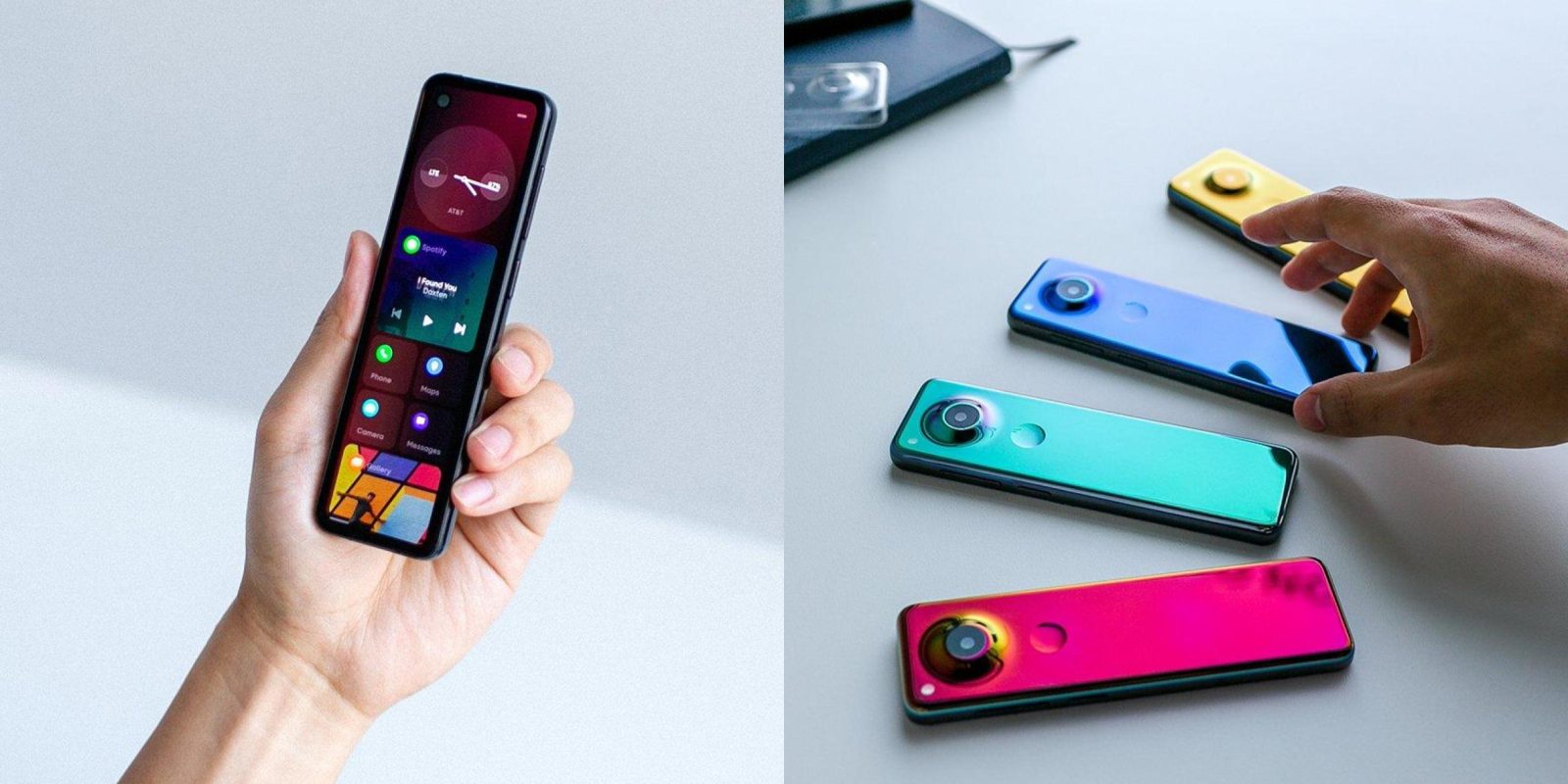
Essential Products announced today that it’s ceasing operations and shutting down. Founded by the controversial Andy Rubin, the start-up last August showed off a radical ‘GEM’ smartphone.
Back in 2017, Twitter killed 6-second looping video service Vine. Two years later, co-founder Dom Hofmann teased a return, and last April introduced a closed beta. Byte today is officially launching for Android and iOS.
Last year, Google announced that all Android 7+ devices can be used as two-factor authentication when signing into Gmail, Drive, and other first-party services. Most modern iPhones can now be used as a built-in phone security key for Google apps.
With Google’s acquisition of Fitbit — set to be completed this year, there will be one less independent player in the health space. Withings is kicking off 2020 with the ScanWatch. The French company is touting this hybrid smartwatch as being its “most medically advanced wearable.”
Last month, reports first emerged that Fitbit was considering a sale and Google’s parent company was tentatively floated as a possible candidate. Reuters this morning is reporting that Alphabet has made an offer to acquire the wearable company.