Late Weekend Humor: Social Networks

[youtube http://www.youtube.com/watch?v=lYoAwfh4QOU&hl=en&fs=1]
[youtube http://www.youtube.com/watch?v=lYoAwfh4QOU&hl=en&fs=1]
But thanks for playing the brick riddle, Superfunny…
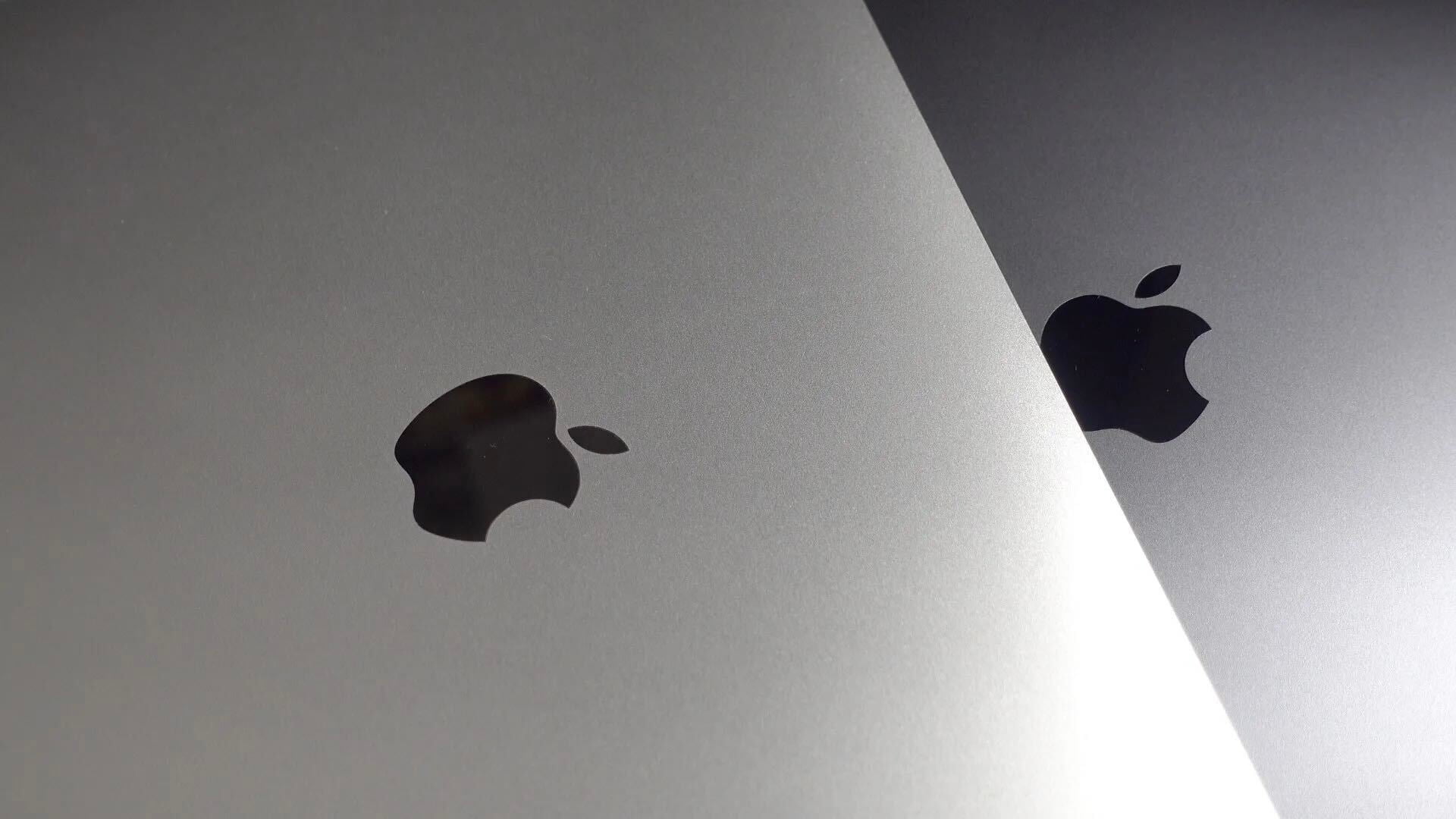
Any other takers out there?
Remember we are talking MacBook Touch with glass trackpad here….
This is closer:
Does Brick = Wireless USB Hub?
With the supposed October 14th MacBook makeover event just over three weeks away, hardware detail rumors are starting to heat up. The latest is the posting by Mac Soda of the chipset choice. According to them*, Apple will forgo the standard Intel laptop motherboard and instead use NVIDIA’s new MCP7A chipset line. This line is noted for its high performance per Watt ratio, DDR3-1333 memory and the ability to include HDMI output. Theoretically, it could also help with BluRay support as well.
I’ve covered all of my thoughts on the upcoming new MacBook series here:
New Apple MacBook Series
MacBook Pro
MacBook
MacBook Air
via Macenstein
*mykbibby also writes for 9to5mac
The Surfin’ Safari blog has been away for awhile (Endless Summer?). Their first post back (Since June!) is a great one, however, and shows they haven’t spent the whole summer on the beach. They report that the new Javascript rendering engine (unfortunately) dubbed SquirrelFish Extreme is wicked fast compared to the current Safari Engine and even over twice as fast as the current WebKit SquirrelFish builds…
There has been a lot of movement in the Javascript rendering engine optimization department lately. With Google’s Chrome on the scene boasting of lightning quick V8 Javascript rendering and Firefox Gekko constantly optimizing their code, there is intense competition in this arena (see comparison). While the speed increases are huge for the one important component of the browser, many other factors contribute to the actual speed of the browser experience and, as they say, your results may vary.
Expect to see the Extreme version of SquirrelFish in upcoming Webkit builds….
[youtube http://www.youtube.com/watch?v=wj5UyZKo2iE&hl=en&fs=1]
[youtube http://www.youtube.com/watch?v=7hhVjSbV_oQ&hl=en&fs=1]
 Apple CEO Steve Jobs is in Europe, visiting European Competition Commissioner Neelie Kroes in Brussels yesterday, and no doubt dropping down the road to Paris, France to take a look at what remains of Europe’s largest Apple trade show, Apple Expo, which now features everyone, but Apple (maybe we’ll see a surprise announcement?).
Well, at least the CEO may – or may not – be there – he may instead choose to explore the sights and sounds of Paris. Or maybe he popped out for a meal with Mick Jagger, who was in the same meeting yesterday.
 What was the meeting about? Well, that’s pretty important, really. Ostensibly Jobs, Jagger, Apple’s iTunes head, Eddie Cue, and representatives from EMI, eBay, Fiat, UK consumer association, Which? and sundry other chiefs were gathered for a round table debate exploring “opportunities and barriers to online retailing and the European Single Market”.
What this means, of course, is best summed-up by Kroes, who said: “The people of Europe were promised a union, a place without borders: but on the Internet they have not yet got it. Progress has been made; sometimes impressive, but it is not enough. As Competition Commissioner, I want to know why. If this is because the competition rules are not clear enough, I will clarify them. If it is because the competition rules are not up to date, I will update them. And of course, if this is because the competition rules are not being respected, consumers and companies should know that I will enforce them."

What that means is summed up by me as a pretty stern warning to companies doing business in Europe that they better forget the whole notion of charging more for the same product in one European country than in another, and they better get used to the idea that European consumers have the right to pick up new products at the best available European price. And the internet could be an absolute blessing on consumers shopping for goods in the recession we face. If the big firms who run everything step up to the plate and respect the common market laws that govern the EU.
Anyway, the people met, they talked, and there’ll be a publication later this year…And while everyone appears to be being all nice about it, under the surface there’s a threat – if big business don’t do what it’s told, then it can expect European laws to appear that will force it too.
Meanwhile, we thought you’d like a few pictures of Jobs and Jagger – and in the image below, you get to see Eddy Cue (to the left of Jobs).. and just below that you can enjoy watching Steve’s GulfStream land in Rotterdam! (Thx to One More Thing).

(Update) The One More Thing crew in the Netherlands caught Stevo’s plane at Rotterdam airport. Apparently, it was parked in the handicap spot.
http://vimeo.com/moogaloop.swf?clip_id=1754655&server=vimeo.com&show_title=1&show_byline=1&show_portrait=0&color=&fullscreen=1
OMT nieuwsflits: Steve Job’s private jet op Rotterdam Airport from One More Thing on Vimeo.
Mac users are beginning to suffer from iPhone overload, and can’t wait for Cupertino to get some new computers out the door – and new MacBooks are a Mac geek’s wet dream right now…we know they’re coming, we think within weeks, but the anticipation…
So, the computer to the right has none of the new "curvature" we’ve been hearing so much about. On that alone, we are calling fake. It is interesting to note that there is no latch…something we’d be glad to see disappear. At least we can agree with our imposter on that.
Apple is expected to introduce new Macs – MacBooks – by October 13, with some industry insiders anticipating an announcement of the new products by the end of this month.
While we wait we’re getting our fix pulling in the rumours, and we think this one’s interesting – see, these images depict a hitherto unknown MacBook model were published on German retailer, T System’s retail website. And then removed…
We love it when stuff gets removed, it’s all the more exciting for that – even Photoshop frauds are better with a take down notice, real or otherwise.
Step in the lovely Danes at MediaMac – they snagged a few images just in time (apparently).
These will offer up to a 2.6GHz Core 2 Duo processor, will have a clear black frame around the screen (like the iMac). And prices seem set around €1,797. For the Pro machines….
Oh, and there’s a lovely little info-nugget that emerged this week…seems Nvidia will launch its MCP7A IGP chip by the end of the month, an updated Intel-platform integrated graphics chip that could well be scheduled for deployment in the new Macs.
And recent analyst remarks that Apple has already begun to move quantities of its new computer about in order to have them in place for the imminent launch don’t hurt at all.
And with Apple now holding 10.6 per cent of the US notebook market, well, the only way is up, right?
I am trying to start up a little conversation about the new MacBook Pro specs over at my Computerworld Blog. We have heard very little over here except that it will be released soon – possibly sooner than October 14. Terms like "Big MacBook Air", "Black and Aluminum beauty" and "Stunning – makes current line look like eyesore" have been thrown around. What features do you think it will have? Chime in and be heard. Or comment on Digg.
 Apple’s more popular than ever with enterprise users, claimed IDC analyst, Michael Rose, this week.
Explaining the growing popularity of the Mac, he said: “As we’ve seen with consumers, small and medium businesses (SMBs) as well as large organizations are starting to consider the possibility of deploying more Macs within their corporate environment."
Why’s this happening? Well, we know it’s down to the iPod halo, the iPhone halo, the Mac halo, the OS X halo and the sheer media love-in surrounding Steve Jobs. We also know it’s because of the vexations of Vista, the lack of interest in any but the high-budget Windows machines, and finally, well, let’s just say it’s the software, stupid…
What this comes down to, according to the IDC analyst, is that business users as well as consumers are flocking to the Mac, "because of the company’s positive mindshare within the IT user market," the analyst said, adding, "among other reasons.” So that’s a lot of reasons.
Why hasn’t this story been more widely heard? Well, Rose’s observations were quietly made within the press release trumpeting the release of VMWare Fusion 2.0 (a free update for existing users, $79 for everyone else, and the new version promising a better user experience than ever, alongside a batch of features for enterprise users.
Rose plugged the virtualisation software, saying, “With technologies available today, like VMware Fusion, ‘switching’ to a Mac by individuals within organizations, whole departments or even across the entire company, is more conceivable because it allows users to adopt Apple hardware and software, while enabling the continued use of Windows applications and their associated management infrastructure."
Meanwhile in the red corner, CNNMoney has begun campaigning for the editors at the Wall Street Journal to drop ailing giant AIG (before it brings the entire global financial system to ruin) and drop Apple directly into the Dow Jones index.
CNNMoney editor at large, Paul R. La Monica, notes, "Apple dominates the consumer electronics market with its iPod and iPhone and is expected to generate $40.4 billion in sales in its next fiscal year – higher than the estimated revenue for Dow components Coca-Cola, Walt Disney and Alcoa."
Piper Jaffray’s Gene Munster, in a note issued to clients yesterday, estimated "that Apple will sell 2.8 to 2.9 million Macs and 11 million iPods [and 4.1 million iPhones] in its fourth fiscal quarter, which ends Sept. 30… based on data released at midday by the NPD Group," Philip Elmer-DeWitt also reports for Fortune.
We here at 9 to 5 Mac think the message to enterprise IT buyers is pretty clear: "Don’t settle for shoes that don’t fit that your employees can’t wait to cast off when they get home; don’t adopt suburban families in an attempt to make things real once you’ve made your millions, go for the best – Get A Mac."
Comment?
(Update see video of presentation below)
Google is preparing to introduce the first Android-powered mobile phone, putting the new device in competition with the iPhone during the coming Holiday sales market.
The device, Dream, is manufactured by HTC and available exclusively on T-mobile in the UK and to ship in early November. A local UK report predicts the device will be introduced at a New York press conference next Tuesday.
Unlike iPhone, Dream’s expected to carry a slide-out Qwerty keyboard as well as matching the iPhone with 3G and built-in GPS. It’ll also have Chrome inside, so it will run Google applications such as Gmail, Google Docs, Google Maps and so on..much like Mobile Safari.
HTC expects to shop 600,000 to 700,000 of its first Android phone, Dream, this year, a person familiar with the matter told the Wall Street Journal.
Apple’s all-new iPod range may have rained down upon the planet in a wave of Apple-inspired glory, but members of the ‘Made For iPod’ consortia may well feel a little like the jilted parties who signed-up to Microsoft’s ‘Plays for Sure’ deal, (which didn’t)…
What’s happened is that the new iPod touch and iPod nano models – fine though they are – are sadly incompatible with some iPod peripherals. What’s worse is that the feature manifests itself in the form of many older iPod gadgets being unable to re-charge your Apple music player.
And the devices these new iPods aren’t compatible with aren’t your common old garden $10 cases and odd little leads – these are expensive systems, such as the Numark iDJ (first edition), some extremely expensive speaker systems (better than the iPod hifi, thank you), in-car iPod recharging devices, including the phenomenally popular Griffin iTrip and more….
Attempting to use these devices renders an erropr message on the iPod screen – a message which warns, "Charging is not supported with this accessory". In the case of the iTrip, it isn’t just charging that fails – all you’ll hear is static.
All this is compunded as there’s no warning anywhere on Apple’s packaging that there have been any changes in the way it has wired its gadgets up. The result though is that many iPod owners who have spent hundreds of dollars on iPod accessories may well feel frustrated at the move….
Particularly as the majority of the accessories described here proudly carried the ‘Made for iPod’ logo, a scheme Apple demands generous royalty payments from manufacturers in exchange for the right to put the brand on their packaging. A scheme Apple administers, a scheme which Apple has full knowledge of – and a scheme partners in which Apple should have informed if devices already sold under the marque were about to become utterly useless with an iPod ‘refresh’.
We don’t have a complete list of affected gadgets, but given the strength of the iPod economy, this particular Apple move is guaranteed to annoy a lot of loyal iPod users, particularly as no explanation as to the reason for the changed mechanics of the new iPods and their charging routines has been given. And it’s not just us who are making these claims – check here.
UK music service 7digital today beat Apple and Amazon to the punch, introducing a fully DRM-free music service featuring tracks from all four major labels – and announcing plans to open for business in the US and Canada.
The company this morning announced a deal with Sony BMG to offer music from that label DRM-free in MP3 format, meaning it now offers music free of rights restriction from all four major labels – Sony BMG, Universal Music, Warner Music and EMI Records.
7digital is therefore the first digital music store in Europe to offer downloads from all the majors unencumbered by DRM, even while Amazon inks the deals for the European expansion of its DRM-free service, and while Apple continues to seek permission to offer more music through its DRM-free iTunes Plus system.
7digital’s music quality is also high. Tracks are sold as high-quality 320kbps MP3 files – they’re better quality than available elsewhere and will play on any device.
Clearly the UK company has support from the labels – it will launch its service in the US and Canada before the end of the year, the company said.
While this isn’t really new (Steve Jobs mentioned this awhile back when questioned about the purchase of P.A. Semi), Apple really is crafting a next-generation processor to power up a future model iPhone and we’d assume iPod Touches. One of the engineers involved in the project has revealed as much in a post on LinkedIn, the popular business Social networking site.
Woops.
As seen by the New York Times (via MacRumors), Wei-han Lien, the senior manager of Apple’s chip team revealed his work in developing an ARM-based processor for the iPhone in a post on his LinkedIn profile. This post reveals he is the man currently charged to manage the ARM CPU architecture team for the iPhone.
Apple acquired PA Semi, a global leader in processor design, in June, and when it did the company also acquired the services of Wei-han Lien. ‘Course, we already knew the PA Semi was purchased at least in part in order to develop a world-class unique proprietary processor for Apple’s mobile device. Apple CEO Steve Jobs went so far as to say the acquisition took place precisely in order that the PA Semi team should focus on this. What is news here is that it confirms the processor will be based on the ARM architecture, which is a natural progression as all the take-down analysis stuff confirms it’s ARM, rather than Intel, which sits inside the Apple device, with those chips made by Samsung, allegedly.
While Apple faces some risks in attempting to manufacture its own processor – what if it hits a development road block it is unable to surmount? What is clear is that the company has acquired itself a world class team to help in the development, and that the company’s move will ensure the iPhone as a platform will always possess unique advantages unavailable to competitors in the smartphone space. And, of course, will enable Apple to create an ecosystem so tightly connected to the processor, competing firms – who lack the chip design skills of Apple – will be unable to compete with.
Apple currently uses ARM chips manufactured by Samsung in its iPod and iPhone lines.
Napster CEO Chris Gorog seems to be among the most accomplished escapists in the game, with the shock announcement today that US retail giant, BestBuy, has agreed to buy the loss-making music service for $121 million ($2.65 per share).
The transaction has been approved by Napster’s board and is expected to close during the fourth quarter. The proposed acquisition includes Napster’s approx. 700 thousand digital entertainment subscribers, its Web-based customer service platform, and innovative mobile capabilities.
Napster CEO Chris Gorog and key members of the company’s senior management team will be employed to manage the company post-acquisition, and no redundancies among the 140 exisiting employees have (yet) been discussed.
So – what’s a giant high street US retailer to gain out of this deal? Well, we think it reflects the increasing commodification of digital music. Also consider the major labels appear ready now to offer their music in DRM-free MP3 format internationally (expect much more news on this in the weeks ahead). And Napster already offers music DRM-free.
Certainly these hunches are borne out by Best Buy management, in the form of Brian Dunn, President and COO of Best Buy, who said, "This transaction offers Best Buy a recognized platform for enhancing our capabilities in the digital media space and building new, recurring relationships with customers. Over time we hope to strengthen our offerings to consumers, who we believe will increasingly seek devices and solutions that enable them to access their content wherever, whenever and however they want.”
Dave Morrish, Executive Vice President – Connected Digital Solutions of Best Buy adds, "We can foresee Napster acting as a platform for accelerating our growth in the emerging industry of digital entertainment, beyond music subscriptions. We’re very excited to add these capabilities to leverage our existing relationships with the labels, the studios, and the hardware providers."
And Gorog? He said this: "We are looking forward to combining our digital media capabilities with Best Buy’s resources and global network to extend our digital content platforms."
Apple faces its strongest attack yet, with its iTunes market lead threatened by the launch of MySpace Music, expected to start-up for real in the US this week.
The question on music industry and analyst’s lips is, "can the world’s largest music-focused social network take a chunk out of iTunes sales?" Some industry watchers, however, remark that the most likely competition to be generated as a result of the launch will be between News Corp’s MySpace and CBS’ Last.fm.
MySpace last night confirmed itself to have won support from major advertisers to kick-start its free music streaming and paid purchase MySpace Music service.
McDonald’s, Sony Pictures, Toyota and State Farm will pay for ads, underwriting the service which is expected to launch for real in the US this week.
MySpace Music offers catalogue from three majors (all but EMI) and some indies (through its deal with Amazon, which is handling the infrastructure for music downloads, which are not free through the service).
Whereas MySpace users can now only add a single song to their profiles for sharing, MySpace Music will allow them to create and post entire playlists.
"With MySpace Music integration, premium brands are offering our users and their customers new ways to discover, experience, and share music online and offline, said Jeff Berman, president of sales and marketing at MySpace."
MySpace Music has been organised as a joint venture with Sony BMG, Universal and Warners. The fact the majors have a slice of the action underscores their desire to topple iTunes from its leading position in digital music retail.
"We haven’t made just a commercial deal with the labels, but a joint venture, so they are invested in our success," Berman added.
The service starts without a CEO, but weekend rumours suggest the company may be preparing to hire former Facebook COO Owen Van Natta to the role.
It has been a rough week for the Apps Store. Germany’s Higher Regional Court of Hamburg has banned the use of VoIP application, Sipgate, on the Apple iPhone.
Sipgate enabled iPhone users to make VoIP calls when connected to a local WiFi hotspot in Germany, which raised the anger of Apple’s German carrier, T-Mobile, which launched legal action to ban the app.
The court agreed with T-Mobile that Sipgate had used unfair business practices in order to attract consumers that are otherwise locked to T-Mobile while making calls. The carrier also argued that because use of the application required that users jailbreak their iPhones, thus breaching their agreement with T-mobile.
It is not known how this will effect other VoIP apps in other markets. Truphone comes to mind.
And in related news, NetShare developers, Null River, confirmed this weekend that their popular iPhone tethering application won’t be made available again through the App Steore. And industry observers once again believe its the carrier – in this case, At&T – that’s to blame for the ban.
"Looks like Apple has decided they will not be allowing any tethering applications in the AppStore," Null River wrote. "As such, NetShare will not be available in the iTunes AppStore. We are seeing a lot of similar reports from various developers who’s applications were abruptly removed and banned from the AppStore without any violations of the terms of service. This is all unfortunate news for the iPhone platform end-users."
Also last week, iPhone app Podcaster was denied the chance to be sold through the App Store, with Apple saying the software "assists in the distribution of podcasts, it duplicates the functionality of the Podcast section of iTunes,” and citing that as cause for the rejection.
We aren’t taking sides here on any political fronts – our comments system probably couldn’t handle it. Both candidates are amazing stories and we’ll leave it at that OK?
Anyway – Obama’s campaign has jumped on the "out of touch" message toward McCain by saying he "doesn’t use a computer" (see screengrab below). Not even a nice new MacBook Pro? Come on, even a 72 year old war vet can use a MacBook. I call BS!
http://services.brightcove.com/services/viewer/federated_f8/1185304443
To be fair, the Obama campaign team used Brush Script in the Ad which is just as 1982 as not using computers (thanks comment). When McCain has an Apple related ad, we’ll throw it up – promise!
Come on! Look how easy the MacOS is!
Apple has already seized 6 per cent of the handset market with its iPhone – and the future looks pretty positive too, with UK sales hitting 27,000 every week, says Mobile magazine.
The publication adds that UK sales in the first two weeks following launch of the device crossed 50,000 per week.
Marketshare is believed to be hovering between a 4% and 6% share of the UK handset market, and even reaching ‘high single digits’ some weeks, according to a source close to the matter.
And in order to maintain the momentum, Apple and O2 have introduced the device on a pay-as-you-go basis. First-week sales of the 3G iPhone racked up around 50,000 units despite the systems faults, but those levels dropped to 32,000 after the first month.
An O2 spokesperson said: "We have a strong relationship with Apple and they are pleased with the sales of the iPhone to date."
Are you amuzed yet?
Was 4 minutes of your life worth watching Bill Gates do the robot?
 Shhh! Keep it quiet, but it looks like BlackBerry-maker Research In Motion is quietly weaving together a strategy designed to help it in its digital media-driven battle for market share with Apple’s iPhone.
Strike one: News emerged today that RIM is climbing in with TiVo, developing software for the BlackBerry that could vastly improve the way the device links up with video content. The first jointly-developed software app should ship this year.
Initially, BlackBerry smartphone users will gain the convenience of being able to discover what shows are on and schedule television recordings while away from the living room and on the go. "Future collaboration between the companies will focus on software applications that further simplify mobile access to video content," the partners said, leading to speculation BlackBerry users will be able to stream video from their TiVo to their handheld.
It’s a battle on Apple’s home turf, bestowing improved media access and playback features on RIM’s device. It’s a strategic move, said Jim Balsillie, Co-CEO of Research In Motion. "As the BlackBerry smartphone continues its evolution as a modern lifestyle device, the importance of home entertainment integration will continue to grow and TiVo will be the key in providing consumers with greater flexibility in accessing television content."
Tom Rogers, CEO and President of TiVo Inc. "RIM and TiVo share a commitment to great user experiences, which cause our products to become seamlessly integrated into the consumer’s lifestyle. We also share a vision for the future of mobile entertainment services and we look forward to a variety of future innovations as a result of this relationship."
Strike Two: RIM has also made a move to team with Ticketmaster, Billboard revealed this morning. Under this new deal, BlackBerry has become the official smartphone for Ticketmaster, and users of the device will be able to buy tickets from the booking service in the US, Canada and UK using software that’s being jointly-developed by RIM and Ticketmaster.
"Our new agreement with RIM ushers in the next generation of lifestyle innovation designed to conveniently connect fans to live entertainment," Ticketmaster CEO Sean Moriarty said in a statement.
Also this week, RIM debuted its all new Pearl Flip device at the CTIA show. This looks and acts like the standard Blackberry Pearl, but has a flip-down cover for the screen, WiFi, mobile streaming, video recording and other features and will be made available on T-Mobile in the US.
RIM really has no choice. Even as Apple continues to improve its iPhone offering to the enterprise, the BlackBerry maker must strive to strengthen its move toward becoming a more consumer-friendly device.
With reports suggesting that the iPhone 3G is the fastest selling phone for both AT&T in the States and O2 in the UK, it’s no surprise that its sales are taking customers away from other smartphones including the BlackBerry Curve, Samsung Blackjack 2, Palm Centro, and BlackBerry Pearl.
But RIM has more to concern itself with than Apple – the company is also facing renewed vigour from competitors, Nokia and Microsoft, who have clearly announced a plan to go up against the Canadian company.
Nokia and Microsoft this week announced a deal that brings Exchange support to nearly all of Nokia’s smartphones. Anssi Vanjoki, Nokia’s executive vice president for markets, told BusinessWeek that the deal is “absolutely” aimed at RIM and its BlackBerry handsets and software.
As Mobile Today observed yesterday, achieving a 5 per cent share of the smartphone market means you’ve made it in the mobile industry – and Apple seems set to exceed this notional target.
"The first sales figures obtained by Mobile for the 3G iPhone reveal that Apple is on course to breeze by this milestone. Its sales have consistently hovered at around 4-7% of the market. What is amazing about this feat is that it has been achieved on the back of a single product, sold at a premium price on terms dictated by the manufacturer," editor-in-chief, David Nunn observed.
Changewave director of research David Carton has also noted RIM’s plans to counter the Apple offensive. "RIM isn’t taking the Apple 3G challenge lying down," Carton notes. "The Canadian manufacturer has multiple plans in motion to counter Apple’s momentum among consumers, including an already announced new product release (the Bold) and two likely additional product releases (the Thunder and Kickstart)."
And while RIM could be seen as isolated with Apple on the one side, and other competitors on the other, one thing the BlackBerry family shares with the iPhone is product loyalty – so Nokia and Microsoft may in the end find themselves sharing a shrinking bed.
"The Apple iPhone has captured the hearts and minds of its user base, and so has the RIM BlackBerry," Carton said. "Fortunately for both, the global consumer and enterprise smart phone markets are big enough to support both Apple and RIM – it’s the other cell phone manufacturers that look like the real losers."
The question is – will RIM’s move to make its device more consumer multimedia friendly help it retain its Q2 2008 US 46 percent marketshare? And will Apple’s iPhone sales remain strong in the months ahead?
In related news: Google today announced its free Google Mobile App for BlackBerry.
Once again, we thought our readers may take an interest in the latest post-event client bulletin from American Technology analyst, Shaw Wu.
While he maintains Apple is a stock to buy with a $220 value, Wu seems a little unsure on Apple’s announcements, saying, “while we are pleased to see lower pricing, we are concerned that price points may remain too high given the tough macroeconomic environment and relative to the 3G iPhone at $199 and $299.”
Without further ado, here’s Wu’s message to clients, in full:
"Yesterday (09/09/08), at AAPL’s "Let’s Rock" special event, Steve Jobs announced new iPods with lower price points and a renewed content partnership with NBC.
New iPod nano Pretty Much As Expected.
While we find the new fourth generation iPod nanos impressive with 9 bold colors and an accelerometer, the refresh is arguably moderate, similar to its earlier 1G and 2G designs. We find the $50 price cut to $149 and $199 for 8 GB and 16 GB models positive and believe it should help make this an attractive holiday item.
Price Cut On iPod Touch Nice, But May Not Be Enough.
As expected, the new second generation iPod touch has a slimmer form factor with lower price points of $229, $299, and $399, respectively (from $299, $399, and $499) for its 8 GB, 16 GB, and 32 GB models. While we are pleased to see lower pricing, we are concerned that price points may remain too high given the tough macroeconomic environment and relative to the 3G iPhone at $199 and $299.
Minor iPod Classic And Shuffle Updates.
Other minor updates Steve didn’t mention in his keynote include consolidation of its iPod classic to one price point ($249) with two colors, and new colors (but no price cut) for its iPod shuffle.
No Material Change In Build Plans.
From our supply chain checks, we have not picked up a material change in iPod build plans. At this point, we remain comfortable with our forecast of 11 million iPods for the September quarter and 24 million for the December quarter.
Conclusion:
While AAPL shares will likely remain volatile given market sentiment, we view current levels as a buying opportunity for longer-term investors. AAPL remains one of the best positioned large-cap technology companies. We see upside to $220 based on 32.5x our CY09 EPS of $6.73.
Favorable Component Pricing Trends Should Help Offset Lower Price Points:
We believe continued favorable component pricing trends, particularly in NAND flash and memory, as well as less upward pressure on commodities and plastics should allow AAPL to absorb these iPod lower price points without impacting its margins materially. Arguably there could be room for upside given the lack of pricing change for the iPod shuffle.
Renewed Content Partnership with NBC:
AAPL also announced that NBC Universal content will return to its iTunes store including programming from NBC, USA Network, SCI FI Channel, Bravo, Sleuth and NBC News. We view this as a positive that demonstrates AAPL’s market power and ability to negotiate deals. Hit shows include “Heroes”, “The Office”, “Battlestar Galactica”, and “30 Rock”.
New Macs Likely At A Later Event:
We continue to believe that MacBook Pro and MacBook are due for refreshes with more radical redesigns, likely at a special event later this fall. In addition, we are picking up that MacBook Air could see a minor refresh and potential price cut to increase its value proposition as build plans have slowed from earlier robust levels as customers have opted for MacBook or MacBook Pro instead.
Competitive Advantages Intact:
We believe AAPL’s key competitive advantages remain its 1) strong brand loyal customer base; 2) vertically and horizontally integrated hardware, software and service model (iPod + iTunes, Mac, Apple TV, and iPhone); 3) proprietary interface technologies (clickwheel and multi-touch); and 4) unique and pleasant customer experience with its Apple stores.
Macro headwinds are becoming more apparent:
We continue to see AAPL as the best play on digital media in the home and a large beneficiary of the shift to mobile computing. In two of its three big franchises, Mac and iPhone, penetration is very low and starting in the higher-income demographics. The disturbance in the macroeconomic environment is within lower-income demographics and financial institutions with exposure and impact to overall liquidity. This could certainly spread, but we believe AAPL’s business will remain strong in the near- to medium-term. Enough high-end consumers are still buying tech, though commodities inflation could pressure future margins."
David Nunn has a nice little op ed piece today in Mobile Magazine which lays out Apple’s high level strategy going into the mobile handset arena. The numbers he quotes are quite impressive.
The first sales figures obtained by Mobile for the 3G iPhone reveal that Apple is on course to breeze by this milestone. Its sales have consistently hovered at around 4-7% of the market. What is amazing about this feat is that it has been achieved on the back of a single product, sold at a premium price on terms dictated by the manufacturer. In contrast, the likes of LG climbed up through the second division of handset manufacturers by cheap 3G handsets to the whim of operators (namely 3). It then graduated to the top tier by turning cartwheels to produce one eye-catching designer product after another.
But the interesting thing is the comparison between Apple and out-matched military commanders who see a weakeness and exploit it.
Great military commanders in history, such as Nelson or Napoleon, were masters at winning battles against larger enemies. Their technique was to mass small forces at a single point where the enemy was weak, to create an overwhelming advantage that would force a breakthrough. That’s pretty much what the polo-neck brigade at Apple has achieved.
Good analagy except it is the ‘mock turtle neck brigade’.
 While the iPod has become a mature product and Apple and the world’s attention has shifted to the iPhone and iPod touch, the product range seems set to attract 20 million Windows switchers in the next 12 months, said Needham & Co. analyst, Charlie Wolf, this afternoon.
"We estimate that 20 million or more Windows users will join the iPod nation annually over the next few years and potentially fall under the sway of the iPod halo effect, which is great for Mac sales," he said.
What’s also behind the reduced impact of the current crop of music players is a change in the market dynamic, Wolf also observed, as reported by Distorted Loop: "…The importance of the iPod in Apple’s product portfolio has definitely taken a back seat to the iPhone, which is targeting a market that’s 20 times larger than the music player market," he said.
Wolf also explained that in his opinion the two "most important aspects of Apple’s “Let’s Rock” event in San Francisco were Steve Jobs’ health and a software update for the iPhone."
Wolf reckons that the market will take a little reassurance from Jobs’ dynamic on-stage energy yesterday, and also pointed out that the iPhone 2.1 software update that’s set to ship later this week is an extremely important move, designed to eradicate criticism of the product for, "dropped calls, poor battery life and crashes…it was crucial that Apple address these problems."
Wolf, who maintains a strong buy rating and a $240 target price on AAPL stock, added, "The iPod continues to gain share in markets abroad, most notably in Europe, where iPod sales dramatically lagged those in the US, and in China and other countries in the Asia Pacific region."