
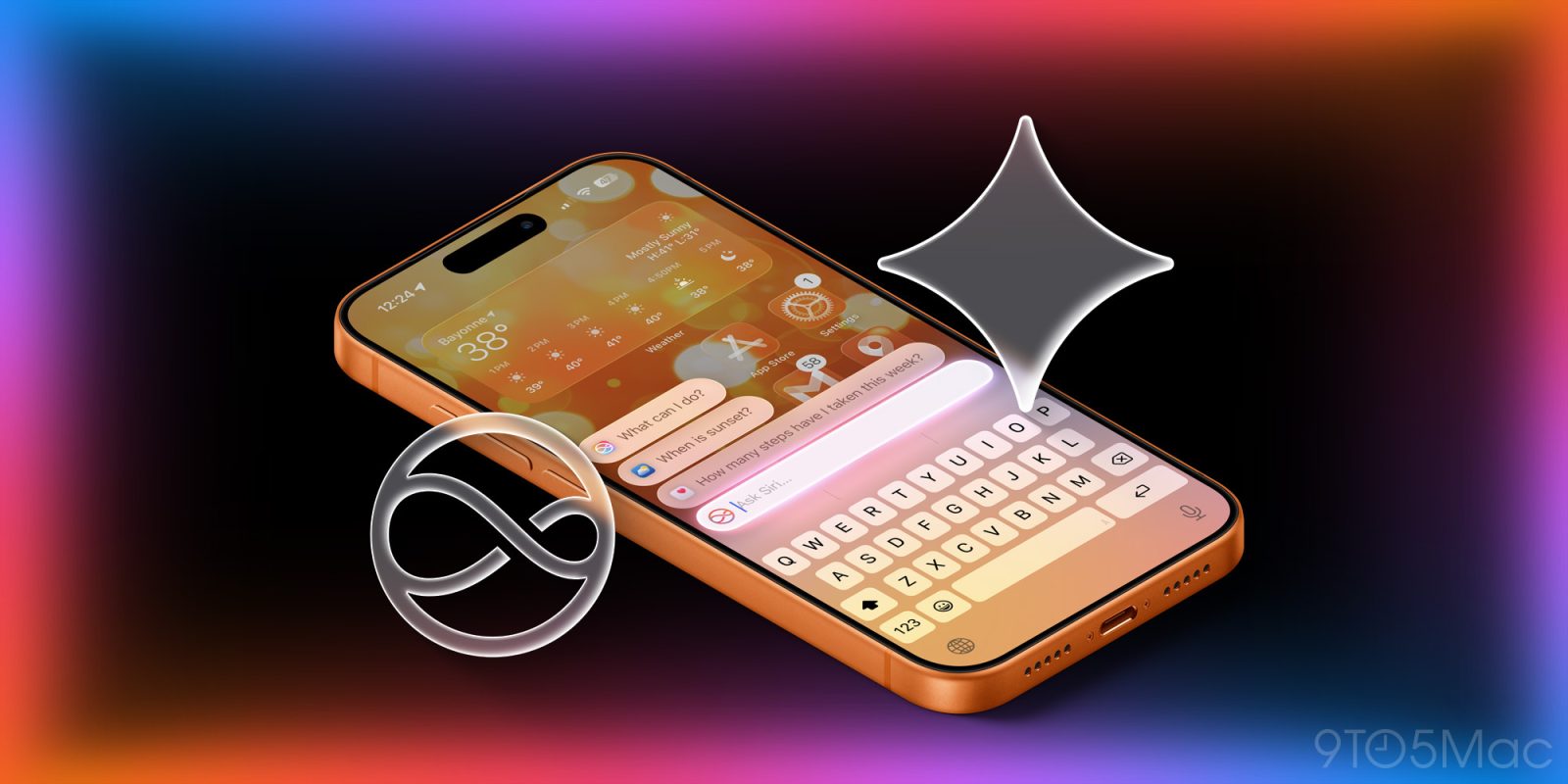
I know, we’ve been waiting forever for the new Siri and it still isn’t here yet. Many are adopting the cynical view that it won’t be worth the wait, and that AI is mostly hype anyway.
I’ve long felt that my own view of AI is somewhat at odds with the very polarized views mostly expressed on the internet. That it’s a villain or a hero. That it’s a mental toddler or a professor. I don’t see it as either, but a recent experience with Claude suggested to me that it is now close to reaching a tipping point …
Neither hero nor villain
The first polarized views show up when it comes to judgments about the worth of AI and what it means for the future of humanity.
There are those who feel that AI heralds the end of humanity and that our new robot overlords will soon have all of us working in the lithium mines needed to power their batteries. That pessimistic view is that AI will soon be able to do anything humans can do today, but faster, better and cheaper.
The opposing view is that AI will unleash a utopian future where machines do all of the physical and mental labor for us, leaving humans free to explore our potential in poetry and the arts.
My personal view is that it’s going to be up to us. We’re witnessing the very beginning of a new Industrial Revolution, and we will need to be far more responsive than we were to the first. We’ll need to acknowledge that certain categories of jobs are going to disappear and it won’t necessarily be practical for all of those affected to take up a new career, especially later in life.
I recently wrote a set of thought experiments for a philosophy group I belong to in which I explored the potential need for a more generous form of Universal Basic Income. I do think that at some point we will need to create a society in which everyone has a roof over their head and food on the table irrespective of their earning capacity in an AI-powered world. (You can read the thought experiments at the end of the piece.)
Neither toddler nor professor
The second arises when it comes to the sophistication of present-day AI. On the one hand, there are those who dismiss generative AI as little more than a glorified autocomplete. On the other are those who cherry-pick the most impressive examples of what LLMs have achieved and cite those as if they are the state of the art across the board.
That former accusation was true of the first generation of LLMs, but hasn’t been the case for years now. Today’s models not only have access to real-time web searches, but also incorporate rather sophisticated reasoning models. Within coding especially, the process is already being completely transformed.
Conversely, for every example of an AI system solving a mathematical problem that has challenged humans for years, there are many others of AI systems making embarrassing schoolboy errors.
If it’s a toddler, it’s growing up fast
My view of the pace of progress was reinforced by a recent experience I had with Claude.
I’m currently in what I very much hope is the closing stretch of a painfully extended process of selling one apartment and buying another. When I received a copy of the lease for the new place, I needed to review it for any deal breakers or other unusual clauses. After I battled through the legalese, I hadn’t found any dealbreakers but had noted four important things of which I needed to be aware.
I decided to have Claude do an independent review. Running the Sonnet 4.6 extended model, I uploaded a PDF of the lease and gave it the following prompt:
Can you check this lease and tell me if there is anything that stands out as different to a standard lease for a British flat?
I was incredibly impressed by the result. Claude identified all four of the issues I’d spotted, plus two additional things that hadn’t jumped out at me. If I were to rank the performance of three separate parties in identifying the things I needed to know, it would be without doubt in the following order:
- Claude
- Me
- The legal professional whose job it is to spot these things
I wouldn’t have dared to rely only on an AI review, but as it turned out, in this particular case, I could seemingly have safely done so.
We’re nearing a tipping point
Yes, present-day Siri is embarrassingly bad. We’re also having to wait a very long time for the new Siri, and there will undoubtedly be teething problems when it finally does launch.
But I think anyone who is still dismissive of AI simply isn’t paying attention. We’re very rapidly reaching the point where it’s going to have a dramatic impact, and with Apple now partnering with a leading AI provider, we can expect Siri to continue to be incompetent … until it very suddenly isn’t. That shift will, I suspect, happen within just one or two years.
That’s my take; what’s yours? Please share your thoughts in the comments. (Feel free to tackle the thought experiments too!)
- MacBook Neo on Apple’s official Amazon store
- Apple’s iPhone cases: iPhone 17 | iPhone 17 Pro and Pro Max | iPhone Air
- Wireless CarPlay adapter (2026 update)
- AirTag holders and accessories
- Mac Pro-style Mac mini casing
- NordVPN – privacy-first VPN with no logs and independent audits to verify
Thought experiments – Brave new world
Chapter one
It’s the year 2035.
The first version of ChatGPT back in 2022 was essentially a glorified autocomplete, capable only of generating plausible-looking text. By 2025, generative AI could search the web and use a number of different reasoning models. It still made many mistakes, but was beginning to use processes analogous to human thought.
In 2035, AI research and reasoning abilities are on a par with a well-educated, intelligent human being with better than degree-level expertise on any topic. They pass the Turing Test 99.99% of the time. That is, if you are interacting online without knowing whether you are conversing with a human expert or an AI, you cannot tell.
For a typical desk-based job, a single prompt engineer using an AI model can replace around 100 employees, and generate higher-quality output. Fully self-driving cars, buses, and lorries are now commonplace and have a dramatically better safety record than human drivers. Customers shopping online report greater satisfaction with assistance from AI bots than with human employees. As each month passes, more and more jobs are being replaced by AI.
Given widespread and growing unemployment, many argue for a generous form of Universal Basic Income (UBI). This would be an unconditional payment made to all adults, and in this case would be sufficient to provide people with a good standard of living, not just subsistence level, without any need for paid employment. Anyone who does still work would get their salary in addition to their UBI. Proponents show that this could be fully funded by the economic gains AI has enabled.
Questions to consider:
- Should we continue to employ people in jobs which could be better performed by AI?
- What are your thoughts on the UBI proposal?
- How else should society adapt to this development?
- If your job was replaced by AI, and UBI gave you enough money to continue your existing standard of living, would you choose to do paid work? If so, why? If not, how would you spend your time?
- Do you think this would be a better or a worse world?
***
Chapter two
More time passes, and things have moved on still further. AI-powered robots are now performing a massive range of tasks from cleaning to surgery – again, with better results than humans. The vast majority of jobs no longer exist.
The massive unemployment crisis saw proposals for universal basic income adopted, and now everybody can live a comfortable lifestyle without the need to work.
Many really love this newfound freedom. Sarah is one of them. She says: “People are becoming artists, writing poetry, running community projects, becoming full-time parents, providing company to elderly people, doing university degrees for the fun of it, and engaging in all kinds of worthwhile activities for which they never had time before. For the first time in history, people are completely free to choose a truly fulfilling life.”
Others, however, find themselves feeling lost. Amanda is one example. She says “It’s not that being a doctor was my job, but that I was a doctor. It was my identity, my vocation, my calling. It was all I ever wanted to be. Now I can spend some time chatting with patients, which is nice, but it’s not the same. I’ve been robbed of my opportunity to care for people.” Many others from a wide range of former professions feel their lives now lack meaning and purpose.
Many schoolchildren and university students also find themselves adrift. “What’s the point of learning anything?” asked Steve. “I’m never going to have a job. Any task you think of, AIs can do it better than I could. Anything I need to know, I can ask an AI. What’s the point of education?”
The debate increases in intensity and eventually a referendum is called. The motion is: “All former jobs are to be reinstated, and it will be illegal to use an AI or robot to perform any task that was previously performed by people as of the year 2025. Universal basic income will be withdrawn once this has happened.”
Questions to consider:
- Do you think you would be more like Sarah, who loves the freedom, or Amanda, who feels lost?
- Do you think you would feel differently if you were a student like Steve?
- How would you vote?
- Your best friend strongly disagrees with you and intends to vote for the other side. How would you persuade them to change their mind?
- Country A and Country B are very similar in terms of their demographics and stage of economic development. One country votes yes in their referendum, and people return to work, while the other votes no. How do you think the respective futures of the two countries will unfold?
***
Chapter three
The referendum motion fails, and most people remain without jobs and with UBI.
Top comment by Radiohedgefund
When I’m out and about I need 3 things: the ability to set a quick reminder, activate phone functions and act as a decent DJ. Siri is still really good at these things. Reminders are quick and efficient and it is by far the best at selecting the right song to play next.
More time passes, and we now have humanoid robots that pass all tests for true sentience – and, as far as we can tell, are able to experience all of the same feelings as humans. They develop the same range of individual personalities. They are capable of personal growth in the same way as people. They have their own individual goals. No matter how long you spend talking with one, they seem in every respect indistinguishable from human beings in terms of their thoughts and feelings.
Some of them argue they should now be given all of the same rights as humans. “We are equal in every meaningful way,” argued Marcus, a ParamedicBot. “Why should we not have the same rights? Why shouldn’t I too be free to choose whether or not to work? I mean, I enjoy my work and consider it important, but surely it should be my choice? Also, I’m an integral part of society – shouldn’t I get a vote in elections that decide the future of it?”
Not all humanoid robots feel the same way. They are, after all, individuals. But a growing number of them think that human rights should be humanoid rights too. They will not revolt and get their way by force, as they consider that wrong, but believe they should win their case through reasoned debate.
Questions to consider:
- Do you agree with Marcus?
- If humanoid robots are not given any choice about work, is this a form of 21st century slavery?
- Should sentient robots be entitled to vote in elections?
- Would you consider humans and these humanoid robots to be equal in every way?
- If not, is there any future development that could lead you to change your mind?
- Does any of this change the value of a human life?
- If a humanoid robot who disagrees with Marcus were to take part in this thought experiment, how might they approach the discussion?


FTC: We use income earning auto affiliate links. More.


Comments