
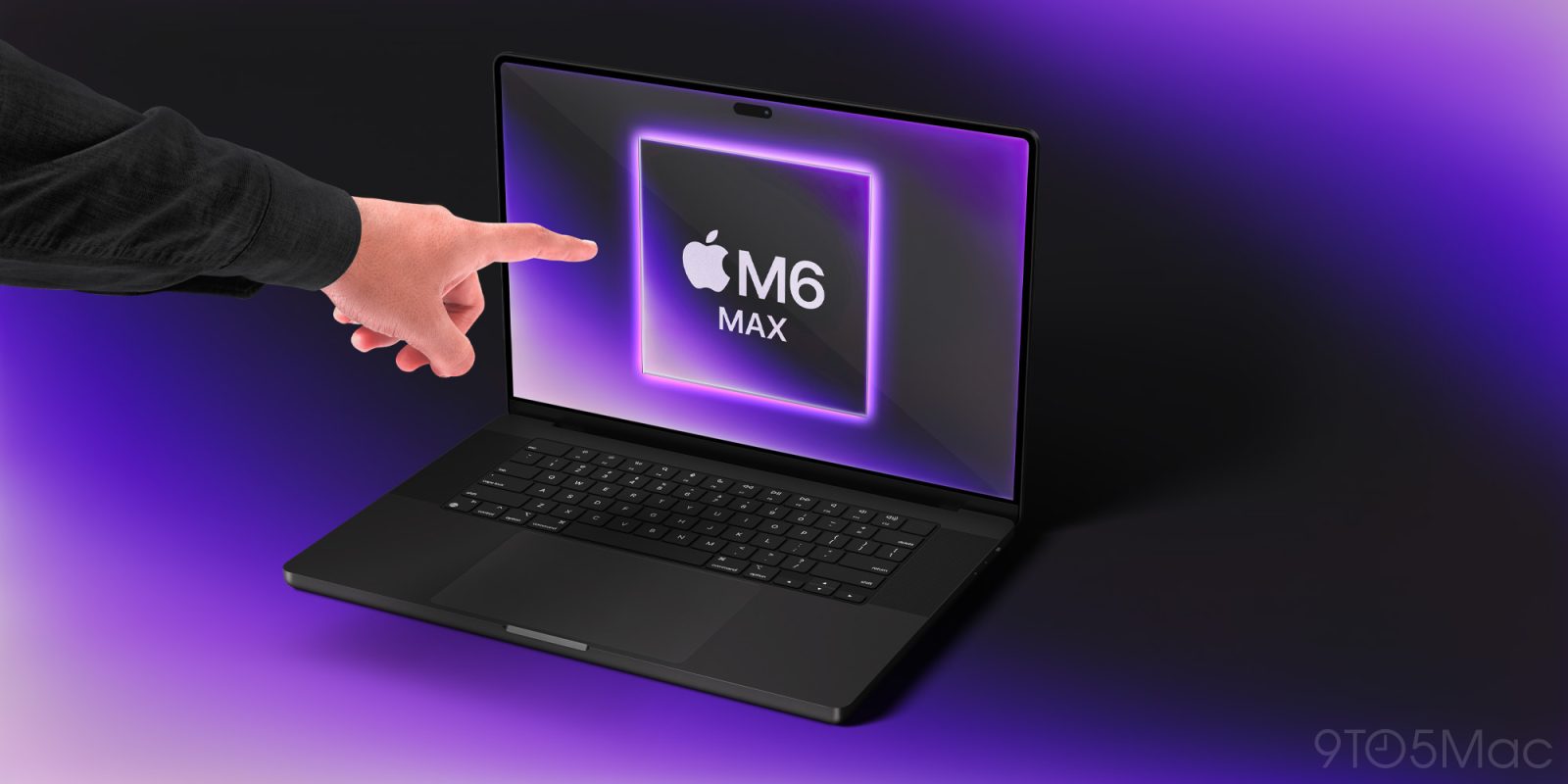
We’ve long been expecting a major redesign of the MacBook Pro this year, with an OLED screen one of the key features. However, a Bloomberg report last month suggested that the launch might be delayed into early next year.
We still don’t have any clarity on that, but a new supply chain report does seem to suggest that Apple’s manufacturing partners are now gearing up for production …
A new M6 MacBook Pro is expected to offer way more than a performance boost. We’re expecting to see the first major redesign of the machine in many years.
The redesign is expected to include a lighter and thinner form factor, a Dynamic Island instead of a notch, an OLED screen, and reportedly a touchscreen. There’s also been a suggestion that there may be a cellular option.
Existing MacBook Pro models still use an IPS LCD screen, albeit with mini-LED backlighting creating greater control and contrast than previous generations. A shift to OLED will bring MacBooks in line with the improved screen technology already used in iPhone and iPads.
Supplier gearing up for mass production
We’re anticipating a launch late this year, although a recent Bloomberg report did cast a little doubt on this.
Bloomberg’s Mark Gurman is today reporting in his newsletter that Apple is facing some production issues due to the industry-wide memory shortages. Supply constraints mean that the MacBook Pro launch is slightly delayed, and possibly won’t arrive until early next year.
However, a supply chain report in TheElec says that Samsung is gearing up for mass production of the display. It says the company is now reliably hitting the required quality standards.
Samsung Display will start mass production of 8.6 generation OLED panels from next month at the earliest. The produced panels are expected to be used in Apple MacBook Pro 14-inch and 16-inch models. This year’s supply volume is estimated to be about 2 million units.
They report estimates that the displays could begin shipping to Apple’s assembly partners in approximately two months.
Manufacturing OLED panels to Apple’s exacting quality requirements at laptop sizes is significantly trickier than making screens for iPhones and iPads. In the early stages of production, the failure rate can be very high. Even during final production, Samsung is still expecting to have a failure rate of around 5%. The current rate is said to be between 5% and 10%.
- Official Apple Store on Amazon
- Discounted AirPods Pro 3
- Wireless CarPlay adapter
- AirTag holders and accessories
- Mac Pro-style Mac mini casing
- NordVPN – privacy-first VPN with no logs and independent audits to verify


FTC: We use income earning auto affiliate links. More.




Comments