
Author

Avatar for 9to5 Staff

9to5 Staff

JP Morgan: Wannabe iPad killers slow down build plans

Site default logo image

JP Morgan sees Apple’s tablet rivals cutting down on their build plans after “an early dose of reality”, as analyst Mark Moskowitz has put it. Flagship tablets aren’t selling as their makers have been hoping, JP Morgan concluded tracking “widespread reductions in build activity” in recent months. This includes flagship devices such as Motorola’s Xoom, Samsung’s Galaxy Tab, Research In Motion’s BlackBerry PlayBook and Asustek’s Eee Pad Transformer (which was suspected of falling prey of Apple’s buying power). The weak showing so far has prompted those tablet makers to decrease their build plans by an estimated ten percent, Moskowitz writes in a report to clients:

In our view, the technical and form factor improvements of the iPad 2 stand to make it tougher for the first generation of competitive offerings to play catch-up, meaning actual shipments could fall well short of plan. The nascent tablet market stands to become big enough to create a ripple effect in the broader tech food chain in 2011.

At the same time, Apple’s shipments too will fall short of projections, but for diametrically opposite reasons…

Expand
Expanding
Close

Find My Mac to enable remote wipe even if nobody's logged in?

Site default logo image

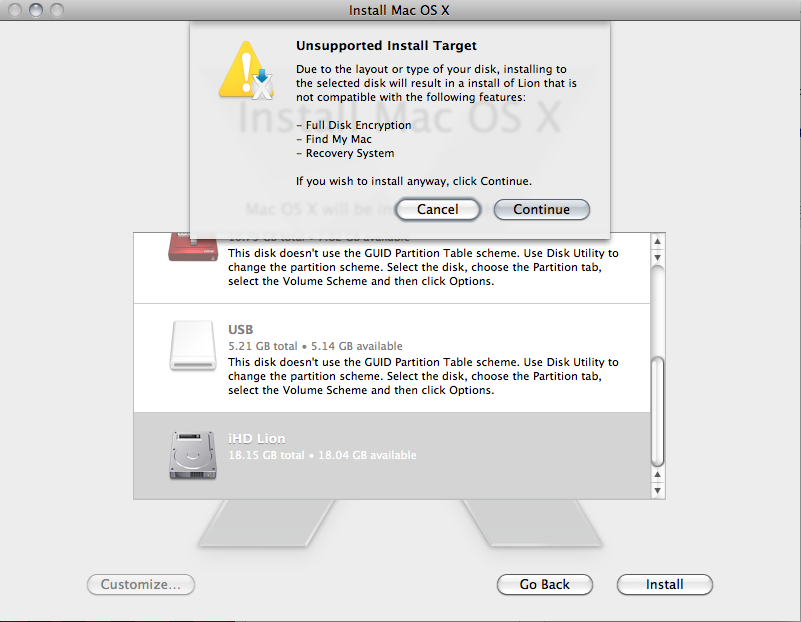
Granted, we don’t know yet whether the rumored Find My Mac feature will make it into Mac OS X Lion, but clues have been discovered all over the place in beta builds of the operating system. According to a MacRumors forum member “ArmanUV”, Find My Mac could be dependent on your hard drive partition layout. This is the warning message the poster got when attempting to install Lion on a HFS+ journaled formatted partition.

Due to the layout or type of your disk, installing to the selected disk will result in a install of Lion that is not compatible with the following features:

– Full Disk Encryption
– Find My Mac
– Recorvery System

Other posters have noted that said Find My Mac dependency on your boot drive partition layout might indicate the existence of a hidden partition. Its purpose would be to enable the ability to locate your computer and remotely wipe out its hard drive even if the person using it is not logged in. This is a long shot, but it does make sense, here’s why…


Expand
Expanding
Close

Apple issues Snow Leopard Security Update 2011-03, removes Mac Defender threat

Site default logo image

It’s live now, go get it quickly via the Software Update feature from the Apple menu. Apple explains that the 2.36MB download “provides additional protection by checking for the MacDefender malware and its known variants”. If Apple finds the pesky MacDefender malware on your system, the computer “will quit this malware, delete any persistent files, and correct any modifications made to configuration or login files”.

More information from Apple’s support document:

The OSX.MacDefender.A definition has been added to the malware check within File Quarantine. The system will check daily for updates to the File Quarantine malware definition list. An opt-out capability is provided via the “Automatically update safe downloads list” checkbox in Security Preferences.

And this bit about malware removal:

The installation process for this update will search for and remove known variants of the MacDefender malware. If a known variant was detected and removed, the user will be notified via an alert after the update is installed.

You can also download the standalone Mac OS X Snow Leopard Security Update 2011-03 here. Apple has also published a support document regarding XProtect. Of course, we’ve known Apple has had malware list for cases like this since 2009. Reader Tobias took it upon himself to explain…


Expand
Expanding
Close

The latest Apple switcher: US government

Site default logo image


President Barack Obama salutes as he walks to Marine One following a town hall meeting in Fairless Hills, Pennsylvania, April 6, 2011. Official White House photo by Pete Souza.

An increasing number of US government employees are finally being allowed to drop their aging BlackBerrys and replace them for Apple’s fashionable gadgets or Google-powered devices, whichever they fancy better. That’s a pretty telling sign of the bigger changes in the technological mindset of the federal government. Today’s interesting story by The Washington Post outlines what we’ve known all along – that President Obama loves his iPad – adding that a growing number of tech-savvy federal employees are allowed to use their iPhones, iPads and even Google’s cloud services such as Gmail for work.

Somewhere in America, perhaps at this very moment, a bad guy is under video surveillance. He is being watched, every movement, every step — but not on a little TV. That’s so 2009. Instead, a special agent from the Bureau of Alcohol, Tobacco, Firearms and Explosives is keeping tabs on an iPad. This is not a movie. This is not a Steve Jobs dream. This is the federal government 2.0, where technology upgrades no longer come at a “Little House on the Prairie” pace. Even President Obama, a BlackBerry devotee, has upgraded. He now owns an iPad, and it has been seen on his desk and under his arm.

The Washington work culture has long been dependent on Research In Motion’s BlackBerry smartphones for their praised security features. Not anymore, the report notes…


Expand
Expanding
Close

New options for Apple from Sandisk and Intel for upcoming MacBook Airs

Site default logo image

MacBook Air supplies are seriously constrained ahead of a summer update, meaning the guessing game is on. Two seemingly unrelated announcements from Intel and Sandisk today help paint a better picture of what the new hardware might bring. First up, Intel at the Computex show previewed a pair of new capabilities of a revised Sandy Bridge chipset, a likely candidates for the Air. We’re talking new Rapid Start and Smart Connect technologies, per this MacWorld report:

Intel’s Rapid Start Technology allows for faster turn-on by writing the PC’s application state to a dedicated flash drive. By doing this, the PC can quickly reload to its that state without rebooting, even if the battery is removed and then reinserted. The other feature, Intel’s Smart Connect Technology, updates content continuously on the PC while it’s in standby mode. The PC will periodically “wake up” and check for e-mail and other information like Twitter posts, and then fall back to standby mode.

The catch?


Expand
Expanding
Close

Semper FiPad: Marine Corps loving digital maps on their iPads

Site default logo image

The United States Marine Corps aviators are in love with their iPads:

Since November last year, marine pilots have been using iPads and more recently iPad 2s with digital maps, which allow the crews to search out locations in the region at the tap of the screen rather than flicking through map packs that are heavy and take up room in the cramped cockpits of aircraft such as the AH-1W Cobra and the F/A-18 Hornet.

Sensor operators aboard the KC-130J Harvest Hawk are also field-testing iPad and so far have deemed the device “a game-changer” for its ability to obsolete paper charts and the grid reference drawings with pretty graphics and interactive multitouch interface. The Marines are also rolling out iPads on US-based aircrafts used for training. Their take?


Expand
Expanding
Close

ECS "tablet" houses your iPhone, "runs" its iOS

Site default logo image

You needn’t look with envy at the Padfone, a phone-meets-tablet device Asus showed off yesterday at the Computex 2011 show. Just a few hours later, computer maker ECS rushed to demo a Padfone-like prototype offering. Unlike the Asus device, the ECS solution can actually house your iPhone 4. The ECS thing  is a docking station rather than a tablet per se, though. It takes your iPhone’s video and outputs it via HDMI to the built-in display which is of the same 9.7-inch variety and 4:3 format as your iPad’s. You also get an SD card slot, two USB ports and a front-facing camera, as seen in a video introduction below the fold. So far so good. But what’s the selling point?


Expand
Expanding
Close

Nvidia CEO: Expect tablets to beat your computer to the Intel CPU punch in five years

Site default logo image

Nvidia’s boss Huang Jen-Hsun certainly knows a thing or two about tablets and the semiconductor industry. His company’s Tegra-branded chips have risen in a short period of time as the go-to silicon for mobile devices, even though Tegra processors don’t power the one tablet to rule them all.

That said, if the Shadowgun game demo is an indication (video below), current-generation Tegra 2 packs in some impressive oomph in the graphics department (yes, Shadowgun is also coming to an iPhone and iPad near you). Chatting with journalists at Computex, the CEO boldly predicted that tablets would outperform PCs five years from now…


Expand
Expanding
Close

A new Apple store to open near North Carolina's iTunes super datacenter by year's end

Site default logo image

America’s greatest retailer Apple is set to open a new brick-and-mortar store in Charlotte, North Carolina. Some thirty miles outside the city work is also underway on Apple’s $1 billion super datacenter facility which has been kept shroud in secrecy. The Apple Store-focused publication, ifoAppleStore, explains the new retail spot will become Apple’s fifth store in the state and their second in the city. It will be located on the second level of the Northlake Mall, on the city’s north side some sixteen miles north of the existing SouthPark location.


Expand
Expanding
Close

Inspired by iPad and the Air, Intel talks up Ultrabooks and Android-friendly tablet chips

Site default logo image

Forget about Chromebooks, here come the Ultrabooks. Ultra-what? Per Intel’s presser at the Computex show in Taipei, Taiwan, Ultrabooks represent an entirely new class of notebooks that include the best features of tablets. If this sounds suspiciously familiar, look no further than the upcoming Mac OS X Lion operating system that is being pitched by Apple as “taking our best thinking from iPad and bringing it all to the Mac” or the MacBook Air’s iPad-like instant-on promise. Intel is playing exactly the same iPad card, their senior vice president Tom Kilroy telling Reuters:

We’re shooting for ultra responsive. You’ll have always-on, always-connected, much more responsive devices, similar to what you would see with a tablet today such as an iPad.

This sounds a lot like a catch-up to the MacBook Air’s all-flash instantaneous performance, cynics would argue. Ultrabooks are about Intel’s latest chips and reference designs. Intel also took the wraps off of its new fanless netbook platform code-named “Cedar Trail” and proposed a “Medfield” tablet reference design for sub-9mm designs, weighing less than 1.5 pounds and supporting a choice of operating system, per press release. So when can we expect first Ultrabooks to challenge MacBook Air’s dominance?


Expand
Expanding
Close

After Samsung and Dell, Asus tries luck with own MacBook Air-killer (Video)

Site default logo image

Notice a trend recently? Major notebook players are growing increasingly confident about putting Apple’s MacBook Air in their cross-hairs. First Samsung issued a challenge with the Series 9 notebook that tried to be a Windows MacBook Air, then Dell followed suit with the supposedly thinnest notebook on the planet which wasn’t even as thin as the 2.5-year old MacBook Pro. The latest entrant includes the UX2, a machine Asus unveiled with great fanfare this morning at Computex.

PCMag went hands-on and discovered that the UX21 matches the 11-inch Air with its all-flash design, weight, screen size, display resolution and glass touchpad. It’s not thinner, but tops Apple’s baby with a 1.7GHz Intel Core i5 processor (an aging Core 2 Duo in the Air), a USB 3.0 port and lower price points. No word on battery life but the standard-voltage variant Intel Core i5-2557M consumes more power that the Air’s low-voltage chip.

Oh yes, the Asus machine has a sealed battery. Remember when the haters slammed Apple for the Air’s non-user-replaceable battery? Another deal-killer: The UX21 runs Windows and clunky old PC software. So-called MacBook Air-killers have come and gone. I guess their creators didn’t pay attention to Consumer Reports’ charts.

So, should Apple be worried about this particular machine?


Expand
Expanding
Close

Apple launches worldwide MacBook Bottom Case Replacement Program

Site default logo image

Per Apple’s support document, they will now fix the issue with the rubber bottom on the white unibody MacBook coming off due to issues with glue. This applies to any MacBook purchased between October 2009 and April 2011. The program is available free of charge via your local Apple Store or Apple Authorized Service Providers.

Apple has determined that under certain circumstances the rubber surface on some MacBooks may separate from the bottom case of the system. MacBooks shipped between October 2009 and April 2011 may experience this issue. Apple will replace the bottom case of any affected MacBook, free of charge, that exhibits the issue.

There’s another option, too.

Expand
Expanding
Close

The iconic Fifth Avenue Apple Store is New York's top photo attraction

Site default logo image

See the circle labeled “1” on the image above? Researcher Eric Fischer created this amazing heat map showing photo densities by using geotags that belong to millions of snaps publicly available on Flickr. Turns out Apple’s prominent glass cube store, which is open for business 24/7, isn’t just a landmark site – it’s one of the city’s four major photo attractions as well. Other favorite locations include Rockefeller Center (2), Columbus Circle (3) and the Manhattan area around Times Square (4). According to ifoAppleStore, a site specialized in tracking Apple’s retail ventures:

Fischer also used the date and time of the photos to categorize the photos as being shot by locals or tourists. He then plotted the locations to create a heat map that reveals patterns of photographic interest. He performed the same photo analysis for several other cities, showing that tourists and locals have a very different eye for what is interesting. In other cities with high-profile Apple stores, the stores’ heat is less obvious because they’re surrounded by other attractions.


Expand
Expanding
Close

Ivy Bridge chips pushed to 2012, Macs will have to wait

Site default logo image

Intel’s Sandy Bridge chips, which are ticking inside 2011 MacBook Pro and iMac computers, are all the rage in the chips business at the moment. However, the pundits are already watching closely a next-generation Sandy Bridge successor code-named Ivy Bridge. Intel originally planned on bringing first Ivy Bridge chips in late 2011, with volume manufacturing set to begin early in the first quarter of 2012. Those plans have been pushed back a bit, we learned this morning.

Multiple news outlets are pointing to a leaked Intel roadmap slide which puts Ivy Bridge chips in the late Q1-Q2 2011 timeframe, indicating a March or April 2012 release at the earnest. Since Apple usually enjoys a preferential treatment from its buddy Intel, this probably means no Ivy Bridge-based iMacs and MacBooks for you for at least ten months, possibly even a full year. What’s in store for Ivy Bridge-powered Macs, you ask…


Expand
Expanding
Close

Samsung: Apple lawsuit "not legally problematic" but could "grow"

Site default logo image


Strategy Analytics ranked Samsung the #1 Android tablet maker and the world’s #2 tablet company behind Apple in Q1 2011. It took them a month to sell a millionth Galaxy S II smartphone in Korea  and brag about it  on their Flickr account with the above image.

Samsung is content on releasing more Android tablets despite that pending legal spat with Apple, which is accusing them of stealing the iPad’s and iPhone’s design, software features and hardware engineering with the Galaxy-branded tablets and smartphones. The Wall Street Journal quoted this morning Samsung’s J.K. Shin who underscored his company’s determinacy to release more Honeycomb tablets this year as they “continue to work with Android on future tablets”. Their senior vice president of sales and marketing Younghee Lee added:

Android is the fastest-growing platform and the market direction is headed toward Android so we’re riding the wave. When there is a market need for our own software, we will consider it but that’s not our plan at the moment.

Now, about that “fastest-growing platform” thing – I guess Samsung folks didn’t get the memo. The company also says it’ll continue offering tablet PCs in multiple screen sizes as a way of distinguishing themselves from Apple. Asked to comment on that pending lawsuit with Apple, Shin responded:


Expand
Expanding
Close

Refurbished Apple iPad 64GB Wi-Fi + 3G Tablet for $495

Site default logo image

From 9to5Toys.com:

Today only, Woot offers the refurbished, 1st-generation Apple iPad 64GB Wi-Fi + 3G Tablet for $489.99. With $5 for shipping, it’s $164 under our April mention and the lowest total price we’ve ever seen. (It’s also $74 under the lowest total price we could find for a new unit today.) This 0.5″-thick tablet weighs 1.5 lbs. and features an Apple A4 1GHz processor, 9.7″ 1024×768 LCD touchscreen display, 802.11a/n wireless, Bluetooth 2.1 + EDR, accelerometer, compass, up to 10 hours of battery life, and more. A 90-day limited Woot warranty is supplied.


Expand
Expanding
Close

Google search page on iOS devices gets face lift and tabs (for some)

Site default logo image

Some people are beginning to see a revamped Google search site on their iOS devices. Both iSpazio and phoneArena have noticed the changes, pointing out that big new icons have replaced the smaller top links. The new icons are visible upon running a search query on an iOS device. They essentially function the same as the smaller textual links, taking you to the search silos such as Images, Places and News. Clicking the More link pulls even more big icons for quick access to YouTube, Gmail, Maps and other popular Google services.


Expand
Expanding
Close

Will Tegra 3 supertablets obsolete iPad 2's A5 graphics?

Site default logo image

Back in January I covered Nvidia’s mobile roadmap detailing a next-generation Tegra processor code-named Kal-El. Right now, iPad 2’s A5 chip rules the mobile landscape with an Apple-advertised nine-fold jump in graphics performance from the previous generation. But Tegra 3 looks like a game-changer, too. The chip combines four processing cores with twelve GeForce graphics units with stereoscopic 3D support.

If the above video dubbed “Glowball” is anything to go by, Tegra 3-powered tablets and smartphones due later this year could obsolete iPad 2’s shiny graphics. The demo features a brilliant lit, bouncing ball which is also the light source that casts its effect on different objects. It includes true dynamic lighting rendered in real-time with physics, the first time this type of lighting is feasible on a mobile device. Nvidia explains:

Glowball also leverages the accelerometer inside the device, affecting real-time movements of drapes throughout the game. As the user tilts the device, the gravity in the scene changes and drapes respond accordingly. The movements are calculated using physics and are simulated across Project Kal-El’s four CPU cores. Again, no canned animations. As the ball rolls through the drapes, they respond how you’d expect them to in real life. In addition, as the ball collides into the jack-in-the-boxes and barrels, the scene responds. Notice how the visual quality degrades when only two CPU cores are used. It’s clear that the quad-core processor in Project Kal-El is required for this level of realism.

If this pans out as Nvidia planned, the quad-core Tegra 3 chip will give Apple’s iPhone/iPad processors a real run for their money. Even though Nvidia’s Tegra and Apple’s A4/A5 are both based on CPU blueprints from UK-based ARM Holdings (which has Intel in its cross-hair), Nvidia’s silicon has two capital advantages: Power efficiency and graphics expertise. Read on….


Expand
Expanding
Close

ARM to dominate mobile PC market by 2015, says president

Site default logo image

If history repeats itself, UK-based ARM Holdings is hoping that the rise of the tablets will help grow its business substantially and catapult them to the mobile PC market dominance by 2015. MacWorld UK quoted their president Tudor Brown who said during a presser at the Computex trade show in Taipei:

Today we have about 10 percent market share [in mobile PCs]. By the end of 2011 we believe we will have about 15 percent of that market share as tablets grow. By 2015, we expect that to be over 50 percent of the mobile PC market.

The quote is interesting because we’ve learned for the first time about ARM’s market share in the greater mobile PC market, which is comprised of tablets, netbooks and other mobile PCs. Even though ARM’s tablet market share is much higher (their CPU designs power Apple’s iPad as well as Motorola’s Xoom and Samsung’s Galaxy Tab), it drops when you add Intel-powered netbooks and other mobile PCs into the picture. Intel, which has so far failed to woe handset makers, is expected to announce a new smartphone chip later this week code-named Medfield. Meanwhile, new chips based on ARM’s Cortex A15 architecture, pictured above, will arrive by next year. In order to rival Intel – which has high hopes for its latest tri-gate transistor technology – ARM has partnered with IBM for a 14 nanometer production process.


Expand
Expanding
Close

DigiTimes: Foxconn affiliate Chimei Innolux to supply Apple with iPad 2 touchscreens beginning June?

Site default logo image

Backlight bleeding? Dead pixels? Yellow tinting? Constrained availability? Apple is determined to put an end to the iPad 2 teething issues, if indicative reports trickling in from Asia are anything to go by. We heard earlier Apple had been considering Everlight as a backlight module provider before Coretronic won that contract. Today we learn through DigiTimes that Chimei Innolux,  an affiliate of Apple’s long-time manufacturing partner Foxconn, has begun the development of touch sensors to be shipped to Apple in June (meaning Bloomberg Businesweek was right)

Chimei has recently signed an in-plane switching (IPS) technology licensing agreement with Hitachi, the publication pointed out. IPS is a premium display technology that allows for wide viewing angles on Apple’s tablet. Author Max Wang explains that Apple could even entrust Chimei with the complete service, from panel production to touch components to final assembly, benefiting from Chimei’s component procurement under the Foxconn Group.


Expand
Expanding
Close

Maps+, new iOS mapping app with location alarms, bike routes, GPS tracking

Site default logo image

Maps+ is a universal app for your iPhone and iPad that combines common mapping features, courtesy of the Google Maps back-end, with advanced location and tracking capabilities usually found in standalone GPS tracking apps. The app can record and edit your GPS tracks and tweet your location, for starters.

But that’s so last century. How about pinning location-based alarms on the map? This is when things get interesting. For example, a location alarm lets you remind yourself to get off at a train station. Maps+ will also do route directions with alternatives, transit points and bike routes, but only if you are located in the United States. Here are two nice iPad screenies and more info…


Expand
Expanding
Close

Citi: Microsoft takes $5 in royalties for every Android device HTC makes

Site default logo image

A report from Citi analyst Walter Pritchard made headlines this morning with claims that HTC agreed to paying five bucks per every Android handset sold. The basis for this is Microsoft’s patent settlement with the Taiwanese handset maker over intellectual property infringement, the analyst has found out. The fact that HTC makes Windows Phones obviously didn’t help dodge that patent hit.

Microsoft’s boss Steve Ballmer argued last October that Android wasn’t free just because it’s open-sourced. Some watchers are calling the Android platform a patent bomb waiting to explode. HTC is also being sued by Apple over alleged breach of iPhone patents and Oracle is suing Google over use of Java in Android. Pritchard warns other Android vendors can expect to pay royalties to Microsoft between $7.50 to $12.50 per device, which is troubling and here’s why.


Expand
Expanding
Close

AppleCare under fire by Italian regulators

Site default logo image

AppleCare, a paid support service from Apple, has found itself under fire in Italy where government regulators are probing the company over a possible noncompliance with the European Union’s consumer laws. Setteb.it explains that EU consumers laws protect buyers with a minimum two-year coverage on all consumer electronics products, which includes Apple’s iPhones, iPads, iPods and Apple TVs. However, Apple is selling those gadgets with a one-year warranty. How’s that possible?


Expand
Expanding
Close

iPad apps not very intuitive, major study finds

Site default logo image

It takes a lot of guts to accuse some of the most popular iPad apps of putting form over function. That’s exactly what the Nielsen Norman Group has accomplished with a usability study which has proved in ways more than one that, unfortunately, many iPad apps and websites could use a little work in the usability department. The study stems from numerous observations collected from sixteen individuals who have owned iPads for two months. Each person performed a variety of tasks in cherry-picked iPad apps and websites. Even the simple tasks such as browsing stories in The Daily app or listening to podcasts in the NPR app posed problems, resulting in frustrated users. Here’s a summary of the key findings.


Expand
Expanding
Close