Tech Industry

See All Stories

Apple retail is number one shop for UK computer buyers…

Site default logo image

It’s all about mind-share, and Apple’s mojo’s rising with UK computer buyers flocking to the company’s retail outlets when they want to buy a new PC, or should we say, Mac.

Don’t believe us? Then mosey over to independent consumer’s association title, Which? Computing, which has declared Apple Retail Stores to be the favourite choice for British consumers looking to buy a new computer.

And shoppers like what they find in-store. Apple retail in the UK has an overall approval rating of 88 per cent, with the company at number one on the customer satisfaction table, based on a survey of 7,683 online panel members.

As we reported some time back, the survey also rated the best laptop and desktop brands, with Apple again leading the pack in the desktop category with a customer score of 94%.

“Although there are only a small number of Apple shops across the UK, they were praised for providing customers with all the information required, and for the availability of sales staff,” the report notes.

This is probably why Apple’s currently hiring some of the brightest and best retail executives to spear-head future European expansion of its highly-successful retail initiatives.

Compare consumer sentiment concerning Apple with that surrounding the big name UK PC sellers. Computer high street PC giant PC World was ranked in bottom place in a recent survey of technology retailers achieving a disappointing customer score of just 42%. Currys was also languishing near the bottom with 45%.

Does anybody out there think Microsoft will do a better job than that done by its long-term ‘partners’ in PC retail when it launches its own chain of corner computer shops?

Apple's App Store is a big, big, big $2.4 billion business

Site default logo image

While Microsoft attempts to woo Apple iPhone App developers, it’s pretty clear the subject of Redmond’s paid-for passions are on an Apple gravy train, despite continued inconsistencies in App Store approvals.

The latest stats from AdMob claim the App Store economy is already worth $2.4 billion – bigger than Android or any other contender.

AdMob serves up ads within iPhone/iPod touch and Android apps. Based on a survey of 1,000 users the company released data for July today which suggests $200 million (value) in apps are downloaded every month. This means the App Store business worth around $2.4 billion a year – and the business is growing. (Expect a further shot in its arm when the fabled Apple tablet ships).

Android grabs a paltry $60 million in app sales each year at this point in its development….Why the difference? Put simply, it is because the iPhone represents 60 per cent of US smartphone usage. Not bad for a product family that’s only existed for a single digit sum of years.

The forgotten element in Apple’s App Store story is the iPod touch, owners of which download on average 18 apps each and every month (iPhone/Android users grab just ten, AdMob claims).

AdMob is also advising App developers to create free versions of their apps, as these stimulate sales of full versions. Additionally, iPod touch owners download twice as many free apps as Android/iPhone owners.

More stats:

– App Store customers are extremely likely to purchase at least one app each month.

– Fifty per cent of iPhone users and 40% of iPod touch users buy at least one app per month. Just 19% of Android users do the same.

– Over 90% of users browse through Apps on their mobile device.

– Over 50 per cent of Android and iPhone users spend over 30 minutes a day using applications.

– Users who regularly purchase paid apps spend an average of $9 on about 5 paid apps per month.

– The most-cited ways of discovering apps are browsing the Store Rankings and searching for a specific type of app.

Check out the full report here.

Via: GigaOm.

Mossberg claims Snow Leopard upgrade can upgrade Tiger systems sans Leopard…

Site default logo image

Wall Street Journal technology correspondent, Walt Mossberg, is claiming that Snow Leopard will install on Macs running the previous Tiger OS without requiring installation of Leopard, contrary to Apple’s previous claims.

“For owners of Intel-based Macs who are still using the older Tiger version of the Mac OS, Apple is officially making Mac OS X Snow Leopard available only in a “boxed set” that includes other software and costs $169,” Mossberg explains.

“The reasoning is that these folks never paid the $129 back in 2007 to upgrade to Leopard. But here’s a tip: Apple concedes that the $29 Mac OS X Snow Leopard upgrade will work properly on these Tiger-equipped Macs, so you can save the extra $140.”

If this is true – and we’re interested to test the claim – then Apple will likely attract a deluge of sales from Mac users who have until now been laid back in moving to the latest upgrade.

Snow Leopard ships tomorrow and the first batch of delighted reviews are coming in, reviews which pit the new OS firmly ahead of Microsoft’s latest attempt at an OS, Windows 7 .

The software sits at the top of the Amazon sales charts at this time, with pre-orders through all retailers at an all time high. Analysts now expect Apple to sell five million copies of the new OS within the year. We think sales are going to be far higher.

Mossberg notes a few hidden gems inside the upgrade:

– “Substitutions,” which is like the auto-correct feature in Microsoft Word, but extends the concept to Apple’s email and other programs;
– the ability for Snow Leopard to automatically reset the time zone on the Mac’s clock based on your location while traveling;
– and a new built-in function in QuickTime that allows you to record videos of actions you take on the Mac’s screen.”

Microsoft’s attempt to regain control of the OS market seems on shaky ground, with the company’s channel partners recently confessing just how impressed they are with Apple’s incremental – yet powerful – new OS.

Order yourself a copy of Mac OS X Snow Leopard hereand support 9to5Mac. Or take a look at thishand-picked selection of guides to the new OS, boost your knowledge.

Microsoft partners wowed with Snow Leopard, as analysts say

Site default logo image

Microsoft is big, really big, and because it is so big it has lots of ‘friends’, some of which it calls ‘Channel Partners’. And many of those Channel Partner ‘friends’ seem pretty impressed…by Mac OS X version 10.6 Snow Leopard (which ships Friday, folks).

Vista wasn’t so much a view as a disaster, with consumer and business users preferring to stay safe with Windows XP. And while Windows 7 promises more, there’s work ahead for Redmond, observed on of the company’s friends..

"Performance in Windows Vista was a disaster, but in spite of that, Microsoft had 64-bit support and multicore processor support," said Ron Herardian, president of Global System Services. "With Snow Leopard, Apple intends to far exceed the performance of Windows 7 on 64-bit and multicore hardware, and that’s a major strategic advantage."

Gary Dailey, president of Daystar Technology, an Atlanta-based solution provider that sells PCs and Macs, says the performance boost Snow Leopard offers won’t go unnoticed by Microsoft or its partners. "There’s just so much under the covers with Snow Leopard. Apple realizes it has a very mature OS but is still choosing to enhance it, while Microsoft is still trying to get past the Vista experience," he told Channel Web.

The Channel Web report also has the usual statements saying Apple has raised the bar on competition, noting one of Microsoft’s friends who said, “Competition is exactly what Microsoft needs and responds to best.”

Is it really? Let’s take a look at the Zune, which grabbed 2 per cent of the US MP3 player market in June (NPD claims) as compared to Apple’s, erm, Seventy-three per cent (73%).

Microsoft’s anti-Apple MP3 player plans have been through myriad forms. Recall, if you will, the company’s ‘Plays for Sure’ branding (which didn’t) and its host of other attempts to grab a larger slice of the music player crown. Well, now Redmond is attempting to lure iPhone developers to the Zune HD by the simple expedient of paying them cold hard cash…

“One developer of a popular iPhone application for reading Twitter messages says Microsoft recently approached him about re-creating the software to run on Zune, with Microsoft footing the bill for development costs,” reports BusinessWeek. (BTW, the dev declined).

It’s no longer about the device, but the service, Microsoft now claims, according to the report. "The business is entertainment," says Brian Seitz, group marketing manager with Microsoft Zune. "The mobile device or the MP3 player is just one screen that can use the service. To erase the iPod is not what the vision was. The business is the service."

Interesting Microsoft is attempting to make a business out of a service providing media, music and other downloads at a time the music and media industries are wondering just how to create a viable business plan for themselves, but why digress?

Anyway – the new Zune HD is coming and the company’s pinning its hopes on the device. Which hasn’t particularly impressed Needham & Co analyst, Charlie Wolf (one of the better analysts, BTW, who presciently predicted the extent of the iPod-driven switch to Mac once Apple shipped Boot Camp).

His advice to Microsoft? "If I were Microsoft, I’d just drop it.”

Sure, Microsoft is considering opening its Zune marketplace doors to users of other devices, and sure it hopes to boost its place in the mobile devices market with Windows Mobile and Windows 7, but as both reports show, the company really is chasing the tail of its competition.

By the way, if you are one of the many Windows users planning the switch to Mac, you may find Parallels Desktop Switch to Mac Edition a really helpful thing.

Snow Leopard re-takes Amazon top spots as UK users squeal on price

Site default logo image

Apple’s announcement that Snow Leopard will indeed ship on August 28 (as we predicted) has generated a fresh rash in sales of the software, even as the company’s UK price for the essential Mac upgrade generates shrieks of anguish from Mac users there.

Snow Leopard pre-orders once again seized the top two slots on Amazon’s best-selling software list, following Apple’s announcement. The single-user version of Snow Leopard ($29) is the best-selling version, hotly-pursued by Mac OS X Snow Leopard Family Pack (5-User) in second place. Interestingly, iLife ’09 remains popular at number 9.

These strong pre-orders reflect analyst sentiment for Apple’s sales of its new OS. Piper Jaffray analyst Gene Munster believes Apple will sell “approximately 5 million copies” of Snow Leopard during the remainder of the current quarter.

UK users have been wondering why Apple hasn’t enabled them to pre-order the new OS, unlike in the US. With the £25 price tag now announced, local UK Mac websites are carrying unhappy comments from customers who had expected to pay under £20 for the upgrade.

While Snow Leopard costs a great deal less than Windows 7 Family Pack – £150 compared to the Mac OS X Snow Leopard UK price of £39 – customers still feel the price difference can’t entirely be explained away by local tax and shipping costs.

"Why does the UK Mac customer always get ripped off by Apple? I know that £25 is cheap for an operating system (albeit a minor upgrade) but you can’t help but be annoyed by the much cheaper US version,” one customer complained.

UK users are also being warned the software won’t ship until September 4 if ordered through Amazon’s UK store.
 

Blackberry goes Webkit with Iris browser pick up

Site default logo image

With Blackberry’s aquisition of Torch Mobile today (horrible website btw!), Webkit literally owns the mobile browser space.  This is important as the browser becomes the platform for a growing number of mobile web apps – which Torch Mobile alludes to in its press release:

Torch Mobile is excited to announce that our company has been acquired by Research In Motion (RIM), one of the most renowned mobile technology companies in the world. Our team of developers will join RIM’s global organization and will now be focused on utilizing our WebKit-based mobile browser expertise to contribute to the ongoing enhancement of the BlackBerry® platform.

Torch Mobile’s team of highly skilled developers has been actively involved in Open Source development and includes contributors, Commiters and Reviewers of the WebKit project. As part of RIM, these developers will continue to be active participants in the WebKit development community.


All of the leaders in the Mobile space are now using Apple’s open source Webkit platform, which is only a few years old.  Blackberry, Nokia’s Symbian, Android, Pre and iPhone are now all using Webkit by default.  Windows Mobile is the odd one out.  Interestingly, Torch Mobile made a Webkit browser for WM6 – it was actually touted on tis website more than its Blackberry browser.  Perhaps this was another reason for the purchase.


Nokia's revolutionary laptop is a Atom-based Windows netbook

Site default logo image

Nokia broke out its top secret laptop computer plans today.  We don’t know about you but we were expecting a little more than this new "Booklet 3G".  It’s hard to still be considered an innovative company when they come out with stuff like this:

Espoo, Finland – After more than 25 years as a pioneer and leader in the mobile industry, Nokia will bring its rich mobility heritage and knowledge to the PC world with the new, Windows based, Nokia Booklet 3G.

They are about 3 years late on the Netbook scene as well as a year past the 10+ Hour battery life "revolution".  There also looks to be plenty of space around that 10-inch glass screen, making it a bit of a "clunker" when it comes to netbook size.  Most major netbooks have had 3G capabilities for awhile too.  

Take a garden variety Eee 1005HA.  10.5 hours battery life, 10.1 inch screen.  $375

This isn’t a low end netbook, mind you.  There is some good stuff inside which will put it at the high end of the highly competitive netbook arena:

The mini-laptop also comes with an HDMI port for HD video out, a front facing camera for video calling, integrated Bluetooth and an easily accessible SD card reader. Other premium features include the 10-inch glass HD ready display and integrated A-GPS which, working with the Ovi Maps gadget, can pinpoint your position in seconds and open up access for a truly personal maps experience. The Nokia Booklet 3G also brings a number of other rich Ovi experiences to life, whether its access and playback of millions of tracks through the Nokia Music Store, or using Ovi Suite to sync seamlessly from your Nokia smartphone, to your mini-laptop, to the cloud.

If it is priced anywhere north of $350, it won’t sell.  Otherwise it will fit in an already muddied field dominated by ASUS, HP, Dell and Acer.  Oh, and why not run Maemo Linux like the much more interesting N900?  Microsoft just made Office for Nokia Symbian phones, coincidentally.

Apple ships Snow Leopard August 28, UK Apple store hints (Update: US+Canadian stores too)

Site default logo image

Apple’s UK store is currently listing a shipping date for Mac OS X 10.6 Snow Leopard.  Update: The US+Canadian stores are now showing August 28th as well (below).

The company has announced August 28 as the ship date for the Mac OS X Snow Leopard Up-To-Date scheme, available to new Mac purchasers who acquired their Mac since June 8, 2009. The software costs £7.95 in this situation, though UK price hasn’t yet been generally announced.

The listing follows numerous reports that Snow Leopard will be released on August 28.

Via: MacRumors

Apple to release six inch iPod/tablet at September event?

Site default logo image

Would you consider a 6-inch iPod touch to be a tablet?

Businessweek spoke to Richard Doherty, a director at market researcher Envisioneering Group on Apple’s upcoming Tablet(s):

"There’s no hotter topic [than tablets] in Asia right now," …Apple has developed prototypes of two different tablet machines—one that resembles a large-sized iPod and boasts a 6-inch screen, and another that features a larger display. Apple may launch one or both devices as early as September, Doherty says. A decision on whether and when Apple takes the tablet plunge lies with Apple CEO Steve Jobs, Doherty says.

Obviously tablets have been tried and failed before.  He has some answers on why Apple’s could be different.  He guesses a much lower cost than has been predicted before as well as 65,000 apps on launch.

Price, for starters. Apple’s tablet may cost as little as $679, Doherty says. Then there’s the Apple software mystique. "Apple has a real opportunity to take the magic of the iPhone interface and give that more real estate to do the tasks," Kay says. "It’s an iPhone, but bigger. It’s something that you know, but bigger." The device may be able to wirelessly access iTunes and Apple’s App Store, which offers more than 65,000 apps such as games, e-books, and calendars. Apple declined to comment for this story.

Really? Apple declined to comment for this story?  Shocker.

But the iPod tablet isn’t the only tablet being built in Cupertino.  Doherty says there is a Mac tablet out there somewhere too.

One of Apple’s prototype devices is able to run all Mac applications, and allows for video and audio editing and graphic animation, Doherty says. Another, which looks like a larger iPod, lends itself to watching videos, playing games, and reading e-books.

This may not be such a boring September after all. Perhaps Apple leakers are saying 2010 for the Mac tablet and 2009 for the iPod tablet?

Apple's new data center: "ridiculously big scaling-up of business or a whole new thing"

Site default logo image

Apple’s new data center in North Carolina is amongst the biggest being built in the world right now.  At over 500,000 square feet it is bigger than both Microsoft and Google’s latest data centers and five times its current data center in Newark California (109,000 sq. ft).

The obvious question is: What will Apple do with this new space?  Cult of Mac spent a few moments with a data center guru to get some answers. 

It seems Apple could follow a couple of different courses:


  • Apple currently hosts most of their users’ MobileMe data.  If MobileMe should grow in scope (bigger email boxes, more pictures and videos) it is going to need more space = bigger data center.
  • Most of Apple’s web and media content isn’t hosted by them.  It is hosted by 3rd parties like Akamai and 7digital.  Apple could be trying to bring in some of this capability to reduce costs and gain flexibility
  • Apple could be working on new Cloud tools that require not just bandwidth but also some databases and CPU cycles.  We’ve heard that Apple is working on their own version of Google’s Grand Central to bring to its iPods, iPhones tablets and other mediums via iChat.
  • We’ve also heard that Apple is experimenting with moving iTunes libraries into the cloud as part of MobileMe.  On one hand having everyone’s music collection in the cloud would be incredibly complex.  However, the most popular iTunes songs are on millions of different iTunes libraries. If Apple’s system is capable of recognizing duplicates, it could save petabytes of space by indexing the music and pointing everyone’s reference to one copy.  In fact, Apple already stores most of the world’s available music and videos in its iTunes library.  Making symbolic links to purchased music would be easy.  Apple also does a similar thing with iPhone apps.  If you lose your iPhone, you can just redownload your whole application library.  Fortunately, they control the rights to the iPhone apps.  Media companies might not be so willing to let people redownload their music/videos.  Also, users might not like to give Apple all of their music.


Some fun facts:

• Apple’s existing Newark, CA., Data Center is around 109,000 square feet–the new one is over 500,000. That represents either a ridiculously big scaling-up of business or a whole new thing
• 500,000 square feet is among the largest centers being built in the world on a single site. Microsoft’s new one in Chicago is around 400,000, in comparison
• "The companies that are building the biggest data centers tend to also have the biggest cloud ambitions"
• The choice of site location depends on cheap electricity and/or fast broadband pipes to the World. Rural North Carolina was chosen probably more for tax breaks and low-cost running rather than fast connectivity

Ben Charny: New App model skirts App Store, Phil Schiller emails 3rd developer

Site default logo image

Ben Charny has some pretty famous miscues to his name.  The most recent was his assertion that Apple was going to be at this year’s CES.  Keep that in mind when reading this.  He asserts that there is a new way to upload apps to the iPhone without jailbreaking and without going through the App Store.  The first application to be able to do this is apparently ‘iHypno’.  It doesn’t look (ahem) like the type of application we’d buy but if it does do some sort of magic install, it is noteworthy.

The magician turned App developer has begun selling his $4.99 "iHypno" mind- reading application for Apple iPhones and iPod Touches directly from his Web site. That means consumers can buy the program without visiting the App Store, the official software bazaar that operates under Apple’s iTunes store.

"It’s based on technology encouraged by Apple," Sheraton said during an email interview. "It’s totally legal and possibly the way you’ll see other apps delivered in a year or so."

Sheraton’s action is the latest – and possibly most extreme – example of the frustration some iPhone software developers feel as they grapple with Apple’s notoriously difficult iPhone vetting process.

He also mentions in passing that another developer has gotten a direct email from "Mr. Public Relations", Phil Schiller.

Meanwhile, another magic app purveyor, theory11.com LLC, had a "rising card" trick application rejected by Apple, which said it created "consumer confusion," according to Chief Executive Jonathan Bayme.

Wednesday, Apple’s Schiller emailed theory11.com developer Chris Kenner, who wrote the app and also works with magician David Copperfield, saying he would look into the situation, according to Bayme. Kenner and Schiller are expected to discuss the matter Thursday.


Snow Leopard retail packaging and printed disc = launch soon

Site default logo image

It would appear from these leaked images of Snow Leopard printed discs and packaging that the release would likely be before the September timetable set at WWDC.  Even sitting on these for two weeks until the "talked-about" August 28th date might be hard to do.  With hundreds of thousand of people unable to wait until the official launch and downloading the Torrent, perhaps Apple will push the launch up even further.

Apple, Nvidia, Intel: Happy families?

Site default logo image

Apple seems set to use a new Nvidia chip inside future Macs, but there’s a sticking point – Intel has launched a lawsuit against the graphics chip maker to prevent manufacture of the very GPU’s Apple’s seemingly intending to use. Meanwhile, in the background, Apple’s PA Semi team are quietly developing new processor platforms for Apple devices…

Sounds like a soap opera? It’s not. Here’s the deal:

Digitimes informs us Nvidia plans to launch new chipsets for Intel-based notebooks in the first quarter next year, the MCP89 and MCP99 chipsets. These chipsets are expected to sell to at least one major computer maker, Apple, the report explains.

Reports from China (and we confess to becoming a little less credulous to such reports every day) claim Apple will use both Nvidia chipsets in future Macs, replacing the current GeForce 9400M (aka MCP79) with the all-new MCP89 chipset. Conflicting reports say the MCP89 will be used inside Core2 laptops, while the MCP99 grabs some desktop action.

– Factoid: the MCP89 will support a faster system bus and faster DDR memory, which, in conjunction with Snow Leopard, should usher in yet more performance gains on future Macs.

– In the way: These new Nvidia chipsets incorporate a built-in Intel-based memory controller. The two companies have some deals in place that let Nvidia build chipsets that support Intel processors, but Intel earlier this year launched a lawsuit agains Nvidia, saying this deal doesn’t extend to inclusion of integrated memory controllers.

– An Intel statement on the above: “Intel has filed suit against Nvidia seeking a declaratory judgment over rights associated with two agreements between the companies. The suit seeks to have the court declare that Nvidia is not licensed to produce chipsets that are compatible with any Intel processor that has integrated memory controller functionality, such as Intel’s Nehalem microprocessors and that Nvidia has breached the agreement with Intel by falsely claiming that it is licensed. Intel has been in discussions with Nvidia for more than a year attempting to resolve the matter but unfortunately we were unsuccessful. As a result Intel is asking the court to resolve this dispute.”

Nvidia may be on thin ice. While Apple CEO, Steve Jobs has in the past said his company hopes to continue working with Intel for “many years”, strong speculation last month suggested the company may not feel quite as much love for Nvidia. A report claimed negotiations between the two firms for use of Nvidia chipsets on Mac motherboards had come to a halt. This generated speculation Apple may use Intel or AMD GPU’s, or even field new graphics processors developed in-house. Apple has been hiring former AMD staffers extensively in recent months.

– Tensions between Nvidia and Apple may reflect the former firm’s problems with GPUs as installed in MacBook Pros last year, problems which saw Apple offer an unprecedented three year free replacement to MacBook Pro owners in the event their GPU developed a fault.

So, summing up, Apple’s future Macs may, or may not, include Nvidia’s newly-developed chpsets, and Intel may, or may not, pursue its existing litigation against Nvidia.

Would it be better if Apple developed its own GPU’s in-house? We can’t say, but we do suspect Apple’s engineering teams will be learning quite a lot as they work to develop the Open CL standard

Apple fends off iTunes/iPod class action lawsuit

Site default logo image

Apple has prevailed in a long-standing iTunes action which claims the company has acted monopolistically in the way iTunes works seamlessly with the iPod/iPhone family, and no other devices.

The complaint alleges illegal "tying" in violation of the Sherman Act, monopolization in violation of the Sherman Act, and violations of California’s Cartwright Act, unfair-competition law, and Consumer Legal Remedies Act.

U.S. District Judge James Ware of the Northern District of California denied certification of a damages class in the suit, a decision which reflected the credibility of the expert witnesses fielded as part of the hearing which attempted to secure class action status for the case.

The lawsuit describes Apple as holding 83 per cent of the US online music market, 75 per cent of online video and over 90 per cent of the market for hard drive-based music players.

The lawsuit alleges Apple has used its dominance in these three markets to create a closed system in which the iPod will play only files purchased from iTunes, and iTunes files will work only on the iPod. The argument rests on whether Apple has restricted consumer choice in its business behaviours.

(Let’s skip iTunes Plus, as music was sold in proprietary DRM-shrouded format at the time this case was filed).

Plaintiff Stacie Somers was attempting to certify both a damages class and an injunctive class action on behalf of everyone in the US who bought an iPod between Dec. 31, 2003 and whatever future date this case ends.

The case is: Somers v. Apple Inc., No. C 07-06507 JW, 2009 WL 2137148 (N.D. Cal., San Jose Div. July 17, 2009).

You can view the entire 24 page filing here.

PowerPC: RIP; Adobe, Apple go 100% Intel for Mac

Site default logo image

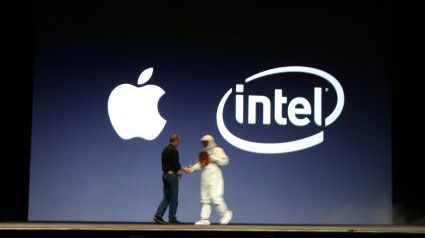
Four years since the great Intel transition for the Mac platform was revealed at WWDC 2005 (see above clip), Adobe has announced that future versions of Creative Suite will run only on Intel-based Macs.

Four years since the great Intel transition for the Mac platform was revealed at WWDC 2005 (see above clip), Adobe has announced that future versions of Creative Suite will run only on Intel-based Macs.

This news helps seal the fate of PowerPC Macs, which are all now effectively consigned to some environmentally-friendly landfill, that’s the situation.

Of course, it’s not just Adobe who is turning its back on PowerPC. Apple has also confirmed years of speculation it will do the same, on news that Mac OS X 10.6 Snow Leopard will itself be Intel only.

Flash back to WWDC 2005, when Apple CEO Steve Jobs stunned developers with confirmation of then current rumours the company intended moving to an Intel architecture.

Justifying this, Jobs pointed to the failure of Apple’s PowerPC partners, IBM and Motorola, to keep pace with their processor speed road map, saying, “As we look ahead, we can envision some great products we want to build for you, but we can’t imagine how to bring them to you using PowerPC.”

The move sparked a mass migration to the Intel platform as developers rushed to release software capable of supporting both the Intel and PowerPC platforms, and Apple hustled out Intel-supporting Macs at a dizzying pace.

Not so Adobe. Even one full year since the transition was announced and relevant development software was released to developers, Adobe still attracted criticism from users, frustrated the company hadn’t yet managed to ship key software applications such as Photoshop for Intel Macs.

Seems we’ve come full circle, on Adobe’s announcement yesterday it will now abandon PowerPC support for future iterations of Creative Suite.

Existing Creative Suite 3 and Creative Suite 4 customers can of course use the software on both types of Mac, but the company will only provide limited support for this, and wanted to warn customers of its intention so they could figure out a migration part for the as-yet unannounced Creative Suite 5.

The PowerPC has reached the end of the road. Here’s a history of the platform.

Unreleased Apple product sighted in California – no images (yet)

Site default logo image


There’s definitely an unreleased Apple product looming – and while that bald statement is pretty much an eternal truism, product marketing plans for this one are advanced, a report this morning explains.

Apple has already filmed an ad for this new product, and, as you’d expect, security was tight on the film set yesterday. “Because the product they were advertising hadn’t been released, members of the group didn’t release any information, or allow any photographs,” a local report claims.

The ad was shot at a Californian restaurant – a beautiful 1940’s style diner – called Jax on the Tracks, which was chosen by a location scout. Filming took place Tuesday afternoon, with restaurant owner Bud Haley telling the Sierra Sun, “Apple found us, they’re trying to show us as a hip and cool spot for the 20-something crowd.”

Now we can only imagine what this unreleased product may be, but the location and target demographic most strongly suggests a new iPod ad to us, potentially involving a new model iPod touch – equally, we can see the target demographic as being an ideal one for the much-rumoured Apple tablet device.

After all, we think this system will be aimed fair and square at internet media-centric people, possibly in education, perhaps in their first jobs, who move around for work and pleasure and have a steady income.

We’re interested to see this ad appear, if only to find out what the unreleased product’s going to be. And as we head into the news blackout which constitutes August’s news agenda, we’re happy to report yet another little nugget that boosts expectation as we approach Apple’s next major product introduction cycle…

Photo from Chow.

digg_url = ‘https://9to5mac.com/node/8320’;

Nokia, Microsoft team for Apple iPhone attack

Site default logo image

Stung by falling market share and Apple’s iPhone ascendancy, unlikely bedfellows Nokia and Microsoft are hatching a few joint plans to unseat the smartphone champion, and it seems Office support in Nokia handhelds will be part of this attack.

Microsoft today will announce an alliance with Nokia, an alliance which seems set to spawn a new era of Office suite app compatibility on Nokia phones.

This news comes as the Redmond beast prepares to introduce Windows 7 (at higher prices than Snow Leopard), and hatches plans to boost its mobile OS and Office software offerings.

It’s thought the alliance will see Nokia devices enabled to access Microsoft’s purported future software as a service offering based on its Office products.

That announcement will be given by Stephen Elop, head of Microsoft’s Business Division and Kai Oistamo, executive vice president of Nokia Devices, Reuters explains.

In a second pronged attack, Nokia is expected to launch its own Music Store (in India) later this month, offering users of its handset a catalogue of music and movies to purchase through their handset.

India is a potentially huge market for Apple, but competing handset makers there have a major price advantage, and this Nokia move also seems set to beat Apple to the punch, as it’s thought to be preparing launch of an iTunes Store in India.

With a value conscious market, Nokia has a further string to its bow, and will not charge users for the media they download for the first year.

Nokia is changing its business plan from relying on hardware sales to developing a business as a services operator, claims the Economic Times.

“We want to generate revenues through services and music is one of them. We will soon launch our online digital stores,” Nokia marketing director Vineet Taneja told ET.

Bandspeed bangs Apple, Sony, Nintendo, alleges patent abuse

Site default logo image

Apple, Sony and Nintendo are in the legal crosshairs once again this week, as a WiFi network company, Bandspeed, has slammed litigation down against the three tech firms, alleging patent infringement.

Bandspeed describes itself as, “the leader in next-generation WiFi management, providing access point (AP) solutions that make possible mission-critical WiFi voice, data and video applications for the business mass market.”

The company reckons Apple, Sony and Nintendo offer devices which infringe on two patent that firm holds. The offending gadgets are the iPhone, Wii and PS3.

Bandspeed says the patents in question relate to “managing wireless communication channels using frequency hopping”. The patents are U.S. Patent No. 7,027,418 (entitled “Approach for Selecting Communications Channels Based on Performance”) and 7,570,614 (entitled “Approach for Managing Communications Channels Based on Performance”),

The lawsuit was filed last week, little additional detail is available at this time.

ZuneHD prices: $220 for 16GB, $290 for 32GB

Site default logo image

Amazon has inadvertently(?) released pricing for the new ZuneHD according to Computerworld.  The good news for consumers?  They are coming in at about $100 below current iPod Touches with comparable memory.  The bad news for ZuneHD fans?  The iPod touch will be likely be $100 cheaper when it goes on sale next month…with a video camera built-in and a trillion more apps.  The one major advantage for Microsoft is that the screen is an OLED variety which is superior to the current iPod touch screen.  Currently, the Amazon links don’t work but we’d expect them to be up shortly.


94 per cent of customers say Apple desktops are the best in unbiased consumer report

Site default logo image

Apple already offers the best tech support from any computer company according to Laptop magazine, but with all the focus on mobile, its surely reassuring to know Apple also make the best desktop computers in the world, according to an unbiased independent UK survey.

Apple achieved a 94 per cent rating for customer satisfaction, an 85 per cent assessment for reliability and a four star ranking for tech support in a UK consumer research survey which crossed our desk today.

UK mag Which? has an international reputation as an unbiased title. It carries no advertising and offers no hidden agenda. In its most recent computing survey it asked thousands of Which? members how many problems they’d had with their machines, and what they thought of the tech support line….and Apple topped the pack by a country mile.

Which? states: “Apple gets an impressive 91 per cent in our customer satisfaction measure. It’s also rated highly for support, earning a good overall rating.  Apple Mac are reliable too, with an above average reliability rating.”

Runner-up Sony achieved 80 per cent customer satisfaction, didn’t achieve a reliability score and won two stars for tech support. In third place PC maker Novatech came in with 79 per cent.

Interestingly, the survey is based on a sample of 384 Mac users. Dell’s 75 per cent customer satisfaction rating being based on 1,884 users – a fairly reliable guide in either case.

And probably well-timed as rumours claiming new Blu-ray-equipped iMacs are looming on Apple’s product road-map, likely for introduction this month, perhaps September.


Dell to beat Apple to China Smartphone market?

Site default logo image

Techcrunck says that Dell is about to enter the Chinese smartphone market with its own super-secret gadget.  Arrington notes:

A source with knowledge of the situation tells us that Dell is launching (or at least announcing) a mobile phone in China in the next day or two.

Dell’s smartphone has been rumored for awhile now with different reports coming every few months.  AT&T wireless CEO Ralph de la Vega even let it slip that they were looking at a device from Dell. 

Apple isn’t asleep at the wheel however.  They are closing in on having a deal with China Unicom, the second largest phone provider in the country of 1.3 Billion potential customers. 

 (image via Engadget)