
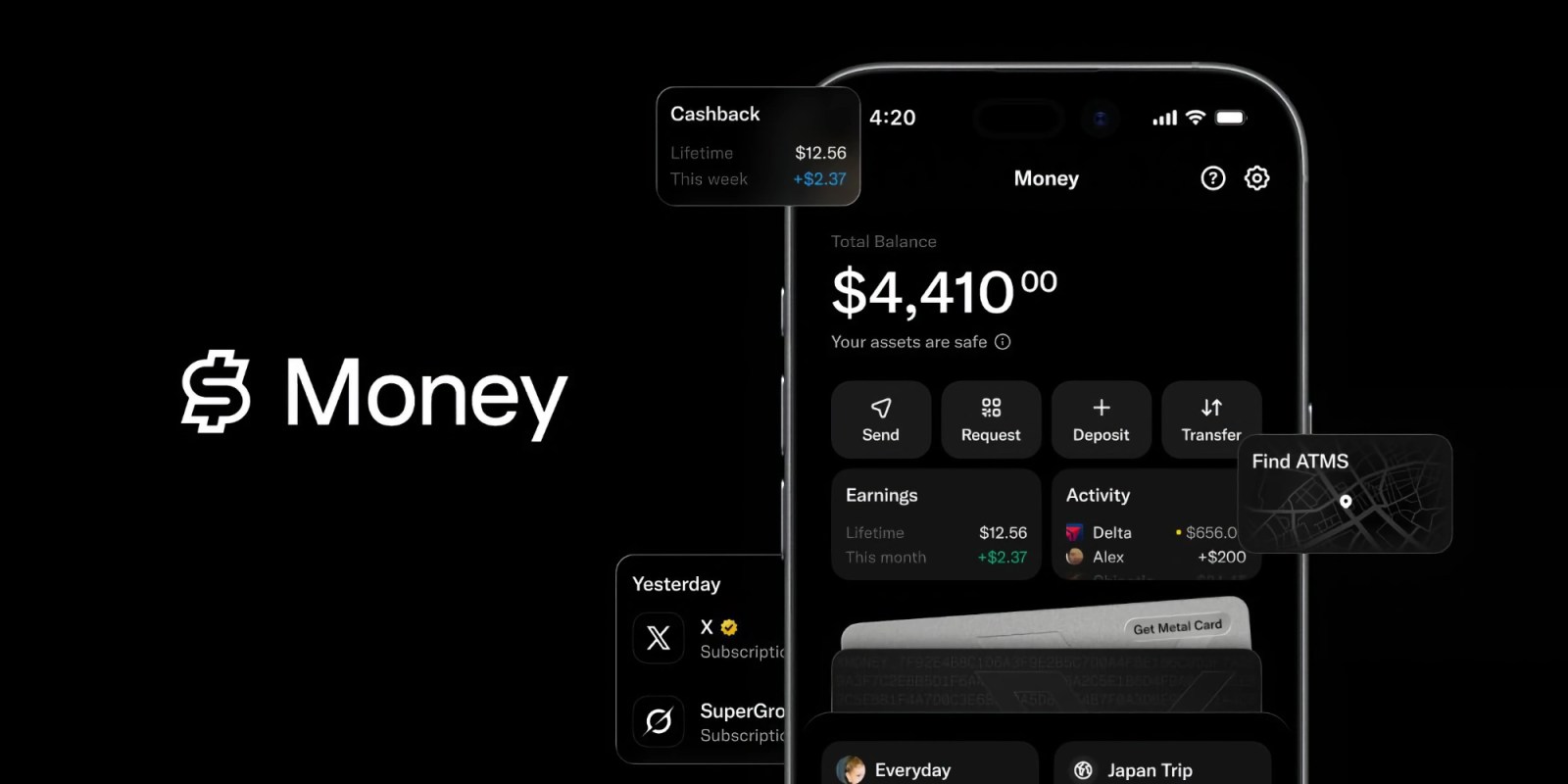
Following X Money’s launch last month, one question has repeatedly surfaced: What happens to your money if X suspends or closes your social media account?
What happens to X Money if your X account gets banned?
The short answer is that, in most cases, nothing happens.
According to X’s updated suspension policy, users suspended for policies other than Child Safety or Violent and Hateful Entities violations will retain access to every X Money feature “with no interruption.”
For suspensions involving either of those two policies, X says access to Money will be revoked and the remaining balance will be returned by check. In other words, X says an account suspension won’t result in your money being forfeited.
Why would anyone use X Money?
The most compelling answer is its interest rate. Premium+ subscribers currently earn 6% APY on eligible balances. Premium subscribers receive 4%, increasing to 6% after at least $1,000 in qualifying direct deposits (including payroll or X Creator payouts) within the preceding 34 days.
That compares favorably with many leading online savings accounts, which are currently clustered around 4%. It also substantially exceeds the 3.5% APY currently offered by Apple Card Savings.
The calculation is less attractive if you subscribe to X solely for the higher rate. But for existing Premium or Premium+ customers, it is a competitive place to hold cash. Eligible X Card purchases also receive 3% cash back.
Is X Money a bank?
X Payments itself is not an FDIC-insured bank. Deposit accounts are provided by Cross River Bank, Member FDIC, with the standard $250,000 coverage.
An optional sweep program distributes larger balances among participating banks and is designed to provide as much as $10 million in total FDIC coverage, although X notes that individual placements are not guaranteed to remain below each bank’s insurance limit.
What about the X Card?
Every customer receives a virtual Visa debit card that can be added to Apple Pay. Physical metal cards are now reaching early customers as well.
The physical card does not print its number, expiration date, or security code. Customers can customize how their name appears and may include their X handle, but neither the handle nor a full name is required.
Initials are allowed if you don’t want to display your full name. The virtual and physical cards also use separate card numbers.
How does this compare with Apple?
Apple Card Savings remains operated by Goldman Sachs for now, but the broader Apple Card program is moving to JPMorgan Chase over roughly two years.
The key difference is that Apple Card offers a credit card. X Money offers a debit card with a savings feature.
Chase reportedly intends to offer a new Apple savings account. Existing customers are expected to be given a choice between keeping their Goldman Sachs savings account or opening the eventual Chase version. Apple has not announced what interest rate Chase will offer.
You can learn much more about X Money here.
Do more with your Apple products
AirPods 5 | Apple’s newest wireless headphones
Apple AirTag 2 | Add Find My tracking to keys, bags, bikes, more
AirPods Pro 3 | Apple’s best wireless headphones


FTC: We use income earning auto affiliate links. More.


Comments