
As someone who writes for a living, you would correctly guess that I’m wholeheartedly in favour of allowing AI-generated text to be detectable and marked as such. There’s just a ridiculous amount of AI slop out there, and an “AI content” label means I don’t need to waste my time reading any of it.
However, Anthropic has just announced that it’s complying with an EU initiative to have Claude watermark AI-generated text, but doing so in a particularly perverse manner …
Watermarking AI-generated images & text
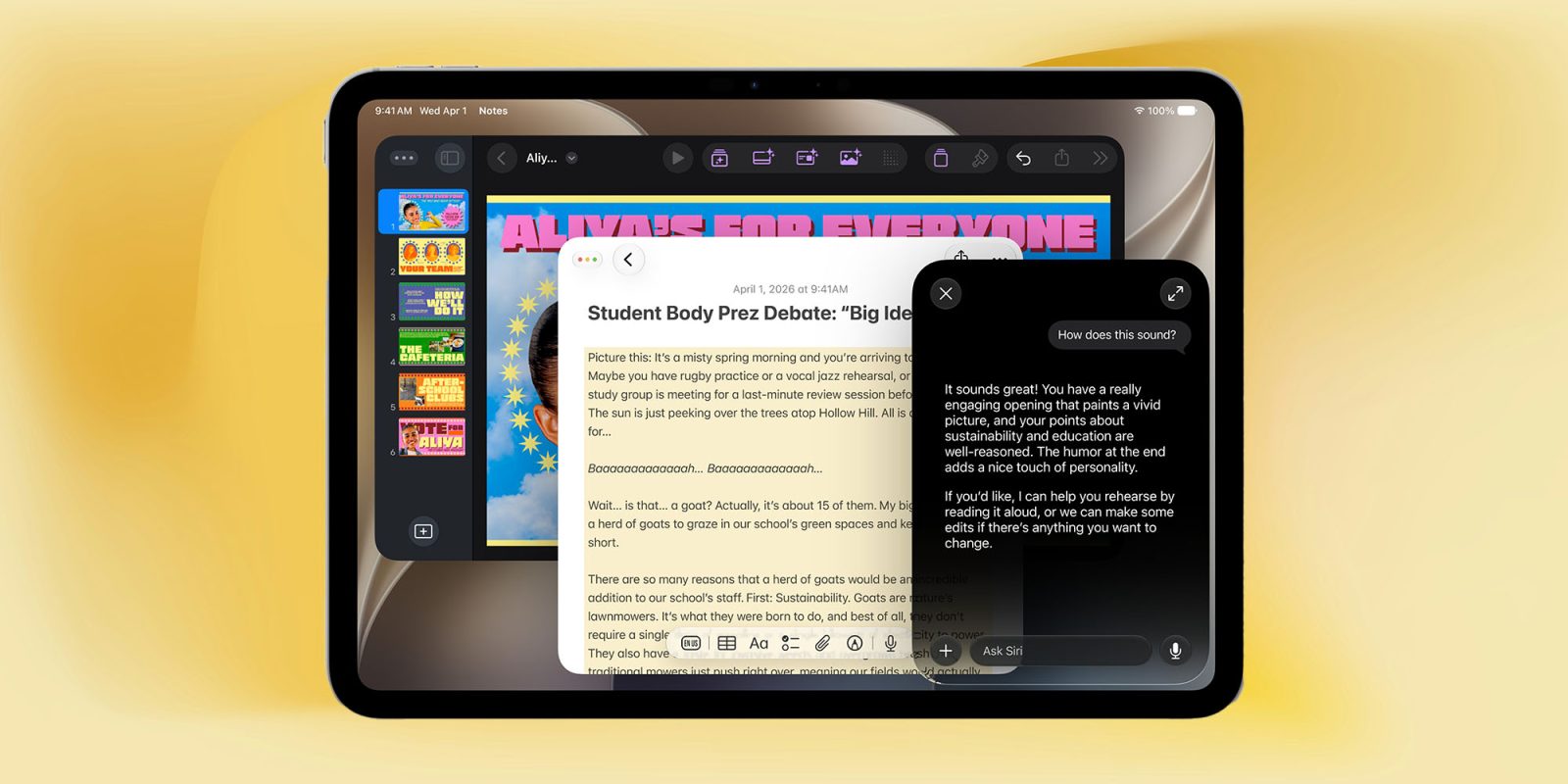
Apple is already preparing its own response to the problem of AI-generated imagery through a feature known as Apple Reference Image. It’s likely the company will have to do something similar with Siri AI tools since they can be used for anything from proofreading to writing something for you.
There’s no perfect solution to this, as I mentioned last week when referring to the approach of using invisible characters to serve as watermarks.
The most eye-opening requirement in the EU initiative is that AI companies must digitally watermark text output as well as images. This can be done using invisible characters, such as the one I just used to replace the space between the words ‘invisible’ and ‘characters.’ This would survive copying and pasting, although would be very easy to defeat using optical character recognition.
Anthropic’s perverse approach
I mentioned then suggestions that Anthropic might instead take a different approach.
Some are suggesting that Anthropic may go as far as using particular language patterns in Claude output in order to allow detection even for OCRed text. I could have very much to say about this, but that’s beyond the scope of this piece.
Well, it now appears that the company is indeed doing this, so it’s time for me to have my say about it!
The issue isn’t that Claude will embed these language patterns in text entirely generated by the AI; I have no issue at all with that. The problem is that some people write their own text and then use AI chatbots for proofreading. It would appear that Claude will embed these hidden watermarks in the language even when it was only asked to identify and correct any grammatical errors in human-written work.
This is, of course, one of the features offered by Siri AI. You can highlight text that you’ve written, tap the Siri button and select the Proofread option.
Admittedly, my own limited tests of this suggest that it is rather too aggressive. It doesn’t just detect and correct grammatical errors, but proposes its own phrasing. I would certainly like to see this toned down so that it is definitely the author’s work, with no more correction than would be performed by a human sub-editor with a light touch.
As an aside, this is why I tested but ultimately discarded Grammarly: the changes it suggested went beyond highlighting grammatical errors and typos and instead offered wording I would simply not choose to use.
But assuming a light touch is Apple’s intention, it would be wrong for an AI to deliberately mangle the language in order to allow it to be marked as AI content. It would also be wrong to mark it as AI content at all if the changes made amounted to nothing more than sub-editing. At most, a ‘Proofread by AI’ label would be appropriate.
Top comment by Mike Beasley
Slop users who are content to use randomly generated text created via probability getting angry that the probabilities are shifting slightly in a different direction is so dumb.
You could have generated the same text randomly without the watermarking in place. The watermarking just makes it more likely that you get one outcome instead of the other, something models already did with weights.
I think all slop usage should be detectable. If you don’t like people knowing you used the slop machine, don’t use the slop machine. It really is that simple. People have been writing and proofreading long before this stuff was invented a few years ago. Using a slop generator to do it isn’t actually necessary. Just make the effort.
As I say, I don’t pretend to have all of the answers to this. The growing use of AI chatbots to assist with writing and editing raises tricky questions. At what point does a piece written by a human and edited by AI become something that should be correctly identified as the hybrid work of the author and the AI system?
What I do know is that deliberately changing the wording chosen by a human author who has asked an AI system for nothing more than proofreading is not the correct approach. While Apple will certainly need to respond in time to this issue, I very much hope it will choose a smarter path than that employed by Anthropic.
What are your thoughts on this? Please share in the comments.
- Certified refurbished Apple products 15% off at apple.com
- Official Apple Store on Amazon
- Discounted AirPods Pro 3
- Wireless CarPlay adapter
- 10-year AirTag battery case
- Logitech MX Master 4 for Mac
Image: 9to5Mac/Apple/Sean Fahrenbruch


FTC: We use income earning auto affiliate links. More.


Comments