Mark is an award-winning journalist who worked at 9to5Mac for over six years. He covers Apple and other topics related to the consumer technology industry.
Following OS X Lion 10.7.5 beta build 11G36 nearly two weeks ago, Apple, today, released build 11G45 to developers in both standard and server configurations. The build has no known issues, and Apple asks developers to focus on Graphics performance and quality, and Image & Media importing, editing or viewing. Thanks, Jean!
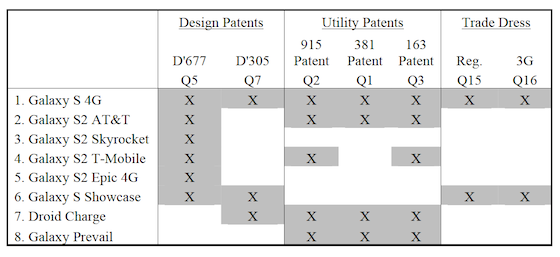
Following Apple’s win against Samsung in U.S. court last week, Apple has identified which devices it will seek bans on. The Verge posts Apple’s list, which features ban requests for the Galaxy S 4G, Galaxy S 2 for AT&T, Samsung Skyrocket, the S2 on T-Mobile, Galaxy S2 Epic 4G, Galaxy S Showcase, Droid Charge, and Galaxy Prevail. Notably, Google’s flagship Galaxy Nexus smartphone is not present on this list. Separately, Bloomberg notes that Apple is seeking a ban on the cellular version of Samsung’s Galaxy Tab 10.1 tablet. Notably, this is the tablet that the U.S.-based jury believed did not infringe Apple’s patents.
The first piece of news comes from the Korea Times. The site reports that Samsung executives held an emergency meeting regarding the loss in trial. Even worse is a comment from a Samsung senior executive as he walked into Samsung’s HQ: “It’s absolutely the worst scenario for us.”
Inside the building, Choi Gee-sung, former Samsung Electronics CEO and now the head of Samsung Group’s corporate strategy division, was holding an emergency meeting attended by Shin Jong-kyun, the company’s mobile devices chief, and Lee Dong-joo, lead marketing official.
The Korea Times also reports that Samsung executives are set to formally respond to media requests and offer a more official response in the coming days.
The loss not only created havoc for Samsung executives, but Samsung shareholders as well. CNET reports that Samsung shares are down approximately 7% in the South Korean market:
Ahead of Apple’s September and October media events that focus on Apple’s post-PC devices, a string of new rumors regarding a new iPod touch, iPod nano, and smaller iPad have surfaced.
Next-generation iPod touch case may point to new design:
The first rumor comes from GizChina, who has photos of a case purportedly for the next-generation of Apple’s iPod touch (shown above). The site believes that this new case shows less prominent tapers than found on the current, fourth-generation iPod touch. However, it’s difficult to actually see that based on this plastic case.
Additionally, the site claims that the iPod touch will have an LED flash based on this case. However, current iPod touches feature a video camera microphone next to the camera on the top left of the device. The same elongated hole on this iPod touch case (above) is found on fourth generation iPod touch cases. We believe that this case may point to the camera microphone, rather than an LED flash.
Also present on this case is a circular cutout on the bottom left corner of the device. The cutout’s purpose is currently unclear based on physical evidence, but it may be a speaker. If, in fact, the new iPod touch has a thinner design, it would likely be more difficult for Apple to retain the speaker on the bottom of the device, making it necessary to be moved to the bottom back (like on the move from the original iPad to the 2nd and 3rd generation, thinner designs).
iPod nano may gain WiFi for iTunes music downloads:
Today was an important day for Apple and for innovators everywhere.
Many of you have been closely following the trial against Samsung in San Jose for the past few weeks. We chose legal action very reluctantly and only after repeatedly asking Samsung to stop copying our work. For us this lawsuit has always been about something much more important than patents or money. It’s about values. We value originality and innovation and pour our lives into making the best products on earth. And we do this to delight our customers, not for competitors to flagrantly copy.
We owe a debt of gratitude to the jury who invested their time in listening to our story. We were thrilled to finally have the opportunity to tell it. The mountain of evidence presented during the trial showed that Samsung’s copying went far deeper than we knew.
The jury has now spoken. We applaud them for finding Samsung’s behavior willful and for sending a loud and clear message that stealing isn’t right.
I am very proud of the work that each of you do.
Today, values have won and I hope the whole world listens.
Tim
Cook notes that Apple seemingly did not want to go to trial with Samsung. These events only occured after Apple repeatedly asked Samsung to stop copying. Cook ends his email to employees by saying how proud he is of the work of each employee and that “values have won.”
Following the U.S. court’s verdict in favor of Apple in the high profile Apple vs. Samsung mobile device patent case, The Verge reports that a date for an injunction hearing has already been set. Now that Apple has the win and just over a billion more dollars on its hands, a September 20th hearing will determine injunctions for Samsung’s infringing products. Apple will file its injunction requests by August 29th. (Image: ATD).
We are grateful to the jury for their service and for investing the time to listen to our story and we were thrilled to be able to finally tell it. The mountain of evidence presented during the trail showed that Samsung’s copying went far deeper than even we knew. The lawsuits between Apple and Samsung were about much more than patents or money. They were about values. At Apple, we value originality and innovation and pour our lives into making the best products on earth. We make these products to delight our customers, not for our competitors to flagrantly copy. We applaud the court for finding Samsung’s behavior willful and for sending a loud and clear message that stealing isn’t right.
Cotton goes onto say that Apple values originality and innovation and that the company applauds the court for making it clear the “stealing isn’t right.”
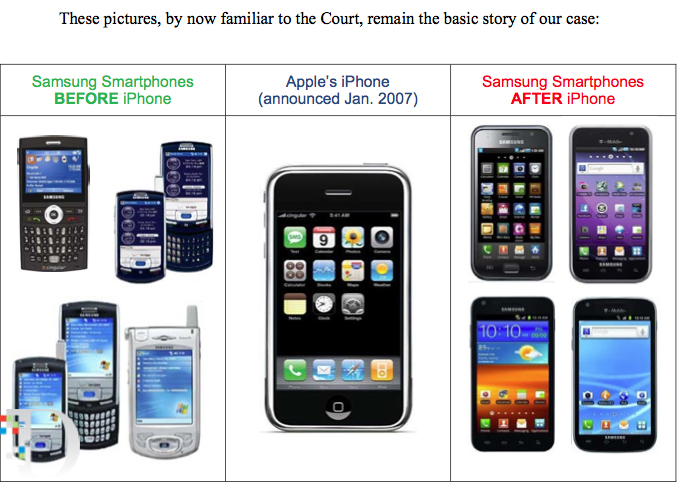
Today’s verdict should not be viewed as a win for Apple, but as a loss for the American consumer,” Samsung said in a statement. “It will lead to fewer choices, less innovation, and potentially higher prices. It is unfortunate that patent law can be manipulated to give one company a monopoly over rectangles with rounded corners, or technology that is being improved every day by Samsung and other companies. Consumers have the right to choices, and they know what they are buying when they purchase Samsung products. This is not the final word in this case or in battles being waged in courts and tribunals around the world, some of which have already rejected many of Apple’s claims. Samsung will continue to innovate and offer choices for the consumer.
Samsung calls Apple’s victory a loss for the American consumer. Samsung says that it will continue to innovate and that consumers have the right for choice when buying products. (Image: ATD)
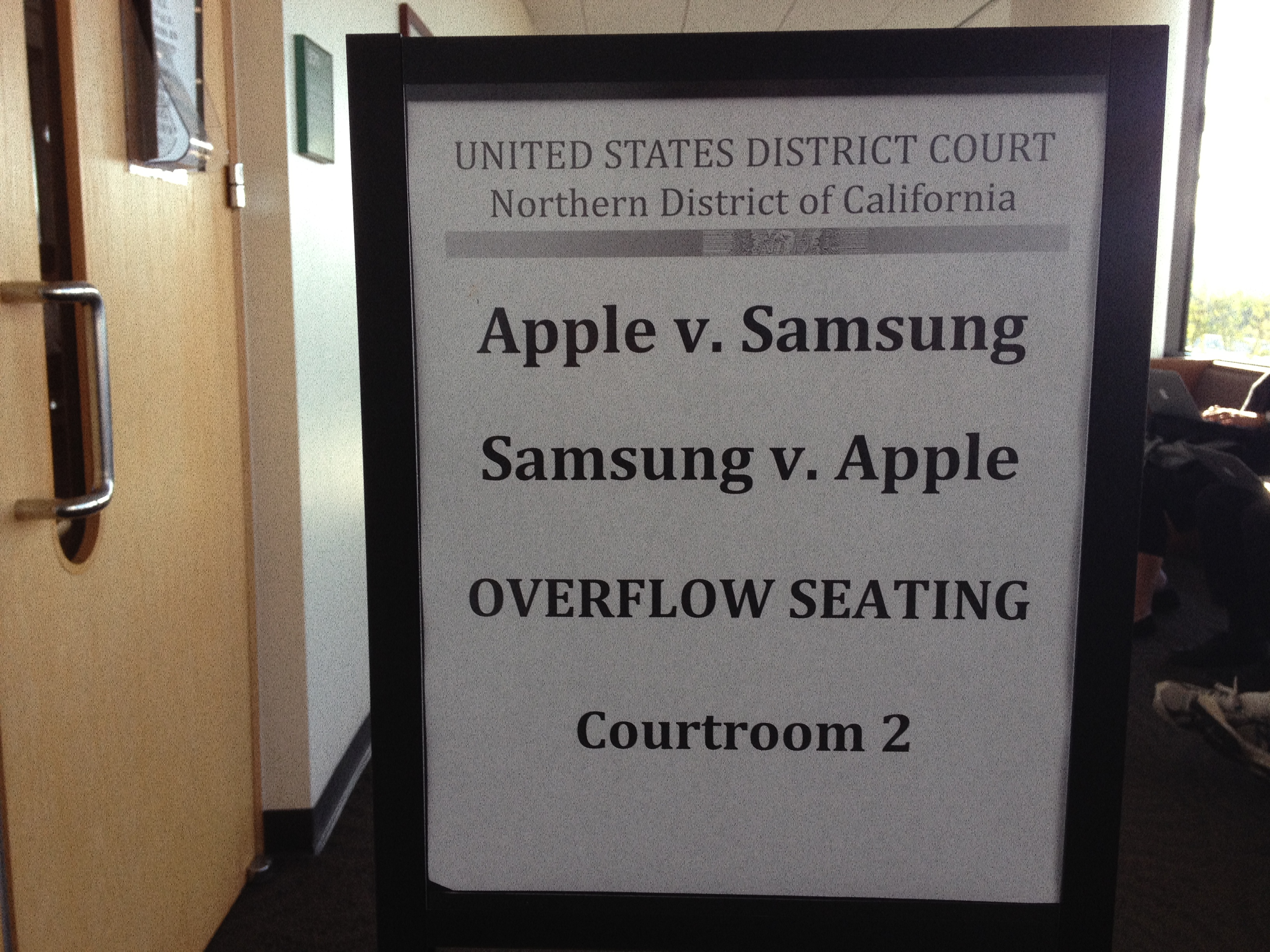
Word is coming out of the court room that the jury in the San Jose-based Apple versus Samsung trial has reached a verdict. The result is yet to be announced, but we should find out shortly. Stay tuned to this post for more information as it develops.
Facebook has announced that it has finally rebuilt its iPhone, iPad, and iPod touch app for speed. Facebook’s previous iOS apps displayed and loaded all content view customized embedded mobile sites, but this new update is completely reengineered using native tools. Facebook says that the new update runs twice as fast as previous versions of Facebook for iOS.
Today we’re announcing an update to the Facebook app for iPhone and iPad that makes keeping up with friends faster and easier. Facebook 5.0 for iOS is twice as fast as the previous version when launching the app, scrolling through news feed and opening photos in feed.
App opens quickly
We’ve rebuilt the app from the ground up, so now the app opens much faster and your news feed and notifications load right when you open Facebook.
Stories scroll smoothly
As you scroll down your news feed, all your friends’ stories appear faster than ever. A banner lets you know when new stories come in, and you can tap once to immediately see the latest updates.
Photos load instantly
Tap on any photo and it opens right away. Pull down to close it with a single swipe.
Facebook says that the most notable speed increases come when you launch the app, when you scroll your newsfeed, and when loading up photos. In fact, Facebook says that photos load “instantly.” The new app also includes an in-app banner notification for when new information loads into your news-feed while you are reading through your feed. The update is now available as a free update as version 5.0.
Following its notification of the upcoming release, Apple has seeded the first build of OS X Mountain Lion 10.8.2 to developers. It is build number 12C31a, and Apple says to focus on Facebook, Messages, Game Center, and Reminders.
OS X Mountain Lion 10.8.2 build 12C31a Seed Note
OS X Mountain Lion Update 10.8.2 is an update to OS X Mountain Lion 10.8.
Installation Instructions
The OS X Mountain Lion 10.8.2 Update (Combo) updates OS X Mountain Lion 10.8 build 12A269 GM or 10.8.1 build 12B17 or later build.
Please be aware that you will not be able to revert back to your previous system after updating. Please install this update on a system you are prepared to erase if necessary.
Reuters reports on comments from LG Display’s CEO regarding the company’s upcoming, thinner smartphone displays. According to Han Sang-beom, LG Display’s CEO, LG “just began mass production and [they] don’t expect any disruption in supplies.” Reuters seems to believe that the displays mentioned by LG are for the upcoming iPhone.
These particular displays are described as a thinner type of screen, likely built with in-cell technology. In-cell technology was previously rumored for the next-iPhone’s display, and the technology seemingly will allow Apple to build thinner iPhones.
Current and previous iPhone touch-screens include multiple display layers, including a separate LCD and touch sensor sheet. With in-cell technology, the two layers are combined, making the display thinner overall.
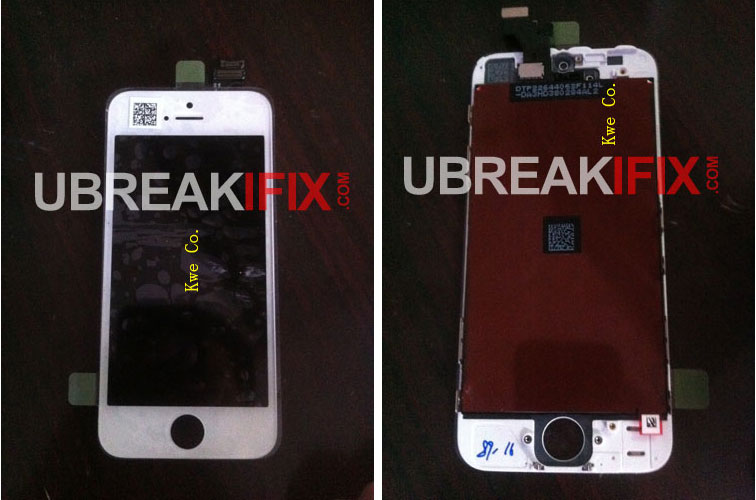
Photos of a purported next-generation iPhone LCD were recently posted online (shown above). We reported earlier this year that the next-generation iPhone would feature a taller, 4-inch (diagonal) display with a resolution of 640 x 1136. We corroborated those claims with iOS 6 based evidence earlier this month.
Notably, LG Display’s comments about new screens going into mass production come just about a month prior to Apple’s rumored September 12th event and September 21st iPhone launch.
The Wall Street Journalpreviously said that LG, Sharp, and a new company named Japan Display would be the supplier trio for Apple’s next-generation iPhone displays.
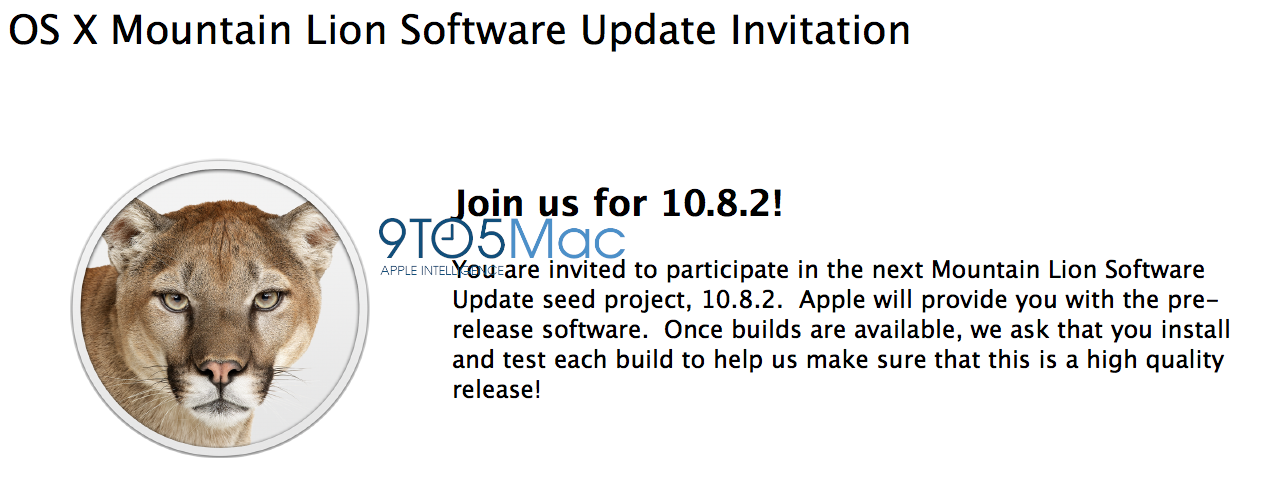
Today, Apple has begun notifying participants in its early software seeding program (AppleSeed) that OS X Mountain Lion 10.8.2 is on the way. According to the email notification, the 10.8.2 seeding will begin soon. AppleSeed and Mac Developer builds typically coincide in release timing, so it appears that registered Mac developers will, too, receive the first 10.8.2 build very soon.
You are invited to participate in the next Mountain Lion Software Update seed project, 10.8.2. Apple will provide you with the pre-release software. Once builds are available, we ask that you install and test each build to help us make sure that this is a high quality release!
With OS X Mountain Lion 10.8.1 coming soon as a maintenance release, this new 10.8.2 install will likely be an iOS 6 compatibility release. iOS 6 includes a number of features that will require a Mac update. These features include Apple ID phone number merging for iMessage and FaceTime, Facebook integration, Shared Photo Streams, and other iCloud enhancements.
USB cable specialist Veister claims to have its hands on a sync cable for the next generation iOS devices with smaller dock connectors. The company tweeted the above image (via iLounge) to a number of publications and case makers today. Apple is including a smaller dock port on the new iPhone, but is also rumored to include it on a tweaked third-generation iPad, iPad mini, and on new iPods. According to iOS 6 beta code, the new connector will feature nine pins.
Google’s new Motorola Division has filed a patent lawsuit against Apple with the United States International Trade Commission, according to the Wall Street Journal. In this lawsuit, Motorola claims that Apple violated seven patents with its iPhone, iPad, and iPod touch iOS products and even Macs.
As detailed by Bloomberg, the specific patents in question involve Apple’s Siri voice-control system, location-based reminders, push email notifications, media playback on phones.
Earlier this year, Apple’s case against Motorola over four patents was dismissed. Notably, todays claims by Motorola comes just after the close of the high-profile patent trial between Apple and Google Android-partner Samsung. The two company’s completed their closing remarks today, with jury deliberations scheduled for next week.
Less than a week after seeding the initial build of OS X Mountain Lion 10.8.1 (build 12B13), Apple has followed up with a new build to developers. The beta, coming in at build number 12B17, has no known issues. Apple asks developers to focus on Active Directory, iCal, Microsoft Exchange in Mail, PAC proxies in Safari, SMB, USB, and WiFi and audio when connected to an Apple Thunderbolt Display.
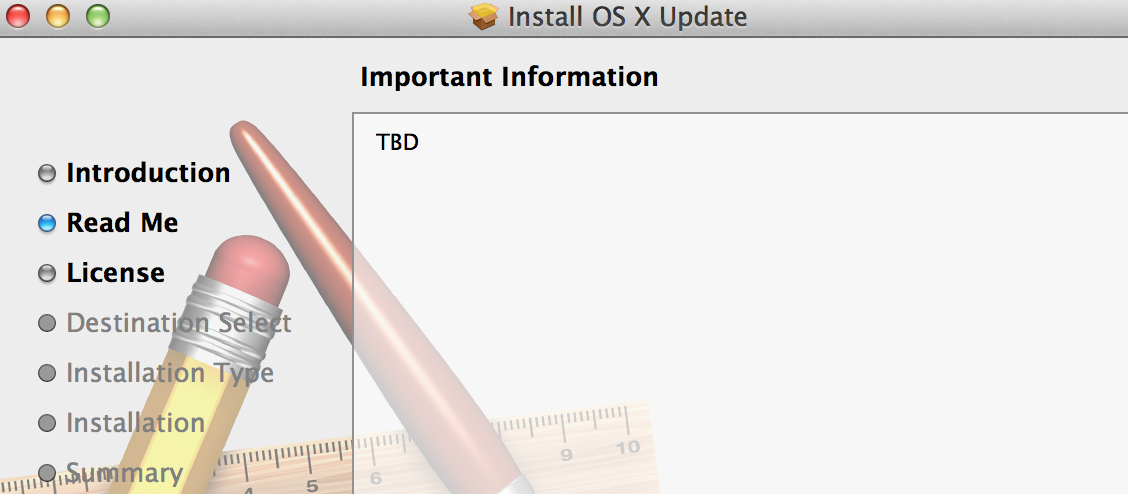
10.X.1 OS X updates are usually maintenance updates released soon after the initial 10.X.0 release. The short amount of time between developer beta releases, and the small amount of builds between the earlier release and today’s release should point to that. However, the release notes are yet to be included in 10.8.1 seeds. (as shown above).
The Wall Street Journal reports that Apple is in talks with cable television operators to use an Apple TV device as a set-top-box. Instead of Apple building their own TV show database to compete with the cable operators – as Apple has discussed with show creators in the past – this approach would simply plug cable operators to televisions via an Apple device.
The report says that Apple’s plans with cable TV networks aren’t necessarily for the current Apple TV $99 box. The plans could be for a future version of Apple’s current device, or for the much-rumored Apple Television set.
Two people briefed on the matter said the technology involved could ultimately be embedded in a television. Apple has worked on prototypes for televisions in the past, according to people briefed on the projects.
Additionally, the report says that Apple has not yet come to any agreements with any cable TV operators.
Before launching the latest design of the Apple TV, Apple considered building the set-top-box service described in this new report. However, Apple co-founder Steve Jobs dismissed the idea.
Apple contemplated building a cable set-top box more than two years ago before it launched the latest version of its Apple TV, according to a person familiar with the matter. At the time, Apple’s then CEO Steve Jobs was dismissive of the idea, believing working with cable operators was problematic because they didn’t have national reach—each served only defined geographic territories. Another issue: entertainment companies own most of the content, not the operators, according to two people familiar with the meetings.
Today, Apple seeded a new beta build of OS X 10.7.5 to developers, as noted by MacRumors. The new build number is 11G36 and it comes in both delta and combo-update configurations. Apple’s previous 10.7.5 beta came in at build 11G30 in late July. The small increase in builds from the last seed to today’s seed means that Apple is close to reaching the end of the development cycle. Apple says that no known issues are present in the build, and developers should focus on graphics and media.
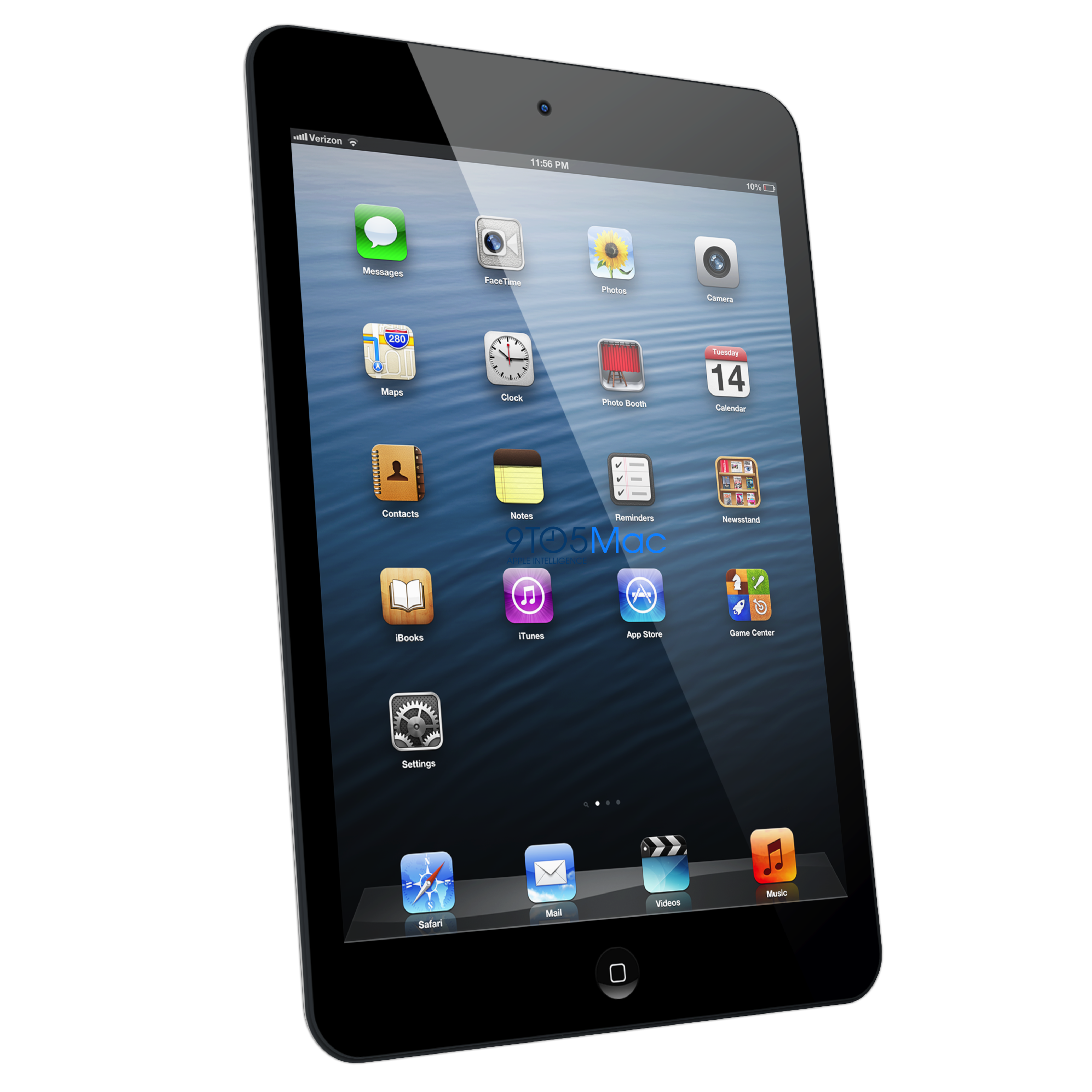
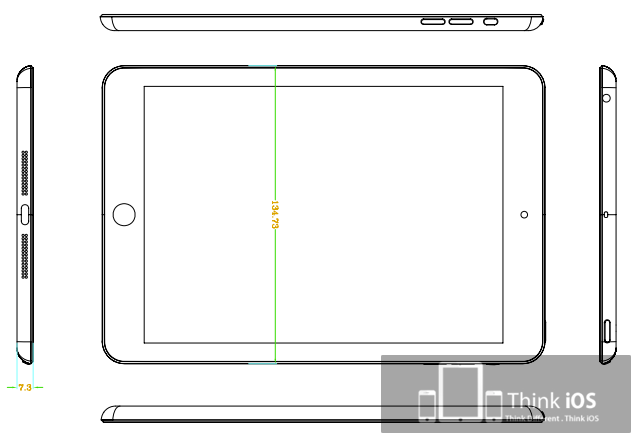
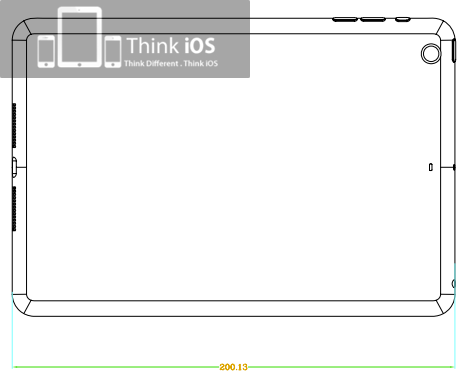
The height, width, screen-size, and more were all calculated based on those aforementioned schematics. Better yet, we’ve also got an iPad mini render that compares the device in size to the current Retina display iPad with a 9.7-inch display. That comparison is also based on the dimensions garnered from the schematics.
Ahead of the upcoming jury deliberations in the high-profile Apple/Samsung mobile device patent trial, AllThingsD reports that the Judge presiding over the case, Judge Koh, has asked Apple and Samsung executives to try to settle before deliberations begin. According to the report, both sides agreed to a telephone meeting outside of court.
Judge Koh noted to both sides of the trial that this high-profile case has surely demonstrated both Apple and Samsung’s thoughts on patents:
“I see risk here for both sides if we go to a verdict,” Judge Lucy Koh said on Wednesday. She said that if the companies were just seeking to show the world they both have intellectual property positions relative to tablets and smartphones then “message delivered.”
AllThingsD provides another choice quote from Koh: “it’s time for peace.” (Image: AllThingsD)
The lack of bezel on the side will not allow you to carry it like you hold a full-size iPad when in portrait mode without triggering some multi-touch on the display. Perhaps Apple has some software to dull the side touches when in portrait mode. But, really, this is unnecessary. You will need to hold it from the back more like you hold a phone (or one of those 7-inch tablets above). This is not hard, and in fact, it is the de facto way I tend to hold a Nexus 7 even though it has a bezel.
This iPad mini bezel design is a key design differentiator from the iPad (9.7-inch) that features a uniformly sized bezel around the entire device.
However, as you can see, these drawings completely match up with what we reported today. You can see the thick bezel on the top and bottom of the design, and the thinner bezel along the sides.
Also present is an ultra-thin design, front-facing camera, rear-camera, and a smaller dock connector.
Is this simply a coincidence? Maybe. But are these images a solid representation of what the iPad mini will look like? We think so.
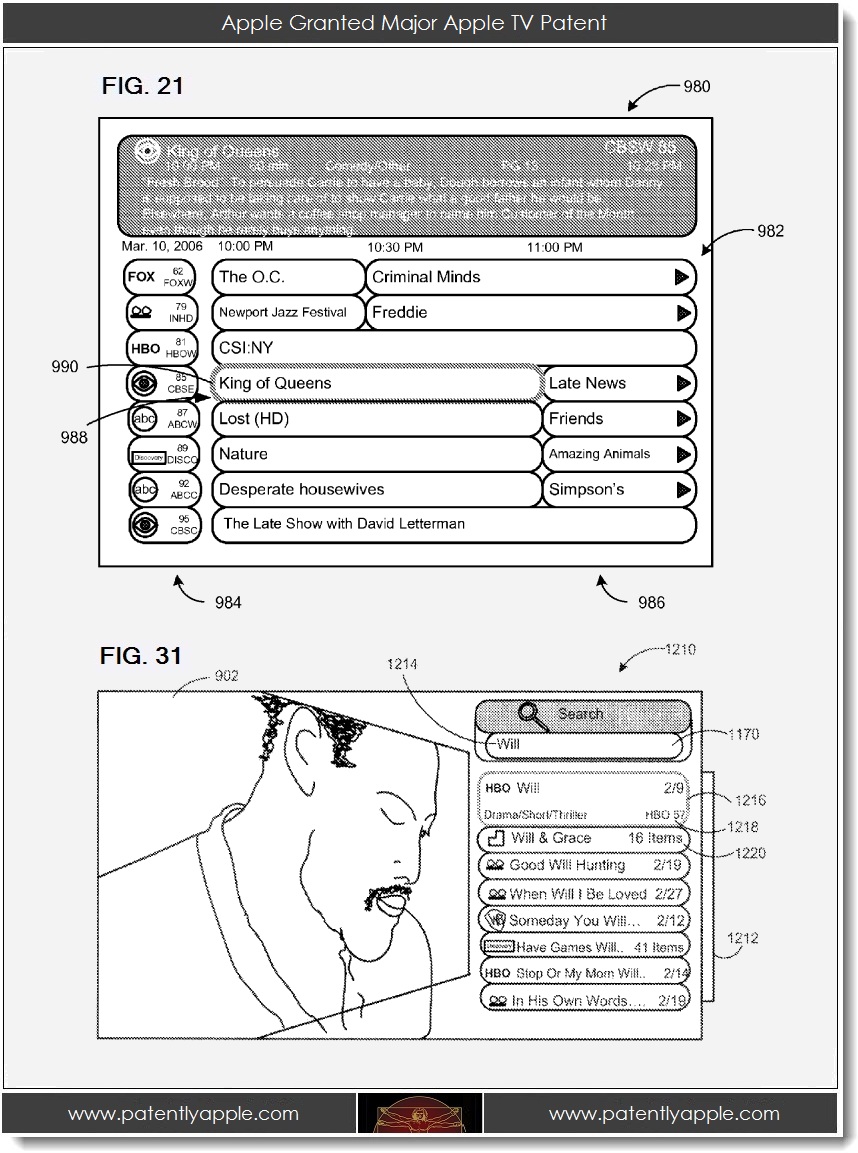
With Apple’s iPhone, iPad, and iPod focused media event quickly approaching for next month, the previously heavy rumors of an Apple TV set have seem to calm down. However, Patently Apple now covers a new patent that will surely once again stir up the rumor mill. Apple was recently granted patents that show Apple’s work in an Apple TV-device that connects to cable TV networks and allows for DVR-like show recording.
As you can see in the patent graphic above, Apple’s work on future Apple-TV devices includes the ability to be watching a video, then being able to click a button to review TV listings. Apple actually has patented the action to bring up the menu overlay:
Apple has received a Granted Patent relating to a video device which displays video in one of a plurality of contexts in an onscreen display area. In response to the menu command, the video device generates a menu overlay within the onscreen display area while maintaining the video within the menu overlay, and generates within the menu overlay a context icon based on the selected context.
While Apple may be able to connect a cable TV box to the current $99 Apple TV, it seems plausible that these patents were built with an actual TV set in mind.
Apple’s recently discovered patents also include a patent for a DVR-like feature. DVR systems were popularized by TiVo, and it is a feature that allows you to have pause, play, and record control over live TV. However, it seems like Apple presents this feature as geared toward the Apple TV set-top-box, not a general TV set.
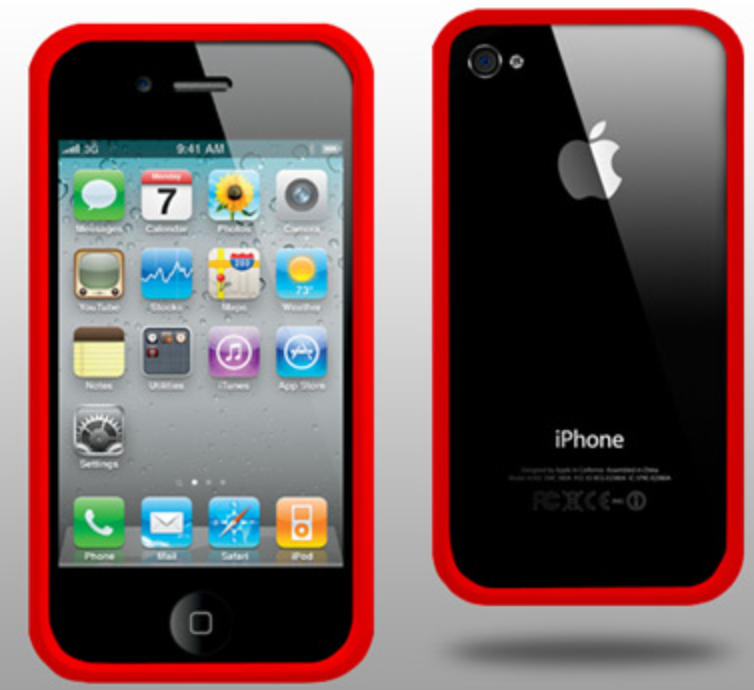
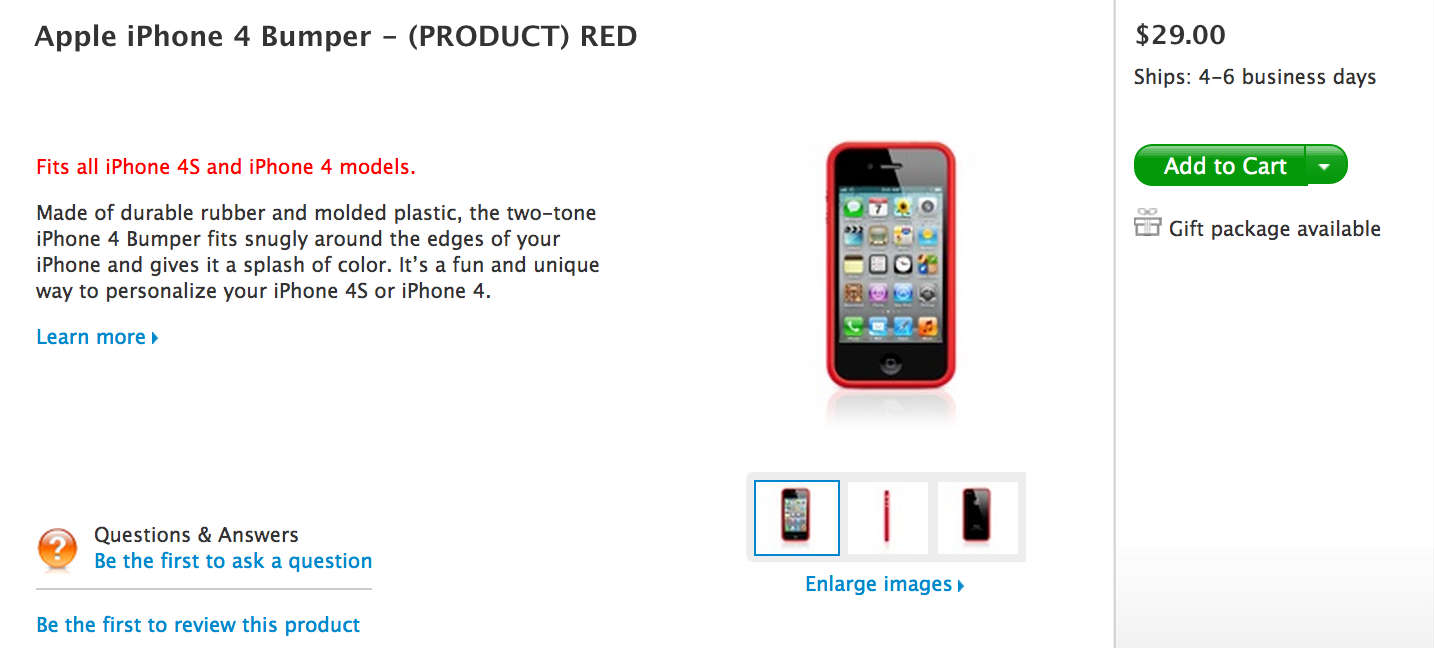
According to very reliable sources, Apple is about to release a red colored iPhone Bumper case. Apple’s inventory system just calls it “Red,” so we’re not sure if it’s PRODUCT(RED) certified. But with Apple’s ties to the organization, we’d assume it is. Not the actual Red Bumper:
With Apple’s redesigned iPhone coming in less than a month, it seems hard to believe that Apple would release a case for the iPhone 4S/4. However, it seems likely that the iPhone 4S/4 will stick around, so perhaps that is why Apple is set to release the new red iPhone Bumper case.
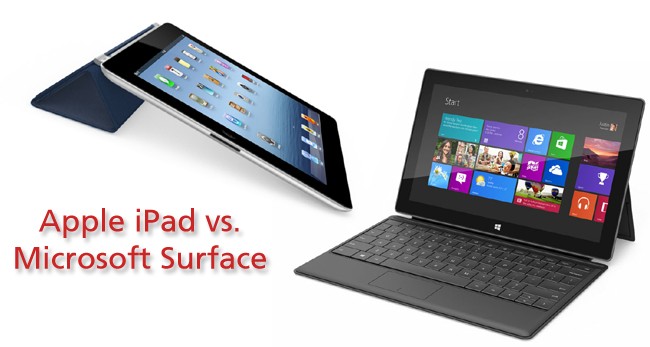
From the courtroom of the Apple vs. Samsung trial comes some major news involving Apple’s iOS device patents and Microsoft. Some may have noticed that some of Microsoft’s mobile device designs are akin to Apple’s iOS device designs. Specifically, the Microsoft Surface has the same general curved, black bezel design as the iPad. This is, of course, also the case with Samsung’s products. However, as Reuters reports, this is perfectly legal for Microsoft.
Teksler noted that Apple and Microsoft have a cross-license agreement that does cover the design patents at issue in this case, but said that there are also special “anti-cloning” provisions in the agreement between those two companies. “We couldn’t copy each other’s products,” Teksler said.
According to Apple’s patent director, Boris Teksler, Apple and Microsoft have an iOS device design patent agreement in place. This means that Microsoft is paying Apple to use some of the iOS design patents for its products. The report does not offer specifics like how much Microsoft pays Apple for everyone device with Apple’s patents sold. Though, the report notes that an “anti-cloning” agreement is in place to prevent copying.
Just like Apple and Samsung are strategic partners for device hardware components, Apple and Microsoft are partners in software products like Office for Mac and Bing integration in Apple’s latest OS X and iOS Safari browsers.
Last week, it was revealed that Apple attempted to strike a patent licensing agreement with Samsung, just like they did with Microsoft. That offer from Apple meant a $30 royalty per phone and $40 per tablet. Samsung, unlike Microsoft, clearly was not interested. AllThingsD notes that Apple’s offer to Samsung was solely in regard to hardware, and it did not affect Apple iOS software patents. (Image: GamenGuide)
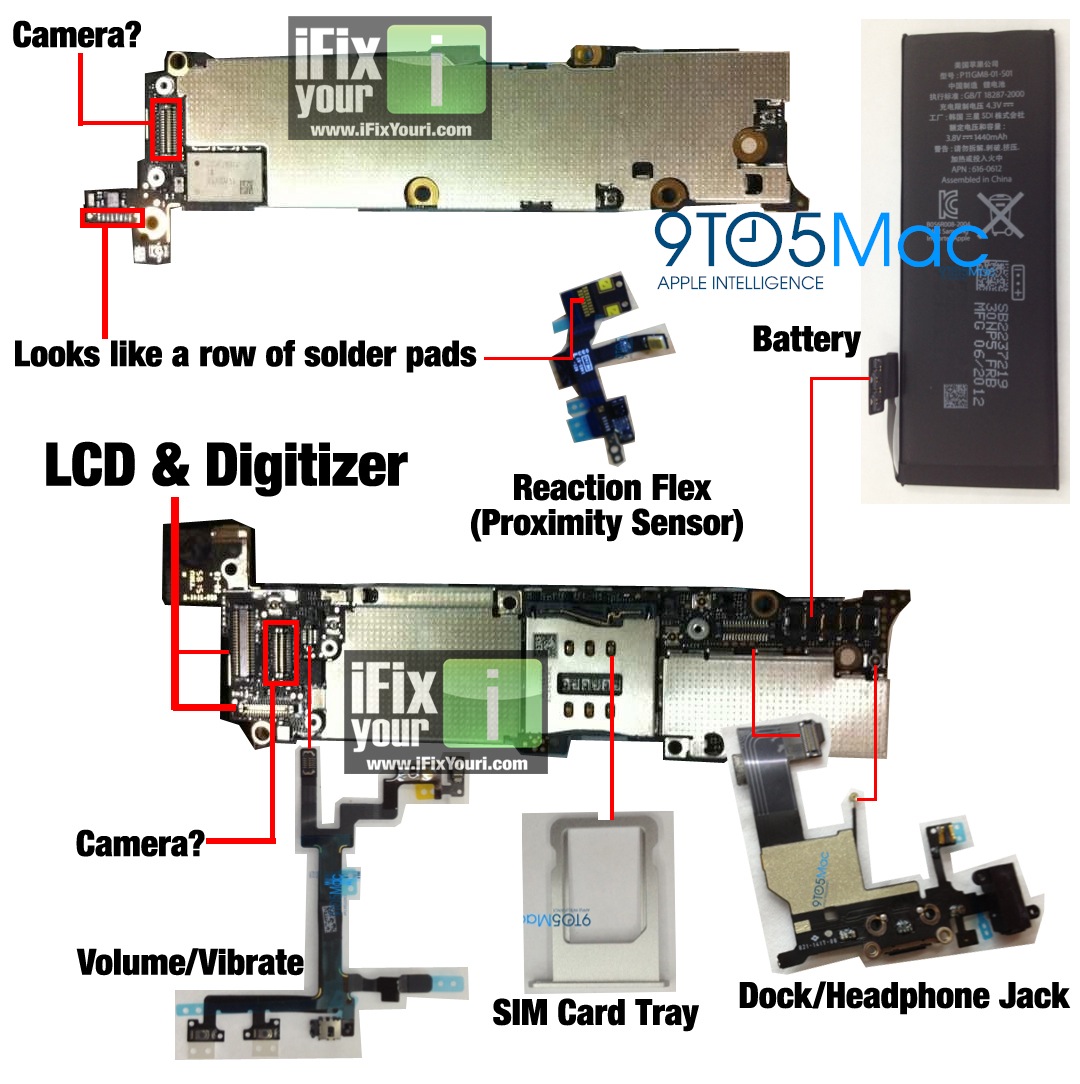
iFixYouri Professional iPhone Repair has put together a diagram (shown above) that puts many of the next-generation iPhone’s leaked parts into context. Earlier today, the purported motherboard for the next iPhone leaked out, and iFixYouri iPhone repair’s diagram shows where all of the leaked parts fit onto the motherboard.
One of the biggest points to note is that many of these leaked parts fitting together nicely on the motherboard (obviously, image size aside) probably means that these parts are legitimate.
Another thing to note is that the SIM card slot, while seemingly slightly smaller, appears to be more along the size of the current Micro-SIM-standard found in the iPhone 4 and iPhone 4S. The next iPhone has been rumored to include a smaller, nano-SIM standard, and parts pointing to this have already leaked out. Although we cannot be entirely sure what size the leaked motherboard points to (due to angle, size, and context of the imagery), it is worth nothing that we have seen leaks for the new iPhone that differ in their SIM-card slot sizes. This means that Apple has been testing components for both sizes. With the next-generation iPhone already in production, Apple’s decision for SIM size has obviously already been decided.