Author

Avatar for 9to5 Staff

9to5 Staff

Dual SIM card adapter for iPhone 3G/3GS?

Site default logo image

USB Fever has an interesting product in their matrix this morning.  The Q-Dual SIM card adapter apparently allows you to manually switch between two SIM cards in your iPhone.  The package also includes an external battery and case in one package.

It isn’t clear whether this bypasses Apple’s carrier exclusivity settings or, for instance, you would just need two legit AT&T SIMs.  It seems to be geared toward international travellers who might have an AT&T card in the US and a O2 SIM when travelling to the UK, for example.  They offer the instructiosn below:

Installation:
See pictures above plus
– Home ==> settings ==> Phone ==> SIM Applications: select your desire SIM card
(If you don’t want it to select SIM card for you when the signal is low, please don’t select "auto/SW)

Note once you’ve chosen to another sim card, it will have a message "No SIM Card installed", please wait 1 or 2 minutes, it needs aound 1 ~ 2 minutes to search, during this time, "No SIM" will appear in the top right of your iphone’s screen.
– When the battery is with the case, the LED will be always on (blue). When the battery is being charging, it will be in Red.
– For sync with PC / charge with PC / Mac, please turn the Charge Button to "OFF" – This devices does NOT support DUAL STANDBY Mode but you can switch between them.

– Due to complexiety of network compatibility, we cannot 100% guarantee its compatibility with your network, we can only guarantee the compatiblity of the battery part, but if you have probelms of compatibility, we will try our best to help you.


Did AT&T get a sour apple when it snagged the iPhone?

Site default logo image

No. But the WSJ feels otherwise.  Their arguments:

  • The iPhone used to generate 40% new users for AT&T in 2007.  Now that has dropped "all the way down" to 35%.  No other Smartphone brings over a third of their customers from another network or anything close to that.  What is a good number for the WSJ?  90%?
  • The iPhone generates about $2000 in revenue per customer over the two years of the contract if you deduct the estimated $400 subsidy.  There are 9 million iPhones on AT&T’s network.  That is $18 Billion in revenue.  Not too shabby.
  • The heavy iPhone network usage has caused harm to AT&T’s reputation.  It has and rightly so.  Perhaps if AT&T used some of that revenue above to build out its network in a timely manner (it has been two years), iPhone users wouldn’t feel so short – changed.  For $100/month you should be able to make a 5 minute call without getting dropped.
  • When Verizon gets the iPhone, a lot of customers will defect – therefore Apple is the only beneficiary.  True, but AT&T has had every opportunity to keep their customers.  They have done a poor job.

The facts that the Journal give as rationale for the iPhone being a bad deal for AT&T could easily be made into a good deal proposition for AT&T.  Do you think any other carrier would like a chance to carry the iPhone?


Insider trading of Apple stock being investigated by SEC

Site default logo image

According to the Huffington Post, the SEC is in the process of an investigation into the trading in Apple’s securities both in the US and abroad. The information was revealed in a series of documents sent to the brokerage community:

I have obtained copies of those internal SEC documents from a regulatory contact. Interestingly, the nature of its interest shows that the commission is not investigating, as is usually the case, the trading that occurred in a specific time period, but rather, in this instance, in four specific time periods. This suggests the SEC could be looking into more than one potential violation in the trading in Apple shares. What the agency is seeking in its queries to the brokerage community are the names of its clients who specifically bought and sold Apple’s securities in those four time periods and whether anyone did so with a knowledge of non-public, inside information.

According to their sources, the investigation centers on three areas:

  1. Whether anyone got an illegal lead on precisely how sales were faring on key items in Apple’s highly successful iPod product line.  
  2. Whether anyone was given a precise insight into the health of the company’s co-founder and CEO, Steve Jobs, a cancer survivor who took a six-month leave of absence last January and then received a liver transplant. Subsequent questions about the viability of his health then led to a great deal of volatility in Apple’s shares.  
  3. Whether anyone had exact knowledge of when specific releases would be made by the company with regard to Jobs’ health or Ipod sales and pretty much of an awareness, as well, as to what those announcements would say.

Regarding point two, there was a report in Barrons about Steve Jobs buying property in Tennessee and getting a liver transplant.  The public didn’t believe this story, however.  The medical staff at the hospital where he was being treated (besides the Barron’s report) kept it pretty confidential.

Some believe there is a culture of manipulation around Apple’s share prices.  This piece from the Daily Show shows CNBC and The Street’s Jim Cramer explaining how to manipulate Apple’s stock (at 7:30).  He even mentions that it is illegal but the SEC doesn’t understand it..


Apple stock trades aren’t the only ones under the microscope, the SEC is also looking into the buying and selling action in Biogen Idec, Human Genome Sciences, BioMS Medical Corp., Blackout Media, Location Based Technologies, Advanced Medical Optics and Hansen Medical.


Adobe says sorry for 'unacceptable' customer support

Site default logo image

Following the fuss and bother of earlier this week, Adobe now appears to be making moves to get closer to its customers. Lambert Walsh , Adobe Vice President, Technical Services, has penned an open letter to Adobe’s customers in which he apologises for the company’s recent customer service issues and makes a commitment to address these snags.

The letter was first revealed on John Nack’s blog, who wrote, “The quality of Adobe customer service has really taken a dive lately (I know: I end up fielding/escalating a lot of cases that come in through blog comments). Now company VP Lambert Walsh has posted an open letter to customers”.

The full text of the apology follows. We’re hoping this may mean the company – as Quark has already done – may become more transparent in its dealings with customers in future.

“Open Letter to Adobe Customers
 
“Adobe is committed to providing the most advanced, innovative products and services in the world.  Recently, however, our customers have experienced a level of service that is inconsistent with what they expect and deserve. This is unacceptable to us and we sincerely apologize for the inconvenience this has caused some of our customers.

“We are working diligently – in fact, teams are working around the clock – to resolve these issues. I’d like to thank all our customers who are sharing feedback and giving us the opportunity to respond. We appreciate your loyalty, support, and willingness to make your concerns heard. 

“Adobe is in the process of transitioning to a new global service provider that will help grow and improve the quality of our customer service worldwide. While our new partner is a recognized leader in service and support solutions, this is a major global transition that includes bringing more than 800 new agents onboard. Clearly this process has not gone as smoothly as we had planned, and we are working to immediately remedy the situation. We are confident that once this transition is completed, we will provide customers with new and better ways to engage with Adobe using their preferred methods, helping to ensure prompt, effective customer service.
 
“The Adobe Customer Care leadership team is monitoring our customers’ experiences closely to understand and respond to the challenges you are encountering. If you experience difficulties of any kind, contacting Customer Service in your local region remains the best initial course of action; however, during this transition period, unresolved issues can also be directed to adbecare@adobe.com. 
 
“Thank you for your patience and understanding as we make this transition and work to improve our service and support operations for customers around the world.”
 
Regards, 
Lambert Walsh
Vice President, Technical Services

Find my iPhone leads to capture of iPhone thieves

Site default logo image

We aren’t surprised by this at all and expect to see more and more of it as GPS devices become more ubiquitous.  Pittsburgh police last night nabbed a trio of iPhone robbers who were caught using the iPhone’s "Find My iPhone" service. 

The victim, who was not identified by police, said two men approached him at about 1 a.m. near the intersection of Amberson Avenue and Amberson Place. He told police the men demanded his wallet and asked for his PIN number for his credit cards; one of the men also showed what appeared to be a handgun. The man told police he turned over his wallet, his PIN number and his iPhone before running away toward Ellsworth Avenue. Officers arrived while he was contacting his bank to cancel his cards. The man later used his computer to track the location of his iPhone to a Wal-Mart in North Versailles, where police said the suspects purchased items with his stolen credit card before moving on to an Eat’n Park restaurant on Route 30.

Suddenly, that $99/year MobileMe fee doesn’t seem that steep.  Will criminals stop stealing iPhones if they know this feature exists?  Maybe, or perhaps they’ll just turn them off while hitting up the Eat’n Park.

(Photo is one of the perps)


Analyst: "MacBook Air has some of the aesthetic qualities of the tablet"

Site default logo image

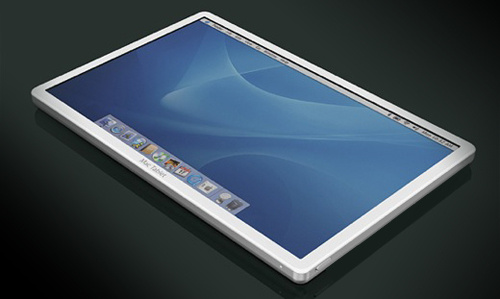
CNET has an incredibly vague analyst quote mentioning that Apple’s tablet resembles the MacBook Air.  Brook Crothers says:

I will make an exception–which I almost never do–and not identify the analyst. He claims to have seen a prototype of the Apple tablet and would prefer not to be identified. (Yeah, I know, more than a few analysts claim they have seen the furtive device. But I will go out on a limb and say I trust him. He claims the MacBook Air has some of the aesthetic qualities of the tablet.)

Crothers goes on to explain that the technology industry is waiting with bated breath on the Apple Tablet so that it can turn out the duplicates. He points to the iPhone changing the smartphone industry and the MacBook Air creating a market for ultra thin notebooks.

Crothers’ secret analyst says Apple will be selling the tablet at over $500 while the industry copies it and sells tablets for under $200.  Sounds like you can take the PC industry, cut prices in half and that is the tablet industry.  Crothers speculates that the other tablets won’t only come in one platform like the Wintel PC market.  He thinks (and we agree here) that the tablet market will be much more spread out, with ARM chips and Google’s Chrome/Android OS’s taking a big role.

There is nothing entirely new here but we’re left wondering how the tablet will resemble the MacBook Air?  Sure it will be thin and light.  Hopefully, it runs a capable version of Mac OSX.  After that, it becomes a little baffling.  MacBook Pros seem like a much more modern design for the tablets – especially since glass is better at capacitive touch screen navigation.  The Air’s bezel is aluminum like MacBook Pros of yore (last year).

Crothers ends by saying that in a year everyone who is a techie will have a tablet in their "inner circle of gadgets".  We hope to. Will you?


Microsoft new media chief warns TV against 'iTunes moment'

Site default logo image

Former BBC iPlayer boss and now Microsoft UK’s MD consumer and online, Ashley Highfield has warned broadcasters they have two years to create viable digital businesses, or face an ‘iTunes moment’ in which they could hand over control of their businesses online to Apple.

Highfield warned that advertising spend will eventually migrate to online services such as Facebook, which will create heavy pressure on broadcasters. Rather than give Apple control, Highfield told attendees at the MediaGuardian Edinburgh International Television Festival to take action now.

“So realistically I think the industry has about two to three years to adapt or face its iTunes moment. And it will take at least that long for media brands to build credible, truly digital brands. But, importantly, I do believe TV does have a small two to three year window in which to respond,” he said.

Highfield – who was the man responsible for the initially Microsoft-only BBC iPlayer service, and now works for Microsoft, also observed that online television services such as iPlayer (or the services he’s currently developing for Microsoft) are three years away from achieving a nexus point at which online ads spending may match that of TV.

The executive then launched into a Microsoft moment, calling out for a range of advertising techniques, including controversial forms of behavioral targeted ads based on user’s web viewing habits.

Highfield also demonstrated an Xbox and a multi-touch version of windows, calling for content to be freed from TV archives and be made available on-demand for numerous devices in ways consumers want to access the content.

"One of the biggest shifts has been that viewers want their media on demand and if they don’t get it, they will pirate it," he said. "That’s fair enough – well, it’s not, but it is understandable. I want to work as an industry to make sure content is available. The television industry needs to get into the mindset that it will be consumed through iPods, small screens, laptops, televisions and often multiple screens at once."

Permissions problem in 10.5.8 is patched by Snow Leopard…

Site default logo image

We’ve just come across what appears an interesting report, which describes problems and a solution for fixing permissions in Snow Leopard and Leopard.

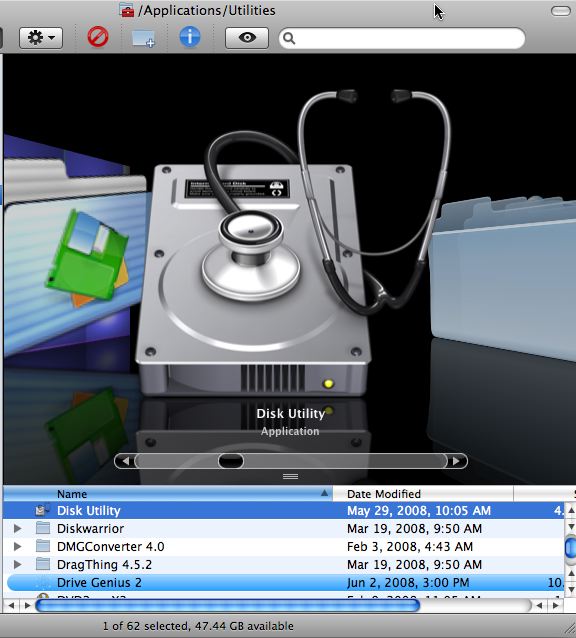
The report comes out of Macworld via Network World, and describes situations in which users upgrading to Mac OS X 10.5.8 have faced problems fixing permissions on their start-up drive using Disk Utility.

There’s a rich stream of user comments on this over across at Apple’s very own Discussions forums.

Ted Landau has described a fix for afflicted users, which also includes news of a little-known Knowledge Base article detailing permission error messages you can happily ignore.

Otherwise the recommended repair is to download the Mac OS X 10.5.8 Combo Update and reinstall the update twice–without selecting to repair permissions in between.

Landau also found that upgrading to Snow Leopard seems to address the permissions problems he was facing.

Contacts sync, Push, more for Facebook 3.1

Site default logo image

Facebook 3.0 shipped this week, and developer Joe Hewitt – who made a highly-publicised plea for the removal of the entire App Store approval process in the prelude to his app making it onto the store – spent time with ReadWriteWeb to chat about what he has planned next for the Facebook 3.0 App.

Hewitt’s a developer’s developer, his previous work has included the co-creation of the Firefox web browser. He’s named three improvements he hopes to implement in a future release of the software.

The developer confirms true push notifications are scheduled for introduction in v.3.1 of the iPhone and iPod touch-friendly software, saying, “We are working on push. I plan to have it in the next major update, the 3.1. It will be the same kind of notifications you get on the website.”

Hewitt is also working to develop saved, site-wide search features within the Facebook app, though he was unable to promise this would be introduced in 3.1.

Finally, he also wants to synchronise contact lists between your Facebook friends and iPhone contact lists. Apparently what’s in the way are terms of service and privacy restrictions, rather than any technical problems. The way this may work could be that when your friends call you their Facebook avatars pop-up on the iPhone’s screen.

Larger Snow Leopard soft keyboard makes tablet computing EZ

Site default logo image

Let’s not jump to any conclusions here.  We’d just like to point out that with all of the Snow Leopard coverage, no one is mentioning the new Snow Leopard soft keyboard which didn’t exist in Leopard in the same capacity.  In Leopard and before, the soft keyboard was located in the International System pref and was very small (half-sized – See below). You could make it bigger but only one size.

The new keyboard is much (finger sized) bigger and is located in an input method (keyboard) system pref.  You can now resize it as well to stretch all the way across the screen.

After playing with it for awhile, you’ll probably see that it would make a great interface for another type of device.  Instructions below…


1. Go to System Prefs/Keyboard

2. Check "Show Keyboard and character viewer in Menu bar"

3. Go to the top right menu bar and click "show keyboard viewer"

4. Pretend like you have a tablet with your trackpad.


Old soft keyboard:


Thanks Dan B.!

 Updated for clarification

Yelp updated with augmented reality Easter egg

Site default logo image

 Popular Yelp has updated it’s iPhone app to include a pretty cool easter egg. Shake your iPhone (3GS only) three times and, viola!, a hidden monocle feature appears. Click the top left tab and boom the iPhone camera activates within the app and it will show the nearest restaurants, bars, and anything with a Yelp rating.

To date, this is one of the first iPhone apps to use this feature, which reportedly was not supposed to come out until iPhone 3.1. What could be better? How about a similar augmented reality feature for social networks such as Twitter or Facebook or where my cat likes to hide


Current iPod stocks dwindling as new SKU's loom

Site default logo image

Not entirely surprising, but Ars Technica is reporting sources from Apple’s Authorised Resellers, who have confirmed that current models of iPod have been discontinued as stocks run dry, while Apple management prepare to unleash the next generation of its family of media devices.

Stock of some models has completely disappeared, the report explains, noting this comes just over a week before the much-speculated upon but as yet unconfirmed September 9 iPod refresh.

The new range is expected to feature cameras in most models, with a recent report this week suggesting even the venerable iPod classic will gain such a feature.

Apple is also expected to announce a new socially-connected version of iTunes, including some form of Blu-ray support. Outside bets claim improvements to the Apple TV, while speculation also exists predicating the introduction of a 6-inch media playing device, like a larger iPod touch, though this is not anticipated to be the full-strength tablet Apple CEO Steve Jobs is currently focused on development of.

There has also been speculation Apple may introduce some form of ads-funded music streaming service, despite its recent granting of permission to sell the music industry supported Spotify application through the App Store.

Via: MacRumors
 

Don

Site default logo image

We’ve noticed our reports detailing Apple’s continued negotiations to introduce the iPhone into China haven’t quite captured the collective attention of readers, and fresh analysis once again reinforces just why the deal’s so important.

As noted previously today, China Unicom and Apple have at last confirmed a three-year deal to offer the iPhone in the world’s most populous country. Subsequent to this, Broadpoint AmTech analyst, Brian Marshall has issued fresh estimates indicating Chinese iPhone sales will account for 15-20 per cent of Apple’s global iPhone sales next year.

Apple is likely to sell between five to seven million iPhones next year as a result of the deal, the analyst said, observing, “the upside for Apple is great”. He anticipates Apple will sell 37 million iPhones worldwide in 2010.

China Unicom has about 140 million subscribers, that’s under a third of the 460 million subscribers of China’s biggest carrier, China Mobile. The difference between the two firms is that while 80 per cent of the larger carrier’s customers hold pre-paid phone contracts, half of China Unicom’s customer base are on a monthly contract – the very market Apple’s aiming at with the iPhone.

An interesting point that’s emerging on the financial wires this afternoon – Apple has apparently not signed an exclusive deal with China Unicom, with Interactive Investor briefly reporting: "Apple says iPhone deal with China Unicom is not exclusive".

If true, we suggest this has been the consequence of the carrier refusing to offer the computer company a slice of user revenues, suggesting the stage is set for a wider availability in China, potentially making the market the largest potential iPhone market in the world.
 

Gizmodo: 10, 13, 15-inch Mac OSX tablets coming

Site default logo image

Gizmodo has a pretty big one this morning.  They claim that Apple is not only building the often talked about 10-inch tablet, but they are also developing much bigger tablets in 13 and 15-inch varieties.  These tablets are clad in aluminum but in the shape of very large iPhones (gen 1?). 

The machines were spotted in a factory in China (not Foxconn) and their source wasn’t sure how far these were along. One could speculate that if they are in China they are being fitted for production.  Their source said the company where they were spotted had a tight relationship with Apple.  Quanta has been the rumored manufacturer of Apple touch screen tablet products for months.

At least one of these tablets was running OSX (10.5) Leopard.

Oh, and Gizmodo says this source has always been 100% reliable up until this point so it is likely a good tip.


Opinion – Digital Tribes: Adobe, Snow Leopard, CS3 furore hints social change

Site default logo image

Sure looks like we stirred up a can of worms when we noted Adobe’s intention not to test Adobe CS3 for Snow Leopard support, and the company’s seeming insistence it wouldn’t devote resources to ensuring the premium-priced essential design software would work with the new OS.

Adobe shifted position slightly on this, with the company’s John Nack offering frequent updates to the originally stated position – now an independent test seemingly indicates there’s few potential problems (none found so far, as far as we have been able to discern) using the 2.5-year old software with Snow Leopard.

“In my beta testing of Mac OS X Snow Leopard, I had no issues with Creative Suite 3. But just to be sure, I installed the suite on a fresh copy of Snow Leopard today and ran a variety of tasks in the main CS3 apps just to be sure. You can relax: I’ve yet to encounter any issues, not even with Adobe’s alternative file manager, Version Cue, which mucks around the Mac OS’s innards a bit,” reports Infoworld’s Galen Gruman.

Gruman reports that his whistle-stop tests showed no obvious incompatibilities between CS3 and Snow Leopard, but notes Adobe’s lack of a guarantee of such support.

Despite Adobe’s warning that the company wouldn’t support Snow Leopard with CS3, the reviewer notes, “If you think you need to upgrade to CS4 because you plan to upgrade to Snow Leopard, think again.”

We’ve read multiple reports on the original position taken by Adobe, and were keenly disappointed with some reviewers who seemed to think that maintaining older applications through an OS transition was unnecessary. Our position is that during economic recession you can bet your bottom dollar there’s going to be hundreds, perhaps thousands, of smaller graphics and design shops using older software packages. And with Adobe’s software suite being both premium-priced and utterly essential, there’s no excuse not to offer a firm promise of support to users. Frightening customers into engaging in a costly software upgrade isn’t good business.

As mentioned, Nack has since updated his position on all of this, he now states: “I’ve done some more research into the history of Adobe’s work with Mac OS X 10.6 (Snow Leopard). I can’t speak for product teams besides Photoshop, and in the interests of time, I’m sharing what I’ve found out so far….It turns out that the Photoshop team has tested Photoshop CS3 on Snow Leopard, and to the best of our knowledge, PS CS3 works fine on Snow Leopard.”

He added, “The Photoshop QE team reported a couple of dozen problems to Apple, and I’m happy to say that Apple has fixed all the significant issues we found.”

He continues to explain: “It has always been Adobe’s policy not to go backwards and do dot releases on software that is no longer shipping. This isn’t some kind of ploy to force people to upgrade; rather, it’s a recognition that resources are not infinite, and we need to focus our efforts on current and future technology. When we say that we officially support a specific OS, you can trust that we’ve done very extensive testing on that platform. If we haven’t done that level of testing, then we simply won’t say that we support it.”

“That said, none of us like to inconvenience customers, so the reality is that we *do* actually perform some amount of testing on older product if we believe that there are a significant number of customers using it. So does Apple.”

So, we’re pleased to see some response from the company, but we think the furore surrounding Adobe’s original statements, which strongly suggested no support for CS3 on Snow Leopard, and the subsequent changes in position and info-updates from the company reflect that doing business in an internet-connected, socially networked age has changed.

Customers aren’t happy with a “top-down” approach to product introductions. That’s the same change as is happening in management, politics and employment. It’s not enough any more to tell customers or employees to jump and expect them to ask you “how far”. In this new era we’re becoming digital tribes, and now, more than ever, there’s a shift toward consensus marketing.

This means that software developers, including the likes of Microsoft, hardware makers, including Apple, most any kind of business now needs to engage positively with customers. This requires more than the occassional blog entry, instead it requires a recognition that, as predicted by Marshall McLuhan (who I keep banging on about, sorry), we’re all in the loop. The medium is the message, and companies need to ensure they nurture and nourish their tribes, it’s not just about the money, it’s about community.

 *though Apple has a special relationship with customers based on its proven ability to continue to stun an amaze with its products, hence a wide acceptance, if a little frustration, at its customary secrecy*

In the case of the CS3 “incident”, Adobe may have learned that the top-down approach to customer relations is on the way out, that that style of hierarchical management is under threat. It’s exactly the same thing the music industry has been struggling to hang onto since Napster, the idea that some people are in charge while others follow. That’s true to an extent, but it’s also true that old style management practises that alienate existing communities can ultimately undermine a business position. Tribes simply elect new leaders.

So, we’re pleased Adobe’s done some tests on CS3 on Snow Leopard. Now we think the company should publish the full results – not just those for Photoshop.

In the new business paradigm, there’s nothing to lose for any firm choosing to establish an open feedback loop with customers – and everything to gain.

Customers who feel their previous investment has been appreciated and supported by any company are far, far more likely to upgrade to a similar product from the same company later than customers who feel slightly alienated by their treatment. And this could conceivably include more transparency from any tech firm when choosing price points for different territories, but that’s another story.

Snow Leopard Server howto videos posted

Site default logo image

While most of us will be taking the wraps off of Snow Leopard client this weekend, Mac System Administrators will be taking a look at Snow Leopard Server.  Charles Edge of 318.com has posted a number of videos on using Mac OS X Server 10.6. These include configuring Wide Area Bonjour and the Mobile Access Server amongst other topics.

http://www.youtube.com/p/EFFC3A3FF65CC37D&hl=en&fs=1

via AFP548

While most of us will be taking the wraps off of Snow Leopard client this weekend, Mac System Administrators will be taking a look at Snow Leopard Server.  Charles Edge of 318.com has posted a number of videos on using Mac OS X Server 10.6. These include configuring Wide Area Bonjour and the Mobile Access Server amongst other topics.

http://www.youtube.com/p/EFFC3A3FF65CC37D&hl=en&fs=1

via AFP548


Apple Regent Street is bigger than Harrods

Site default logo image

Apple’s UK retail stores are already the apple of computer consumer’s eyes – now the company’s flagship Regent Street store takes more cash per square foot than the world’s most prestigious department store, Harrods, new data claims.

iMacs, iPhones, iPods and Macs are flying out the door of the hugely profitable store, with takings reaching £60 million per year, that’s £2,000 (c.$3,262) per square foot, double the estimated take at Harrods.

Neil Saunders, a spokesman for commercial property agency Verdict, which estimated the figure, told the Evening Standard: "To make £60million a year from a shop of Apple’s size is absolutely phenomenal. We’ve known for a while that Apple is far more than just a computing brand, and the latest findings prove it.

“Apple’s Regent Street store has extremely strong footfall, since it has become a tourist attraction in its own right, and as it stocks its own products, it controls the price, helping it to boost profit. Shoppers pay a premium for the Apple brand, and there is never discounting, so customers don’t waver over buying elsewhere.”

In contrast, Harrods makes £751 per square foot, while Topshop in Oxford Circus takes about £1,000 per square foot. Rival electrical retailers average about £722 per square foot.

The story is the same in the US, where Apple’s stores are defying the recession with huge crowds and strong sales, even while high street sales generally decline. Apple increased store revenue to $3 billion in its most recent quarter, up 2.5 per cent year-on-year while US retail sales generally fell 9.2 per cent.

Recent NPD figures claimed 66 per cent of laptops sold in US retail stores that cost $1,000 or more are Macs.

No wonder they’re dancing in the aisles at Apple retail…

Apple iPhone crosses the wall and breaks into China – confirmed (at last)

Site default logo image

China Unicom and Apple this morning confirmed the carrier will offer two versions of the iPhone in the world’s most highly-populated country, China.

The news follows months of rumours to this effect, with the two companies seemingly locked into discussions regarding revenue-sharing arrangements. It seems Apple lost the battle on that one, so keen was it to gain a foothold in the booming market.

The carrier will offer two different "3G iPhones" to its 141 million subscribers and it will buy the phones wholesale from Apple.

China Unicom said: “On 28 August, the Company and Apple reached a three-year agreement for the Company to sell iPhone in China. The initial launch is expected to be in the fourth calendar quarter of 2009. This will provide users with brand new communication and information experience.”

It is unclear whether the device’s will support WiFi. Apple spokesman Alan Hely confirmed the deal with China Unicom, but declined to give further details.

Apple tech support publishes Snow Leopard FAQ's

Site default logo image

Snow Leopard is available internationally now, attracting positive reviews and seemingly delighting customers with its speedy nature.

In conjunction with the release Apple has published a selection of tech support documents detailing certain functions within the new OS, including new features, startup problems, and printing tips.

Mac OS X v10.6: About incompatible software

This advises as to which applications are known to have incompatibilities with Snow Leopard.

“Mac OS X v10.6 Snow Leopard is designed to protect your Mac from certain incompatible software that can quit unexpectedly or cause other issues in Mac OS X v10.6.

“When you install Snow Leopard or migrate to Snow Leopard, known-incompatible software is moved to a folder named Incompatible Software on your hard drive.

“Snow Leopard also prevents known-incompatible software from opening. If you see an "Incompatible software" message, contact the software’s vendor or visit their website for a later, compatible version.”

Mac OS X v10.6: About Sync Diagnostics assistant

The Sync Diagnostics assistant lets you collect information about a sync as it occurs, and email diagnostic information about that sync to Apple. This can be useful in diagnosing and troubleshooting issues when synchronizing data with MobileMe, your iPhone, or a third-party mobile device via iSync.

Mac OS X v10.6: About the Battery menu bar extra for portable Macs

This tech support page details and describes the features of the improved battery menu in Snow Leopard, including the all-new “Replace Soon” battery replacement warning.

Mac OS X v10.6: Printer and scanner software

Mac OS X v10.6 Snow Leopard includes software for many printer and scanner models.

This article lists software provided for printers and scanners. This software can be installed from the Mac OS X Install DVD, and updated by using Software Update (some models have software available through Software Update only).

The report also links to the full list of printer models supported in OS X.

Mac OS X v10.6: Mac 101 – Printing

A step-by-step tutorial for how to install a printer or use the new "nearby printers" feature in Snow Leopard. Also covers printing to PDF.

Mac OS X v10.6: After installing, Mac still starts up into Mac OS X v10.4 or v10.5

“After installing Mac OS X v10.6 Snow Leopard on a Mac that already has Mac OS X v10.4 or Mac OS X v10.5 installed, the computer may continue to start up in Mac OS X v10.4 or v10.5. “This may indicate an issue with your Snow Leopard installation disc or DVD drive.”

Mac OS X v10.6: About gamma 2.2

Mac OS X v10.6 Snow Leopard uses a gamma value of 2.2 by default. In versions of Mac OS X prior to 10.6, the default system gamma value was 1.8. Using the capabilities of ColorSync, the gamma value of 2.2 is automatically applied and seamlessly transitions your display, images and videos to the new gamma value.

Mac OS X v10.6: About Wake on Demand

With Mac OS X you can share your music, printers, files, and even your screen with other computers on your network. Previously, in order for items shared by your Mac to always be available, you had to configure your Mac to never go to sleep.

With the new Wake on Demand feature in Mac OS X v10.6 Snow Leopard and an AirPort Base Station or Time Capsule, you can see and access shared items even if that Mac is asleep. This helps you save energy and reduce costs while still ensuring full access to all your shared files and devices, even remotely across the Internet.

Mac OS X v10.6: Unable to use third-party screensaver

“When attempting to install, preview, or run a third-party screen saver in Mac OS X v10.6 Snow Leopard on a Mac that has a 64-bit processor, you may see this alert: "You cannot use the screensaver (NAME) on this computer. Contact the developer of this screen saver for a newer version."

Boot Camp 3.0, Mac OS X 10.6: Frequently asked questions

This article contains answers to common questions about Boot Camp, including new features within Boot Camp 3, such as: Read Mac Volumes Support for advanced features on Apple Cinema displays Improved tap-to-click support Command line version of the Startup Disk Control Panel.

Mac OS X v10.6: Digital camera RAW formats supported

Learn which digital camera RAW files are supported by Mac OS X v10.6 Snow Leopard, or later.

Mac OS X v10.6: Mac 101 – The Dock, Dock Exposé, and Stacks

Learn about The Dock, Dock Exposé, Dock menus, and Stacks in Mac OS X v10.6 and later. New in Snow Leopard is Dock Exposé: When you click and hold an active application icon on the Dock, Dock Exposé shows you a thumbnail of every open window for an application, regardless of the Space your application windows reside in or minimized application windows. Just click the Window tile you would like to work on and it will instantly appear.

Mac OS X v10.6: Mac 101 – Finder and the desktop

This report describes all the changes in the Finder and Desktop. Snow Leopard’s Finder has been completely rewritten and is faster and more responsive. It also includes an enhanced icon view with live file previews, so you can thumb through a multipage document or even watch a QuickTime movie.

Snow Leopard also improves the reliability of ejecting discs and external drives

Mac OS X v10.6: Using Microsoft Exchange 2007 (EWS) accounts in Mail

Potentially one of the more important tech support notes, this article offers instructions and troubleshooting advice for adding Exchange accounts to Mail.

Installing QuickTime Player 7 on Mac OS X v10.6 Snow Leopard

Apple now offers the older version of QuickTime as an optional install for Snow Leopard, which includes the much-improved QuickTime X which comes with a new QuickTime Player.

“Should you need it, a Snow Leopard-compatible version of QuickTime Player 7 is also available for use with older media or with existing AppleScript-based workflows. QuickTime Player 7 can be used to playback formats such as QTVR, interactive QuickTime Movies, and MIDI files. Also, it supports QuickTime 7 Pro registration codes for access to QuickTime Pro functionality.”

Media formats supported by QuickTime Player in Mac OS X v10.6

This report explains all the various video and audio formats supported in the latest versions of QuickTime on Snow Leopard.

Point your RSS reader here in order to stay up-to-date with additional Snow Leopard information prowling out of Cupertino.