In a move usually reserved for Apple, Verizon Wireless has gone ahead and aired their own television advertisement for the iPad 2. The TV ad focuses on the iPad 2’s ability to connect to Verizon’s 3G networks. The company showcases the power of the iPad 3G with apps like Twitter and downloading iBooks. Hat tip Derek Kessler.
The latest in the ongoing legal dispute between Apple and its key components supplier, Samsung, comes via Bloomberg which reported this morning that Apple may be pushed into revealing iPad 2 sales numbers in the UK and the US if the company is to increase chances of the Samsung Galaxy Tab 10.1 blockage in Australia:
Apple Inc. may have to reveal iPad and iPad 2 sales figures in the U.K. and U.S. to improve its chances of barring Samsung Electronics Co. from selling the Galaxy 10.1 tablet computer in Australia, a judge said. Apple’s claim that the Samsung tablet’s release in Australia will hurt iPad sales may carry little weight if it doesn’t provide the numbers, Federal Court Justice Annabelle Bennett said in Sydney Federal Court today. ‘Unless Apple puts on evidence showing the impact in the U.S. or U.K., I can’t draw any positive assumptions,’ Bennett said.
Apple sought an injunction on Samsung’s tablet in Australia until the patent spat is resolved. Apple is claiming that the obvious similarities between Samsung’s family of Galaxy smartphones and tablets are hurting their sales. Apple in prior court documents referred to Samsung as the “copyist”. Recently, Samsung in America asserted Apple ripped off the iPad design from the Stanley Kubrick 1969 film “2001: A Space Odyssey” to argue Apple’s patents should be invalidated under prior art. Judge Bennett would leave it up to Apple to determine whether or not it would be willing to provide court with sales figures. Whichever way you look at it, that’s an interesting twist in this litigation…
Apple’s China sales are up sixfold and topped $3.8 billion in June quarter revenues. Per conventional wisdom, Apple could boost iPhone revenues by adding more carriers to its Chinese distribution matrix. But for all the cozying up to China Mobile, the country’s largest wireless operator, the second-largest China Unicom remains Apple’s sole carrier in the country. While Apple has left the 1.33 billion people market largely untapped, its iconic smartphone is now facing competition from both carriers, reportsDigiTimes:
China Unicom and China Mobile both have launched own-brand 3.5G handsets using chipset solutions from MediaTek, with prices set below CNY1,000 (US$156), or one-quarter the price of iPhone, according to industry sources. The launches of own-brand 3.5G handsets will help China Unicom and China Mobile save a large of amount in subsidies the two companies have been spending for the promotion of iPhone, the sources indicated.
Granted, the report fails to mention the exact types of phones and wouldn’t event hint at whether they’re high-end smartphones or cheapos. Regardless, this is business as usual as no carrier can depend on iPhone alone. On the other hand, the report notes how both carriers are additionally pushing their own app stores. Looks like Apple will need that inexpensive iPhone sooner than later.
Reuters indicated that China Mobile was holding secret meetings with Steve Jobs regarding an iPhone version for the carrier’s 3G cellular network, which is based on TD-SCDMA radio technology (not related to CDMA technology used by Verizon). China Mobile is serving about 7.5 million iPhone users on its network, even if they can only tap EDGE speeds. Furthermore, Samsung is already shipping a TD-SCDMA version of its Galaxy S II smartphone to China Mobile subscribers. Despite the fact that China Mobile is the world’s largest carrier by both subscribers and revenue, Apple may want to wait out and instead take an alternative route, here’s why…
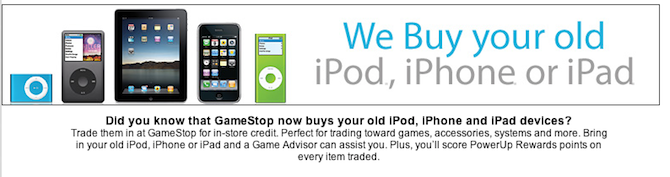
We’ve received a word from several sources that GameStop will soon begin offering the entire lineup of Apple’s popular iOS mobile devices such as iPhones, iPods and iPads at their stores. The announcement was made to dealers at an annual trade show in Las Vegas this past week. Also, as of this week, GameStop began accepting iOS device trade-ins for in-store credits. From the sound of it, our take is GameStop is first doing trade-ins/used products before phasing in new ones, perhaps as Apple launches iPhone 5 in October (Deutsche Telekom in Germany is now quietly accepting pre-orders).
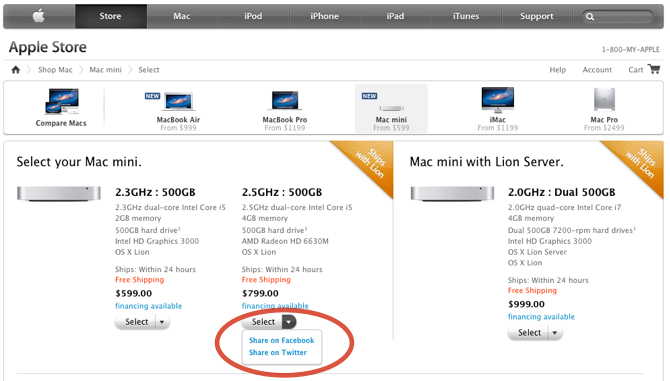
Apple’s online store last month mysteriously went offline for hours in what had been a slight tweak which saw a limited roll out of Facebook and Twitter sharing on the Mac Pro page and iPod classic pages. Today, the company rolled out the social sharing buttons for every product sold on the online store, including printers, accessories, speakers and other third-party products. It’s easy, just browse the store for a product you would like to share, click the right side of either the Select button or the big green Add To Cart button and then choose Twitter or Facebook to share.
We’ve also noticed that the various sections of Apple’s support site have been unavailable since yesterday, including the Repair Status, Product Registration and Service & Support Coverage tools. These outages might not be related to store-wide social sharing that has been live for hours. Perhaps those sections are dead as a result of a maintenance upgrade. Another possible explanation is that Apple is revamping those ahead of iPhone 5 launch, which now looks increasingly due in early October, as 9to5Macoriginally reported.
German-language Focus.de is reporting (Google translation) that T-Mobile customers in the country are now allowed to reserve Apple’s unreleased handset, the iPhone 5, since this morning. The iPhoneblog.defirst broke the story and 9to5Mac has also received several tips from our readers confirming that the Deutsche Telekom-owned wireless operators has in fact begun issuing so-called Premieren Ticket. These are basically support tickets – one per customer – for early adopters and informed buyers who couldn’t be otherwise convinced into buying the existing iPhone 4 or iPhone 3GS.
Those coupons will eventually let folks claim their handset, when it arrives, on a first-come-first-served basis. Only the carrier’s customers are eligible and only upon contacting sales representatives in one of the carrier-owned brick-and-mortar stores or by calling customer support. As you could imagine, Deutsche Telekom is pretty low-key about the initiative and thus shuns from advertising it apart from a rather cryptic hint on their website. Shortly after the report was published, Bloomberg was able to verify it with a company spokesperson, who said:
Deutsche Telekom AG (DTE) will allow customers to reserve the next generation of Apple Inc. (AAPL)’s iPhone as of today in anticipation of supply bottlenecks for the device, spokesman Alexander von Schmettow said by phone. The operator will hand out coupons to people who expressly request the successor model to the iPhone 4, without providing the name or release details of the device, he said.
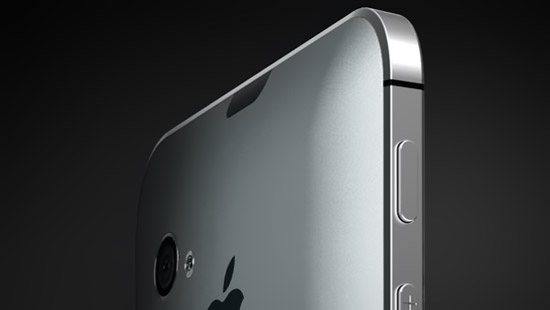
Hints have been multiplying since last week that Apple could be close to unveiling a fifth-generation iPhone. Apple store employees have received their iOS 5 and iCloud training material and internal Best Buy documents have pointed to a Sprint iPhone 5 launch in the first week of October. Both nuggets confirm 9to5Mac’s discovery from July that Sprint would get iPhone 5, based on an April job posting seeking cellular engineers in the Kansas City region, right in the neighborhood of Sprint’s headquarters. 9to5Mac also originally broke the news that Apple would begin accepting iPhone 5 pre-orders in early September, gearing up for an early October launch. Also…
An upcoming Apple store in the heart of Hamburg, Germany. Photo courtesy of alkr.com
In addition to the City Galerie store in Augsburg, which is opening tomorrow at 9:30am local time, Germany is about to become the home to yet another big Apple store, the country’s seventh. Local web sites iFun.de and Alkr.com published a series of photos this morning depicting a huge teaser poster in the window panels at the Jungfernstieg street in Hamburg, Germany. Apple has not yet published any details on their retail site, but the lettering says it all. The words “Moin” (German for “hello”) greet passers-by and the familiar white Apple logo that contrasts the hot red background focuses your attention on the smaller message above the entrance, “Wir freunen uns, dich bald hier zu begrüßen”.
Our German is pretty rusty so our friends overseas helped us with the translation, it means “We are pleased to welcome you here soon”. According to Alkr.com which peeked inside the store, “it looks as it should look and has the huge staircase right in the middle”. The store should open later this month. Apple also operates brick-and-mortar stores in the city of Frankfurt, Oberhausen, Munich, Augsburg and Dresden. Three grand openings are due tomorrow in Italy, Canada and Germany, leaving Apple with at least thirteen more stores to open if it’s to meet the self-proclaimed goal of thirty new stores before the end of September. Apple’s love for prominent, high-trafficked locations is evident with this store, too…
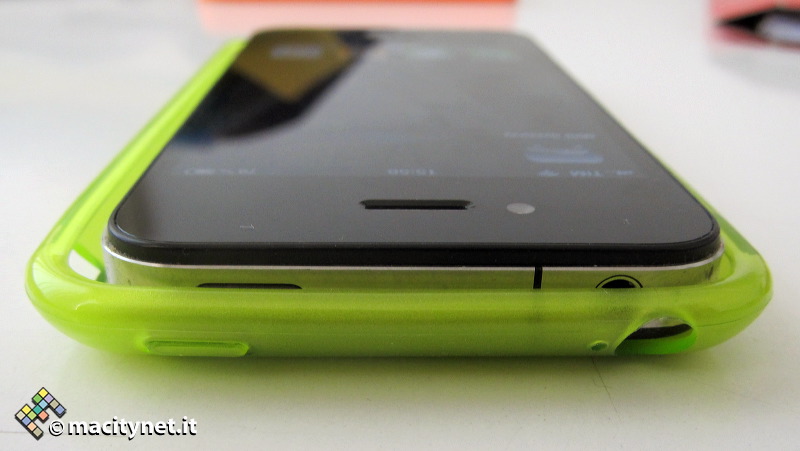
Case makers have traditionally been early sources of rumors about Apple’s next whatever big thing. Thus far, it’s been true for the upcoming iPhone 5. Financial incentives stemming from selling cases from day one are measured in millions of dollars in quick profits. Hence, it is really no surprise that case vendors have developed quality sources who tip them Apple gadgets’ dimensions and shapes so they could make molds on time.
It’s a risky, hit-and-miss game for case makers, but us journalists benefit from early leads into the design of Apple’s future gadgets. Here’s something completely different, though. Italian-language site Macitynet.it has put together a nice gallery of an iPhone 4 or fourth-generation iPod touch sitting in the supposed iPhone 5 case. This is definitely the best comparison image set we’ve seen yet. If anything, these shots nicely depict the assumed differences between a future iPhone and its current-generation counterpart. One more image after the break and lots more in the source article.
BTW, remember where you saw those silicone cases first, back in July.
Salesforce.com’s rock concert style Dreamforce 2011 conference has attracted industry heavy-weights, such as Google chairman Eric Schmidt who openly lauded Apple chairman Steve Jobs’s industry-defining achievements. In a chat with Salesforce CEO Marc Benioff on stage at San Francisco’s Moscone West center, Apple’s preferred venue for product launches, Schmidt said this of Apple’s former chief executive:
What Steve has done at Apple is certainly the best performance of a CEO for over fifty years, maybe a hundred years. But not only did he do it once, he did it twice. We’ve all benefited from the tremendous innovation at Apple. And I say this as a very proud former board member at Apple.
Of course, the comment earned Schmidt an instant applaud from the audience. He then addressed the question of his stay on Apple’s board at a time when Apple had already been deeply involved with the development of the original iPhone. He said, according to the San Francisco Chronicle:
I was on the board until I couldn’t stand the board anymore.
He wouldn’t elaborate, but it’s worth remembering that Schmidt resigned from Apple’s board of directors on August 3, 2009, years after Apple had finished the original iPhone development and well into the third-generation of the iconic handset. Steve Jobs was quoted in Apple’s official statement explaining Schmidt’s exit:
TUAWposted has this image and a short video, embedded below, of workers unloading huge glass panes outside Apple’s iconic Fifth Avenue store in New York City. The store lost its iconic glass entrance two months as Apple has been working to upgrade the cube to a more seamless appearance. Although the main entrance is closed, the store itself has been open all this time. The upgrade will reportedly cost the company $6 million, nearly matching the seven million dollars Apple allegedly paid back in 2005 to assemble the glass cube entrance. They want to reduce the number of glass panes from 90 to just 15, three per side, per released company plans.
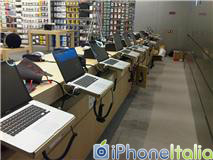
Images of the Campania store in Italy’s Caserta province courtesy of iPhoneItalia.com
Continuing on its aggressive goal to open twenty new retail stores before the end of September (here and here), Apple posted three new store openings in Italy, Canada and Germany. The Campania store, north of Naples in Italy’s Caserta province will be the company’s hundredth retail spot outside the United States. The store, Apple’s seventh in the country, is set to open at 10am this coming Saturday.
Also on Saturday, another grand store opening is scheduled at 9:30am local time in Augsburg, Germany, the City Galerie store. The third store opening is planned at the Mapleview Centre located in the town of Burlington, Ontario, Canada, seen below. The Mapleview Centre store will be Apple’s 21st store in Canada. As always, the first 1,000 visitors at each of the three stores will get a free T-shirt.
The Mapleview Center store in Burlington, Canada. Photo courtesy of iPhoneinCanada.ca
9to5Mac has learned that Apple’s iTunes chief Eddy Cue has been promoted to Senior Vice President of Internet Software and Services, reporting directly to Tim Cook, the CEO of Apple. Cue, 47, will also serve on Apple’s executive management team. The change has been communicated internally via Tim Cook’s email message to employees, enclosed below. Also, Apple’s PR beat Cue, whose LinkedIn profile still lists his old role, by updating his public bio page on the company’s site to reflect the change.
Interestingly, Cue is now responsible for Apple’s iAd division which has been struggling since its promising launch in the summer of 2010, culminating with the resignation of Apple’s former vice president of mobile advertising Andy Miller earlier this month. In fact, Eddy Cue is now in control of Apple’s entire cloud-based operation that encompass the iTunes Store, App Store, iBookstore and iCloud services, the CEO wrote in his email message. Here’s Cook’s email to troops:
Team, It is my pleasure to announce the promotion of Eddy Cue to Senior Vice President of Internet Software and Services. Eddy will report to me and will serve on Apple’s executive management team.
Eddy oversees Apple’s industry-leading content stores including the iTunes Store, the revolutionary App Store and the iBookstore, as well as iAd and Apple’s innovative iCloud services.
He is a 22-year Apple veteran and leads a large organization of amazing people. He played a major role in creating the Apple online store in 1998, the iTunes Music Store in 2003 and the App Store in 2008.
Apple is a company and culture unlike any other in the world and leaders like Eddy get that. Apple is in their blood. Eddy and the entire executive management team are dedicated to making the best products in the world that delight our customers and make our employees incredibly proud of what they do.
Please join me in congratulating Eddy on this significant and well-deserved promotion. I have worked with Eddy for many years and look forward to working with him even closer in the future.
Tim
Fast Company last year ranked Cue the second most creative person in their annual list of creatives. They wrote:
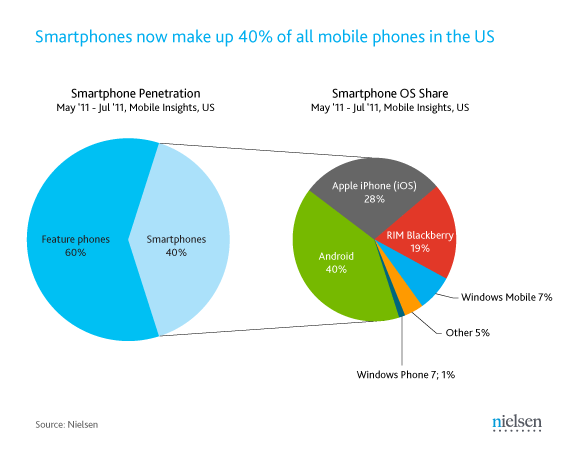
Like politics, smartphone wars come down to two major parties – Google and Apple – embroiled in a never-ending fight for consumers, especially those who have not made up their mind as to which operating system they’d like in their next smartphone. According to July 2011 data from Nielsen survey, “these ‘undecideds’ will be the ones device makers will be hoping to win over”. Interestingly, the Late Adopters among likely smartphone upgraders are the ones most likely to be undecided about their next phone platform.
The research firm discovered that forty percent Americans aged 18+ now have smartphones. Android leads the pack with a forty percent OS platform share and iOS came in second with 28 percent. Compared to Nielsen’s June 2011 study, Android grew its share by one percentage point while iOS growth fell flat. The BlackBerry platform lost one percentage share and now stands at nineteen percent.
Of those buying a new smartphone next year, one third would opt for an iPhone and another third would go Android. This leaves other manufacturers outside the Android-iOS duopoly to fight for the remaining 33 percent of buyers.
Contract manufacturer Foxconn, which makes Apple gadgets, is expected to manufacture twenty million iPad 2s in the third quarter, more than doubling the 9.25 million iPad units Apple sold during the previous quarter of this year. The tidbit came in a DigiTimesreport today:
For the third quarter, Foxconn is expected to ship 20 million units of iPad 2 to Apple, a growth of 60% sequentially, and the orders should be the major growth driver for the company in the second half.
Foxconn just reported its financial results for the first half of this year. Net profits reached NT$27.38 billion, or about $945.93 million, but earnings per share decline 20 percent from the year-ago quarter, down to NT$2.58. For the Christmas quarter, however… Expand Expanding Close
Back in July, someone sent in this photo described as portraying a prototype phone, presumably iPhone 5, in the hands of an Apple employee on his way from work in San Francisco.
We find it hard to believe Apple would be foolish enough to lose another iPhone prototype – and at a bar, too – but this comes from CNET and they’re vouching for it. An iPhone prototype – probably for an upcoming model, allegedly went missing last month in Cava22, a Mexican restaurant and bar in San Francisco’s Mission District.
The device may have been already sold on Craiglist for $200, the publication has it. CNET has learned that the errant phone “sparked a scramble by Apple security to recover the device over the next few days”. Apple representative allegedly contacted the police, the story goes, to tell the device was “priceless” and that Apple “was desperate” to see it recovered. No details were provided about the phone’s looks or what iOS version it was running. Here’s the thriller part:
Apple electronically traced the phone to a two-floor, single-family home in San Francisco’s Bernal Heights neighborhood, according to the source. When San Francisco police and Apple’s investigators visited the house, they spoke with a man in his twenties who acknowledged being at Cava 22 on the night the device went missing. But he denied knowing anything about the phone. The man gave police permission to search the house, and they found nothing, the source said.
And this is where the story gets interesting:
Before leaving the house, the Apple employees offered the man money for the phone no questions asked, the source said, adding that the man continued to deny he had knowledge of the phone.
Could it be just us or does that last bit make the entire story less believable. Apple last year pushed the police and FBI into raiding a journalist’s house and now they bribe someone to get their stolen property? Expand Expanding Close
UPDATE 1 [Wednesday, August 31, 2011 at 12:17pm EST]:AT&T has provided us with the official line regarding this development, found at the bottom of this article.
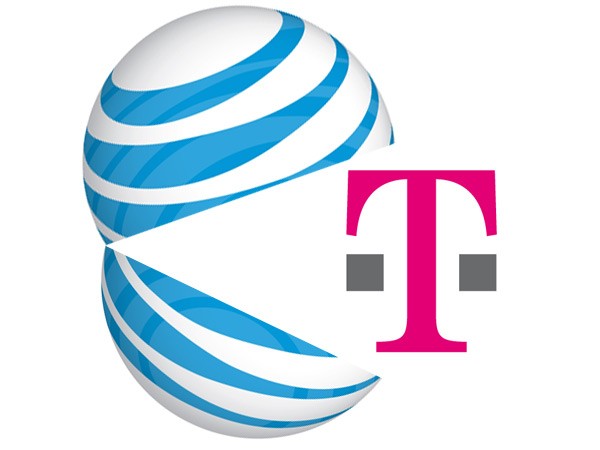
Bloomberg reports that the U.S. government has made a move to block the proposed merger of AT&T and T-Mobile USA valued at $39 billion:
The U.S. government sued to block AT&T Inc.’s proposed $39 billion acquisition of T-Mobile USA Inc., saying the deal would “substantially lessen competition” in the wireless market.
The publication writes that the Justice Department filed a complaint Wednesday in federal court in Washington. The government is arguing that the proposed transaction would effectively legitimize duopoly in the country, adding in its filing that “AT&T’s elimination of T-Mobile as an independent, low- priced rival would remove a significant competitive force from the market”.
The government’s reasoning resonates with Sprint, the nation’s third-largest wireless operator, which asked Uncle Sam to intervene on the grounds that the resulting super carrier would prevent any meaningful competition on the market. AT&T denied Sprint’s accusations and said the merger would lead to fewer dropped calls and cheaper data plans for customers.
This is my nexthas a statement from FCC chairman Julius Genachowski who expressed “serious concerns” about competition:
By filing suit today, the Department of Justice has concluded that AT&T’s acquisition of T-Mobile would substantially lessen competition in violation of the antitrust laws. Competition is an essential component of the FCC’s statutory public interest analysis, and although our process is not complete, the record before this agency also raises serious concerns about the impact of the proposed transaction on competition. Vibrant competition in wireless services is vital to innovation, investment, economic growth and job creation, and to drive our global leadership in mobile. Competition fosters consumer benefits, including more choices, better service and lower prices.
If the transaction does indeed get rejected, T-Mobile USA will walk out with…
There is no shortage of GPS-enabled apps on Apple’s mobile devices. Unfortunately, quality programs usually cost north of fifty bucks. For example, Garmin’s StreetPilot, an excellent navigation app for iOS gadgets, is a $60 download – you can get refurbished low-end handheld GPS devices for that sum. Figuring out the realities, Garmin released a brand new, low-cost, subscription based personal navigation iOS app, the Garmin StreetPilot onDemand.
The program works with iPhones as well as WiFi and 3G models of iPad and costs just 99 cents a month to use. It includes public transit information for 31 metropolitan areas, pretty 3D graphics, standard walking, driving and public transportation directions, spoken turb-by-turn directions and more.
You can download Garmin StreetPilot onDemand from the App Store and let iTunes charge your credit card 99 cents each month or opt for a premium subscription that comes with advanced features. More on that, plus three more screenshots after the break.
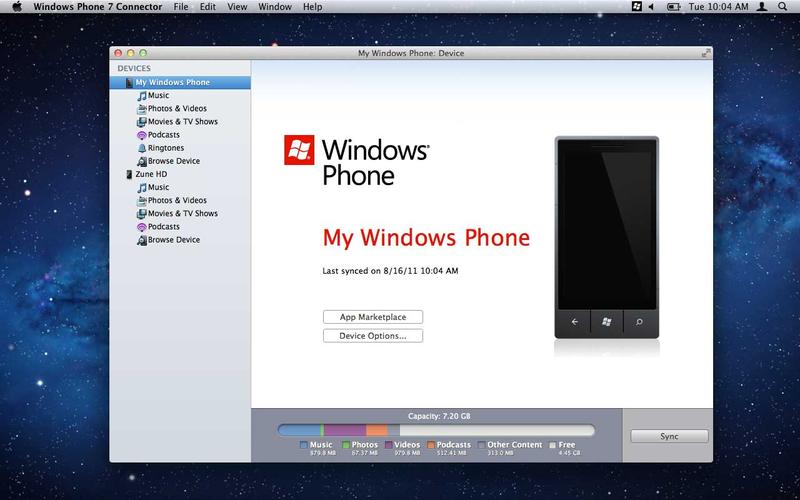
Microsoft rarely moves fast to keep their Mac software up-to-date, so it’s a welcome sign that its Connector app has just been updated, ahead of the flurry of new Windows Phones expected any time now. Of course, Microsoft’s mobile platform is not faring well: It declined to a single-digit percent market share and is now tucked away under the Other category in market surveys.
But if you do care, the updated Connector app will let you access Microsoft’s app store called Marketplace, transfer ringtones to Mango-powered devices, drag files, import images from Apple’s Aperture app and fully sync Mango phones with your Mac. Bonus: It syncs Zunes, too. You can download Windows Phone 7 Connector from the Mac App Store free of charge. Full specs and couple more screenies after the break.
Remember when the iPad was but a rumor? And how the rumor-mill was citing unnamed Hollywood executives who used to boast how an Apple tablet would be awesome for watching movies? Apple, the sources would have us believe, was supposed to let customers subscribe to bulk TV channel in iTunes and enjoy quality TV programming on their tablet. Unfortunately, that wasn’t meant to be. Blame it on the forces that be, which couldn’t come to terms at the negotiating table.
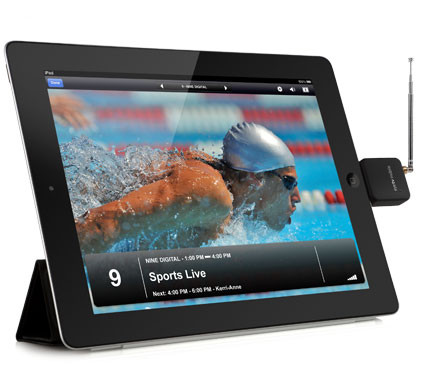
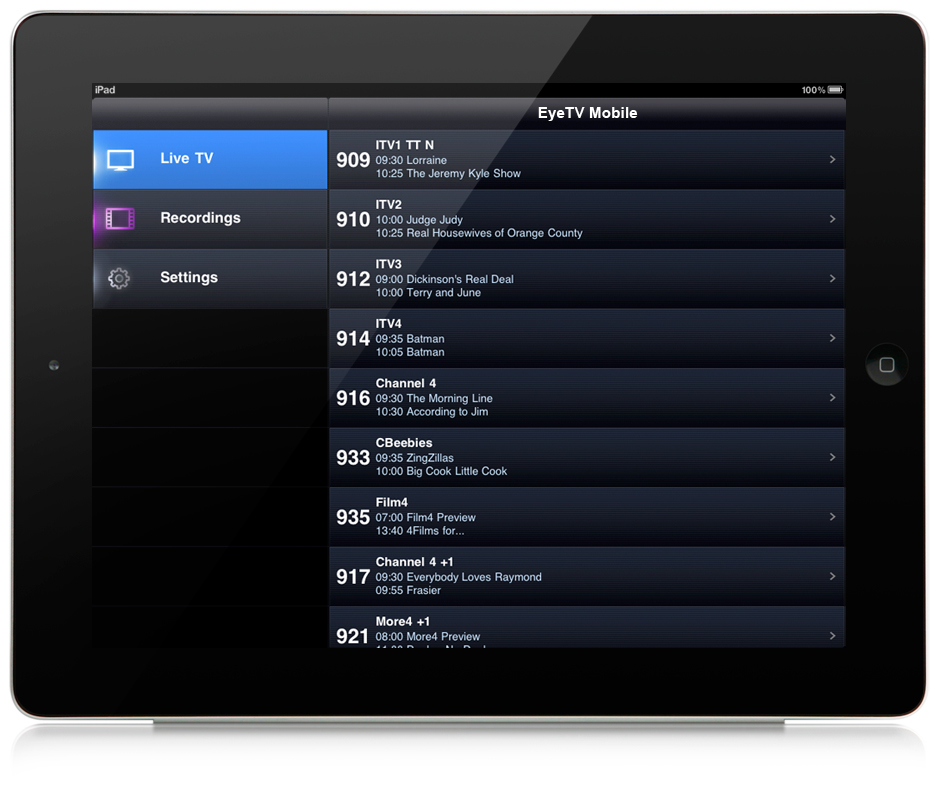
Enter Eye TV Mobile, an iPad 2 dongle from Elgato, the established maker of cool accessories for Apple products. Just pop in this thing into your iPad 2’s 30-pin dock connector and you’re ready to enjoy live television broadcast via an integrated DTT/Freeviewer receiver. Even better, you can record programs using a free companion app, browse an electronic program guide and more.
On the downside, this dongle won’t capture analogue television broadcasts nor will it work in the U.S., it’s basically a digital TV tuner for the European market. The dongle will set you back a hundred Euros/quid. Elgato has yet to announce availability so head over at the Elgato site to check out more details. Engadget’s hands-on video is right below the fold.
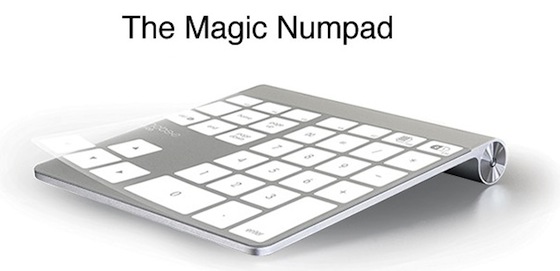
Here’s an original idea from Mobee called the Magic Numpad, a simple accessory that turns your Magic Trackpad into a full-blown numpad by applying a thin plastic film that has a numpad printed on it, closely resembling the numeric keypad found on the wired Apple Keyboard. Of course, this thing ships with the accompanying Mac OS X app that figures out where you touched the trackpad and translates your input into correct key commands in OS X.
What’s best, you can easily peel the Magic Numpad off at any time and they ship three films with different keyboard layouts for your pleasure: A numpad + trackpad, an extended numpad and a numpad with customizable keys. If you’re interested, Mobee’s online store lists the Magic Numpad with a $30 price tag, shipping in October. Or, if you’re old-fashioned, you can just pick a real numpad for your Mac for $10. More press shots below. Expand Expanding Close
Apple indeed operates the largest online content store in the world, the iTunes Store, but its storefront in iTunes and on the web leaves a lot to be desired. As a result of this, searching the iTunes Store often resembles picking a needle in the haystack. I mean, a fifteen-year old showed Apple who’s who in the usability department by creating iTunes Instant, a web-based search tool. Another guy also wrote App Store Instant in the spirit of Google’s Instant Search.
Tunesque from Marco Tabini is awesome. A lightweight search front end, Tunesque sits in your Lion’s menu bar, awaiting your command. Just begin typing and Tunesque does its thing. This nifty little program sports a blue search box that reminds a lot of Spotlight, but the similarities don’t stop there. Tunesque formats its output Spotlight style, grouped by iTunes Store categories such as apps, music, movies, books and more, allowing you to easily spot what interests you. Hover over an item and up pops a handy iTunes description that includes a product shot, description and user ratings. That’s not all…
France-based Hardmacreports that Apple is readying a remote iOS device testing tool for deployment to its service personell. It is web based and will send the diagnostic information, relatively anonymously, to Apple technicians. A tool of this sort is already in use by Apple technicians but Hardmac claims that this once can be used remotely.
Apple announced (internally) that they have put the final touch to the tools that will facilitate a diagnostic. It will be simple to use and can be used remotely. In effect, this systems operates entirely online. An email is sent to the device containing a URL (this can also be entered by hand) and the device will connect via Mobile Safari and the telephone to start internal checks and sends the result of it to the Apple servers to which the service centres are connected.
This would be a pretty clever and powerful tool to do basic diagnostics on iOS devices which could help technicians diagnose and fix device problems over the phone, saving both the customers and Apple time and effort. Obviously, the diagnostics would only work on devices that were booting up and running Mobile Safari -which isn’t the case in most device repair situations. The test can only identify the following information:
Health, level of load of the battery, duration passed since the last complete charge,
Minimum level to which the battery was discharged,
iOS version installed,
To know if the mobile was turned off normally the preceding time.
The tools should be available in the coming months and Hardmac doesn’t speculate whether the test will be able to detect if a device is jailbroken. Expand Expanding Close
That question’s been on our minds ever since the rumor began swirling that the world’s largest online retailer was meticulously prepping a tablet of its own. It’s easy to dismiss Amazon’s efforts in light of Apple’s stellar iPad sales. After all, the tablet market is really an iPad market, right? Nonetheless, the Amazon tablet appears to be in the works, per multiple sources, some more credible than the others. The latest example: Amazon is currently testing a mobile-optimized version of its shopping web site with a small portion of users. Why bother now if not for own tablet?
The web site changes reportedly include tablet-friendly tweaks, such as bigger controls so you don’t have to sand your fingers down. Another tell-tale sign: The new site lends itself prominently to Amazon’s tablet-friendly services such as Instant Video, MP3 Store, Cloud Player, Kindle, Cloud Drive, AppStore for Android, Game and Software Downloads and Audiobooks. This feels like part of launch preparations, if you ask us.
Then there is the Amazon brand, which certainly gets a wider recognition than any other Android tablet brand out there. In fact, a Retrevo survey (charts below the fold) has more than 50 percent respondents favoring a tablet from Amazon versus any other Android brand. This, in and of itself, is remarkable as Amazon has yet to release an Android tablet. Then there is the Amazon price aggressiveness.
Amazon is a rare example of a company that demonstrated willingness to lose money on Kindle hardware in order to accelerate mass market adoption, later recouping losses from content sales. We’ve seen this strategy at work in the console world, but it’s a rarity in consumer electronics. So, if Amazon is willing to price its tablet competitively and can supply the market with enough units, they should be able to steal some thunder from iPad.
A recent survey from Nielsen revealed that a tablet from Amazon marrying e-reading features of the Kindle to the computing capabilities of tablets could appeal to wide demographics. Nielsen says women now amount to a whopping 61 percent of e-reader owners, up from 46 percent last year. As for tablet and smartphone adoption, women climbed only by four and three percentage points in the period, respectively. The numbers led Silicon Alley Insider to joke that “women are from Amazon, men are from Apple”.
Some analysts also see bright future ahead of Amazon’s slate. For example…
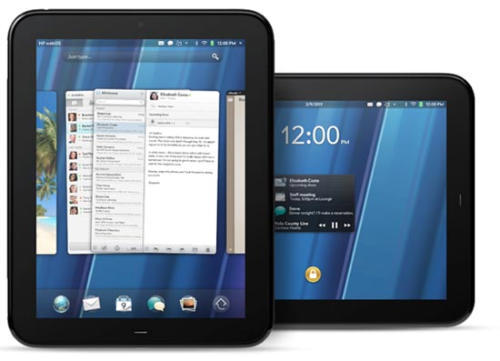
You surely recall how computer maker Hewlett-Packard announced earlier this month it would exit the low-margin PC business, stop selling smartphones and tablets and sell out or license the webOS operating business. Well, less than two weeks later HP’s PC chief Todd Bradley tellsReuters that the TouchPad could make a come back:
Bradley said the company could resurrect HP’s short-lived TouchPad tablet computer, which was introduced on July 1 before being terminated only about six weeks later. ‘Tablet computing is a segment of the market that’s relevant, absolutely,’ Bradley said.
We’re not sure quite what to think of it. Was the whole “we’re killing the TouchPad” thing just a marketing ploy? Perhaps the news that Samsung wants to become the next HP and whispers that they are “considering purchasing webOS” prompted top dogs at Hewlett-Packard to second-guess CEO’s decision to focus on software and services instead on cool gadgets? Why else would Bradley tell Reuters that selling the PC division to a rival like Acer or Lenovo is “not a desirable alternative”?
Is $99 the new $499? Well, no. A tier one company can’t make anything close to the TouchPad and hope to break even at $99 yet. But if anything, the $499 TouchPad that was plagued with a sell-through rate of just ten percent versus the $99 TouchPad that is seemingly flying off the shelves reinforces the notion that price matters in this game – perhaps more than any other feature. Consumers clearly appreciated iPad’s aggressive $499 price point. For a gadget you could do without in your life, price remains the crucial factor. For example…