A certain Cupertino, California consumer electronics powerhouse has more cash on its hands than the cash-strapped US government which is struggling to raise its debt limit before the August 3 deadline and avoid a default at the same time. Business Insidernails it down, saying “the world’s largest tech company has more cash than the world’s largest sovereign government”. Apple sat on a cash pile of $76.2 billion at the end of the June quarter, the sum which is comprised of cash, cash equivalents and marketable securities. Per this statement from the US Treasury, the government had an operating cash balance of $73.8 billion at the end of Wednesday, July 27. As Asymco’sHorace Dediu commented, Apple’s cash hoarde “is now nearly 16 percent higher than three months ago, the amount added last quarter is higher than the amount on hand 4.5 years ago and the cash added is higher than Google’s overall revenues in the quarter”. And unlike the US government…
Is there no limit to the tolerance margin in Apple Stores? After comedian Mark Malkoff brought his pet goat into an Apple Store (go past the fold for a video of Malkoff’s stunt), another guy found out that Apple Stores will in fact service his knock-off MacBook Air. And no, we are not talking about counterfeit Apple Stores in China, although the store in question was located in China.
Per this report from the Chinese forum Sina Weibo, relayed by MIC Gadget, a Chinese guy brought his laughable MacBook Air knock-off to Apple’s flagship store in the Shanghai’s Pudong district. An Apple Genius not only agreed to repair the poor guy’s computer, but also posed for a shot which is now making the rounds on the web. From the looks of it, the Genius appears to be genuinely surprised by just how closely the rip-off Air resembles the real one. Yup, knock-offs are getting sophisticated these days. Now, about that goat…
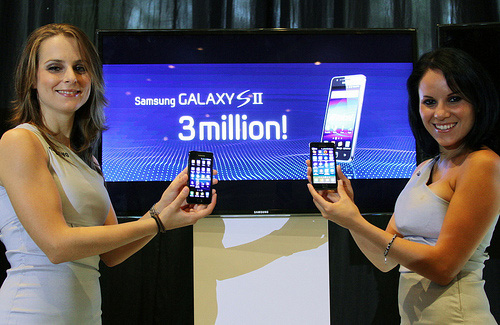
Samsung, which reported second-quarter earnings today, did something odd, especially if you consider peculiarity of the timing. The company has stopped reporting sales data and forecasts for its mobile phones and tablets, notesThe Wall Street Journal. Indeed, Samsung did not divulge phone or tablet shipments data in today’s earnings release, noting instead that “shipments of mobile handsets increased in the high-single-digit range quarter-on-quarter”. The firm’s chief of investor relations Robert Yi defended the move in a conference call with Wall Street analysts, citing competitive reasons:
As competition intensifies, there are increased risks that the information we provide may adversely affect our own businesses.
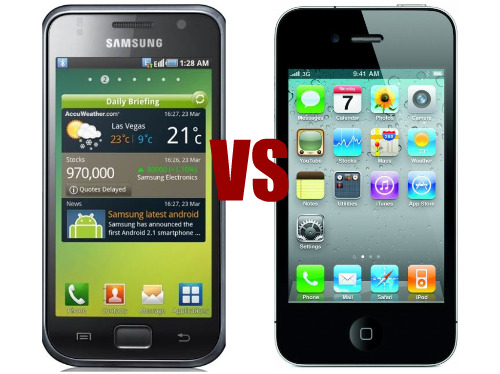
Analysts tell the Wall Street Journal that the change in reporting practice was “probably due to its continuing legal battle with Apple”. As you know, Samsung is embroiled in a tough legal spat with Apple which accused them of ripping off the iPhone’s hardware, software, design, packaging and even marketing. In that respect, it would make sense for Samsung to hide sales numbers because they are growing at an astounding rate and with an IDC-estimated second-quarter smartphone sales of 19.2 million units they indeed are within spitting distance of Apple’s record-breaking shipments of 20.34 million iPhones.
In fact, several research firms warn Samsung’s 500 percent unit growth versus Apple’s 142 percent growth suggests that Samsung most likely will overtake Apple this year to become the world’s #1 smartphone maker. The decision to cease reporting phone sales could also stem from failed expectations as Samsung’s top brass might have been convinced they would outsell Apple this quarter, as Boston-based Strategy Analytics wrongly predicted. Seeing the Apple hype machine at work and bloggers rave about iPhone milestones, it is entirely possible that Samsung’s leadership concluded it would be in their best interest if they withheld sales data.
Research firms IDC, ABI Research and Strategy Analytics have released their respective smartphone market data this morning and the numbers confirm that yes, Apple is the world’s leading smartphone maker in units (and revenue, for that matter), as previous surveys by Strategy Analytics and Nielsen pointed out. Furthermore, Apple is going after LG for the title of the world’s #3 maker of all phones. Even though their data includes preliminary estimates, Apple came on top with a record 20.34 million iPhones shipped, up from the 18.64 million iPhones shipped in the previous quarter and representing 142 percent unit growth over the year-ago quarter.
Apple’s achievement is even more surprising knowing they accomplished it with a one-year phone. Samsung shipped an IDC-estimated 19.2 million smartphones, a substantial increase over the 3.1 million units from the year-ago quarter, representing a 500 percent growth in units. In terms of market share, Apple held a 20.3 percent share of the smartphone market in the second quarter versus 19.2 percent for Samsung in the industry that shipped an IDC-estimated 110 million smartphones in the June quarter (ABI: 103 million). Samsung, which reported earnings today, also said it would stop reporting phone sales and forecasts for its mobile phones and tablets, citing competitive reasons. IDC explains Apple’s victory over Samsung:
Apple maintained its number four position overall but closed the gap on Top 5 competitors thanks to another record unit shipment quarter. The company easily posted the highest growth rate of the worldwide leaders despite the fact that its flagship iPhone 4 is now more than a year old. The triple-digit shipment volume growth allowed Apple to more than double its share when compared to the same quarter last year. Apple’s ability to bring its smartphone momentum to developing economies, where it’s less successful, will help dictate the company’s smartphone fortunes in future.
However, ABI Research senior analyst Michael Morgan comments
Although Apple’s 142% YoY growth placed it as number one this quarter, Samsung’s 500% YoY growth shows that going forward, the top smartphone OEM position is Samsung’s to lose.
Whether or not Apple remains the top smartphone vendor in the September quarter remains to be seen, but Samsung’s growth relative to Apple indicates that the Korean firm might dethrone Apple as soon as the next quarter. ABI says some 47 million Android smartphones were shipped in the second quarter, giving Google a 46.4 percent platform share. Samsung captured 34 percent of those Android shipments, HTC 23 percent and Sony Ericsson 11 percent. Note that HTC is the leading Android vendor in the US and the nation’s second-largest smartphone maker, according to Nielsen’s study from yesterday. Another interesting factoid…
Boy Genius Reportrelays a story by Taiwan Economic News asserting that Pegatron Technology, not Foxconn, has landed a contract to build iPad 3. Per the original story:
After garnering Apple Inc.’s big order for 15 million units of iPhone, Pegatron Corp., a Taiwan-based contract manufacturer of electronic products, is allegedly to snap up the customer’s another order for iPad 3 production, poised to shake up Hon Hai Precision Industry Co., Ltd.’s leading status in Apple’s supply chain, according to industry sources. Hon Hai is likely to turn Apple’s another contract order for iPad 3 manufacturing over the Taiwanese counterpart, as the customer has considered looking for a second iPad supplier to reduce over-dependence on Hon Hai, especially at a time after an explosion accident occurred at the firm’s Chengdu factory in May. Therefore, Pegatron, having effectively integrated its production resources specifically for tablet PCs and built close partnership with Apple by supplying iPhone’s CDMA edition to the customer, has been regarded as the most likely candidate for handling Apple’s contract order for iPad 3.
Author Steve Chuang named purported iPad 3 suppliers, including the likes of TPK Holdings which is to provide touch panels for iPad 3, battery suppliers Simplo Technology and Dynapack International Technology, Largan Precision (camera lenses) and casings from Foxconn Technology. Those names tie nicely with a Tuesday report by DigiTimes that named other suppliers of iPad 3 components, including Novatek Microelectronics (LCD driver), Richtek Technology (integrated power management), Capella Microsystems (ambient light sensors) and Integrated Memory Logic (programmable gamma/Vcom buffer solutions). The China Times independently reported that iPad 3 would come “later this Fall”. This development is nothing unusual, mind you…
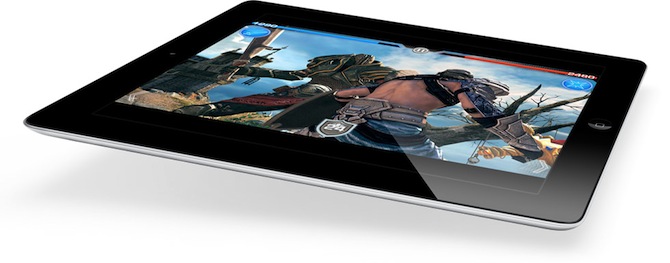
We all know iPad is a great gaming device. Apple is bound to grow iPad’s entertainment allure as it puts out newer, faster iPads with juicer graphics and user base expands. But for some high-profile publishers, gaming on iPad is now their focal point as the traditional console business has been in a steady decline. Blame it on high-priced hardware and software in the console world, more attractive touch gaming platforms and consoles’ multi-year upgrade cycles. But we’re not talking any publisher here, this quote comes from the mouth of John Riccitiello, the Electronic Arts CEO, who toldIndustryGamers yesterday:
Consoles used to be 80% of the industry as recently as 2000. Consoles today are 40% of the game industry, so what do we really have? I think that the pattern against which Nintendo is no longer resonating is over anyway. We have a new hardware platform and we’re putting out software every 90 days. Our fastest growing platform is the iPad right now and that didn’t exist 18 months ago.
Wow, that’s a pretty strong statement. What’s more, coming from the world’s super publisher, it definitely legitimizes Apple as an important player in the gaming space. No wonder Nintendo called Apple “enemy of the future” and slashed the price of the 3DS handheld from $249 to $169 as the iPhone and iPad ate its lunch (and Forbesagrees). On top of that…
If you’re a Communicator for Mac user, you no doubt were disappointed finding out that the software crashes a lot in Lion. Worry not, as Microsoft tells us via a blog post that an update is due via the Microsoft AutoUpdate mechanism “in the next day or so”. The team’s Pat Fox also revealed that some of the most exciting features in Lion are coming to Office for Mac 2011:
Yes, we are working hard with Apple to enable versioning, auto save, and full-screen for Office for Mac 2011. I know your next question will be “when?”, and unfortunately I can’t answer that – but it’s likely measured in months not days – just to set expectations.
And if your daily productivity involves Office for Mac 2004, Microsoft warned earlier, don’t upgrade to Lion because Office 2004 was a PowerPC-based product and Lion no longer includes Rosetta, a software emulator for the PowerPC instruction set. It’s nice that major software developers are adding Versions, Auto Save and Full Screen to their apps. Are you listening, Adobe?
Op-chief Tim Cook recently in a conference call with Wall Street analysts re-iterrated Apple’s stance that the Apple TV box remains “a hobby” for the company. The comment jibes with Steve Jobs’s argument from the Wall Street Journal’s D8 conference last year when he said set-top box makers like Apple and Google faced a go-to market problem, calling the television market “balkanized” (full quote and video below the fold).
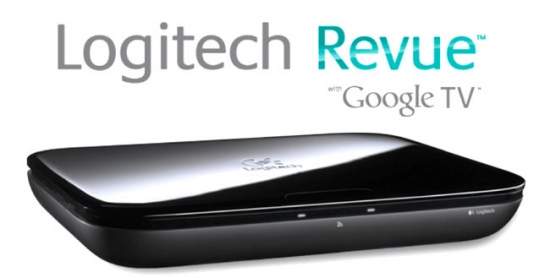
Is it surprising then to find out that Google TVs are not selling very well, just like Apple TVs? What we didn’t know is how bad the situation is for the search giant’s set-top box pet project. TIMNpoints at a prepared statement from Logitech, the maker of Google TV-powered Revue box, in which the company acknowledged “very modest sales” of the product in the June quarter:
Sales of Logitech Revue were slightly negative during the quarter, as returns of the product were higher than the very modest sales. We believe the significantly lower everyday price for Logitech Revue, reduced from $249 to $99, will generate improved sales.
Google on its part will update the Google TV project with Honeycomb code later this summer, adding the ability to download and run apps on your television. But despite the aggressive price cut which will cost Logitech $34 million in one-time charges and the fact that the Revue now price-matches the $99 Apple TV, ordinary consumers will still be avoiding set-top boxes in droves, regardless of a brand. Apple on its part could tackle the issue with a rumored full-blown television set with the Apple TV functionality built-in. Now, about that Steve Jobs argument…
We have received numerous tips regarding issues with OS X Lion resulting in Macs freezing after waking up from sleep. A thread on Apple’s Discussion forum about this problem already has over 12,000 views and more than 300 replies. The issue appears to predominantly affect 2011 iMacs, although some of the posters have reported freezes after waking up their MacBook Pros from sleep. The only solution is to hard-reset the machine by holding down the power button.
Another thread is filling up with complaints about Lion freezing at the login screen (disabling the switching graphics feature in energy presets doesn’t help). Regarding the first issue, user rubenlx described problems with his brand new 27-inch iMac running Lion:
The machine freezes randomly when starting to play videos, either on Youtube, Quicktime, iTunes. When it freezes, the mouse still works, but the machine doesn’t respond to any command, requiring me to hit the power button and restart the computer.
Another poster, likely a newbie to the world of Apple, complains:
This is ridiculous… Not a good start to a new OS system. Does this stuff happen at every update? I can’t even click on the Apple menu to force quit.
Other people report freezes when playing back video clips in iMovie, iPhoto, GarageBand and other apps. Moreover, the problem is persistent regardless of whether users have the latest version of Flash Player installed, or any version of it for that matter. This suggests a likely problem with the QuickTime subsystem which mostly handles video encoding and decoding in third-party applications, in which case either the 10.7.1 update or a graphics firmware update could fix this problem. Here’s a little trick to help alleviate the freeze after playback issue…
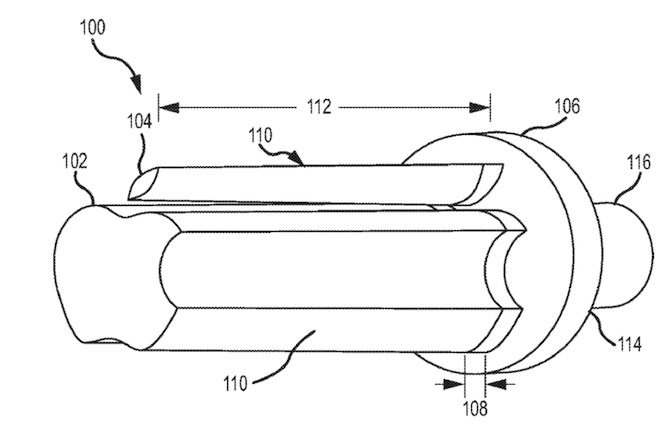
An interesting patent application from Apple surfaced today in the United States Patent & Trademark Office’s database. Entitled “Aparathus and Method for Intricate Cuts”, it describes a cutting apparatus of sorts and includes a drawing that suggests Apple’s been using this tool to cut out the Apple logo in casings of its products. Apple writes:
The cutting apparatus includes a base member and an elongate member extending from the base member. The elongate member includes a tapered region having an abrasive surface. The tapered region defines at least one vertex defining an angle of a desired cutout shape. Additionally, the tapered region is toothless.
Multiple tools like this can be sequentially inserted through an aperture in a fiber-in-matrix material to “incrementally increase the size of the aperture to form the radial shape having at least one sharp feature of the tapered elongate members”, the company explains. But why go to great lengths and devise your own tool for a simple task like punching shapes in metal?
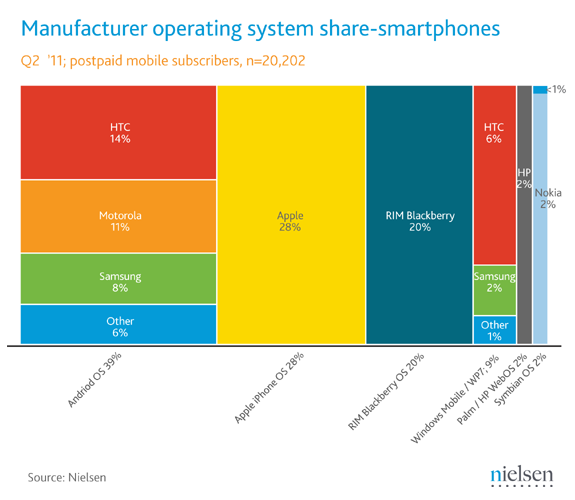
Research firm Nielsen chimed in today with a survey that puts Apple as the leading handset maker in the United States whilst Android is portrayed as the top mobile operating system in the country. Those findings follow a recent analysis which had Apple overtaking Nokia to become the world’s leading smartphone vendor in July, also corroborated by IDC figures. According to Nielsen’s June data, Google’s Android remains the nation’s top phone platform with a 39 percent of the country’s consumer smartphone market. Apple’s iOS follows with 28 percent and BlackBerry maker Research In Motion continues to bleed share, down to 20 percent in the second quarter of 2011. Windows Mobile and Windows Phone combined grabbed nine percent, webOS and Palm OS were barely a blip with two percent, as was Nokia’s dying Symbian OS.
Apple on the other hand is the top smartphone maker in the United States that controls 28 percent of the market (excluding iPods and iPads). That’s partly “because Apple is the only company manufacturing smartphones with the iOS operating system”, Nielsen argues. HTC shares second spot with Research In Motion with a fourteen percent share of Android devices and six percent of Windows Phones for a total of 20 percent share of the whole market, same as the BlackBerry maker. HTC is also the nation’s leading Android and Windows Phone vendor with 14 percent and six percent share, respectively. No wonder Apple is suing HTC and seeking to ban import of their phones into the US…
Carrier Sprint today announced a fifteen-year deal with LightSquared enabling them to offer 4G LTE services on their network. As you know, Sprint currently offers wireless broadband marketed as 4G through its majority stake in Clearwire, utilizing their WiMax technology. Sprint couldn’t have signed a better deal to joing the 4G LTE craze. LightSquared will actually pay the carrier $9 billion in cash over the course of eleven years to deploy an LTE network, spending itself $13 billion over the next eight years on boosting their network capacity. In return, the company will be allowed to sell their 4G service to Sprint customers. Sprint can tap up to 50 percent of LightSquared’s 4G capacity and a roaming agreement will be in place by 2012.
On the downside, LightSquared plans on launching its first 4G market in 2012 and finish commercial deployment by 2015. Compared this to AT&T and Verizon Wireless which already operate 4G LTE service in select markets and plan to commercially deploy their networks by the end of next year. However, Sprint is the nation’s third-largest carrier with 51 million customers as of June and they have been rumored to have been testing a Sprint iPhone for some time, with Apple seeking a carrier engineer in the Kansas City area, where Sprint is headquartered.
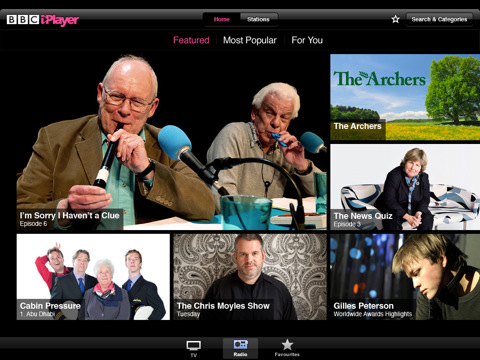
Guardianreports that BBC iPlayer will launch in eleven European countries, coming later this year to United States. The subscription-based service that streams some of the finest BBC programming launched its iPad app today in Austria, Belgium, France, Germany, Italy, Luxembourg, Ireland, the Netherlands, Portugal, Spain and Switzerland. In those markets, BBC iPlayer will require a monthly fee of 7 Euros. The app provides on-demand access to BBC’s popular news and documentaries, in addition to both archive and most recent shows such as Doctor Who and Top Gear. Initially, BBC’s catalogue will include about 1,500 hours of content, with a hundred hours added each week.
In the US, BBC.com managing director Luke Bradley-Jones told the publication, will go head to head with the likes of Hulu and Netflix subscriptions and the low monthly fee of eight bucks should help BBC compete with those content providers on their own turf. You can download the app free on App Store in select markets, but note the system won’t let you stream content unless you access it from one of the supported countries. Another goodie for international viewers: Content can be streamed over 3G cellular networks and individual episodes can be downloaded for offline viewing. Interestingly, the team worked closely with Apple on the offline feature, Smith explains:
Now that Apple let Lion out of the cage, Google is developing a Chrome browser version to take advantage of the operating system’s gestures support. The search company announced on the Google Chrome Releases blog a new developer build (version 14.0.835.0) that re-enables a two-finger gesture “which respects the system preference”. A three-finger swipe that would previously move you backward and forward in browsing history now respects system-wide preference in Lion that flips between full-screen apps. Chrome still lets you go forward and backward in browsing history by invoking a two-finger swipe left or right.
The release also comes with a multi-profile user interface improvements and support for a new communication protocol for Web Sockets. The former lets one browse the web using multiple online identities and switch them easily. Windows and Linux builds added platform-specific tweaks and changes as well. It’ll be some time before Chrome 14 makes it down to the stable channel, but if you wish to try out experimental new features without messing with your existing Chrome installation and user profile, we recommend installing the Canary build of the browser. Expand Expanding Close
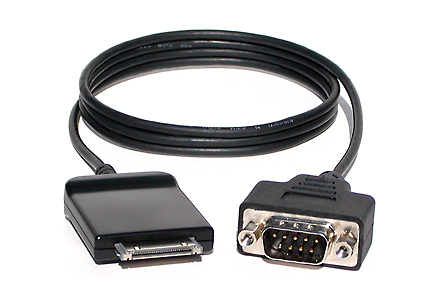
Never mind the iPad’s lack of USB and SDcard slots, how about a serial port? Our younger readers are now probably going like, “a serial what?”, but those of you that have been around for a while sure have fond memories of the romantic pre-USB era of computing when we connected peripherals like mice, keyboards and printers to our computers using the then ubiquitous nine-pin serial port. Well, a new accessory connects your modern-age iOS portable gear to old-school devices utilizing the serial interface. As you can see in the shot above, the $59 RS-232 serial cable has the iPod dock connector on one end and the male DB-9 connector on the other. Actually, we first spotted it at Macworld in January of last year.
The accessory is the result of collaboration between Redpark Product Development and Keyspan engineers behind the popular USB-Serial adapters for Macs. Because iOS doesn’t support the serial interface protocol, RS-232 peripherals don’t just work with existing apps. That’s why a Redpark serial communications library is available, helping developers write iOS apps that communicate with serial devices. This FAQ also states the cable does not work at this time with App Store apps out of the box. It might eventually, Redpark says, but it will “depend upon Apple policy”. With that in mind, the possibilities are seemingly endless….
IMS Research put out a study estimating that some 420 million smartphones will be sold worldwide in the 2011 calendar year, or 28 percent of all handsets sold. The survey portrays Apple as making huge gains in the space, buoyed on the sales of 18.65 million and 20.34 million iPhones in their last two quarters – enough to garner a 19 percent share of the global smartphone market.
Combined with Nokia’s slumping sales, Apple emerged as the world’s leading smartphone maker. It remains to be seen whether Samsung, which is due to report its earnings Friday, will beat Apple’s smartphone sales (some say it will). IMS’s Analyst Josh Builta says this of LG:
LG, despite being the third largest OEM in the world, has offered a fairly limited smartphone portfolio in recent years, a factor that resulted in the company reaching less than a three percent share of the total smartphone market in 2010.
However, Nokia’s fall surprised even the most seasoned watchers and is unheard of in this industry. They shipped 16.74 million smartphones in the June quarter – a 34 percent annual decline – versus Apple’s 20.34 million units – a 134 percent annual increase – they killed Symbian and are only shipping the well-received but short-lived MeeGo-powered N9 to select markets. Here’s how the analyst described Nokia’s problem:
Clearly one of the key dynamics of the mobile handset competitive environment in recent years has been the inability of many traditional market leaders to recognize and adjust to the growing smartphone tier. The reasons for these failures vary and include everything from poorly designed and manufactured devices, unsatisfactory user interfaces, and portfolios that don’t offer products with a differentiating feature. These lapses have created opportunities for newer entrants to the market, which they have aggressively pursued.
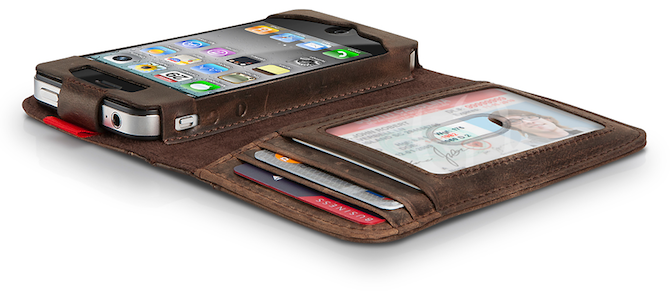
Remember the BookBook, Twelve South’s eautiful vintage book-style case for the MacBook Air we told you about two months ago? Well, it has come to iPhone 4, not unexpectedly. By the looks of it, book lovers, retro fans and just about anyone in a market for a stylish, premium case for their glass-and-metal Apple handset should be taken care of. The BookBook for iPhone 4, like its bigger brother, flips open like a book, revealing interior pockets for cash, credit cards, ID and other wallet-sized items.
Talk about convenience – now you can ditch your wallet and replace it with this case and carry one less thing in your pocket. The case also has holes in the right places for easy access to your handset’s hardware buttons, ports and cameras. From the outside, the handmade leather case with its hard-back covers and vintage finish lends itself perfectly to the fans of Indiana Jones memorabilia. Interested? Head over to the Twelve South online store where BookBook for iPhone 4 retails for sixty bucks.
Check out the below commercial, it’s really cool. Notice the non-discrimination creative concept: He is an AT&T user and she’s on Verizon.
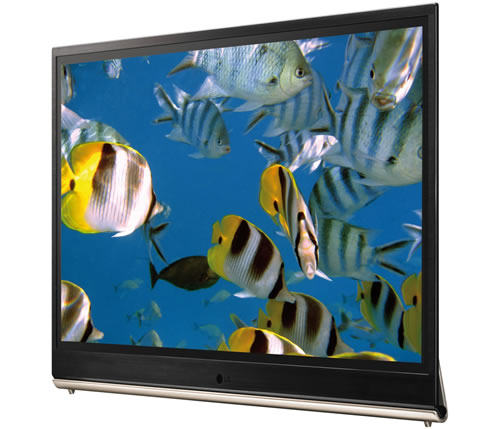
Look, we here at 9to5Mac do not rule out the possibility of an Apple-branded television in the not-so-distant future, but at this point the realities of large-size OLED display manufacturing would make such a product prohibitively expensive. We’ve said it repeatedly – and now touch panel makers in Asia are pointing out as well – that OLED technology isn’t ready for prime time yet in large television displays, per this DigiTimesreport.
Taiwan-based panel makers pointed out that Apple is unlikely to offer TVs using 55-inch AMOLED panels for the time being because development of large-sized AMOLED panels is not mature yet and therefore yield rates are low and production costs are high.
The report is in response to the last week’s rumor by the notoriously unreliable Smarthouse that Apple was procuring 55-inch AMOLED displays for an integrated television set apparently slated for late 2012. On the other hand, we know Apple’s been researching glass-less 3D displays featuring transparent OLED panels and a job listing in February had signaled intentions to implement OLED displays in future products. On the other hand, OLED TVs are not a matter of if, they are a matter of when.
LG Display’s CEO Kwon Young-soo toldThe Korean Times that his company “may release a 55-inch OLED TV set sometime in the latter half of next year”. LG Display wants to stop Samsung Electronics’ manufacturing grip on AMOLED technology and especially Samsung-improved version called Super AMOLED, which is featured on their high-end smartphones such as the Galaxy S family. Other players like Sony already make OLED TVs in very limited quantities. The Japanese consumer electronics giant will be using an OLED display for their upcoming Vita handheld console.
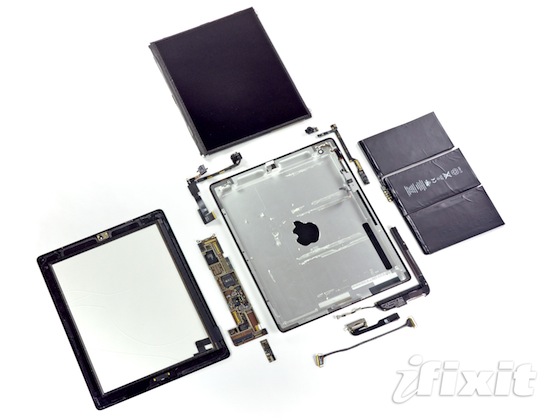
An interesting report comes this morning via DigiTimes, the Taiwanese trade publication. Besides naming possible integrated circuit suppliers for iPad 4 – Novatek Microelectronics (LCD driver), Richtek Technology (integrated power management), Capella Microsystems (ambient light sensors) and Integrated Memory Logic (programmable gamma/Vcom buffer solutions) – the publication mentions that Apple is now “more willing” to ship various integrated circuit modules from Taiwan-based IC design houses as a way of reducing iPad’s bill of material (BOM):
Apple is now more willing to adopt IC solutions from Taiwan-based IC design houses as it is adjusting the cost structure for iPad tablets in order to compete with an array of tablet PCs to be launched by rivals in the second half of 2011, commented the sources.
iSuppli estimated iPad 2’s bill of materials at $323.25 for the 32GB CDMA version ($3.35 more for the GSM version), an increase compared to the original iPad which is mostly attributed to the costs associated with Apple’s A5 processor, cameras and high demand that caught touch screen panel makers on the wrong foot. For example, iSuppli estimates that Apple pays an estimated $127 for touch screen panel per each unit versus an estimated $95 for the original iPad’s touch screen panel. However, economies of scale enable Apple to grow iPad 2’s margins, one analyst estimates, and actually extract more profit from the second-generation unit.
Another win for Apple here… In what’s being described as a move “based on developer feedback”, Adobe has shut down two of its app stores for AIR and InMarket apps, reportsReadWriteWeb. The company wrote on its Developer Connection website the following:
After reviewing our efforts and based on feedback from developers, we have decided that we will deliver the most value by helping developers author and publish their apps on multiple platforms. Given this focus, we have decided to discontinue development and support of Adobe InMarket.
And then this:
Concurrent with this change to InMarket, we are also closing Adobe AIR Marketplace. When we established Adobe AIR Marketplace three years ago, there were few distribution opportunities for AIR developers. There are now several app stores on desktops, mobile devices and tablets that service AIR developers including Apple App Store, Android Market, BlackBerry App World, Intel AppUp center, Samsung Apps, and Toshiba App Place. We encourage you to use these newer popular app stores to distribute your applications.
Now, that’s a refreshing tune for Adobe which isn’t the one to shy away from slamming Apple and painting the company as a closed ecosystem. Adobe last week released Photoshop Elements 9 Editor as their first Mac App Store download. The software is priced at $80, a $19 saving over the $99 price point for its dead trees counterpart.
Update: Nook got the same treatment which render the current screenshots outdated.:
You can read any NOOK Book you have purchased on this updated NOOK for iPhone app, however the Shop link has been removed so to buy NOOK Books from your iPhone, open your Safari browser and go to nookbooks.com.
There are some other updates for the Kindle App release notes accompanying the Kindle update (iTunes): Expand Expanding Close
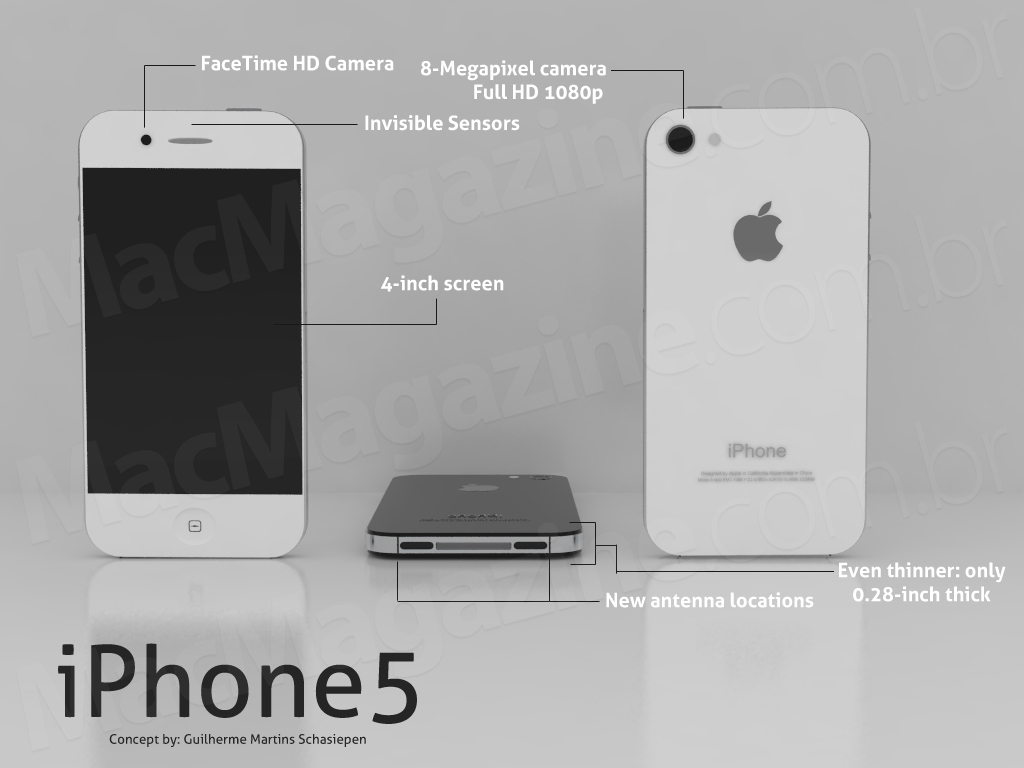
Boy Genius Report’s Jonathan Geller has an exclusive on iPhone 5, claiming that AT&T is gearing up for an early to mid-September launch of iPhone 5. The carrier is apparently communicating launch plans to employees, Geller claims, and urging them to finish training as soon as possible:
AT&T is asking managers to finish training in order to have employees available for the influx of foot traffic expected in September, a proven source has shared with us. Other reports indicate that Apple is looking to hire additional Apple Store staff to be on hand for “new product launches” during the same period of time, further supporting our information.
This pretty much jibes with what we know so far, including a MacRumorsstory about Apple increasing retail staffing for August-September in the US and an unreliable report calling for a September iPhone 5 launch in the US (October everywhere). Apple issued the fourth iOS 5 beta over the weekend as an over-the-air update, expanded the App Store to 33 new countries, flip the switch on the Documents in the Cloud feature of iOS 5 and enabled wireless device syncing in Windows with the latest iOS 5 beta, which all signals that the company is polishing the software and smoothing out a couple of rough edges before the official release. In addition, T-Mobile USA is now cozying up to iPhone users while Verizon has been seen clearing iPhone 4 accessories stock in anticipation of iPhone 5 launch.
Pinch-zoom, the trademark gesture Apple popularized with iPhone, seen above to peek inside and open a stack of photos on iPad.
9to5Google.comsourced several DigiTimes articles from this morning about a rumored Android-driven Amazon tablet said to arrive by September. The gist of it is that the Amazon device will use a low-cost touch panel that can only recognize two fingers at once, instead of ten fingers for touch panels found in premium-classed tablets such as the iPad.
Asian firm Wintek, Apple’s touch panel supplier, will reportedly supply Amazon with touch panels for their upcoming tablet. Thanks to strong iPad and iPhone 4 sales and new orders from Amazon, Wintek’s third-quarter capacity is now booked up. Amazon is said to be developing an affordable device for the mass market, thus less capable touch panel, assertsDigiTimes:
For touch-panel solutions, two-finger solutions, instead of 10-finger ones, are sufficient for entry-level smartphones, noted the sources, adding that many smartphones and tablet PCs launched recently in China and emerging markets, as well as the tablets to be launched by Amazon, all adopted two-finger solutions.
While two fingers are better than one and suffice for pinch-zoom gesturing, some apps benefit from multiple touch points, such as Apple’s GarageBand for iPad that lets you play virtual keyboards, guitars and other virtual instruments with your fingers.
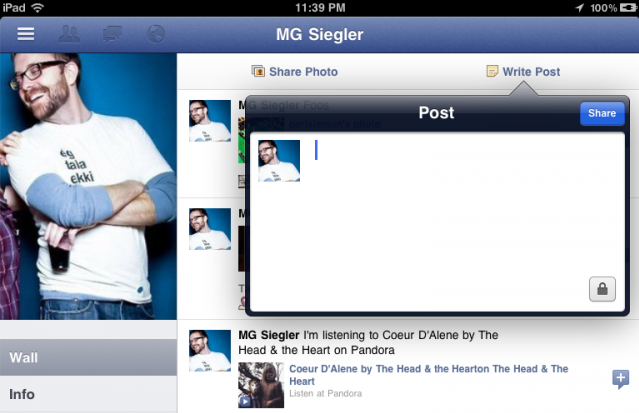
TechCrunchhas discovered that the Facebook for iPhone app contains hidden iPad code and has published a series of screenshots to prove it. Author MG Siegler acknowledges 9to5Mac’s similar discoveries stemming from code hooks in Apple’s software (thanks, guys!), noting that the iPad app is already there in the current version of Facebook for iOS app, ready to be put to use whenever Facebook sees fit:
Hidden in the code of Facebook’s iPhone app is the code for something else. Something everyone has been waiting over a year for. The iPad app. Yes, it’s real, and it’s spectacular (well, very good, at the very least). And yes, it really is right there within the code. Even better, it’s executable. (Update: a lot of pictures here.)
Much of the code is written with HTML5, Siegler observes, but nonentheless the experience of running the app on a 9.7-inch iPad feels as native as it can get. Using the left-hand menu and pop-overs you can access Facebook’s many option at any time while being focused on the news from your friends. Turning the tablet upside down invokes Facebook’s chat and the photo viewer feels like Apple’s native Photos app. You can enable the iPad view on your jailbroken tablet by following a step-by-step guide by iClarified. Those that don’t want to jailbreak can still enable the iPad view using this simple tutorial. A couple more screenies and a clip demonstrating how to get the iPad app right below the fold.