Apple Silicon is Apple's new lineup of processors for the Mac platform. It was announced in 2020 with the first Macs appearing at Apple's "One More Thing" event in November 2020. The first was the M1, and it first appeared in the MacBook Air, MacBook Pro, and Mac Mini.
Intel is looking to use its recently unveiled Medfield chips in the iPhone, according toThe Telegraph. In the report, Dave Whalen, vice president of Intel’s architecture group, told The Telegraph that Intel has talked to Apple and other manufacturers about using the new Medfield chips in iOS devices. Specifically, Whalen said as iOS continues to grow, “We talk to everybody.” Intel is also looking to Android and Windows Phone to use the new chips.
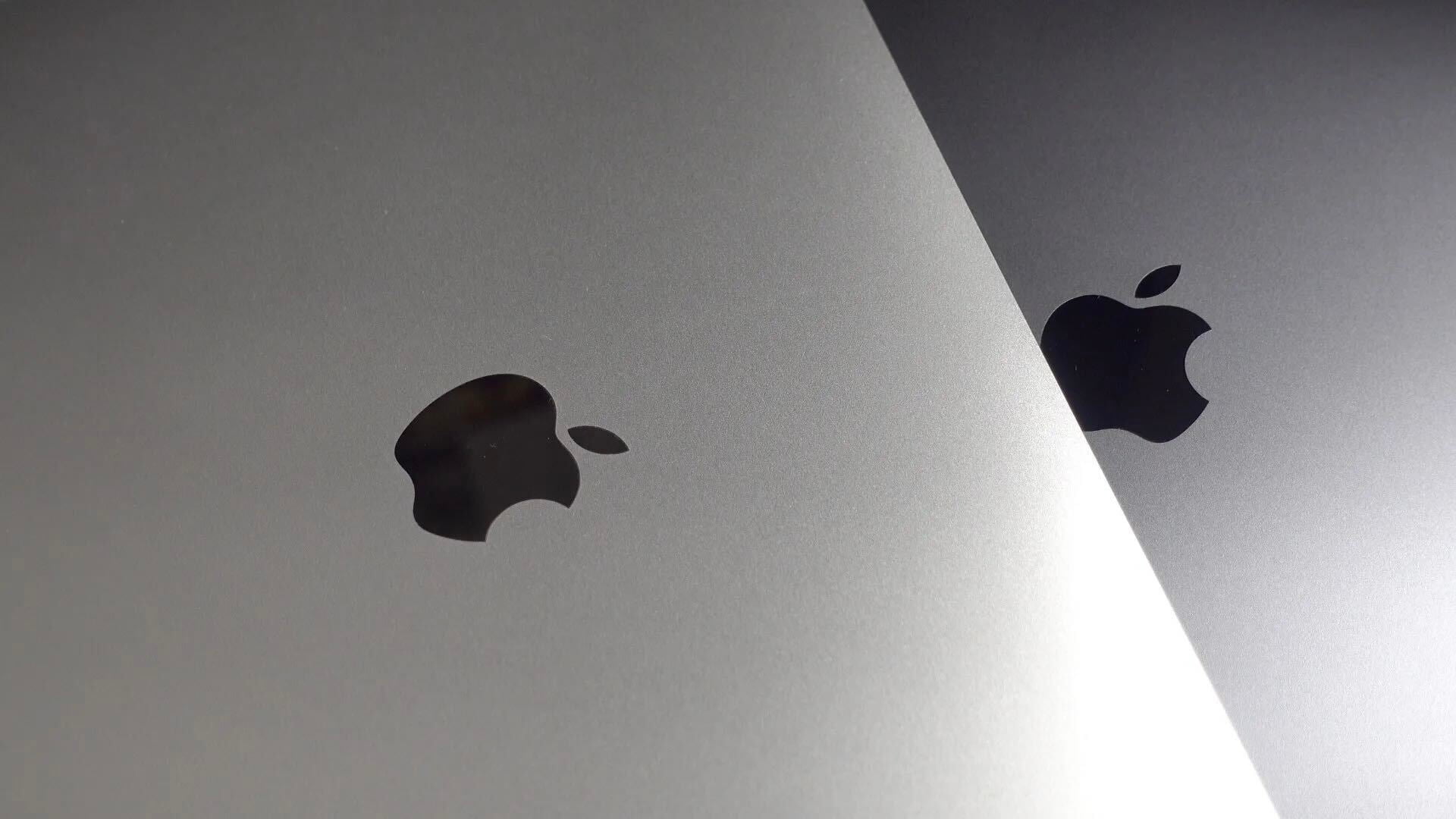
It is worth noting that it is highly unlikely Apple would move to Intel chips in iOS devices, even though the company uses Intel in Macs. Since the iPhone 4, Apple has continued to use its own line of processors—with the help of Samsung. The iPhone 4 was graced with the A4, the iPad 2 had the A5, and most recently— the iPhone 4S got the A5. The iPad 3 is rumored to get the quad-core A6 (mock up on the right), and going off Apple’s recent timeline, the iPhone 5 will most likely have the A6.
The most unique aspect about the Medfield chip is that it is a single core, unlike Intel’s previous chips. The Medfield uses the ARM chips’ strategy, in pulling all processes onto a single chip, which helps to save battery life and other things. For now, it looks Apple will most likely stick with its own proprietary chips. Samsung recently opened a factory in Texas for developing the A5 chip, showing Apple is committed to producing its own goods. Therefore, it is interesting that Intel is trying to make a move.
Taiwan Economic News is reporting that local Taiwan Semiconductor Manufacturing Co., Ltd (TSMC), the company slated to supply Apple with the A6 processor after a shift from Samsung, has begun trials of the new chip made with the company’s “newest 28-nanometer process and 3D stacking technologies”. However, dont expect to see the A6 in a new iteration of the iPad anytime soon, as the report suggests the processor wont be officially unveiled until Q2 of next year, at the earliest.
Included in the report:
TSMC has applied its newest 28-nanometer process and 3D stacking technologies to produce the next-generation processor A6, which is based on the ARM architecture and will undergo TSMC’s cutting-edge silicon interposer and bump on trace (BOT) methodologies. Industry insiders said that the manufacturing will help to pump considerable momentum into TSMC’s business growth starting next year, though the company has yet to comment on the deal for the moment.
This contradicts an earlier report thru Reuters which stated that test production had already begun in July. Both reports agreed that the final A6 processors would be complete and ready for iPad 3 in early 2012. EETimeshad reported the move back in March which was said to involve Apple’s current A5 chip but that never materialized.
An Apple switch to TSMC would obviously be a huge blow to ‘frenemy’ Samsung who currently makes the iPad CPU, DRAM and supplies Flash storage as well.
Apple dropped prices on current MacBook Air refurbs last night so that the base model now starts at just $829. That’s $30 lower than yesterday and could mean Apple’s clearing some inventory out for a refresh, perhaps as soon as WWDC. Or, perhaps not.
Apple’s A5 chip has debuted with iPad 2, but the company’s already hard at work designing the A6, contemplating the A7 and thinking about the A8. Apple added more chip experts to their in-house silicon team and poached veteran engineers from Samsung and ARM earlier this month. A LinkedIn profile belonging to chip expert Eunseok Ji reveals he recently came on board as a senior Apple engineer, the role he played for years at rival Samsung. He counts advanced semiconductor skills in his profile, hard core stuff such as logic design, DFT, silicon testing and hands-on experiences on post-silicon bring-up and debugging of complex mixed-signal design for system-on-a-chip (SoC) solutions.
Why antagonize your silicon manufacturer by poaching such an expert? Okay, Samsung is a frenemy. But why lure an engineer away from ARM? This fabless semiconductor firm makes designs that power Apple’s iOS gadgets and the vast majority of mobile gear, for that matter. ARM’s Steve Ravet, who also joined Apple in March as an SOC prototyping engineer, is a twelve-year veteran who worked as a system verification engineer at Compaq and verification engineer at International Meta Systems prior to joining ARM as an electrical engineer.
His competencies include CPU validation and design, focused on FPGA emulation, silicon and board bringup, top level simulation and debug for ARM microprocessor cores and SOCs. I’m just speculating here and your guess is as good as mine, but I think you’ll agree such a hiring spree might be a tell-tale sign of a greater number of unique hardware features in upcoming Apple gadgets. Look no further than Apple’s current lineup of iOS devices.
Bloombergtoday reports what would have seemed unthinkable a year ago. Microsoft is building a version of its Windows OS (not Phone 7) for the ARM processor design, the very same that powers Apple’s lineup of iOS devices.
The operating system would give Microsoft another way to attack the market for tablets and phones, where it’s lost ground to Apple Inc. and Google Inc. ARM chips — made by Qualcomm Inc., Texas Instruments Inc. and Samsung Electronics Co. — are used in most smartphones, as well as Apple’s best-selling iPad. A full-featured version of Windows for ARM chips is the best way for Microsoft to make a dent in the iPad’s lead, said Robert Breza, a Minneapolis-based analyst for RBC Capital Markets. While Windows is dominant in the personal-computer market, it hasn’t parlayed that into tablet success yet. “They’ve got to come back with a product that’s better than ‘me too’ and is equal if not better in features,” Breza said. He has an “outperform” rating on Microsoft’s stock, which he doesn’t own. “A lot of tablets today are inferior to PCs.”
Microsoft became a licensee of the ARM architecture earlier this year but at the time it seemed to be for embedded devices such as the Zune. Apple is also an ARM licensee and builds its A4 lineup of chips using ARM designs.
Is this really a good move for Microsoft? The problem with Windows 7 on tablets hasn’t really been an Intel problem necessarily. Whatever the case, this has to be bad news for Intel/AMD who now may see competition from ARM processors like the Nvidia Tegra 2 in netbooks running Windows.
We’re not saying the iPhone 5 will be this startlingly amazing example of a location-sensing, near field communicating hyper-advanced device that might run at speeds as fast as 2.5GHz — but we are saying it’s possible. Expand Expanding Close