
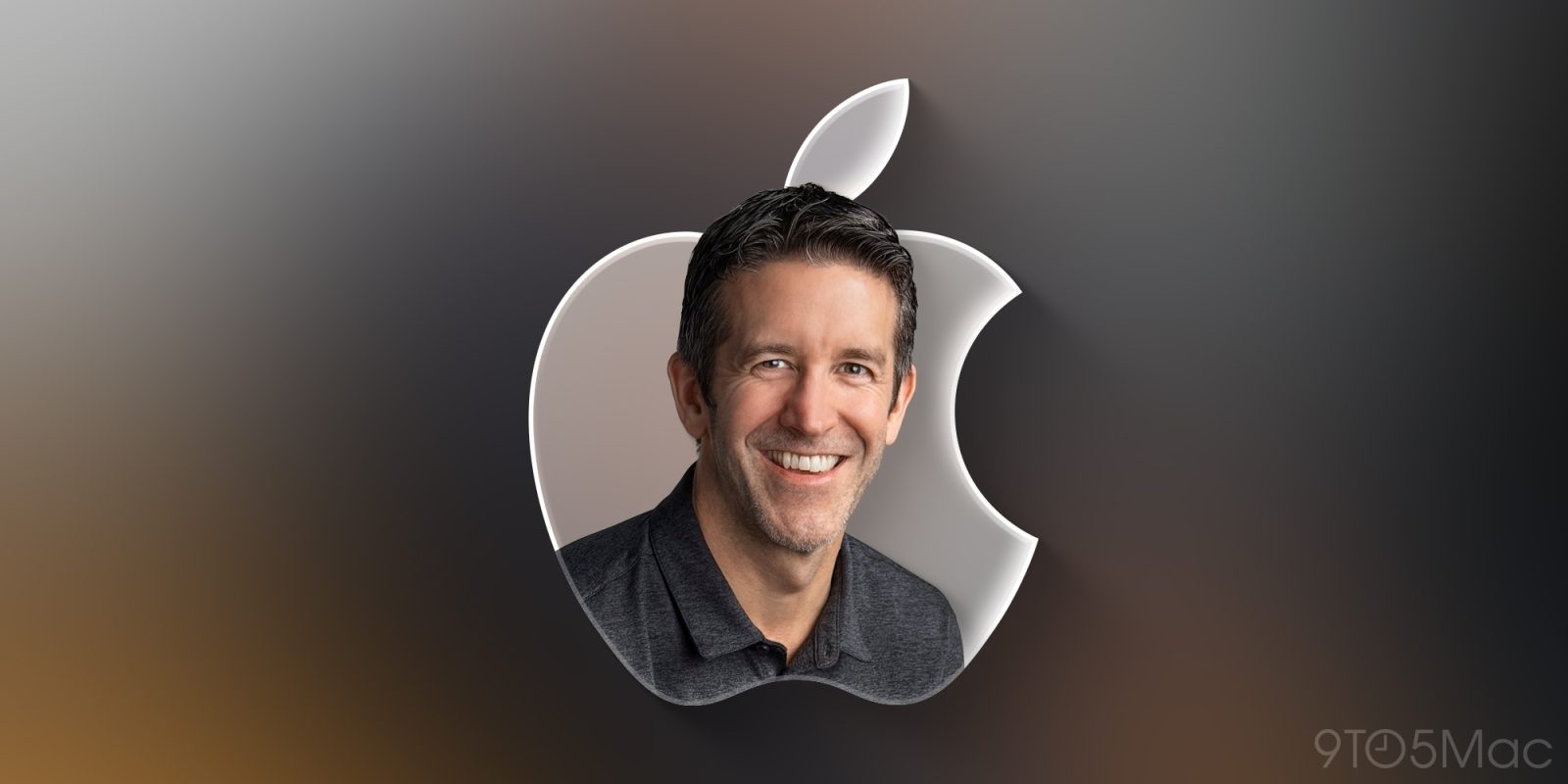
Apple announced Monday that Tim Cook will step down as CEO later this year, with John Ternus set to take over on September 1. Ternus has been at Apple for over 25 years and has played a pivotal role in every Apple product category since joining.
Here’s everything you need to know about Apple’s next CEO, widely described as a “super nice guy” with an engineering and product background.
John Ternus is Apple’s next CEO
Education
Ternus attended the University of Pennsylvania from 1993 to 1997, where he received a bachelor’s degree in Mechanical Engineering and Applied Mechanics, plus a minor in Psychology.
During his time at Penn, Ternus was an award-winning member of the school’s swim team. He earned a varsity letter his freshman year and was a member of the team all four years he was at Penn. “Ternus was a very good guy,” according to a former teammate quoted by The Wall Street Journal.
Ternus went back to his Penn stomping grounds in 2024 to deliver the commencement address to the Penn Engineering Class of 2024. During that address, Ternus revealed how he got his college nickname of “Crash” his senior year of college:
“I really appreciate you inviting me back to campus after I nearly destroyed Penn’s first, and at the time only, CNC milling machine my senior year. I won’t get into the whole story here, but let’s just say it was dramatic. They called me ‘Crash’ for the rest of that year.”
According to The New York Times, Ternus’s senior project at Penn was a device that allowed quadriplegics to control a mechanical feeding arm using head movements.
Ternus’s career path
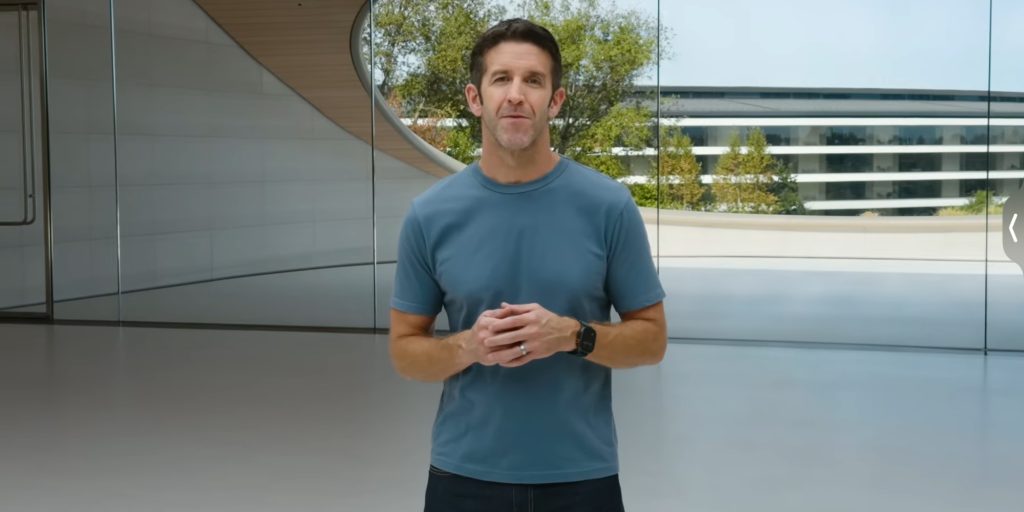
After graduating from Penn in 1997, Ternus’s first job was as an engineer at Virtual Research Systems, a startup developing virtual reality headsets. As spotted by Road To VR, the timing here means Ternus likely worked on the V8 headset, which was one of the first commercially available (though high-end) VR systems.
Ternus joined Apple in 2001 as a member of the company’s Product Design team. His first project was the Cinema Display, which Apple first introduced in 1999 alongside the Power Mac G4. It received multiple updates between 1999 and its ultimate discontinuation in 2011, when it was replaced by the Thunderbolt Display.
During his commencement address at Penn, Ternus told the story of visiting a supplier and arguing over the number of grooves in the screws used in the back of the Cinema Display. It was during this visit that Ternus says he started asking himself, “What the hell am I doing?” during his first year at Apple.
“My first project at Apple was the Cinema Display. It was a large desktop monitor. It had a beautiful clear plastic enclosure held together with some screws coming in from the back. These screws were made of stainless steel, and the head of every screw was machined to have a pattern of concentric grooves that shimmered like a CD when light moved across it. I should probably say, if some of you have never seen a CD before, you can ask your parents afterward.
“At some point in my first year, I found myself at a supplier facility. I was far away from home, it was well past midnight. I was using a magnifying glass to count the number of grooves on the head of this screw, which, remember, lives on the back of the display. And I was arguing with the supplier because these parts had 35 grooves, and they were supposed to have 25.
“I distinctly remember stepping back for a minute and thinking to myself, ‘What the hell am I doing? Is this normal?’ And I thought about it, and I realized it might not be normal, but it’s right. It’s right because I’d already spent months working on that product, and if you’re going to spend that much time on something, you should put in your very best effort. Maybe a customer notices, maybe they don’t, but either way, whenever I saw one of those displays on someone’s desk, it mattered to me to know that my teammates and I had considered everything about it and done the very best job we could.”
Ternus cited this as an example of “the care that you put into your work really matters,” a key reminder for outgoing college students. “Make no mistake, it’s hard to put that much of yourself into something,” he said. “It’s stressful, it requires sacrifice, but it’s worth it because our time is finite.”
Ternus quickly moved up the ranks at Apple. Just three years after joining the company, he was promoted to a manager, as reported by The New York Times.
During that time, their team moved office floors, switching from a closed office plan to mostly open seating with a few offices. When he was promoted, Mr. Ternus had the option to move into one of those offices but declined.
This earned Ternus a reputation as “a man of the people,” according to Steve Siefert, his first boss at Apple. When Siefert retired in 2011, Ternus once again had the opportunity to take a private office. He declined.
In 2005, Ternus was promoted once again, leading hardware engineering for the iMac team amidst the iMac G5 era.
While Tim Cook often gets painted as Apple’s top liaison to the company’s supply chain in China, Ternus also played a key role in the expansion of that relationship. He reportedly traveled regularly between Cupertino and Asia as part of his role on the iMac team. In particular, Ternus pushed for Apple to use an innovative way to hold the iMac’s glass screen in place with magnets, working closely with Apple’s supply chain partners to perfect this unconventional hardware design.
Ternus spearheaded hardware engineering for the first iPad and every subsequent model. In 2013, Ternus took on oversight of the broader Mac and iPad teams and was promoted to VP of Hardware Engineering. He reported to Dan Riccio, Apple’s then-senior vice president of Hardware Engineering.
Ternus has been involved with almost every Apple hardware product since that promotion. Bloomberg credits him with “shepherding development of the AirPods and the company’s first 5G phones.” He also oversaw the expansion of the iPad line with new models.
Ternus is credited with coordinating the Mac’s transition from Intel to Apple Silicon, alongside Johny Srouji (who is now Apple’s chief hardware officer).
In the early days of the iPad, Bloomberg reports that Ternus argued the device’s “hardware capabilities weren’t used to the fullest because its software platform wasn’t taking advantage of the tablet’s more powerful processor and bigger screens.” Ternus pushed Apple’s software group to add new multitasking features, while simultaneously leading hardware development of accessories like the Apple Pencil and Magic Keyboard.
Ternus, however, isn’t perfect. He was reportedly a driving force behind the Touch Bar, which replaced the function row on the 2016 MacBook Pro and was widely criticized. “He shoehorned it in, arguing it was something different, a good marketing idea,” one source told Bloomberg. He also reportedly played a role in the development of the butterfly keyboard, which also marred that same design era of the MacBook Pro.
In January 2021, Ternus was formally promoted to senior vice president of Hardware Engineering. Riccio transitioned to focus on a mystery “new project,” which turned out to be Apple Vision Pro, before ultimately retiring in 2024.
Since that 2021 promotion, Ternus’s responsibilities have grown dramatically as Apple started laying the groundwork for him to succeed Tim Cook. He was given oversight of the Apple Watch several years ago, and Cook tapped him to oversee Apple’s design teams earlier this year.
Ternus’s leadership style
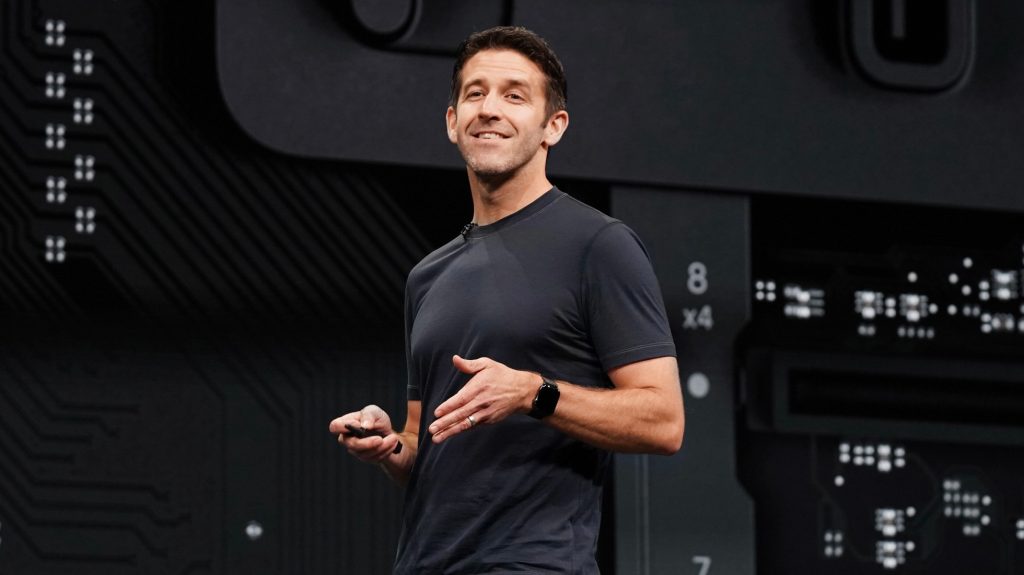
The most common way people seem to describe Ternus is that he’s “a super nice guy.” A profile from The Wall Street Journal reads:
Ask anyone from Apple what they think of Ternus, and they all say the same thing: He’s a super nice guy. People who have worked with Ternus describe him as a great collaborator who inspires fierce loyalty among those who work for him, a levelheaded voice who has made few if any enemies inside a company that in the past was notorious for its noxious personalities.
Staffers describe his ability to get things done in meetings, which he keeps focused, as well as his preference to deal directly with lower level staffers more familiar with products, rather than their managers who have less specific knowledge.
According to Bloomberg, Ternus has a close relationship with Craig Federighi, Apple’s senior vice president of Software Engineering. While there’s a “history of infighting” between the software and hardware teams, Federighi and Ternus have developed a “symbiotic relationship.”
Despite being an engineer at heart, however, Ternus also has a “Cookian eye for cost-cutting,” which has led to conflicts with Apple’s design team, according to Bloomberg.
The Wall Street Journal reports that, when overseeing the Mac, Ternus set out to update the Mac mini. He wanted to do so, however, without working with Jony Ive’s design team. He worried that having to go through Ive could lead to delays.
He ultimately accomplished exactly that. Ternus determined that the Mac mini didn’t need a major change, allowing his team to update the machine without Ive’s involvement. “He didn’t dwell on the product’s profit margin, focusing instead on its value to Apple’s overall ecosystem,” the report says, citing people familiar with the situation. “It was one of many episodes that showed his decisiveness, keen understanding of Apple’s culture and products, and how to get things done inside the company.”
Bloomberg also reports on one instance in which Ternus seemingly abandoned his traditional “personable management” style.
Late in the lead-up to the release of the Vision Pro headset, for instance, engineers uncovered a flaw that threatened one of the device’s marquee features: the ability to stream ultralow-latency audio from the headset to AirPods, a capability central to Apple’s pitch of a seamless experience for immersive video and gaming. The problem stemmed from a missing wireless frequency in the then-newest AirPods Pro.
The only fix was to ship a revised version of AirPods Pro, which Apple did in late 2023. This, apparently, set Ternus on a warpath to find who should be blamed for that misstep. The situation “reverberated through multiple teams,” including hardware, software, testing, and the separate Vision Pro team.
In the aftermath, a senior AirPods executive was reassigned. The episode, one person says, “ran through the social fabric of the company.” But the incident also stood out in part because it was an outlier under Ternus’ leadership—a throwback to the department’s cutthroat culture before he took over.
Broadly speaking, though, Ternus, a “nice guy,” looks for “systematic problems that could be solved with better leadership instead of by putting the onus on engineers,” a former Apple employee said.
Ternus, however, is also described as being conservative when it comes to new product categories. For example, he was wary of Apple’s work on self-driving cars as well as Apple Vision Pro. He was also hesitant to invest in the original HomePod. Bloomberg reports that he shot down the idea of adding a camera and more advanced sensors to the product.
He apparently turned a corner on that thinking and now views home devices as central to Apple’s future growth.
Reacting to the official announcement of Ternus’s transition to CEO, Apple employees reportedly expect him to be a more “decisive” leader than Cook. In situations where Cook would often ask questions instead of deciding between two options, Ternus “will choose,” according to Bloomberg. “It could be right or wrong, but at least it’s a decision.”
Personal Life
Very little is known about John Ternus’s personal life. Even his specific birthday remains a mystery. Until this week, Wikipedia listed him as 50-51 years old. In its financial disclosure filing this week, Apple confirmed that Ternus is indeed 50 years old. Multiple outlets, including CNBC, issued corrections after referring to him as being 51 years old.
According to The Wall Street Journal, one of Ternus’s hobbies is racing his Porsche at California’s Laguna Seca raceway. Ternus reportedly “clocks laps in under 1:40,” according to the report, which is “solid for an amateur driver.”
Bloomberg, meanwhile, has reported that Ternus is a fan of off-road rally car racing. He’s reportedly known inside Apple to take his coworkers to upstate Washington to partake.
Outside of those small anecdotes, however, Ternus lives an incredibly private life — even more private than his predecessor.
Wrap up
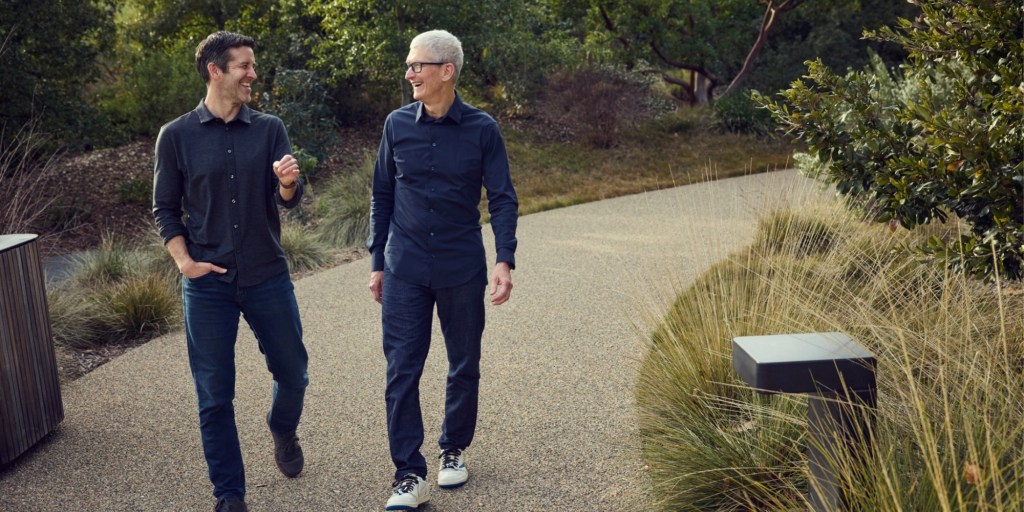
If one thing’s clear, it’s that John Ternus has a storied and successful history that more than proves he’s qualified to take over as Apple CEO on September 1. Ternus will also have the comfort of Tim Cook serving as Apple’s Executive Chairman, working with policymakers and serving as a shoulder for Ternus to lean on when needed. This, of course, is vastly different than the circumstances under which Tim Cook took over for Steve Jobs in 2011.
“Always assume you’re as smart as anyone else in the room, but never assume that you know as much as they do,” Ternus said during his Penn commencement speech. “With this mindset, you’ll find the confidence you need to push forward, but more importantly, the humility to ask questions and learn.”
If that style of thinking is any indication of Ternus’s leadership strategy, then I think we’re in for an exciting new chapter in Apple’s history.
What do you think about Apple’s pick to have John Ternus take over as CEO? Let us know down in the comments.
My favorite iPhone accessories:
- Anker Nano USB-C wall charger with built-in screen
- AirPods Pro 3: Check the current sale price
- Charge all your Apple gear at the same time
- Bring wireless CarPlay to any car
- USB-C cable that shows how fast you’re charging
Follow Chance: Threads, Bluesky, Instagram, and Mastodon.


FTC: We use income earning auto affiliate links. More.


Comments