We have received more information. This will be huge.
We’ll have more for you this weekend….
(sorry guys, this isn’t about the book…just came with the other stuff)


We have received more information. This will be huge.
We’ll have more for you this weekend….
(sorry guys, this isn’t about the book…just came with the other stuff)
Kinda fun look back at Google’s homepage over the past 10 years as per the Internet Archive. WARNING: turn your sound off unless you want to hear some Techno Opera-Omen-Paul Simon-Dream Theater montage.. Props
 OK McCain supporters, we promised you an McCain Apple story and failed. Turns out those tech savvy Obama whippersnappers have come up with an iPhone application that is pretty durn cool…if you are into that sort of thing. The Obama ’08 Application(iTunes link) is available from the app store and has a flurry of features for those actively supporting Obama:
As a peace offering, here’s a clip of John Stewart and Bill Maher both supporting McCain (@1:00) over Al Gore. Oh the humanity!
http://www.thedailyshow.com/sitewide/video_player/view/default/swf.jhtml
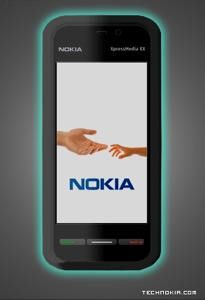 Nokia today announced its much-mooted ‘iTunes killer, ‘Comes With Music’, an all-you-can eat music service that was originally reported to be going to offer music for permanent retention within the purchase price of the handset.
On the face of it, the deal, available only in the UK seems sanguine enough – but the devil’s in the detail: the music is DRM-protected, can only be registered to two devices (handset and PC) at once, and it becomes impossible to enable the music for other devices after two years.
The deal
– One year’s unlimited access to download and keep as many of a two million-strong music catalogue you like.
– These songs can be kept and played on the handset you get with the deal, and also on one PC.
– Service goes live on 16 October 2008 in the UK
– Nokia 5310 XpressMusic included in price
– Cost is £129.95
– Available only from the Carphone Warehouse.
The drawbacks
Then it gets kind of complicated.
– Nokia Comes With Music allows tracks to be downloaded directly to your computer, from where they can then be transferred to the handset. Downloaded tracks can be kept on the handset or PC forever – for no additional fee.
– The user is only able to change registered mobile device or PC every three months for a further two years post termination. After two years you won’t be able to transfer it to other machines, at least, that’s the implication.
The service has already been panned as ‘fatally flawed’ by 7digital founder, Ben Drury. Pointing out that the music is available only in DRM-attached files that must be registered to devices, he said,
“Nokia claims users will be able to keep any downloaded tracks forever, even if they decide not to renew their contract. In reality, “forever” means for the lifetime of the device (typically 2 years) or computer they download to – users won’t be able to transfer their music to new, non-Nokia devices in the future.”
 Security researcher Aviv Raff has gone public on a pair of security vulnerabilities within the iPhone that he first warned Apple about months ago.
The researcher says he decided to publicise the workings of these security flaws on his blog because Apple has released at least three iPhone software updates since he informed the company of the flaws, and has made no move to patch the mobile system against the vulnerabilities. He let the company know about these problems way back in July.
The vulnerabilities are within Mail.
Mail automatically downloads images – images which could be compromised, and when they are downloaded, the image URL checks back with its source, enabling spammers to harvest an email address.
Fault two concerns Mail’s handling of URL’s.
"The iPhone’s Mail application can be used to view both HTML and plain text mail messages. When the mail message is in HTML format, the text of links can be set to a different URL than the actual link. In most mail clients (e.g. on your PC / Mac), you can just hover the link and get a tooltip which will tell you the actual URL that you are about to click," the researcher explains.
Because an iPhone user who clicks on the link may only get to see the beginning part of the link, an attacker can, "set a long subdomain (~24 characters) that, when cut off in the middle, will look as if it’s a trusted domain." Effectively leaving an iPhone user at risk of a phishing attack in situations in which the shortened link pretends to be a trusted site, such as Amazon.
Best advice, of course, is not to click on links when you are preparing to hand over personal info – type URL’s in manually for this, and don’t open images from people you don’t trust.
On his move to publicise these problems, the researcher said, "I have disclosed the technical details to Apple few weeks before that post, in a hope to get those security issues fixed as soon as possible. Unfortunately, two and a half months later, and still there is no patch for those vulnerabilities. I’ve asked Apple several times for a schedule, but they have refused to provide the fix date."
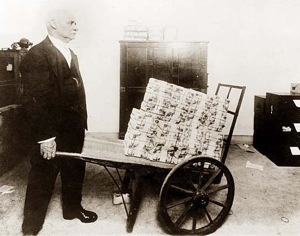 It really is only a question of time before your iPhone becomes an electronic wallet – after all, on Android, it’s already almost there.
We’ve mused on this before, but things have taken another step forward with news of Mitek’s Mobile Deposit (read, banking) application for the iPhone.
In brief, what the ImageNet Mobile Deposit application for the iPhone does is quite interesting – while also being a simple concept..essentially, the software allows banks to accept paper check deposits from merchants and customers via camera-equipped mobile phones.
To make a deposit, the user initiates a mobile banking session, keys in the deposit amount, and snaps a photo of the front and back of the check. Mobile Deposit’s advanced image preprocessing ensures the check images meet Check 21 accepted image quality standards. Once the bank’s system receives the deposit, it sends the customer a confirmation text message. The entire transaction takes less than a minute.
The application is available to financial institutions or mobile banking software vendors looking to add Remote Deposit Capture (RDC) to their mobile banking platform.
Now, we’d like to look at this the other way round. Apple CEO Steve Jobs touched on this briefly during his September ‘Let’s Rock’ keynote, when he mentioned the iTunes Store now has the banking details of 65 million users. Imagine if those 65 million users could pay and receive money using their iPhone and their iTunes account?
Essentially you’d buy what you liked and charge the payment to your iTunes account, saving you the risk of carrying a credit card, and subject to dark shrouds of logarithm-jamming UK military-grade security,
Look – we’re not imagining the situation: Apple has patented the notion of using your iPhone as a device to access and purchase food in restaurants and more…
And there’s been a trial of mobile payment services in the US in which Procter & Gamble, The Clorox Co., Del Monte Corp. Kimberly-Clark, and General Mills Inc. have been testing just how well consumers get on when using their phones to hand over discount coupons while shopping.
As final proof that this theorem is taking a march toward prime time, consider this: Visa has already confirmed plans to develop a mobile payments-related services for Google’s Android platform. This will let users check their accounts, make payments, and more, all using your Android phone.
 We’re happy to reveal the all-new latest fake MacBook/MacBook Pro images. Get on!!
With the almost completely unlikely tag-line of, “A blend of beauty meets beastly power," (which sounds like a Dell marketing plug – on a bad day) and the notion. "Pro, on-the-go", these latest images claim a two-tone case, a magnetic latch and (we’re sad to note) no glass trackpad…
We aren’t sure about the two-tone design, for a start it looks derivative, for a second note, there’s lots of people who don’t like black keyboard on their Apple notebooks, and finally we note the Apple logo is white, meaning yet another colour.
Signing off, we’d like to thank Cult of Mac for spotting the image, and warn you, dear readers, once again, these may not be real… but pending release of the much-mooted new Apple notebooks, we can speculate away to pass the time, or perhaps launch a petition to ask Apple to refresh its Mac products a little more often…

Android software engineer Andy Stadler has explained a little more on how search works Android-powered phones on the Google Mobile blog.
[youtube http://www.youtube.com/watch?v=zLxVQi0lRQ4&hl=en&fs=1]
Google has chosen to integrate search across its platform and inside most applications, including Maps and Android Market.
"We’ve made Search easier to use by providing suggestions. As you type, the list of suggestions refines itself, and you’ll immediately jump to that search with a simple touch," the company reveals on its blog. Essentially that sounds like predictive search – should be useful on a mobile device.
Google has also done something even smarted, and has integrated search across the platform so that applications can share search capabilities with each other. What that mean? Well, imagine listening to a track on the music player and exercising a search on the artist name to bring up YouTube clips or the artist’s webpage.
Expect more innovative use of search as Google also claims to have introduced API’s that should let developers integrate search within their applications.
 PBS is making its US election coverage available through YouTube and iTunes this month, offering its Frontline documentary series through both outlets
The network will broadcast its election special "The Choice 2008,"
premiering Tuesday, 14 October, from 9-11p.m. ET on PBS – but you won’t be uninformed if you miss the show, as it will be made available for free download from iTunes the next day and for free viewing on YouTube, as well as through the PBS website.
The two hour show comprises a dial biography of John McCain and Barack Obama. These bios are PBS traditions – the network has offered them for five elections across two decades.
Here’s a preview:
"Now more than ever, new media plays an important role in how Americans learn and share information about the election," says Frontline executive producer David Fanning. "It’s important that we continue to fulfill the mission of public broadcasting by extending free viewership of "The Choice 2008" to as wide an audience as possible and by reaching out to voters across these digital platforms."
 Nokia boss (President and CEO) Olli-Pekka Kallasvuo is full of praise for Apple, though he’s digging in his heels to compete with the iPhone company.
He described Apple’s impact on the industry across the last year and said the company had done the industry "a big favour".
As reported by Reuters, he observed, "We have a new, credible competitor in this business. You know I need to take my hat off," he said of how the iPhone has raised expectations for phones. But he’s still preparing a fight back, with looming missions such as the UK launch of Comes With Music and imminent release of touch-sensitive handsets.
He’s still not sure about Google, rhetorically asking attendees at the Churchill Club, where his statements were made, "What is the new thing they bring here?"
The CEO also promised to match Research In Motion and its Blackberry in the near future, at least as per email, "We will exceed the RIM client (BlackBerry) in some months with a very good e-mail system," he promised.
Olli-Pekka joined Nokia in 1980 as Corporate Counsel, and has held roles of increasing responsibility since that time. He was born on July 13, 1953, in Lavia, Finland. Nokia has a customer base of one billion handsets.
 This is interesting. Apparently the day nVIDIA was slated to introduce the integrated graphics chip the new MacBook will use has been moved… from September 30th to October 15th. Recall the fact that the MacBook event was originally scheduled for September 29th, and was postponed to October 14th. I find it hard to believe that the announcement wasn’t moved because the MacBook event was moved, so look at this as further confirmation to Mac Soda’s report: the MCP7A-U chipset will be in the next MacBook.
iMacmatician has used his mathematics skills for good and not evil to create a helpful guide for what we feel will be new MacBook screen sizes. The 16:9 ratio seems like a lock at this point so we will have some nice new sizes to choose from. What sizes do you guys think we’ll see?
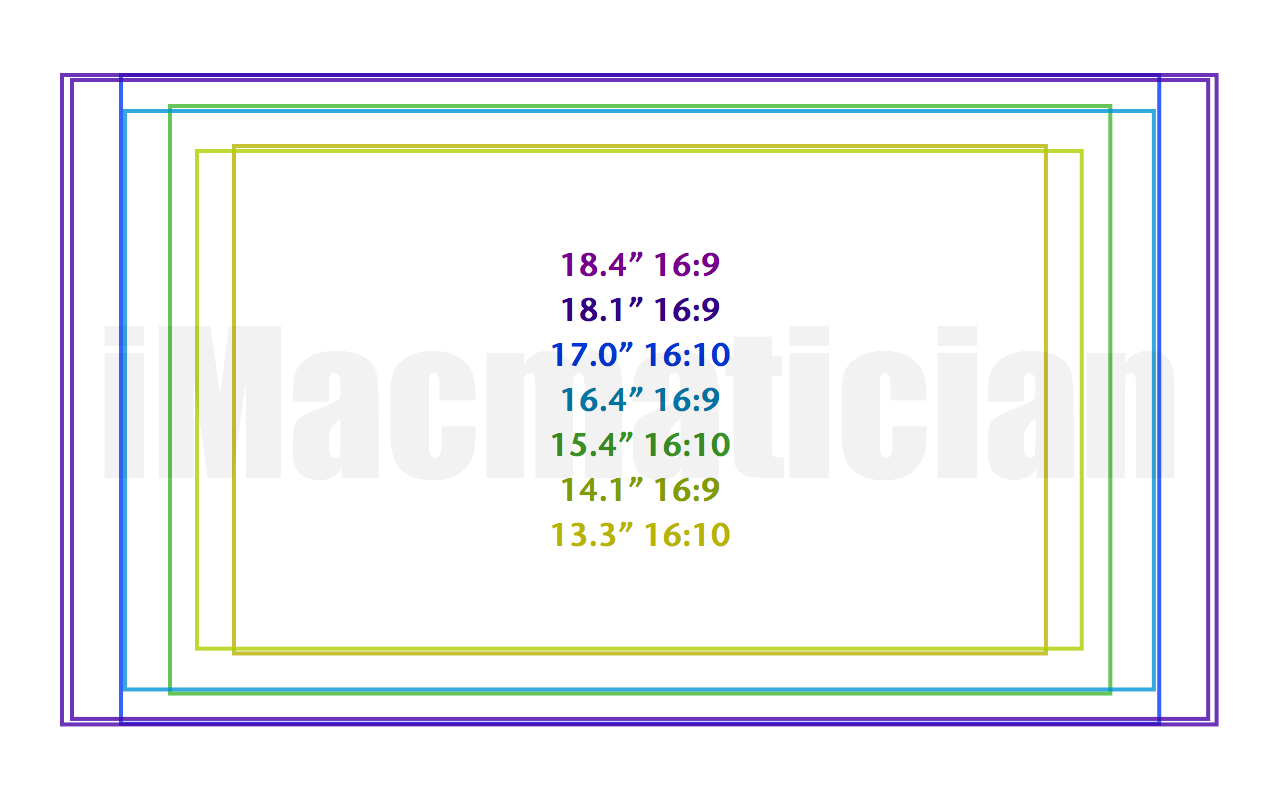
Notice the height is about the same but the screens will become a bit wider at various sizes. Most likely the bezel around the screen will have to change significantly for the new MacBooks.
iMacmatician has used his mathematics skills for good and not evil to create a helpful guide for what we feel will be new MacBook screen sizes. The 16:9 ratio seems like a lock at this point so we will have some nice new sizes to choose from. What sizes do you guys think we’ll see?
Notice the height is about the same but the screens will become a bit wider at various sizes. Most likely the bezel around the screen will have to change significantly for the new MacBooks.
As you all probably know by now, there will be an Apple event on October 14th (it will be announced "officially" October 7th, but we know its coming). It is widely expected for Apple to update their MacBooks and MacBook Pros at this event. Mac Soda offers all of its predictions for the event.
MacBook
 The MacBook has been trapped in a plastic enclosure throughout its life, seemingly begging to be placed into a nice, cool, aluminum shell. It will finally get its wish… sort of. The MacBook is going to adopt a lot of its looks from the aluminum iMac. While it will be aluminum on the sides and the front, the back will adopt the plastic backing from the iMac, to differentiate it from the MacBook Pro. While that description may not sound appealing, I think we can all trust Apple to pull it off. The enclosure will also be substantially thinner and tapered, as all of Apple’s products have been as of late.
The screen will migrate to a 16:9 aspect ratio, with a new 14.1 inch screen size, closer to the edges. The keyboard will adopt the MBA’s black, backlit (finally!), chicklet keyboard. While this is all fine and dandy, the real story is the trackpad. In order to prepare for a multitouch future, the new MacBook will gain a glass (or at least glass-looking) trackpad to accommodate much more advanced gestures. The possibilities are tantalizing. Whether this trackpad will have a screen or not is uncertain, but the odds say no.
As far as the guts are concerned, the MacBook will receive the Intel Centrino 2 processor. Expect similar speeds in Mhz, but better power management and a faster front size bus (1066). In a Mac Soda exclusive, we revealed the graphics card that will be used in the new MacBooks (click for more info). Also, there will likely be no removable battery
Other possibilities include HDMI output, a redesigned compact power adapter, iChat HD, and Blu-Ray (though that will probably be exclusive for the MacBook Pros).
MacBook Pros
 The MacBook Pro has been milking practically the same enclosure for the past 5 years. Today, its design is still the best in the industry, second only to the MacBook Air. Redesigning the best designed computer on the market is going to result in one amazing computer. The MacBook Pro will stay aluminum, will be even thinner than it is now, with the tapered edges Apple is currently fixated with. It also will add a magnetic latch, replacing the current, pain-in-the-a**, cheap push latch it currently has. The power button also will resemble the MBA’s, rather than the one it has now, that always, without a doubt, dents inward after enough use.
The MacBook Pro’s screen will migrate to 16:9 as well, with a 16 inch screen on the base model, along with an amazing 18.1 inch option (an option I am going to get!). Like the iMac, the screen with receive a black bezel. The MBP will also adapt the MBA’s keyboard, which should complement the design perfectly. I also expect better and louder speakers to be included, as Apple has seemed to be interested as of late in good sound quality. The trackpad will be glass just like the MacBook.
Inside this beautiful monster will house an Intel Centrino 2 processor, with an option for 4 cores. Internal memory will probably be expandable up to 8 GB, and the graphics card will improve as well, though the specific card was not revealed to us. For connectivity, I expect more USB and Firewire ports, alongside an introduction of a new faster Firewire standard. Also, Blu-Ray will be an option. Apple, despite how much they want digital downloads to win, will have to adopt Blu-Ray for its professional clients, and now is the time. It probably won’t be standard, but rather BTO.
Other possibilities, like the MacBook, are HDMI, iChat HD, and a redesigned power adapter. The battery may be removable, but odds are, no.
MacBook Air
While I doubt we will see many physical changes to the MacBook Air, I am sure we will at least see the glass trackpad on the Air, along with spec bumps, and a major price drop. Expect the MacBook Air to start at 1299, possibly even lower. If this is not announced at the event, it will be announced shortly after the event.
MacBook Mini
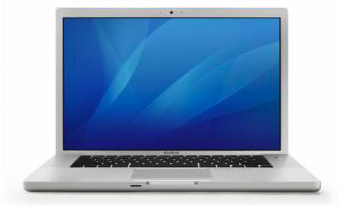 Did you see Apple’s stock yesterday? They don’t have a choice but to release this. As the Mac Mini is to desktops, the MacBook Mini will be to laptops. At 59
9, this is a computer that will be hard to ignore. It will boast 11 inch screen, just so that Steve can make fun of the other guys’ small screens, be fairly thin, made of aluminum, feature a relatively large keyboard, Wi-Fi, glass trackpad (maybe), good connectivity, a combo drive (super drive option), and an iSight camera.
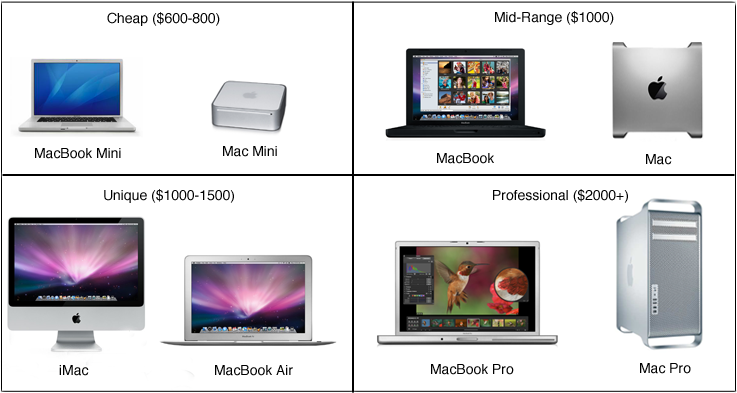
Another possibility is that the MacBook will be the low end model, seeing a major price drop (down to 700-800 dollars), and the MacBook Air will fill the MacBook’s position in the 1000 dollar laptop market. Whichever scenario comes to fruition, whether it be the MacBook Mini, or a major MacBook price drop, one thing is certain: with the economy the way it is, Apple can’t ignore the lower-end marker any longer.
Mac
This is not a prediction, it is a possibility. Apple may finally decide to address their lack of a mid-size tower, and release, as I call it, the Mac. Fairly cheap, and enormously expandable, this combined with the MacBook Mini would complete the grid of computers Apple would like to ship (see below).
Overall, I think we are in for an exciting keynote. I’m in the market for a new MacBook Pro, so what they announce is what I get!
October 14th can’t come soon enough…
 Apple today gave up the fight to keep the NDA on released iPhone applications built with the iPhone SDK. The NDA has recieved much bad press and complaints from developers who wanted to communicate their experiences with developing programs for the iPod/iPhone platform. From Apple:
To Our Developers
We have decided to drop the non-disclosure agreement (NDA) for released iPhone software.
We put the NDA in place because the iPhone OS includes many Apple inventions and innovations that we would like to protect, so that others don’t steal our work. It has happened before. While we have filed for hundreds of patents on iPhone technology, the NDA added yet another level of protection. We put it in place as one more way to help protect the iPhone from being ripped off by others.
However, the NDA has created too much of a burden on developers, authors and others interested in helping further the iPhone’s success, so we are dropping it for released software. Developers will receive a new agreement without an NDA covering released software within a week or so. Please note that unreleased software and features will remain under NDA until they are released.
Thanks to everyone who provided us constructive feedback on this matter.
iPhone users in the UK are hugely happy with their device, despite recent foibles, fresh research shows.
Research company Wavemetrix presented its new data at special digital industry event, mashup*, last night. The data indicated an extremely high level of satisfaction among UK iPhone users, who appear particularly interested in social, music and gaming applications.
Distorted Loop reports one iPhone customer, who said, “I generally check for new applications daily and end up usually buying at least one a day."
Apple will be pleased to learn that the feedback canvassed during the survey indicated customers see most of the applications available on the App Store to be good value – and the largest complaint among users was that it can take some practice to get to learn how to control Super Monkey Ball.
It seems gaming on the iPhone has arrived. Speaking shortly after the App Store opened for business in the UK, one user said, “I’ve got to say, gaming on the iPhone is a pleasure. I can only describe the gaming experience as like a cross between Nintendo’s DS, Sony’s PSP and the Wii. If this is what developers are pumping out in the first few days of the App Store, imagine the quality apps that are going to be made in a few months time!”
Beyond gaming, UK iPhone users are particularly keen on Tuner, Remote and Shazam. The research also showed that developers seek more transparency in their dealings with Apple – perhaps this is the company’s Achilles Heel?
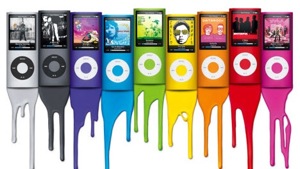 You may remember we recently observed that the new iPods don’t work with some accessories, including things like speakers, the Numark iDJ and more.
At the time we were curious as to why – now one of our contacts within the world of iPod peripheral production told us the details – and it’s all in Firewire…
"The recently launched iPod nano G4 and iPod touch G2 have changed slightly from their predecessors in terms of how they charge," our contact said. "The new models will now only charge via USB, whereas previous iPods also charged via Firewire, both over the 30 pin connector. Because of this, for speaker docks to charge and play an iPod, they must provide charge over USB."
"This is important as many major brands followed the Firewire technology route and so their speaker docks will not charge the new iPods."
So there it is, just a quick detail to clarify things.
 Apple has filed a 23-page motion to dismiss upstart clone maker Psystar’s counterclaim against Cupertino rather than filing a response to that claim.
The story starts way back when, when Psystar, a Miami-based company, started advertising its $400 OpenComputer this week. A PC that shipped with Mac OS X installed, and "violated Apple’s terms of use" for the OS.
Apple’s End User License Agreement clearly says its OS can only be used on Apple-branded hardware – and soon (in July) slammed an injunction against Psystar for breaking that admonition, accusing the firm of copyright and trademark infringement for pre-installing Leopard on systems,
Faced with that lawsuit, Psystar fought back with a legal claim which accused Apple of breaking anti-trust laws by determining that only Macs can run its OS.
Psystar even claimed Apple embedded code in the OS that, when it recognizes non-Apple hardware, sends the system into a kernel panic, in order to prevent operability on computers other than Macs,
Speaking to Information Week in August, a Psystar employee said, "What if Microsoft said you could only install Windows on Dell computers?" The rogue firm also accused Apple of charging an 80 per cent mark-up on hardware.
Via: World of Apple
 Apple’s relative notebook market share continues to explode while Windows-based laptops, well, people just don’t care about them any more, or so it seems.
eWeek reports that while, "Windows laptops are losing lustre, Mac laptops are making surprising gains." (Not that surprising, eWeek – they’re clearly superior machines). In essence the news is that MacBooks and MacBook Pros accounted for 20 per cent of notebooks sold across US retail stores, which is nice. Even more interesting, Apple’s notebooks took a substantial chunk of the market when measured in dollars. What does that mean? It means for every $3 spent on a laptop in the US, Apple took $1 while the various partners in the world’s dominant OS ecosystem shared $2 between them. Wonder which business model makes the most sense?
Apple’s we guess, as the analysis continues: "Notebooks are the PC growth category, according to both Gartner and IDC. Portable shipments will reach 148.2 million units this year, according to IDC. Worldwide year-over-year growth rate is expected to be 37.2 percent and a staggering 44.7 percent outside the United States. Microsoft and its partners should dread Apple’s shocking gains in such an important computing category."
The report says this vindicates Apple’s pricing strategy. And given the strong rumours currently circulating which suggest the company plans to lower prices and deploy its own sub-books in the near future, it’s pretty clear Apple could clean-up in the months ahead – even if computer sales slow down, consumers will buy the best computer they can afford – and for one-in-five US laptop shoppers, the best one is a Mac. This market’s Apple’s to win.
Anyway, speaking of winning, Citigroup analyst Richard Gardner yesterday cut Apple’s future estimates and stock price to reflect the tumultous economic melt-down we’re all hoping just goes away, but tipped investors off that Apple’s remains a solid stock to buy that will excel against competing firms. "We believe this will represent outperformance versus most consumer PC, consumer electronics and handset competitors thanks to the superior design, ease-of-use, utility and reliability of Apple’s products," he said.
The analyst isn’t sure speculation on cheaper laptops is correct, but does think Apple will introduce new model laptops in the next two to three weeks.
Meanwhile, while Apple offers everything that’s different – a secure operating system in OS X, fluid access to key CE devices including iPod, iPhone and iTunes, built-in applications for imaging, video, music creation and more, and a series of applications most all of which win regular praise for usability, consumers looking to the PC world are presented with bland homogenised solutions, which to all intents and purposes are exactly the same.
Apple has transformed its minority market share into a major market advantage. Now only do its products work, not only are they attractive, but they do things Windows machines just can’t – and do many of the things they can do a whole lot better.
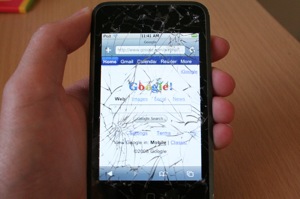 This one’s circulating – the unbreakable, eternal, ever-working iPod touch!!
Seems someone at the iPod touch Fans forum had a little accident – out walking he dropped his player and didn’t notice it had gone until some time later when a friend found the ‘touch – well, after accidentally running it over with a pick-up truck (well, that’s the story).
The glass screen of the device is shattered but intact – safe to touch except in one corner of the screen, and the device is dented at the back – but, surprise, surprise – it works.
“As sad as I was, I was still delighted when I pressed the little black button to turn on the iPod. It worked perfectly: the touch screen, the music, the WiFI. Everything was exactly the same, other than the crippled screen and dented back,” the poster declares.
Nice story, good to know how strong this device is – perhaps it should be called the ‘iPod tough’? But there’s two questions I can’t seem to ignore:
1/ How did this man’s mates notice they’d run over such a small object when driving a pick-up truck?
2/ How come he wasn’t listening to the music while walking along the road, (though perhaps the prevalence for running things over while driving pick-up trucks is answer enough for that one).
Still, nice story.
Here’s a nice re-run – Apple CEO Steve Jobs introduces us to the first-ever iPod way back on October 23, 2001. "Huge target market," Jobs said – he was right – took a lot of people a while to figure out just how right..Enjoy!!
[youtube http://www.youtube.com/watch?v=kN0SVBCJqLs&hl=en&fs=1]
 Apple released its iPhone unlocked and without a plan this week in Hong Kong, the first release of its kind. Many, including I, wondered why Apple chose Hong Kong as its release point of this unprecedented package. Apple already sells its iPhones unlocked in countries with rules against locking phones to carriers. These includes Czech Republic, Greece, Hong Kong, Italy, Luxembourg, Macau, New Zealand, Singapore, Slovakia, South Africa, and Turkey (thanks DF).
However, in all of those locations, you have to buy the iPhone through the mobile provider…usually saddled with a plan and/or a providor markup. But Apple is selling the iPhone right from its site in Hong Kong. I can even order one here from Greenwich Village and have it sent to a friend in Hong Kong. You can’t do this anywhere else on earth. Why?
Many people buy the iPhone with the plan and then opt out for varying fees and sell it on the gray market. One report a year ago said 400,000 of them had made it to China. This hasn’t stopped with the iPhone 3G. Chinese customers have been buying gray market iPhones like crazy.
We all know talks with China’s largest carrier, China Mobile, have been going very poorly for Apple. According to some reports China Mobile wanted Apple to remove the Wifi access and only allow EDGE speeds on the iPhone. Obviously, this isn’t the experience Apple wants its customers to have.
So, the the question that must be asked… Is Apple dumping iPhones into the world’s largest market via Hong Kong because none of the Chinese carriers will accept the iPhone on Apple’s terms? Is Apple using the gray market that hurts so many retailers with knockoffs and pirated material to get at the Chinese mobile companies?
Don’t mess with the Jobs.
Here’s a quick video from Lifehacker on how to make a little iPod/iPhone stand from a paper clip. Apple, if it had any creativity whatsoever, would have made that paperclip that ejects your SIM into this little guy via some crazy transformer robotics.
This reminds me of a guy I sat next to who used his dinner roll as an iPod stand on a flight to New York. This is a big improvement.
 Clearly at this point, Apple has very little interest in porting Flash to the iPhone. Apparently there isn’t even a skunkworks type project going on between the two companies to suss out whether or not it can run at acceptable speeds. This, according to Flash Magazine, who covered the Adobe Flash gathering, mention that the Adobe team is actively developing the Flash app for the app store, but getting nothing in the way of guidance from Apple. They aren’t even sure the Flash app will make it to the app store.
Even if Adobe got the chance to release a Flash Lite type of App for the App Store, it still wouldn’t serve its most important functionality properly, being embedded into webpages. Hurdles like this keep the AIR platform and Flash Apps like Workamajig from being able to be used on the popular mobile device. We’ve disccussed the reasons behind Apple’s neglet of the Flash player in the past. Not much has changed. As we’ve said previously, Flash isn’t coming to the iPhone any time soon.
If you want Flash, go get yourself a OQO.
 Dell has a plan to take on iTunes – and it’s leading the charge with ‘Iron Man’.
Seems Dell and Paramount Pictures are offering customers who buy a new Dell PC the chance to have new film, Iron Man, pre-installed on their machine. With unavailable elsewhere ‘bonus footage’ (when will someone come up with bonus footage anyone actually enjoys?)
According to the Hollywood Reporter this strategy to offer a film in software format only at a price probably more expensive than it is on DVD in the shops, "is the first step Dell is taking toward setting up a broader digital content storefront that could create significant competition for Apple’s dominant iTunes Store."
Really?
Former Apple bloke Tim Bucher leads Dell’s 120-person group that’s developing the company’s digital strategy…does that include charging consumers $20 for a standard definition version of a film that only exists on a computer’s hard drive?
I can imagine that will catch on…