Author

Avatar for 9to5 Staff

9to5 Staff

More from iPhone Canada…leaked Memo to Rogers employees?

Site default logo image

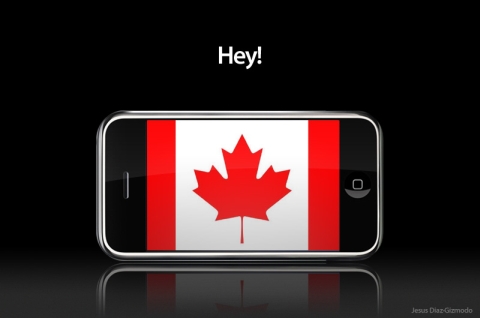
An anonymous poster over at iPhone in Canada.ca posted what is supposed to be the employee Rogers iPhone 3G In-Store Activation Process and Store Setup Requirements for iPhone.  Have a look.  If it is a fake, someone has a lot o time on their hands.


***Rogers iPhone 3G In-Store Activation Process Explained***

iPhone In-Store Processes
· Absolute NO’s
o No Promotions/Contests
o No Countdowns
o No Posters out of the store
o No Flyers
o No Radio remotes
o No Mailers
o No Alteration of Store Hours
o No Swag
o No Tshirts with any reference to Apple or Iphone
o No advertising until 13 weeks post launch

· Action Items
1. Shipments for fixtures should start arriving in stores July 8th. Once fixtures are received in store, they can be put together, but Demo Unit cannot go onto fixture until July 11th.

2. Please ensure that the DP’s send their floor plans to their stores to ensure proper set-up of the fixtures when they arrive

3. Store Set-Up Phase 2 – Please ensure all your stores receive the attached set up document as soon as possible. They can download iTunes Client only from the link provided in the document. We need confirmation that this was downloaded by EOD Friday July 4th, 2008.

Key follow ups
1. MShop – (July 11 – 20 Mshop will be suspended for participating locations) more information to be discussed on Director’s call on Monday June 30th.

2. SMB On-sites – No Pre-advertising, no desk drops, no posters (You can show up on that day and sell the product) No pre-promotion

3. Training – ensure store reps have signed up. Sales process training will be included next week.

4. Fast-Track will be unavailable from Sunday June 29th at 12 PM until Tuesday July 1st at 8 PM

5. Product will be available shortly for ordering

Store Setup Requirements for iPhone

This document outlines the initial store setup requirements that you must fulfill in order to effectively sell the iPhone in store. To ensure customers can leave with a fully functional iPhone, it must be first be "unbricked". This process involves using the tether (a USB cable: see below) to connect/sync the iPhone to a unique ‘Activation Only’ version of iTunes via a computer. More information about the unbricking process will be provided in training (found on Fast Track and Sales Central) and you will be informed when the job aid is available.

Glossary:
Bricked: Default state of the iPhone, only emergency calls allowed.
Unbrick: Enabling the phone for services.
Tethering: Connecting an iPhone to a computer running iTunes.
Activation: Customer account setup and CTN provisioning which is completed in-store and is immediate. This is identical to today’s process for other wireless products.

Requirement 1) Download/Install ‘Store only version’ of iTunes

    * In order to unbrick the iPhone in store (which is a requirement of the iPhone Sales Process), you must have iTunes version 7.6.3b4. Installed on your computer. This version has a special ‘Activation Only Mode’ that must be enabled and used in store.
    * The iTunes version that is currently available on the Apple website is version 7.6.2. This version does NOT have the activation only mode and as such please action the following steps to complete the installation of version 7.6.3b4:

1) Download and install 7.6.3b4 from the following link. Do not attempt to use any other version of iTunes as V7.6.3b4 is a specific activation only module designed for in-store use.
https://attache.apple.com/AttacheWeb…QNmUHPjRZRI%3D
2) When you enter the link above you will be asked if you want to ‘open’ or ‘save’ the file. Select ‘Open’. The file is 102mb and may take 5 to 15 minutes to download, depending on your connection speed.
3) Once downloaded you will see a window containing two files. One file is for a Mac and the other is for Windows. Please double-click the Windows.exe file.
4) A small ‘warning’ window will pop-up that advises you to extract all files –Please do so.
5) An ‘Extraction Wizard’ will start. Click ‘Next’.
6) You will be asked where you want the files to be extracted to. The default location (a temporary file) is ok, so select ‘next’. You will then be advised that the extraction has finished. Click ‘Finish’.
7) A new window will appear with the extracted files in (both Mac and Windows). Double click on the Windows.exe file. You may be presented with a Windows security warning. If so, select ‘Run’ as the files are safe. There may be a delay before the next step starts.
8) Pop-up windows and instructions will guide you through the rest of the installation process. You must close MS Outlook (if it’s open) before completing the installation.
9) During the installation process you will be asked if you would like an iTunes shortcut on your desktop – Please do so.
10) You may be asked to restart your computer – Please do so if asked.
11) Once you have restarted you will see an iTunes shortcut on your desktop.
12) The download process is complete – you must now follow the following steps to complete the process.

    * You MUST now enable the ‘Activation only Module’ within iTunes.

13) Create a shortcut on your desktop by right clicking on a blank space on your desktop and selecting ‘new’ and then ‘shortcut’.
14) A ‘Create a shortcut’ wizard window will appear. In the box within the window marked ‘Type the location of the item’, please type or copy and paste the following bolded text in this EXACT format.
15) Please ensure you use the whole of this text with all punctuation/grammar exactly as specified:
"C:\Program Files\iTunes\iTunes.exe" /StoreActivationMode 1

16) Click ‘Next’. You will be asked to enter a name for the shortcut. use:
iTunes Activation Module

17) Click ‘Finish’. You will now see a new iTunes shortcut on your desktop with this name.
18) This shortcut is the Activation Module and should be used to unbrick the iPhone. When you first start this version of iTunes there will be a terms and conditions agreement that you will need to "accept’ in order to proceed.

Note: Unbricking the iPhone should only be completed after activating the iPhone on Sales Central. Full instructions on how and when to activate and unbrick will be provided in a training job aid on fast track and sales central. You will be informed when this Job Aid is available.

Note: As of July 11 2008, an updated version of iTunes (7.7) will be publicly available from www.apple.ca. It will have the activation only mode built in (like 7.6.3b4) so you will not need to use unique Weblinks to download it. As it is a publicly available version of iTunes it still needs to be configured for store use. Therefore you MUST ‘enable’ version 7.7 in the same way as you did for version 7.6.3b4 that is detailed above.
1) To update your current version (7.6.3b4) to V7.7 to benefit from software updates; Open iTunes, select ‘help’ and ‘check for updates’ or go to www.apple.ca and download iTunes from the ‘downloads’ section. You do not have to uninstall previous versions first.
2) You MUST still enable the activation only mode, using the shortcut creation method above.

Requirement 2) Tethering the iPhone
Ÿ Every iPhone box contains its own tether (USB cables to connect the iPhone to the computer) which is required to complete the unbricking process and for customers to sync their iPhone’s at home.
Ÿ In order to speed up the in store process you will receive 2 tethers for your store as part of your Demo unit docking station shipment.
Ÿ Attach each tether via a USB port (ideally USB 2.0) to separate computers. There is no need to remove the tethers; they can remain connected at all times. If the tether is not long enough, you can extend it with a USB extension lead purchased from many electronics stores
Ÿ The iPhone will need to be connected at the other end of tether for unbrick

ing – only after the activation has been completed in SC (see training module on SC and Fast Track for details).

Requirement 3) Sales Central Training and IDs
Ÿ iPhone should only be activated via Sales Central and through the call centre in an emergency.
Ÿ An iPhone Sales Process job aid will be available on Fast Track and SC. It details all the related sales process discussed in this document and others, including Sales Central.
Ÿ Please ensure all store reps have their own unique and active Sales Central ID and have reviewed the job aid.
Ÿ The iPhone product will be made available through DOAT in due course (you will be advised when this happens) and no other special permissions are required in order to activate the iPhone.

Additional Information:

    * Product training is now available on Fast Track – Please sign up as soon as possible!
    * Mosaic Representatives will be visiting select stores in the lead-up to Launch
    * Launch day plans will soon be available. In the interim please do not modify your store opening hours, speculate on launch plans, contact the media or create any form of waitlists or advertising related to the iPhone.


Rogers: Dear Canada, take it or …take it

Site default logo image

We know you hate your mobile provider.  No one really likes them.  But with the possible exception of Australia’s disdain for Telstra, we’ve never seen such universal hatred for a carrier as Canadians have for Rogers.  Unfortunately for you Canada, Rogers is the only carrier with EDGE/HSDPA network in your fair country, so until the EVDO/LTE version of the iPhone comes out, you are pretty much bank rolling the Toronto Blue Jays

The Plans they are offering….

Oh, in case you think the Canadians are cry babies, from the graphic below you can see that yes, they are getting screwed.

Oh, and go here (or here) to voice your opinion

FuckYouRogers.com

Apple China's retail Olympics

Site default logo image

S’funny, these days, watching conversation turn towards China. China Mobile and the Apple iPhone make international headlines. The Olympics. Global manufacturing and the need to do so without landfill. We live in interesting times (Chinese proverb).

Enough build-up. Latest news is that Apple will open its first Apple retail store in China in Beijing’s Sanlitun district on July 19 (Shanghai Daily). And plans to open a second store in the city "during the Olympics".  Oh, and China Mobile looks to be in the final negotiating stages with Apple to carry the iPhone.  According to…them..they already have almost a 1/2 million iPhones on their network so a few more milion 3G models shouldn’t be hard to sell. 


Servicing a fifth of the world’s population – who are growing richer and more middle-classy every day – dosn’t sound like a bad idea at all.


MMS messages coming to iPhone

Site default logo image

 Apple’s kept it quiet, but the company has been quietly developing a way iPhone users can send MMS messages to friends using the device. At least, that’s the latest rumour spreading on teh ‘Net.

Seems an internal AT&T email has emerged regarding a service which lets users attach images, audio and video to a normal SMS. 

Related stories see Rogers Wireless, Canada’s exclusive iPhone 3G carrier announcing today that monthly service plans for the handset will start at $60 for 150 anytime minutes, 75 outgoing text messages, and 400MB of data.

"As Canada’s leading wireless carrier, Rogers is thrilled to not only bring the iPhone 3G to Canada but to make it affordable and accessible to as many customers as possible," says John Boynton, SVP and Chief Marketing Officer, Rogers Wireless. "We’ve designed a pricing structure that offers affordable, flexible voice and data packages so Canadians can truly unleash their iPhone 3G experience on Canada’s fastest wireless network."

Finally, Apple and China Mobile have cleared the main hurdle to a deal for China, meaning iPhone could ship in that country before the end of the year. It’s understood Apple’s move to abandon insistence on a revenue-sharing deal was the barrier to doing the deal in the first place.

Lovely retro iPhone app

Site default logo image

 Here’s a chance to get all retro and, like, modern – both at once – using Object Graph’s iPhone app iRetroPhone and, erm, your iPhone. You just need to dial the number, here’s the video, enjoy… (expect the app to be available on the App Store next month.

'Steve Jobs eventually will get old' – Verizon boss

Site default logo image

Verizon boss Ivan Seidenberg seems ready to make it personal with Apple CEO Steve Jobs, offering some fairly harsh words for the company and its leader.

Speaking to the Financial Times, Seidenberg, boss of the world’s fifth-largest telecoms company, says of Jobs, disparagingly, "Steve Jobs eventually will get old."

Apple is credited with turning the mobile internet into a user-friendly reality with its iPhone – sold in the US exclusively through AT&T – and Seidenberg ain’t so happy, sure, he’s happy to call Apple "a great company", but scoffs at Apple’s iPhone sales so far.

"There goes the conspiracy again," he says of Apple. "You’re declaring them a winner before they’ve earned it on the field." Jobs has no monopoly on innovation, he cries.

Verizon Communications has a market capitalisation of $102bn, it’s the second-largest US telecoms company, and the fifth-largest in the world.

iPhone SDK 8 reveals iTunes remote control app

Site default logo image

We’re entering our last two weeks of iPhone 3G anticipation, and activity around the 11 July launch is beginning to pick up.

Apple has released an eighth version of the iPhone SDK, inadvertently revealing plans to introduce remote control software for the iPhone and iPod touch in the process. In related news, China Mobile confirms talks between it and Apple are now focused on the detail, making it possible Apple could launch in China this year.

"iPhone SDK Beta 8 is compatible with the final iPhone OS 2.0 release and must be used to build and sign any iPhone OS application to be submitted to the App Store. As a reminder, you must be a member of the iPhone Developer Program to submit apps," Apple explains in release notes around the software.

The eighth beta version of the iPhone SDK includes Xcode IDE, iPhone Simulator with Open GL ES support, Interface Builder, Instruments, frameworks and samples, compilers, and Shark analysis tool. The software also requires use of the pre-release iTunes 7,7.

iTunes 7.7 will be the version of iTunes required to underpin iPhone Software 2.0 – and Apple plans to make the media library remote controllable by any iPhone or iPod touch user.

"Use iTunes 7.7 to sync music, video, and more with iPhone 3G, and download applications from the iTunes Store exclusively designed for iPhone and iPod touch with software version 2.0 or later. Also use the new Remote application for iPhone or iPod touch to control iTunes playback from anywhere in your home — a free download from the App Store," Apple explains.

Finally, Apple seems set to introduce the iPhone in China, where  China Mobile spokeswoman Rainie Lei said: "Apple is no longer insisting on a revenue-sharing policy, so the biggest hurdle for China Mobile to bring in the iPhone has been cleared, but there are practical issues still to be resolved."

Apple plans cheaper nano, raises iPhone orders

Site default logo image

 Apple plans to introduce a low-cost iPod nano later this year, and has raised its iPod and iPhone orders in anticipation of strong summer sales, an analyst warns.

FBR analyst Craig Berger reports Apple to have ordered production of over 15 million iPhone 3G’s and 2 million more old model iPhones this year – well above the quantity the company’s been counting on selling this year.

He also reveals Apple to have ordered about 15 per cent more iPods to be produced in the third quarter, and believes Apple is also preparing to introduce iPod classic and iPod touch upgrades. The most likely launch point for these is probably September.

The analyst also claims Apple has increased its Mac orders: Laptops up 10 per cent from his last check and desktops up 20 per cent. This may reflect the imminent release of new Intel processors designed to drive Mac upgrades as the critical US education buying season approaches.

Finally a solution to iPhone-home speaker noise.

Site default logo image

Remember how much we hated the iPhone and its incessant GSM noise on our unshielded speakers?  Some dude says he’s solved all of our problems with some ingenuity and a can of Red Bull.  Anyone want to test it out?

From the site:

Parts you will need to complete the project.

1. iPhone (of course)

2. iPhone Dock

3. Red Bull. Drink it first. Sugar-free is better in taste and less sticky for the remainder of the project. But if you like regular better that’s fine in either case just rinse the can out well before starting.

4. Double stick tape. I used carpet tape for superior thickness to strength ratio.

Tools you will find helpful. 1. •VERY sharp scissors. Don’t use scissors that you care too much about as you’ll be using them to cut the Red Bull can. 2. •A carpenter knife. (Optional. I find better control. If your not a pro knife user don’t use this method. i am not responsible for injury or death as of this disclaimer) 3. •A metal straight edge of some kind. (optional) 4. •Patience.

Quick Directions. I may or may not post images if build another one. 1. •Cut top and bottom off the Red Bull can. This can be rough. You can clean it up later with a scissors or straight edge. 2. •Un-curl the can by gently forming it in the opposite direction. I did this by placing rolling it the opposite way on the edge of the desk in half-inch sections. Be patient and gentle. 3. •Lay the can across the the back of the dock and mark the cuts for trimming then cut down the can and notch spot for the dock connector and AV Output. 4. •Using a scissors (or optional knife) cut out your can as you marked it. 5. •Gently bend and shape your final shield to hold the radius of the back of the dock. 6. •Place the double stick tape across the bottom and adhere it to your dock. That’s it. Done.

Congratulations of your new iPhone Red Bull anti-interference shield.

iPhone software 2.0 – GM ships Friday

Site default logo image

iPhone users, rejoice – Apple’s on the edge of shipping iPhone Software 2.0, meaning the upgrade looks set to reach your mobile this month.

Cupertino “sources” report that it’s “highly probable” the iPhone 2.0 Gold Master will ship this Friday, two weeks before  the iPhone 3G ships and just close enough to the end of June to keep Apple’s promise to ship the software this month.

Gizmodo observes the latest software build offers two code-signing and encryption features which haven’t been seen before.

“Meanwhile, the iPhone Dev Team has confirmed they are working hard cracking the latest build, getting ready for the pwnage of the final release,” the report adds.

Apple not yet green enough – Greenpeace

Site default logo image

While it excels in some areas, Apple needs to improve in terms of the energy used in computer manufacture and needs to deliver much improved global e-waste schemes, according to the latest Greenpeace report.

It’s not all bad news for Apple – the company is one of the two best firms in terms of energy efficiency in its products, with all of them meeting and, in many cases, exceeding Energy Star requirements. However, Apple missed a big chance to advance its score by not improving the environmental performance of the new version of the iPhone, Greenpeace notes.


The latest Greenpeace Guide to Greener Electronics rates company performance on a range of categories, but this eighth edition introduces expanded and tougher criteria on toxic chemicals, electronic waste and new criteria on climate change. It ranks the top market leaders of the mobile phone, computer, TV and games console markets according to their policies and practices on toxic chemicals and take-back schems and more.

Companies are scored on disclosure of their greenhouse gas emissions, commitment for absolute cuts in their own emissions and support for the mandatory global emissions reductions that are needed to tackle climate change. On energy efficiency, a selection of each company’s product range is assessed to see how far they exceed the current de-facto global standard, Energy Star. The overall percentage of renewable energy in a companies total energy use is also assessed. 

Apple took eleventh place, scoring 4.1 points, mainly due to putting products on the market whose key components are free of brominated flame retardants (BFRs) and PVC vinyl plastic.

"For example, all new models of iMac and the MacBook Air have bromine-free casings and printed circuit board laminates as well as PVC-free internal cables. Millions of iPods now have bromine-free enclosures and printed circuit board laminates. The MacBook Air also has mercury free LCD display with arsenic-free glass. MacBook Pros come with mercury-free LED backlit displays," Greenpeace explains.

"Apple scores poorly on most e-waste criteria, except for reporting a recycling rate in 2006 of 9.5 per cent as a percentage of sales seven years ago. It does only slightly better on energy criteria, failing to score on all criteria except energy efficiency of products, where it scores top marks (doubled) for all desktops computers, portable PCs and displays complying with Energy Star 4.0 and their iPod and iPhone power adapters not only exceeding the Energy Star standard, but already meeting California’s stricter efficiency regulations that take effect 1 July 2008."


Coldplay smash US/UK iTunes sales records

Site default logo image

UK act Coldplay seems set to smash US iTunes album sales records this week. Hits Magazine suggests the band’s new album, Viva La Vida, sold over 275,000 copies in the US in the most recent week, overtaking the previous record held by Jack Johnson. The album also sold in excess of 700,000 copies in US retailers.

Apple has been engaged in a Coldplay-focused iTunes campaign, which has helped raise the profile of the Chris Martin-fronted act. That Coldplay occupy the number one album slot on both sides of the Atlantic also illustrates the growing ability of Apple as a power to help create success for bands.

Coldplay’s success isn’t unexpected. As reported earlier this month, the new Coldplay album also became the best-selling album pre-sale ever released in the history of iTunes.

this also means the band’s beaten out releases from Paul McCartney, U2 and Gnarls Barkley to take that prize. Largely produced by Brian Eno, the album’s scheduled to ship on 12 June in the UK and 17 June in North America. The album leaked online earlier this month, though the band made one album track Violet HIll available for download from its website for one week only in April.


Around the Web – 25 June

Site default logo image


It’s an update and shipping forecast kind of a day, with Adobe introducing a new and improved CS3; Microsoft shipping its latest batch of (delayed) Mac software updates; news that Spore ships September 5 and Microsoft dragging its feet over being good under the DOJ anti-trust thing (gosh, is that still dragging on? Why not just split the company?)

Anything else? Not a whole heap really, other than some strange excitement that O2 in the UK may let iPhone buyers pre-agree their contract in early July (but not get the phone until later). And, yeah, more on iSuppli’s claim the iPhone costs $173 to make, a statistic the researchers there, erm, based on guessing, you know, kinda made up, sorta. Read on.


Updates and shipping

– Adobe adds Acrobat Pro 9 to the CS 3.3 bundle, cuts UK prices and so on.

– Microsoft ships: Office 2008 for Mac 12.1.1 and Office 2004 for Mac 11.5.0 – both of these improve compatibility.

– More importantly, Microsoft has also introduced Open XML File Format Converter for Mac 1.0. Originally promised for release in January, the converter allows users to convert files created in Office 2008 for Mac or its Windows counterpart. 

– Oh, and you know how Microsoft has licensed its Exchange communication protocols to Apple? Seems its still a little backward in its support documents, at least so say the Judge in the historic DOJ antitrust case

– Spore ships September 5 – it does!! Enjoy the QuickTime trailer for Spore here. Or you can get yourself ready for gameplay by designing your very own alien beings using Spore Creature Creator.

In other news…


So it seems UK iPhone users will be able to pop into an O2 shop come 1 July in order to sign a contract enabling them to more speedily pick up an iPhone when it ships on 11 July, a big deal, apparently.

iSuppli makes wild speculation and guess as to cost of iPhone manufacturer, while almost certainly an accurate guess, it is still a guess, and is widely reported….and the iPhone costs – $173 to manufacture (maybe), according to guessing….

Pop back round here later on, we may have some more for you then.


Microsoft's Mac BU plans big expansion

Site default logo image

 Presumably reflecting Apple’s ever-growing slice of the personal computer market it ignited in the ’70s with the Apple II and then reinvented with the Mac in the 1980’s, Microsoft’s Mac Business Unit has announced its biggest recruitment drive in eleven years.

A note on the Mac Mojo blog on the Mac BU site says: "We are hard at work planning for products beyond Office 2008, and we are growing our team to help turn our vision into reality. We offer the feel of a small company with a strong team culture of innovation, creativity, and creating great user experiences."

Microsoft is hiring for multiple roles (Program Managers, Developers, Testers, User Experience, and Marketing) based in Redmond and in Silicon Valley. "We offer an outstanding opportunity to build great software experiences for Mac customers, and to have a significant impact on the way millions of Mac users work around the world."

While it may not always be so obvious when using Microsoft’s productivity software, the Mac BU describes themselves as, "the brightest, coolest, and most interesting business unit at Microsoft – if we do say so ourselves."

Formed on January 7, 1997 the Mac BU is one of the largest developers of Macintosh software outside of Apple, currently employing more than 180 people and having an estimated yearly revenue of $350 million.

Games guru slams complexity on iPod

Site default logo image

 Chris Foster, a Harmonix developer from the company behind the original Guitar Hero and the more recently-introduced Rock Band, had some interesting insights on games development for the iPod today.

Speaking at the Paris Games Developers Conference, he talked about iPod users as gamers, characterising them as extremely casual gamers. He chatted about the game he worked on, called Phase, to outline the kind of lessons he learned in his work.

"The audience for iPod is different to that of the PSP and DS," he said. "The iPod user is not necessarily a gamer. Complexity is not welcome on the iPod."

As reported by Develop.Mag, he also warned: "Embrace your platform’s limitations and audience. Don’t try to cram in ideas that are not suitable."

Foster also described iPod users as the kind of gamers who will play a game for five or ten minutes, rather than for several hours, calling them "listeners first and players second".


SproutCore co-founder speaks

Site default logo image

 An audio interview with SproutCore founder Charles Jolley (now senior user interface engineer for .Mac/Mobile Me at Apple) is available now. Jolley is the man with the plan, as commentators observe SproutCore could be the perfect open-JavaScript-based competitor for Flash and .Net.

Educated at the University of Kansas, he’s the former MD of Nisus Software. His SproutCore code is used as the foundation of Mobile Me. It’s a JavaScript framework designed to make web applications that work a lot like desktop apps while running within the browser, while also being widely compatible as a result of being built with JavaScript’s open standards. 

As interviewer, Dion Almaer, reports for Ajaxian: "We talked about the history of the project, how it differs from other frameworks that are out there, and where they are going."

SproutCore is much more JavaScript focused though, and gives you MVC in the client in a simple and intuitive way. I found it interesting to see how the framework has developed, from its Rails plugin roots," Almaer adds.

You can listen to the interview here, thanks to Mac Daily News for the link.


iPhone war begins: Nokia buys Symbian

Site default logo image

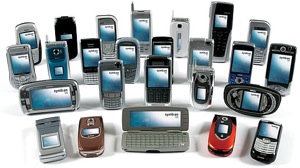
This is interesting – Nokia this morning announced plans to buy mobile phone operating systems maker, Symbian. This is significant because it underlines how software is the new battle ground for the smartphone market, with devices and functionality taking second place to ease-of-use and integration.

Nokia paid out over $250 million in Symbian license fees last year, so it makes sense for the company to purchase the firm. Well, that, an imminent competition from Google’s now-delayed Android platform, and the permanent looming threat of Apple with the iPhone. Apple, in particular, lends its proven skills in software design to the mobile phone market.

Mobile phone makers have been slammed in the past for creating user interfaces which don’t sufficiently engage users and lack the level of intuition most of us demand from devices we use every day. Apple’s iPhone raised the bar on this, so Nokia’s investment may also be predicated on that company’s need to bring in leading-edge software development skills. Symbian and its developers hold extensive expertise in the mobile phone software development space.

It’s a joint effort. Also announced this morning was the launch of the Symbian Foundation, which features Nokia, Sony Ericsson, Motorola, NTT DoCoMo, AT&T, LG Electronics, Samsung Electronics, STMicroelectronics, Texas Instruments and Vodafone Group. All members will be able to use the Symbian OS under a royalty-free license. 

"Ten years ago, Symbian was established by far sighted players to offer an advanced open operating system and software skills to the whole mobile industry," said Nigel Clifford, CEO of Symbian. "Our vision is to become the most widely used software platform on the planet and indeed today Symbian OS leads its market by any measure. Today’s announcement is a bold new step to achieve that vision by embracing a complete and proven platform, offered in an open way, designed to stimulate innovation which is at the heart of everything we do."

"Establishing the Foundation is one of the biggest contributions to an open community ever made," said Olli-Pekka Kallasvuo, CEO of Nokia. "Nokia is a strong supporter of open platforms and technologies as they give the freedom to build, maintain and evolve applications and services across device segments and offer by far the largest ecosystem, enabling rapid innovation. Today’s announcement is a major milestone in our devices software strategy."

Nokia expects the acquisition to be completed during the fourth quarter of 2008.

A press conference will be webcast live from London today at 11am, and will be available for replay from here.

Apple Hot News links to Snow Leopard shots

Site default logo image

Some editor at the Apple Hot News website has a bit of a sense of humor.  They detail a National Geograhic photographer whose focus is…wait for it….

Snow Leopards.

At the very least all of us bloggers will have some stunning pictures to use when referring to Apple’s new operating system.  Beautiful work from Steve Winter:

When National Geographic photographer Steve Winter reviewed his Snow Leopard images in Aperture, he was literally seeing them for the very first time. Knowing Snow Leopards to be notoriously camera shy, Winter set up 14 camera traps to capture remotely the photos selected for the recent National Geographic article and gallery — just a small sample of the 30,000 he edited and processed in Aperture.


Apple seen as already greener

Site default logo image

Apple is seen as the greenest IT brand, sharing the lead with HP, Microsoft, IBM, Intel and Sony, reveals an environmentally-focused research study among enterprise technology users.

The survey – conducted by GreenFactor – revealed that 70 per cent of those surveyed said they would be prepared to purchase green products, but only if they were convinced of the positive impact of the decision.

The research was conducted among 3,500 enterprise IT decision makers during the first quarter of 2008 by Strategic Oxygen, GCI Group and Cohn & Wolfe.


Price, company policy, and lack of availability of green products were cited as typical reasons not to invest in greener kit, while enterprise buyers confessed to be searching for green versions of the following products (in order of preference): Laptops; desktops, servers, storage, network hardware.

In nine of 11 countries polled, price was the top barrier. Marketers must focus on better communicating total cost of ownership and overall value to potential buyers.

Low cost iPhone 3G drops dock

Site default logo image

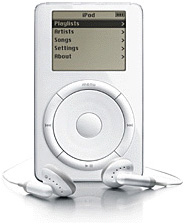
Wondering how Apple has bought down the price of the iPhone? Anyone remember the first-generation iPod, which shipped with its own power adaptor?

Announced on October 23, 2001. Jobs announced the first-generation iPod put "1,000 songs in your pocket," Apple charged $399 for the device. Over time, Apple whittled away the cost by sourcing lower-cost components and by removing things like the dock and power adaptor from the retail product, making these available as optional extras.

Now the company is doing the same thing again as it makes its iPhone more widely accessible at $199, subsidised by carriers. In order to reduce costs while still delivering a cutting edge device, the company has moved to a plastic back (a widely reported feature) and once again taken something out of the box: unlike the first-gen device, the iPhone 3G ships without a dock. You’ll have to buy that separately at a cost of $49, though you don’t require the dock in order to sync your phone.


Motorola massacre: iPhone slices Razr…

Site default logo image

 Apple’s iPhone is already snapping at the heels of Research In Motion and trouncing Palm, but spare a thought for another victim of the invasion – former partner, Motorola.

Apple worked with Motorola to deliver the first iTunes-capable mobile phone, the somewhat lacklustre ROKR. While this never truly competed with Motorola’s RAZR phone, it was an attempt.

Motorola’s handset sales are suffering now in the PiP (Post-iPhone) world. A survey by Rubicon Consulting reveals 14 per cent made the switch from Windows Mobile; 13 per cent from Blackberry, 7 per cent ran from Palm – but almost a quarter, 24 per cent, of those surveyed were previously owners of a Motorola Razr.

A survey conducted by JD Power and Associates found the average price paid for a handset in the US has increased by $9 over the past six months, to a record high of $101.