
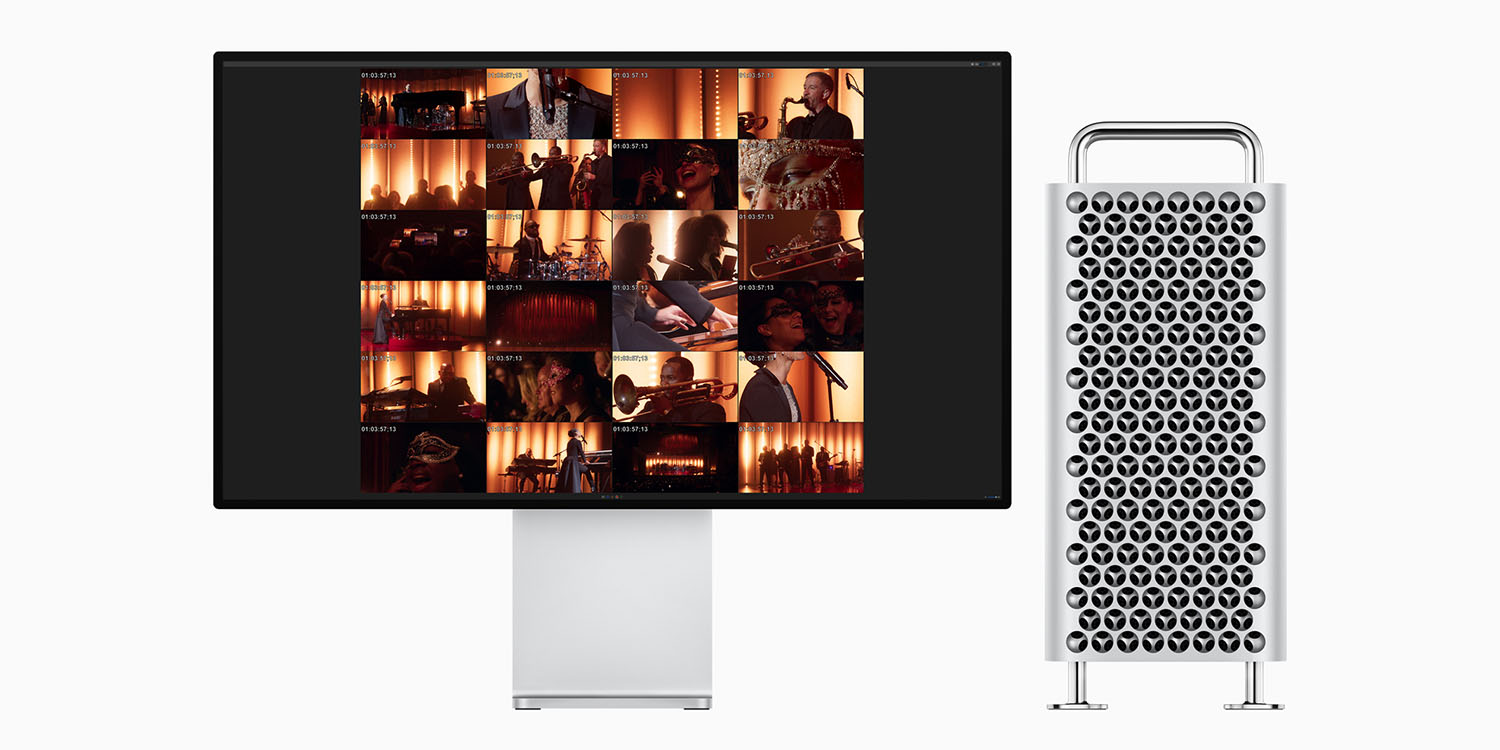
Back in 2019, Apple responded to Trump’s tariff threats by agreeing to make the Mac Pro in the US – proudly bearing a Designed by Apple in California, Assembled in USA label. The 2023 Mac Pro, however, has different wording.
The label instead now reads Designed by Apple in California. Product of Thailand. Final assembly in the USA …
What is in a word?
The history of US “assembly” of the Mac Pro has long been a somewhat murky one. While Apple appeased Trump by creating a photo opp for him, the Texas facility he “opened” had actually been operating for six years by that point.
There’s also the question of exactly how one defines “assembled.”
The word could give the impression that all the various components for the computer are sent to Texas, with each one of them hand-assembled by a smiling team of American workers. The reality, of course, is very different.
The big trend in Mac interior design in recent years has been for fewer and fewer elements. That is, instead of a CPU being plugged into a circuit board, with separate GPU and RAM chips being similarly added, the “component” is now a motherboard with CPU and GPU sitting inside a single chip, and the board already populated with both RAM (really, unified memory) and SSD storage.
Top comment by Leroy
The FTC has guidelines for what constitutes "assembly"
The Commission further concludes that, in many instances, it will be appropriate for marketers to label or advertise a product as "Assembled in the United States" without further qualification. Because "assembly" potentially describes a wide range of processes, however, from simple, "screwdriver" operations at the very end of the manufacturing process to the construction of a complex, finished item from basic materials, the use of this term may, in some circumstances, be confusing or misleading to consumers. To avoid possible deception, "Assembled in USA" claims should be limited to those instances where the product has undergone its principal assembly in the United States and that assembly is substantial. In addition, a product should be last substantially transformed in the United States to properly use an "Assembled in USA" claim. This requirement ensures against potentially contradictory claims, i.e., a product claiming to be "Assembled in USA" while simultaneously being marked as "Made in [foreign country]." In many instances, this requirement will also be a minimum guarantee that the U.S. assembly operations are substantial.
Presumably, because the computers have not "undergone principle assembly and that assembly is substantial", Apple can no longer use "Assembled in USA"
Other components are similarly module in nature, so what really happens is that the modules are put together elsewhere, and “assembly” is a rather minor element. I joked with my colleagues that an American intern makes the final turn on a single screw after the machine arrives from Thailand. But I suspect the reality may not be too far removed from this– especially as it seems to confirm a report that the machine would be assembled in Thailand.
Why the new wording for the 2023 Mac Pro?
It seems exceedingly unlikely that Apple made the change, which was first spotted by MacRumors, of its own volition. There’s no benefit, and it makes the wording clunkier. This is, for sure, a change that has been forced on Apple in some way.
One possibility is a US regulator scolding the company for misleading consumers. Another is some agreement reached with the Thai government to highlight the country’s status as an Apple-supplying nation in return for breaks on component import duties or the like.
Given the rather awkward wording of “final assembly in the USA,” I suspect regulatory intervention.


FTC: We use income earning auto affiliate links. More.



Comments