
The long-awaited low-cost MacBook powered by an A18 Pro chip is now expected to launch on March 4. It will reportedly be priced somewhere around $700, making it significantly cheaper than an entry-level MacBook Air.
Given that the upcoming machine is likely to meet the needs of a great many of those who currently opt for the MacBook Air, it could cannibalize a lot of sales. One possible solution to this is to use the strategy Apple once adopted with the iBook and Powerbook lineups …
The cannibalization problem
A lot of those who buy the MacBook Air have extremely undemanding needs. They use their machines for tasks like email, web browsing and writing, none of which require much in the way of CPU or GPU performance.
While I’m sure there will be those who will poke fun at a MacBook powered by an iPhone chip, the reality is that the A18 Pro is a very respectable processor, and more than capable of meeting these kinds of needs. This potentially means that a sizable chunk of the MacBook Air market could instead opt to spend considerably less money on the low-cost MacBook.
Apple has said in the past that it isn’t afraid of cannibalizing its own products – as if it doesn’t, then someone else will. However, that’s not really true when it comes to the MacBook Air. No other laptop maker has succeeded in winning much of this business, despite respectable attempts like the Dell XPS 13 and ASUS Zenbook 14. Most MacBook Air buyers definitely want an Apple laptop.
The launch of a $700 MacBook could potentially end up costing Apple a significant number of $1,000 sales.
Apple’s Powerbook versus iBook strategy
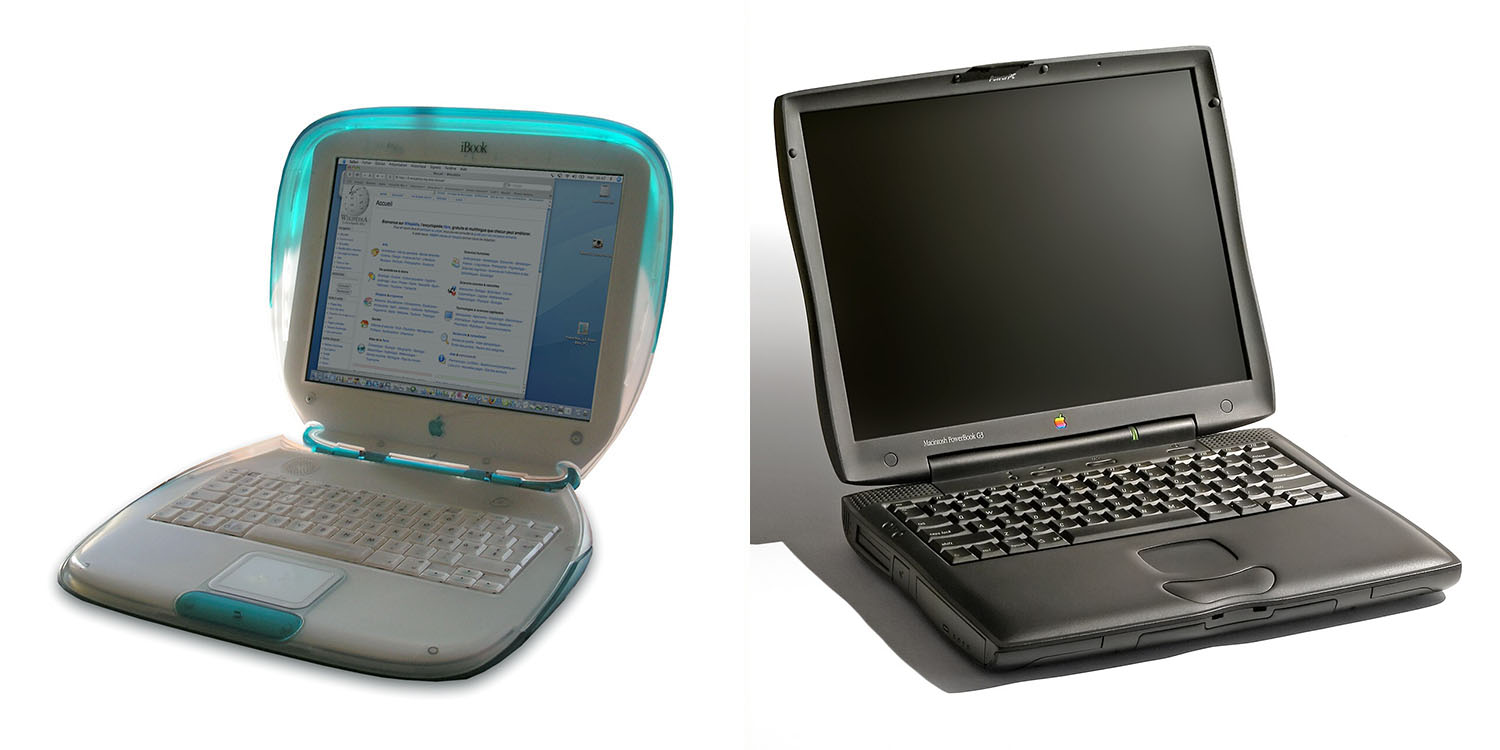
It’s not the first time Apple has faced this kind of problem. In 1999, the company introduced a new laptop aimed at students and consumers known as the iBook. However, the company didn’t want to cannibalize its existing Powerbook lineup aimed at business users.
Exactly the same circumstances applied. The iBook would serve the needs of many business users with undemanding needs, and the company could potentially have ended up downselling many buyers to the cheaper model.
Apple neatly solved this problem by giving each range a very different design and image. While the Powerbook G3 was a muted and professional-looking gray, the iBook G3 … wasn’t. The company opted for a funky-looking plastic model based on the design of the iMac, which some unkindly characterized as having a Fisher-Price toy look to it.
Apple was betting that not many people would want to go into a business meeting with an iBook under their arm, and the strategy did appear to be successful. Although both models later got sleeker designs, the iBook remained easily distinguished from its more expensive brethren.
Could the low-cost MacBook be the new iBook?
What started as an April Fool’s joke back in 2024, a reader poll a year later, and a theory last summer has now evolved into an expectation. We’re expecting to see the upcoming MacBook offered in a range of bright colors.
To be clear, Bloomberg’s Mark Gurman did not state that the new machine would only be available in vivid colors. He left open the possibility that it would also be available in silver and gray.
Apple will market the machine to students and enterprise users and offer it in playful colors, going beyond the muted tones of the MacBook Air and MacBook Pro. Over the past year, Apple has tested options such as light yellow, light green, blue, pink, classic silver and dark gray — though it’s unlikely all of these will ship.
All the same, color could be a key differentiation between the $700 MacBook and the $1,000 plus MacBook Air. Yes, you can have a $699 machine that will meet the needs of many current MacBook Air users, but the price of this will be that everyone will be able to see you own the cheaper model.
The question is, would anyone care? Our own poll showed that many would actively prefer a colorful model to a more muted tone, and the popularity of the iPhone 17 Pro in Cosmic Orange underlines this.
My personal view is that most consumers wouldn’t care, but some businesses would. If I’m right, then the strategy may well prove worthwhile in protecting at least some of the undemanding MacBook Air market.
What’s your view? Please share your thoughts in the comments.
- Official Apple Store on Amazon
- Apple’s iPhone cases: iPhone 17 | iPhone 17 Pro and Pro Max | iPhone Air
- Wireless CarPlay adapter (2026 update)
- AirTag holders and accessories
- Mac Pro-style Mac mini casing
- NordVPN – privacy-first VPN with no logs and independent audits to verify
Photos: Powerbook: Danamania | iBook: Believed to be Ocmey


FTC: We use income earning auto affiliate links. More.


Comments