Author

Avatar for 9to5 Staff

9to5 Staff

Off Topic: Microsoft will reveal two iPhone competitors in 2010

Site default logo image

It isn’t really our area of expertise, but we’ve gotten word that Microsoft will unleash two new Smartphones, probably at CES in January 2010 MWC in February 2010.  Developed under the project “Pink” moniker, these two slider phones stem from the acquisition of Danger and will continue to use Sharp as the manufacturing partner (not HTC as previously rumored by the WSJ).  In fact, they’ll be co-branded as “Microsoft+Sharp” products. 

One device is “squircle” in shape like the past Zune’s buttons.  The slide out keyboard houses the mic at the bottom and it is meant to be open when being used as a phone.  This device is code-named “Turtle” and looks like a dressed up Motorola QA1.

The other device is more traditionally-shaped candybar slider and is code-named “Pure”.  The devices had previously been rumored to be carried on Verizon but we haven’t heard anything more in this area.

They will continue to use the App Store model that the Sidekick has employed with over-the-air applications appearing on your phone bill.  Danger’s phone App Store predated Apple’s by two years.

We’ve actually been sent pretty detailed product pictures and could possibly post them if there is any interest in this subject matter. (Or, perhaps to avoid litigation, maybe we’ll just Twitter them up later this week).

Oh, and we’ve recieved something much, much bigger and juicier from Redmond as well.  This is something more interesting to tablet fans, but is still in late prototype phases. 

Here’s a clue.

Preview: Garmin Edge 500

Site default logo image

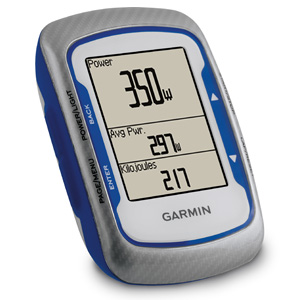
Garmin Edge 500We at 9to5Mac like the cycling. And we love cycling gear. Here’s a little ditty on a forthcoming product that we think will be a hit.

On this blogger’s second century ride of the season, I noticed the groan-inducing "low battery" icon on my near-antique Polar S710 cyclecomputer/HRM–I now have to send it to Polar for a battery and chest strap replacement. The Polar product has always been a bit of a disappointment to me. It has an unintuitive interface, is prone to interference, and is infamously inaccurate. Since the S710 is eight years old already, I thought I’d take a look at what else is available, and see if the time was right for an upgrade.

I had already considered going without a cycle computer in favor of using the B.iCycle or iMapMyRide apps for the iPhone. When the 3.0 SDK came out I had visions of mounting my iPhone to my handlebar and purchasing external speed, cadence and HRM units that would communicate via bluetooth with one of these apps. Unfortunately, the apps haven’t attained that level of maturity yet, though developers of B.iCycle have assured me that they are "eager to improve it with the support for external hardware." On the Long Island Harbors Century this summer, I tested B.iCycle, and it sapped my iPhone 3GS battery completely by mile 56. There were also accuracy problems, since speed is calculated by GPS. And forget about cadence or heart rate. So, I decided to look elsewhere.

A few of my cyclebuddies have Garmin Edge units. Their 605 and 705 products even offer turn-by-turn directions, which is pretty cool, except for the fact that the units are 2" wide by 4.3" tall and weigh 3.7 ounces, which isn’t terribly heavy in principle, but is still about twice as large and heavy as anything else out there, and is kind of horsey (and not aero, if you care about that) when mounted on your stem or bar. Garmin Slipstream star Christian Van De Velde had the same complaint, and Garmin worked with him and the rest of the team to develop the new Edge 500.

The Edge 500 (with HRM bundle) shares many of the top-of-the-line 705’s features, such as GPS, wireless HRM cadence and speed, Garmin Training Center software (which unlike the Polar offering, IS Mac-compatible, though there are some hiccups with SL that will hopefully be resolved soon), and ANT+ power meter compatibility. The Edge 500 also adds heart rate based calorie computation, which the 705 doesn’t have, and has an extra 3 hours of battery life (up to 18 hours). But the Edge 500 has no maps, turn-by-turn directions, routes or waypoints, and no microSD slot, which brings the unit down in size to 1.9" x 2.7" and 2 oz in weight. There has also been some sniping on cycling forums about the mysterious omission of some 705 features that have nothing to do with mapping, like training against a virtual partner, custom workouts, pace alerts, interval training, and unit-to-unit data transfer. Perhaps some of these will roll out in future firmware updates, along with SL bug fixes in the Garmin software.

On balance, I think the Garmin Edge has the mix of form and features to make it the best cyclecomputer on the market when it comes out in December. The sacrifice of mapping and directions for size is actually a good call for many cyclists who train and race on established routes. They are still able to analyze their route and performance post-ride on Garmin Connect, the online community of Edge users. Touring cyclists will probably want the mapping features of the 605 and 705, and probably don’t mind the additional bulk on their bikes. Per Van De Velde’s advice, the Edge 500 is a more durable unit and has a sturdier mount than the 605 and 705, which will be welcome news for mountain bikers and anyone who has lost their $550 Edge 705 in a crash…

…which brings us to price. Garmin’s own press release boasts that "the Edge 500 streamlines your cycling statistics for a fraction of the cost of comparable head units" and lists the MSRP as $249.99 for the base unit and $349.99 when bundled with HRM and cadence sensors. However, if you click over to Garmin’s Edge 500 product page, you’ll find an MSRP of $274.99/$399.99.

I called Garmin Product Support to ask about the disparity, and a very friendly representative named Vern informed me that the MSRP was subject to change between now and the product release. I can only imagine the controversy that such pre-launch MSRP fluctuations would foment in an Apple gadget, but so far, there has been very little noise about this in the cycle forums. Amazon’s Edge 500 page features the unit with the HRM and cadence, and their list is $367.48, but you can pre-order now for just $342.99 with free shipping, which is $7 off the original MSRP from the press release.

Apple introduces App Store Resource Center for Developers

Site default logo image

While the App Store has been a success for Apple and many developers, many others feel that there are a lack of communications, resources and tools for those building iPhone Apps.  Hoping to address those concerns, Apple today announced the App Store Resource Center for Developers:

We are pleased to introduce the App Store Resource Center, a single destination designed to make it easier for you to find details on everything you need to know about distributing your app on the App Store — from how to prepare for app submission to managing your app once it’s been posted.
Make sure you also check out the News and Announcements section of the iPhone Dev Center for tips on submitting your apps to the App Store, turnaround time for app review, new program features, and guidance on everything from development and testing to distribution and marketing.

Apple fires back: "We do not agree with all of the statements made by Google"

Site default logo image

Oh, snap!  Not an hour after Google published their letter to the FCC stating that Phil Schiller rejected the Google Voice App, Apple responds:

“We do not agree with all of the statements made by Google in their FCC letter. Apple has not rejected the Google Voice application and we continue to discuss it with Google.” 

Hope Apple and Google PR people didn’t have any big plans this weekend!

Phil Schiller dropped the hammer on Google Voice, confidential docs disclose

Site default logo image

Really think Apple is still evaluating the Google Voice app?  Is the status in limbo while the folks in Cupertino "study" the matter?  Not Really.  The FCC and Google today released Google’s version of the story. To say that Apple and Google aren’t on the same page is quite the understatement.

According to Google, Phil Schiller himself dropped the hammer on Google’s VP of Engineering & Research, Alan Eustace:

Read – Google unredacted FCC filing [Warning: PDF]
Read – Google Public Policy Blog explaining decision to release letter

Palm CEO Jon Rubinstein talks Apple, Palm on first Engadget Show

Site default logo image

http://www.viddler.com/simple_on_site/c82ea7d3

The inaugural Engadget show’s pretty good viewing led by an interesting chat with current Palm boss and former Apple exec, Jon Rubinstein, who talks about the “terrible state” Apple was in at the start of his time there, and confirms he was involved in the decision to adopt USB, stop use of the floppy disk, and in the choice of 1.8-inch drive used in the iPod.

“While we started working on iTunes we started playing with some of the music products that were available on the market, and they were terrible, really poor products.” So Apple decided making a music player would be fun.

When he decided to leave Apple, he gave 18-months notice and finished development of the iPod nano and video, and headed off to Mexico for a year and a half off, before a call from former Apple CFO, Fred Anderson, then at Elevation Partners, inviting him to “take a look at” Palm.

Take a look at the rest of the interview to find out what Rubinstein did next. “I think Palm is an incredible opportunity,” he says.

He also had a good crack on Apple secrecy: "You guys are always looking through Apple’s garbage can, no one’s looking through our garbage can," he said, while discussing the secrecy surrounding launch of the Palm Pre, which should ship in Europe by Christmas, he said.

Microsoft goes on price attack for Win 7 as OS wars continue

Site default logo image

Microsoft continues to attempt to regain the initiative, and is attempting to boost sales of its forthcoming Windows 7 OS by offering a deep discount on the software to students, as it tries to lure them back from the Mac.

The company has announced qualified college and university students can obtain Windows 7 for $30 in the US and £30 in the UK. The OS is available to students for pre-order now and will be released for download on October 22 in the US. In the UK pre-orders start September 22, while students in other countries will be able to take up the discount from October 22.

Microsoft has lost many students to Apple in recent years. Apple now leads the education markets in the US and Europe. Now it appears Microsoft is attempting to consolidate its remaining student user base. The discounts are only available to students who already run a “genuine copy” of Windows Vista or XP. They must also possess a valid college email address.

The move follows NPD’s revelation yesterday that Apple’s decision to make Snow Leopard an affordable OS upgrade is paying dividends, Snow Leopard sales in the first two weeks have “far exceeded” those of the two previous OS’s. NPD believes Snow Leopard sales are over twice those of Leopard and four times higher than those achieved by Tiger.

AT&T CEO: 7.2Mbs wireless in 6 major markets by year end

Site default logo image

Randall L. Stephenson spoke at today’s Goldman Sachs Communacopia conference.  He noted among other things that AT&T would open up 7.2Mbs in six major markets by the end of 2009.  The iPhone 3GS will be able to take advantage of this speed while older iPhones will be stuck with 3.6Mbs.  As for cities that are going to get updated?  We know Chicago is wired up and ready to go but who else gets to go 7.2?  Update – as per this week’s press release: Charlotte, Chicago, Dallas, Houston, Los Angeles, and Miami are getting the "7dot2" lovin’

He then goes on to explain why carrier exclusivity drives innovation and is good for the consumer (ROFLOL!).  Have a listen to the MP3 file here.


ZuneHD forces you to watch commercials before apps load?

Site default logo image

It appears that instead of selling games, Microsoft’s ZuneHD strategy is to place advertising in the apps before they load – like pre-mercials.  These are full videos that take up space on your Zune Flash storage, not just your friendly Malware banner ads. 

We can see this trend as being pretty annoying.  Perhaps there will be a pay-opt-out?  This one took up 30 seconds before playing a chess game.  Thoughts anyone?

http://vimeo.com/moogaloop.swf?clip_id=6612641&server=vimeo.com&show_title=1&show_byline=1&show_portrait=0&color=&fullscreen=1
 Ars Technica via Distorted


Snow Leopard sales roaring, outsell Tiger and Leopard upgrades

Site default logo image

Apple’s decision to make Snow Leopard an affordable OS upgrade is paying dividends, with NPD reporting the new software has outsold sales of both Leopard and Tiger in just two weeks.

Price – $29 – is certainly part of this success, while the fact that a Leopard disc isn’t technically required to enable a Tiger user to upgrade all the way to Snow Leopard is bound to help, despite Apple saying this isn’t permitted.

As we reported last week, we’re certainly experiencing the same mass migration, with our current visitor stats showing over 62 per cent of 9to5Mac readers are already using Snow Leopard, while 29 percent are on Leopard, as indicated in the chart below. 

That 62% Snow Leopard users is up from 55% the week after release and 10% the day of release.  This is substantially faster adoption than we saw with Leopard.  Three months after Leopard was introduced, more than half of our readers were still using Tiger.

As reported by LoopInsight, Snow Leopard sales in the first two weeks have “far exceeded” those of the two previous OS’s. NPD believes Snow Leopard sales are over twice those of Leopard and four times higher than those achieved by Tiger.

Sales also remain steady, as second draft upgraders move to but the software following Apple’s recent release of a patch to address issues encountered by early adopters. Snow Leopard sales declined by 25 per cent, but fell 60 per cent for the previous two OS’s.

“Even though some considered Snow Leopard to be less feature-focused than the releases of Leopard or Tiger, the ease of upgrading to Snow Leopard and the affordable pricing made it a win-win for Apple computer owners — thus helping to push sales to record numbers” said Stephen Baker, vice president of industry analysis at NPD.

WinMob goes Multi-touch

Site default logo image

Apple’s latest legal beagle, Bruce Sewell, will likely be taking a close look at HTC’s new Windows Mobile-powered device, wondering if it crashes any patents Apple may hold on elements of Multi-Touch technology.

This short video of HTC Leo demonstrates some of the capabilities of this as-yet-unannounced Windows phone, including its large display’s support for Multi-Touch.  The newly released ZuneHD also takes advantage of this technology.

Granted, Apple’s currently in dispute with Elan Microelectronics on two Multi-Touch related patents, which the Taiwanese firm employs in some Eee PCs (video below).

However, when the iPhone was originally announced, Apple CEO, Steve Jobs promised the company would aggressively protect its patents on technology used in the device.

These statements were echoed by COO, Tim Cook, earlier this year, when he said, “We approach this business as a software platform business. And so I think we approach it fundamentally different than people that are approaching it only from a hardware point of view. And, so, as I’ve said before, we’re very, very confident with where we are competitively. We are watching the landscape. We like competition, as long as they don’t rip off our IP. And if they do, were going to go after anybody that does.”

While questions remain as to the extent to which Apple can make claims against competitors introducing gesture-based Multi-Touch controls, it is pretty certain that Sewell has the required experience to make such cases, should the company choose to engage.

Apple’s new legal chief was formerly part of the team which represented the company in the infamous Apple versus Windows Mac OS UI case. Given the impact of that – Microsoft proceeded to take over the PC industry – is Apple likely to cede the user interface again?

We watch with interest.
 

Elan sample video:

FUD report: Snow Leopard 'not as secure' as Windows…

Site default logo image

Another week, another lax Mac OS X security FUD emanating from the usual quarters, making the risible claim Apple’s platform is inherently less secure than Windows.

Story goes like this: The hacker who successfully broke into a Mac at a hacker’s conference some time ago has tested Snow Leopard against WIndows 7, and accuses the Mac OS as being “less secure” than Microsoft’s Vista upgrade.

Charlie Miller is one of the team from Independent Security Evaluators who successfully "pwned and owned" an Apple MacBook Air, in a hacking contest sponsored by TippingPoint’s Zero Day Initiative.

Miller tells Computerworld that Address Space Layout Randomization (ASLR) is “less developed” in Snow Leopard. Then his argument gets – to our eyes – a little ridiculous. We stand to be corrected, of course.

“Snow Leopard’s more secure than Leopard, but it’s not as secure as Vista or Windows 7. When Apple has both [in place], that’s when I’ll stop complaining about Apple’s security," Miller says. “It’s harder to write exploits for Windows than the Mac, but all you see are Windows exploits. That’s because if [attackers] can hit 90% of the machines out there, that’s all [they’ll] do. It’s not worth [them] nearly doubling [their] work just to get that last 10%."

Harder to write exploits for Windows than the Mac? Sorry, we don’t buy it. Mac is Unix-based, hence its robust nature. Windows isn’t – and why would Microsoft want to put all those security company’s out of business?

Without skipping a beat, Miller does say, “I still think you’re pretty safe on a Mac.”

In the ten years of writing about this stuff, I’ve lost count of the number of times dire Mac security warnings have been propagated by security and anti-virus vendors. Six years on since the sabre-rattling became more intense, and there’s still been no serious remote exploits that haven’t then been quickly fixed.

Sure, the danger’s always there – you can’t be blind to security threats and need to stay aware and up-to-date – but the fact remains, despite these regular FUD reports, chiefly emanating from Windows-friendly sources, the Mac platform remains more secure. And we don’t buy that to be solely because of its smaller market share – after all, we know there’s plenty of Apple haterz out there.

Sony Ericsson takes on Apple App Store, offers fast apps approval system

Site default logo image

Sony Ericsson is touring the world’s developers to rustle up support for application-building for its devices, and is promising to beat Apple in the creation of a short and transparent Apps approval process.

The company’s head of developer and partner engagement, Christopher David, has promised to create a special approval system for what he terms “tier one” developers. This free scheme promises to get freshly-made apps to market fast, most crucially promising to vet newly-submitted apps “within five days”.

And while Apple offers an App for everything, Sony Ericsson hopes to offer a more moderate experience, he said, “We’re not looking for dozens of Sudoko games, but for apps that enhance the Sony Ericsson mobile experience.”

The company opened up its app marketplace to developers during summer, the store’s now available in 69 countries.

While the promise of less competition between similar apps and a fast approvals process may look good on paper, the company’s vision isn’t as inclusive as Apple is attempting to be. In order to offer their apps, developers must first submit their concepts to Sony Ericsson Labs.

Strangely, though, Sony Ericsson is also demanding a 30 per cent slice of revenue (as Apple does).

Also worth reflecting, while Apple already offers 75.000 apps, Sony Ericsson has just 150 available now with 400 more “in the pipeline”. So the company basically doesn’t need a huge team of approvers in order to maintain the store. “We’re going for quality over quantity,” David said.

Mossberg reviews iTunes 9

Site default logo image

Walt’s got the review of iTunes 9. It is a little slow going but covers most of the good stuff.

http://s.wsj.net/media/swf/microPlayer.swf

From a commenter below:

His videos start off looking like he’s been kidnapped and has found access to a web-cam in his captors’ basement. But instead of yelling for help, he explains what iTunes is for ten minutes.

Remember, he’s speaking to a not as tech savvy audience – this is a good video to pass along to your parents (if they aren’t tech savvy), for instance.

Apple's stock trajectory charted against major events of the last year

Site default logo image

Silicon Alley Insider’s SChart of the Day is AAPL’s roller coaster of a year overlayed with the larger Apple events.  Pretty interesting how everyone is bullish right now…

..because those Generation 3 iPod touches aren’t going to sell that well until it gets a camera.  Although it is only one tiny product, it is the most important iPod and is facing unprecedented competition from Sony, Microsoft and Archos.

U2 forgo iTunes LP in favor of Blackberry, Benjamins

Site default logo image

There was a day when U2 and Apple were buddies. Apple CEO Steve Jobs even sold an apartment to U2 front man, Bono. There was the U2 iPod. There’s still a Product Red nano. But it’s all about the dollars, and in the current state of play of the iPhone and Apps market, Canada’s Research In Motion dug deep to take a slice of me too with U2, so it appears.

Distorted Loop is reporting that U2 and RIM today introduced their own take on the iTunes LP with the release of a new U2 Mobile App, not for iPhone, but for BlackBerry.

There’s nothing covert in the move, with the partners claiming the new app, “invigorates the album experience for the digital age.” Erm, right…

It promises “a rich visual experience with evolving content and an interactive dimension for the band’s current Number 1 album No Line On The Horizon."


Expand
Expanding
Close

iPhone/iPod augmented reality gear make spectacles of themselves

Site default logo image

Vuzix have announced an all-new and quite cool-looking set of iPod/iPhone-compatible digital video glasses, set to ship just in time for Christmas.

The new wraps look like sunglasses and feature ‘see-thru’ Quantum optics technology that doesn’t block out the world around you while you watch your private video display or play a game or check Google Maps or whatever you happen to be doing in your 21st Century ‘Augmented Reality’. (It’s all getting very Matrix, is it?)

A patent pending electronic IPD system enables adjustment for virtually all facial structures and optional prescription lens inserts provide the ultimate solution for eyeglass wearers.

The glasses will be made available in three models:

The Wrap 920 offers a 60-inch monitor as seen from 9 feet and weighs just 3 ounces. They provide a 30-degree field of view, ship with removable noise-cancelling earphones and work for six hours with two batteries. There’s also an expansion port that’ll give it VGA / component outputs in the near future,

They are compatible with all NTSC or PAL audio/video devices equipped with video-out capabilities, so that’s iPods, iPhones, DVD players, Media Players, Camcorders, and so forth.

While you wait for these new augmented reality shades to ship, why not take a look at the existing range of these offered by Amazon, and consider those up to $99 discounts on the older models while you make up your mind.

via Engadget.

Forget ZuneHD, the iPod touch's biggest competition is the Archos 5 media tablet

Site default logo image

A lot has been made of the ZuneHD vs. iPod touch competition that is currently underway.  However, a third competitor, the Android-based Archos 5, may make a better choice than the ZuneHD or even the new Sony device to compete with the iPod.

Here are a just few reasons why:

  • It runs Android which has a working apps store and Google behind it.  Included apps: Webbrowser, Email, Contacts, DroidIn™, Ebuddy™IM, Twidroid™, Deezer™, Dailymotion™, QuickPedia, ThinkFree Mobile, Moov, CraigsPhone, Pages jaunes™ (only for France), High Paying Jobs (only for US & Canada), Alarm clock, Calculator.
  • Built-in GPS, built-in DVR, 802.11N, FM receiver AND transmitter (to broadcast music into car stereo)
  • 800×480 screen 3X compared to Zune’s 480×272, over an inch larger
  • Up to 500GB Hard drive version, MicroSD card slot for an additional 32GB of Flash storage
  • Bluetooth keyboard support
  • Flash 10 support in 2010
  • the Archos 5G has 3G wireless built-in.

 Overall, a pretty insane features list.  We’re certainly more interested in this than a Zune.  Prices start at around $200.

ARM announces 2GHz, low power chip – is this the heart of Apple's tablet?

Site default logo image

The old wisdom states that every journey begins with a single step, and it’s possible Apple’s tablet tale opened up yet another chapter on ARM’s morning announcement of its development of a new 2GHz, dual-core version of its Cortex-A9 architecture.

This 40-nanometre processor offers its high speed at impressively low power, which ARM pegs at 0.25-Watts per CPU. The product’s being aimed at the market for fast small home devices.

A December 2008 Computerworld article by our own Seth Weintraub predicts Apple’s tablet will be based on ARM’s Cortex architecture.

Now, we know ARM licenses its chip designs to others for manufacture. And we also know Apple’s former PA Semi engineers are expert at tweaking ARM processor designs to yield even more bang for the buck.

"This is a huge departure from what we’ve done in the past", Eric Schorn, vice president, marketing for ARM’s processor division, told ZDNet UK. "We really wanted to take off the handcuffs and see what could be done with performance, performance, performance."

"The sweet spot for most customers is dual-core," Schorn added, "but the base design can go up to quad-core and some partners are already building those. Eight way is coming. Everyone’s high-end roadmap is putting down more cores, and we do that. We’re headed in the direction of Intel’s mainstream processors. We have other plans that surpass the current performance, and we’ll intercept Intel in a high-margin area, not just with Atom."

Now the story gets more interesting, for example, we know Apple uses a chip based on a former ARM Cortex reference design inside the iPhone 3GS. And ARM tells us it expects processors to ship to partners in the fourth quarter of 2009.

As ZDnet adds, the growing netbook and mobile market is also in the sights of the processor producer. "If you look at the high end of embedded systems, netbooks and the like, there’s not much innovation relative to the mobile phone area. We want to take the rate of change of mobile phone design and innovation into other areas. Consumers will see a lot more diversity at a lot faster pace," said Schorn.

ARM’s new chip has another feature – it’s not compatible with Windows 7.

A second chip based on ARM’s design will also be made available. This consumes half a Watt of power and operates at 800MHz. The first products using these chips will appear next year, the company said.

Should Apple choose to use either design in a future or in development product, it will license the design, then adapt it, plugging in other components and applying its PA Semi expertise.

Incidentally, these processors can run things like Adobe Flash, Air, and Firefox, which older generation ARM devices can’t do.

We anticipate that in terms of power and performance, these new processors could deliver the kind of easy action Apple’s going to want to offer customers in a future mobile product, perhaps a tablet, a device that was most recently predicted to make its debut in February last year.

iPhone hammers BlackBerry in radiation emission survey

Site default logo image

In the smartphone wars Apple’s iPhone can claim to be far, far healthier than Research In Motion’s BlackBerry devices, at least in terms of radiation…

The latest report from the US Environmental Working Group (EWG) contains radiation rankings for top brand mobile phones, including those from Motorola, BlackBerry and iPhone. And the report makes grim reading for RIM, with handsets from that firm joining those from Motorola and T-Mobile (US) in the top ten worst phones in terms of radiation exposure.

To be fair, all models tested are within current international limits, but the EWG warns that consumers should try to buy phones with the lowest level of radiation emission, to be on the safe side.
 

The test measures the Specific Absorption Rate (SAR) for different handsets. SAR is a means by which the amount of radiation passed from a device to a human body is assessed. The internationally-accepted safe limit of exposure to the head and trunk of a body is SAR 2W/Kg. Some say this should be set lower.

It’s not all good news for Apple – the iPhone 3G secured a maximum score of 1.19 W/kg, putting the device outside the top ten least ‘radiating’ phones. However, news is worse for the competition: the ten devices with the highest radiation levels are:

1. Motorola MOTO VU204 – 1.55 W/kg
2. T-Mobile myTouch 3G – 1.55 W/kg
3. Kyocera Jax S1300 – 1.55 W/kg
4. Blackberry Curve 8330 – 1.54 W/kg
5. Motorola W385 – 1.54 W/kg
6. T-Mobile Shadow – 1.53 W/kg
7. Motorola C290 – 1.53 W/kg
8. Motorola i335 – 1.53 W/kg
9. Motorola MOTO VE240 – 1.52 W/kg
10. Blackberry Bold 9000 – 1.51 W/kg

And the ten devices with the lowest radiation levels are:

1. Samsung Impression (SGH-a877) – 0.35 W/kg
2. Motorola RAZR V8 – 0.36 W/kg
3. Samsung SGH-t229 – 0.38 W/kg
4. Samsung Rugby (SGH-a837) – 0.46 W/kg
5. Samsung Propel Pro (SGH-i627) – 0.47 W/kg
6. Samsung Gravity (SGH-t459) – 0.48 W/kg
7. T-Mobile Sidekick – 0.50 W/kg
8. LG Xenon (GR500) – 0.52 W/kg
9. Motorola Karma QA1 – 0.55 W/kg
10. Sanyo Katana II – 0.55 W/kg

Via: The Ecologist

iPhone Dev Team partially jailbreak iPhone 3.1

Site default logo image

The iPhone Dev Team have released an updated version of popular jailbreaking utility, PwnageTool, but has stumbled on a few road blocks in assembling a one-size fits all tool.

The developers explain the newly released application supports iPhone OS 3.1 and 3.1.1 for iPod touch, but is only capable of jailbreaking/unlocking first-generation devices, and the iPhone 3G.

“This is the low down on our tools for use with the 3.1 firmware from Apple, please read the whole post in full before attempting anything,” the developers warn on their blog. “Because of changes with Apple’s update techniques (that complicate the 3GS upgrade process) this will be a multipart release. This release starts with PwnageTool 3.1 for Mac OS X – this application supports the iPhone 1st Generation (2G), the iPhone 3G and the iPod touch 1G. NB: THIS DOES NOT SUPPORT THE 3GS OR 2G/3G IPOD TOUCH. redsn0w for Mac OS X and Windows will follow sometime in the near future, please don’t bug us about it – we’ll release when we have something ready.”

They also warn that 3G iPhones unlocked with ultrasn0w should only be updated to 3.1 with a PwnageTool-created IPSW. “Stay away from Apple’s direct updates as described here and here please get up to speed on the whole subject by reading the information contained in these posts,” the team warns. “This version of PwnageTool will NOT work for the iPhone 3GS,” another warning goes.

PwnageTool 3.1 will jailbreak and unlock original iPhones (1st Generation), the original iPod touch (1st Generation) and the iPhone 3G.

Users must download special support files before beginning the jailbreaking process, which may appeal to users in areas which don’t enjoy particularly great coverage from Apple’s authorised carrier partners.

AAPL stock could hit $264 – Cramer

Site default logo image

Apple could rise to $264 per share on new accountancy standards regulation, said Jim Cramer during his Mad Money report last night. (Video Below)

“I’m raising my price target on Apple," Cramer said, saying his $200 price target on the company no longer applies if a new accounting change goes into affect.

Following strong lobbying on behalf of Apple, the Financial Services Accounting Board is considering applying a change in its rules, a change which would enable Apple to recognise revenue from its iPhone and Apple TV products during the quarter in which they are sold.

At present, Apple is required to recognise the money it raises on these products over a 24-month period.

Cramer said if Apple is allowed to recognize all of its true earnings in the quarter, its earnings per share will rocket from $9 to $12. With this in mind he set a new price target for the company – $264 a share.

The stock-picker also urged investors to move fast, explaining that many bigger money managers haven’t yet considered the implications of the accountancy rule change, creating opportunity for smaller investors.

He expects the new rules to come into effect in the next few weeks.

http://plus.cnbc.com/rssvideosearch/action/player/id/1255375408/code/cnbcplayershare