Author

Avatar for 9to5 Staff

9to5 Staff

iPhone Doom developers speak up

Site default logo image

 iPhone development is a “doddle”, said the developers behind the project to port Doom to the device – revealing the first version of the port was created in just a week.

Developer Psychochromatic explains: “Looking at the hardware specs, I knew iPhone would be able to play a simple game like Doom no problem as it was open-source and already ran on the click-wheel iPod running Linux. I knew Stepwhite, who I work with on Mac projects, and as he’d just bought himself an iPhone and was working with the unofficial tool-chain I jokingly told him he had one week to port Doom to iPhone, and all it had to do was run; he didn’t have to implement controls. One week later, he proudly linked me to his Doom port homepage.”

The first build of Doom saw 15,000 downloads on the project site alone, even without a way to control the game. Once controller input had been included that version received  over 25,000 downloads. 

Behind the ease of development lies the iPhone’s inherent support for a full scale OS. “The iPhone runs OS X. It’s a full UNIX system in your pocket, with brilliant Objective-C frameworks that make coding beautiful and powerful applications a dawdle,” explains Psychochromatic.

Inherent to this is that Apple’s mobile device uses many of the API’s developers already use when designing full-strength apps for OS X, meaning they can develop for the mobile version “with minimal re-learning”. Apple’s shrewd move to introduce the iPhone SDK has also driven many Windows developers to begin learning Mac OS X programming languages (such as Objective C or Cocoa), meaning it will in future become easier for Windows developers to “program for OS X without too much effort.”

Stepwhite, explained that moving to iPhone development caused him to abandon many of the precepts he used in Mac design on account of the size of the screen, but remains full of enthusiasm: “Despite having to throw out a lot of my knowledge, the iPhone provides so much ease for the developers in terms of it’s APIs it’s a pleasure to work with.”

The iPhone software SDK has accelerated development. “It remained difficult to work upon due to problems with the unofficial compiler (causing non-working versions of the game) but with the release of Apple’s SDK it was trivial to get Doom running on iPhone 2.0,” said Stepwhite.

For all this success, there’s a few snags before iPhone users can anticipate buying Doom for the device from Apple’s App Store.

“Our current port of Doom would currently be rejected by Apple if we were to submit it to the iTunes App Store because we use certain APIs for accelerated drawing that are marked as "private". Before submission, we will have to rewrite portions of it to only use documented APIs; most probably moving to OpenGL/ES for the video output,” explained Stepwhite.

That Apple appears currently to be offering only limited access to these API’s means there’s still a future for iPhone jailbreaks, the developers observed, “some applications need more direct access to the underlying iPhone OS,” they said. Network file access, for example, requires deeper access to certain API’s, the developers said.

“Until iPhone ships unlocked there will still be people needing to Jailbreak the phone to save themselves from some of the miserable tariffs offered by the official operators,” they added.

Both developers seem genuinely excited at the potential future of Apple’s mobile standard.

“iPhone marries Apple’s popular image and brand excellence with the most powerful and fun to use operating system on mobile devices. The possibility of having Apple’s latest iPod also do all your phone and internet in one place is going to be very attractive. Everyone who plays with one wants one, and that alone puts it far ahead of any of the Windows Mobile devices or Nokia smartphones on the market,” observed Psychochromatic.


AT&T Employees told not to go anywhere from June 15th to July 12th

Site default logo image

Engadget is saying that AT&T employees just got the summer of fun email that they got last year.  Expect to be bolted to your posts for a summer blockbuster product.  What?  We have no idea what is expected around then.

Just as a little reminder, last year’s iPhone launched on June 29th.  I guess it takes two weeks to set up the displays and learn how to say "take this home and connect it to the computer."

AT&T employees, we don’t envy you.   Have a nice summer.  See you in June.

iPhone, iPod touch becomes home music remote control

Site default logo image

You want control, right? The convergence culture means every home now has a plethora of different remote controls, each for different devices. Wouldn’t it be handy if your iPhone or iPod touch also controlled all the CE devices in your crib? 

Well, we may have a wait until that happens but an announcement from Arkados means we can look forward to using Apple’s devices to control all manner of home streaming solutions. And with iTunes controls (allegedly) built-into the soon-to-ship iPhone Software 2.0, it’s natural others in the streaming home audio space want a place at the party. 

Fabless semiconductor company Arkados produces its own portfolio of connected home products, and now plans to widen its solutions by introducing its own chips and software to enable iPhone and iPod touch users to control their whole-house audio systems.

The company will in future offer up a reference design that will allow companies that produce home audio systems to embed Arkados chip-and-software solutions into a device that enables the iPhone or iPod to "talk" to and control whole-house audio systems.

In essence, this will mean iPhone or iPod touch will function as an intuitive and colourful handheld wireless remote control from anywhere within the home for such functions as song selection, volume control, or choosing which room the user would like to direct music to. Additionally, HomePlug powerline technology enables an easy-to-install and easy-to-use whole-house system, for a fraction of the cost of professionally installed systems.

Arkados  uses HomePlug technology to make it easier for customers to wire up their homes for music. It does this by using the existing electrical wires in the home.

The company cites recent CEA stats claiming the market for iPod docks grew 44.5 per cent in 2007 and is expected to grow another 27.7 per cent in 2008. It claims to be one of the first to market with powerline solutions for networked audio that “couple the appeal of whole-house music with the storage and portability aspects of an iPod, as well as with any music available in the home via internet, stereo systems, or PCs.”

Oleg Logvinov, President and CEO of Arkados said: "iPhone and iPod are the premier handheld devices in today’s marketplace. By utilizing them as the touch screen controller in our upcoming reference design, we enable millions of consumers to use these devices in the broader whole-house audio/video market."


3G iPhone ships in Europe 'by August' – sources

Site default logo image

 Apple’s getting serious, planning to introduce its 3G iPhone across Europe by August, with help from its latest partner networks.

Apple’s aiming to ensure the new breed of mobile communications devices are available in quantity across Europe before August, presumably to make some sales before consumers here engage in their customary summer holidays that month.

This news emerges hot on the heels of Vodafone’s announcement today that it would sell the handset in the Czech Republic, Greece, Italy and Portugal in Europe, as well as in Australia, Egypt, India, New Zealand, South Africa and Turkey, later this year.

The move to sell the iPhone in Italy also suggests Apple is departing from its practice of inking exclusive deals with individual networks, as Telecom Italia has also confirmed its intent to sell the iPhone, the current model of which is only available in Austria, Britain, France, Germany, the US and Ireland. The device is also set for sale in Canada, Spain, the Netherlands, Korea and (potentially) China and Russia, according to various reports.

Most analysts believe the next-gen iPhone will be introduced in June, timed to coincide with Apple’s annual Worldwide Developer’s Conference (WWDC). News of an August deadline for putting the device up for sale across Europe suggests Apple may plan a phased roll-out of the device, presumably introducing it to the US first – though how the company’s existing network partners in Europe are likely to respond to this isn’t clear.


Magic, marketing and the power of iPhone

Site default logo image

 Not just a rerun (though it is) but an intimation of the kind of viral activity we expect to see on the iPhone.

This clip shows magician Marco Tempest employ some clever video animations as part of his act. Sure, it’s not magic per se, but it’s smart – and provides just a hint of the kind of activity big brand marketers are hoping will help them get all viral on the ‘Net.

[youtube http://www.youtube.com/watch?v=lcB8CKa73B0&hl=en]

See, New York-based creative marketing agency, Site International, this week confirmed it is developing a range of applications for the iPhone and the iPod touch, applications designed to harness the must-have power of the device with amusing viral ads for their client’s products.

One is for a yogurt chain interested in mobile coupons,. This ad/past time lets iPhone users create a “virtual smoothie”, mixing yogurt with a selection of fruits and other ingredients on the screen. Once mixed, the viral app lets a user virtually blend the ingredients using the iPhone screen, generating an on-screen bar code they can take to the yoghurt shop to have their choice of smoothie made on the spot.

‘”It’s a fun thing to show off to your friends and we think it can be an effective form of viral marketing.’" said Site Interactive CEO, Alan Ruthazer. 


Australia, the Czech Republic, Egypt, Greece, Italy, India, Portugal, New Zealand, South Africa and Turkey get iPhone in 2008

Site default logo image

Looks like the iPhone is truly going Global.  Today Vodaphone let the cat out of the bag:

Vodafone Group  said Tuesday that it’s signed an agreement with Apple Inc.  to sell the iPhone in ten of its markets. Starting later in 2008 Vodafone will offer the iPhone in Australia, the Czech Republic, Egypt, Greece, Italy, India, Portugal, New Zealand, South Africa and Turkey.

Vodafone would be an additional carrier slated for both Australia (Telstra, Optus?) and Italy (TIM).

While India is the biggest market announced so far at 1 billion people, news yesterday came out the Chinese handwriting recognition was found in the iPhone 2.0 beta software.

AP launching iPhone news service

Site default logo image

A news service just about iPhones?  No, but if you like to read your news on the iPhone, you now have another option (besides Fox News*).   The Mobile content format isn’t just for the iPhone (and iPod Touch).  It will be available as a format for other portable web browsers, though it is hard to imagine the format will look as good on regular smartphones.

AP had announced the Mobile News Network at its annual meeting April 14 in Washington. AP’s president and chief executive, Tom Curley, said then that six newspaper companies were working to help develop the new service.

Paul Caluori, director of client content services for AP, said the service now has 107 newspapers participating, up from 18 at the time of the announcement. The papers include The Miami Herald, the San Francisco Chronicle and the St. Paul (Minn.) Pioneer Press.

Companies that help connect advertisers with networks of Web sites will be among the sellers of ads for the new service and will share revenues with the news providers.
The service will deliver local news from participating member newspapers and national and international news from AP. The reports will be organized by ZIP code.

Google Inc., Yahoo Inc. and others also offer news services tailored for mobile devices, but Jeffrey Litvack, global product development director for AP, said the Mobile News Network would offer easier access to local news stories.

Apple offered guidance on how to best tailor the service to the iPhone but has no formal role with the product, Litvack said.

Go there on your iPhone now: http://www.apnews.com/

Apple's cash stocks approaching Microsoft's

Site default logo image

With the failed attempt by Microsoft to buy Yahoo! as a backdrop, the importance of having some cash on hand is becoming more important in the technology world.  With that in mind, the San Francisco Chronicle today does a piece on how Apple’s $19 Billion dollar cash pile is climbing, while Microsoft is falling and currently at $26 billion.   The balance was more than $64 billion less than four years ago.

What is all of Apple’s money for?  According to some analysts, it might be for a rainy day – perhaps the tech industry will hit a  dry spell?  Maybe Apple will hit an innovation wall?

More likely however, Apple wants to give itself the ability to make a megabuy – like the Microsoft-Yahoo deal. (But one that makes more sense hopefully)

The trends have implications for both companies. Cash translates into the ability to consider acquisitions and other potentially business-boosting deals. Apple has cited those types of possibilities when Wall Street analysts have asked about plans for its cash. Microsoft had been planning to borrow money for the first time, before it withdrew its $44.6 billion Yahoo bid Saturday.

We’ve discussed these possibilities before.  Apple likely doesn’t know which mega-buy/merger it will undertake at the moment.  However,  if one becomes available that makes sense, Apple should have the capability to make the move.   Changes in the industry over the next few years however, might make a deal like this very important to Apple’s future. 

For now, Apple’s cash stock pile keeps growing and growing…

3G iPhone Spy picts?

Site default logo image

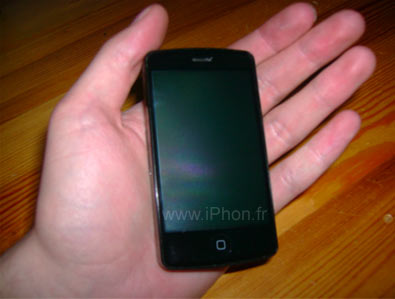
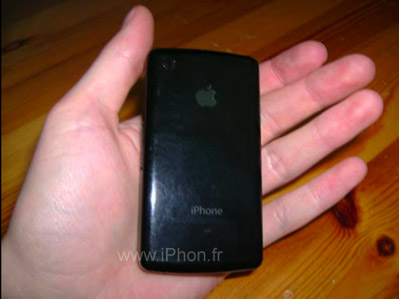
These look like what we’ve heard the 3G iPhone will look like.  Our source says that the 3G iPhone looks "more like an iPod" and these certainly follow that.  However, they just have a photoshopped quality about them – start with iPod Touch then…

You know the drill…if they are still here in 24 hours…no 3G iPhone for you!


iphon.fr

O2 prepares for 3G iPhone

Site default logo image

More information confirms O2 has ramped up operations for the release of the next-generation iPhone – the company has extended its 3G network to 80 per cent of the UK.

This news was confirmed by UK telecoms regulator, Ofcom, this morning. The move follows Ofcom’s notice to O2 in February that it would shorten its license by four months if it did not comply with its rollout obligation by June 30 2008.

The rollout obligation required each of the five holders of a 3G license to roll out their networks to enable the provision of 3G services to at least 80 per cent of the population from 31 December 2007

O2 acquired its 3G license in 2000 for £4,030m. Ofcom estimated that a reduction of the license term by four months would have been equivalent to a significant financial sanction of at least £40 million.

Until now, O2 has been slow to build its own high-speed network, lagging behind the other 3G license holders, T-Mobile, 3, Orange and Vodafone.

Since introducing iPhone O2 has worked to extend its Edge network system, now – as recent price cuts and the subsequent sell-out of the iPhone in the UK suggest – it seems the network has put infrastructure in place to support the new generation, 3G iPhone.

Safari 3.1 blowing up

Site default logo image

According to Net Apps, the Safari browser is blowing up on the Windows platform… to the tune of three times its last month of total of marketshare.  No doubt in large part due to (un)equal parts coming out of beta, the great reviews and Apple’s somewhat questionable strategy of slipping the application into the iTunes software update.

When you are playing on Microsoft’s field, you have to play by Microsoft’s rules….or when in Rome?

Thanks to P.E.D./ Apple 2.0 for the look

Apple 10Q: MacBook Air drives huge Q2 Mac sales

Site default logo image

 Apple kept it close to its chest during its financial results conference last week, but it seems the company has yet another singular success on its hands with the MacBook Air, which the company’s Form 10Q SEC filing today says was the primary driver of increased Mac net and unit sales in the quarter.

In black and white, the note (on page 26 of the report) reads: “The increases in Mac net sales and unit sales were driven primarily by sales of the new MacBook Air, introduced in January 2008, and higher sales of the iMac and other Mac portable systems.”

The report notes Mac unit growth of 51 per cent and 48 per cent in the second quarter of Q2 and first six months of 2008 respectively, observing the rate of growth strongly exceeds the industry average.

Apple’s laptop sales climbed 61 per cent, with 2.29 million Macs sold in Q2, 1.433 million of Macs sold were laptops.

While its interesting that Apple seems to have nailed the lighweight laptop category with the MacBook Air, this may be scant comfort to some early adopters of the first generation machine, with numerous complaints noting some (but not all) of these have a tendency to overheat during normal use. 

The report also notes iPod sales climbed, albeit slightly, but observes strong sales of the iPod touch, with consumers favouring that device above the purchase of the iPod shuffle.

The report also confirms research-&-development spending climbed 49 per cent, or $90 million to $273 million in Q2 08, compared to Q2 07. “The Company continues to believe that focused investments in R&D are critical to its future growth and competitive position in the marketplace and are directly related to timely development of new and enhanced products that are central to the Company’s core business strategy,” the report also explains.


Purchase New Movies on iTunes Same Day as DVD Release

Site default logo image

 Apple today confirmed overnight chatter claiming the company will make new film releases from most leading studios available for purchase through iTunes Store in the US on the same day as their DVD release.

Both new films and catalogue titles will be available from a range of studios, including 20th Century Fox, The Walt Disney

Studios, Warner Bros., Paramount Pictures, Universal Studios Home Entertainment, Sony Pictures Entertainment, Lionsgate, Image Entertainment and First Look Studios.

We’re thrilled to bring iTunes Store customers new films for purchase day-and-date with the DVD release," said Eddy Cue, Apple’s vice president of iTunes. "We think movie fans will love being able to buy their favorites from major and independent studios."

New releases available for purchase on the iTunes Store this week, concurrent with their DVD release, include ‘American Gangster’ and ‘The Diving Bell and the Butterfly’. Other popular titles now available for purchase include ‘Juno,’ ‘Cloverfield,’ ‘I Am Legend,’ and others.

Movies are available in the US only and are $9.99 for library title purchases and $14.99 for new releases. Rentals cost $2.99 and $3.99 respectively.


iPhone's future desktop file sync?

Site default logo image

…Asmundson reports that networking giant Cisco is developing software that creates a real-time link between the iPhone and your computer. The result: A user could simply aim his iPhone at his computer and "sweep" the file to it with a finger flick, sending the file to the desktop over the phone’s built in wi-fi connection.

Shazam!

Apple in the wireless technology game?

Site default logo image

According to today’s Form 10-Q for APPLE INC filing, Apple is

…developing new digital lifestyle consumer and professional software applications; and investing in new product areas such as iPhone and wireless technologies.

Are you guys thinking what we are thinking

Probably not.  We are thinking about a weekend barbeque.  But no doubt Apple is considering wireless technologies like WiMAX and 802.21.  Right?  Oh, and what "new digital lifestyle and professional apps" are we looking at? 


Apple's plans iPhone diversity for June

Site default logo image

 Apple’s iPhone plans continue to leak, or so it seems as the pre-June rumour mill continues to drive through the gears – now a new report claims we’re going to see not one, not two but three different models of the device.

These reports confirm our earlier “Apple plots iPhone diversity roadmap” story, which claimed Apple plans to diversify its iPhone product range in order to widen its reach in the mobile phone market.

The latest leak comes from the Taiwan Economic News, which claims three models of the iPhone may appear. The first will be a smaller, lighter handset with a plastic rather than aluminium magnesium case.

This device will weigh just 110-120g, less than the 135g weight of the current model. It will also offer a 2.8-inch screen, rather than the 3.5-inch screen currently offered on the iPhone.

The smaller model won’t offer 3G support. Instead, Apple intends selling a higher-specified iPhone equipped with such support. This handset will also offer GPS and will have a larger case, presumably more or less the same dimensions as the existing handset.

Finally, Apple plans to maintain its current generation iPhone as a third middle option.

“Components suppliers in Asia pointed out that Apple has asked them to ready materials for the new phones by the end of next month. They are asked to deliver components enough for 300,000 phones in the initial stage and components enough for three million phones in June,” reports the Taiwan Economic News.

Multiple rumours meanwhile suggest Apple will also mark June’s introduction of the new generation iPhones – and the next version of the software that runs all iPhones – with a widespread launch of the device to multiple companies, perhaps on a carrier-agnostic sales model.

Australia, South America, Canada, India, Russia, many European states, Korea and more all seem set to see the product launch, perhaps as part of an overweaning push to help Apple secure the level of sales it requires in order to meet its ten million sales target by the end of the financial year.

UPDATE TO ADD: That Apple will diversify its iPhone range isn’t really the question, at present the discussion should focus on when. The analysts at Piper Jaffray this morning also observed Apple to be likely to diversify the range in a note to clients (as reported by Apple Insider): "We continue to expect Apple to offer a family of iPhones (2-3 separate models) in the first half of 2009, including lower priced ($200-$300) models. Just as the company slowly diversified the iPod lineup and entered lower price points with every new version of the iPod, we expect Apple to launch new models of the iPhone at lower price points in CY09. This expectation, along with the expectation for lower price points, and world wide availability of the phone, is critical to our CY09 iPhone estimate of 45m units," the analysts explained.


AT&T giving free Wi-Fi to iPhone customers

Site default logo image

As predicted in February, US iPhone subscribers are now getting free Wi-Fi Access at AT&T hotspots around the country including Barnes and Noble and Starbucks.  This correlates to the plans offered in the UK by O2 and Tmobile in Germany. 

Apparantly it isn’t terribly hard to spoof the iPhone interface and get your laptop on free WiFi either – as a Macrumors forum poster shows us.  No announcement from AT&T or Apple has been made but expect one shortly.

Aussies get 3G iPhone choice

Site default logo image

Cnet ‘stralia gets the inside information.  Optus is getting the 3G iPhone.  But we know Telstra is getting it too.  Everybody is getting it it seems – maybe even 3 and Virgin. 

Perhaps that story a month ago about all of Australia’s resellers getting the iPhone was true as well.  Timetable: …wait for it..Late June, just like everyone else. 

Also, Australia…Sorry for the picture, we know how much Paul Hogan is revered as a representative of your proud nation…

Apple buying more Big Apple office space

Site default logo image

According to SAI, Apple is buying some more commercial real estate space in Manhattan.  This is commercial space, not retail space.  The purchase will be in the realm of 10,000 to 15,000 square feet and will be in the midtown area near the 5th Avenue flagship store, according to the article.  

Apple currently has about 10,000 square feet of commercial space in the Citigroup building in Manhattan, which is the most expensive piece of real estate that they rent.  The space is used for sales teams and systems engineers to meet with clients and congregate…among other mundane corporate work.

So what is Apple doing with the new space?  Most likely they are just looking for better digs at better prices.  Perhaps something that would be more inviting to prospective enterprise customers?

Apple also uses the SoHo store downtown for some corporate training and events. 

Special Report: Apple's secret iPhone WiMax plans?

Site default logo image

Apple’s expected to introduce the much-anticipated 3G iPhone next month – but what if the company’s planning a little more than simple support for the 3G standard?

Enter InterDigital. In March, that company revealed it has signed-up Apple (and RIM) as a licensee for its 3G technologies. “As to our market share for 3G, while we did not achieve the 50% target, we did add some very high-quality licensees including Apple, Giant, and RIM…,” the company explained.

This news generated sparks of speculation that InterDigital’s SlimChip architecture might be deployed in products from Apple. InterDigital is currently suing Nokia on grounds that company contravenes the former’s held patents on 3G technologies. Apple’s agreement to license these forms some kind of evidence of 3G inclusion in the iPhone – but we think Apple may plan a far bigger step. We suspect – and we have to say this is only speculation on our part – that Apple may plan to move from behind the cutting edge of mobile technologies (by not including 3G support in the first place) right to the forefront of what’s possible. And in order to achieve that, we think there’s a chance Apple may introduce support for the little-known 802.21 wireless standard

802.21 is soon to be an official standard that converges various types of fixed and mobile technologies: in the case of an 802.21 handset, deployment of the standard could theoretically allow the device to seamlessly switch between various connectivity options, including Wi-FI, 3G and (drum roll please), WiMax.

Now, as Computerworld recently noted, “as is normally the case with new standards, this standard will need a good deal of marketing to really get rolling and it also will need to get the best of competing convergence efforts.”

Apple’s success in bringing new technologies to market was made most clear when it single-handedly popularised WiFi technology (AirPort) when it introduced the iBook in 1999. WiFi’s fairly popular nowadays. InterDigital’s move to join the WiFi Alliance this year, followed by its move to license its 3G modem technology to a shadowy (unnamed) Asian fabless semiconductor company also passed under the radar.

Intel’s WiMax technology has been a promise on a whisper for some time now. Implementation of the technology has faced some resistance, not least from mobile phone networks, scared to cede their control of wireless networks. While that resistance is common in developed telephony markets, it’s less visible in some emerging markets.

Take Russia, for example. December 2007 saw local mobile telco Comstar and Intel announce their intention to build a nationwide WiMax network to launch in Moscow this year (cost, $20/month). Comstar (under its Stream brand) is already Moscow’s leading broadband provider.

Why does a WiMax network make sense for Russia? The secret’s in the existing infrastructure. Russia has 147.3 million mobile subscriptions but just 40.1 million standard telephones. The majority of the existing Russian mobile phone infrastructure is based on 2.5G technologies, though this is changing following the April 2007 granting of 3G licenses to Megafon, MTS and VympelCom (which trades as Beeline). As such, 3G services are set to launch in major Russian cities in late spring/summer. However, Russia is a vast country, and WiMax could provide an alternative route to bring more of the country into the digital decade. 

The US is seeing WiMax deployments, albeit slowly and subject to much delay. Zyxtel is shipping XHOM WiMax high speed routers to Sprint that will be used in its nationwide WiMAX rollout, perhaps later this year. And AT&T’s unlikely to take its eye off the importance of its network products segment – it won’t let Sprint take home all the gravy


WiMAX is also being rolled out in Germany and Japan, two of Apple’s bigger markets, with active trials underway and early 2008 mass rollouts planned.

So, let’s consider the evidence at this point: We know Apple has a licensing deal with InterDigital; we are fairly confident Apple will introduce a 3G iPhone soon; we know Apple has aggressive sales targets for this device, and that the company plans to introduce iPhones into more territories this year; we know that some of those target countries, Russia, for example, are moving to adopt WiMax; and we know InterDigital is deeply involved in developing a convergence standard to facilitate use of mixed network standards through a single device.

We also know Apple likes to amaze, and is in a close relationship with Intel, which is looking for a WiMax champion (and is building WiMax support into many of its chips). With WiMax network roll-out set to gather steam this year, Apple has the opportunity to leapfrog all debate regarding 3G support and initiate a new age of wide area network computing. 

All these signs and portents don’t constitute anything other than speculation. After all – WiMax isn’t yet widely deployed, and Apple may choose to wait until it is before it initiates such a move. But when (or if) it does, it already has the key relationships – and products – it needs to hustle users into a new connected age.  Remember, Apple was the first to bring its customers to Wifi – with its Airport products introduced at MacWorld New York City in 1999.

EFF slaps Microsoft over MSN Music let-down

Site default logo image

 The Electronic Frontier Foundation (EFF) has lambasted Microsoft for its move to effectively disable the music collections of its former MSN Music customers.

In an open letter sent to Microsoft CEO Steve Ballmer, EFF demand the company apologise to its former customers, pays compensation and that it should in future work. “Betrayed MSN Music customers deserve more,” the EFF declares.

MSN Music sold song downloads encrusted in digital rights management (DRM), allowing the music to be played only on approved devices. Music fans who upgrade their computers must reauthorise their music files with MSN Music’s DRM server – which the company last week announced it plans to shut down later this year, “because of the complexity of maintaining the technology.”

“MSN Music customers trusted Microsoft when it said that this was a safe way to buy music, and that trust has been betrayed," said EFF Staff Attorney Corynne McSherry. "If Microsoft is prepared to treat MSN Music customers like this, is there any reason to suppose that future customers won’t get the same treatment?

“With MSN Music, Microsoft has admitted just how expensive, clumsy, and unfair DRM is. It’s time for Microsoft to reject this sloppy technology, and for customers to demand something better," McSherry said.