MacBook Pro: The biggest and baddest Mac laptops

See All Stories

Apple's premium laptop comes in 13- and 16-inch screen sizes. Each model includes 2-4 USB-C ports for charging, accessories, and data transfer. Higher-end models also include the Touch Bar.
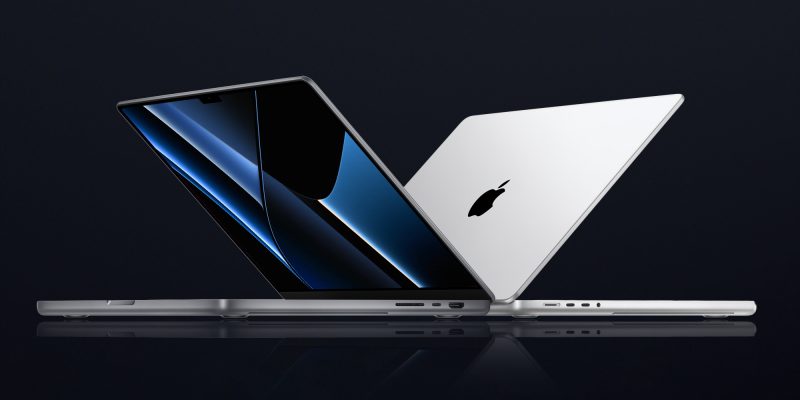
2021 MacBook Pro

MacBook Pro has been the product name for Apple’s high-end laptop since early 2006 when the transition to Intel processors began. Now, that Pro naming has carried forth as Apple has moved to its own silicon. The latest fourth and fifth-generation Pro Apple notebooks bring dramatically more power with lower heat generation and better battery life thanks to the ARM-based Apple silicon. Keep reading for a brief history of the line and a breakdown of the current lineup.

MacBook Pro history

The first generation MacBook Pro followed in the style of the PowerBook G4 that came before it, but used Intel processors rather than PowerPC chips.

The second generation of the MacBook Pro was the first to really separate itself from the products before, with a unibody enclosure. The third-generation MacBook Pro introduced the retina display as well as MagSafe 2.

Perhaps the most controversial version of the MacBook Pro is the fourth generation. While the third generation received some backlash for the removal of ethernet and the optical drive, the fourth generation was a complete rethinking of the device peripherals. No more MagSafe, no more USB-A ports, and only the 13-inch model kept the function keys. Instead, this redesigned MacBook Pro opted for all Thunderbolt 3 ports and headphone jack. In place of function keys, the MacBook Pro gained an OLED Touch Bar. In late-2020, Apple introduced the M1 chip and updated the 13-inch MacBook Pro. The ARM-based processor brought down power consumption and increased performance.

In October of 2021, Apple introduced the fifth-generation MacBook Pro with not one but two updated versions of the M1 chip, the M1 Pro and M1 Max. The move walked back some of the decisions from the previous generation, adding back an HDMI Port, MagSafe charger, and SD card reader while removing the Touch Bar.

The 2020 13-Inch MacBook Pro

In late 2020, Apple introduced the 13-inch M1 MacBook Pro as the latest update to the fourth-generation MacBook. The MacBook features the same look as previous MacBooks, but like the MacBook Air and Mac Mini, switched to Apple silicon.

Apple’s M1 chip brought ARM architecture to the MacBook line, and this was the first MacBook without an Intel processor.

The M1 chip is a unified design with an 8-core CPU and an 8-core CPU. The processor integrated memory on board, limiting the device to either 8GB or 16GB of unified memory. The 13-inch M1 MacBook Pro is configurable with between 256GB and 2TB of storage and features a Magic Keyboard, rather than the problematic butterfly keyboard.

13-inch MacBook Pro specs

Base Configuration$1,299.00

  • Apple M1 chip with 8‑core CPU, 8‑core GPU, and 16‑core Neural Engine
  • 8GB unified memory
  • 256GB SSD storage
  • 13-inch Retina display with True Tone
  • Backlit Magic Keyboard – US English
  • Touch Bar and Touch ID
  • Two Thunderbolt / USB 4 ports

Max Configuration$2,299.00

  • Apple M1 chip with 8‑core CPU, 8‑core GPU, and 16‑core Neural Engine
  • 16GB unified memory
  • 2TB SSD storage
  • 13-inch Retina display with True Tone
  • Backlit Magic Keyboard – US English
  • Touch Bar and Touch ID
  • Two Thunderbolt / USB 4 ports

13-inch MacBook Pro pricing

The price for the 13-inch M1 MacBook Pro starts at $1,299. Upgrading this base configuration to 16GB of memory adds $200 to the price. Likewise, each step above 256GB of storage – 512GB, 1TB, and 2TB – will add $200 to the price. A fully specced out 13-inch MacBook Pro will run you $2,299.

You can configure your own 13-inch MacBook Pro on Apple’s website.

Current 14-inch and 16-inch MacBook Pro

In October 2021, Apple brought a brand new design to the MacBook Pro line. Apple increased the screen size on the 13-inch, making it a 14-inch, and shrunk the bezels on the 16-inch. This fifth-generation notebook addressed many complaints of the last generation. MagSafe returned, in the form of an improved MagSafe 3, while the MacBook also regained an HDMI port and an SD-card slot.

Also gone is the Touch Bar. Instead, the standard row of function keys return. The latest MacBooks also bring a ProMotion display that was first introduced on the iPad Pro, with a variable refresh rate and mini-LED backlight.

The 2021 MacBooks aren’t without a controversial feature, as while the display has been made larger there is now a large notch for the 1080P FaceTime camera. While FaceID would have been a nice addition in exchange for this small chunk of the screen, there are some reasons this is not totally practical.

14-inch MacBook Pro specs

Base Configuration$1,999.00

  • Apple M1 Pro with 8-core CPU, 14-core GPU, 16-core Neural Engine
  • 16GB unified memory
  • 512GB SSD storage
  • 67W USB-C Power Adapter
  • 14-inch Liquid Retina XDR display
  • Three Thunderbolt 4 ports, HDMI port, SDXC card slot, MagSafe 3 port
  • Backlit Magic Keyboard with Touch ID – US English

Maximum Configuration$5,899.00

  • Apple M1 Max with 10-core CPU, 32-core GPU, 16-core Neural Engine
  • 64GB unified memory
  • 8TB SSD storage
  • 96W USB-C Power Adapter
  • 14-inch Liquid Retina XDR display
  • Three Thunderbolt 4 ports, HDMI port, SDXC card slot, MagSafe 3 port
  • Backlit Magic Keyboard with Touch ID – US English

14-inch MacBook Pro pricing

The 14-inch MacBook Pro starts at $1,999. The base model includes 16GB of memory, 512GB of storage, and an M1 Pro processor with an 8-core CPU and 14-core GPU. There are multiple versions of the M1 Pro processor available, while jumping to an M1 Max processor will cost $500 more, and requires you to jump up to 32GB of memory – a $400 upgrade. Going with the M1 Max processor means you can configure up to the full 64GB of memory, an $800 upgrade.

You can configure up to 8TB of storage in the 2021 14-inch MacBook Pro. Upgrade costs are as follows:

  • 1TB SSD Storage – $200
  • 2TB SSD Storage – $600
  • 4TB SSD Storage – $1,200
  • 8TB SSD Storage – $2,400

You can configure your own 14-inch MacBook Pro on Apple’s website.

16-inch MacBook Pro specs

Base Configuration$2,499.00

  • Apple M1 Pro with 10-core CPU, 16-core GPU, 16-core Neural Engine
  • 16GB unified memory
  • 512GB SSD storage
  • 16-inch Liquid Retina XDR display
  • Three Thunderbolt 4 ports, HDMI port, SDXC card slot, MagSafe 3 port
  • 140W USB-C Power Adapter
  • Backlit Magic Keyboard with Touch ID – US English

Maximum Configuration$6,099.00

  • Apple M1 Max with 10-core CPU, 32-core GPU, 16-core Neural Engine
  • 64GB unified memory
  • 8TB SSD storage
  • 16-inch Liquid Retina XDR display
  • Three Thunderbolt 4 ports, HDMI port, SDXC card slot, MagSafe 3 port
  • 140W USB-C Power Adapter
  • Backlit Magic Keyboard with Touch ID – US English

16-inch MacBook Pro pricing

The 16-inch MacBook Pro starts at $2,499. There is only one M1 Pro processor available on the 16-inch MacBook, and that’s the highest version 10-core CPU, 16-core GPU version of the M1 Pro processor that is a $300 upgrade on the 14-inch MacBook Pro. Of course, you can also step up to the M1 Max processor with either a 24-core or 32-core GPU, a $200 and $400 upgrade respectively (which also requires the $400 upgrade to 32GB of memory). The memory and storage options are all the same as the 14-inch MacBook Pro.

You can configure your own 16-inch MacBook Pro on Apple’s website.

Differences between 13-inch,14-inch, and 16-inch models

The 2021 MacBook Pro lineup is a refreshing change. The return of ports and physical keys make the laptops more versatile, while additions like an XDR display and hardware acceleration for ProRes improves the experience but is harder to quantify for the average user.

13-inch14-inch16-inch
ProcessorM1M1 Pro / M1 MaxM1 Pro / M1 Max
Memory8GB / 16GB16GB / 32GB / 64GB16GB / 32GB / 64GB
Storage512GB, 1TB, 2TB512GB, 1TB, 2TB, 4TB, 8TB512GB, 1TB, 2TB, 4TB, 8TB
Screen2560×1600 pixels 3024×1964 pixels; ProMotion3456×2234 pixels; ProMotion
Weight3.0 pounds (1.4 kg)3.5 pounds (1.6 kg)M1 Pro: 4.7 pounds (2.1 kg)
M1 Max: 4.8 pounds (2.2 kg)
Size (Width x Depth)11.97 x 8.36 inches (30.41 x 21.24 cm)12.31 x 8.71 inches (31.26 x 22.12 cm)14.01 x 9.77 inches (35.57 x 24.81 cm)
Height0.61 inch (1.56 cm)0.61 inch (1.55 cm)0.66 inch (1.68 cm)
Base Price$1,299.00$1,999.00$2,499.00

The $1,999 starting price for Apple latest computer is a harder pill to swallow than the $1,300 13-inch Pro from last year. For an average user, the superb M1 MacBook Air will likely suffice (and that sub-$1,000 price is hard to pass up).

But the 2021 14-inch and 16-inch MacBook Pro are exactly what they need to be, a return to function-over-form that will truly meet the needs of professional users.


Apple updates Smart Covers, kills the Orange but adds a lovely dark gray (and “color-matched fiber lining”)

Site default logo image

New MacBook Pros weren’t the only thing updated quietly in the Apple Store this morning. Apple has updated the whole line of Smart Covers for iPad. You’ll notice the Orange Smart Cover is now gone and Apple has added a lovely Dark Gray Polyurethane model. Apple has added “color matched microfiber lining” to the description of the leather products (gone are the gray lining across the board) as you can see in the images below:


click to enlarge

Apple has also improved the colors of the Smart Covers as well:


click to enlarge

The whole line gets new part numbers but prices have not changed. Notice the subtle color change comparisons below:


Expand
Expanding
Close

Apple quietly updates MacBook Pros with faster processors and bumped specs

Site default logo image

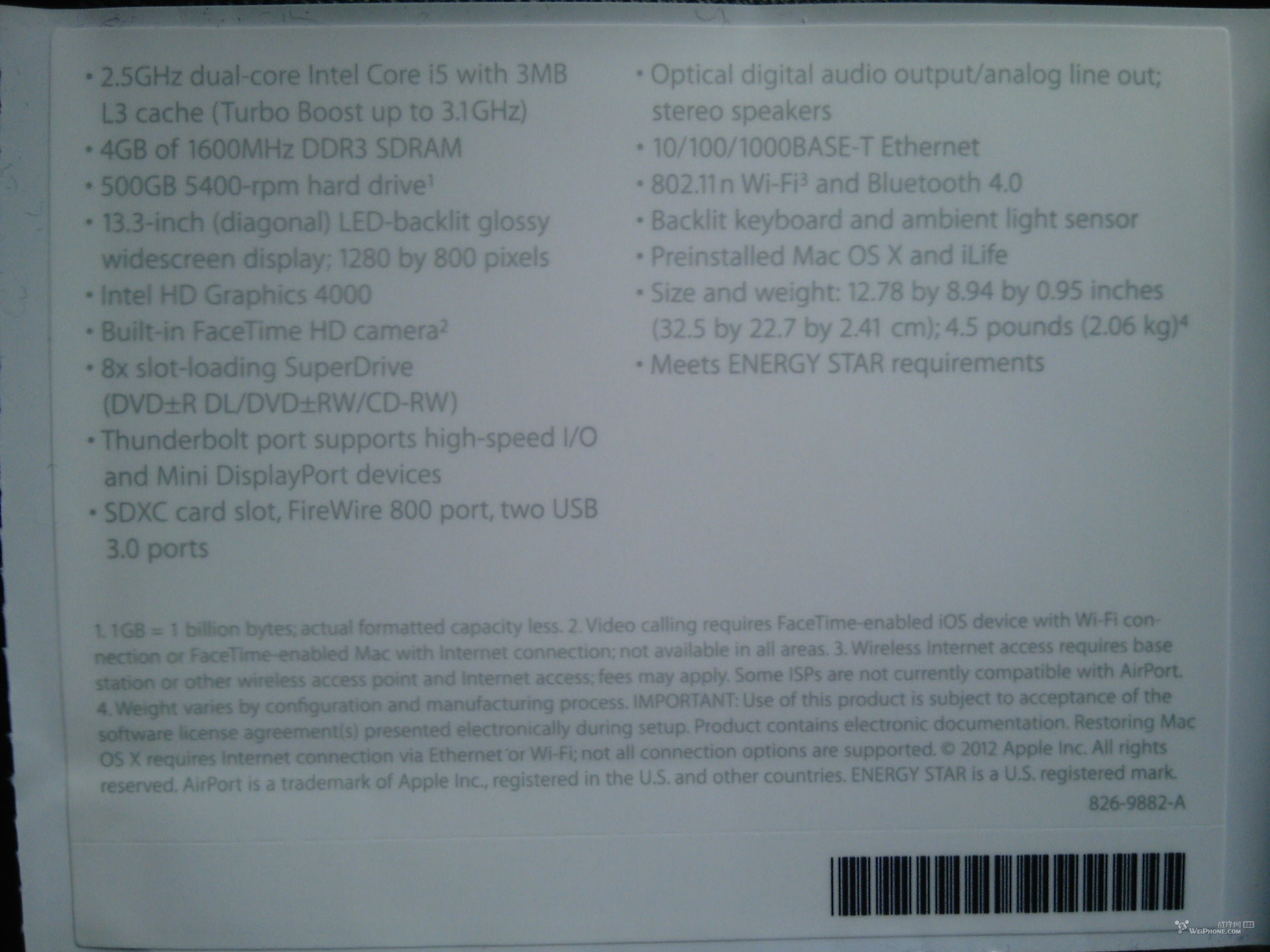
As leaked by Mr. X (and it didn’t take until November) Apple quietly updated its MacBook Pro line this morning. There are slight processor speed improvements across the board with updated hard drives and video cards peppered throughout. Compare today’s MacBook Pros, above, with yesterday’s MacBook Pros, below:


Expand
Expanding
Close

New MacBook Pros launching as soon as next week at current price points

Last week we exclusively reported that the current line of MacBook Pros is severely constrained and that part numbers for a new MacBook Pro line had surfaced. Based on these similar internal part numbers, the new MBP’s design should be the same as the current design.

Now, we’ve received pricing for the new laptops and the prices for each unit are the same as the prices for the current generation.

With supplies only becoming more constrained, and with shipments already touching down in select countries, we think a launch next week is likely (between Tuesday and Thursday). That is, of course, if there are no unforeseen circumstances. Thanks Mr. X! 

One more thing… after the break:


Expand
Expanding
Close

Apple leaks clues to new MacBook Pros on its own website?

Site default logo image

Last week we revealed that Apple is planning a small refresh for its MacBook Pro line with modest CPU bumps and possibly improved Bluetooth Wireless networking. Today we’ve found what seems to be evidence for such a refresh in Apple’s own online store.

If you do a search on Apple’s online store for ‘MacBook Pro’, you get a list of Apple’s products. In that list of products, there are two mysterious entries for ‘Macbook Pro Memory Model’ toward the bottom with the caption “Ships: Coming in November”.

Perhaps more interestingly, they link to the following two URLs which aren’t currently active:

http://store.apple.com/us/product/ME_17_2_33_MBP?mco=MTY3ODQ5OTY

http://store.apple.com/us/product/ME_17_2_4_MBP_PREV?mco=MTY3ODQ5OTY

We’ve heard that these could be the spare part part numbers for the new MacBook Pros and the 2_33 and 2_4 could be the new speeds of the quad-core Intel Core i7 processors (current is 2.0 to 2.3 GHz). If they are spare parts, these often ship a week or so after the new products so the MBPs could come sooner than ‘November’.

Update: 4-year-old MacBook Pro RAM has a similar URL but it isn’t certain if the two parts are related.


Expand
Expanding
Close

MacBook Pros constrained, new models appear in Apple’s inventory system

Site default logo image

Apple’s current line of MacBook Pros is heavily constrained with all models appearing to be nearly out of stock. Don’t fear, though, if you want a MacBook Pro because new models are right around the corner. Updates to all MacBook Pro models have appeared in Apple’s inventory system for the 13-inch, 15-inch, and 17-inch screen sizes. Apple will continue to ship two 13-inch models, two 15-inch models, and one 17-inch model.

This MacBook Pro refresh will not be the expected re-designed models, but will likely bring some marginally faster processors and the Bluetooth 4.0 technology that Apple started shipping in the latest MacBook Airs and the new iPhone 4S. The new internal code names for the updated MacBook Pro line are K90IA (13-inch), K91A (15-inch), and K92A (17-inch). The A in the codename signifies this next MacBook Pro refresh as being relatively minor. Thanks, Mr. X!


Expand
Expanding
Close

Mercury Aura Pro Express 6G SSD upgrade boosts MacBook Air speed more than 3X

Site default logo image

If you really want to turn your new MacBook Air out, OWC is offering up a new SSD upgrade option that promise up to 4X read/write performance (>500MB/s) over Apple’s factory installed SSDs. The SSDs, priced at $350 for 120GB and $600 for 240GB use a Sandforce 2200 controller.

• Tier 1/Grade A Toggle Synchronous NAND
• SandForce 2200 Series Processor
• Offers nearly 4x factory SSD capacity.**
• Compatible with 2011 MacBook Air
• Utilizes 6G SATA bus in 2011 MacBook Air to deliver over 500MB/s data rate performance

.

In other OWC news, they mention that yesterday’s MacBook Pro update fixed lingering issues with the 6GB SATA port on the MacBook Pros (not to be confused with the 3GB Optical port.)

See performance benefits, below:

Expand
Expanding
Close

Intel’s new chips could give future MacBooks 24 hours of battery life (just like current ARM chips)

Site default logo image

Today at the Intel’s Developer Forum, Intel unveiled a new processor that will be able to power a x86 computer for 24 hours/10 days of stand-by time off a single charge. Intel’s new Haswell chip uses a 22-nanometer 3D-transistor architecture that uses 20 times less power than current Sandy Bridge models which are featured in the newest line of Macs. The new chip was demonstrated using solar-power to grab light from a source as small as a light bulb to power the system.  Oh, and the Haswell chips will be faster than current processors.

The new chips will land in 2013, after Intel’s Ivy Bridge in 2012. Recently, Intel revealed that Apple wasn’t entirely pleased with upcoming Intel Chips power usage and were currently investigating other alternatives.  Clearly, Apple’s own ARM AX line which already can provide 24 hour battery life (with PC-sized batteries) is being considered. (via Gizmodo)

It is interesting to note how much the image reminds us of the image below:
Expand
Expanding
Close

New iMacs and MacBook Pros out-blur Mac Pros in Final Cut Pro X benchmarks

Site default logo image


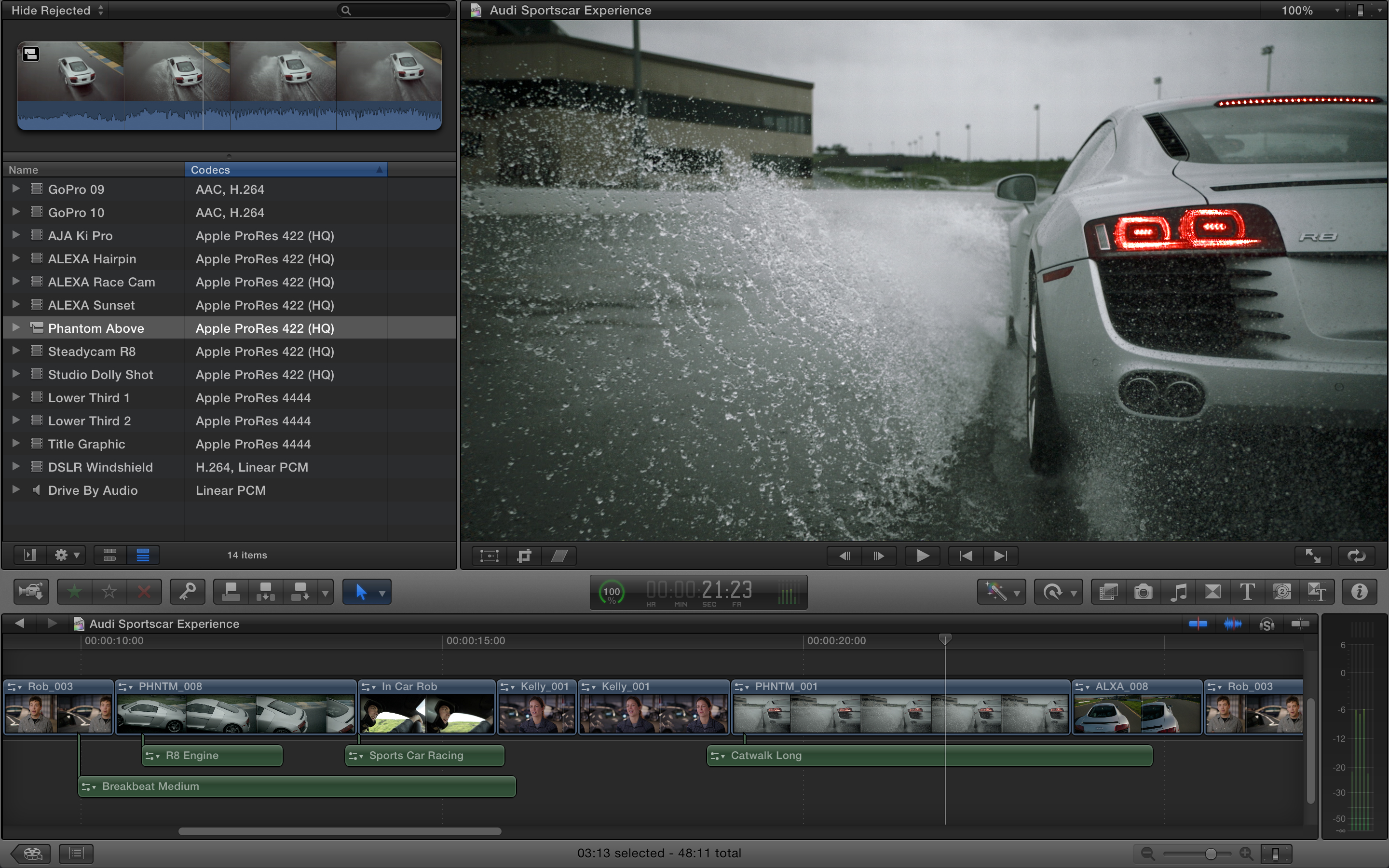
Hardware specialists over at Bare Feats ran a series of interesting Final Cut Pro X benchmarks pitting the latest Sandy Bridge-equipped iMac and MacBook Pro against the last year’s Mac Pro. The iMac system rocked a 3.4GHz quad-core Core i7 processor with 16GB of DDR3 1333MHz RAM and AMD Radeon HD 6970M graphics with 2GB of GDDR5 video memory. The MacBook Pro was a 2.3GHz quad-core Core i7 system with 8G of DDR3 1333MHz RAM and AMD Radeon HD 6750M graphics with 1G of GDDR5 video memory. The 2010 Mac Pro desktop had a 3.33GHz six-core Westmere processor with 24GB of ECC DDR3 1333MHz RAM and AMD Radeon HD 5870 graphics with 1G of GDDR5 video memory.

Summing up, in two out of four benchmarks involving blur sharpen and blur directional effects the iMac came in first and the MacBook Pro outperformed or matched the Mac Pro. It is in the remaining two GPU-intensive tests – exporting a Final Cut Pro X project in H.264 (transcoding) and encoding a  Blu-Ray stream in Compressor 4 – that the Mac Pro shined. Although the benchmarks are far from conclusive, they give away the false impression of Apple favoring the newer Sandy Bridge architecture.


Expand
Expanding
Close

President Obama tweets from Mac during Twitter Townhall

Site default logo image

Today, President Obama made history by hosting the first ever Twitter Townhall, with Twitter co-founder Jack Dorsey. During the event, President Obama made the first live presidential tweet ever…on a MacBook Pro.

[youtube=http://www.youtube.com/watch?v=Fe-rIymyxys&start=470]

Besides using a Mac, President Obama shared his praise for Apple, but mentioned that he would love to see device parts manufactured in the United States.

via CNN


Expand
Expanding
Close

Dell's new 'thinnest' laptop isn't even as thin as the 2.5-year old MacBook Pro

Site default logo image

We were expecting a MacBook Air-like device.  It turns out Dell’s new product, dubbed “Thinnest 15-inch PC on the planet” isn’t thinner than the 15-inch MacBook Pro I gave up a year ago for an Air.  That’s the same one that came out with the Unibody manufacturing process in October 2008.

Dell’s 15-inch XPS 15z is .97 inches thick compared to the MacBook PRo’s .95 inches.  It does weigh in at slightly less than the MacBook Pro (which is due for an update soon as well).

Update: Engadget has a comparison gallery:

All of that being said, the XPS 15Z  looks like a solid, loaded Sandy Bridge package for just $1000 – except the Windows OS of course.  Imagery and video below:
Expand
Expanding
Close

Refurbished Apple MacBook Pro Laptops from $899 + free shipping

Site default logo image

From the Toys section:

The Apple Store offers price drops on select factory-refurbished unibody MacBook Pro notebooks in its Special Deals section, with prices starting at $899. It’s among the best selections we’ve seen from Apple in several weeks, and combined with free shipping, most systems at lowest-we’ve-seen prices. Sales tax is added where applicable. All come with a 1-year Apple warranty, the same as new Macs. Items are removed from Apple’s site when they sell out. Notable laptops:

Apple updates MacBook Pro EFI Firmware to 1.9

Site default logo image

Apple today updated the firmware on the new (mid 2010) 15 and 17-inch MacBook Pros.

The update resolves a rare issue that may cause the system to freeze during startup or intermittently stall during operation, and it improves compatibility with external displays.

Connect up that power cable and hit Software Update or head here if this affects you.  
Expand
Expanding
Close