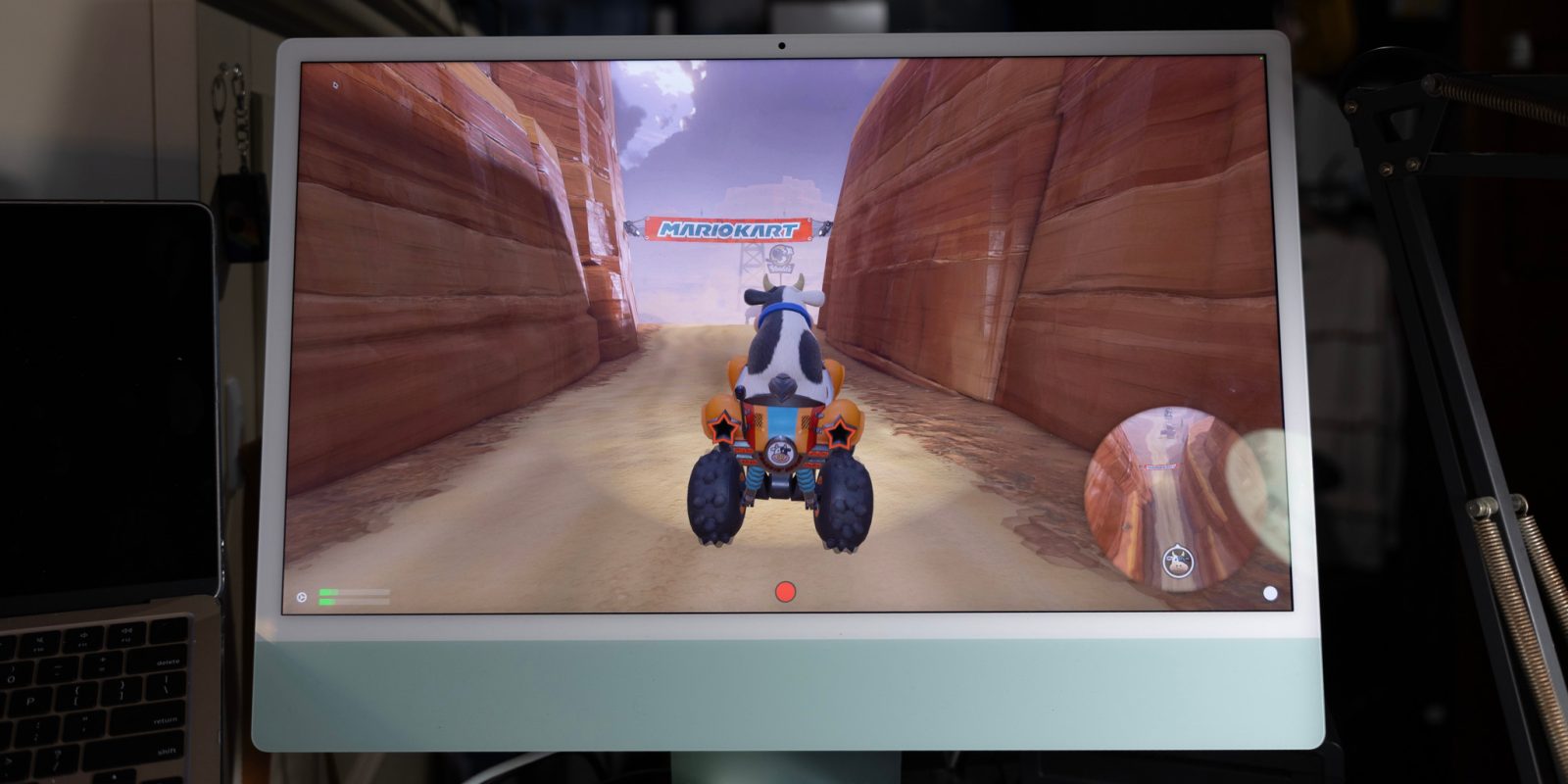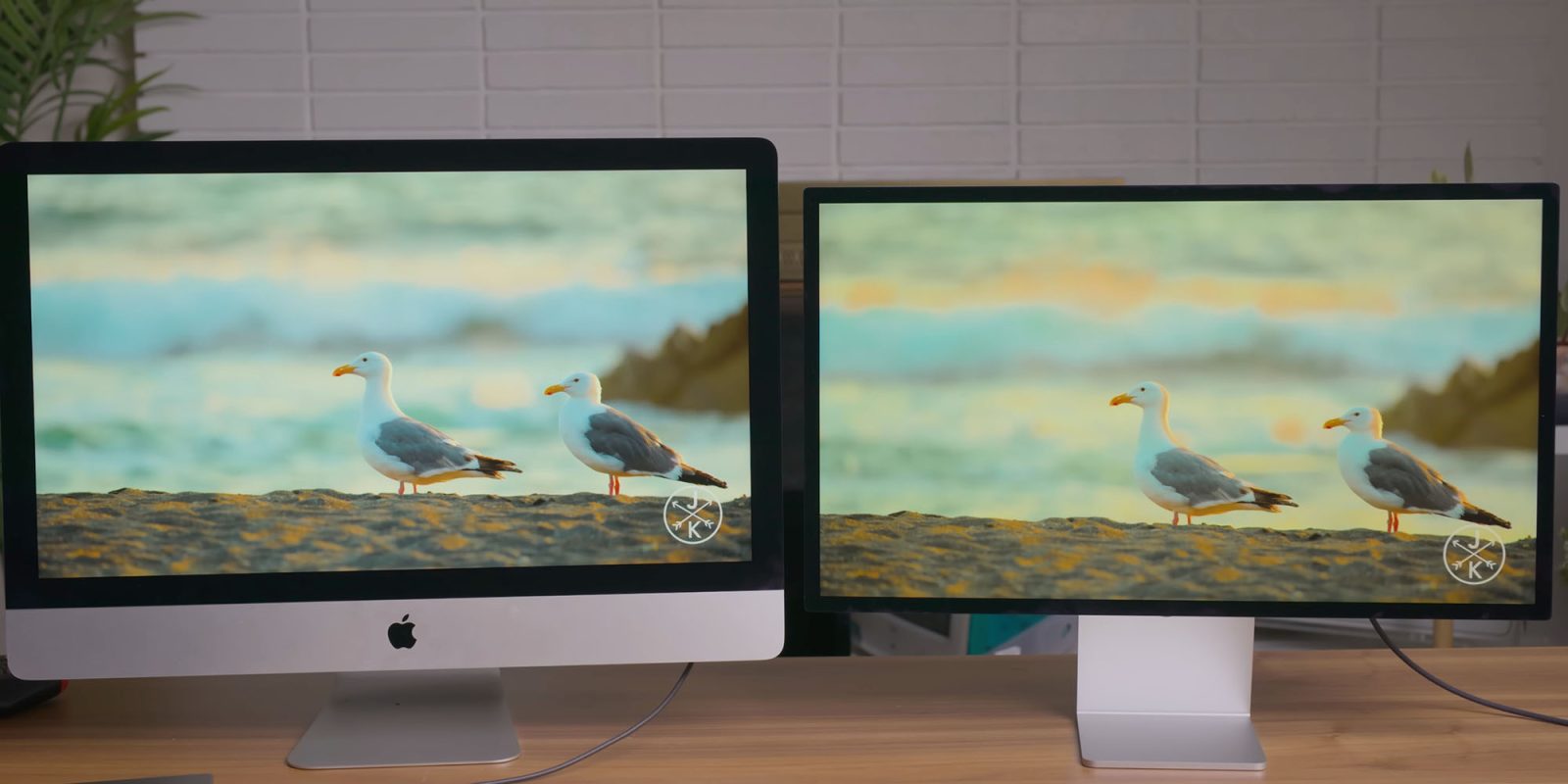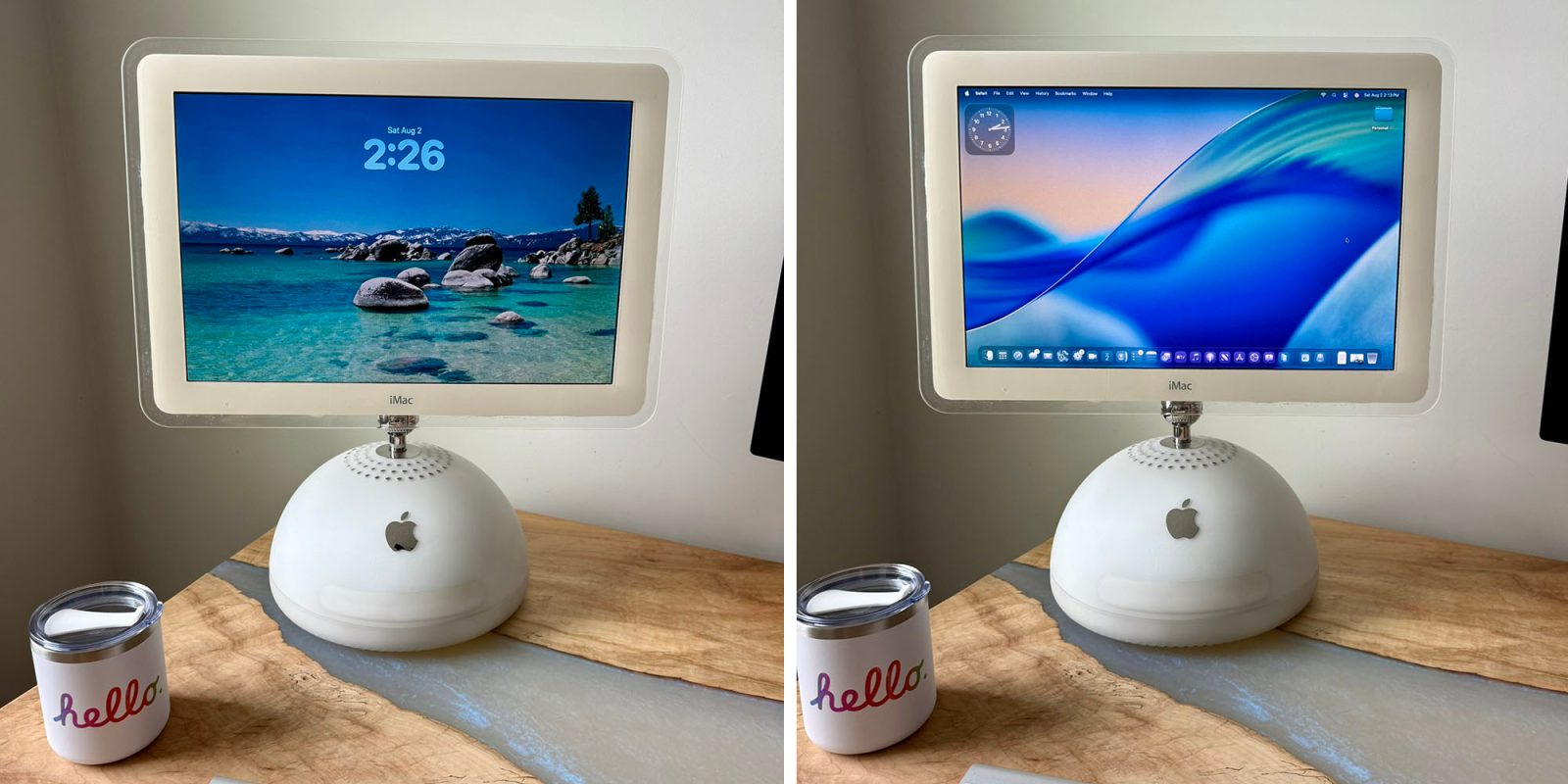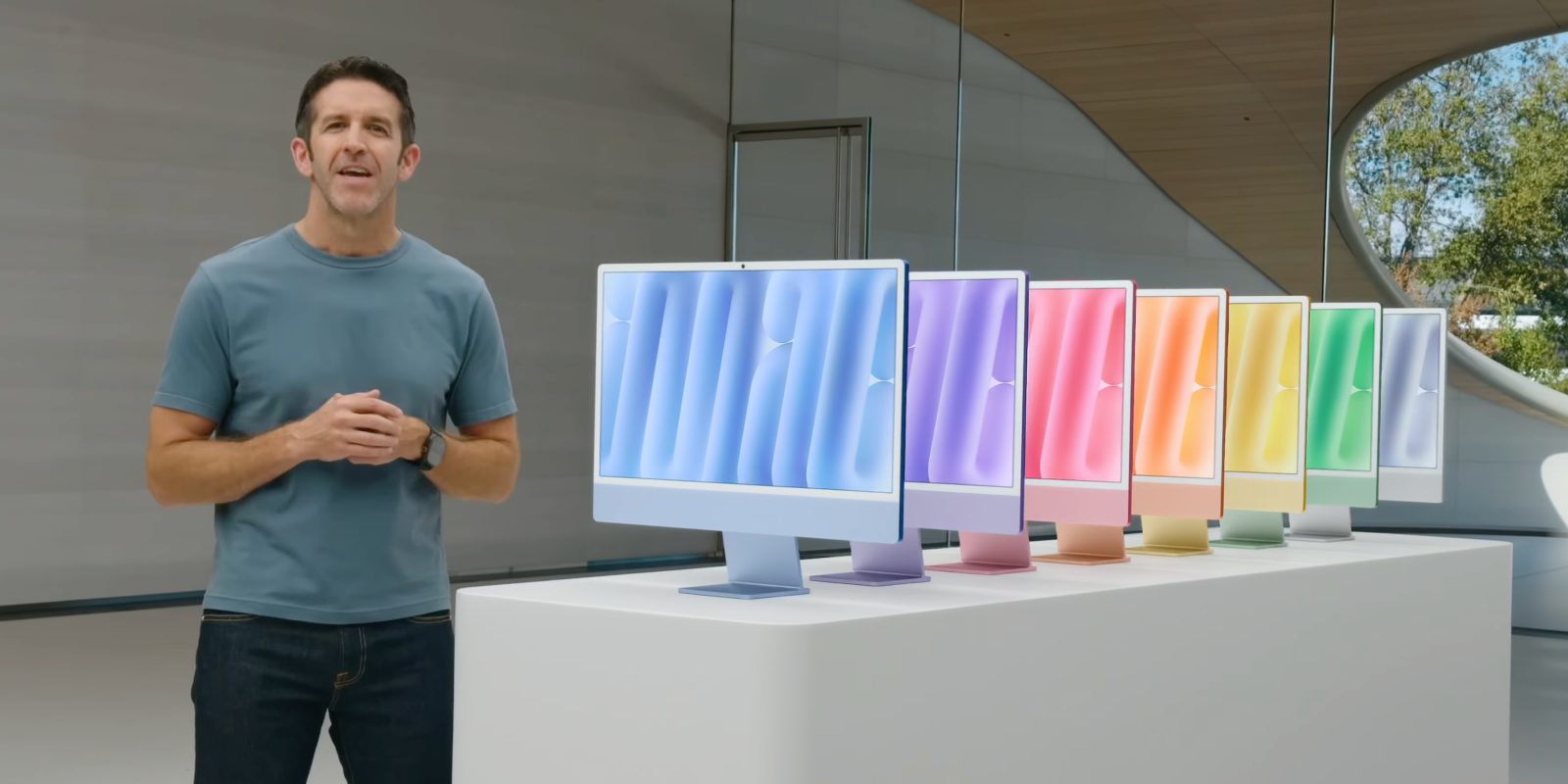
When asked about staggered product launches during the Q&A of Apple’s Q2 2013 earnings call today, Apple CEO Tim Cook admitted that he wished Apple would have postponed the launch of the new iMac until after the holiday season in order to avoid the significant delays that customers experienced in the initial months of launch:
I don’t spend a lot of time looking back… If we could run it over, i would have announced the iMac after the turn of the year… we felt our customers had to wait too long for that specific product… Where the iPad mini was in shortage in the December quarter, I would not have done that differently because we were able to get the product out to many customers that wanted it. In retrospect, I wish it [iMac] was after the turn of the year so customers would not have had to wait as long as they did.
Today, Intel announced a new version of its Thunderbolt technology that will ship with devices in 2014. The new Thunderbolt technology supports up to 20Gbps throughput, which is up from the 10 Gbps supported by the current version of Thunderbolt.
Notably, the new technology supports 4K resolutions, which could open the door for even higher-resolution Mac displays. Perhaps, this is the technology that Apple needs to work with in order to begin a Retina display rollout for its all-in-one desktop computer, the iMac, or even Mac Pro compatible Thunderbolt displays.
NVIDIA announced a new series of notebook GPU’s today branded as the 700M series. Introduced today are five new graphics cards in total, and NVIDIA said they would be available in a long list of laptops over the next few months. The five new graphics cards include two options aimed at the “mainstream segment”, the 720M and the 735M, while the remaining three, the 740M, 745M, and 750M, will be “for the performance segment” of the market.
The graphics cards are being touted by NVIDIA to “maximize performance and experience,” but they also more power efficient than their predecessors. Because the 700M Series is notebook-only, expect these to be less powerful than a desktop version of the 700 Series that may be announced sometime in the future.
Helping our new 700M chips reach such lofty levels of performance is GPU Boost 2.0, a GPU innovation that extracts every ounce of available computing power from the graphics processor. Before GPU Boost, GPUs were held back by synthetic benchmarks that pushed chips and power usage to the limit, far beyond the levels typically seen when playing games. This ‘worst case scenario’ forced us to throttle GPUs, leaving spare performance on the table when playing games.GPU Boost resolves this problem by monitoring power usage and temperatures, enabling the GPU to use every last ounce of performance without exceeding safety or comfort limits.
While the press release from NVIDIA said the new GPUs will be available in nearly every notebook maker other than Apple, it is possible these GPUs will be seen in the next-gen MacBook Pro with Retina Display. The current 15-inch MacBook Pro with Retina Display sports a NVIDIA 650M GPU, as does the high-end 21-inch iMac model, so an upgrade to the 700M series only makes sense.
The full press release is available below.
New NVIDIA GeForce 700M GPUs Squeeze Every Drop Of Performance Out Of Notebooks, Automatically
Monday, April 1, 2013
NVIDIA today announced five new notebook GPUs which deliver a trifecta of technologies that seamlessly and automatically maximize a consumer’s notebook performance and experience.
With no effort or input from the notebook user, the technologies work in the background to save battery life, enhance performance and enrich the visual experience — providing the best notebook experience the GPU can deliver. They include:
New NVIDIA GPU Boost™ 2.0 technology, which intelligently adjusts GPU clock speed to maximize graphics performance.
NVIDIA® Optimus™ technology, which enables extra-long battery life by switching the GPU on and off so it runs only when needed.
GeForce® Experience™ software, which adjusts in-game settings for the best performance and visual quality specific to a user’s notebook and keeps GeForce drivers up to date.
“There is an elegant simplicity to NVIDIA’s GeForce 700M notebook technologies,” said Rene Haas, vice president and general manager of the notebook business unit at NVIDIA. “You use your notebook how you want, and GeForce makes your experience awesome.”
Incorporating all three of these technologies, the new lineup of NVIDIA GeForce 700M GPUs includes GeForce GT 750M, GeForce GT 745M, and GeForce GT 740M GPUs for the performance segment, as a well as GeForce GT 735M and GeForce GT 720M GPUs for the mainstream segment.
NVIDIA GeForce 700M GPUs are available today. Every leading notebook manufacturer will be introducing notebooks with GPU Boost 2.0 technology, including Acer, Asus, Dell, HP, Lenovo, MSI, Samsung, Sony and Toshiba.
More information about the GeForce 700M family of notebook GPUs is available at http://www.GeForce.com.
When Apple first introduced its new iMacs that began shipping to customers in November and December of last year, it confirmed the new models would not include support for VESA mounts like earlier models. Users of previous generation iMacs were able to buy and install a mount using the Video Electronics Standards Association standard to attach the product to a wall or other surface. It looks like Apple has now finally come up with a solution for the new super-slim iMacs by offering a $40 built-to-order option that will replace the iMac’s stand with a built-in VESA mount adapter.
The iMac with Built-in VESA Mount Adapter is ready to pair with your favorite VESA-compatible wall mount, desk mount, or articulating arm(sold separately). This iMac doesn’t include a stand, so a mount is required. If you don’t already have a mount, you can purchase one when you configure your iMac.
iFun pointed us to the listing on Apple.com where Apple now lets you select all four models of the new iMac with the built-in mount. The option will run users an extra $40 on top of the regular iMac pricing, making the entry-level 21.5-inch model start at $1,339.
Apple noted that it isn’t including its traditional iMac stand with these models, and users will have to purchase a desk or wall mount separately.
The VESA iMacs are now shipping in 7 to 10 days in the U.S. (compared to ‘within 24 hours’ for the other models) and seem to be available on Apple Stores worldwide wherever iMacs are currently sold.
In the video above, Bloomberg West speaks with 72andSunny’s partner and creative director Jason Norcross about the thinking behind some of Samsung’s latest campaigns.
If there is one person qualified to discuss the state of Apple’s current marketing efforts, it’s Ken Segall. Working alongside Steve Jobs’ creative team for more than a decade, Segall, the man who put the “i” in iMac, served as creative director at ad agency TBWA\Chiat\Day. He created some of Apple’s most iconic ads such as the legendary Think Different campaign. Segall took some time on his Observatory blog today to share his thoughts on how “momentum has been lost” for Apple’s marketing department at the hands of none other than the company’s biggest rival, Samsung:
While you can still argue that Macs and i-devices have a ton of appeal, you can’t argue that Apple is still untouchable when it comes to advertising…The fact is, it is being touched — often and effectively — by none other than Samsung…Samsung has made remarkable inroads in a very short time, for two big reasons.
According to Segall, the two big reasons Samsung’s advertising has eclipsed Apple’s is due to Sammy’s massive advertising budget and willingness to “bash away at Apple, delivering ads that are well produced, well written and seem to be striking a nerve.” Specifically, Segall pointed to Samsung’s decision to run creative new ads at the Super Bowl and Oscars: Read more