[youtube http://www.youtube.com/watch?v=Nx7v815bYUw&hl=en&fs=1&]
Enjoy this adjective-only version of Apple’s recent music keynote.
Via: Fortune.



[youtube http://www.youtube.com/watch?v=Nx7v815bYUw&hl=en&fs=1&]
Enjoy this adjective-only version of Apple’s recent music keynote.
Via: Fortune.
The ZuneHD came out today. Have you heard of it? It gets pretty good reviews and it costs less than a 32GB iPod touch
Microsoft priced the Zune at $289 to undercut Apple’s iPod Touch 32GB $299 price point. However, today the price of a 32GB iPod touch has dropped to $279 at Amazon (something that almost never happens on a brand new model of ANYTHING from Apple). Strangely, the 64GB model, which doesn’t have a ZuneHD equivalent remains unchanged while the 8GB model is $10 off.

Microsoft…do we hear $269? Going once…going twice

The iPod touch, of course, is still beating the Zune in the Amazon top 10 (below) but not by much.


Great news for Mac Dev, Apple has now allowed open source its’ Grand Central Dispatch API’s to potentially allow us to get some core tapping applications headed are way. If you are interested more info here and here
http://developers.slashdot.org/story/09/09/11/1139212/Apple-Open-Sources-Grand-Central-Dispatch?from=rsshttp://developer.apple.com/mac/library/documentation/Performance/Reference/GCD_libdispatch_Ref/Reference/reference.html
 Wedge Partners thinks that Apple is getting set to release redesigned MacBooks and iMacs in the next few weeks.
Wedge sees a redesigned iMac witjh a “thinner, organic design, likely with smoothed or rounded edges. The MacBook redesign “is likely to be limited,” Wedge asserts. Meanwhile, the firm also expects “new, lower price points to drive demand and create a meaningful competitive threat” to coming PCs based on Windows 7 as well as to the booming netbook segment. “We believe these new designs and price points will help Apple achieve a 3 million unit quarter for Macs in [calendar] Q4.”
We haven’t heard much from the iMac sector lately so it’d be nice to see a well done redesign. We’re thinking that the 24-inch LED Cinema display is a pretty good place to start. Will it have BluRay? Does "Organic" mean OLED?

| Apple latest iPhone 3.1 update came in with a little dirty secret. This update kills Exchange support with 1st and 2nd generation iPhones owners leaving them high and dry with little option but to try to convince companies’ IT department to lower encryption security policy or fork over cash and upgrade to the newer iPhone 3GS/3rd Gen iPod Touch or the dreaded act of (hacking) downgrading to 3.0 making the user accessory accomplices in the deed. What was very interesting was the heated conversation on Apple forums that has some owners infuriated and feeling that Apple has breached that sacred trust leaving them feeling betrayed. It’s not clear how Apple manages to keep this a secret for so long (alarming in and of itself) while spoofing companies Exchange encryption securities by communicating to servers it was secured device or, if that was their true intent, to quickly push devices that weren’t business ready. Apple now (conveniently) calls it a minor bug now patch in firmware 3.1. Buttom line is most end users feel that this is clearly unacceptable and wants this fixed ASAP and I’m pretty sure that companies are frowning as you read this. What’s your take, are you feeling the pinch? |
http://discussions.apple.com/thread.jspa?threadID=2151382&start=0&tstart=0

Dan Frakes at Macworld ran some basic tests on the new (but cameraless) iPod touch and got some interesting results. Most tests had the new iPod touch coming in around twice as fast as the previous model with browser tests going over 2X speed. Apple only claims a 50% improvement in speed on its website. Does the speed make up for the lack of a camera?

Note: the current 8GB version has the same processor as the previous model.

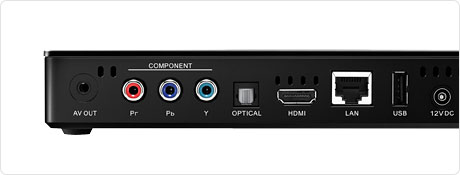
Seagate sent us their new $150 FreeAgent Theater+ HD to review yesterday and we haven’t really put the remote down since. The device picks up a bit from where AppleTV leaves off in terms of format compatibility. Is the interface as polished as AppleTV? Of course not. But it plays just about every media type (movies, photos and music) from your network shares, not just Apple’s preferred file types. It will even play 1080P videos with Dolby sound over Gigabit Ethernet without skipping.
Seagate tells us they are working on additional content from premium content vendors such as Netflix and the hardware/software solution here is an in-house development, not pulled from 3rd party technology. We asked about Hulu, they said we have no announcements at this time. Updates to the platform come via software update from the Internet. It is definitely wandering into the Plex or Boxee space.
This is an interesting product because Seagate is a hard drive company first and foremost but they don’t require you to buy another drive for this thing beyond what you already have (but it is tempting). Seagate’s own drives do fit neatly inside the dock bay but it also has USB ports on the front and back to play from USB sticks or plug-in hard drives. Obviously, network shares and NAS drives might be the best way to share video, however.
The device is an upgrade from the previous FreeAgent Theater which lacked Ethernet, HDMI, or the ability to read Mac HFS formatted volumes. (which we got a review unit for and could do nothing with it, it was essentially useless). This version is quite th opposite. You don’t even need to buy a hard drive with this one, it will stream what you already have.
We’ll put up some videos soon. You can pre-order the device now from Amazon.
Press Release Below:
Seagate FreeAgent Theater+™ (Plus), the next generation of the company’s home theater solution, offers customer a rich user experience and simple way to enjoy digital media on their TV Seagate (NASDAQ: STX), the worldwide leader in hard disk drives and storage solutions, today unveiled its new FreeAgent Theater+™ [Plus] HD media player, the next generation home theater solution designed to instantly and easily connect your digital media library to your home entertainment system.
The FreeAgent Theater+ HD media player leverages a docking system unique to Seagate FreeAgent Go™ portable drives and accessories, providing a quick and easy way to connect your external hard drive to your television or home entertainment center. After loading the drive with your favorite movies, videos, music and pictures from the home PC, simply slide it into the FreeAgent Theater+ dock to get instant access to your digital media library. With the FreeAgent Theater+ player, you can just sit back, relax, point, click and enjoy as digitally captured memories and your favorite movies come to life in 1080p HD video, DTS™ 2.0 + Digital Out, or Dolby Digital technology. The interface is easily navigated with the included remote control, and you can choose from video, photos or music with the up/down arrows on the remote to make your selection.
The Seagate FreeAgent Theater+ HD media player includes two additional USB ports for connecting other USB attached storage devices. Also incorporated into FreeAgent Theater+ is an Ethernet port for network connectivity, which allows access to digital media through your home network. Seagate intends to launch a USB Wireless Adapter in October to enable this same access with 802.11n wireless connectivity to a home network. Enjoy it all, with the included new and improved remote control, from the comfort of your couch.
“There is so much media that is now being captured and created through various methods and stored on the PC, yet the computer is not the ideal way to enjoy these photos and videos,” said Terry Cunningham, senior vice president, Seagate Branded Solutions. “The FreeAgent Theater provides the easiest way to view and enjoy video and photos on your HDTV. Simply load up a Seagate FreeAgent Go™ hard drive and drop it into the FreeAgent Theater+ HD media player dock. It’s a behavior we’ve all been familiar with for years with VHS and DVDs, but now with digital HD enjoyment.”
The new FreeAgent Theater+™ HD media player solution includes:
HDMI with 1080p HD video playback for high-definition content viewing
Dolby® Digital and DTS™ 2.0 + Digital Out audio support surround sound where available.
Unique docking system eliminates fumbling with cables and connections
Ethernet connection for accessing shared content on your network or streaming of content from the Internet
The optional wireless connectivity feature, expected to be available in October, will allow you to access stored content on any networked computer in the home at your fingertips
Two additional USB ports and one front-mounted port for digital cameras and additional storage devices
Simple sync software for PC and Mac® computers
Intuitive user interface with DVD-style navigation
Support for Windows® XP, Windows Vista®, Windows® 7, and Mac OS® X operating systems, as well as NTFS, FAT, FAT32, HFS+ file support
Component video and Composite video support
Optical S/PDIF audio and Stereo RCA sound options
The software included with FreeAgent Theater+ HD media player is a rich media-specific synchronization application that enables the automatic transfer and organization of all photo, music, video and movie files stored on your computer.
Technical Specifications
The Seagate FreeAgent Theater+ HD media player now supports even more Audio/Video and sound formats including MPEG-1, MPEG-2 (VOB/ISO), MPEG-4 (DivX® /Xvid formats), DivX HD, Xvid HD, AVI, MOV, MKV, RMVB, AVC HD, H.264, WMV9, VC-1, M2TS, TS/TP/M2T, JPEG files up to 20 megapixels, BMP, GIF, PNG and TIFF. Audio formats supported include 5.1 channel surround sound, where available, and popular digital audio formats including: AAC, MP3, Dolby Digital, DTS, ASF, FLAC, WMA, LPCM, ADPCM, WAV and OGG. The FreeAgent Theater+ player also offers support for SAMI (smi), SRT and SUB subtitles. To download and transfer content to a Seagate FreeAgent Go portable drive using a Windows XP, Windows Vista or Windows 7 operated PC, a 256MB RAM and an available USB port is required. Mac computer users must be running Mac OS X 10.4.11 or 10.5.6 or later and have an available USB port. FreeAgent Theater connects to any TV with composite, component video or HDMI connection and stereo, optical S/PDIF or HDMI audio connection
Pricing and Availability
The Seagate FreeAgent Theater+ HD media player is available immediately via Seagate.com and other online retailers. It comes as a stand-alone unit for use with any USB storage device for a manufacturer’s suggested retail price (MSRP) of $149.99, or bundled with a 500GB FreeAgent Go drive for a manufacturer’s suggested retail price (MSRP) of $289.99. The FreeAgent Theater+ Wireless Adapter is expected to be available in October as a separate accessory through Seagate.com for $69.99.
The iPhone 3GS has some significant Voice Over navigation features built to help the seeing-impaired use the iPhone. However, we can see this functionality helping anyone who can’t look down at their iPhone while they are doing another activity. Changing a iTunes track while driving, for instance, becomes a lot easier with voice navigation.
Other times when something like this would be useful for the sighted? In classroom setting, or in bed at night?
HP just released an update with more Mac supported features to its line of media MediaSmart Servers EX490 or EX495. For example, admin features, media library and recovery over Time Machine. Another cool tidbit for specific devices is a built-in video converter for collecting and converting videos. The MediaSmart comes to flavors, the EX490 has a Celeron processor and 1TB of storage for $549, while the EX495 rocks a 1.5TB HD with Dual Core for $699. Along with this updates the media Smart servers can potentially support 17 GB external HD.
That’s is whole lot of content streaming media to your iPhone with HP’s iStream app that allows users to tap into to with their iPhone/iPod Touch. 
http://itunes.apple.com/WebObjects/MZStore.woa/wa/viewSoftware?id=310041883&mt=8
http://www.shopping.hp.com/store/product/product_detail/FL704AA%2523ABA?
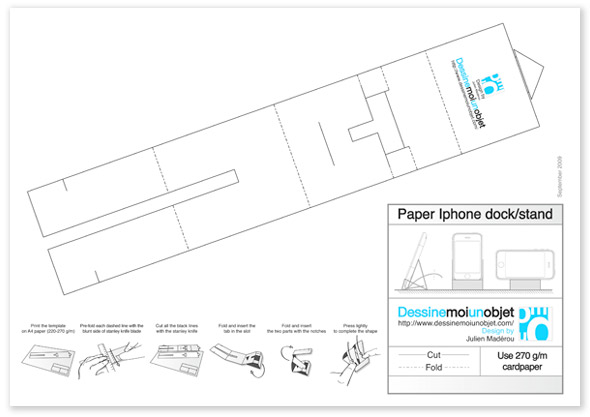
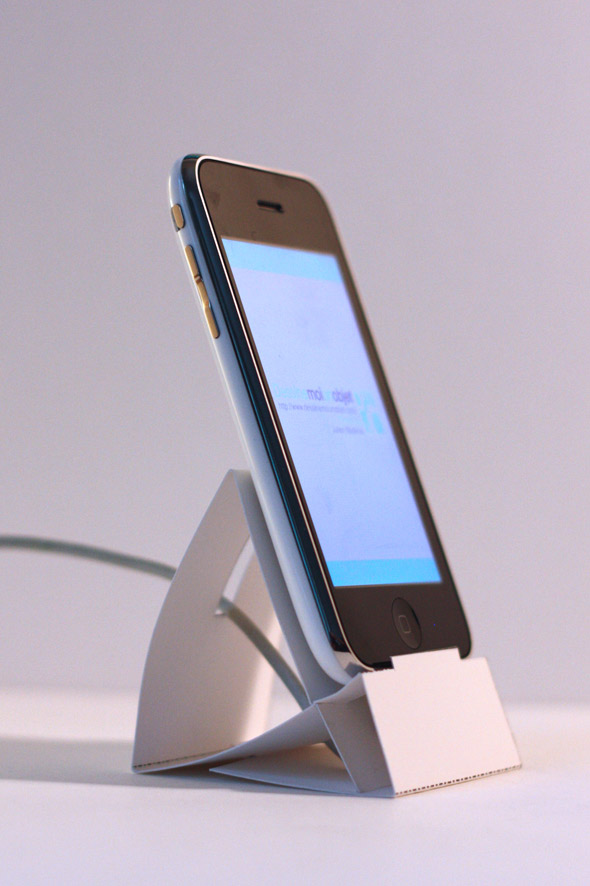
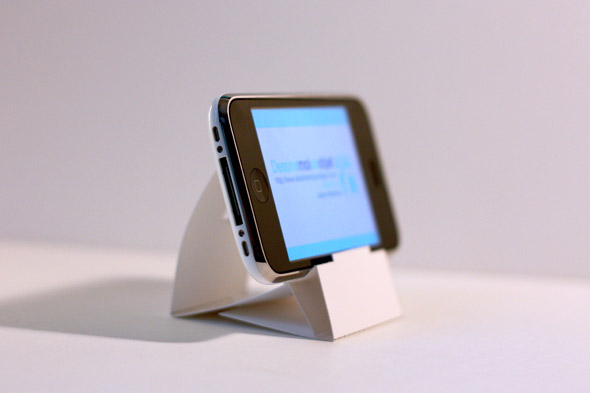
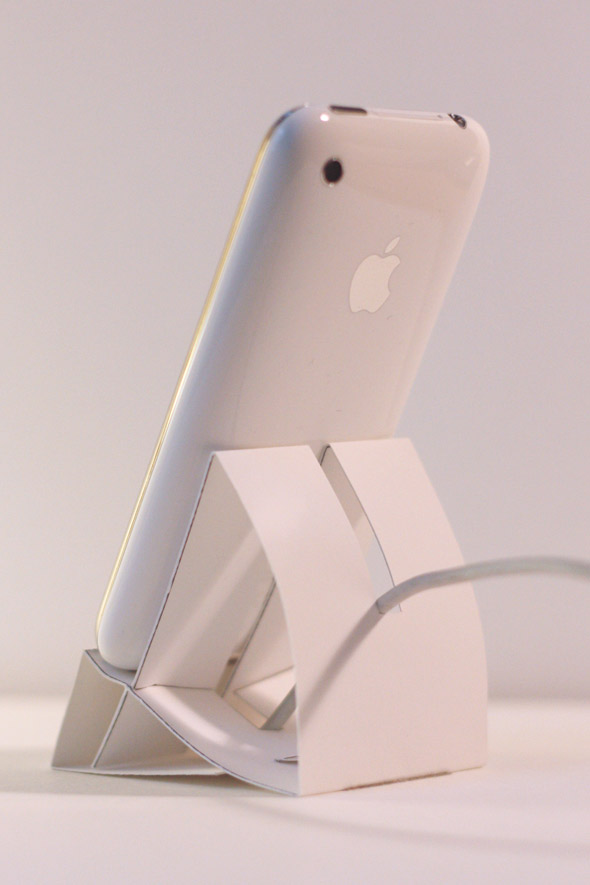
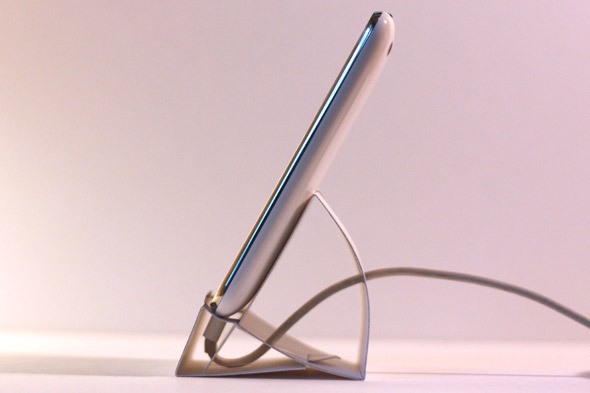
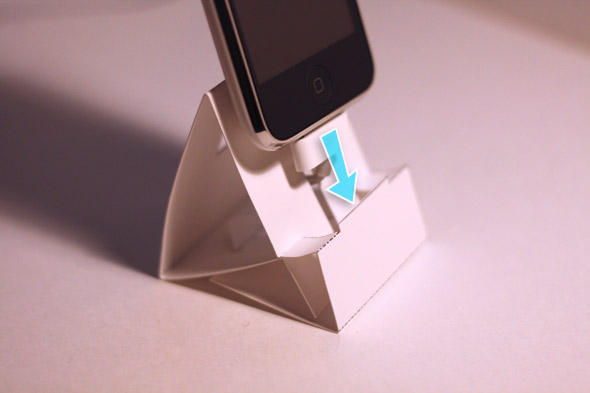
Dessine Moi Un Objet has a nice little howto on building an iPod touch or iPhone dock out of a piece of cardpaper. Apple’s first generation iPhones came with a dock, however subsequent models lost the dock and it became an accessory. Download the template here. Video below.

Original soundtrack by Florent Paris from Hors Sujet
 Apple has hired Intel’s top lawyer, Bruce Sewell, replacing the company’s General Counsel and senior vice president, Legal and Government Affairs, Daniel Cooperman, who has served in the role for the last two years and will be retiring at the end of September.
“We are thrilled to have Bruce join our executive team, and wish Dan a very happy retirement,” said Steve Jobs, Apple’s CEO. “With Bruce’s extensive experience in litigation, securities and intellectual property, we expect this to be a seamless transition.”
Sewell’s no stranger to Apple. Prior to joining Intel he was a partner in the litigation firm of Brown and Bain, where he handled such notable cases as the landmark fight between Apple Computer and Microsoft Corporation over the copyright of the Macintosh Graphical User Interface.
At Intel Sewell served as senior vice president and general counsel, supervising a team of roughly 600 attorneys and policy professionals across 30 countries.
Sewell also represented Intel on several professional, legislative and policy boards in the United States and abroad. He has been profiled in Fortune Magazine and was recognized in 2006 as one of the 100 Most Influential Lawyers by California Lawyer magazine and the legal Daily Journal.
Mr. Sewell is a frequent contributor and lecturer in the areas of global business development, innovation economies, international competition, and intellectual property rights.
He joined Intel in 1995 as a senior attorney assigned to counsel various business groups in areas such as antitrust compliance, licensing and intellectual property. In 2001, Sewell was promoted to vice president and deputy general counsel, managing Intel’s litigation portfolio, and handled corporate transactions including M&A activities.
Sewell was admitted to the California Bar in 1986 and to the Washington D.C. Bar in 1987. He received his J.D. from George Washington University in 1986, and a Bachelor of Science degree from the University of Lancaster, in the United Kingdom, in 1979.
Just out of interest, here’s Sewell talking on CEO responsibility and regulation at Davos this year:
 Apple has applied a quiet “Snow Leopard Tax” against professional photographers using earlier versions of popular pro software package, Aperture.
Digital imaging professionals who rushed to upgrade to the new OS have been distressed when they attempt to open their essential photogs tool, as Apple’s big cat is not prepared to support versions of Aperture earlier than 2.1.4.
An Apple tech support document published in the early hours of this morning confirms the news, warning: “When you attempt to open Aperture 1.5.6 on a computer running Mac OS X v10.6 Snow Leopard, the following alert appears: "You can’t use this version of the Application Aperture with this version of Mac OS X."”
Apple then helpfully informs users that the problem “is expected as Aperture 2.1.4 is required for Snow Leopard compatibility.”
Apple has made the Aperture 2.1.4 update available for download by users upgrading to Snow Leopard. The software was introduced near the ship date for Snow Leopard, August 27.
To be fair, Apple released Aperture 2.0 almost 18 months ago. An upgrade from a previous version to the current, supported version, costs c.$100.
 Apple TV day was yesterday in the US, with revelations that the new iTunes LP/Extras formats carry content at sufficiently high-res for playback on a TV and discovery of new iTunes U features, and a huge price cut for US customers.
Today’s the day Apple begins extending its Apple TV blessing outside of its own US shores, with the 40GB model being removed from sale worldwide and new lower prices set on the 160GB model.
Apple’s UK store this morning reveals that Apple has cut the previous £263 cost of the system to £219 in the UK. That the product costs just $229 in the US will inevitably see some UK customers complain at the hefty price differences between the US and the UK, as it can’t simply be explained away by the cost of VAT (a UK sales tax) applied here.
Meanwhile, expectation of a new breed Apple TV continues, with some anticipating a 250GB model, while others predict the addition of new features to the device, principally the introduction of a WebKit-based browser of some kind and others hoping for gaming features.
All this follows last week’s price cut on these systems over at giant online retailer, Amazon. It also follows recent claims that new Apple TV SKUs were being reported among resellers.
 Here’s one to watch: recall the beginning of the month when Sony briefly outsold Apple’s iPod with its Walkman in Japan, and just how widely that news spread? We’re wondering if this nugget will spread as fast…
Sure, it was significant as it represented the first time in four years Sony had grown a sales lead on its rival, but as we predicted Sony’s little home turf advantage has evaporated already, following Apple’s introduction of the new iPod range, according to BCN.
Apple’s iPod market share shot up to 58 per cent in the week ending September 13, far and away ahead of Sony with 32.1 per cent.
Its a big change – Sony held 47.4 per cent the previous week, compared to Apple’s then 37.1 per cent, Bloomberg informs.
Naturally, we’re suspicious on these statistics because they don’t include iPhone (which is also an iPod) sales though how the total Japanese market for music playing devices including phones shapes up hasn’t yet been revealed by BCN.
Apple has sold near 225 million iPods worldwide since the device launched in 2001. Half of all new iPods sold go to customers who have not previously purchased an Apple music player.
It boasts 100 million iTunes accounts and has shifted 8.5 billion songs so far. Between Jan 6, 2009 and July 21, 2009 the service sold 2 billion songs. That’s interesting when you consider it took Apple between April 28 2003 and January 10, 2007 to sell the first two billion.
Apple says it has 73.8 per cent of the MP3 player market, followed by 18 per cent held by "other", SanDisk at 7.2 per cent and Microsoft at 1.1 per cent share.
Sales of portable music players in Japan fell by 13.5 per cent in August from a year earlier.
Just for fun, the latest iteration of the "Hitler finds out.." meme – this time his reaction to the iPod touch lack of camera. (Warning, contains some sweary bits).
 Microsoft’s iPod-contender, the Zune HD is shipping now in the US, but the company has played another of its PR master strokes – the products are shipping without software installed.
You’ll have to wait until later – perhaps today – for the world’s biggest software developer to get the code you’ll need to actually use the new device. Though you will get to look at the demo movie on the Zune HD’s OLED screen.
“It’s a pretty unusual move for a company like Microsoft to put devices into the hands of consumers with no functionality at all, but it seems the Zune team was cranking till the last minute,” EnGadget explains.
Now that’s what we call an open public beta test!
 We went a few weeks without a tablet rumor – which was scary – but the Taiwan Economic News chimes in today with a bunch of parts information on Apple’s forthcoming Tablet. From reports from Dynapro, a battery supplier, they expect to build 300,000 units/month. Wintek is again said to be the supplier of the touch panels, which they also build for the iPhone.
The tablet PC features a 9.6-inch screen, finger-touch function and built-in HSPDA (high speed download packet access) module, and adopts a P.A. SEMI processor chip and long lasting battery pack, selling for between US$799 and US$999. DynaPack International Technology Corp. has been exclusively contracted to supply up to 300,000 units of long lasting battery packs a month for Apple`s newest tablet PCs.
The HSDPA module also seems to indicate that it would have to be on AT&T/Tmobile, not Verizon. It has been widely speculated that the tablet would also work on Verizon’s network.
 Apple makes great products. That’s probably part of why I am writing this and you are reading it. Apple’s MacBook Pros are the best in the business, their support is second to none. The Mac Pro workstations are incredible. Their displays (while overpriced) are the best there is. Etc etc.
But Apple has failed so incredibly miserably on one very important piece of Pro equipment. For anyone who needs to use a 30-inch monitor with any new Mac, you’ll need to purchase a certain notoriously horrific Apple part – the DisplayPort to Dual-Link DVI Adapter.
Here’s the timeline of events for this particular piece of …. Apple equipment:
Early-October 2008 – Unibody MacBook Pros released. Instead of having the built in ability to work on 30-inch monitors like previous DVI MacBooks and G4 Powerbooks, the new products use a new DisplayPort technology. Apple sells the new solution, DisplayPort to Dual-Link DVI Adapter, for $100. It is relatively bulky and requires the use of a USB port to power the device. People with 30-inch displays who want a new MacBook have no choice to to pay the extra $100 for the spawling mess of wires. The product is supposed to arrive by the end of the month.
November 2008 – product is delayed for 2 months until after Christmas. Those who bought new Apple MacBooks anticipating the adapter to be shipped within weeks are now forced to wait almost 3 months without using their $1000+ monitors.
Late December 2008 – Apple finally ships the DisplayPort to Dual-Link DVI Adapter with Firmware 1.01. Immediately, Apple’s message boards are alight with complaints of distortion without a known cause. The issue goes on for months. Apple tells people with 3rd party displays that the Displayport adapter doesn’t support them. People with Cinema displays are sent new adapters which still don’t work.
March 2009 – Apple isues firmware version 1.2 replacements to affected users alongside new Mac Pro/DisplayPort and Mini/DisplayPort introductions. Users of 1.2 adapters are still having problems.
Today – Those with 30-inch displays (often high end customers) are still getting the distortion (though it has been reduced somewhat), almost a full year after the DisplayPort is introduced in Unibody MacBooks. Apple has never issued a reason why these parts are defective, nor totally fixed the problem, nor issued an official recall.
Currently on Apple’s Store, it is hard to find someone who has had success with the product. Third party retailers are no different. It is a dud. And not just a failure but a failure to Apple’s most high end subset of customers.
Those with 1.01 firmware devices can get a 1.02 device exchange from Apple free after spending an hour or so on the phone with Apple support – who incidentlly claim no knowledge of such issues. They can also make a reservation at a genius bar at an Apple Store to get an exchange part.
In my 25 years with Apple products, this is by far the worst experience I’ve ever had.
I don’t know about you but I can’t get enough of Mosspuppet comedic sense. In this vid they make good use of the "I am T-Pain" iPhone app. http://itunes.apple.com/WebObjects/MZStore.woa/wa/viewSoftware?id=314652382&mt=8
In the battle for the low end video recorder, Apple’s iPod nano is staking its claim vs. the Flip. But is the video out of the Nano as good as the Flip? NewTeeVee did a side by side and you can see there are some differences:
[blip.tv http://blip.tv/play/AYGfvwgC]
While the Nano is good for its size, there are obvious areas where the Flip and its bigger lens grab better quality video. Perhaps this is the reason that Apple kept this camera out of the iPod touch?
 AppleTV day continues here at 9to5mac…Loopinsight has found some localization strings inside AppleTV which refer to iTunesU syncing. Currently, AppleTV doesn’t play content from iTunesU which leads them to believe that there is an update to AppleTV arriving in the near future.
While this isn’t a monumental update in functionality, it does mean that something (anything?!) more may be put into the AppleTV in Apple’s future. Perhaps AppleTV will see and additional life as a university dorm kiosk or a medium to communication for eLearning.
Many have wondered what is in store for Apple’s hobby, whether it is going to turn into a home gaming system, an App Store compatible WebTV, or simply be shelved. We think this might be a good sign that there are some more good updates in the pipe.
The text of the file can be seen below:

 Apple has at last published a dedicated page recruiting home workers to add their strengths to its tech-support provision.
The company in May began recruiting home workers to act as remote tech support operatives, offering numerous benefits (and pay) to tech-savvy users able to deliver their services across a 40-hour week.
The dedicated page (which currently only seeks an operative in Kennesaw, GA), bids to interested potential recruits as follows: “What if you could enjoy all the comforts of home while working with the coolest new technology? What if you could tap into great employee benefits without even leaving your bedroom? What if that job also happens to be with America’s technology innovator? Now you can redefine work – your way – as an Apple At-Home Expert. Welcome to your future.”
The job involves providing telephone-based tech support to customers having problems. In typical Apple style, it offers numerous benefits, and ends, “You’ll reduce your carbon footprint by working from home for a green company. You can wear your bunny slippers to work, every day. You’ll redefine work.”
In May, it was reported Apple is seeking 450 such operatives, with ads then appearing through some ads networks and recruitment websites.
 Initial problems with use of iTunes 9 are beginning to emerge, now the software has emerged from internal testing into a wider user base.
The first problem is described within a series of posts on Apple’s discussions forum, where customers claim some loss in audio clarity once iTunes 9 is installed.
As described, users complain that bass-heavy audio played back through the software is muddy or muffled, a problem they have not experienced before. Others complain at loss of clarity and detail when playing existing music files.
However, some customers are denying this, saying music playback has markedly improved.
The second problem appears more common. Customers are complaining that iTunes 9 appears to suffer from intermittent drops when streaming music to AirTunes using an Airport Express or an Apple TV.
That problem isn’t consistent, not everyone is complaining of it, but it has been reported and experienced by at least one user at 9to5Mac. It appeared first in the days following installation of iTunes 9, and doesn’t appear to relate to the strength or otherwise of a user’s WiFi connection.
Some claim the problem emerged on upgrading to Snow Leopard, but we’ve seen situations in which these dropped connections are occurring on systems not running that OS.
Some report success in fixing this issue by simply selecting ‘multiple speakers’ in iTunes, in which music is pumped out of the Mac’s speakers as well as via iTunes. A year-old Apple tech note describes other potential approaches to solve this problem.
All of this appears to imply that for better or worse, iTunes 9 has changed the AirTunes sound output.

We were curious, now we’re convinced Apple has some big, big plans for Apple TV – the company this morning dumped the 40GB model of the product and slashed the cost of the 160GB version of its TV set-top box. (or it might just be component price drops)
The company has slashed prices on the product, too. The US Apple Store now offers the 160GB model at $229 – that’s $100 less than it cost yesterday, and follows Amazon’s move to slash prices on the product, as we reported last week.
This price discount follows hot on the heels of revelations the company’s new iTunes LP/Extras format supports the resolution output by the Apple TV so closely we’re becoming convinced at some future plan for the product.
The news also follows another recent revelation that new Apple TV SKUs were being reported among resellers – could the new SKU simply refer to Apple’s plan to cut the range down to one – cheaper – model?
Meanwhile, games industry chiefs seem moderately convinced Apple will extend its success in mobile gaming to a raft of differing products at some point, potentially including its touch sensitive tablet, which has been long-speculated at at this point.
Via: MacRumors