Author

Avatar for 9to5 Staff

9to5 Staff

Eric Schmidt off of Apple's Board of Directors

Site default logo image

Apple released a PR Statement today saying that Eric Schmidt had resigned from Apple’s Board of Directors.  The move was anticipated as more and more of Google and Apple’s businesses crossed over into each other’s paths.  The straw that broke the camel’s back was undoubtedly the announcement of the Google Chrome OS which will compete with Windows and Mac for the desktop space.

The move will also ease some regulatory issues.  The FTC had previously been investigating Apple and Google for sharing board members.  As of this writing, Google and Apple still share a single board member, Art Levinson from Genentech.  The FCC is also looking into the Google Voice App Store rejections.

 In May, Schmidt said:

“From my perspective, I don’t think Google sees Apple as a primary competitor.”
Mr. Schmidt said that if there were areas of competition between the two, he would recuse himself from discussions. He added that it was well known that he typically recuses himself from Apple board discussions related to the iPhone.

Last month, it was reported that Schmidt was going to talk to Apple’s Board about any possible conflicts.

"I’ll talk to the Apple people," he told reporters "At the moment, there’s no issue."

Apple today said:

CUPERTINO, California—August 3, 2009—Apple® today announced that Dr. Eric Schmidt, chief executive officer of Google, is resigning from Apple’s Board of Directors, a position he has held since August 2006.

“Eric has been an excellent Board member for Apple, investing his valuable time, talent, passion and wisdom to help make Apple successful,” said Steve Jobs, Apple’s CEO. “Unfortunately, as Google enters more of Apple’s core businesses, with Android and now Chrome OS, Eric’s effectiveness as an Apple Board member will be significantly diminished, since he will have to recuse himself from even larger portions of our meetings due to potential conflicts of interest. Therefore, we have mutually decided that now is the right time for Eric to resign his position on Apple’s Board.”

Besides OSes, Google and Apple compete in the following areas:

    * Smartphone software. iPhoneOS vs. Android
    * Webpage building software iWeb vs. Google Pages
    * Calendar software – iCal vs. GCal
    * Document writing software – iWork vs. Google apps (Docs, spreadsheets and presentations)
    * Feed reading software Mail.app vs. Google reader.
    * Email software Gmail vs. Mail.app
    * OS Software: MacOS vs. Android Linux
    * They both give away photo editing software – Picassa vs. iPhoto.
    * Web Browsers (both based on the same Open Source Webkit and sold for free) Safari and Chrome
    * Web Services with Apple’s MobileMe and Google’s Google Apps and Gmail.
    * Video services – Youtube vs. iTunes

  Fake Steve humorously and correctly analyzed the situation here and here.

iMoney evolution: Developers vie for iPhone payment processing prize

Site default logo image

It’s only a question of time until you can use your mobile (iPhone) in order to pay for things in the shops, though getting there will require lots more work on transaction security, but developers are already looking at solutions which enable use of the device as a payment processing tool.

A recent example of such development is currently being tested in a New York store. It’s codenamed Square and involves a small plastic card reader which plugs into the iPhone’s headphone socket. Vendors can use this card reader to read the magnetic strip on the card, prices can be input on screen and customers can sign for their goods there (or, in future likely input their PIN code).

There’s a few nifty touches: customers can enter their email in order to be sent a receipt, which names the date and value of the transaction and also delivers a map showing you were the store was. If the trial is a success, then the system will be introduced to other stores, and may even end up making it possible for smaller vendors, market traders, for example, to take payments.

This isn’t the only such activity exploring use of an iPhone as a credit card device. Apple holds a patent on an iPhone ordering and payment system.

And another firm, Encore Payment Systems is enabling its merchants to process credit and debit card transactions through its secure network by utilizing an iPhone, iPod Touch or T-Mobile G1 over Wifi or 3G wireless connections.

The application is currently available through Encore’s sales team and is set up via a one-time installation process through a web browser. Upon installation the application icon is available on the home screen of the device for convenient future use.

Using the application, merchants can type the card information into the phone and the credit and debit card transactions are processed as "card-not-present" or "offline-debit" payments.

And in further development to this end, Innerfence are currently developing a system which will turn your iPhone into a terminal for taking payments.

Even Apple’s iFund partners are interested in this evolution. Representatives from the venture capital fund handling the $100 million iPhone developer ‘iFund’, Kleiner Perkins Caufield & Byers, took a look at yet another such solution, which is being developed by Billing Solutions last year.
http://www.ustream.tv/flash/video/859587
Truly, with all this activity, in the near term we’ll see iPhones (or an iPod touch) used as credit card payment terminals at sales outlets, and it’s only a few leaps forward from that until we see the devices replacing credit cards in their own right.

Flaming iPod claims emerge in UK

Site default logo image

Yet more information on flaming iPods comes to light this morning with a report in The Times claiming at least one UK family has been offered an out of court settlement following an incidence of this.

The newspaper claims Apple attempted to convince a father and daughter to sign a settlement form that left them open to legal action if they ever disclosed the terms, signature of which was required in order for Apple to refund the family the cost of the music player.

The father dropped his daughter’s iPod touch at which point it made a hissing sound and began to grow hotter in the father’s hand, with strains of barely perceptible vapous. The dad chucked the gadget out of the back door, and within a few seconds there was a pop, smoke and the iPod jumped ten feet into the air.

He contacted the original retailer, ended up talking with Apple, and that’s when his refund was offered, but only on condition he kept the story quiet.

This follows revelations last week of similar incidents in the US, filed with the Consumer Product Safety Commission (CPSC).

As of September last year, 173,000,000 iPods have been sold worldwide.
 

iPhone, App Store bigger than iPod and iTunes, iFund manager reckons

Site default logo image

http://static.slidesharecdn.com/swf/ssplayer2.swf?doc=kpcbiphonedevcamppresentationfinal-090801021040-phpapp01&stripped_title=kleiner-perkins-ifund-presentation-at-iphonedevcamp-3


Chi-Hua Chien of the Kleiner Perkins’ iFund gave a talk at iPhoneDevCamp 3 this weekend, leaving developers full of promise, even as Microsoft begins a flirtation with the same.

Among other nuggets, the slideshow presentation attached reveals that the rate of growth of iPhone sales and of subsequent App Store purchases already eclipses the early stage growth of iTunes and the iPod. The slides also reveal Kleiner Perkins iFund has funded seven companies from among 4,000 ideas reviewed so far, while two firms in receipt of funding have yet to be revealed.

At the end of the three day event, 54 iPhone applications and related projects were demonstrated to developers and a series of iPhone app developer prizes were given.

Microsoft tries to get iPhone developers to port their apps to Windows Mobile

Site default logo image

Maybe it is desperation time…or, perhaps Microsoft is trying to capitalize on all of the negative energy surrounding the App Store lately with the Google Voice and Google Latitude shuttering.  Redmond has put together a case study on porting an iPhone App to Windows and are showing it off to other application developers in the hopes of attracting the legions of programmers who have flocked to the iPhone and its development environment.

The application in question is called Amplitude (iTunes link) and is described as:

Amplitude is a fun application that enables users to amplify sound from their surroundings. With real-time graphical representation of sound picked up by the microphone, Amplitude users can adjust the volume/gain on their microphones to amplify sounds, such as animal heartbeats, environmental sounds, distant bird calls, tiny sounds from mechanical devices, and a host of other sounds that might otherwise go unnoticed.

So this App takes sound in from the mic port and puts it though to the headphones with an equalizer.  We’re not professional programmers but that doesn’t sound like rocket science, more like something that would take a professional programmer a few hours to build from scratch.  Porting using this complex process would probably take longer…and since it is so simple (and doesn’t use advanced OpenGL graphics) it sounds like a bad example to follow on more complex apps.

Additionally, Microsoft illustrates some of the inherent problems in Windows development; building for different devices with different processors and different screen sizes:

Gripwire used the HTC Touch Pro as the target mobile device. Development initially started with the HTC Touch Diamond 2, then switched because the HTC Touch Pro provides updated resolution specs to help support the display of audio. It also has increased hardware performance specs for testing code performance, and uses a more recent beta build of Windows Mobile 6.5.

The HTC Touch Pro (also known as the HTC Fuze for AT&T) includes 288 MB RAM and 512 MB ROM; with 480 x 640 pixels and a TFT resistive touch screen. In the current production release it runs Windows Mobile 6.1 Professional on a Qualcomm MSM 7201A 528 MHz processor.

In any case, we don’t expect to see flocks of developers heading to the Windows Mobile Platform any time soon.

Via Distorted Loop

Amazon pre-orders for Snow Leopard, Server price cut in half

Site default logo image

Just another sign that Apple’s next generation OS is right around the corner, 9to5mac affiliate Amazon has begun taking pre-orders for Snow Leopard.  The product is slated to ship in September and starts at $29 for a single user upgrade from Leopard.   Other pricing options are shown below (Snow Leopard only runs on Intel processors):

10.6 Snow Leopard: $29
Snow Leopard Family Pack (5-User): $49
Box Set (Snow Leopard including iWork and iLife):$169
Box Set Family Pack (5-User):$229
– Snow Leopard Server version 10.6  $499

Apple now only offers one option for Snow Leopard Server instead of the 10-client and unlimited client, which had been offered before.  The price of the unlimited client is now placed at the price of the 10-client (half off).

Amazon offers free shipping and a Pre-order Price Guarantee. If the Amazon.com price decreases between your order time and the end of the day of the release date, you’ll receive the lowest price.


FCC investigating Google Voice banishment from App store

Site default logo image

Apple’s App Store shenanigans are starting to get seriuzAccording to the WSJ, the FCC is investigating Apple’s rejection of Google Voice and the subsequent banishment of GV Mobile, a third party application that used Google’s Voice network.  They issued a request(PDF) that Apple explain the circumstances behind the removal/rejections and whether or not AT&T had any impact on the decision. 

Apple has three weeks to answer the request (pasted below).  In a statement Friday, FCC Chairman Julius Genachowski said the FCC "has a mission to foster a competitive wireless marketplace, protect and empower consumers, and promote innovation and investment." The inquiry letters "reflect the Commission’s proactive approach to getting the facts and data necessary to make the best policy decisions."

The FCC also petitioned AT&T and Google for information on the matter.  Apple declined to comment, Google had this to say:

"Apple did not approve the Google Voice application we submitted six weeks ago to the Apple App Store. We will continue to work to bring our services to iPhone users, for example by taking advantage of advances in mobile browsers. We will supply the information that the Commission has requested."

In response to the inquiry, AT&T said it does not ”manage or approve” applications in the iPhone store.  That’s what the FCC intends to find out.

This investigation comes as a growing number of influential people are growing concerned with the App Store and Apple’s policies.  Just this week, TechCrunch CEO Michael Arrington and Panic Software developer Steven Frank dropped their iPhones because of the Google Voice issue.  This adds to the growing legions of reporters upset with AT&T’s dismal service.

While this investigation is far from leading to any government action, it does stoke the flames of injustice that many of us Apple fans are feeling right now.  We hope that whatever or whomever (AT&T) is persuading Apple to take these actions relents on the grounds that the poor publicity outstrips any competitive advantage they hope to achieve by playing unfairly.


RE:    Google Voice and related iPhone applications

Dear Ms. Novelli:
Recent press reports indicate that Apple has declined to approve the Google Voice application for the iPhone and has removed related (and previously approved) third-party applications from the iPhone App Store.1    In light of pending FCC proceedings regarding wireless open access (RM-11361) and handset exclusivity (RM-11497), we are interested in a more complete understanding of this situation.
To that end, please provide answers to the following questions by close of business on Friday, August 21, 2009.
1.    Why did Apple reject the Google Voice application for iPhone and remove related third-party applications from its App Store? In addition to Google Voice, which related third-party applications were removed or have been rejected? Please provide the specific name of each application and the contact information for the developer.
2.    Did Apple act alone, or in consultation with AT&T, in deciding to reject the Google Voice application and related applications? If the latter, please describe the communications between Apple and AT&T in connection with the decision to reject Google Voice. Are there any contractual conditions or non-contractual understandings with AT&T that affected Apple’s decision in this matter?
3.    Does AT&T have any role in the approval of iPhone applications generally (or in certain cases)? If so, under what circumstances, and what
1 See, e.g., Jenna Wortham, “Even Google is Blocked With Apps for iPhone,” New York Times, July 28, 2009.
role does it play? What roles are specified in the contractual provisions between Apple and AT&T (or any non-contractual understandings) regarding the consideration of particular iPhone applications?
4.    Please explain any differences between the Google Voice iPhone application and any Voice over Internet Protocol (VoIP) applications that Apple has approved for the iPhone. Are any of the approved VoIP applications allowed to operate on AT&T’s 3G network?
5.    What other applications have been rejected for use on the iPhone and for what reasons? Is there a list of prohibited applications or of categories of applications that is provided to potential vendors/developers? If so, is this posted on the iTunes website or otherwise disclosed to consumers?
6.    What are the standards for considering and approving iPhone applications?    What is the approval process for such applications (timing, reasons for rejection, appeal process, etc.)? What is the percentage of applications that are rejected? What are the major reasons for rejecting an application?
Request for Confidential Treatment. If Apple requests that any information or documents responsive to this letter be treated in a confidential manner, it shall submit, along with all responsive information and documents, a statement in accordance with section 0.459 of the Commission’s rules. 47 C.F.R. § 0.459. Requests for confidential treatment must comply with the requirements of section 0.459, including the standards of specificity mandated by section 0.459(b). Accordingly, “blanket” requests for confidentiality of a large set of documents are unacceptable. Pursuant to section 0.459(c), the Bureau will not consider requests that do not comply with the requirements of section 0.459.
Thank you in advance for your anticipated cooperation. Sincerely,
James D. Schlichting Acting Chief Wireless Telecommunications Bureau Federal Communications Commission


NetNewsWire 3.2Beta now uses Google Reader for online feed syncing/reading

Site default logo image

It is a match made in heaven really.  The best native Mac feed reader (no offense Vienna, Safari, Mail.app) has always been NetNewsWire.  Their online component, NewsGator, has always been a little lacking behind Google Reader, however.  That was then, this is now. 

NetNewsWire 3.2Beta now syncs your NetNewsWire feeds through the Google Reader engine allowing you great offline access that is tied directly to your Google account (for sharing feeds with your friends, etc – – if you are into that sort of thing).

The 3.2Beta version updates many of the features, like Twitter integration, that will be implemented in a forthcoming 4.0 version of the software which should hit the streets later this year. 

You can always pick up the 9to5mac.com feed here and the 9to5mac.com/Toys feed here.  Screenshots and more info below…

The main point of 3.2

This is supposed to be a minor upgrade. And it is, largely — though Google Reader syncing is a pretty big feature.

The main point of 3.2 is as transition to 4.0, already in progress, which will be a major upgrade.

NetNewsWire 3.2 upgrades some of the data storage to 4.0-format. (Some, not all.) A bunch of the code has been modernized, and as a result it now requires OS X 10.5 (Leopard).

And it removes some features, in order to clear some of the slate for 4.0.

Features removed

A bunch of small items are gone that most people will never notice. Some larger features are also gone:

  • NewsGator syncing
  • DotMac/FTP syncing

Here’s the thing: I consider offering a range of syncing choices to be user-hostile. How does anyone know which to pick? And: how does the developer work on any cool new features when all his time is taken up with working on the various types of syncing?

It’s way better to offer just one, the one people are asking for, and make it good, and then start working on other cool stuff.

So that’s the deal: this release is all about getting to that one type of syncing, and 4.0 will be about the other cool stuff.

There’s a FAQ on the NewsGator website that talks more about NewsGator syncing and what’s happening.

Known bugs in Google Reader syncing

The basics are in place, though there may be some bugs.

There are some things we know are incomplete or are still on the to-do list:

  • You can flag items and they show up as starred items in Google Reader, but the syncing of flagged/starred items is not complete.

  • You can’t share or “like” items yet, or view shared items (yours or your friends). Still on the to-do list.

  • You can’t import OPML at the moment, because it needs to be re-worked to work with Google Reader syncing. But you can import OPML via Google Reader, so you’re not totally stuck.

Clippings

They’re not gone — it just looks that way.

Since no feature of Google Reader maps exactly to clippings, I’m trying to figure out what to do with clippings. It could be one solution, it could be several.

(Note: as added precaution, NetNewsWire made an HTML backup of your clippings at [home folder]/Library/Application Support/NetNewsWire/ExportedClippings/.)

The Deck

NetNewsWire 3.2 also displays ads from The Deck. You’ve seen their ads on places like A List Apart and Daring Fireball.

(The ads are displayed in the lower-left corner of the application, where before we had the thumbnail/NewsGator-news feature. They’re not in-line; they’re not embedded in the articles.)

But we know, because people have told us, that they’d be willing to pay to remove the ads. We haven’t set that up yet, but we will.

The new app icon

The app icon is designed by RogueSheep. Their designer Brad Ellis, who created this icon, also designed their very cool iPhone app Postage, which won an Apple Design Award.

I totally love it. It’s modern. It’s not Just Another BlueGlobeyThing(tm) on the Dock. It’s still very much in the spirit of NetNewsWire, with the satellite and concentric rings and blue and gold-ish amber-ish bits.

Here is the evolution of NetNewsWire app icons: 1.x, 2.0 – 3.1.7, then the new one.

NetNewsWire 1.0 iconNetNewsWire 2.0 - 3.1.7 iconNetNewsWire 3.2 icon

How to help — how to report bugs

Look in the Help menu — there’s a new command: Report Bug or Feature Request.

Choose it, and a window opens where you can write up a bug report or feature request or other general feedback. Whatever you write gets emailed to me personally.

If I responded to all those emails, I wouldn’t be able to actually work on the software. (I’m so not joking — that’s the trade-off, very real.) I apologize in advance for not being able to respond to everything. But I read carefully and save everything.

To-do list

There’s a To-do list and Known Bugs page. You can get to it any time from the Help menu.

How to follow NetNewsWire development

Also in the Help menu is a new command: NetNewsWire Developer Blogs & Twitter.

It opens a web page which lists the various ways you can follow NetNewsWire development. That web page is here.

What about the iPhone version?

We’re working as quickly as we can on NetNewsWire 2.0 for iPhone. It also will sync with Google Reader.

It’s a complete rewrite, based on our upcoming TapLynx framework and on the code written for NetNewsWire 3.2 for Mac.


A few other small things:

  • There’s a new Open in Browser toolbar button. Do a Customize Toolbar to add it. (This has been an astoundingly common feature requests over the years.)

  • You can create Twitter search feeds easily. Choose File > New Special Subscription > Search Engine. Twitter is one of the choices in the popup menu.

  • You can also run a Twitter search via the browser address bar: type t some search word(s) and hit return. Or you can choose Twitter from the popup menu in the search bar in the toolbar.


Digital 45's aren't just for iTunes…

Site default logo image

Remember the brouhaha when Apple and the labels introduced a new section to iTunes selling “Digital 45s”? Well, it seems it’s not just an iTunes thing – you can expect similar offerings from all digital music providers starting from next week.

How do we know? Because we’re watching. Here’s the skinny: Sony Music subsidiary Legacy Recordings last night announced the latest batch of vintage singles to get the two-track Digital 45s treatment. These include songs from Steppenwolf, Jefferson Airplane, Bill Withers, Boston, Johnny Cash and Van Morrison.

The company calls the releases, “a 21st century virtual facsimile of the original 45 experience,” adding, “Legacy Digital 45s bundle an original A-side hit with its contemporary B-side and sleeve art (when available) for online download.”

The kicker’s at the end, where the label states: “These titles are currently available exclusively on iTunes and will be released to all major digital music providers on Tuesday, August 4.”

So, we can expect a wave of such offerings from most major digital music stores in the coming weeks, or so it appears, which makes us wonder if we’re about to see a digital music price war in the singles market as in the virtual world music retail continues to emulate previous business practices.
 

iPhone 3.01 update coming this weekend?

Site default logo image

The BBC has quoted O2’s spokespeople on an upcoming iPhone update scheduled for tomorrow:

An O2 spokesperson said the patch would be available Saturday through iTunes.

"We will be communicating to customers both through the website and proactively," the spokesperson added.

"We always recommend our customers update their iPhone with the latest software and this is no different."

The security update is related to the SMS vulnerability that Charlie Miller and Colin Mulliner demonstrated at this week’s Black Hat security convention but was originally discovered and reported over a month ago.

iPhones aren’t the only platform vulnerable to this attack.  WinMo and Android are too (though Google has already pushed a fix).  However, the bulk of the publicity until this point has been focused on the iPhone and Apple’s apparent inability to send up a patch. 

Because of the nature of this attack (SMS), it would also seem that the Telcos could play a part in preventing its use/spread.

Unlike O2, AT&T hasn’t mentioned anything to its customers about the issue and forthcoming solutions.


Apple hire hints European retail expansion intent

Site default logo image

Apple has plans to continue expansion of its high street retail presence in Europe and has hired a leading agent to manage mall matters.

The company has hired Chris Braithwaite, a partner at Cushman & Wakefield, to become senior director of European real estate at Apple, Retail Week informs.

Braithwaite has already played a central role in Apple’s retail story since 2005, when the company instructed Cushman & Wakefield to act on its behalf.

Since then there’s been 16 stores opened up in the UK. Three in Switzerland and more in Italy and Germany. Apple CFO, Peter Oppenheimer, confirmed the company intends opening its first store in France in the holiday (Christmas) quarter.

Oppenheimer also said: “We remain on track to open a total of about 25 stores during fiscal 2009 and to complete the remodel of 100 stores to our new design.”

Apple’s retail segment’s firing on all cylinders, the chain attracted $1.5 billion of revenue during the June quarter and sold 492,000 Macs, “about half the Macs sold in our stores during the June quarter were to customers who never owned a Mac before,” Oppenheimer said.

Apple opened six new stores during the last quarter, it now has 258 stores. With an average of 254 stores open during the quarter, average revenue per store was $5.9 million. These stores hosted 38.6 million visitors during the quarter.

Meanwhile, Microsoft remains on track to open its first two stores in the US this autumn.

Chinese iPhone approved for sale, while puzzles remain

Site default logo image

Apple’s Chinese puzzle continues even while negotiations with China Unicom for the launch of the iPhone there prevail, a Chinese version of that device has won regulatory approval for use in the nation.

Meanwhile company watchers continue to ask what happened to the recently stolen product prototype – will counterfeit versions of the product appear in time to dent Apple’s sales in China?

China’s State Radio Regulatory Commission has published its approval of the Chinese version of the device, which lacks WiFi but is a GSM / WCDMA cellphone complete with Bluetooth, an internal model number A132. Approval for sale of the product times out in five years.

Earlier this week conflicting reports emerged which claimed China Unicom to have secured the deal to distribute iPhone in China. That company later said, "Discussions are still ongoing, we have not reached any formal agreement.”

It’s pretty clear the deal must be heading to becoming final though, as additional reports explain new model iPhones for the Chinese market are already in production. There’s no way Apple would damage its margins by over-producing product in the absence of a definite route to market.

Meanwhile, the case of the missing iPhone – punctuated by the tragic suicide of a young engineer tasked with looking after top secret prototypes for Foxconn’s clients – may take an interesting turn.

Reuters informs us that the most likely fate of the missing prototype product (widely reported to be an iPhone, but in view of the tablet rumours we’re kind of curious if that’s the case) is to have ended up in the hands of counterfeiters. These hi-tech crooks are more than capable of creating counterfeit versions of advanced products, a walk through Hong Kong’s busy markets is all it takes to find a fake iPhone, with prices as low as $63 a pop.

“A typical Chinese factory is protected only by guards who check the IDs of employees entering the facility,” that report adds, pointing out that these days counterfeiters identify those who have access to prototypes and often resort to bribery to get their hands on them.

Open to question then is whether Apple’s plan to launch iPhone in China will see some sales sapped by the existence of counterfeits on the local market.

Jailbreaker shows top 10 Cydia apps

Site default logo image

Sure we know that Jailbreaking is frowned upon in many circles and Apple says it can hurt the performance of iPhones. That doesn’t mean it isn’t interesting.  Here’s Vandam500’s top 10 Cydia apps:

It has been awhile since we were jailbroken, but we’d be lying if we said we weren’t tempted by the video.

From Russia, no iPhone love (or.. In Soviet Russia, iPhone buys you)

Site default logo image

Huge expectation that Russia would prove an incredibly lucrative market for Apple’s iPhone have been dashed. Gloomy reports claim Apple’s three carriers there are unable to meet sales quotas, and are receiving a steely response from Cupertino to their requests for subsidies, lower prices or some kind of carrot to win over Russian consumer hearts and minds.

A report reveals Russia’s three major mobile carriers reached a deal with Apple last year that demanded they sell 3.5 million iPhones over two to three years…but only 250,000 units shifted in the six months following the product’s introduction into Russia.

Worse, one of the big Russian retailers currently owes one carrier $8.5 million for iPhones it just can’t shift.

Expectation was high for the Russian market. The trade in grey market iPhones was extremely brisk there, with an estimated 400,000 jailbroken ‘phones already in circulation before Apple’s “official” launch. This apparently sated some demand among Russia’s small but rich middle classes.

What’s in the way of sales? Price, of course. With an estimated 15.8 per cent of the 140 million-strong Russian population living under the poverty line and an average per capita GDP of $15,800, the $1,000 Apple originally wanted to charge was just too high for the product to get the street appeal its managed to create in other countries.  Also, the price of oil has adversely affected Russia’s economy.

Also in the way is the carriers. This lesson’s coming through loud and clear across all iPhone territories – consumers seemingly like to pick up their choice of device on their choice of carrier, rather than being stuck using devices they may like with carriers they don’t like.

Carriers have now stopped buying iPhones from Apple and are trying to renegotiate prices and or quotas, but Apple’s not ceding to these demands, Fortune informs.

“The worst part is that this disaster will hardly teach Apple anything and I’ll expect seeing ridiculously priced iPhone 3GS here as well – way after everyone who wants to have the latest model manages to buy it abroad,” one Russian commentator observes.


Hold everything, Apple might not be showing up at CES

Site default logo image

Don’t book your Vegas tickets to CES just yet.  Ryan Block of GDGT and Engadget (and CEA advisor) says he was at the same dinner that Ben Charny of the WSJ was at when he got "the tip" that Apple was going to be at CES.  According to Block, at no time during the dinner did Gary Shapiro say that Apple was going to be at CES.  In fact the opposite occurred.

Unfortunately, it’s also specious and flatly wrong. I was seated directly across from Gary, and present for the entire conversation, wherein a dozen or so other journos chatted with him and one another. When asked about the CEA’s ongoing contact with Jobs, Gary joked that every once in a while Steve might even return his email — to which we all laughed knowingly. Yep, that’s our Steve. Shapiro went on to mention that Apple was a great and long-standing supporter of the efforts of the CEA, but that their only direct involvement was sending a check each year to pay their membership dues.

But wait!  It isn’t that simple. The Wall Street Journal has a recent history of being tipped off about Apple information in a very timely fashion and not needing to cite sources.  For instance, they got the Steve Jobs liver transplant tip on a Friday evening when Apple announced the news that they’d sold 1 million iPhone 3GSs.  The two pieces of information seemed to be timed in a way that they clouded each other out on Monday morning.

This CES report came minutes after a TMZ picture showed a still slim Steve Jobs doing his best Abbey Road impersonation.  Could Apple have given them another morsel to deflect attention away from the image?  Just speculating here.  Charny could have thrown that into a story he was writing about the CES dinner.

Block continues:

At no point did Gary even remotely imply that Apple would be present at a future CES — let alone state flatly that Apple "will be there" in 2010. In fact, at one point, someone asked if, hypothetically, Apple did want to attend CES, whether the CEA could accommodate them. Gary said flatly that if pressed, they might be able to come up with a small 2,000 square foot booth, but they couldn’t do anything, say, Microsoft-sized on such short notice. Bottom line, though is that if Gary had even gotten remotely close to implying Apple would be at CES, this shoddily sourced piece by Charny wouldn’t have been the earliest story with the scoop nearly 24 hours after the fact — laptops would been immediately out for reports filed from the dinner table.

Block goes on to say that Apple may show up at CES in some sort of capacity and information may of been exchanged outside of the conversation.  It just wasn’t at that meeting that the information was gathered.  However, the fact that Block is on the CEA payroll, probably means that he knows more than the average reporter.  Also Ben Charny isn’t the one at the WSJ getting the Apple "leaks" and has a history of bad reporting.

Now, I’m not saying Apple won’t be there. But Gary and the CEA certainly never said or implied that they would, and Charny certainly didn’t cite any other sources. Maybe by "Apple plans to attend" Charny meant one of Apple’s 32,000 employees would happen to be in Vegas next January. Of course, the greatest irony of this little dinner was the lively debate at the end of the evening sparked by one particular old school BusinessWeek journalist who laid claim that tech blogs like Engadget publish first and ask questions later. Right.

 Update.  WSJ page updated to reflect :

Correction: It is not clear whether Apple will attend the 2010 Consumer Electronics Show. This post previously stated that Apple would attend.


Apple boosts Time Capsule capacity to 2TB

Site default logo image

Apple has quietly upgraded its Time Capsule product, introducing a new higher capacity model, but kept prices unchanged.

The new Time Capsule is available with a 2TB capacity – more than enough to  support wireless back-up for multiple Macs. A 1TB model is also available. Prices are $499 (2TB) or $299 (1TB), exactly the same price points as before but with double the capacity.  They now also offer the previous (refurb) 500GB ones for $199.

Time Capsule is a back-up appliance that automatically and wirelessly backs up everything on one or more Macs running Leopard. The product also includes a dual-radio 802.11n base station (so you can use it as an AirPort connection to set up a network), three Gigabit Ethernet ports and is equipped with a "server grade" hard drive.


Nintendo admits iPhone threat as devs say Wii is 'less powerful' than Apple handheld

Site default logo image

Nintendo has at last admitted the iPhone (and iPod touch ) are direct competitors to its Nintendo DS Lite and DSi handheld gaming consoles – even as a Nintendo games developer admits there’s more processing power packed into an iPhone than you’ll find inside a Wii.

A developer, Yare, from Telltale Games, (who built Tales of Monkey Island, among others) explains: “The Wii is just not a powerful console. An iPhone is much more powerful than a Wii, even… The Wii and DS are extremely underpowered and their popularity doesn’t remove the hardware limitations.”

The developer was defending the company against some complaints concerning “frame-rate issues” in the recently released WiiWare version of Tales of Monkey Island.

That Apple now poses stiff competition in the games market has also been confirmed by Nintendo itself. In its latest earnings report this week, Nintendo revealed a 66 per cent decline in operating profit, citing “slowing demand for its Wii console and a stronger Yen,” as cause.

The company also admitted DS sales are slowing down, and pointed the finger directly at Cupertino, saying the slow-down was attributable to, “increased competition in the handheld business from Apple’s iPhone.” (We’d add the iPod touch to your list there, Nintendo).

This doesn’t mean it’s doom and gloom for Nintendo. It still aims to sell 26 million Wii consoles this financial year, along with a total of 30 million DS and DSi handhelds.

We’d speculate that Nintendo may be driven to upgrade its product range in the near future, in order to compete in the long term the company will have to close the processor speed gap its devices have in comparison to Apple.

This could be a much tougher target than most realise. Apple’s invested heavily in chip production talent in recent months, ever since its PA Semi purchase. This means Apple now has the kind of world class expertise it requires to design its own low power yet ultra-high performance processors, based in theory on the ARM processors presently used inside its handheld range.

Apple may, in the future, also pose some threat to Wii. After all, if the premium App Store does emerge to be a shop front for sale of high res versions of existing games and media for use on the much-anticipated 10-inch iTablet; and if these games are also offered for sale to Apple TV owners, then Apple will have some kind of play at Wii’s home market.

Should it be technically possible to link an Apple TV up with an iPod touch or iPhone for use of the handheld devices as motion sensing controllers for gaming on the Apple TV, then Wii – and Nintendo – will have one helluva fight on their hands.

Piper Jaffray’s Gene Munster now anticipates sales of 6.6 million Apple TV’s by the end of this year. Munster also expects launch this year of new Apple TV hardware equipped with a TV input and DVR functionality.

Wait and see how this game goes. And don’t forget, Nintendo is one of the companies commentators occasionally cite as a potential takeover target for Apple. With Apple on its current trajectory into the gaming market, such a purchase could make more sense now than ever before – assuming Nintendo has any technologies or patents Infinite Loop may consider worth bringing into the Apple fold.

iPhone nano rumour machine starts up all over again

Site default logo image

Oh? This is two years old? Damn

Apple has filed a US patent for what appears to be some sort of iPhone nano, potentially confirming months of speculation the company plans to widen its market with introduction of a smaller, cheaper model.

The design features a display all across one side of the device with a force-sensitive touch-screen surface covering the other. The filing describes the device as offering the capacity to make calls, SMS messages, for use as an iPod and for taking photos.

The most robust rumours of recent weeks have suggested Apple intends putting cameras in many of its iPod products.

The front display is pretty intelligent, it’s capable of switching between various modes, including a numeric keypad, a QWERTY keyboad, an iPod clickwheel and a clickwheel with a menu next to it.

Interestingly, the sole inventor of the patent is John G. Elias. What makes this curious is the patent wasn’t originally owned by Apple but has been passed across to the company. Elias is currently working with Apple on development of touch-related technologies.

The patent lends a little weight to claims made last year by UK newspaper the Daily Mail. In a report published in August 2008, the Mail claimed Apple planned to introduce a smaller, cheaper iPhone nano in time for Christmas ‘08. ‘Course, we know this didn’t happen, but the description of said product remains curious.

“A cut down version, with the candy bar shape of iPod nano music players, would be a huge hit as a Christmas gift,” an industry insider told the Mail. The device described hosted a touch wheel on the back and a display on the front – now it looks like Apple’s moved away from any moving parts in this purported device.

Initial reports predicating an iPhone nano emerged in April last year. At that time many Apple-watchers dismissed such notions, saying Apple would be unlikely to damage its own market.

However, Apple has a pattern of extending families of devices to extend and embrace new markets, as seen in the history of the iPod (or read Cult of iPod ), which eventually morphed to become the iPod classic , iPod touch, iPod nano, and iPod shuffle – and, indeed, iPhone.

Boom! Apple to attend CES '10. Will Steve Jobs headline?

Site default logo image

Unless there is a monumental typo here (there was!), the WSJ just outted Apple as being an attendee of CES 2010

Apple plans to attend the show’s 2010 version, marking the first time in memory the Cupertino, Calif., consumer-electronics giant will be there.

You’ll remember there was a lot of talk about Apple’s intentions after they announced that last years Macworld would be the last one they’d ever attend.  Apple remarked that they had better avenues for reaching their customers, like the Apple Store, the web…and apparently CES.

The WSJ also notes that Steve Jobs has been invited to be the Keynote speaker but he hasn’t gotten back to Gary Shapiro, who heads the world’s largest consumer electronics industry trade group.

FYI, Microsoft CEO Steve Ballmer and Intel CEO Paul Otellini say they will provide keynotes at the show.

Update.  WSJ page updated to reflect :

Correction: It is not clear whether Apple will attend the 2010 Consumer Electronics Show. This post previously stated that Apple would attend.

iPhone Nano patents emerge

Site default logo image

Well, what have we here?  Seems ol’ Apple might have been thinking about an itsy bitsy, teeny weeny iPhone a few years back.  The patent below, via BGR, shows what Apple was thinking about before the iPhone was released.  This probably won’t ever see the light of day, but perhaps some of the work done here will find its way into the iPod Nano come September.  That’s right, we said it… we’d live to see a multi-touch Nano!  Stranger things have happened, and how else are we going to do fun stuff with that camera?

more snappers below


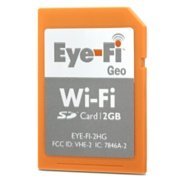
Eye-Fi Geo lets you Geotag your pictures for iPhoto 'Places'

Site default logo image

Although it isn’t true GPS like the iPhone 3G has (and possibly the unannounced iPod touch), Eye-Fi is now offering Apple’s iPhoto users a way to organize their pictures in Places without having a GPS-enabled camera.

Places is an iPhoto feature that organizes photos according to where they are taken, and arranges them in an easy to decipher Google Map. Although you can later manually tag photos to the general area where they were taken, the process is tedious and time consuming. 

Eye-Fi is targeting Apple’s iPhoto users with their new Geo Card ($60 Apple Store), which seamlessly geotags photos that can then be downloaded into Apple’s iPhoto as normal.  The SD card uses Wifi triangulation to give best approximations of location, much like the iPod touch uses Wifi to locate itself in the Maps.app.

Users can also upgrade their Geo card to share images online at MobileMe – or one of more than 20 other photo sharing and social networking sites – for a $9.99 annual fee.