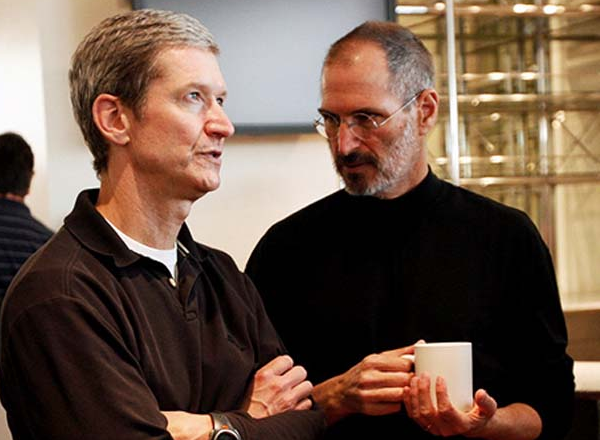
Tim Cook was appointed CEO in 2011 when Steve Jobs stepped away from the company as his health worsened. Cook was handpicked by Jobs to be his replacement, having served as a close friend of Jobs during their entire career together.
A graduate of Auburn University with a degree in industrial engineering, Cook earned his Masters from Duke University’s School of business. Prior to joining Apple, Cook spent 12 years at IBM, then served as the Chief Operating Officer of Intelligent Electronics. He then had a short stint at Compaq.
Cook first joined Apple in 1998 after being recruited by Jobs. Cook remarked in a commencement address at Auburn University that, five minutes into his interview with Jobs, he knew he wanted to join Apple. “My intuition already knew that joining Apple was a once in a lifetime opportunity to work for the creative genius,” he remarked.
At Apple, Cook started out as senior vice president of worldwide operating. He served as interim CEO in 2009 while Steve Jobs was on medical leave. In 2011, Cook again stepped in to lead day-to-day operations while Jobs was ill, before ultimately being named CEO permanently just before the death of Jobs.
Apple co-founder and visionary CEO Steve Jobs has passed away at the age of 56.
Apple posted the following statement on their website:
Apple has lost a visionary and creative genius, and the world has lost an amazing human being. Those of us who have been fortunate enough to know and work with Steve have lost a dear friend and an inspiring mentor. Steve leaves behind a company that only he could have built, and his spirit will forever be the foundation of Apple.
Below are pieces of remembrance from some of the people surrounding Steve Jobs.
Another tidbit regarding the iPod. Apple’s music player brand still holds a 78 percent market share a decade since its launch. Quite impressive. They sold over 300 million iPods to date. “It took Sony 30 years to sell 220 million Walkman cassette players,” Apple CEO Tim Cook remarked. We take it that means the iPod classic isn’t going away.
The iPod family of music players still have a lot to offer, he said, noting that nearly half of sales are from users who already own one. Apple shipped 45 million iPods from July of last year to June of this year. As for iTunes, the online music store now commands a 20 million songs-strong catalog. Remember, iTunes Store launched with just 200,000 songs.
In case there was any question, we’ve heard directly from Apple PR that there won’t be a webcast of Apple’s iPhone launch event. Last Year’s September event was live streamed but for unspecified reasons, Apple has chosen to keep this one off the airwaves. They will provide a live closed feed to the UK for European journalists however.
We’ll still be covering the event as it unfolds so make sure to stop by at 10am PT, 1pm ET or your local varient.
Remember when we brought you news way back in June that AT&T would be increasing its premiums on iPhone insurance on October 4th? This was the very first indication that Apple’s iPhone launch event would be on October 4th.
Deductible: A tiered deductible per the terms of your Mobile Insurance Coverage Certificate, will apply as follows:
Device Tier 1: Devices will be charged a $50 non-refundable deductible.
Device Tier 2: Devices will be charged a $125 non-refundable deductible.
Device Tier 3: Devices will be charged a $199* non-refundable deductible. Deductible Tier 3 will become effective October 4, 2011. On this date, certain devices including the iPhone will be moved to this tier.
Now that is out in the open. Prices for iPhones will increase from $4.99 to $6.99. Such an arbitrary date may signal that the new iPhones may be ready sooner rather than later after the announcement. Perhaps as early as October 7th. See new screenie below Expand Expanding Close
Fortunedoes a nice look back on how long Apple has waited from announcement (which seems to be October 4th at this point) and actual launch of the iPhones and iPads. Initial launch windows are huge because there weren’t really competitors in the space quite yet.
Importantly, the general trend is towards a smaller window.
Ten days out, October 14th, seems like a reasonable projection, doesn’t it?
Fast forward to today. AllThingsDreports that Apple CEO Tim Cook will unveil a fifth-generation iPhone at a media event scheduled for Tuesday, October 4:
Tuesday, October 4. That’s the day Apple is currently expected to hold its next big media event, according to sources close to the situation, where the tech giant will unveil the next iteration of its popular iPhone.
Author John Paczkowski mentions Apple could change plans at any time. The time frame jibes with the publication’s previous report calling for a mid-October launch of the next iPhone. Kara Swisher, another author with AllThingsD, wrote on Twitter last month that there will be no iPhone event “until Oc … to … ber”.
This will obviously be a huge event for Tim Cook, his first in the CEO role. AllThingsD notes that pressure is on Tim Cook to perform well.
Cook is certain to preside over the iPhone 5 rollout. He has to, of course. To pass the presentation on to anyone else — even one of Apple’s key executives such as Phil Schiller, who has handled the Macworld and Worldwide Developers Conference keynotes in 2009 — would undercut Cook’s new role and reinforce public perception that its legendary outgoing CEO and co-founder Steve Jobs is Apple and that it will be a different company without him.
The Onion joked that Tim Cook’s first order of business as CEO would be to begin making printers again. Of course that is a bad idea. But, let’s say that we’re in some alternate reality. The above SWYP: See What You Print concept created by Artefact is a very Apple-y solution to printers. Perhaps the HP/Canon/Epsons of the world should take note.
A frustration for many users in the past is the fact that Apple IDs are currently not able to be merged. As Apple’s iOS 5 and iCloud near launch, Apple might be taking an important step to allow the merging of Apple IDs. iOS 5 includes several services such as iMessage, iCloud integration, Game Center, FaceTime, iTunes, the App Store, and iBooks.
Some users are frustrated because all of those services are spread across multiple Apple IDs. For example, some people have a separate Apple ID for iCloud (especially migrators from MobileMe) and for iTunes/App Store/iMessage/FaceTime, etc. According to an answer from Apple’s executive relations team, as reported by MacRumors, Apple could be readying a solution that merges all of a user’s Apple IDs:
Tim Cook about the issue, and quickly received a phone call from an Apple executive relations employee. She had spoken to the team responsible for Apple IDs and acknowledged that they understood the issue and that more people would run into the problem with iCloud. She also repeated that there is no way yet to combine accounts but revealed they are working on it. In the meantime, she recommended picking a single account to plan on keeping indefinitely and to make all future purchases on that account.
Just a quick note on the earlier charity giving email from Tim Cook. It was a lovely gesture and will generate millions of dollars in giving to worthy causes, no doubt.
First of all, Jobs is a charity giver but only privately, never on a personal-corporate level, and he certainly never publicly encouraged Apple employees to do so. Of course there is Product(RED) and numerous disaster relief projects. But today’s public email/idea would never have been prioritized by Jobs.
Second, Apple PR would never have acknowledged an internal email, regardless of its contents to the media. This move was clearly meant to be broadcast to the media. If, for some reason, Jobs had encouraged Apple employees to give to charity it would have been a personal Apple internal-only move.
Finally, ApplePR doesn’t usually give information, let alone acknowledge rumors blogs. ApplePR told Macrumors that the internal email was legitimate. Jobs would have mowed down those PR reps.
The move takes a cue from Microsoft, which has had an employee-matching program in place for many years. Microsoft matches up to $12,000 in non-profit donations annually.
This might be a generous move and one that Apple and its employees can feel good about. But it isn’t one that would happen at Steve Jobs’ Apple.
Perhaps you can add “succession planning” to the list of areas where Steve Jobs has revolutionized the industry.
My theory is that Jobs’ resignation has been baked into the AAPL stock price all of this time (how couldn’t it be?) and the smooth transition and long term planning being revealed is being applauded by investors.
At the time of this writing, AAPL is at 352.63B while XOM is at 351.04B. Expand Expanding Close
In an operational sense, today won’t be any different than yesterday at Apple. The people who help curate the sjobs@apple.com email address will probably be putting in some extra hours, the work changing around the placards is probably almost done, and it appears Apple isn’t going to be doing any sort of media tours to ‘help allay investor fears’.
And they don’t need to. Nothing has really changed. I imagine bigger changes were slowly happening behind the scenes a few months ago when Operations VP (incidentally, Tim Cook’s original title) Jeff Williams was promoted to the Executive Bios page. He probably began doing the work of a traditional COO at around that point and, of course, Tim Cook has been acting as a traditional CEO on and off for years.
As Cook’s email to the troops this morning explained, Apple is not going to change – drastically, that is. As any company, Apple is always changing. But Jobs has set up an internal ‘University’ program run by a former Yale dean to make sure that his and other leaders’ values continue to be passed down to Apple’s new VPs and employees.
Steve Jobs hired dean of Yale School of Management Joel Podolny to run the Apple University, an internal group also featuring business professors and Harvard veterans that are writing a series of case studies to prepare employees for the life at Apple after Jobs. These case studies focus on Apples recent business decisions and internal culture, they are exclusive to employees and taught by top executives like Tim Cook and Ron Johnson.
As John Gruber made note, Apple the company is as meticulously designed as any Apple product:
Jobs’s greatest creation isn’t any Apple product. It is Apple itself.
Apple is the most valuable tech company in the world, an accomplishment that took fourteen years of fantastic long-term decision making. That same intelligence and foresight has gone into the planning of life after Jobs roaming the hallways. Compare today’s long-prepared news on Apple’s share price (none) with that of HP’s bungled earnings news last week on their share price (–20%).
Renaissance Man
Jobs isn’t just a technologist. He built and directed Pixar into the greatest animation studio in the world ahead of anything Hollywood could produce. He changed the music industry forever.
“For a guy who never recorded a song, or signed a band, or founded a label or a music festival, Steve Jobs has probably had more of an impact on the music world than any other person in the last quarter century – and possibly since Thomas Edison.”
He might have been the best, but for all of his greatness, Steve Jobs was not a perfect leader. There have been a few flops and mistakes. Perhaps Jobs was too trusting of Google early on? Options back-dating happened under his watch. AT&T?
Obviously, the triumphs far, far outweigh the mis-steps. As you look at a 55-year-old man in the body of someone decades older, it’s hard not to imagine what a healthy Steve Jobs with twenty years left at the helm might accomplish. I wouldn’t compare the loss of Jobs’ ability to “move the world forward” to the burning of the Library of Alexandria, but it’s hard to find another such comparison that makes sense. This is the man that ushered in personal computers, then did it again with the Mac GUI, then put iOS on portable devices and ushered in the smartphone revolution that we are in the midst of right now and finally re-invented the Post-PC personal computing device. He might have even done things we don’t even recognize yet. Perhaps he’s killed office park campuses with the Mothership HQ? Maybe Apple releases a wearable device in a few months that changes watches like the iPhone changed phones?
What huge innovations will we miss decades from now?
Perhaps the knowledge of his own mortality pushed Jobs even harder. You don’t need to listen to his famous Stanford speech to understand his appreciation for the opportunity he got as a cancer survivor. He worked every day as Apple CEO, just like yesterday, his last.
So how is anyone supposed to follow Jobs, especially an Industrial Engineer out of Auburn who, comparatively, seems introverted and certainly not as innovative?
Give Cook some credit
Remember, Jobs hand-picked Tim Cook to be his successor. What greater honor could you bestow on someone? Jobs didn’t just pick him out of the air, either: they’ve been working alongside each other for over a decade. Jobs picked Cook to be VP of Operations just months after taking back the reigns at Apple in 1997-98. We’re talking 13 quality years working side by side every day here.
As we know, Jobs isn’t shy about telling people what he thinks or cutting people loose who aren’t meeting his expectations. If there were a better candidate in the world for being the COO and now CEO of Apple, Steve Jobs would have found him or her.
Cook has managed Apple’s employees, partners, vendors and everything else during its decade+ renaissance. Remember, Steve Jobs’ first round at Apple and subsequent venture at NeXT were mired in operational mis-steps. Sure, Jobs learned from his mistakes, but I think Jobs would be the first to give Tim Cook credit for turning Apple into the operations machine it is today.
Interesting that Hon Hai Precision Industry, better known as Foxconn, issued a statement regarding Steve Jobs’ resignation from his CEO post at Apple. The Asian company wrote in a short email statement to Bloomberg:
Foxconn wishes Steve Jobs will get well. We think Tim Cook has shown good work as stand- in CEO during Jobs’s absences and expect Apple will perform well in the future. The relationship between Cook and Foxconn has been very close and we expect that the relationship will become even closer in future.
Asian companies are traditionally tight-lipped and shy away from commenting on their partners’ business dealings so it’s a bit surprising Foxconn would put out a statement, let alone touch on the subject of Steve Jobs well-being. On the other hand, Foxconn is Apple’s largest contract manufacturer and as such has been instrumental in ramping up manufacturing to meet the growing demand for Apple’s gadgets around the globe. Expand Expanding Close
This is of course a sad day and one that we’ve had in the back of our minds for years now. After founding Apple 35 years ago in his garage in Silicon Valley, and subsequently getting pushed out less than a decade later, Jobs was brought back in 1997 when Apple was on the brink of collapse. In the 14 years since his return, Apple has turned into the most valuable company in the world by market cap. To say he’s leaving the CEO position on top would be an understatement.
Since his third medical leave was taken in January it has seemed Jobs has been moving into a Chairman-type roll, still leading the Keynotes but giving everyone else a bigger role. As Chairman, Jobs will “continue to serve Apple with his unique insights, creativity and inspiration,” said Apple Board member Art Levinson. Tim Cook will take over as CEO as per the Apple succession plan. Jeff Williams will likely take over as COO.
To the Apple Board of Directors and the Apple Community:
I have always said if there ever came a day when I could no longer meet my duties and expectations as Apple’s CEO, I would be the first to let you know. Unfortunately, that day has come.
I hereby resign as CEO of Apple. I would like to serve, if the Board sees fit, as Chairman of the Board, director and Apple employee.
As far as my successor goes, I strongly recommend that we execute our succession plan and name Tim Cook as CEO of Apple.
I believe Apple”s brightest and most innovative days are ahead of it. And I look forward to watching and contributing to its success in a new role.
I have made some of the best friends of my life at Apple, and I thank you all for the many years of being able to work alongside you.
Steve
From the newswires….
CUPERTINO, Calif.–(BUSINESS WIRE)– Apple’s Board of Directors today announced that Steve Jobs has resigned as Chief Executive Officer, and the Board has named Tim Cook, previously Apple’s Chief Operating Officer, as the company’s new CEO. Jobs has been elected Chairman of the Board and Cook will join the Board, effective immediately.
“Steve’s extraordinary vision and leadership saved Apple and guided it to its position as the world’s most innovative and valuable technology company,” said Art Levinson, Chairman of Genentech, on behalf of Apple’s Board. “Steve has made countless contributions to Apple’s success, and he has attracted and inspired Apple’s immensely creative employees and world class executive team. In his new role as Chairman of the Board, Steve will continue to serve Apple with his unique insights, creativity and inspiration.”
“The Board has complete confidence that Tim is the right person to be our next CEO,” added Levinson. “Tim’s 13 years of service to Apple have been marked by outstanding performance, and he has demonstrated remarkable talent and sound judgment in everything he does.”
Jobs submitted his resignation to the Board today and strongly recommended that the Board implement its succession plan and name Tim Cook as CEO.
As COO, Cook was previously responsible for all of the company’s worldwide sales and operations, including end-to-end management of Apple’s supply chain, sales activities, and service and support in all markets and countries. He also headed Apple’s Macintosh division and played a key role in the continued development of strategic reseller and supplier relationships, ensuring flexibility in response to an increasingly demanding marketplace.
Apple designs Macs, the best personal computers in the world, along with OS X, iLife, iWork and professional software. Apple leads the digital music revolution with its iPods and iTunes online store. Apple has reinvented the mobile phone with its revolutionary iPhone and App Store, and has recently introduced iPad 2 which is defining the future of mobile media and computing devices. Expand Expanding Close
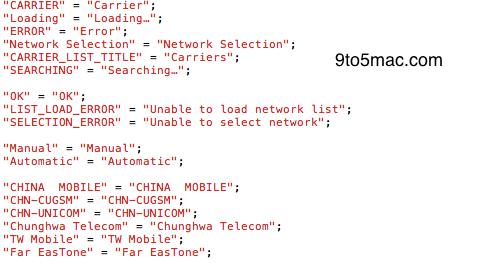
Reutersreported this morning that top brass from China Mobile, the world’s largest carrier by both subscribers and market valuation, and Apple’s head honcho Steve Jobs met “several times on introducing an iPhone based on its network standard”. Did Jobs travel incognito or was he accompanying Apple’s operations wizard Tim Cook during his China tour (snapped paparazzi-style in the shot below)?
More likely, Jobs probably hosted China Mobile reps in Cupertino.
Interestingly, China Mobile counts a cool 7.44 million iPhone users on its network, although it doesn’t carry the handset yet and iPhone users cannot tap 3G speeds on their TD-SCDMA 3G network.
Apple’s been alleged previously as wanting to release an iPhone optimized for China Mobile’s fourth-generation TD-LTE network. The Wall Street Journalchimed in with sources saying the gadget maker and China Mobile are close to cutting a deal set to open up the carrier’s 600+ million subscribers to Apple’s phone. The highest-level meeting isn’t surprising considering that Apple is only “scratching surface” in China, having reported in the June quarter a sixfold growth in the country for a total of $3.8B in revenues from operations in the country.
About a month and a half ago, one of our Apple Store sources told us that some Verizon techs had visited that day and upgraded the in-store cell equipment to LTE. At the time, LTE iPhones seemed like a distant possibility for upcoming iPhones and a Verizon source told us that upgrades to cell boxes were happening somewhat arbitrarily all over the country. Tim Cook, in a conference call earlier this year, made it sound like LTE was going to have to wait until later builds.
Tim Cook said that these early generation LTE chips would require too many compromises in design.
But yesterday things changed when a report detailled the LTE (specifically Verizon in this case) strings that were pulled from a carrier version of iOS OTA updates. Could the changing of the iPhone release schedule be timed to allow Apple to get the most modern LTE chips in iPhones aas well as give the networks time to mature?
Fast forward to this today, where Engadget says AT&T is also upgrading its on-premise Apple Store Cells to LTE.
Sure, but it possible that AT&T is just building up its nationwide infrastructure ahead of its LTE rollout, which today it announced (below) was going to start in 5 cities next month and…
By the end of 2011, AT&T plans to offer 4G LTE to customers in at least 15 markets, covering 70 million Americans.
Realistically, does that sound like the type of mainstream network Apple will aim its iPhone 5 towards? Expand Expanding Close
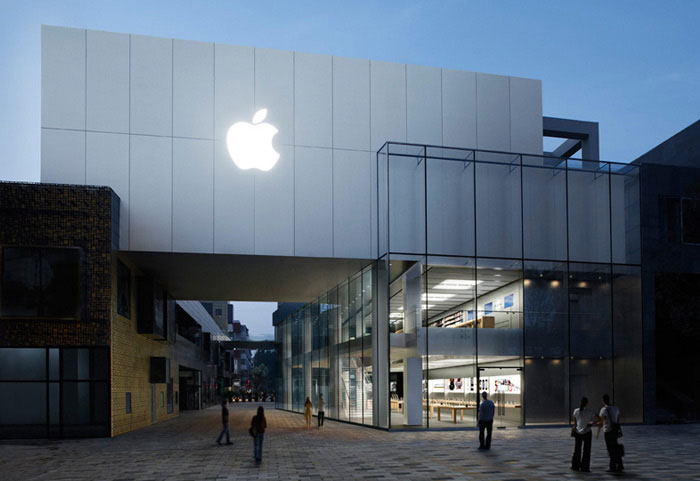
We’ve heard from two sources, one a credit fulfillment processor, that the grand opening is set for September 24th. It spans six lanes of traffic and three-plus floors of Hong Kong’s IFC building.
Another monster Hong Kong Apple Store is set to open in Causeway Bay later this year. Another shot below (Readers, please send more!): Expand Expanding Close
Apple felt incredibly bullish on China in today’s conference call, rattling off numbers that even Tim Cook admitted they wouldn’t have believed if they had been told a year ago. How big is China for Apple?
In the year ago quarter, Apple counted $630 Million in revenues from China. Today, Apple grew that by a factor of six to $3.8B of the total $28+B of their total revenues for the quarter. That’s 13.3% of Apple’s total business by revenue which now comes from China.
To put that in perspective, $3.8B would have been over two-thirds of Apple’s 2007 (iPhone release) same quarter revenue and more than Apple’s whole global revenue for June ’05.
Apple is also being aggressive in their China retail stores, choosing to open larger flagship stores which take more time to build. CFO Peter Oppenheimer mentioned that the Hong Kong Flagship store at the IFC would be opening this quarter. But Apple has an order of magnitude more stores opening up across China. Apple now sells through four stores. They have over 30 planned just for the next year.
If Apple’s growth in China stays on the current pace, which ‘scratching the surface’ seems to at least partially imply, China will account for over $20B in revenue at this time next year – which could start approach Apple’s US revenues even if Apple continues to grow globally as it has.
As part of the prepared statement of today’s earnings call, CFO Peter “Griffin” Oppenheimer told the audience that Lion was launching tomorrow. In case you didn’t know.
Without revealing too many new details, The Wall Street Journal reports that Apple and China Mobile are “getting closer” to the seemingly elusive China Mobile iPhone deal. China Mobile is the mainland’s largest carrier with over 600 million subscribers (that’s about the equiv. of the US+European populations). The report also confirms that it was, in fact, Tim Cook who was spotted at China Mobile‘s headquarters in mid-June.
The WSJ also discusses the price of the current iPhone models in context with the average salaries for China households:
The iPhone, which currently sells for between 3,999 and 5,999 yuan without contract, would be a luxury for many Chinese consumers. The average household income in the first half of 2011 was 12,076 yuan, according to China’s national statistics bureau.
With this fact in mind, it makes sense for Apple to build and sell a more economical iPhone. The report is not specific about when this China Mobile iPhone will launch and China Mobile has already confirmed that talks with Apple over carrying the iPhone are ongoing. Be sure to check out the WSJ’s explanation of the “exclusive” in the video above.
While Tim stopped short of explicitly stating that Apple would pursue a lower price iPhone, he did state that Apple was working hard to “figure out” the prepaid market and that Apple didn’t want its products to be “just for the rich,” but “for everyone”; he also stated that Apple “understood price is big factor in the prepaid market” and that the company was “not ceding any market.” ….He further noted that the handset distribution model was poorly constructed and that Apple would look to “innovate” and do “clever” things in addressing that market.
That was the WSJ tapping the line (har) of Bernstein Research’s Toni Sacconaghi in February.
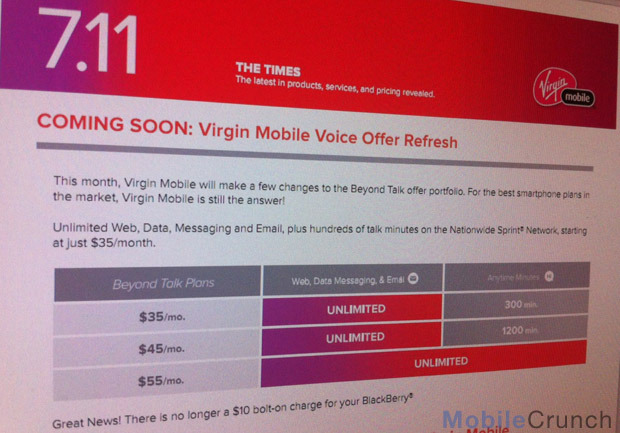
Today, Virgin announced that it was hiking its data plans to $35/month for unlimited data which coincides with the launch of a big Android phone. But more interesting, to me anyway, was that Virgin is changing its ‘unlimited’ to ‘unlimited with throttling at 2.5GB’ in…October.
Beginning in October 2011, Virgin Mobile will also move to reduce data speeds when a customer’s data usage exceeds 2.5GB in a month but still provide unlimited 3G access without a contract, usage cap, overage or activation fees. Based on current usage patterns, fewer than 3 percent of Virgin Mobile USA customers use more than 2.5GB of data usage per month. After reaching this level, this minority of customers may experience slower page loads, file downloads and streaming media. When a customer’s next month begins, the data usage meter starts back at zero with unlimited 3G speeds.
If Apple was going to do a pre-paid carrier in the US, it would certainly be Virgin (vs. Cricket, US Cellular, Boost). If Virgin did do iPhone, they’d certainly want to put measures in place to prevent the iPhone from killing its network.
We got word yesterday that AT&T was changing its iPhone insurance plans on October 4th, perhaps signaling some new models. With what we had, we’d have given the info about a 25% shot of being legitimate. However, since then, we’ve heard that a big commotion was made about that information being made public. Based on that and today’s Virgin announcement, we’re thinking the probability of that date being right has increased significantly. Expand Expanding Close
iOS 5 includes support for China’s QQ, 163.com, and 126.com email services – in the same way that the mobile operating system for iPhone, iPad, and iPod touch supports services like MobileMe and GMail. As Apple attempts to make a bigger impact on the Chinese market, adding new support for mainstream Chinese services is critical. Apple COO Tim Cook was recently spotted meeting with China Mobile executives ahead of a rumored deal to bring the iPhone to the world’s largest carrier. Expand Expanding Close
Last Month, Verizon CFO Fran Shammo told an investor conference call that the Verizon iPhone would be a World phone. The CFO was also the first to reveal the Verizon iPad. Many think that the current Verizon iPhone’s inclusion of a worldphone-capable Gobi chip from Qualcomm is a preview into the future of the iPhone line.
While Verizon has sold fewer iPhones than some analysts expected, Shammo said he was happy with sales of the “six-month-old phone” that only works in some countries.
When the next iPhone model launches Verizon will be able to offer it at the same time as AT&T. Verizon’s version will also work in as many countries as AT&T’s iPhone, which has global coverage, Shammo said.
Some customers held off on buying the first Verizon iPhone because they were waiting for a model that supports Verizon’s high-speed wireless service, which runs on a new technology called Long Term Evolution (LTE).
Shammo said that even if the next iPhone does not support LTE, Verizon will have enough high-speed alternatives to sell.
That’s a pretty good clue that the next iPhone won’t be LTE, which Apple CFO Tim Cook all but revealed himself at the last earnings call: