Philips Hue

See All Stories

Philips Hue, initially introduced in 2012, is a line of color changing LED lightbulbs and accessories created by Dutch company Philips. The line utilizes the Hue Bridge in order to facilitate control over LED lights and accessories. Control can be wielded directly from the Philips Hue app, or via systems like Apple’s HomeKit. HomeKit compatibility allows users to control Philips Hue lighting directly from Control Center, from the Home app, and from Siri.

Site default logo image

littleBits introduces its own DIY Smart Home Kit, a look at your options for creating an internet-connected home


From 9to5Toys.com:

Home automation possibilities are endless and what our homes will be like in the coming 5, 10 or 15 years is truly unknown. It is a constantly evolving sector of the technology scene that continues to grow each day with every new product announcement. From WeMo to SmartThings, Z-Wave to ZigBee, someone somewhere has something that will satisfy your home automation needs.

The reality is that we are in a time of great change, with internet-connected offerings in nearly every product category, even coffee makers. It’s an industrial revolution happening in your home and with that comes a lot of trial and naturally, error. So how does one choose?

There seems to be two options, one for the basic consumer, which includes your WeMo outlets, Philips Hue, etc. On the flip side you’ve got the open source crowd that wants to tinker and tweak and create their own system, and this is where littleBits comes in. While most of the aforementioned products have structured ecosystems and physical designs, with the ability to communicate via If This Then That (IFTTT) or the like, littleBits has gone to the complete opposite end of the spectrum.

We’ve covered littleBits in the past, with its WiFi-enabled cloudBit that “snaps the internet to anything”, allowing for custom Sonos-esque or Nest-like creations. At first glance its whole line of products feels overwhelming, and would appear to scare off anyone that was not familiar with the goals of littleBits. Today, they’ve expanded that line of Bits with the hopes of fully empowering consumers to create any home automation system that they’d like.

With the $249 Smart Home Kit from littleBits, consumers can get their hands on a 14 module set filled with sensors, LEDs, transmitters and sound triggers. At first glance, it is admittedly a little overwhelming. But once you take the time to dig into the possibilities that littleBits affords users, it is easy to see why its route to home automation can give consumers a massive amount of freedom. Instead of being locked in to an ecosystem, trying to trigger your WeMo when the Nest thermostat says you are home, littleBits is attempting to put all that power in your own hands. With that, comes the need for setup and the required desire to build your own system.

If you don’t know or are not willing to learn how to, then some of those other offerings from WeMo or SmartThings may be better suited for you. If you are into the this level of customization, you’ll want to check out littleBits’ offerings.

The basic setup allows users to specifically configure their system to their own specifications by piecing together individual modules that help trigger different actions. For example, utilizing the USB power module, MP3 player, a speaker and a ‘servo’ you can create a blind-opening-music-playing wakeup system. A number+, USB power, temperature sensor, cloudBit combo will allow you to control your window air conditioner. You get the idea, the possibilities are endless.

littleBits offers the $249 Smart Home Kit for pre-order starting today, with an estimated ship date of early December. Amazon has the entire line of littleBits products, available as full kits or individual pieces.

A good comparison for the littleBits line of products is the recently released Belkin WeMo Maker, which applies many of the same DIY principles to home automation. Although it does not offer some of the customization features, such as an MP3 player or speakers, it does have a more advanced level of hackability within the confines of the WeMo ecosystem.

Ultimately, we end this article where we started it, with consumer choice. Creating a home automation system is both exciting and daunting, and consumers have to make the choice for what is best for them. One positive of the current smart home landscape is the massive amount of choice afforded to consumers. The good news is that this encourages competition, which is good news for anyone considering going this route.

It’s hard to tell when the home automation market will become more focused and universal. Perhaps Apple’s HomeKit will play a role in that development once it is released. But in a world where Google and Samsung are buying interests in this area, a segregated marketplace is likely for the foreseeable future.

Full PR from littleBits:

littleBits LAUNCHES Smart Home Kit

The DIY solution to your own smart home

NEW YORK, New York, November 18, 2014 – littleBits Electronics, the company aiming to democratize hardware, today announced the launch of the littleBits Smart Home Kit, the ultimate kit of parts to turn any home into a smart home. With this unveil, littleBits is extending the power of the recently launched cloudBitTM, which lets you “snap the internet to anything”, making it possible for anyone to DIY their own smart devices.

“Our mission is to put the power of electronics in the hands of everyone, and to break down complex technologies so that anyone can build, prototype, and invent. Democratizing the smart home industry is one more step in delivering on that promise,” said Ayah Bdeir, founder and CEO of littleBits. “The Smart Home Kit is bring their home to the 21st century, on their own terms recreate a popular smart device, retrofit an old appliance, or invent something entirely new that may be the next big thing.”

In 2013, there were a mere 5.5 million connected homes in the United States. In the next two years, that number will increase to more than 31 million with the market poised to become a $71 billion industry by 2018. Today, companies are telling you to throw out all of your “dumb” home appliances and buy their new “smart” versions: from coffee machines and lights to speakers and refrigerators. This approach is expensive, unrealistic, and unnecessary. With the launch of the littleBits Smart Home Kit, an industry that has been the domain of expert installers and required steep financial investments, is now accessible to everyone.

The littleBits Smart Home Kit has already been used to create some popular applications such as smart refrigerators, internet connected speakers and smart lighting system. But more importantly, the Smart Home Kit allows people to build solutions that are completely new and unique such as retrofitted curtains to open at sunrise, remote feeders that respond to quirky pets, and a toilet paper roll that keeps you stocked. The possibilities are infinite.

The Smart Home Kit comes with 14 Bits, including the instrumental cloudBit, and five brand new Bits: MP3 player, Threshold, Number, Temperature Sensor, and IR transmitter. Also included is an infographic poster with 14 projects ideas and 11 accessories – including the brand new AC switch, which connects the littleBits 5V system to AC power (110V). It’s available online starting today for $249 at littleBits.cc/kits/smart-home-kit .

Additionally, this month littleBits rolled out its products to RadioShack stores across the U.S. The retail partnership was first announced in June among select stores and as of now is extended to include 2,000 stores nationwide. Beginning in December, the Smart Home Kit will be available in select RadioShack locations.

Site default logo image

9to5Toys Last Call: JBL Lightning Speaker Dock $20, Jabra REVO BT headphones $140, Transcend JetDrive 480GB SSD $317, more

Be sure to follow 9to5Toys to keep up with the best gear and deals on the web: TwitterRSS FeedFacebookGoogle+ and Safari push notifications.

Today’s can’t miss deals:

Last Call Updates:

  • Transcend JetDrive 480GB SSD upgrade kit for Macbook Air $317 shipped (orig. $400)
  • Home Deals: Dyson DC25 Multi-Floor Vac (refurb) $180 (orig. $500), Cuisinart Citrus Juicer $20 (orig. $55), kitchen items, more
  • Fashion: Levi’s jeans/apparel additional 50% off + free shipping, J. Crew Factory extra 50% off sale items, more

JBL OnBeat Micro Speaker Dock (black or white) $15 + $5 shipping (orig. $120)

Jabra REVO wireless Bluetooth headphones $140 shipped (orig. $249)

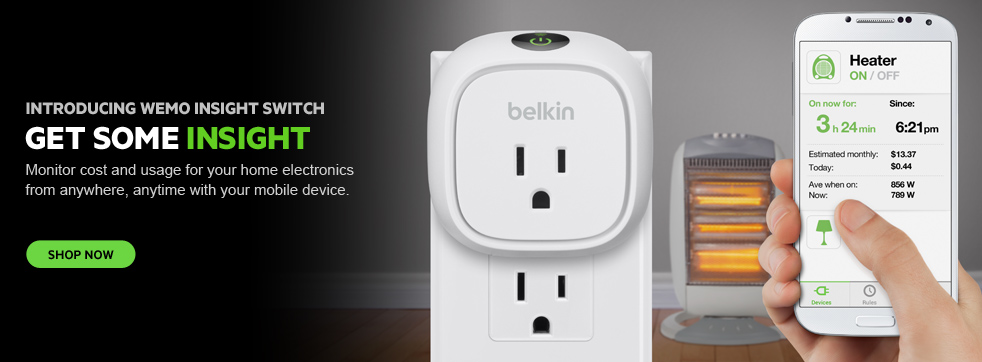
TigerDirect $15 off $50+: Belkin WeMo Insight $49 (Reg. $80), WD 3TB Desktop HDD $85 (Reg. $160), more

Other new deals:

More deals still alive:

Apple deals:

Smart home deals:

New products/ongoing promotions:

Site default logo image

9to5Toys Last Call: $100 GC w/ iPads, Aros smart AC $249, 15″ Retina MacBook Pro $300 off, more

Be sure to follow 9to5Toys to keep up with the best gear and deals on the web: TwitterRSS FeedFacebookGoogle+ and Safari push notifications.

Today’s can’t miss deals:

Last Call Updates:

Apple Deals:


Smart Home Deals:

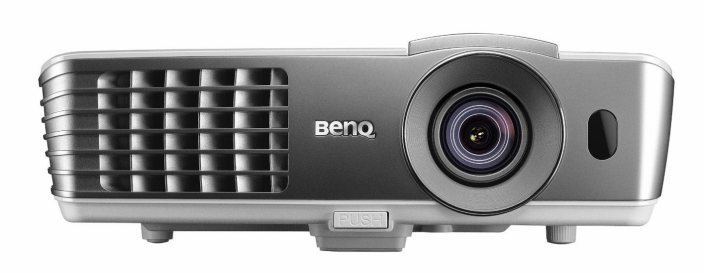
Home theater 1080p 3D projectors: BenQ $699 (Reg. $1,099), Optoma $869 (Orig. $2,499)

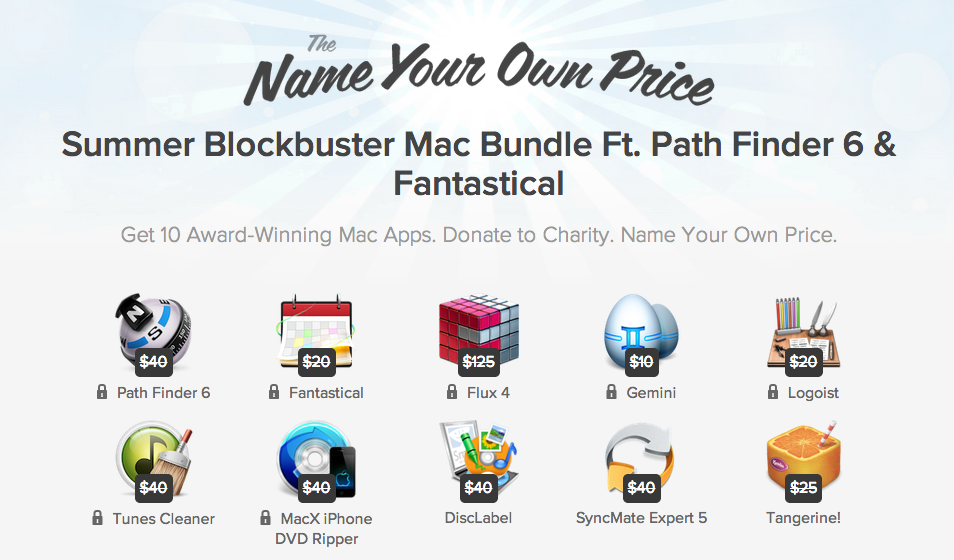
Last chance on discounted Mac apps: Name Your Own Price Bundle ($12 minimum to unlock all 10 apps) featuring Path Finder 6, Fantastical, Gemini, Tangerine, Flux 4 and more

Other new deals:

  • New! Canon PIXMA Wireless Inkjet All-In-One printer w/ AirPrint: $99 shipped (Reg. $200)
  • New! Clearance Cases at Best Buy for the iPad Air $10-$15 (Reg. $30-$50)
  • New! Headphones: MEElectronics Bluetooth over-ears $40 (orig. $120), more
  • New! Daily Deals: Klipsch KMC BT Speakers $165-$205, Logitech iPad KB Cover $25, more
  • New! Games/Apps: Infamous Second Son $40, Weathercube free (Reg. $4), more iOS freebies

More deals still alive:

New products/ongoing promotions:

Microsoft/Google/Android:

Site default logo image

Control your Philips Hue lamps from your Mac Menu Bar – new app coming soon

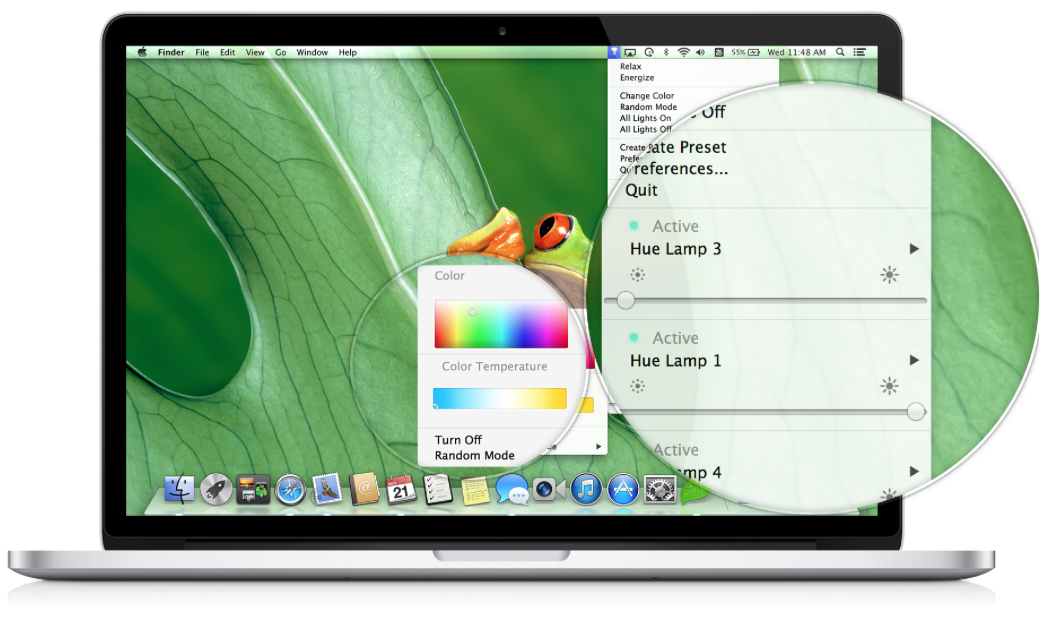
I can see why manufacturers opt for iPhone apps as the remote controls for their gadgets. A small touchscreen device is a familiar form-factor for a remote, and it’s likely to be easily to hand. But if happen to be in front of your Mac at the time, it can seem a bit awkward to have to pick up your phone, open an app and then use a smaller, fiddlier device.

Philips seem to have recognised this, with a new Mac app on the way to control its range of Hue smart LED bulbs. The app sits in the menu bar, providing a convenient way to control any of your Hue lamps.

Philips updated the iOS app back in May, with geofencing, schedules and a wide variety of triggering actions, including support for the popular IFTTT (If This Then That) app.
Expand
Expanding
Close

Site default logo image

Philips updates ‘Hue’ app with geofencing, recurring schedules & visual cues for weather, email, social media, more

https://www.youtube.com/watch?feature=player_embedded&v=FdvqZNJP6oA

Philips today launched a big update to the Hue app that provides users with control over their network connected Philips Hue lighting system which the company began selling exclusively through Apple Stores last year. Version 1.1 of the app adds a ton of new features including Geofencing to trigger scenes when you leave or return home, recurring schedules for functions such as alarms, a new synchronous scenes, and much more.

One of the big announcements accompanying the launch of the updated app is a new IFTTT (If This Then That) channel for Hue. IFTTT is a service that allows online applications to talk to one another by letting users set up actions for one app that are triggered by another. For example, with the Hue channel, users can have “access to any application programming interface (API) on the Internet, allowing Hue smart bulbs to act as informational gateways and visual cues for updates on weather, stock quotes, sports scores, email, social media and more.” Imagine getting a notification through Hue related to a weather forecast or update on a social network.

The Philips Hue starter kit is available now for $199 with 3 bulbs and additional bulbs are available to purchase for $59 each.

A full list of what’s new in the update Philips Hue app is below:

What’s New in Version 1.1.0

– Geofencing feature: Scenes can now automatically turn on when coming home and turn off when leaving home
– Scenes can now be switched on or off using a timer between 1 and 59 minutes
– Alarms can now be set to recur in a weekly schedule and with a random offset for the start and end time
– Fades of alarms now start at the set time instead of ending at the set time
– Increased reliability of alarms
– Improved vibrant colors for LivingColors and hue lights and added support for LivingWhites
– When activating a scene the lights change at the same time synchronously
– Compatible lights can now be added to the system using their serial number

Site default logo image

Philips announces iOS SDK & APIs for Hue wireless lighting system

http://www.youtube.com/watch?v=IT5W_Mjuz5I

Philips announced today that it launched an SDK and opened APIs to iOS developers who are interested in creating apps that work with its “Hue” personal wireless lighting system. The company started selling its smart, Internet-connected LED lighting system in October exclusively through the Apple Store.

Philips today, as promised, launches a software developer program for Hue that allows consumers to create and control their light bulbs using a smartphone or tablet. In publishing Hue’s open application programming interfaces (APIs), as well as releasing guides and libraries in an iOS software developer’s kit, Philips reinforces its commitment to helping the developer community start programming with Hue. This move opens the playing field for third party developers to create new, exciting applications using light, enabling Hue to communicate with a variety of devices and applications (apps). Philips Hue’s developer platform is available at developers.meetHue.com.

The Hue system allows iOS users to control lighting from their iPhones or iPads by enabling Hue bulbs to talk to iOS devices and one another using the ZigBee LightLink standard. The Hue app provides pre-programmed light settings for the bulbs, timers, and much more, but now developers will be able to create even more great apps that work with Hue.

One app that just hit the App Store is Ambify from developer Kai Aras. The app is described as a Hue-enabled jukebox that “turns music into light using Philips Hue Smart Bulbs.”

The full press release is below:

Philips Hue empowers endless possibilities in connected lighting, launching a developer program for world’s smartest LED light bulb

Developers can now extend Hue’s capabilities with new applications and integration with other products, advancing digital revolution in home lighting

Eindhoven, The Netherlands – Philips today, as promised, launches a software developer program for Hue that allows consumers to create and control their light bulbs using a smartphone or tablet. In publishing Hue’s open application programming interfaces (APIs), as well as releasing guides and libraries in an iOS software developer’s kit, Philips reinforces its commitment to helping the developer community start programming with Hue. This move opens the playing field for third party developers to create new, exciting applications using light, enabling Hue to communicate with a variety of devices and applications (apps). Philips Hue’s developer platform is available at developers.meetHue.com.

This is just the first phase of the software developer program for the world’s first web-enabled LED home lighting system. It allows the Hue community to create rich functionality for an enhanced customer experience. Already external developers have created apps that integrate Hue with music, resulting in an immersive surround sound and surround lighting experience that allows the lighting to change to the beat of the music. Developers have also created scheduling applications that can integrate with a phone’s calendaring system.

“The response Philips Hue has received from the development community has been incredibly positive and we aim to continue redefining the possibilities of light by enabling developers to create apps that customers want and need,” said Kevin Toms, SDK Designer and Developer Advocate of Hue’s software developers’ platform. “Already Hue is sparking a digital revolution in home lighting, as well as becoming an important step towards automated, connected homes, allowing it to further integrate with our world and simplify our lives.”

Using the ZigBee LightLink standard, Hue bulbs can not only communicate with each other, they have the potential for communicating with other ZigBee-based devices such as motion sensors and home thermostats, while offering a broad signal range and using significantly less stand-by power than traditional Wi-Fi systems. Software updates for the bulbs are done automatically via the bridge and the bulbs themselves, and additional apps developed for the system will be made available through app stores or meetHue.com, making it easy and intuitive for users to update Hue with applications and functionality that will enhance their lighting experience.

Hue’s app already includes numerous pre-programmed light settings, including Light Recipes based on Philips’ research around lighting’s optimal effects. These pre-programmed scenarios adjust the bulbs to the optimum shade and brightness of white light to relax, read or boost mood and energy. However, there is additional opportunity with color temperature applications that have the potential to help photographers adjust lighting for shots with a simple app on their smart devices. The company continues to enhance the possibilities of Hue, with new features around schedules and geo-fencing expected to be released in the coming months.

Developers with questions about programming with Hue, can join Hue’s developer forum atwww.everyhue.com where Kevin Toms, designer and developer advocate of Hue’s software developers’ kit, will provide technical support. Kevin can also be reached via Twitter: @philipsHuedev

Hue starter kits comprising three bulbs and a Smartbridge are available at Apple stores for €199.95 / $199 / £179. Additional bulbs can also be purchased for €59.95 / $59 / £49.95.

For more information about Philips Hue and its capabilities visit www.meetHue.com 

Philips launching app controlled ‘hue personal wireless lighting’ bulbs at Apple Stores tomorrow

Site default logo image

[youtube=http://www.youtube.com/watch?v=IT5W_Mjuz5I]

Philips announced today that it would launch what it called “the world’s smartest LED bulb” exclusively at Apple stores starting tomorrow. The bulbs themselves work like any standard light bulb, but they use a bridge plugged into your router to allow you to personalize lighting settings and timers. This of course is not the first app-enabled product for the home to hit Apple Stores. Apple already sold the first and second-generation of the Nest Learning Thermostat.

The hue bulbs provide all “shades of white, from warm white light to cold with light,” as well as a selection of colors and pre-programmed settings. You can even use a photo from your device as a color palette and save and program settings to activate at certain times of day. Philips said the hue bulbs consume 80 percent less power than traditional bulbs.

Philips will sell a hue starter kit at Apple stores tomorrow that consists of three 50Watt hue bulbs and the hue bridge. That will sell for $199. You’ll also have the ability to purchase additional individual bulbs for $60 and add up to 50 to your existing hue bridge.

Philips is even offering the hue app and an open source platform to developers:


Expand
Expanding
Close