Author

Avatar for 9to5 Staff

9to5 Staff

China Unicom grabs a sliver of O2 parent, Telefonica, as Chinese iPhone deals unfurl

Site default logo image

The corporations. They do keep growing, expanding, forming their own blueprint across the planetary landscape, a sleight of hand so crafy some things just get lost in the ether. Not this one though: Fresh from its iPhone deal, China Unicom today took a slice of another iPhone carrier, O2 parent company, Telefonica. (Or perhaps its true to say the two corporations took a slither of interest in one another).

Spanish-owned Telefonica is one of the largest fixed-line and mobile telecommunications companies in the world: 3rd in terms of number of clients (with the acquisition of O2, Movistar and Manx Telecom) only behind China Mobile and Vodafone, and in the top five in market value.

Apple’s brand-new Chinese iPhone carrier partner has agreed to shell out $1 billion for a 0.88 per cent slice of Telefonica. In exchange, as this corporate love-making goes public, the Spanish firm intends increasing its investment in China Unicom by around $1 billion to an 8 per cent stake, from 5.38 percent currently.

There’s more: Expect joint work on network and technology development, shared infrastructure, working together on developing wireless services. and lots of deals on roaming and sharing of “skills”.

The two firms together account for 405 million subscribers right now.

We wonder what the impact of this nesting between the two carriers will have on Apple’s ongoing conversation with China Telecom.

We know that part of the problem Apple’s had with nailing a deal with Chinese mobile telcos has been the latter’s refusal to engage in revenue sharing deals, and some pressure on Cupertino to relinquish control of the App Store. (As we understand it).

Interesting then to note that the world’s largest indie music aggregator, The Orchard, last month sealed a deal with China Telecom to offer music through that company’s wireless service.

Talk continues to favour the notion Apple and China Telecom will reach an iPhone deal in future. Is all the activity – including recent Chinese government moves to promise more action against copyright abuse – simply Apple’s future Chinese partners putting themselves into position to best benefit from Apple’s smartphone salvo.

There’s a degree of symmetry to this proposition: After all, your iPhone was indeed designed in Cupertino – but made in China.

Adobe Principal Scientist Lars Borg explains why Snow Leopard changed to Gamma 2.2

Site default logo image

One of the many "small-but-big" changes in Snow Leopard was Apple’s change to a darker default 2.2 Gamma from the lighter 1.8 it has been using since the desktop publishing revolution began three decades ago.  The choice of choosing 2.2, the Windows’ default Gamma setting, will help designers who design for both Mac and PCs (and who doesn’t anymore?) get output that matches on both platforms – a welcome change for those who had to try to please people on both sides of the aisle. 

But why did Apple change, and more importantly why now? 

John Nack, Adobe Photoshop’s Blogger/Product Manager asked a very qualified collegue, Adobe Principal Scientist Lars Borg, to answer that question. Lars has spent the past 20 years at Adobe defining & driving color management solutions, and lately he’s been focused on digital cinema standards. Here’s what he said:

In the distant past, the computer world was colorless, bleak, stark black and white. No one cared about their display gamma, as gamma is irrelevant for displaying only black and white.

Macintosh, in 1984, introduced us to desktop publishing and to displays with shades of grays. Publishing at that time meant printing presses, and the dot gain of a typical press (then and now) corresponds to a gamma of 1.8. As color management was non-existent at the time (the first color management solutions did not appear until early 1990s, when color displays became more available), Apple’s pick of a 1.8 display gamma enabled the Macintosh displays to match the press.

In early 1990s, the TV industry developed the High-Definition TV capture standard known as ITU Recommendation 709, using a net gamma of around 2. Later, in 1996, IEC put forth a CRT-based display standard (sRGB) for the Web that would match the HDTV capture standard, having a net gamma of around 2.2. sRGB was slowly adopted first in the PC display market, next in the burgeoning digital camera market, and 2.2 became the dominant display gamma.

Is 2.2 the ultimate gamma? No. In 2005, leveraging color science research, the movie studios’ Digital Cinema Initiative selected a gamma of 2.6 as providing the best perceptual quality for 12-bit cinema projection. Today, few can afford a true Digital Cinema display at home, but as always prices are falling. Yes, that’s what I’ll have in my next home theater.

But, recall VHS versus BetaMax. The VHS format finally died with the last video tape. Gamma 2.2 will not be unseated easily. However, calibrated displays and functional color management will make gamma a moot point. Gamma will be for the Luddites.

Skype 1.2 hits the iPhone, no Push

Site default logo image

Here’s some advice for those Skype iPhone developers: Stop everything else you are doing right now and work on getting Push Notifications working – Nothing else matters until that works.  They’ve updated the following (and some of these things are nice) but frankly we’d trade all of this and more for Push Notifications.

What’s new in Version 1.2
– Set up call forwarding from your iPhone – forward Skype calls to a phone number when you’re not signed in.
– Improved performance and better audio quality on Skype-to-Skype calls.
– Even easier to send text messages (SMS) – Send SMS from the Call tab.
– Calls are connected much faster.
– Status of your contacts is updated more often.

– You can now decide whether you want to stay online/offline when the iPhone is  locked. We’ve added this into settings.
– Contact groups are now supported, making it easier to see who is online and separate your saved phone numbers.
– You can now edit the name of your saved phone numbers.
– Added support for skype: URL schemes in Safari.
– When creating a new account the country in your Skype profile is taken from the language used on your iPhone.
– Group chat profile pictures are now shown.
– You can now remove your profile picture.
– Added a ‘Help’ link to ‘Forgot your password’.
– Improved support for proxy configurations.

Download Skype 1.2 for iPhone (iTunes Link)

Also Top Up your Skype account with these discounted rates.

Spotify is on the App Store…in Europe

Site default logo image

As we mentioned last week, Spotify, the all-you-can-eat subscription music service, was approved for the App Store.  It looks to have just gone live in Europe where you can now have access to over 6 million songs on your iPhone for roughly $20 a month. 

Not a bad deal but there’s one monster catch.  Like all third party apps, it doesn’t work in the background.  Which sucks for a music player.  The App is free (iTunes Link) – but only in Europe for the moment. The service is hitting North America in the coming months. 

Also, it will be interesting to see if Apple revisits the iTunes all-you-can-download service that was rumored by the Financial Times last year.  We’re not sure what happened to that one -likely Apple and the labels couldn’t come up with an agreement.   Coincidentally, Spotify counts the music labels as its investors (18% ownership), and a recent UK court case confirmed the company has its own super-secret ads-funded music plan…

Spotify is also on Google

Spotify was also on Google’s Android today.

Commodore 64 emulator now $5 on iPhone

Site default logo image

The good news is that Apple has finally let an emulator on the iPhone.  The bad news is that it is so neutered that it might not be that great of a value proposition.  As Arnold Kim reports yesterday on Touch Arcade and today on Macrumors, Apple appears to have requested the removal of the Commodore BASIC interpreter from the application which allows running arbitrary code (or any fun stuff).

So you basically get five 20+year old games (Dragons Den, Le Mans, Jupiter Lander, Arctic Shipwreck, and Jack Attack) for $5 (iTunes link).  The company plans additional in-app game purchases along the way which may range anywhere from Free to $2.00.

Give us a call when Larry Bird v. Dr. J One-on-One hits. 

LG unveils its 15-inch (MacBook bound?) OLED display

Site default logo image


Picture from CNET, more below
 

Let’s just put the facts on the table and we’ll let y’all speculate away

In January, Apple announced a deal in which it will spend $500 million over the next 5 years on LG displays.  The money was a pre-payment. 

In Late April, the Register and Smarthouse both said that Apple would be using a new 15-inch LG OLED display in an upcoming MacBook Pro product:

"An LG staffer has made the very bold claim that 15in Apple notebooks equipped with OLED displays will appear within months… the mole added that once Apple’s unveiled its 15in OLED notebook, LG will then launch its own standalone 15in OLED panels later in the year."

As you probably know, Apple hasn’t released any OLED MacBook Pro goodness upon the world yet, though we’d imagine one would sell pretty well to high-enders.

This week, however, LG announced their new 15-inch OLED display.  So, we do know that a 15-inch OLED display from LG exists.  These aren’t going to hit the streets until November and judging by the Sony 11" OLED TV’s $2500 price tage, they’ll be expensive.  And those streets are Korean streets.  Western shores aren’t going to see these things until 2010.   

On the other hand, Microsoft has an OLED ZuneHD coming out this month for $200 so there might be some price flexibility.  (Some think Apple’s high end iPod Touches may also see some new OLED screens as well)

Speaking of flexibility, OLED screens are semi-flexible, allowing them to be made into curved surfaces.  

As iPod upgrades loom, Apple devices still dominate Amazon

Site default logo image

Despite the imminent appearance of Apple’s next-generation of iPods in the week ahead, the company’s existing products continue to sell strongly, dominating Amazon’s Bestsellers in the MP3 players and accessories category.

Leading the pack is the 8GB iPod touch, currently available at a $15 discount from the online retailer. The 16GB model sits in second place, available at a $25 discount today.

Rumour-mongers predicting that Apple will withdraw its iPod classic range may want to consider the third place iPod on Amazon’s best-selling list – the venerable iPod classic. Though, some sources think the Classic will live on and add a camera.

A quick scan through Amazon’s top twenty list reveals Apple iPods in nine of the top twenty slots. iPod-related accessories account for five more slots.

In order of preference, the main iPod contenders are:
SanDisk Sansa Fuze 4 GB Video MP3 Player (Black)

Zune HD 32 GB Video MP3 Player (Platinum)

Archos 7 160 GB Internet Media Tablet

SanDisk Sansa Fuze 8 GB Video MP3 Player (Black)

It will be interesting to see what impact Apple’s new products have on Amazon’s best-sellers list when they are revealed this week.
 

Over 55% of 9to5Mac readers now on Snow Leopard

Site default logo image

It looks like the Snow Leopard transition is moving along pretty well, if our Google Analytics are any indication.  A week after release, over 55% of you Mac users are using Snow Leopard (which includes PowerPC users who don’t have the option).  The bleeding edge 9to5mac community is probably a little ahead of the rest of the world but the stat is still an extremely positive sign for Apple.  For the rest of you (on Intel), get updating!

For the work week, it was still the most popular version of the Mac OS (below) garnering 50% of the logged machines. 


In fact, (impressive!!) 10% of you were on Snow Leopard the day before it was released!  That is some early adoption!

Adobe issues fresh Snow Leopard CS3 compatibility notes

Site default logo image

Adobe has issued a revised Creative Suite 3 FAQ (PDF) in which the company details the results of its application testing and compatibility with Mac OS X 10.6 Snow Leopard.

Adobe’s John Nack published this new information yesterday, detailing a couple of major points taken from the new company document.

“Adobe has conducted its own additional testing of our Adobe CS3 software on Mac OS X Snow Leopard, and is confident that our CS3 applications will function as expected with Mac OS X Snow Leopard. Adobe did uncover some non?critical issues, which are documented for our customers to review,” the company writes.

Adobe also confirms several reports which claim Snow Leopard ships with an earlier version of Adobe Flash installed, saying: “The initial release of Mac OS X Snow Leopard (v10.6) includes an earlier version of Adobe Flash Player than what is currently available from Adobe. Adobe recommends all users update to the latest version of Flash Player (10.0.32.18) which supports Snow Leopard and is available for download from Adobe.com.”

As we reported, Adobe initially warned users that it didn’t intend testing CS3 for Snow Leopard compatibility. It then emerged that Photoshop CS3 had been tested. Now the company has released further and more extensive testing notes as a service to users.

While the history of the company’s move to offer this information to customers owning CS3 has been opaque at best, we welcome this new transparency.

Interestingly, Amazon US is currently offering Adobe Creative Suite 4 Design Premium Student Edition [Mac] for $399, rather than the $1,799 claimed list price (which we suspect could be an Amazon listings error). This is the student price, rather than a discount on full price.

Loopt betas "always-on" iPhone GPS service

Site default logo image

Loopt, the location-based social networking application for the iPhone and other smartphones (and iPod touch users), is announcing that they will now be offering a GPS for iPhone (and assuming other phones) through AT&T.  The Always-On Location Service, which won’t run on the iPhone, will constantly update Loopt of your location and will eventually cost $3.99/month (currently 3 month free trial) and be billed by AT&T on your phone bill rather than through iTunes or the App Store.

This is an interesting development for a number of reasons.  Firstly, it bypasses the iPhone entirely.  It doesn’t use GPS, it uses AT&T’s cell location data to triangulate your location (like A-GPS).  With your permission (and $4/month) AT&T is sending your constant whereabouts to Loopt.   The service is also operating through AT&T and their billing system (which is more tedious to navigate) rather than Apple’s iTunes ecosystem.  This is the same tracking information that police would request if you had committed a crime and were being chased. 

We’re a bit leary of this whole system.  While AT&T can already track your location without your say, a service that does this for another business could be another level of privacy concerns.  Also, the $4/month charge is questionable because it is something the iPhone could do on its own.  An extra monthly charge to let an application run in the background seems unfair.

Plus, why does Loopt get to use this service while Google Latitude and other social Networking applications (FourSquare?) are closed out?  An always-on locations service should be an API that any developer should have access to.

From Loopt:


The world around you never stops moving so Loopt should provide you with a service that doesn’t either. You’re constantly running errands, answering calls, meeting up with friends, etc. – you need your mobile phone to update your location in real-time while you’re in motion. Loopt supports location updating via its Always-On Location Service even when you’re not running the Loopt application on many platforms and our users love it. That’s why we’re excited to announce that Loopt is providing this separate, optional Always-On Location Service for the iPhoneTM to provide you with information on the "now" as well as the "here".

This is the first service for the iPhoneTM to do this – Loopt continues to push the boundaries of location technologies to provide you with the best experiences possible. We will provide this separate Always-On Location Service to a limited set of Loopt users on a trial basis in order to help test-drive it. Your first 14 days of service are FREE! Standard data and messaging charges apply. If you do not cancel prior to the end of the free 14 days, you will automatically be subscribed and charged $3.99 per month thereafter unless you cancel service.* Fill out the form below if you’re interested in applying to join the trial. We can only grant access to 5,000 of you, so get going!

You can sign up for the trial here.

Seth the blogger guy tells you why AT&T is way behind every other network in the industrialized world (updated w/personal response from Mr. Bloom)

Site default logo image

"Seth the Blogger guy" is really Seth Bloom, a Senior Vice President at AT&T’s outsourced public relations group. His title is as genuine as his message.


Everything from the 45 degree head tilt to the silly graphics have the ring of an out of touch PR agency trying to hit the blogger demographic. The intent? To stop the downward spiral of negative publicity surrounding AT&T’s fumbling of the iPhone.  Result?  "Save your PR spend and put it into your network."

Update: Mr. Bloom writes in to clarify his postion:

Wow, yeah.  Tough crowd.

I guess that I’d just ask – if you agree it makes sense – that you let folks know that the “blogger guy” moniker stems from what I do for AT&T – work with tech bloggers around the country.  It’s genuine, not contrived. 

Seth [Bloom]


Apple springs iPod with camera cases leak

Site default logo image

Two separate iPod case makers today effectively confirmed Apple’s next-gen iPods will carry cameras, reinforcing months of expectation of the same.

UK case manufacturer Proporta has distributed a press release offering cases for the as-yet unannounced iPod nano. The manufacturer hasn’t yet released any images of the new range, presumably being under an NDA of some kind with Apple Inc. – but has confirmed the new models will feature cameras, or at the least it believes they will.

“The new Apple 5G iPod nano looks set to be a typically beautiful new product from the Apple stable, building on the already impressive 4G nano by adding a camera and improving the size of the screen,” the company said, announcing its new range.

The new products include an Aluminium Lined Leather Case and the Ted Baker Leather Case.

Another European manufacturer, Hama, is also showing cases for the next generation of Apple iPods, including for the iPod nano and iPod touch, Engadget reports.

Interestingly, both cases feature holes for the cameras we now know are iPod-bound. Also of interest is the lack of any mention of the iPod classic, which is bound to fuel further speculation that the original iPod may have reached the end of its journey, despite one recent Digitimes report claiming the iPod classic will also gain a camera.

Apple will reveal all on September 9th at a keynote presentation during which the company is also expected to introduce iTunes 9, equipped with extra features. Speculation exists that music from The Beatles will also be made available through the service at the event.

Many also anticipate the introduction of iPhone Software 3.1. While this expectation is based on thin reports, AT&T’s promise to at last provide support for MMS messaging on the device later this month lends a little weight to the notion.

AT&T will not, however, introduce support for tethering, explaining that its networks are not yet sufficiently robust to handle an anticipated increase in data traffic when it does so.

iPhone gains 10% web browsing use in August

Site default logo image

Use of an iPhone to access the Web climbed c.10 per cent in August when compared to the previous month, and its share of total internet traffic has more than doubled since October last year, the latest NetApplications statistics inform.

iPhone’s accounted for 0.33 per cent of Web traffic last month, up from 0.30 per cent the month before and 0.14 per cent in October 2008, the figures reveal.

That’s one-third of the number of machines running Linux currently being used to access the Web; and is a higher figure than use of Java ME and Symbian devices to get online.

Mac operating systems accounted for 4.87 per cent of traffic, up from 3.79 per cent in October last year. Windows held fairly steady at 93 per cent, the figures reveal.

Internet Explorer continues to be the most-used browser, with 66.7 per cent share; it’s followed by Firefox with 22.98 per cent and Safari, which grabbed 4.07 per cent of overall traffic, the fresh NetApps stats claim.

Chrome continues to climb, now capturing 2.84 per cent of use, while Opera is used during 2.04 per cent of online sessions, the researchers said.

With Windows 7 due to go on sale October 22, 2009, NetMarketShare.com is tracking its usage market share at  1.18% with the release candidate made available by Microsoft. Most usage comes at the expense of Windows XP users, who have skipped upgrading to Windows Vista, but are now upgrading to Windows 7.

 

iPods keep you fit – Apple targets exercise in fitness freak filing

Site default logo image

Apple has filed a patent describing an iPod/iPhone-integrated personal fitness system capable of monitoring and recording personal fitness data, and of sharing and comparing different exerciser’s data using the web.

Patent number 20090221404 involves interfacing portable media devices and sports equipment. It seemingly describes a solution that takes the existing Nike Plus system for personal training and adds numerous bells and whistles.

The abstract of the filing, published last night and filed on September 26, 2008, reads: “Circuits, methods, and apparatus that allow sports or other equipment, such as gym or other cardio equipment, to write data to a media player. Examples further provide the uploading of this data to a computer and third-party website. To monitor progress, the third-party website can be used to track workout data over time. The third party-website can also collect data from other users, which is particularly useful for providing a competitive environment. This data can then be graphically displayed in various ways to provide encouragement.”

The system would enable gym and other such equipment to monitor exercise sessions in order to write that data to the media player. It also lets the data be uploaded to a website, where users can monitor progress over time. That feature also enables data to be gathered from multiple users, so fitness freaks can get all competitive while they sweat over their exercise machines.

Describing the background of the application, Apple writes: “Portable media players have become very popular the past few years and their market penetration shows no signs of abating. People use them when walking, driving, and commuting by bus or train. They are also particularly useful as a distraction or source of entertainment when working out. People often bring these to a gym or similar location to use while exercising.

“While exercising, many people like to keep track of their progress. For example, the distance "traveled" while on a treadmill may be recorded and progress over time monitored. This can provide positive feedback when progress is made; it can also provide encouragement to improve when efforts have been somewhat lacking.

“This data is typically recorded using a clipboard and paper or notebook. However, this is somewhat time consuming. Because people often carve a few minutes out of their day to exercise, it is not desirable to lose time keeping track of this data; they may need to quickly return to work or home. Also, since it does not happen automatically, such record keeping can become spotty at times.

“The portable media players that are often found at the gym are capable of carrying data. Unfortunately, there is currently no simple way to transfer workout data to them. That is, there is no easy way to transfer data from equipment in the gym to a portable media player.”

The application then says that a solution to allow sports and other types of equipment to write data to a media player for record-keeping and other purposes is required.

The inventors are Jesse Dorogusker, Scott Krueger, Lawrence Bolton, Emily Schubert, Gregory T. Lydon, Debbie Lambert, Michael Hailey and Donald Ginsburg.

'I am T-Pain' App lets you Auto-Tune yourself

Site default logo image

You know that "Auto-Tune" voice – the one popularized by T-Pain?  If not, here’s a refresher:

[youtube=http://www.youtube.com/watch?v=R7yfISlGLNU&w=600&h=360]

Want your voice sound to sound like that?  Now "there’s an app for that" from Smule called I am T-Pain ($2.99 App Store).  Here’s a video of it in action:

via TUAW


OK, that whole story was so that we could put up that I’m on a boat video.

Microsoft can continue to sell Word – for now…

Site default logo image

Microsoft has secured court permission to continue distribution of Word in the US as the company faces an injunction to prevent the same.

Microsoft filed a motion to stay an injunction barring it from selling Word – an essential element of its Office suite with the US Court of Appeals for the Federal Circuit on August 18. The company has secured the right to appeal a ruling that Microsoft wilfully infringed a patent held by another firm (i4i) for processing XML.

Judge Leonard Davis ordered Microsoft to pay i4i $240 million and placed an injunction against selling Word software in its current form. That injunction is now blocked until the appeals process is over.

i4i alleges Microsoft willingly infringed its patent on processing custom XML when Microsoft included the technology in Word 2003, causing material damage to the smaller company’s business.

The case continues. Download the order to stay the injunction here.

Blackberry Desktop Manager for Mac leaked?

Site default logo image

According to Crackberry the 1.0.0Beta version of the Blackberry Desktop Manager has been leaked.  If you are a Blackberry-toting Mac User, you may want to check this out. 

Crackberry has installed and is running this program.  Boy Genius has also installed and run it.  A word of caution beyond the "You would be installing anonymous beta software from the net" warning:  There is word around the Twittersphere that the Blackberry Desktop Manager phones home, and sends more info than you’d probably like (especialy since you are using unauthorized software) to RIM.  Other than that Happy Blackberrying!


Snow Leopard 10.6.1 (10B503) seed build notes posted

Site default logo image

The 10.6.1 build 10B503 notes were posted today by World of Apple.  Along with the following improvements, the build includes an updated version (MAC 10,0,32,18) of Adobe’s Flash Player which was a few revs behind when released last week.  The build is a significant step up from Snow Leopard GM 10A432 and addresses a variety of issues but is under 72MB in size.  From the seed notes:

The 10.6.1 Update is recommended for all users running Mac OS X Snow Leopard and includes general operating system fixes that enhance the stability, compatibility, and security of your Mac, including fixes for:

  •  compatibility with some Sierra Wireless 3G modems
  •  an issue that might cause DVD playback to stop unexpectedly
  •  some printer compatibility drivers not appearing properly in the add printer browser
  •  an issue that might make it difficult to remove an item from the Dock
  •  instances where automatic account setup in Mail might not work
  •  an issue where pressing cmd-opt-t in Mail brings up the special characters menu instead of moving a message
  •  Motion 4 becoming unresponsive

EFI MacBook Pro drive problems prevail

Site default logo image

If you own a Unibody MacBook Pro and plan to upgrade the internal hard drive of the machine, then Apple’s Discussion Forums are warning of a serious issue which could affect you, a faithful 9to5mac commenter has reported.

The problem first surfaced in June this year, and continues to vex users today, if the 1,067 posts across 72-pages describing the situation are to be believed.

Apple introduced its EFI Firmware 1.7 update in June. The company’s tech note states this: “Addresses an issue reported by a small number of customers using drives based on the SATA 3Gbps specification with the June 2009 MacBook Pro.  While this update allows drives to use transfer rates greater than 1.5Gbps, Apple has not qualified or offered these drives for Mac notebooks and their use is unsupported.”

While most Mac users have reported no problems subsequent to installing the firmward update, others installing SATA II drives have experienced inexplicable crashes, system freezes and a variety of other problems. Some report that the system fails to recognise the newly-installed third-party hard drive when attempting to install Mac OS X.

Apple tech support have clearly been alerted to this issue, with Genius Bar operatives using tools to reinstall a previous firmware version, which has been described as fixing the problem. Another solution which some have claimed success with is to run an archive-and-install of  Mac OS X 10.5.8, but even here some customers report the problem returning later on.

We’re interested in finding out if any more of our readers have been affected by this problem, and if they have found any successful way in which to mend their Mac in such cases.

Snow Leopard using older version of Flash?

Site default logo image

According to UK security vendor Sophos, the shipping version of Flash in Snow Leopard (10.0.23.1) isn’t the most recent.  In fact, it is a few months old and likely would have installed over a newer version had you kept up with Flash updates.

Sophos being a security vendor, recommends Snow Leopard users to update to the latest version of Flash, lest they be vulnerable to the latest security attacks aimed at Flash users.   To find out what version of Flash you are using, head to Adobe’s Version tester here.

Adobe have also reccomended that Snow Leopard users upgrade their Flash players:

The initial release of Mac OS X 10.6 (Snow Leopard) includes an earlier version of Adobe Flash Player than what is available from Adobe.com. We recommend all users update to the latest, most secure version of Flash Player (10.0.32.18) — which supports Snow Leopard and is available for download from http://www.adobe.com/go/getflashplayer.


Via Macworld UK

Sony Walkman briefly outsells Apple iPod in Japan

Site default logo image

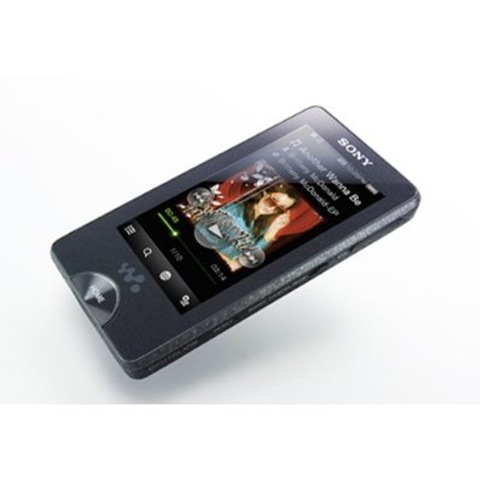
Sony Walkman outsold the iPod in Japan for the first time in four years, new research claims – but the research is flawed…

Electronics research firm, BCN, made the new claim for Japanese marketshare this morning, saying Sony’s Walkman claimed 43 per cent of local sales of portable music players in the week ending August 30. This compares to Apple’s 42.1 per cent share.

These results are being explained as significant because they represent the first time since January 2005 Sony has beaten Apple in this market, but the figures don’t include iPhone sales, rendering them questionable.

Sony is offering its products at lower prices than those Apple charges, but despite the slight lead, analysts aren’t totally blown away. “Sony has gained customers seeking less expensive products and those seeking high quality by broadening its lineup,” Kazuharu Miura, an analyst with Daiwa Institute of Research told Bloomberg. “But you can’t really say Sony regained its competitiveness against Apple unless it improves its market share in the U.S. and Europe.”

Apple’s music player sales will also have been impacted by expectation of new model iPods later this month. Promise of a product upgrade will inevitably depress sales of the current range. We can’t see Sony’s slight lead maintaining itself once new iPods ship.

Sales of portable music players in Japan fell by 13.5 per cent in August from a year earlier, the report claims.

Meanwhiole, Credit Suisse analyst, Bill Shope, raised his target price on Apple stock from $175 to $200 this morning, predicting strong Mac and iPhone revenues, and positive momentum from next week’s iPod refresh.