AAPL Company

See All Stories

Breaking news from Cupertino. We’ll give you the latest from Apple headquarters and decipher fact from fiction from the rumor mill.
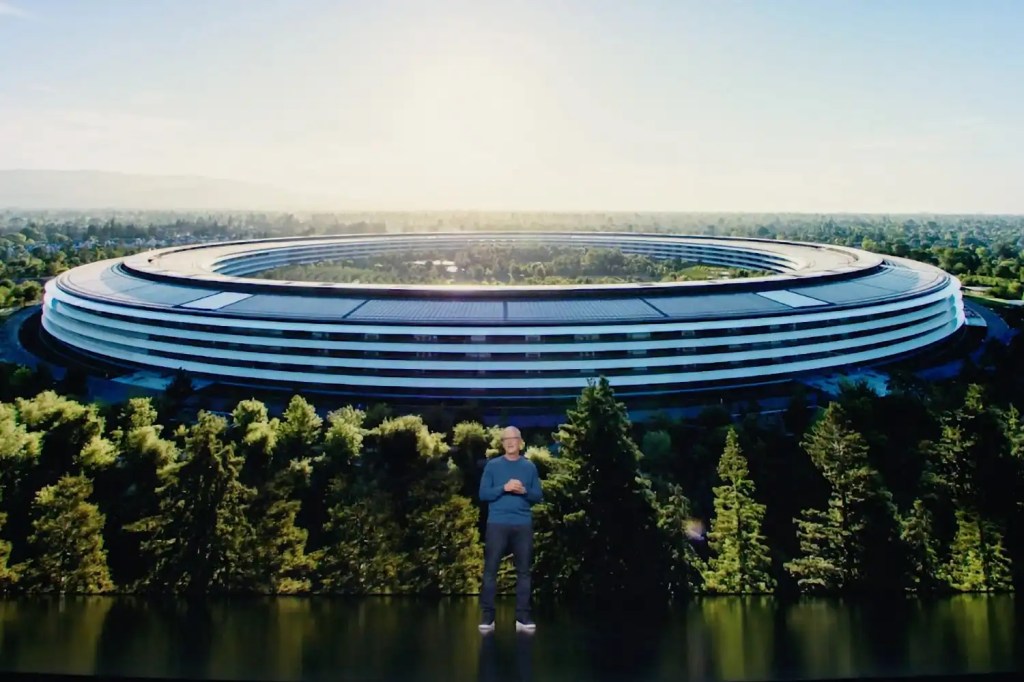
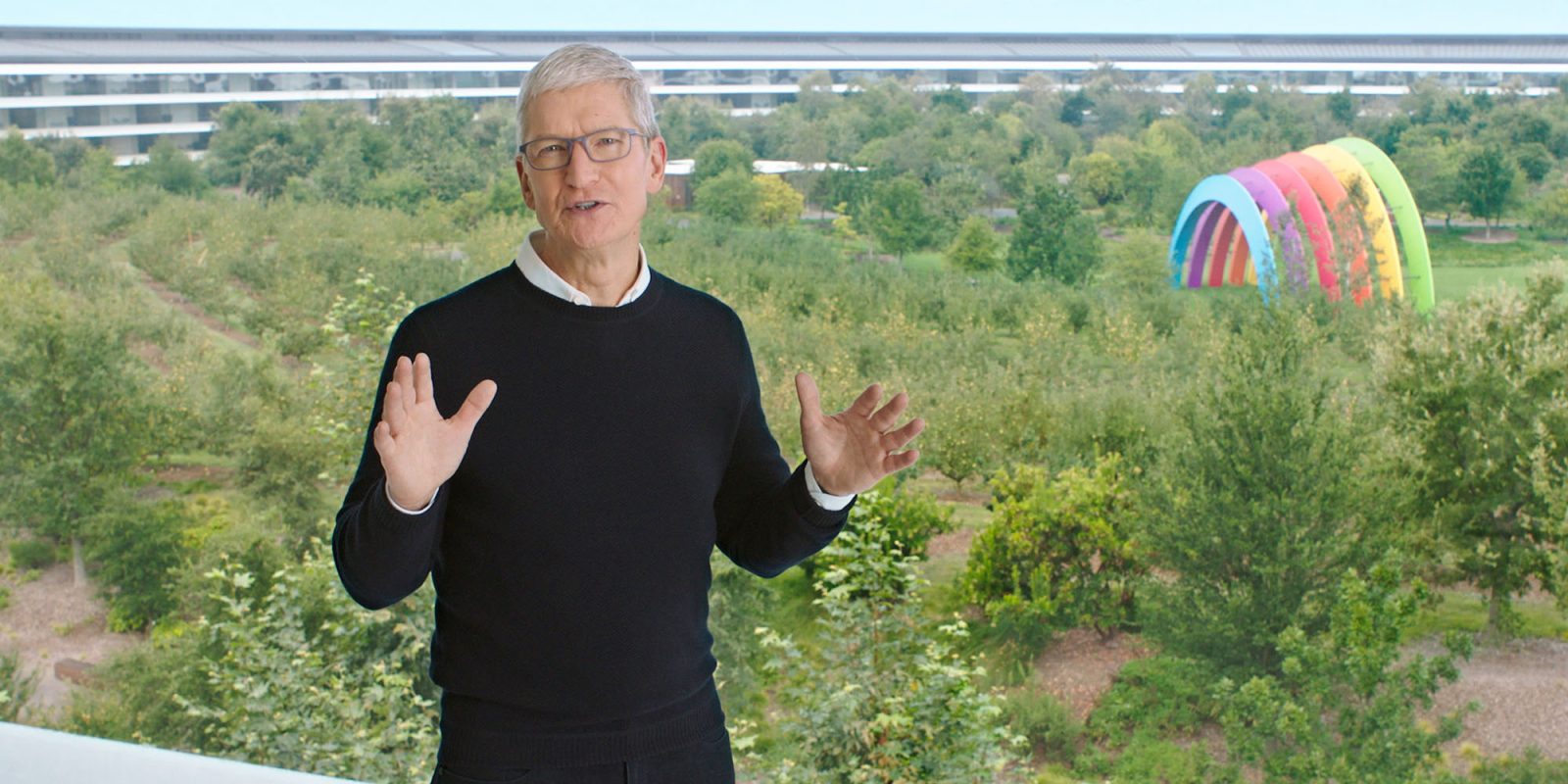
Apple Park Tim Cook AAPL

AAPL is a California-based computer company that became the most successful smartphone company in the world.

AAPL defined by Apple

Here’s how Apple defines itself:

Apple revolutionized personal technology with the introduction of the Macintosh in 1984. Today, Apple leads the world in innovation with iPhone, iPad, Mac, Apple Watch, and Apple TV. Apple’s five software platforms — iOS, iPadOS, macOS, watchOS, and tvOS — provide seamless experiences across all Apple devices and empower people with breakthrough services including the App Store, Apple Music, Apple Pay, and iCloud. Apple’s more than 100,000 employees are dedicated to making the best products on earth, and to leaving the world better than we found it.

Key AAPL history

From Apple I to iMac

Apple was founded in 1976 by Steve Jobs (Steve), Steve Wozniak (Woz), and (briefly) Ronald Wayne as a business partnership: Apple Computer Company. The following year it became Apple Computer, Inc. The company’s first product was the Apple I, a personal computer hand-built by Woz and sold in part-completed kit form. The Apple II and Apple III followed.

The modern Apple as we know it today began in 1983, with the launch of the first personal computer with a graphical user interface, the Lisa. Way too expensive to succeed, it was replaced by the Macintosh in 1984, launched with the single showing of a Ridley Scott commercial during the Super Bowl. The Macintosh transformed the world’s understanding of what a computer was, and would eventually lead to Microsoft adopting the GUI approach.

Steve Jobs and then Apple-CEO John Scully fell out in 1985, when Steve wanted to focus on the Macintosh while Scully wanted to put more attention on the Apple II, which was still selling well. That led to Steve being forced out of the company and going off to form NeXT.

Apple focused on selling Macintosh models at the highest possible margins, but would eventually fall foul of a mix of unsustainable pricing in the face of competition from Windows machines, and an overly complex product lineup. By 1996, the company was in trouble, and in 1997 Steve was brought back, along with the NeXT operating system, which would eventually form the basis of Mac OS X.

Steve simplified the Mac lineup and had industrial designer Jony Ive work on a whole new look for a consumer desktop Mac, the colorful iMac. The iMac, like the original Macintosh, again changed the world’s understanding of what a computer was, and who should want one.

From Apple Computer, Inc. to Apple, Inc.

In 2001, Apple launched the iPod. Although this wasn’t the first mp3 player, it was massively better than anything on the market at the time, and succeeded in turning a geeky piece of technology into a consumer electronics product with mass-market appeal.

The success of the iPod paved the way into other mobile devices. Apple was working on what would eventually become the iPad, when Steve realized that this was the basis of a smartphone. He diverted the team’s work into this, to launch the iPhone in 2007. The iPad launched later, in 2010.

The iPhone was yet another transformational product. While most other smartphones of the time were clunky devices with a keyboard and stylus, the iPhone was a sleek-looking device operated with a finger, and so simple that no user guide was needed. It was with the launch of the iPhone that Apple Computer, Inc. was renamed to Apple, Inc.

From Intel to Apple Silicon

While the iPhone, iPad, Apple Watch, and more are made with Apple-designed processors, the Mac lineup has historically relied on third-party companies for its CPUs. Over the years, Macs progressed from Motorola 680000 series chips through PowerPC to Intel.

In 2020, Apple began a two-year transition to the final stage in that journey, with Macs too finally getting Apple-designed chips. The first such is the M1 chip, used in the latest Mac mini, MacBook Air, and 13-inch MacBook Pro. Other Apple Silicon Macs followed.

AAPL today

Apple is one of the largest companies in the world. It was the first publicly traded company to hit a trillion-dollar valuation in 2018, $2 trillion in 2020, and $3T in 2022.

The company’s product lineup includes five different Mac families (MacBook Air, MacBook Pro, iMac, Mac Pro, and Mac mini); four iPad ranges (iPad mini, iPad, iPad Air, iPad Pro); four iPhone 12 models (12, 12 mini, 12 Pro, 12 Pro Max); three main Apple Watch models (SE, Series 3, Series 6); as well as other products, including Apple TV, AirPods, and HomePod mini.

In addition to hardware sales, Apple derives a growing proportion of its income from Services, including the App Store, iCloud, Apple Music, and Apple Pay.

Mystery recall of iPhone engineers may be Chinese interference in Apple’s plans

Mystery recall of iPhone engineers may be Chinese interference in Apple's diversification plan | Hand held up in 'stop' gesture

More than 300 Chinese iPhone engineers and technicians have been recalled from an Indian production plant, says a new report.

No public acknowledgement or explanation has been offered, but suspicion is falling on the Chinese government, which has previously been accused of actively hampering Apple’s attempts to move more iPhone production out of the country …

Expand Expanding Close

Apple reminds us it will soon end support for the old HomeKit architecture, with two options

Apple reminds us it will soon end support for the original HomeKit architecture, with two options | iPhone with smart home devices

Apple introduced new HomeKit architecture back in 2022, with the primary aim of making the smart home system more reliable. At the time, users could choose between upgrading or remaining on the original version of the platform.

Fast–forward to March of this year, and 9to5Mac discovered code showing that the company was planning to drop support for the old version. That was subsequently confirmed by Apple, and a further reminder has now been found in the latest iOS 18.6 beta – with a little more detail …

Expand Expanding Close

Apple’s insanely complex App Store terms could point to 20% commission globally

Apple's insanely complex App Store terms could point to company reducing its commission to 20pc | Complex equations in a book

Apple last week announced an insanely complex set of changes to its App Store terms in the EU, and hidden in the small–print is one sign that the company might be reducing its standard commission from 30% to 20%, and that it may make this change globally.

If so, it would be the first time the company has ever reduced its 30% cut for all developers, and might go a long way to tackling its legal battles with antitrust regulators around the world …

Expand Expanding Close

JPMorgan cuts Apple stock price target on soft iPhone 17 outlook and delayed AI payoff

Three reasons Apple tariffs absolutely won't be reapplied | Stock image of a graph showing plunging values

Apple’s stock took a minor confidence hit today, as JPMorgan lowered its price target, though the firm kept its overall rating intact.

The adjustment comes as analyst Samik Chatterjee and his team dial back expectations for Apple’s medium-term revenue and earnings, citing weakening demand drivers tied to the upcoming iPhone 17 cycle. Here are the details.

Expand Expanding Close

Senators reintroduce App Store bill to rein in ‘gatekeeper power in the app economy’ [U]

Update: Apple has responded to the reintroduction of the bill with a statement provided to 9to5Mac. See full statement below.

The App Store is back under scrutiny from lawmakers in Washington. A bipartisan group of senators has reintroduced the 2021 Open App Markets Act, a bill aimed at curbing the gatekeeper power that Apple and Google hold over the so-called “mobile app economy.” Here’s what they’re going for.

Expand Expanding Close

Apple fires back at court’s ‘punitive’ App Store order in Epic Games case

After a couple of weeks of radio silence in the Epic Games, Inc. v. Apple Inc. case, Apple’s lawyers are now back with a vengeance in the Ninth Circuit. And this time, they’re not just pushing back on the original outcome, but also asking the Ninth Circuit to assign the case to a different judge if it is sent back to the district court.

Expand Expanding Close

Apple’s China comeback playbook now includes government-backed discounts

China considering antitrust investigation into Apple, likely as leverage in trade war | Photo shows Beijing skyline at dusk

After a rocky stretch, Apple managed to bounce back last month with a 15% jump in iPhone sales, driven largely by renewed demand in the U.S. and China.

In China, especially, Apple had been losing ground to local brands benefiting from government subsidies on lower-cost phones. Now, it appears Apple is joining the subsidy program itself.

Expand Expanding Close

Siri vaporware dispute continues, as high-profile commenters hit back at Apple

Siri vaporware dispute continues, as high-profile commenters hit back at Apple | Colorful photo representing vapor trails

Apple may have belatedly responded to accusations of showing off Siri vaporware at last year’s WWDC, but the controversy is showing no sign of dying down anytime soon.

John Gruber – author of the original piece taking issue with Apple showing off features it hadn’t demonstrated to anyone outside the company – is now joined by M.G. Siegler and others …

Expand Expanding Close

Craig Federighi explains why it took so long to make the iPad more Mac-like

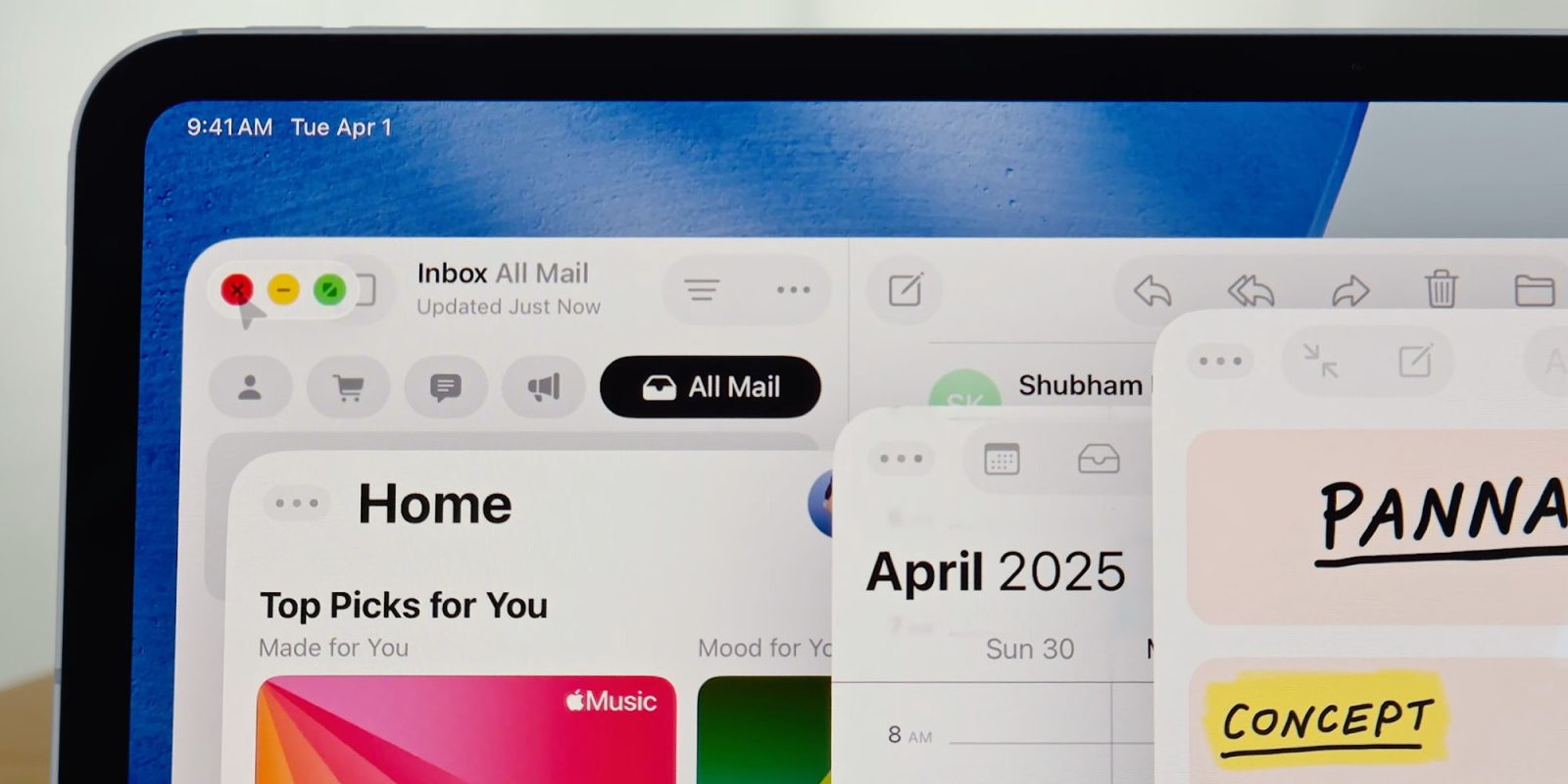
Craig Federighi explains why it took so long to make the iPad more Mac-like | Close-up of windowing on the iPad

iPadOS 26 arguably brings the biggest update to the iPad ever seen, turning it into something much more Mac-like in both UI and capabilities.

But since iPads have been using the same chips as Macs since 2021, why did it take so long? That’s the question Apple’s software head Craig Federighi sets out to answer in a new interview …

Expand Expanding Close

Meta wants to give evidence for Apple in UK privacy battle

Meta wants to give evidence for Apple in UK privacy battle | Glass cloud with padlock

I bet nobody had ‘Meta arguing for privacy on Apple’s behalf’ on their tech bingo cards, but that’s exactly what the social networking company is hoping to do.

Meta has asked the court’s permission to give evidence in support of Apple’s privacy battle with the British government over a feature intended to apply end-to-end encryption to almost all iCloud data …

Expand Expanding Close