Samsung

See All Stories

Apple requests ruling in its favor over Samsung press leak, judge prohibits 2001: A Space Odyssey references


Site default logo image

At the beginning of the week, we reported Samsung leaked slides to the press that Judge Koh excluded as evidence in the Samsung-Apple trial currently underway. Judge Koh was not impressed with the move, despite much of the information in the slides being public knowledge, and today we get an update from FossPatents on Apple’s response to the situation. According to the report, Apple filed a letter with the courts today claiming fines would not be a severe enough punishment for Samsung and it requested a judgment in its favor:

“The proper remedy for Samsung’s misconduct is judgment that Apple’s asserted phone design patents are valid and infringed. Through its extraordinary actions yesterday, Samsung sought to sway the jury on the design patent issues, and the proper remedy is to enter judgment against Samsung on those same patents. It would be, to be sure, a significant sanction. But serious misconduct can only be cured through a serious sanction—and here, Samsung’s continuing and escalating misconduct merits a severe penalty that will establish that Samsung is not above the law.”

Apple also outlined an alternative set of sanctions, requesting “the Court should (i) instruct the jury that Samsung engaged in serious misconduct and that, as a result, the Court has made a finding that Samsung copied the asserted designs and features from Apple products; and (ii) preclude Samsung from further mentioning or proffering any evidence regarding the ‘Sony design exercise’ for any purpose.” FossPatents said Apple’s requests could mean big problems for Samsung moving forward:
Expand
Expanding
Close

Site default logo image

Samsung begins producing blazing-fast ‘eMMC Pro Class 1500’ mobile flash memory

Samsung just announced the production of its latest advancement in flash memory for mobile devices: the eMMC Pro Class 1500.

“Samsung Electronics announced that it has now begun volume production of an ultra-fast embedded memory for smartphones, tablets and other mobile devices in 16-, 32- and 64-gigabyte densities,” explained Samsung, as it noted the new chips feature read speeds of 140 MB/S and write speeds of 50 MB/S.

Those stats equal turbo web and video browsing, ameliorated multitasking, and a boost for processor-exhaustive gaming on smartphones and mobile devices. Users will love the performance enhancements, but manufacturers will enjoy the chip sizes. They go up to 1.2mm in thickness and just 0.6 grams in weight.

“The ultra high-speed storage device uses Samsung’s 64-Gb NAND with a toggle DDR 2.0 interface based on the company’s latest 20 nanometer class process technology. The new eMMC’s fully managed NAND memory comes with its own high performance controller and intelligent flash management firmware,” Samsung added.

The South Korea-based Company’s newest embedded multimedia cards are surely destined for more devices than the next-generation Galaxy.

This article is cross-posted at 9to5Google.

Get the full presser below.


Expand
Expanding
Close

Site default logo image

IDC: iPad still owns over 2/3rds of the tablet market, but Samsung and ASUS are gaining

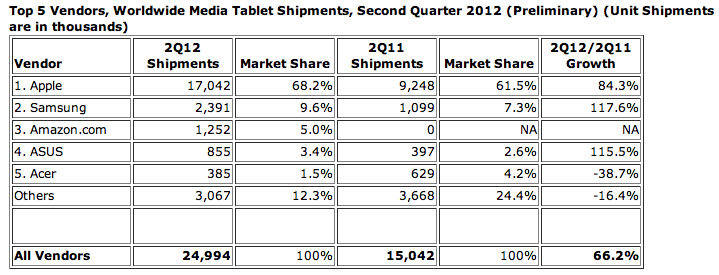
Apple’s iPad set a shipment record in Q2 2012, which led to a “better-than-anticipated” quarter for the entire tablet market, according to the latest data from IDC.

Global tablet shipments hit 25 million units, with a 66.2-percent year-over-year increase, while Apple jumped from 11.8 million units shipped in Q1 2012 to 17 million for Q2.

“Apple built upon its strong March iPad launch and ended the quarter with its best-ever shipment total for the iPad, outrunning even the impressive shipment record it set in the fourth quarter of last year,” said Research Director Tom Mainelli.

Four of the top five worldwide vendors also eyed shipment increases year-over-year and solid growth in Q2. Samsung sits at second place with 2.4 million units shipped, which is an increase from 1.1 million units in Q2 2011, and ASUS notably almost tripled its amount of units shipped from a year ago. Interestingly, shipments of the Google/ASUS-branded Nexus 7 are not a part of these totals.

Get the full breakdown at IDC.

This article is cross-posted at 9to5Google.


Expand
Expanding
Close

Former Apple designer reveals Apple passed on a curved-glass iPhone due to cost

Site default logo image

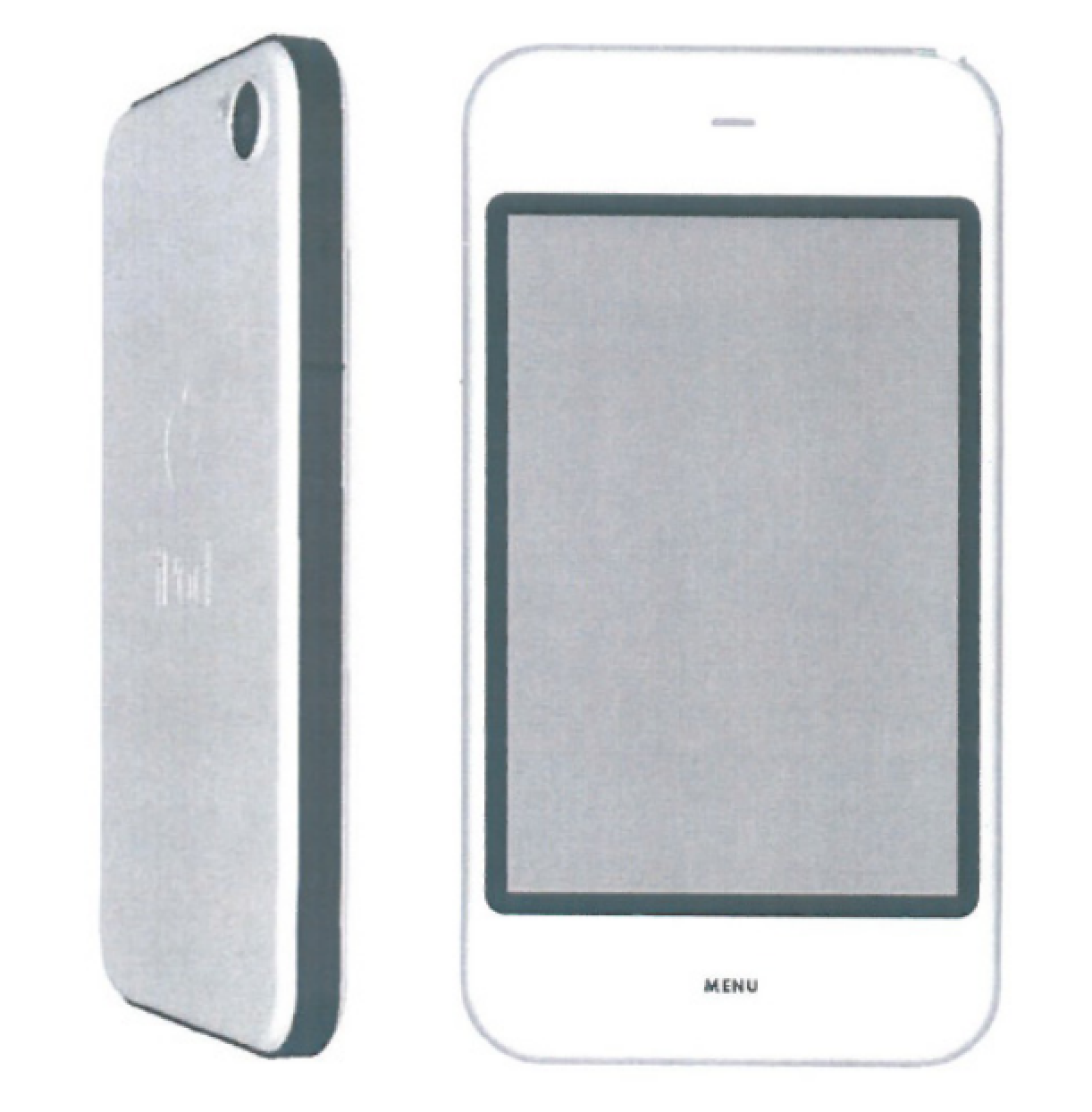
We have been getting some interesting bits and pieces from the Apple vs. Samsung trial this week, and most, of which, are related to early iPhone prototypes referenced in pre trial briefs by Samsung’s lawyers who alleged Apple was inspired by Sony products when creating its initial iPhone concepts. We get some more insight on Apple’s original iPhone plans today thanks to a deposition of former Apple designer Douglas Satzger, as discovered by Network World in recent court filings. Satzger, current VP of Industrial Design at Intel, held various roles at Apple from 1996 to 2008 including Industrial Design Creative Lead and Industrial Design Manager. In the deposition, Satzger claimed Apple had “strong interest in doing two pieces of shaped glass,” while referencing the 0355 model prototype pictured above.

He continued to explain how Apple ultimately chose not to utilize curved glass mainly due to cost:

Expand
Expanding
Close

Site default logo image

ComScore: Ahead of iPhone refresh, Apple outgrew Android and the iPhone took market share from Samsung, Motorola and LG

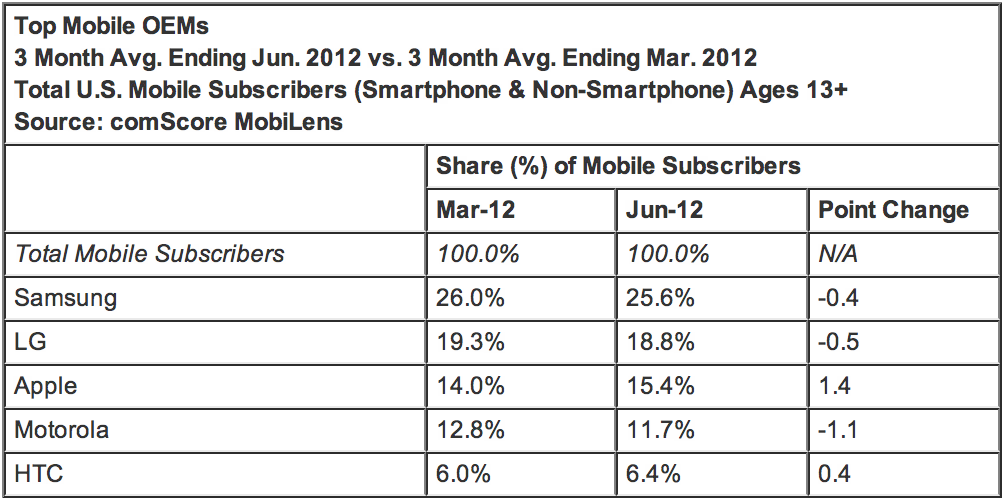
Today’s comScore report measured the U.S. phone landscape from March to June with some surprising surges from Apple noted. Apple was the only manufacturer to gain market share in the overall handset business by growing 1.4-points in the three months. This is particularly notable because Apple’s iPhone is expected to get refreshed in September.

Additionally, iOS outgrew Android in the three-month span from 1.7-points to 0.6-points (see chart below). The gains by both OSes to a whopping 84 percent of all smartphones measured were at the expense of Microsoft, RIM, and Symbian. On the changes, comScore said:


Expand
Expanding
Close
Site default logo image

Apple leads global PC shipments with 19 percent share, primarily due to the new iPad

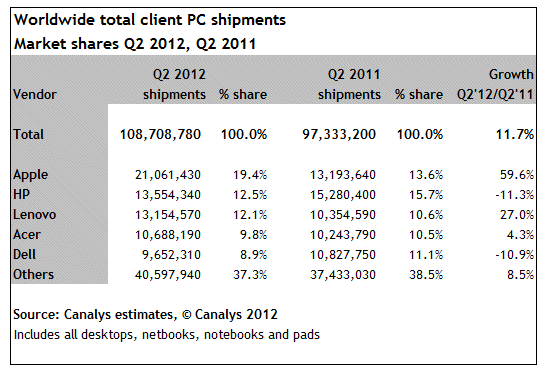
Global client PC shipments rose 12 percent year-on-year in Q2 2012, with the new iPad recognized as the primary influence on growth rates, according to the latest data report from Canalys, who treat the iPad as a PC (and with the ability to operate without being tethered and to use external keyboards and monitors and the like, why wouldn’t you?)

Apple lead the overall charge, boosted by strong iPad sales, with an estimated 19 percent share of global PC shipments. Canalys explained: 

Growth in pads more than compensated for disappointing sales of Ultrabooks. The new iPad had the biggest single impact on growth rates in the quarter, but Asus and Samsung made progress with their Transformer and Galaxy Tab product lines. Total pad shipments increased 75% to 24 million units, representing 22% of all PCs.

“There is now a large base of replacement buyers that simply must have the latest Apple product, and the decision to continue shipping the iPad 2 at lower price points has opened up new customers, for example in education,” added Canalys Research Analyst Tom Evans.

Samsung lead as the “Android pad vendor” in Q2. It more than doubled its Galaxy Tab shipments compared to Q2 2011, and Canalys said the company is “Apple’s chief challenger” in the tablet sector.

Get the full report at Canalys.


Expand
Expanding
Close

One of Apple’s lead designers reveals that the design process starts around a big kitchen table

Site default logo image

“Our role is to imagine products that don’t exist and guide them to life,” said Apple industrial designer Chris Stringer (no relation to Sony’s ex-CEO Howard Stringer), who has been a part of every design since 1995, when he testified today in court as part of the Apple vs. Samsung trial.

Who helps imagine those products that come to life? Stringer told the court that Apple has a small team of only 15 or 16 people who design the original idea for the company’s key products, from the iPhone to the MacBook Pro, AllThingsD first reported. Apple’s lead designer, Sir Jonny Ive, is of the group.

Interestingly, he added the design process begins around a kitchen table, where the intimate team hashes out ideas to someday come to light. If the team believes an idea is good enough, the idea will be made into a physical model. In typical Apple design fashion, the group pays so much attention to detail that there can be up to 50 drawings for one button. What a crazy look into the start of the products we use everyday.

Apple Senior Vice President Phil Schiller is set to take stand next in the case, where both parties are seeking damages over a slew of patents. What a treasure trove of information this case is turning out to be.

 [AllThingsD]


Expand
Expanding
Close

Apple vs. Samsung: Opening Statements in the (Patent) trial of the century

Site default logo image

Apple and Samsung appeared in a San Jose federal court today, where U.S. District Judge Lucy Koh presides, to give opening statements starting at 9 a.m. PST.

Apple filed the first suit in this monumental case in April 2011. The Cupertino, Calif.-based company claimed Samsung infringed its patents by “slavishly copying” its iPhone. Samsung, a South Korea-based Company, promptly countersued.

This is one of the important cases to go to trial among a slew of other litigations on smartphone patents. If Apple wins, Samsung could suffer a financial blow and the ability to sell its infringing products in a large market. If Apple loses, its “thermonuclear war” against Android smartphone manufacturers could essentially wither away as Samsung collects royalty fees.

This morning’s most notable highlights are below (continually updated).


Expand
Expanding
Close

Site default logo image

Samsung Chief Product Officer talks patent wars and rectangles

After execs from both companies could not come to terms in an attempt to settle, both Samsung and Apple take the stand in a San José, Calif., court room this week. Apple and Samsung will face off for allegedly stealing each other’s patents. Apple also claims that Samsung’s Galaxy devices “slavishly” copied its beloved iPhone and iPad. The same type of trial already played out in many countries across the pond. It will be interesting to see where this all goes, especially after the injunctions against Samsung’s products we have already seen.

Samsung Chief Product Officer Kevin Packingham recently sat down with the folks at Wired to answer a few questions on the recent legal matters, shedding more light on Samsung’s view of the whole legal fiasco. First off, Packingham answers a question regarding the separation between Samsung’s component business that supplies necessary parts to Apple and the product team that Apple thinks is a bunch of copycats. Packingham answered: “There are times when I’m absolutely appalled that we sell what I consider to be the most innovative, most secret parts of the sauce of our products to some other manufacturer — HTC, LG, Apple, anybody…But you know, we also use Qualcomm components, and we source from other component manufacturers as well.”

Apple, of course, gets a ton of parts from Samsung, and it even partnered with Samsung on a factory in Texas to make A4 and A5 chips for the iPhones and iPads.


Expand
Expanding
Close

Site default logo image

Amusing tweets from the Apple vs. Samsung Trial: Google and Apple employees not yet vetted

With Apple and Google having such a large presence in the Bay area, there is bound to be some ties to the companies represented on the jury…but both Apple and Google employees have made it to the Jury selection process. Imagine having to write the request to the HR department on this (Thanks, Dan Levine):

[tweet https://twitter.com/9to5mac/status/229997136362754048]

[tweet https://twitter.com/inafried/status/230000222753923074]

[tweet https://twitter.com/fedcourtjunkie/status/229990099675398145]

[tweet https://twitter.com/fedcourtjunkie/status/229988410557865984]

[tweet https://twitter.com/fedcourtjunkie/status/229994305555685376]

[tweet https://twitter.com/fedcourtjunkie/status/229993879498260480]

[tweet https://twitter.com/FedcourtJunkie/status/230002149491363840]

[tweet https://twitter.com/fedcourtjunkie/status/229995864632983553]

[tweet https://twitter.com/fedcourtjunkie/status/229993086082756608]

[tweet https://twitter.com/fedcourtjunkie/status/229992090958954496]

[tweet https://twitter.com/fedcourtjunkie/status/229991527789772800]

[tweet https://twitter.com/fedcourtjunkie/status/229987025078595584]

[tweet https://twitter.com/fedcourtjunkie/status/229995473744826368]

[tweet https://twitter.com/inafried/status/229997431763369984]

Site default logo image

Samsung objects to ‘gratuitous’ images of Steve Jobs in trial, prefers thermonuclear quotes instead

Samsung vehemently objected to pictures of Steve Jobs in Apple’s opening slides for today’s massive trial, but U.S. District Judge Lucy Koh struck down the objections over the weekend.

The South Korea-based smartphone manufacturer claimed the “gratuitous images have no evidentiary value,” as it filed 14 objections to Apple’s opening slides.

The company further noted, as FOSS Patents reported, if Apple is given permission to use these slides, Samsung will “request that the Court allow it to use the quotes from Mr. Jobs — which do have nonprejudicial evidentiary value — and yet were excluded by the Court’s ruling on Apple’s Motion in Limine No. 7.”

In other words, Samsung wants to use the “thermonuclear war” quotes from Walter Isaacson’s “Steve Jobs biography” if Apple can use images of the company’s late founder. The contentious quotes from the biography were previously deemed hearsay and inadmissible in this litigation.

According to FOSS Patents, Apple explained the use of the pitcures in its responsive filing:

  • Three of the images are “from a joint exhibit – 1091 (the MacWorld 2007 video), which Samsung itself relies on in its opening demonstratives (at Samsung slide no. 148)”, so “Samsung cannot complain about Apple’s use of the same video” that shows “the public introduction of the iPhone on January 7, 2007, which launched the fame that the iPhone trade dress has acquired”. Also, “[b]ecause they demonstrate Apple’s notice of the 200+ patents covering the iPhone — including the asserted patents, they thus are relevant to willfulness”.
  • Another slide refers to an exhibition relating to Steve Jobs’s patents, which was organized by the United States Patent and Trademark Office. “Among the highlighted patents at the PTO exhibit are at least two patents at issue in this litigation — the D’677 and D’889” — and Apple argues that “[t]he Patent Office exhibit demonstrates praise by others to rebut non-obviousness”.
  • The fifth image of Steve Jobs in the presentation is “a screenshot from the announcement of the iPad in July 2010” and, therefore, “relevant to the introduction of the iPad and its acquisition of fame and secondary meaning”, Apple says.

Judge Koh overruled Samsung’s objections on Sunday and said the images are “relevant to Apple’s iPhone design patent and trade dress claims and is not unduly prejudicial.”

Get the full report at FOSS Patents.


Expand
Expanding
Close

2005 Purple iPhone design could thwart Samsung’s assertion that Apple copied Sony

Site default logo image

.

We hope you are not sick of early iPhone prototypes just yet, because the monster Apple vs. Samsung trial is kicking off today and another prototype has hit the docket. This time, Apple is releasing images of its “purple” iPhone design from 2005. It actually has some, if not most, of the design elements of the iPhone 4 design, which Samsung accused Apple of lifting from Sony. This one, again, is labeled “iPod”.

The chronological progression below is also posted in the filing (PDF) [via The Verge]:


Expand
Expanding
Close
Site default logo image

Obama’s campaign dropping 72 percent more than Romney’s on Apple products

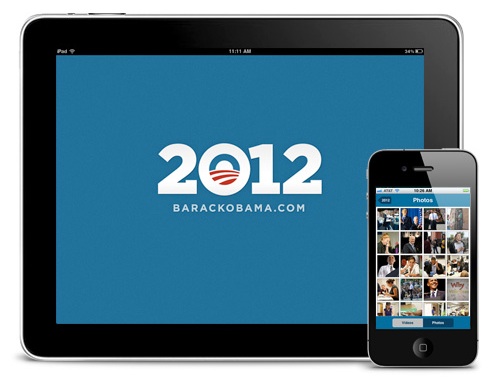
U.S. President Barack Obama’s campaign spent over one-third of a million dollars on Apple products since the election began in 2011.

Obama for America forked over $353,000, according to official expenditure reports filed with the Federal Election Commission, and Dow Jones’ Joseph Walker promptly noted that amount could snag 1,780 new iPhones or 176 new MacBook Airs.

Romney’s campaign spent just $99,000 on Apple products during the same period.

Walker further correlated the campaign spending to donor contributions:

  • Overall, the tech community seems to be firmly in favor of re-electing Obama when it comes to opening up their wallets, according to contributor filings. Obama has raised $950,000 from the Big Five tech giants, compared to Romney’s $123,040. Apple employees seem to favor President Obama by a margin of 15 to 1. Campaign contributions from donors identifying themselves as Apple employees total $121,305, compared to the $8,175 donated to Romney.

Get the full report at FINS Technology.


Expand
Expanding
Close
Site default logo image

IDC: Samsung ships twice as many phones as Apple in Q2

The IDC’s latest numbers mirror yesterday’s figures from Juniper Research.

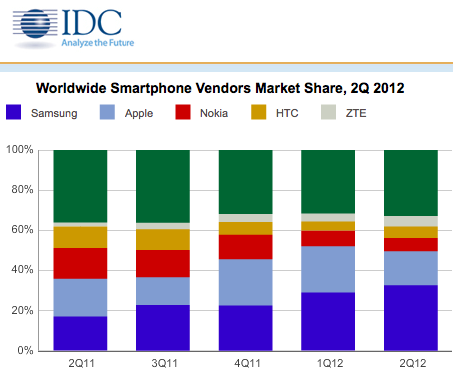
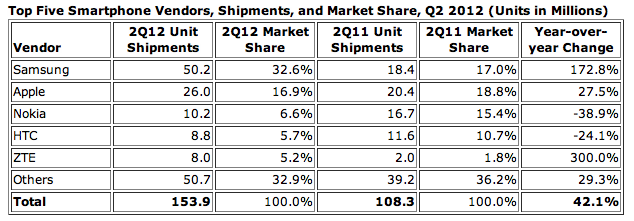
One of the report’s main headliners is that phones are shipping faster than in previous years. About 406 million units shipped in Q2 2012—up from 401.8 million units in Q2 2011. Smartphone shipments also eyed a large year-over-year increase with a 42 percent gain.

The other big news bit concerns Samsung and Apple. The tech giants doubled their combined market share in just two years. Samsung, in particular, hit a new quarterly record after shipping 50 million phones in Q2, where as Apple shipped half as many iPhones during the same time. The Cupertino, Calif.-based Company suffered a quarter-over-quarter decline just six months after its latest iPhone unveiling.

IDC explained the widening gap: 

  • Samsung extended its lead over Apple during the second quarter, taking advantage of Apple’s release schedule and launching its flagship Galaxy S III. In addition, Samsung experienced continued success of its smartphone/tablet hybrid device, the Galaxy Note. As a result, Samsung topped the 50 million unit mark and reached a new quarterly smartphone shipment record in a single quarter. What remains to be seen is how the company’s smartphones will fare against Apple’s next-generation iPhone expected later this year.
  • Apple posted an expected sequential decline last quarter, similar to years past. The quarter-over-quarter shipment decline came six months after it unveiled its latest iPhone. The decline is not unusual as iPhone shipment volume is highest in the first two quarters after its release. The company’s once-a-year release cycle usually results in two quarters of lower volumes leading up to the next-generation model introduction. Nonetheless, Apple made significant inroads into new markets and segments, including smaller regional carriers and prepaid service providers.


Expand
Expanding
Close
Several old iPhone and iPad prototype designs surface: take a look at the iOS devices that could have been

Site default logo image

[slideshow]

The Verge has tracked down several images of old iPhone and iPad prototype designs from Apple the vs. Samsung trial case filings. Buzzfeed got their hands on a few more.  Notably, many of these designs are codenamed N90, so what you’re mainly looking at are design considerations for the 2010 iPhone 4, the Apple device codenamed N90. Many of them are ugly and will hurt your eyes.  Check out the entire gallery after the break or over at the Verge and Buzzfeed.

Besides iPhone prototypes, Apple was toying with an iPad design that featured an HTC Evo-like Kickstand. Given the above and below, we’re pretty happy with the decisions Apple made on these. Many, many more pictures below:


Expand
Expanding
Close

Apple makes as much profit on one iPhone as it does on two iPads

Site default logo image

A quick Reuters report on an unsealed document in the Apple-Samsung trial reveals that iPhones are much more of a profit driver for Apple than its iPads. To the tune of double (!) per unit.

Apple Inc earned gross margins of 49 to 58 percent for U.S. iPhone sales between April 2010 and the end of March 2012…Apple had gross margins of 23 to 32 percent on U.S. iPad sales, the filing said.

That means Apple makes as much money on one iPhone as it does on two iPads (considering they cost roughly the same amount).

Who likes phone subsidies? Apple likes phone subsidies!

Expand
Expanding
Close

Site default logo image

Samsung says Apple stole iPhone design from Sony

With Apple and Samsung’s jury trial slated to kick off in a federal district court in San Jose, Calif., this Monday, AllThingsD points us to trial briefs where Samsung’s lawyers argued Apple’s inspiration for the original iPhone CAD drawings and designs were inspired by a Sony product:

Right after this article was circulated internally, Apple industrial designer Shin Nishibori was directed to prepare a “Sony-like” design for an Apple phone and then had CAD drawings and a three-dimensional model prepared. Confirming the origin of the design, these internal Apple CAD drawings prepared at Mr. Nishibori‘s direction even had the “Sony” name prominently emblazoned on the phone design, as the below images from Apple‘s internal documents show..

Soon afterward, on March 8, 2006, Apple designer Richard Howarth reported that, in contrast to another internal design that was then under consideration, Mr. Nishibori‘s “Sony-style” design enabled “a much smaller-looking product with a much nicer shape to have next to your ear and in your pocket” and had greater “size and shape/comfort benefits.” As Mr. Nishibori has confirmed in deposition testimony, this “Sony-style” design he prepared changed the course of the project that yielded the final iPhone design.

The article referenced above is from a 2006 interview with Sony designers that appeared in Businessweek.

Site default logo image

Apple granted stay on posting Samsung ads on its site and newspapers

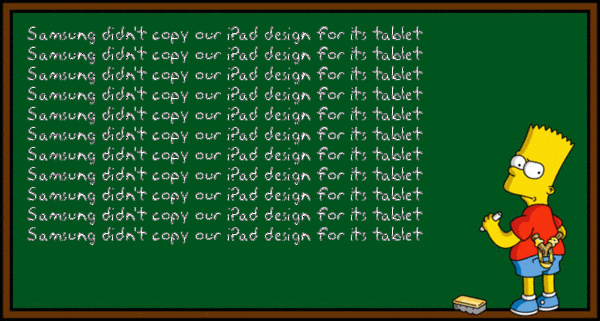
9to5Mac reported earlier this month that a U.K. Judge ruled Apple must publicly state Samsung did not copy the iPad design, but a London court ordered a stay today until the company’s appeal is heard this fall.

According to Bloomberg

  • Apple Inc. won’t immediately have to publish a notice on its U.K. website that Samsung Electronics Co. didn’t copy its iPad tablet, a London court ruled today.
  • Apple was ordered earlier this month to put a note on its U.K. site and buy advertisements in British newspapers to alert customers to a court ruling that Samsung hadn’t copied the iPad’s design. Cupertino, California-based Apple appealed saying it didn’t want to advertise for its rival. The order is stayed until its appeal against the ruling is heard in October.

Apple’s public statements, if the appeal is rejected, will appear as a message on its website and in British newspapers.


Expand
Expanding
Close
Site default logo image

IHS iSuppli: Apple buying chips at a faster rate, will remain top OEM semiconductor buyer in 2012-2013

In a post on iSuppli citing the IHS iSuppli OEM Semiconductor Spend Analysis report, the research firm broke down Apple’s continued lead among top OEM semiconductor buyers, noting Apple is buying at a faster rate and “dramatically outperforming” No.2 purchaser Samsung. The research expects Apple to increase its spending on semiconductors to $28 billion this year from $24 billion in 2011, and also made the case for Apple’s continued growth in 2013. Apple will experience the fastest growth among the top 10 with the company “set to increase its chip buying at a rate nearly three times faster than the next-fastest-rising purchaser.”

Apple this year is expected to buy nearly $28 billion worth of semiconductors, up 15 percent from $24 billion in 2011, according to an IHS iSuppli OEM Semiconductor Spend Analysis report from information and analytics provider IHS (NYSE: IHS). This means that Apple will dramatically outperform the No. 2 purchaser, Samsung Electronics Co. Ltd., allowing it to remain the world’s top OEM semiconductor buyer—a position it has held since 2010… Apple is set to expand its lead in global chip purchasing in 2013, with growth of 12.3 percent once again leading the Top 10 OEM semiconductor purchasers.

Senior analyst for semiconductor spending and design activity at IHS Myson Robles-Bruce explained the benefit of Apple’s dominance in the supply chain:

“It’s well known that Apple has already conquered the smartphone and tablet segments—but behind the scenes the company is engaging in another kind of conquest: the dominance of the electronics supply chain,” said Myson Robles-Bruce, senior analyst for semiconductor spending and design activity at IHS. “Such a dominant position provides critical benefits, allowing one to dictate semiconductor pricing, control product roadmaps and obtain guaranteed supply and delivery. For Apple, these benefits translate into competitive advantages, letting it offer more advanced products at lower prices, faster and more reliably than the competition.”

Next-gen iPhone cases come rolling in [Gallery]

Site default logo image

Tvc-mall.com (via CydiaBlog) has some “iPhone 5” cases for sale (at just $1.58 each!) that seem to align with the many, many, many, many next generation iPhone body part leaks. One thing to remember: Just because a case maker is producing cases, does not mean the next generation iPhone will fit into it.

As you can see, the cases are longer to accommodate the larger 4-inch display and have a smaller dock connector hole at the bottom. The speaker holes are bigger with the addition of the headphone jack rumored to be moving down south.

If you are one of the 65 percent of smartphone owners who are already signed up for the next iPhone, are you buying a case for it yet?


Expand
Expanding
Close
Site default logo image

Judge rejects bids to block live-streaming TV service Aereo

[youtube=http://www.youtube.com/watch?v=DR8lLt3gFZ8&feature=player_embedded]

Aereo—the service that streams over-the-air local TV to any Mac, iOS device, or PC running Safari for $12 per month—just got a second chance at survival. According to The New York Times, a U.S. federal judge on Wednesday rejected a temporary injunction spurred by television broadcasters, saying a ruling for the broadcasters would have shut down Aereo.

Reuters reported that Walt Disney Co., Comcast Corp., News Corp., Univision Communications Inc., and the Public Broadcasting Service tried to stop Aereo with the injunction, claiming they would “lose their right to retransmission fees from cable and other companies that rebroadcast their programming, and also lose critical advertising revenue”:

  • U.S. District Judge Alison Nathan said on Wednesday that while the broadcasters demonstrated they faced irreparable financial damage if were the venture were allowed to continue, Aereo also showed it would face severe harm if the requested preliminary injunction were granted.
  • ‘First and foremost, the evidence establishes that an injunction may quickly mean the end of Aereo as a business,’ the Manhattan judge wrote in a 52-page opinion.

The New York Times quoted Aereo’s Barry Diller, who noted a trial still lies ahead for his company, but he is now “far happier to begin this process with the judge’s ruling.” One of the plaintiffs, CBS, told the publication it would continue to seek damages and a permanent injunction: “This is only a ruling on a preliminary injunction. This case is not over by a long shot.”

9to5Mac reviewed Aereo in March and found its broadcast TV-like experience encouraging and well worth a test-drive:

  • Overall, Aereo’s HTML5 user-interface is the most impressive on the Mac platform. Its ease of browsing, watching, and recording local TV through Safari is a unique take during an age that offers countless ways of viewing cable without an actual television. The main takeaway with Aereo is that it works best on the Mac and the iPad, video quality is identical to what one would see on a HDTV, and the DVR function is extremely handy.
  • […] For many people, its DVR functionality alone is worth the $12 monthly fee. For others, the admission price might be too hefty when compared to cheaper services that also offer cable programming and better streaming.


Expand
Expanding
Close
UK Judge rules against Apple in Samsung patent case, claims Galaxy Tabs ‘are not as cool’

Site default logo image

Reports from last week noted that Samsung’s attempt to lift Apple’s preliminary injunction placed on the Galaxy Tab 10.1 in the United States was rejected by District Judge Lucy Koh. Today, in Apple’s ongoing patent cases with Samsung in the United Kingdom, Bloomberg reported Judge Colin Birss ruled against Apple, claiming Sammy’s Galaxy Tabs “are not as cool.” It is hard to imagine Apple losing in any more of a complimentary way, as Judge Birss claimed his decision was based partly on the fact Galaxy tablets “do not have the same understated and extreme simplicity” as iPad.

The Galaxy tablet doesn’t infringe Apple’s registered design, Judge Colin Birss said in a ruling today in London. He said that consumers weren’t likely to get the two tablet computers mixed up.

The Galaxy tablets “do not have the same understated and extreme simplicity which is possessed by the Apple design,” Birss said. “They are not as cool.”

The company provided a full email statement regarding today’s decision (via Pocket-lint). Samsung explained the court referred to roughly 50 pieces of prior art when dismissing Apple’s case:


Expand
Expanding
Close
Apple posts $2.6M bond to begin preliminary injunction on Galaxy Tab 10.1

Site default logo image

There were reports earlier this week that District Judge Lucy Koh issued a preliminary injunction on the Galaxy Tab 10.1 in the United States related to the ongoing cases between Apple and Samsung. At the time, reports claimed the ruling would kick in once Apple posted a $2.6 million bond. Today, FossPatents reported that Apple has since done so, allowing the preliminary injunction to formally take effect:

Apple didn’t hesitate to post its $2.6 million bond to protect Samsung against the possibility of a successful appeal, in which case the preliminary injunction would be found to have been improperly granted… the injunction has taken effect and Samsung must abide by it. Otherwise Apple could ask the court to sanction Samsung for contempt.

With Apple pulling $39.2 billion in revenue last quarter, we know it takes only a matter of minutes to make that $2.6 million, which is meant to protect Samsung from damages in case the injunction is found to be wrongly issued. On Tuesday, Judge Koh made a statement following her ruling that Samsung “does not have a right to compete unfairly, by flooding the market with infringing products.” FossPatents continued by giving its outlook for the trial set to take place this summer:

Expand
Expanding
Close

Site default logo image

Five years after launch: Apple sold 250M iPhones, accounting for $150B in revenue

According to a report from research firm Strategy Analytics, covering its Global Handset Shipments Forecast for Q2 2012, the company provided insight about the number of iPhones Apple has sold since the device’s launch five years ago on June 29, 2007. The report estimated that Apple sold 250 million iPhones, which accounts for $150 billion in revenue:

“The iPhone portfolio has become a huge generator of cash and profit for Apple. A quarter of a billion iPhones have been shipped cumulatively worldwide in the first five years since launch and Apple reaches its fifth birthday at the top of its game. However, there are emerging signs that the iPhone’s next five years could get tougher. Some mobile operators are becoming concerned about the high level of subsidies they spend on the iPhone, while Samsung is expanding its popular Galaxy portfolio and providing Apple with more credible competition.”

At its Q2 earnings report, Apple announced it sold 35.1 million iPhones during the last quarter, with 365 million iOS device sales to date.

(via The Globe and Mail)