iOS Devices

See All Stories

The devices that run the world’s most advanced mobile operating system

Check out our top stories on iOS Devices:

iOS devices refer to any of Apple’s hardware that runs the iOS mobile operating system which include iPhones, iPads, and iPods. Historically, Apple releases a new iOS version once a year, the current version is iOS 10. Here is the complete list of iOS 10 compatible devices.

Site default logo image

Free blog-sourced music discovery service lively.fm now in app form

If you like discovering new music artists, the free Lively.fm app could be just the thing, scanning over 50 million blogs to find links to legally stream music from the artists.

Launched initially as a website, it’s now available as an app. You can search for specific artists, view top charts, or simply allow serendipity to guide you by clicking on the latest album covers displayed.

Apple in Shanghai court over Siri speech recognition patent infringement claims

Site default logo image

AFP reported Apple is in court in Shanghai, China again today, but this time it’s over a lawsuit alleging the company copied components of Siri’s speech recognition software. According to the report, Shanghai-based Zhizhen Network Technology Co. claimed in pretrial proceedings that Apple infringed its patent related to voice recognition technology via Siri. While the suit notes that development of Siri began in 2007, there is no mention of Nuance. Apple currently partners Nuance with to implement the speech recognition component in Siri, and it is also a market leader that presumably has its own arsenal of speech recognition related patents.

Zhizhen says it patented its “Xiao i Robot” software in 2004, while Apple’s Siri, which made its debut with the release of the iPhone 4S in 2011, was first developed in 2007.

“The company will ask Apple to stop manufacturing and selling products using its patent rights, once Apple’s infringement is confirmed,” Si Weijiang, a lawyer representing Zhizhen, told AFP.

“We don’t exclude the possibility of demanding compensation in the future,” he added.

The company is behind Siri-like software called ‘Xiao i Robot’ that it claimed was first developed before Siri in 2004. The technology is apparently available on some smart TVs and enterprise applications, but it doesn’t appear to be available as a consumer-facing app for smartphones or tablets. The video below appeared online when the company originally filed suit against Apple last year, and it shows the Xiao i Robot software running on a Lenovo smartphone:

http://www.youtube.com/watch?v=Ku0H10_G1X4

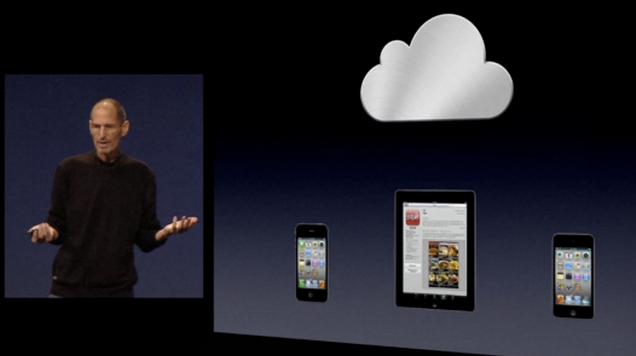
iCloud fails to ‘just work’ for third-party apps, complain developers

Site default logo image

When your third-party iOS app fails to properly sync data between devices, the problem may lay with Apple and not the app, say developers in conversation with The Verge.

Developers complain that two years in, iCloud is still “a developer’s worst nightmare” as Apple has failed to properly integrate iCloud with Core Data (the primary way iOS apps store data). Core Data is effectively a piece of middleware that sits between an app and the database that stores the data, and many iOS apps rely on it. When Core Data and iCloud don’t properly sync, data can go missing.

“iCloud hasn’t worked out for us,” wrote Daniel Pasco, CEO of development studio Black Pixel this past week. “We spent a considerable amount of time on this effort, but iCloud and Core Data syncing had issues that we simply could not resolve.” Pocket lead developer Steve Streza piled on with a cutting tweet: “Remember that @blackpixel has many of the brightest people in Cocoa development. If they couldn’t get iCloud working, who can?” …
Expand
Expanding
Close

T-Mobile iPhone launch wrap up: LTE speed and HD audio tests, the new $579 AWS A1428 iPhone 5 and the plan gamechanger

Site default logo image

We were on hand in New York City today to watch the unveiling of the iPhone on T-Mobile and its new LTE/plans that purport to save T-Mobile customers a lot of money over its U.S. competitors.

T-Mobile tipped us to its grand plan to become the ‘Uncarrier’ at CES in January 2013. The idea is to radically simplify the phone plan purchasing experience by cutting away most complexities of the carrier agreements. The effort was very forward thinking and Apple-like in that sense, and the results are certainly a big change for the industry.

http://www.youtube.com/watch?v=7Zv5wdX1zp0

You basically start with a $50 a month unlimited data plan and go from there. T-Mobile will throttle you after 500MB, unless you give them $10 or $20 more a month, which gives you 2GB or unlimited before un-throttling. Family plans are $30 for the first extra device and $10 for each one thereafter. I imagine most normals will pay $50 a month. That’s a lot less than the typical iPhone user pays.

.

But, let’s not kid ourselves on what’s motivating T-Mobile here. It has been losing customers like crazy and that’s largely due to its failure to carry the iPhone. The iPhone represents well over half of all smartphones on every other big U.S. carrier, and it will likely dominate T-Mobile over the next few years. T-Mobile said that even though it won’t officially support the iPhone until April 12, it currently has over 2.1 million iPhones on the network. That’s about to skyrocket…

CEO John Legere comes from over a decade at Global Crossing, an IP Data backbone firm, so cutting through all the B.S. and delivering fat delicious packets of data is his specialty.


Expand
Expanding
Close

Site default logo image

Apple’s revenue in and outs

Asymco’s Horace Dediu broke down iTunes’ economy and placed it in context with the entire Apple revenue model.

The excellent diagram above illustrates Apple’s revenues in Q4 2012. The initial stats—$4.6 billion consolidated revenues, $650 million in operating income, etc.—isn’t exactly new information, but, as Dediu noted, it is certainly fascinating to see where Apple’s revenues came from and where they were spent during the quarter.

As for the diagram itself, note “Dev Payments” equals $1 billion—or each vertical pixel represents $50 million—and sources of revenue appear according to size. With this in mind, the diagram depicts iTunes (music, apps, software, and more) as having 7 percent of overall revenues, 10 percent cost of sales, and therefore 4 percent of total operating margin.

Dediu published a similar analysis of revenues earlier this week that showed Apple’s ‘break-even’ iTunes business as now making $2 billion a year.


Expand
Expanding
Close

Report: T-Mobile will talk iPhone at tomorrow’s ‘Uncarrier’ event in New York

Site default logo image

We speculated previously that we might see Apple devices at T-Mobile’s upcoming event in New York, and a report from Cnet today claimed the company would indeed talk iPhone tomorrow at its event in New York:

Yep, T-Mobile will finally get the iPhone. Apple’s flagship device, long a gap in T-Mobile’s smartphone line-up, will play a prominent role in tomorrow’s “Uncarrier” event, according to a person familiar with the launch plans.

We knew from previous comments by T-Mobile execs that the iPhone would likely land on the carrier through its new “uncarrier” contract-free plans sometime this month or next.

It’s not certain if pricing or specific release dates would be announced tomorrow, but the device would be used to highlight the carrier’s plans of offering new no-contract, no subsidy smartphone plans. The report noted that the iPhone would not be immediately available following tomorrow’s event.

T-Mobile’s new plans offer users unlimited talk and text with tiered data options and a $70 plan that includes unlimited data, and they were previously leaked and went live on the carrier’s website over the weekend.

T-Mobile USA announced in last year that it had struck an agreement with Apple to begin supporting Apple products in 2013. The carrier’s chief executive, John Legere, later told Reuters the company planned to introduce the iPhone, eliminate cellphone subsidies, and introduce new, flexible pricing plans for customers within 3 to 4 months.

Site default logo image

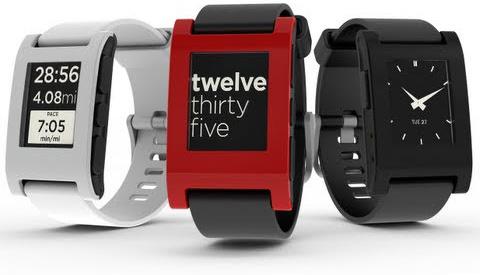
Some Pebble watches failing to power-up after shutdown

Some Pebble smartwatches are apparently failing to power-up again after being shutdown, as reported by Engadget.

Pebble said it’s aware of the issue, which appears to affect only a small number of watches, and is replacing affected watches.

Up to Friday, we’ve had 20-30 reports (out of 30,000+ pebbles in the field). We’ve gotten several back to the office, and we’re getting to the bottom of it … We understand of course that it’s annoying for users. We’re replacing any Pebbles for users who report this issue.

Site default logo image

FAA expected to allow iPad and laptop use during take-off & landing this year

The Federal Aviation Administration’s investigation into whether airline passengers can be allowed to use tablets, eBook readers and laptops throughout a flight is apparently looking hopeful, as The New York Times cited an insider saying approval would likely be granted this year.

According to people who work with an industry working group that the Federal Aviation Administration set up last year to study the use of portable electronics on planes, the agency hopes to announce by the end of this year that it will relax the rules for reading devices during takeoff and landing. The change would not include cellphones.
Expand
Expanding
Close

Site default logo image

You can now buy an iPad Mini from the Apple Store for $299 (refurb)

From 9to5Toys.com

Apple started selling refurbished iPad Minis at the Apple Store a few weeks ago but only offered more high end versions. Today, they’ve unleashed the floodgates and you can now buy base models for $299. Currently black is available for $299.

Apple refurbished items are often indistinguishable from new items and ome with the same 1 year AppleCare protection.

Apple buys indoor smartphone locating company WiFiSLAM

Site default logo image

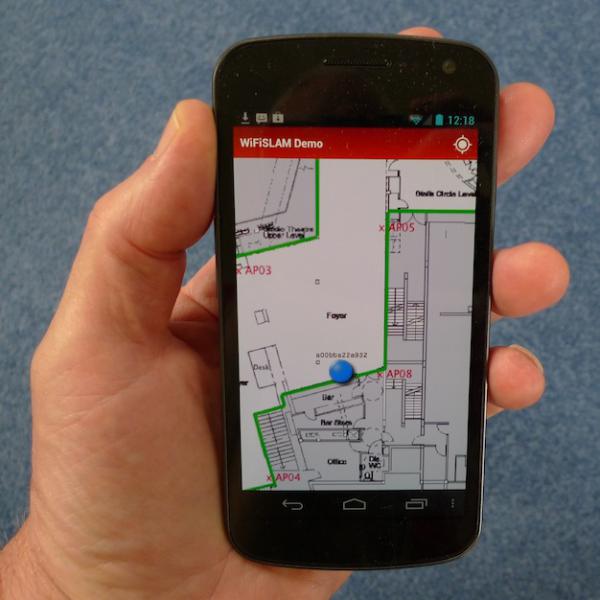
The Wall Street Journal reports that Apple has acquired WiFiSLAM for “around” $20 million. Apple has confirmed the deal, but did not share its purpose for the company. According to a description of the firm, the company has created technology that uses ambient WiFi signals to precisely track the location of a smartphone or other mobile devices.

Allow your smartphone to pinpoint its location (and the location of your friends) in real-time to 2.5m accuracy using only ambient WiFi signals that are already present in buildings. We are building the next generation of location-based mobile apps that, for the first time, engage with users at the scale that personal interaction actually takes place. Applications range from step-by-step indoor navigation, to product-level retail customer engagement, to proximity-based social networking.

Notably, it appears that the technology can be utilized to construct in-door mapping solutions. Google Mapping software already supports indoor maps for a number of venues and buildings, so it would make sense that Apple would want to compete in some form with its own mapping app for iOS devices. The technology seems similar to Apple partner SkyHook which uses WiFi signals and cellular tower triangulation to location Apple devices without the need for a GPS chip.

Business Insider profiled WiFiSLAM in 2011 and a company executive explained some of the finer details of the technology:


Expand
Expanding
Close

Site default logo image

Nokia CEO Stephen Elop takes interviewer’s iPhone and throws it across floor (Video)

What do you do to generate some PR for a phone running Windows Phone 8, a platform that hasn’t exactly taken the world by storm? Nokia CEO Stephen Elop decided throwing a TV interviewer’s iPhone across the studio had to be worth a try…

[youtube=http://www.youtube.com/watch?v=owvtKGlYFVA]

[tweet https://twitter.com/pennstateguy/status/315163638459662336]

App Store apps that access UDIDs, don’t support iPhone 5/Retina to be rejected May 1

Site default logo image

Apple has informed developers that it will begin officially rejecting newly submitted and updated applications that access the iOS device UDID. Apple says that this new policy will begin on May 1st. With iOS 6, Apple began offering developers a new Advertising Identifier system that replicates the use of UDIDs for developers. Apple recommends that developers move over to this new system.

Starting May 1, the App Store will no longer accept new apps or app updates that access UDIDs. Please update your apps and servers to associate users with the Vendor or Advertising identifiers introduced in iOS 6. You can find more details in the UIDevice Class Reference.

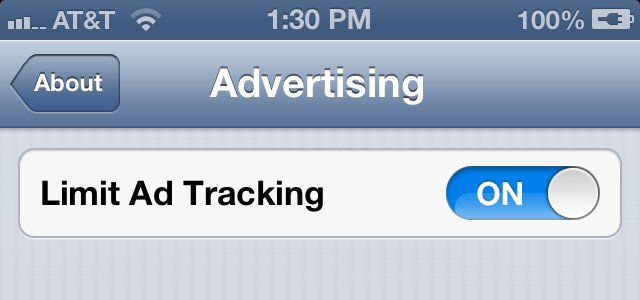
Interestingly, beginning last year, Apple began rejecting apps that access the UDID. Apple hinted that it would begin doing so, but today’s announcement from Apple to developers seems to be the final word on the matter. As pictured above, the iOS Advertising Identifier is a non-personal identifier for iOS devices that developers can access. It does not attach personal information to your device like the UDID system.

Additionally, Apple has announced that, also on May 1, it will no longer accept applications that do not support the iPhone 5’s taller, four-inch display and other iOS device Retina displays:


Expand
Expanding
Close

With Jony Ive working on interface design, Apple hardware and software teams further collaborating

Site default logo image

The Wall Street Journal has profiled some of the work between hardware and software teams within Apple since Jony Ive has taken on software interface responsibilities. According to the profile, Apple’s software design team is being briefed earlier on hardware specifics than ever before.

That dynamic is changing, according to the people close to the company. The stealth software developers still exist. But now, Apple’s mobile software, or “human interface” team, which has been led by executive Greg Christie, is being briefed about industrial prototypes earlier, these people said. The person described the change as “a thawing.”

With Jony Ive now leading both hardware and software, the executive likely wants the design of each to more closely resemble each other. This move is seemingly in an effort to accomplish that. Design review sessions are described as “cordial,” which is a strikingly different tone in comparison to sessions in the Forstall era.


Expand
Expanding
Close

Apple beefs up iCloud, Apple ID security with two-step verification

Site default logo image

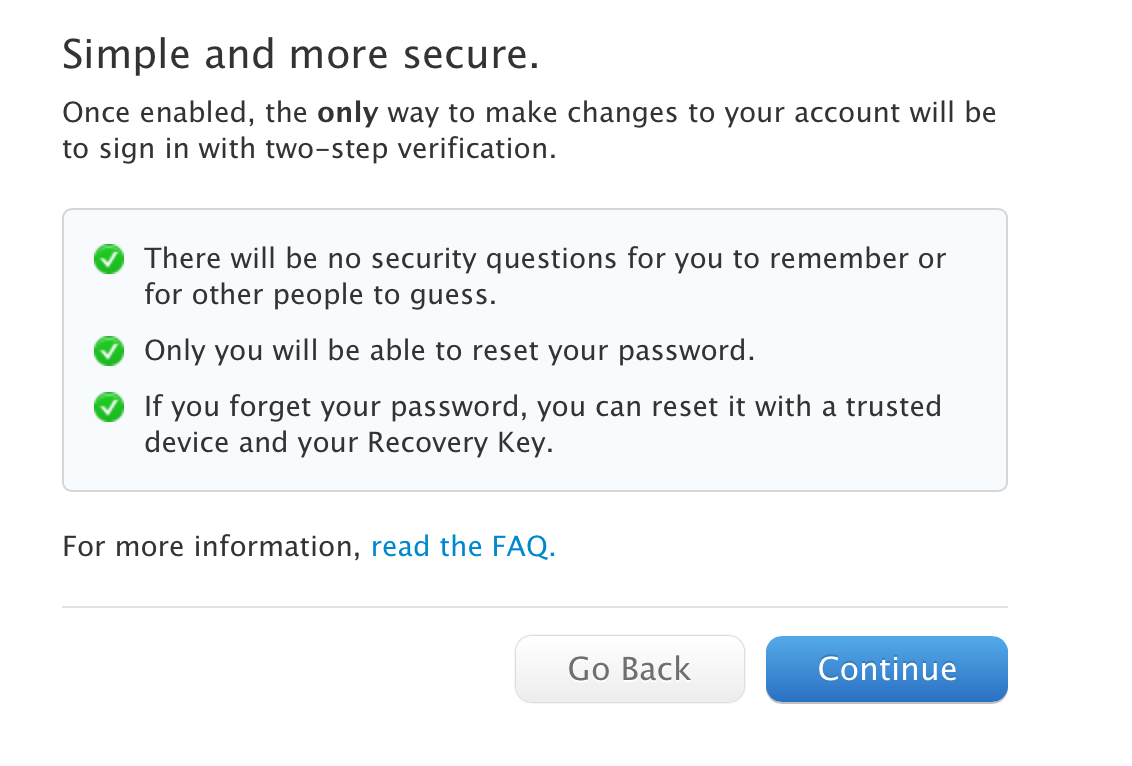
Today, Apple has rolled out a new two-step verification service for iCloud and Apple ID users. This functionality greatly enhances the security of Apple accounts because it requires users to use a trusted device and an extra security code.

This security code can be sent via SMS or via the Find my iPhone iOS app (if it is installed). Users can now setup two-step authentication on their devices via the Apple ID website. Users need to access the security tab on this website to conduct the setup process.

During the setup process for two-step verification, users can choose which of their iOS devices they want to be “trusted.” This new service will allow only you to be able to reset your password. All of the details below:


Expand
Expanding
Close

Google’s Eric Schmidt says Google Now for iOS approval is in Apple’s court

Site default logo image

[viddler id=a66cf352 w=704 h=400]

Update: Apple responds.

Google chairman Eric Schmidt spoke at the company’s Big Tent Summit in India this morning, and, on top of claiming there are no immediate plans to merge Chrome and Android, the executive discussed the possibility of Google Now coming to iOS devices. It appears Google is in a similar situation to when it launched a standalone Google Maps app, as Schmidt claimed it’s up to Apple to approve or reject Google Now for the App Store. TechCrunch pointed us to the comment from the Google executive at around 17 minutes into the interview:

You’ll need to discuss that with Apple” (at around 17:50). “Apple has a policy of approving or disapproving apps that are submitted into its store, and some of them they approve and some of them they don’t,” he went on to say.

A video that appeared to be an ad for the debut of Google Now on iPhone and iPad landed on YouTube last week before quickly being removed. The video (above) showed that Google could implement Google Now functionality—currently only available as a Siri-like voice and contextual assistant app on Android devices—into the Google Search app.

Google already updated its Google Search app with voice recognition and Google Now-like features last October, and a number of comparison videos have since appeared online and show Siri has some serious competition with even the scaled back voice search features. Bringing the contextual assistant features that Google Now implements on Android to the Google Search app would give iOS users yet another reason to use it rather than Siri for a large number of tasks.
Expand
Expanding
Close

Site default logo image

Fan video mockup of potential Ive-ified iOS7

With Apple observers watching with interest to see what might happen now that Jony Ive has responsibility for software as well as hardware design, Apple fan Mohamed Kerroudj has created a couple of very brief but interesting concept videos on what a more minimalist iOS7 might look like.

http://vimeo.com/62244678

Former iOS head Scott Forstall was a noted fan of skeuomorphic design, a strong candidate for the most complex-sounding name for the world’s simplest concept: making virtual objects look like real ones. The iOS Notes app is a classic example of this approach.

Ive is reputedly strongly averse to this approach and is known for his view that designs should never be constrained by conventional ideas of how something might look and function. While the videos are of course no more than one fan’s take on where Apple should go, they are consistent with the more elegant approach we might expect from an Ive-led design ethic.

Site default logo image

The surprise is there’s no surprise from DigiTimes on iPhone 5S

DigiTimes, a website noted for its somewhat extravagant and unreliable supply-chain-based rumors about Apple plans, has posted a surprisingly restrained story predicting only the iPhone 5S will launch in Q3. The report also claimed the iPhone 5S would have a faster processor and higher-megapixel camera (three things that are almost certainly true).

Site default logo image

Take calls over the ocean, in the Congo or Outback with Thuraya’s SatSleeve satellite case for iPhone

http://www.youtube.com/watch?v=eTEDgc2vu44

Thuraya, a mobile satellite operator and telecommunications company providing coverage in more than 140 countries across Asia, Africa, Australia, the Middle East and Europe, announced on Wednesday the launch of its SatSleeve product to enable satellite connectivity on the iPhone. It also builds in a 3.7V Li-ion, 2400 mAh battery pack to extend your iPhone’s battery life, an emergency call button, and its own microphone and speaker. The iPhone case and combo satellite/battery dock come together to allow access to SMS and phone calls on Thuraya’s satellite network.

Thuraya provides services to a number of sectors, including energy, military, and aviation, and it provides roaming services in the United States through a deal with T-Mobile USA.

While iPhones are typically supported by terrestrial networks, Thuraya SatSleeve enables users to enjoy ubiquitous coverage even in the most remote environments. The Thuraya SatSleeve also serves as an important mobile communications tool for corporate users, especially enterprises operating in remote locations, explorers, mountaineers and other outdoor enthusiasts — ideal for prolonged expeditions that take these users deep into uncharted areas that are not served by terrestrial mobile networks.

The product appears to be available for 30-pin devices only, and there are no details on pricing, but you can contact Thuraya through its website to purchase SatSleeve. You can check out Thuraya’s coverage map.

http://www.youtube.com/watch?v=XGh09z-IUY8

Site default logo image

Wal-Mart expanding iPhone ‘Scan & Go’ program to a dozen new markets and over 200 stores

Wal-Mart announced today that it is expanding its “Scan & Go” pilot program that allows shoppers to use their iPhones to scan items at self-checkout terminals. Previously only available at around 70 locations in Arkansas and Atlanta, Reuters reported the program would now expand to a dozen new markets and about 5 percent of Wal-Mart’s 4,000 locations:

Shoppers scan bar codes on items they want to buy, using the Walmart app on their iPhone, iPod touch or iPad to keep track of the planned purchases and the total cost. Then they pay at a self-checkout screen, bypassing the typical registers.

Walmart is bringing “Scan & Go” into a dozen more markets: Denver, Colorado; Phoenix, Arizona; Omaha, Nebraska; Dallas and Austin, Texas; Oklahoma City and Tulsa, Oklahoma; Wyoming; Bozeman, Montana; Seattle, Washington; San Jose, California; and Portland, Oregon.

Apple releases iOS 6.1.3 with Lock screen security flaw fix, Maps improvements for Japan

Site default logo image

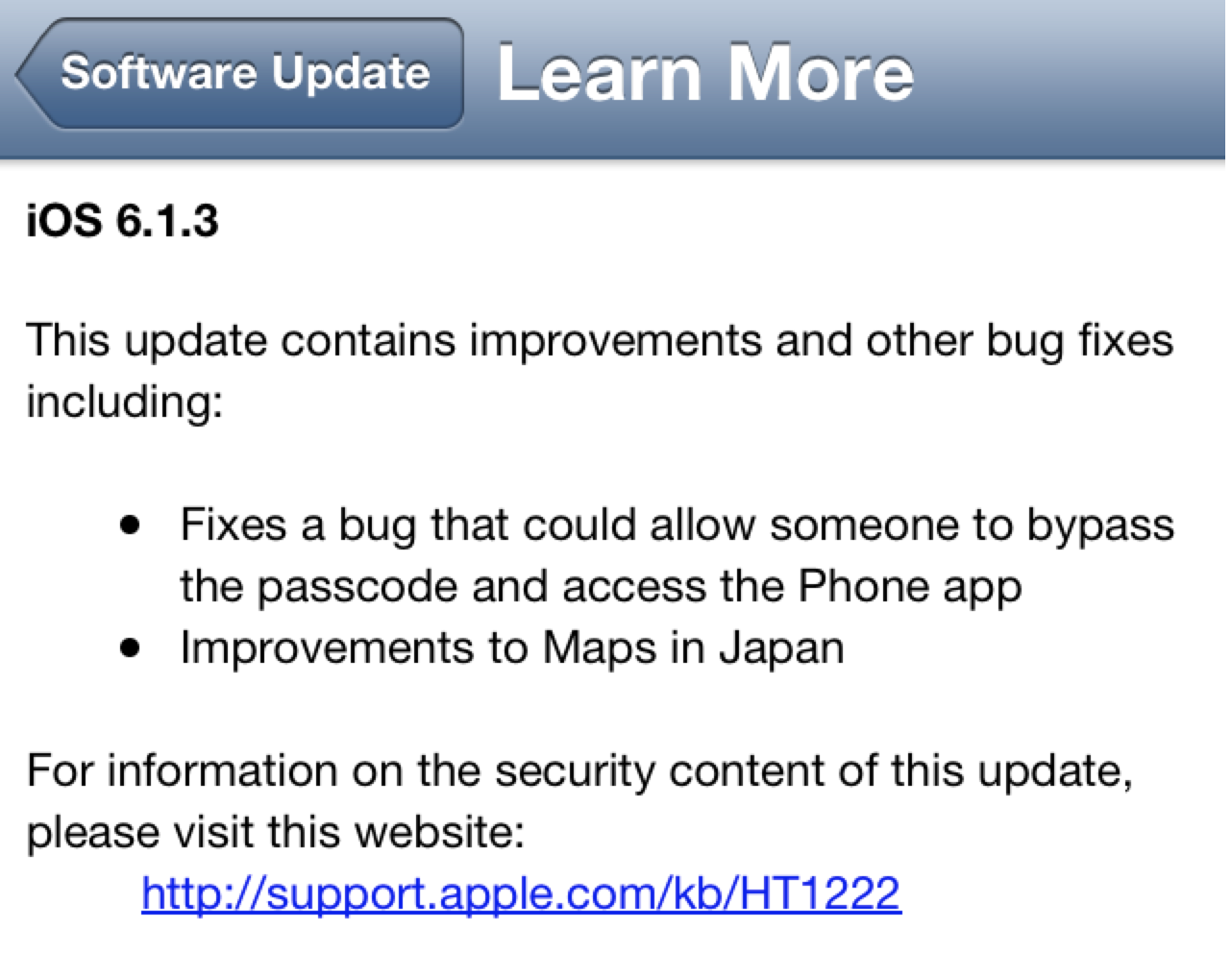
Apple has released iOS 6.1.3 to end users today. It is currently available over-the-air via Software Update in the Settings app.

The update includes a security flaw fix involving the iOS device Lock screen. Additionally, the new update includes fixes for the Apple Maps application for Japan.

Apple previously released these Japanese Maps fixes over-the-air to non-iOS 6.1.3-beta devices, but it appears that the actual update might include even more improvements.

Apple TV software version 5.2.1 was also released today. It includes a redesigned Hulu section. 


Expand
Expanding
Close

Site default logo image

New concepts imagine the low-cost iPhone in 4 and 4.5-inch variants, multiple colors

iPhoneclub.nl has partnered with concept artist Martin Hajek on this latest round of mock-ups that imagines the much-rumored, low-cost iPhone based on some of the recent rumors floating around. More realistic is the red version, as it includes a 4-inch display, polycarbonate backside, and some of the other rumored changes such as the positioning of ports and openings. We also get a larger 4.5-inch version in blue, which is something most analysts don’t expect to see on an iPhone until at least 2014.

Apple patents unlikely SmartCover wireless charging system

Site default logo image

However unlikely—the United States Patent and Trademark office today published an Apple patent application that details a system of inductively charging an iPad through the Smart Cover. The idea is that rather than plugging in the iPad, the Smart Cover would include an inductive power transmitter that would allow it to pair with an inductive power transceiver embedded into the iPad. The result is the Smart Cover would become a wireless charging station, connecting to an external power source, and allowing you to power your iPad in various positions. Apple also explained that it could use “ambient power gathering devices, such as solar cells, can be used to gather ambient power (such as sunlight) to be stored internally in the flap for later inductive transfer.”

A method for wireless powering a tablet device, comprising: determining if a protective cover is in a closed configuration with respect to the tablet device; enabling a wireless power receiver circuit in the tablet device when it is determined that the protective cover is in the closed configuration with respect to the tablet device; and wirelessly receiving power from a wireless power transmitter associated with the protective cover.

Apple described the advanced Smart Cover as including multiple power transmitters to allow the iPad to charge even when using the case, for example, as a stand to prop up the device. Alternatively, the cover could continue charging the device when in the closed position or when an iPad is placed on top:
Expand
Expanding
Close