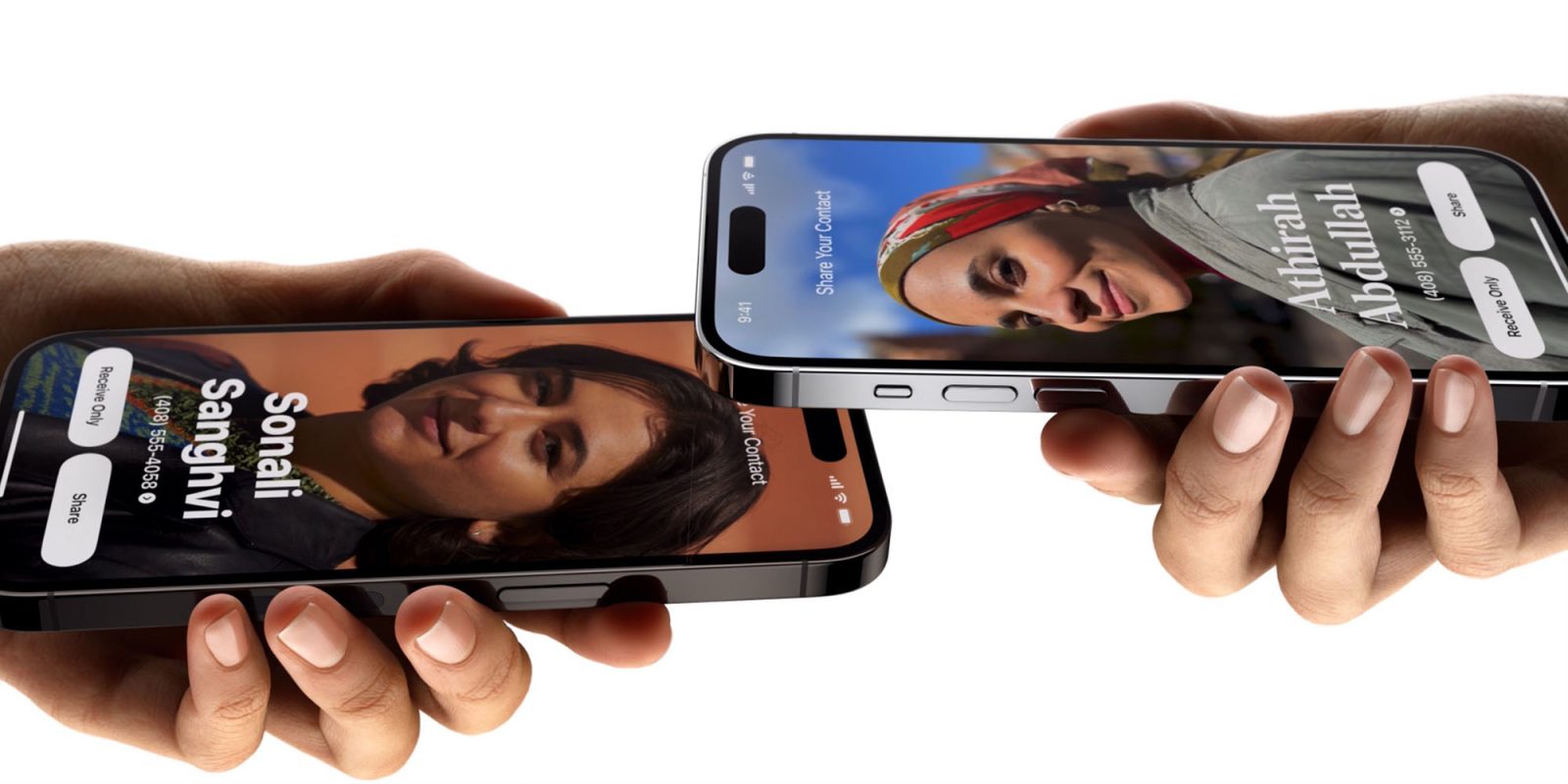
iOS 27 introduces a new security feature called ‘Impersonation Risk Detection’ that helps protect you against scams, but it’s off by default. Here’s what the feature does, and how to enable it.
As reported by 404 Media, Magnet Forensics says it has found a way to bypass the iPhone security feature that automatically reboots devices if they haven’t been unlocked for 72 hours. Here are the details.
The website with the malware convincingly replicates the look of the real thing and claims to offer a $500 discount voucher as an “Authorized Partner Exclusive” …
9to5Mac Security Bite is exclusively brought to you by Mosyle, the only Apple Unified Platform.Making Apple devices work-ready and enterprise-safe is all we do. Our unique integrated approach to management and security combines state-of-the-art Apple-specific security solutions for fully automated Hardening & Compliance, Next Generation EDR, AI-powered Zero Trust, and exclusive Privilege Management with the most powerful and modern Apple MDM on the market. The result is a totally automated Apple Unified Platform currently trusted by over 45,000 organizations to make millions of Apple devices work-ready with no effort and at an affordable cost. Request your EXTENDED TRIAL today and understand why Mosyle is everything you need to work with Apple.
Meta has spent the last two weeks telling anyone who’ll listen how secure its new Muse personal AI agent is. The company boasted about its dedicated Secure VM, a monitoring system called Sentinel, and bug bounty rewards of up to $300,000. Mark Zuckerberg himself even publicly stated the agent is “built from the ground up for privacy and security.”
Then Patrick Wardle, macOS security researcher and friend of Security Bite, found a 0-day vulnerability in the Muse app on Mac that made the last 24 hours particularly not-a-musing (what Wardle comically named the finding).
Two high-profile computer scientists from Princeton University, and coauthors of the book AI Snake Oil, have weighed in on the question of whether AI will kill us all by the end of the decade.
The pair have become well known for their work in separating fact from fiction in the AI world, and have now responded to an admission by Anthropic that there is a greater than 10% chance that AI could kill all humans within the next ten years …
Multiple Dropbox users have been emailed by the cloud storage company to advise them that a security breach saw unauthorised access to their account. Update: the company has said that about 5,000 accounts were compromised, with files downloaded from around 1,500 of them.
The root cause appears to be a lack of authentication by Dropbox when attackers created a single sign-on option through a third-party company …
The Federal Bureau of Investigation (FBI) is reportedly investigating identity theft as digital scans of more than 153 million driver’s licenses went on sale on the dark web. Additional documents offered through a massive security breach include medical cards, residence cards, and more.
The licenses belong to people in the US and Canada, and appear to have been collected by hacking an identity verification service …
Apple recently released updates to three versions of macOS, stating that they fixed a serious screen sharing vulnerability in macOS Tahoe, Sequoia, and Sonoma.
At the time, there was no indication that the security flaw was being exploited in the wild, but now there is, so if you haven’t yet updated your Mac, you’ll want to do so asap …
A Zoom vulnerability discovered with the help of an AI tool gave an attacker the ability to remotely execute code on whatever device a meeting participant was using, including both iPhone and Mac …
Security researchers last week revealed a flaw in Apple’s iCloud Private Relay feature. While this is supposed to protect your IP address from the websites you visit, a vulnerability means that it often fails to do so.
Any time there’s a problem with an Apple product or service, a class action lawsuit is sure to follow, and this is no exception …
The most blatant security backdoor yet seen in an internet router has been found in a range of models sold under multiple brand names. A firmware implant phones home to cloud servers in China to ask for instructions, and can then be remotely controlled …
The Consumer Federation of America (CFA) estimates that online scams cost Americans almost $150 billion last year – seven times the amount reported to the FBI.
The organization says that the number of cyber scams is increasing dramatically, and that most victims never report their losses to law enforcement …
Security researchers demonstrated that Claude Cowork could escape the sandbox intended to control the access it gets to your Mac. The exploit, dubbed ShareRoot, could allow an attacker to read and write files stored anywhere on your Mac, as well as access login credentials for online services.
Around half a million Mac users had co-work sessions exposed, and some still remain vulnerable to the exploit today …
Jamf Threat Labs, the company’s security research arm, recently shared details of a ClickFix-style attack it spotted running as a sponsored ad on the social media site X. Originating from a well-known verified account, it promoted a malicious domain under the guise of a popular Mac app.
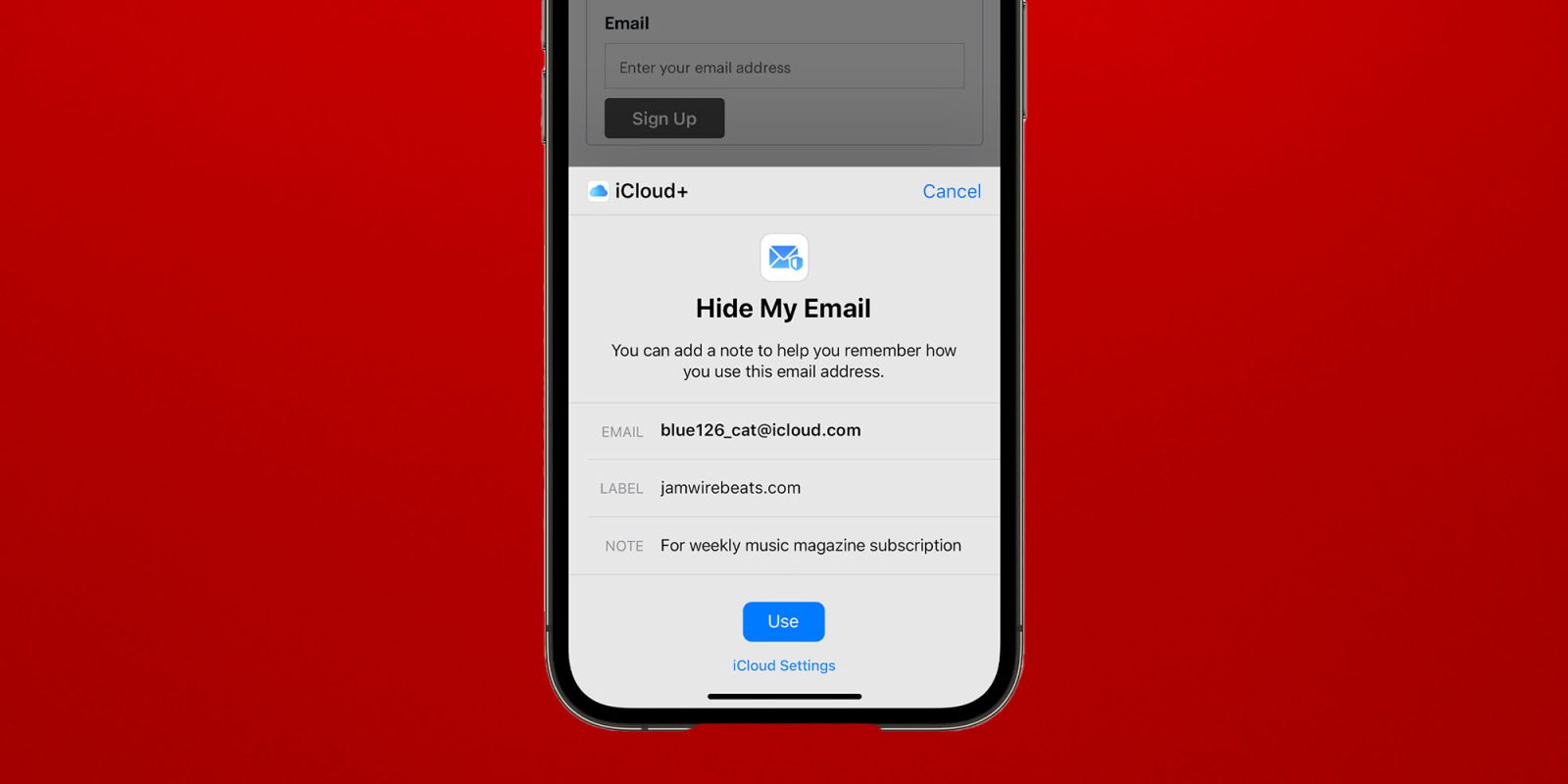
A privacy flaw in Apple’s Hide My Email feature means that your real email address can be discovered. A security researcher said that tests found 100% of generated addresses allowed an attacker to reveal the real email associated with the Apple account.
Tyler Murphy said that he discovered and reported the issue to Apple more than a year ago, but it still hasn’t been fixed, and he has now made the decision to go public …
Three AirDrop vulnerabilities have been discovered by security researchers, affecting both iPhone and Mac, with similar ones found in Android’s Quick Share.
An attacker could easily exploit the vulnerabilities to cause AirDrop, AirPlay, Handoff, Universal Clipboard, and Continuity Camera to crash and remain unavailable for as long as the attack continues …
Today’s iOS, iPadOS, and macOS 26.5.2 updates include security fixes that Apple had originally planned to release with version 26.6 of each operating system. Here’s why the company pushed them out early.
Researchers at Paradigm Shift have published the technical details of usbliter8, a new unpatchable iPhone BootROM vulnerability that enables arbitrary code execution on devices powered by Apple’s A12 and A13 chips. Here are the details.
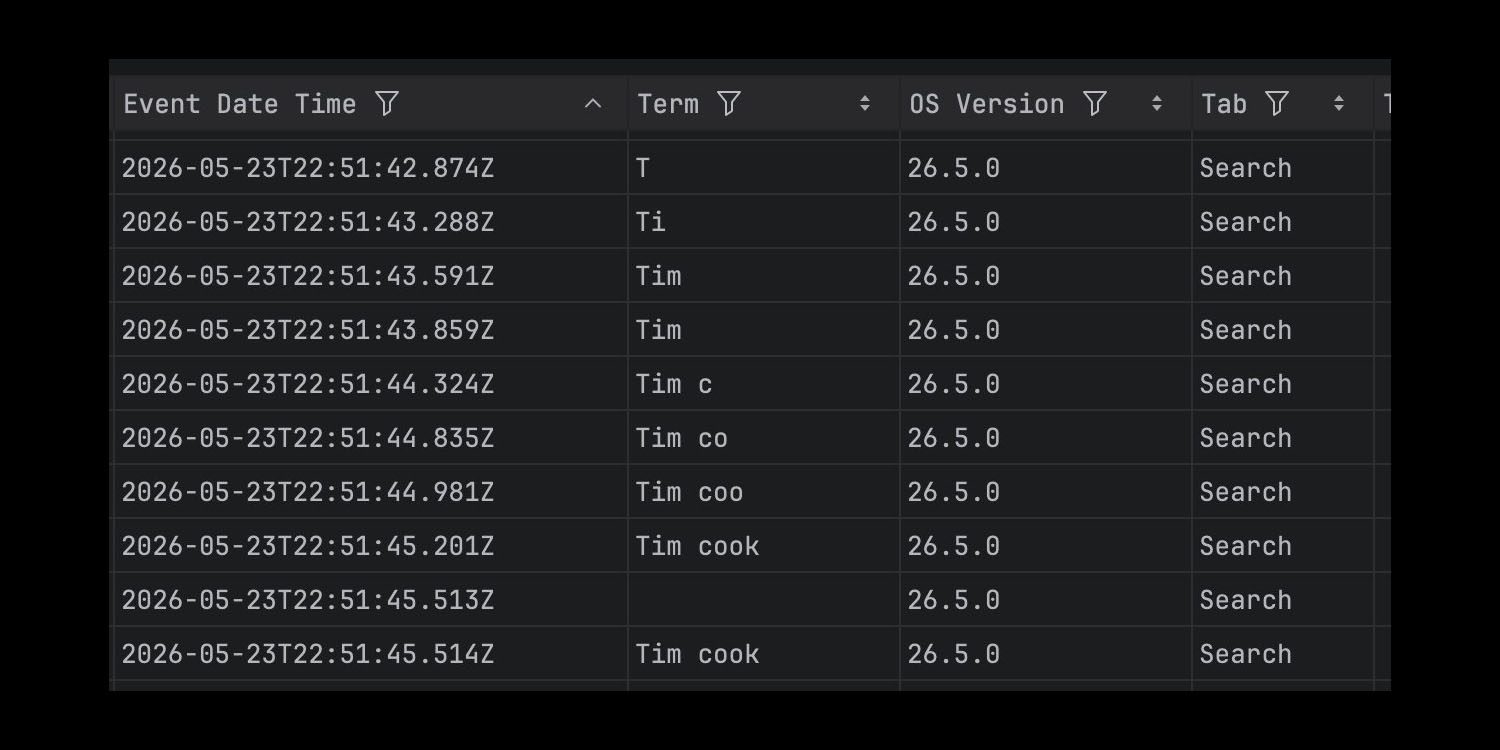
Apple recently introduced Personalized Collections in the App Store, which provides users with individually tailored recommendations for new apps they might enjoy.
Two security researchers have highlighted the extremely extensive analytics data the company is capturing in order to compile these recommendations, logging every tap you make …
9to5Mac Security Bite is exclusively brought to you by Mosyle, the only Apple Unified Platform.Making Apple devices work-ready and enterprise-safe is all we do. Our unique integrated approach to management and security combines state-of-the-art Apple-specific security solutions for fully automated Hardening & Compliance, Next Generation EDR, AI-powered Zero Trust, and exclusive Privilege Management with the most powerful and modern Apple MDM on the market. The result is a totally automated Apple Unified Platform currently trusted by over 45,000 organizations to make millions of Apple devices work-ready with no effort and at an affordable cost. Request your EXTENDED TRIAL today and understand why Mosyle is everything you need to work with Apple.
While WWDC26 is winding down, I’ve had time to reflect on Monday’s keynote, where Apple spent most of its time preaching to parents about on-device Child Safety and, of course, Siri AI.
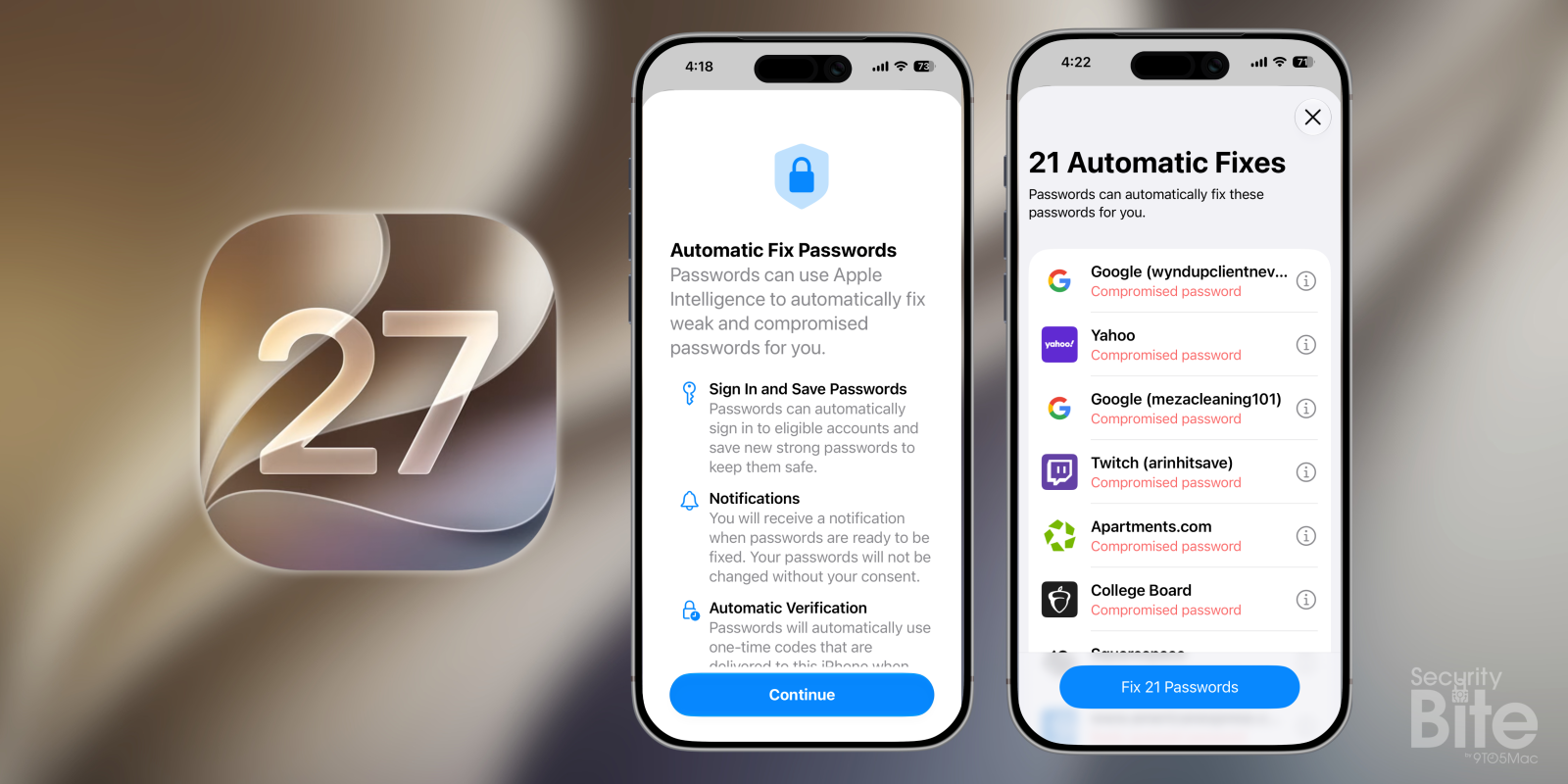
However, it also showcased something insanely neat and ingenious on Apple’s part that is largely being overshadowed. I’m referring to the new agentic AI feature now in iOS 27’s Passwords app.