The iPhone is great in many ways, but perhaps one of the best cases is in a medical emergency. KVALreported a 57-year-old Oregon man was suffering from a diabetic reaction while driving down a local highway. (Video link here.)
When two medical responders came to the scene and tried to assist the man, they ran into quite a language barrier. The man only spoke Chinese, but luckily, one of the responders knew to reach for his iPhone. He fired up Google Translate and was able to speak Chinese with the man to figure out his condition and give him the help he needed.
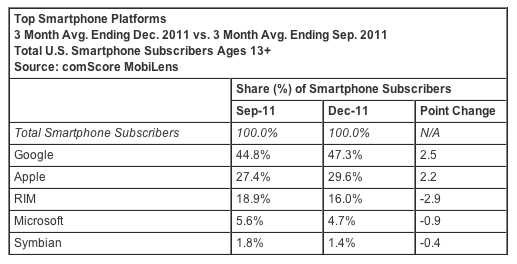
Research firm comScore is out with its latest numbers for the month of December, giving us a glimpse at the current United States mobile market. The report indicates that mobile sales are up-and-rising for the holiday month. comScore found that Google’s Android is leading with a 47.3-percent OS market share (rising 2.5 points) and Apple’s iOS is in second with a 29.6-percent market share (rising 2.2 points).
When it comes to device market share for both smartphones and non-smartphones on the OEM side, Samsung tops the charts with a 25.3-percent market share, which did not change from the previous month. LG and Motorola place second and third, both losing a small amount of market share during December. Apple comes in fourth in market share, and now boasts 12.4-percent of total mobile subscribers (rising 2.2 points).
The U.S. still ranks in as one of the world’s most important places for smartphones, with 97.9 million people owning smartphones during Q4 2011. When it comes to worldwide sales, Research Firm IDC yesterdayreleased its estimates for December. They found that Apple passed LG to become the third-largest smartphone manufacturer worldwide, with an 8.7-percent market share in Q4 2011, and a 6 percent market share in 2011 as a whole. Nokia remains in the top spot with 26.6-percent, followed by Samsung who has 22.8-percent. You can check out the graphs after the break for the full run-down:
Apple announced monster sales of 37 million iPhones yesterday for the holiday quarter that spanned 14 weeks and ended Dec. 31, 2011. It’s a 128 percent unit increase and 133 percent revenue increase, annually, and enough to knock Samsung off the No. 1 spot it briefly held in the previous quarter. However, it appears that the popularity of the iPhone 4S also helped Apple thrive over Google’s platform, especially with Android backers such as Motorola Mobility, HTC and Sony Ericsson reporting disappointing results.
According to research firm Kantar Worldpanel ComTech (viaReuters), iPhone sales gave iPhone a lead over Android in smartphone sales in the United States. Specifically, Apple’s share of the U.S. market during October to November of last year doubled from 22.45 percent a year ago to 44.9 percent. Meanwhile Google’s Android smartphones dropped from 50 percent to 44.8 percent in the same period. Kantar’s global consumer insight director Dominic Sunnebo:
Apple has continued its strong sales run in the U.S., UK and Australia over the Christmas period. Overall, Apple sales are now growing at a faster rate than Android across the nine countries we cover.
Another way to look at iPhone numbers: The iPhone business generated $24.42 billion revenue. During the same quarter, all of Microsoft raked in $20.89 billion revenue. In fact, all of Apple’s holiday-quarter revenues and profits were two times higher than Microsoft’s.
Yet another look at iPhone numbers: Apple sells more iPhones in a day than babies born.
Apple just announced its Q1 2012 earnings in a press release a few minutes ago, which revealed very impressive numbers from the company. Apple revealed it sold a whopping 37 million iPhones during the holiday quarter, which now gives the company the No. 1 smartphone manufacturer spot —back from Samsung, who previously held the title. Earlier this month, Samsung gave estimates of 35 million phones sold during the holiday quarter. This means Apple beat the company by 2 million.
There is no shortage of surveys proving that Apple’s smartphone market share has benefited from strong iPhone 4S reception thus far. A new report published this morning by reputable research firm Nielsen is another indication of Apple halting Android’s seemingly unstoppable rise as a growing number of United States consumers pick iPhones over other smartphones. Based on a poll of recent acquirers —among those who said they got a new device within the past three months— Nielsen found out that 44.5-percent chose an iPhone while 46.9-percent picked an Android phone. Contrast these figures to just 25.1-percent for Apple in October and 61.1-percent for Android.
Furthermore, 57 percent of new iPhone owners surveyed in December said they got an iPhone 4S. […] The high-profile launch of Apple’s iPhone 4S in the Fall had an enormous impact on the proportion of smartphone owners who chose an Apple iPhone.
Therefore, while fewer people bought an Android device in December compared to a month earlier, Apple substantially increased its share among recent smartphone acquirers. These findings are understandable given that iPhone 4S was announced on Oct. 4, 2011 and it became available 10 days later, selling 4 million units during the launch weekend. Pent-up demand and wider price gamut certainly did help boost domestic iPhone sales as did the fact that Sprint and local carriers Claro Puerto Rico and C Spire Wireless finally landed the device.
Apple this afternoon revised holiday ordering and shipping deadlines for this year, as spotted by The Loop. For those looking to order customized Macs, you have until tomorrow, December 14, to place an order for your customized all-in-one system if you want to receive it by December 24, with free 2-3 day shipping. With custom engraved iPods you have until December 19 to receive it by the December 24 deadline.
And lastly, for off the shelf Macs and other Apple products you have until December 21 to receive them by Christmas Eve. Sadly, it doesn’t look like you’ll be able to get an iPhone 4S online before the holidays. Find all of the dates after the break:
Digitimes’latest report puts some numbers on the low end iPhones coming out of China. The 2.5 year old iPhone 3GS has continued to sell briskly with the volume likely to reach two million units in the fourth quarter of 2011 and 1.4-1.6 million units in the first quarter of 2012, according to “industry sources”.
Think about that for a second. In a world where a new, free Android flagship phone comes out every week or so and dying out a few months later, Apple is selling 2 million/quarter of a device that was introduced two and a half years ago. This is the phone the original Droid went up against — in fact.
Verizon and conceivably other CDMA carriers in the world have also continued to sell the iPhone 4 CDMA version at an impressive clip.
Meanwhile, the production of the CDMA version of iPhone 4 is expected to top 800,000 to one million units in the fourth quarter of 2011 and 500,000-600,000 units in the following quarter, estimated the sources.
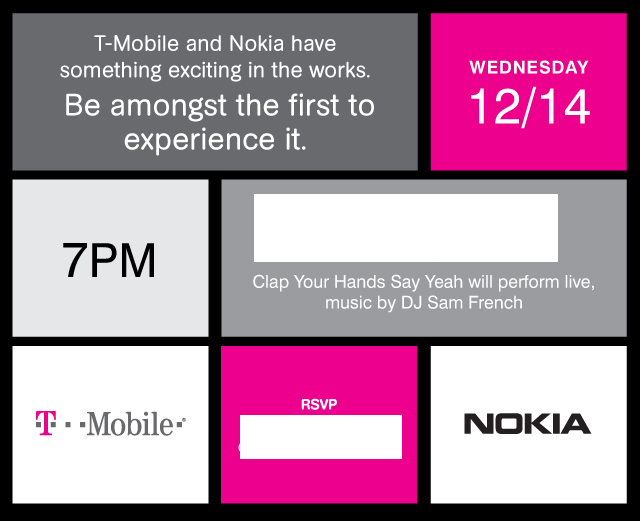
With Apple deciding not to include support for T-Mobile’s bands in the US, T-Mobile has turned into an Android wasteland with over 90% of the smartphones sold on the network running on Google’s OS. Looking for some diversification (besides the over million legacy iPhones), T-Mobile looks to be one of the first in the US to roll out one of the new Nokia Windows Phone 7 devices which they plan to announce on Dec 14th, a little late for the holidays.
iLounge reports that their most reliable source has spilled some details on what’s to come – in terms of redesigns – in 2012 from Apple. First on the roadmap is the iPad 3. The report says the tablet will be slightly thicker in order to make room for a “higher-res” display (Retina Display?) and for that rumored dual-light bar display system. Although it’s possible that this new iPad will be introduced in January, it’s reportedly on track for a March launch (which makes sense).
The delayed iPhone launch gave Android vendors additional three months to gain market share whilst negatively affecting Apple, sending shares down ten percent over the past month. Worry not, though – strong iPhone 4S launch and price reductions for both the iPhone 4 and 3GS models are seen as catalyst enabling Apple to regain lost share from Android manufacturers during the current quarter. Also, remember Apple is still taking more than half of all smartphone profits.
The gist of today’s report from Gartner pegged Apple’s share of the global smartphone market at 15 percent on sales of 17.29 million units, a 21 percent annual increase. But the smartphone market grew at an even faster clip so Apple actually recorded a decline from the 16.6 percent in Q3 2010 on sales of 13.48 million units. Android, meanwhile, has gone from 25.3 percent in Q3 2010 to 52.5 percent in Q3 2011, more than doubling its market share. Together, iOS and Android accounted for more than two-thirds of all smartphones sold (talk about duopoly).
Apple is also under pressure as quarterly iPhone sales decreased compared to the 20.34 million iPhones shipped during the June quarter. Principal research analyst Roberta Cozza said some consumers “were waiting for a rumored new iPhone and associated price cuts on older iPhone models; this affected U.S. sales particularly”.
Gartner believes Apple will bounce back in the fourth quarter because of its strongest ever preorders for the iPhone 4S in the first weekend after its announcement. Markets such as Brazil, Mexico, Russia and China are becoming more important to Apple, representing 16 percent of overall sales and showing that the iPhone has a place in emerging markets.
iPhone 4S launches in India, the world’s second-largest market, on November 25. Pre-orders sold out in Hong Kong in 10 minutes and the online Apple Store is now offering unlocked iPhone 4S units. The company pledged to roll out the handset to a hundred carriers in 70 countries by the year’s end, the fastest iPhone roll out yet. Supply chain sources claimed Apple cut holiday quarter iPhone 4S orders, but analysts rushed to dispute that report. How does Apple fare in the whole handset market? Read on…
Confirming what we already told you yesterday, Apple has said the company has no current plans to implement Siri into any other iOS devices besides the iPhone 4S. Apple confirmed the news in an email (seen after the break) to developer Michael Steeber.
Engineering has provided the following feedback regarding this issue:Siri only works on iPhone 4S and we currently have no plans to support older devices.
That doesn’t mean however that developers won’t continue to work on building Siri for later iOS device — like the iPhone 4 and 3GS. Curious to see how it works on an iPhone 4? Check it out after the break, along with a screenshot of the email:
A delayed launch of Apple’s iPhone, which had been pushed back from the usual summer time frame to mid-October, affected slightly Apple’s earnings, but the effects were felt in the entire smartphone industry which experienced a lower-than-expected growth in the third quarter, research firm IDC reported yesterday. Vendors shipped 118.1 million smartphones during the September quarter, a 42.6 percent growth from the 82.8 million units a year ago. However, IDC’s forecast for the quarter was 49.1 percent and they attribute the difference to the iPhone launch delay:
Smartphone growth came in lower than expected due to the delayed launch of the updated Apple iPhone. In previous years, the introduction of a new iPhone resulted in a spike in shipment volumes during the third quarter. Western Europe and the United States, two key regions for the iPhone launch each year, still posted sizable year-over-year gains, but lower than anticipated.
“Broad and deep product portfolio” and “a welcome reception” of Bada-branded smartphones helped Samsung overtake Apple as the world’s leading smartphone maker in the third quarter, IDC said. But i’s bound to be a short-lived victory as “Apple’s fourth quarter launch of the iPhone 4S and lower pricing of older models will certainly boost volumes”, the research firm explained. But it’s when you drill Apple’s biz deeper when it really starts to come together. Read on… Expand Expanding Close
The third quarter of 2011 marks a shift in the cell phone biz as Samsung takes the smartphone crown from Apple and China’s ZTE rises to become the world’s fourth-largest cell phone vendor by volume and Apple slides to fifth place. The bad news for Cupertino arrives just as the company for the first time in years missed Street expectations after shipping 17.07 million iPhones in the September quarter, a modest 21 percent annual growth and a notable 16 percent quarterly decline in units. As you recall, Apple in the June quarter sold 20.34 million iPhones, allowing them to beat Nokia and Samsung and become the world’s leading smartphone vendor, prompting Samsung to stop divulging smartphone and tablet shipments for competitive reasons.
Everyone was waiting for the new iPhone 4S.
Samsung today posted their quarterly earnings and they passed iPhone by an estimated ten million units. According toReuters which cited a Strategy Analytics survey, Samsung shipped about 27.8 million smartphones, up nearly four times annually and 44 percent sequentially. This gave Samsung a 23.8 percent global market share in smartphones vs. 14.8 percent for Apple. Such a strong growth is attributed to their Galaxy smartphones, particularly the Galaxy S II model which sold ten million units in the five months since its introduction. Strategy Analytics attributed Samsung’s success to “a blend of elegant hardware designs, popular Android services, memorable sub-brands and extensive global distribution”, adding:
After just one quarter in the top spot, Apple slipped behind Samsung to second position and captured 15 percent share. Apple’s global smartphone growth rate slowed to just 21 percent annually in Q3 2011, its lowest level for two years. We believe Apple’s growth during the third quarter was affected by consumers and operators awaiting the launch of the new iPhone 4S in the fourth quarter, volatile economic conditions in several key countries, and tougher competition from Samsung’s popular Galaxy S II model.
Apple also slid to fifth place in Strategy Analytics’s worldwide cell phone rankings as ZTE shipped 18.5 million handsets for a five percent global market share. Apple CEO Tim Cook said at the October 4 iPhone 4S introduction that iPhone had five percent share of the global cell phone market, hinting at Apple’s phone strategy:
AT&T just released its earnings and showed strong iPhone sales despite having a 16-month old device on hand with updates looming. The carrier reported activating 2.7 million iPhones in the quarter out of a total of 4.8 million total devices. Android device sales doubled year over year.
Non-iPhone Smartphone Sales Increase.AT&T continues to deliver robust smartphone sales. (Smartphones are voice and data devices with an advanced operating system to better manage data and Internet access.) In the third quarter, the company sold 4.8 million smartphones, representing nearly two-thirds of postpaid device sales. Sales of Android devices more than doubled year over year, and almost half of all smartphone sales were non-iPhone devices. During the quarter, 2.7 million iPhones were activated.
Our polls show that significantly more than half of all US iPhone users go with AT&T, due mostly to the higher data rates and ability to talk and use data at the same time.
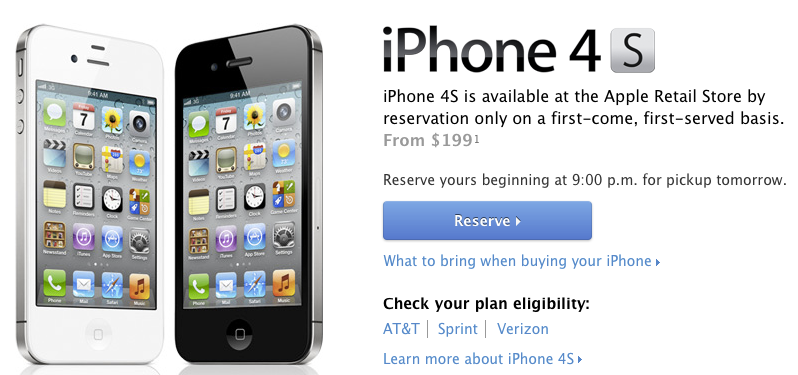
Today Apple debuted their iPhone 4S retail availability reservation system via www.apple.com/retail/iphone/ and the Apple Store iOS app. 9to5Mac has received a bit more clarification concerning the reservation process and walk-in availability from the Apple Store Daily Download. Each evening from 9 p.m. to Midnight, hopeful iPhone 4S buyers can log on to apple.com or the Apple Store app to check model availability and reserve their iPhone 4S for the next business day. When an individual successfully creates a reservation they will have from 9 a.m. to 6 p.m. the next day to pick up their reservation. Apple stores will cease all iPhone 4S sales at 8:30 p.m. to allow ample time to prepare for the nightly reservation process.
Contrary to previous reports, the iPhone 4S will be available for walk-in traffic as well as reserved at Apple retail stores. After 6 p.m. all unclaimed reservations will be forfeited and available for walk-in purchasers to buy. Select stores will also be making unclaimed inventory from the night before available from 8 a.m. to 9 a.m. each day. We hope everybody who wants to get their hands on Apple’s fastest iPhone yet are able to soon!
Alright, calling it outer space is a little over the top as weather balloons may typically reach altitudes of 40km (25 miles) or more, which is still in the atmosphere, but still…
So these guys paid an eye-brow raising tribute to Steve Jobs in their own unique way, by launching two iPhone 4Ss into space by attaching them to a weather balloon. Yeah, I know, it’s an old trick, but the phones are new and do 1080P video. One of the phones had an interval photo timer app running while the other captured video. They explained:
We launched 2 iPhone 4S phones with a weather balloon to go up to 100,000. We put one of the iPhone 4S’s on an interval photo timer app and the other on video mode. We used s Spot GPS tracker (though I would not recommend it because it only tracks in 15 minutes increments.
The result of their undertaking is impressive: Check out the included clip depicting Earth’s atmosphere in full HD quality. The weather balloon eventually deflated and the iPhones landed safely, courtesy of a parachute and OtterBox cases for the iPhone 4S. Yeah, I know it’s a paradox that the iPhone 4S can safely land unscratched from the outer space and yet won’t survive a waist high drop.
And if the attached GPS failed, the amateur balloonists could use Find My Friends to get their rig. See? It isn’t just for finding cheating spouses.
He didn’t call it a world-changing event, like Siri’s co-founder did in the days leading up to the iPhone 4S announcement. But it is pretty clear that he knows how profound Siri will be to smartphone users.
Woz on his last call with Jobs, the future of Apple and other big stuff below:
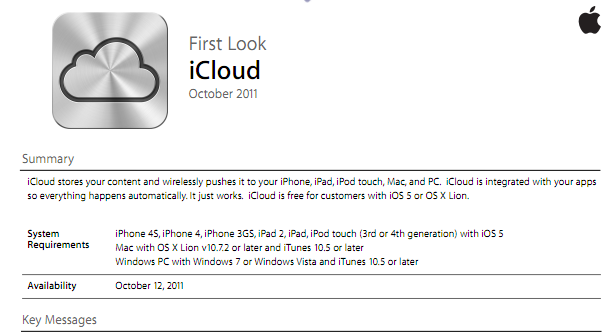
Last week, we detailed the internal docs Apple uses to tell its employees how to sell the iPhone 4S, the new iPods and the new Cards app. Today a tipster added to the trove two more internal docs. iCloud and iOS 5 First looks. These are the cheat sheets that Apple employees use to sell customers these products. Both below:
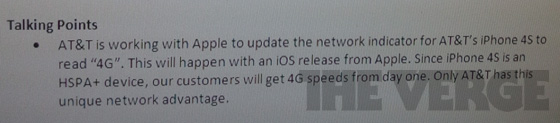
Perhaps looking to differentiate its service from the other two US carriers, AT&T is working with Apple to get a “4G” icon on the iPhone 4S when it hits its HSPA+ network according to The Verge.
The move would seem to try to further differentiate AT&T’s network which is already significantly faster than Sprint or Verizon’s (and theoretically double the iPhone 4 speed).
If you are in the US, which network will you be getting an iPhone 4S on?
In case there was any question, we’ve heard directly from Apple PR that there won’t be a webcast of Apple’s iPhone launch event. Last Year’s September event was live streamed but for unspecified reasons, Apple has chosen to keep this one off the airwaves. They will provide a live closed feed to the UK for European journalists however.
We’ll still be covering the event as it unfolds so make sure to stop by at 10am PT, 1pm ET or your local varient.
Following the news that Apple’s new iPhone N94 device has appeared in the Apple internal inventory system, we are now hearing that this new iPhone will come in three storage capacities. Given that we’ve also heard from manufacturing sources that Apple has at least been prototyping 64GB versions of the new iPhone, we would say it’s fairly likely that Apple’s new iPhone will come in 16GB, 32GB, and 64GB capacities; just like the iPad.
In all fairness, it is also plausible that the new iPhone will come in 8GB, 16GB, and 32GB capacities, but the appearance of a tweaked iPhone 4 (N90A) seems to refute that. Provided that the 8GB iPhone 4 rumor is correct, it would make little sense for Apple to produce both an 8GB iPhone 4 and an 8GB iPhone 4S. For those who have been wondering – and who isn’t? – each of these capacities will come in both black and white. Thanks, Mr. X!
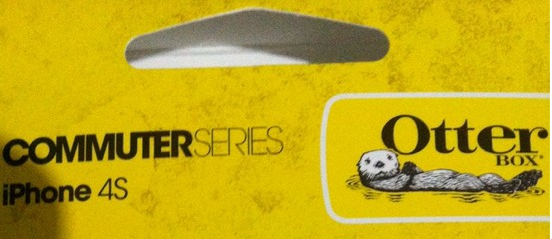
Adding some validity to the possibility of a new iPhone branded “4S”, @chronicwire has just posted the images below showing the iPhone 4S branding on what looks like legit packaging for a new Otter Box iPhone case.
Another couple if you head down south. Notice the changed volume buttons that may or may not be indicative of a volume button to camera shutter feature.
LEAK: Photo of the back of the package showing the iPhone 4S case, depicting new volume buttons, and on the right side. New soft-looking volume buttons being on right side of iPhone 4S can probably be attributed to the “volume button to take pic” iOS5 feature
She explained that the ad reflected the current conversations going on in the blogosphere. “Like many, we are watching the rumor sites and using information to plan ahead as much as we can.” Otterbox promises support for whatever iPhone debuts, but they’re emphatically not stating or leaking anything further. “We do not have any confidentiality agreements with Apple,” Richardson told TUAW.
As for those iPhone 4S Otterbox packaging photos that leaked yesterday, she explained, “What was circulating yesterday was not a case image for the iPhone 4S but a packaging design.” Otterbox has not identified the source of the photos. Expand Expanding Close