MacBook Pro: The biggest and baddest Mac laptops

See All Stories

Apple's premium laptop comes in 13- and 16-inch screen sizes. Each model includes 2-4 USB-C ports for charging, accessories, and data transfer. Higher-end models also include the Touch Bar.
2021 MacBook Pro

MacBook Pro has been the product name for Apple’s high-end laptop since early 2006 when the transition to Intel processors began. Now, that Pro naming has carried forth as Apple has moved to its own silicon. The latest fourth and fifth-generation Pro Apple notebooks bring dramatically more power with lower heat generation and better battery life thanks to the ARM-based Apple silicon. Keep reading for a brief history of the line and a breakdown of the current lineup.

MacBook Pro history

The first generation MacBook Pro followed in the style of the PowerBook G4 that came before it, but used Intel processors rather than PowerPC chips.

The second generation of the MacBook Pro was the first to really separate itself from the products before, with a unibody enclosure. The third-generation MacBook Pro introduced the retina display as well as MagSafe 2.

Perhaps the most controversial version of the MacBook Pro is the fourth generation. While the third generation received some backlash for the removal of ethernet and the optical drive, the fourth generation was a complete rethinking of the device peripherals. No more MagSafe, no more USB-A ports, and only the 13-inch model kept the function keys. Instead, this redesigned MacBook Pro opted for all Thunderbolt 3 ports and headphone jack. In place of function keys, the MacBook Pro gained an OLED Touch Bar. In late-2020, Apple introduced the M1 chip and updated the 13-inch MacBook Pro. The ARM-based processor brought down power consumption and increased performance.

In October of 2021, Apple introduced the fifth-generation MacBook Pro with not one but two updated versions of the M1 chip, the M1 Pro and M1 Max. The move walked back some of the decisions from the previous generation, adding back an HDMI Port, MagSafe charger, and SD card reader while removing the Touch Bar.

The 2020 13-Inch MacBook Pro

In late 2020, Apple introduced the 13-inch M1 MacBook Pro as the latest update to the fourth-generation MacBook. The MacBook features the same look as previous MacBooks, but like the MacBook Air and Mac Mini, switched to Apple silicon.

Apple’s M1 chip brought ARM architecture to the MacBook line, and this was the first MacBook without an Intel processor.

The M1 chip is a unified design with an 8-core CPU and an 8-core CPU. The processor integrated memory on board, limiting the device to either 8GB or 16GB of unified memory. The 13-inch M1 MacBook Pro is configurable with between 256GB and 2TB of storage and features a Magic Keyboard, rather than the problematic butterfly keyboard.

13-inch MacBook Pro specs

Base Configuration$1,299.00

  • Apple M1 chip with 8‑core CPU, 8‑core GPU, and 16‑core Neural Engine
  • 8GB unified memory
  • 256GB SSD storage
  • 13-inch Retina display with True Tone
  • Backlit Magic Keyboard – US English
  • Touch Bar and Touch ID
  • Two Thunderbolt / USB 4 ports

Max Configuration$2,299.00

  • Apple M1 chip with 8‑core CPU, 8‑core GPU, and 16‑core Neural Engine
  • 16GB unified memory
  • 2TB SSD storage
  • 13-inch Retina display with True Tone
  • Backlit Magic Keyboard – US English
  • Touch Bar and Touch ID
  • Two Thunderbolt / USB 4 ports

13-inch MacBook Pro pricing

The price for the 13-inch M1 MacBook Pro starts at $1,299. Upgrading this base configuration to 16GB of memory adds $200 to the price. Likewise, each step above 256GB of storage – 512GB, 1TB, and 2TB – will add $200 to the price. A fully specced out 13-inch MacBook Pro will run you $2,299.

You can configure your own 13-inch MacBook Pro on Apple’s website.

Current 14-inch and 16-inch MacBook Pro

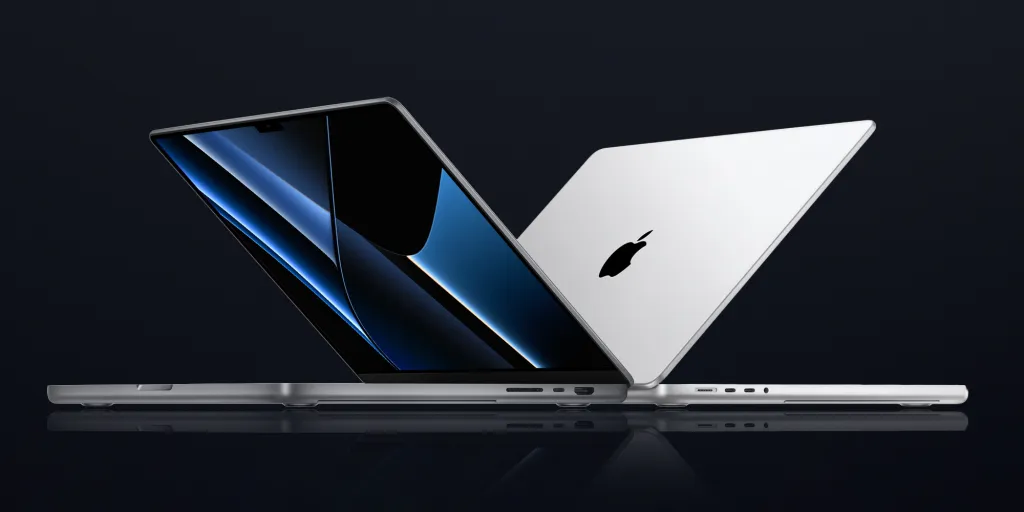
In October 2021, Apple brought a brand new design to the MacBook Pro line. Apple increased the screen size on the 13-inch, making it a 14-inch, and shrunk the bezels on the 16-inch. This fifth-generation notebook addressed many complaints of the last generation. MagSafe returned, in the form of an improved MagSafe 3, while the MacBook also regained an HDMI port and an SD-card slot.

Also gone is the Touch Bar. Instead, the standard row of function keys return. The latest MacBooks also bring a ProMotion display that was first introduced on the iPad Pro, with a variable refresh rate and mini-LED backlight.

The 2021 MacBooks aren’t without a controversial feature, as while the display has been made larger there is now a large notch for the 1080P FaceTime camera. While FaceID would have been a nice addition in exchange for this small chunk of the screen, there are some reasons this is not totally practical.

14-inch MacBook Pro specs

Base Configuration$1,999.00

  • Apple M1 Pro with 8-core CPU, 14-core GPU, 16-core Neural Engine
  • 16GB unified memory
  • 512GB SSD storage
  • 67W USB-C Power Adapter
  • 14-inch Liquid Retina XDR display
  • Three Thunderbolt 4 ports, HDMI port, SDXC card slot, MagSafe 3 port
  • Backlit Magic Keyboard with Touch ID – US English

Maximum Configuration$5,899.00

  • Apple M1 Max with 10-core CPU, 32-core GPU, 16-core Neural Engine
  • 64GB unified memory
  • 8TB SSD storage
  • 96W USB-C Power Adapter
  • 14-inch Liquid Retina XDR display
  • Three Thunderbolt 4 ports, HDMI port, SDXC card slot, MagSafe 3 port
  • Backlit Magic Keyboard with Touch ID – US English

14-inch MacBook Pro pricing

The 14-inch MacBook Pro starts at $1,999. The base model includes 16GB of memory, 512GB of storage, and an M1 Pro processor with an 8-core CPU and 14-core GPU. There are multiple versions of the M1 Pro processor available, while jumping to an M1 Max processor will cost $500 more, and requires you to jump up to 32GB of memory – a $400 upgrade. Going with the M1 Max processor means you can configure up to the full 64GB of memory, an $800 upgrade.

You can configure up to 8TB of storage in the 2021 14-inch MacBook Pro. Upgrade costs are as follows:

  • 1TB SSD Storage – $200
  • 2TB SSD Storage – $600
  • 4TB SSD Storage – $1,200
  • 8TB SSD Storage – $2,400

You can configure your own 14-inch MacBook Pro on Apple’s website.

16-inch MacBook Pro specs

Base Configuration$2,499.00

  • Apple M1 Pro with 10-core CPU, 16-core GPU, 16-core Neural Engine
  • 16GB unified memory
  • 512GB SSD storage
  • 16-inch Liquid Retina XDR display
  • Three Thunderbolt 4 ports, HDMI port, SDXC card slot, MagSafe 3 port
  • 140W USB-C Power Adapter
  • Backlit Magic Keyboard with Touch ID – US English

Maximum Configuration$6,099.00

  • Apple M1 Max with 10-core CPU, 32-core GPU, 16-core Neural Engine
  • 64GB unified memory
  • 8TB SSD storage
  • 16-inch Liquid Retina XDR display
  • Three Thunderbolt 4 ports, HDMI port, SDXC card slot, MagSafe 3 port
  • 140W USB-C Power Adapter
  • Backlit Magic Keyboard with Touch ID – US English

16-inch MacBook Pro pricing

The 16-inch MacBook Pro starts at $2,499. There is only one M1 Pro processor available on the 16-inch MacBook, and that’s the highest version 10-core CPU, 16-core GPU version of the M1 Pro processor that is a $300 upgrade on the 14-inch MacBook Pro. Of course, you can also step up to the M1 Max processor with either a 24-core or 32-core GPU, a $200 and $400 upgrade respectively (which also requires the $400 upgrade to 32GB of memory). The memory and storage options are all the same as the 14-inch MacBook Pro.

You can configure your own 16-inch MacBook Pro on Apple’s website.

Differences between 13-inch,14-inch, and 16-inch models

The 2021 MacBook Pro lineup is a refreshing change. The return of ports and physical keys make the laptops more versatile, while additions like an XDR display and hardware acceleration for ProRes improves the experience but is harder to quantify for the average user.

13-inch14-inch16-inch
ProcessorM1M1 Pro / M1 MaxM1 Pro / M1 Max
Memory8GB / 16GB16GB / 32GB / 64GB16GB / 32GB / 64GB
Storage512GB, 1TB, 2TB512GB, 1TB, 2TB, 4TB, 8TB512GB, 1TB, 2TB, 4TB, 8TB
Screen2560×1600 pixels 3024×1964 pixels; ProMotion3456×2234 pixels; ProMotion
Weight3.0 pounds (1.4 kg)3.5 pounds (1.6 kg)M1 Pro: 4.7 pounds (2.1 kg)
M1 Max: 4.8 pounds (2.2 kg)
Size (Width x Depth)11.97 x 8.36 inches (30.41 x 21.24 cm)12.31 x 8.71 inches (31.26 x 22.12 cm)14.01 x 9.77 inches (35.57 x 24.81 cm)
Height0.61 inch (1.56 cm)0.61 inch (1.55 cm)0.66 inch (1.68 cm)
Base Price$1,299.00$1,999.00$2,499.00

The $1,999 starting price for Apple latest computer is a harder pill to swallow than the $1,300 13-inch Pro from last year. For an average user, the superb M1 MacBook Air will likely suffice (and that sub-$1,000 price is hard to pass up).

But the 2021 14-inch and 16-inch MacBook Pro are exactly what they need to be, a return to function-over-form that will truly meet the needs of professional users.

Site default logo image

How-to: Request an iTunes purchase refund if you have a legitimate reason

When you purchase an item from the App Store or iTunes, it is possible to obtain a refund on items purchased within the past 90 days if you have a legitimate reason. For example, you might buy the live version of a song when you meant to get the studio version. It is certainly possible to download the wrong app inadvertently, especially on an iOS device.

In this article, I will outline the process of how report a problem (and request a refund) with items purchased in the App Store or iTunes.


Expand
Expanding
Close

Opinion: It’s time to bring back the mobile professional’s workhorse, the MacBook Pro 17

Site default logo image

Many of us were deeply disappointed when Apple discontinued the MacBook Pro 17. While the Retina MacBook Pro 15 introduced at the same time offered higher resolution, sometimes there’s just no substitute for physical screen size. Photographers and videographers in particular loved the combination of the sheer size and the option of a matte screen.

I loved mine enough to immediately sell the three-year-old one I owned at the time in order to replace it with the last model made, to maximize its useful life. I still love it enough that I’ve just laid out a thousand bucks on a 2.5-year-old machine to fit 2TB of SSDs, giving it the best of both worlds: lightning-fast performance combined with huge storage that allows me to have all my files with me when I travel.

There may not be too many others who’ll follow my admittedly extravagant example, but I do think it’s time for Apple to revisit its decision and bring back the mobile professional’s workhorse … 
Expand
Expanding
Close

Site default logo image

“Where’s the mouse?” Today’s kids try to figure out an Apple II [Video]

[youtube=https://www.youtube.com/watch?v=PF7EpEnglgk]

If you ever wanted an illustration of how far computer technology has come in a single generation, this video portrays it well. A bunch of kids who’ve grown up with Macs, iPads and iPhones, and for whom apps and the web are as natural as breathing, try their hand at an Apple II – starting with the challenge of how to switch it on.

Scarily, I’m old enough to have used an Apple II and now feel slightly nostalgic, but I don’t think I’ll be trading in my MacBook Pro anytime soon.

Pixelmator 3.2 revamps the Repair Tool, adds locked layers, 16-bit support for all Macs and more

Site default logo image

The Pixelmator team is relentless, releasing significant updates to the application every few months. Version 3.2 (codenamed ‘Sandstone’) is no exception and can be downloaded from the Mac App Store now. Codenamed Sandstone, this iteration adds a majorly-revamped Repair Tool, 16-bit channel editing for all Macs (not just the Mac Pro) alongside a whole bucket of other improvements.

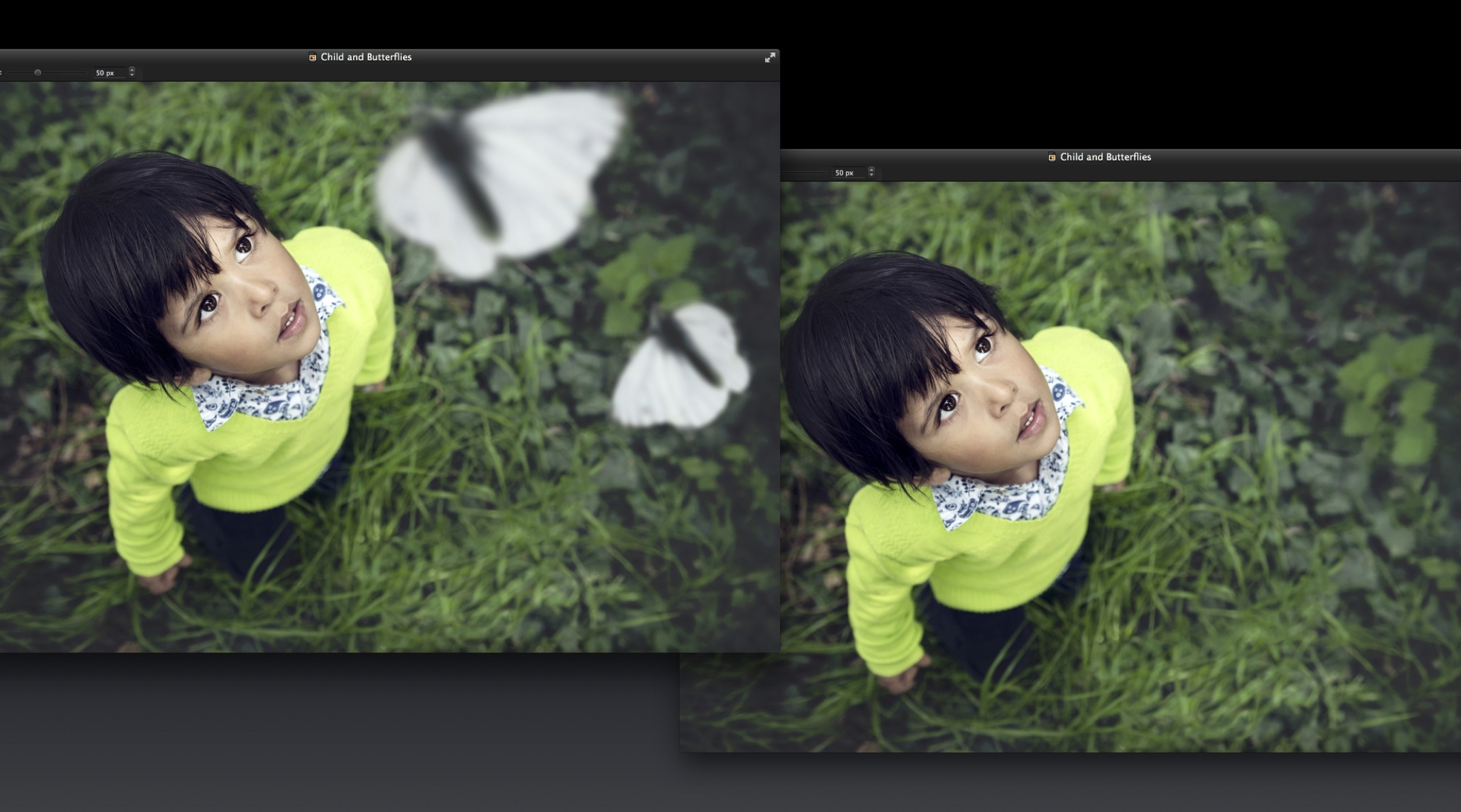
The Repair Tool now uses color-correction to match repaired areas seamlessly. It also has clever smarts that mean you don’t have to precisely select an object anymore, the software will remove the whole object automatically. Pixelmator will also try its best to infer the structure of the background area, for a more natural final edit.

The Repair Tool now has three different options, Quick, Standard and Advanced. Quick is meant for small blemishes, whereas Standard and Advanced tackle the removal of larger objects from a scene. It’s not exactly clear under what circumstances you are supposed to change mode, so I chose ‘Advanced’ every time in my testing and the results were fantastic. It’s sort of like magic. You can see an example of what this is capable of after the break …


Expand
Expanding
Close

How-to: Get started with Instant Alpha and Smart Lasso in Preview for OS X

Site default logo image

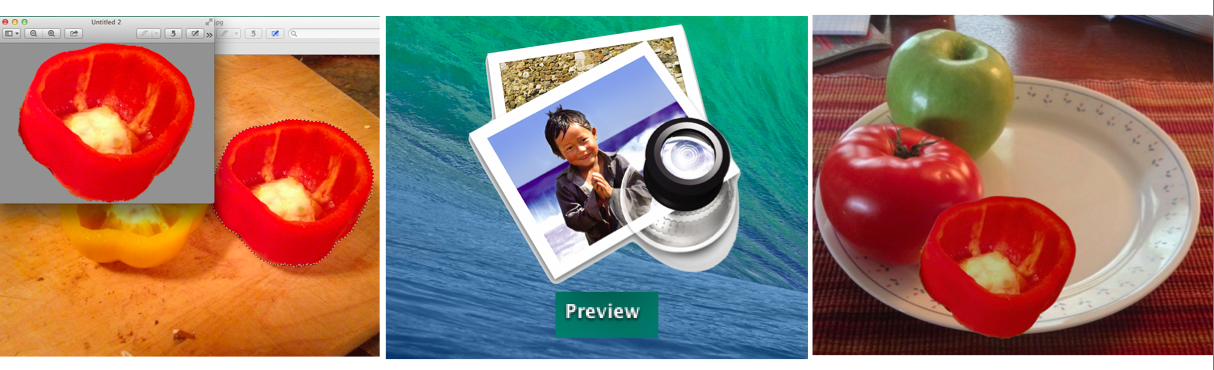
As you may know, Instant Alpha is a feature that allows you to remove an object in an image from its background. You can find this feature in apps like Pages and Keynote, as well as the Preview app that comes built-in on Macs. As we’ve written recently in articles about signatures and marking up images, Preview has a lot of capabilities that don’t get much press.

In this article, you’ll learm how to use Instant Alpha and Smart Lasso to create custom images, remove an object from its background, and some advantages of using Preview to create custom images.

Images created in this way could be used for anything, including fun social media posts. They can be imported into iPhoto, cropped and used in books, calendars, or especially to customize a birthday or greeting card. Depending on what kind of image you want to create, you can really do quite a bit using Preview, Pages and a few other tips and tricks.


Expand
Expanding
Close

Site default logo image

Next-gen faster Haswells chips out as soon as next month, could find their way into upgraded MacBook and iMacs

Intel’s next generation of its Haswell CPUs could be out as soon as next month, according to sources cited by TechPowerUp (via TonyMacx86).

According to sources in the IT retail, Intel could launch these new chips, led by the Core i7-4790K, on May 10th in most markets […]

 Intel Core “Haswell” Refresh processors offer marginally better performance over current Core “Haswell” chips, at existing price points (i.e., they will displace existing chips from their current price-points).The 9-series chipset offers features such as M.2 SSD support, making you ready for a tidal wave of 1000 MB/s SSDs that will launch around Computex.

Apple now uses PCIe SSD interface  even in its base model MacBook Air so the mSATA improvement will only benefit PC users and Hackintoshers but the mildly improved performance might find its way into updated iMac or MacBooks due ’round WWDC.

Site default logo image

Expect faster MacBooks with longer battery-life thanks to DDR4 RAM

Matt Margolis is predicting that Apple will be switching from DDR3 to DDR4 RAM for future MacBooks this year, suggesting faster performance and improved battery-life.

One of Apple’s RAM manufacturer. Micron, says that DDR3 bandwidth tops out at around 17GB/s, while DDR4 aims to double this by 2015:

Since the introduction of the iPhone, the industry has responded with an evolutionary transition from 2.6 GB/s LPDDR1, to 8.5 GB/s LPDDR2, to 17 GB/s LPDDR3, the technology currently is powering today’s high-end devices in volume production. DRAM bandwidth has roughly doubled with each generation to keep pace with demand.

The next generation of low-power DRAM (LPDRAM)—also known as LPDDR4—addresses these constraints by doubling the bandwidth of LPDDR3 while maintaining power neutrality. For example, LPDDR4 targets 34 GB/s of total bandwidth for a x64 memory subsystem, doubling the bandwidth target from LPDDR3

The company has not given specific targets for improved battery-life, but says that it aims to reduce power consumption in both active and standby modes.

Margolis suggests that DDR4 RAM may also make it into future iPhones and iPads.

Contestants at Pwn2Own take down Safari, but said OS X security is better than other systems

<a href="http://www.pwn2own.com/photo-gallery/#prettyPhoto[]/13/">Pwn2Own</a>

As usual, the annual Pwn2Own contest featured many hackers targeting the latest operating systems and browsers from the major vendors, including Apple. Threatpost reports that the “Keen Team” focused Safari on Thursday and exploited it with relative ease.

The team took home a $40,000 bounty for their efforts on Safari, as well as a share in a $75,000 prize for co-engineering a zero-day Flash exploit. They say they will donate some of their winnings towards charities representing missing Malaysian Airplane passengers.

The group say that for Safari, they used two different exploit vectors. One vulnerability was a heap overflow in WebKit that enabled arbitrary code execution. The team then used this opening to use another exploit to bypass the application sandbox and run code as if it was user privileged.


Expand
Expanding
Close

TwelveSouth announces new hand-finished ‘Rutledge BookBook’ case for MacBooks

Site default logo image

TwelveSouth, the company behind the popular BookBook series of cases for Apple devices that we’ve reviewed several times in the past, today announced a brand new option for MacBook users. The new “Rutledge BookBook” for MacBook is the first new product in the BookBook lineup in almost three years and the company says it’s also its most unique yet.

While the overall look of the case is much the same as BookBooks that came before it, TwelveSouth says the Rutledge case features a new process of finishing the leather by hand that makes it look even more like an authentic old book. It also makes every Rutledge BookBook unique:
Expand
Expanding
Close

f.lux for Mac gets smarter with screen-dimming based on daily schedule, Movie Mode and more

f.lux, the popular utility that changes the color temperature of your Mac’s display to reflect the sun’s daylight cycle, has received a major update. Whilst still being in beta, the app can now calibrate your screen based on your actual schedule, not just sunrise and sunset times.

This means the app is now useful for people who have non-standard schedules, such as people who work night shifts. The app smoothly transitions between ‘daytime’,’sunset’ and ‘bedtime’ presets based on the schedule information provided. You tell the app when you wake up and it automatically calculates the color temperature levels for every hour of the day.


Expand
Expanding
Close

Apple building support for driving 4K displays at ‘Retina’ resolution, 60Hz output from 2013 MacBook Pros

Site default logo image

4K display running at “Retina” resolution on 10.9.3

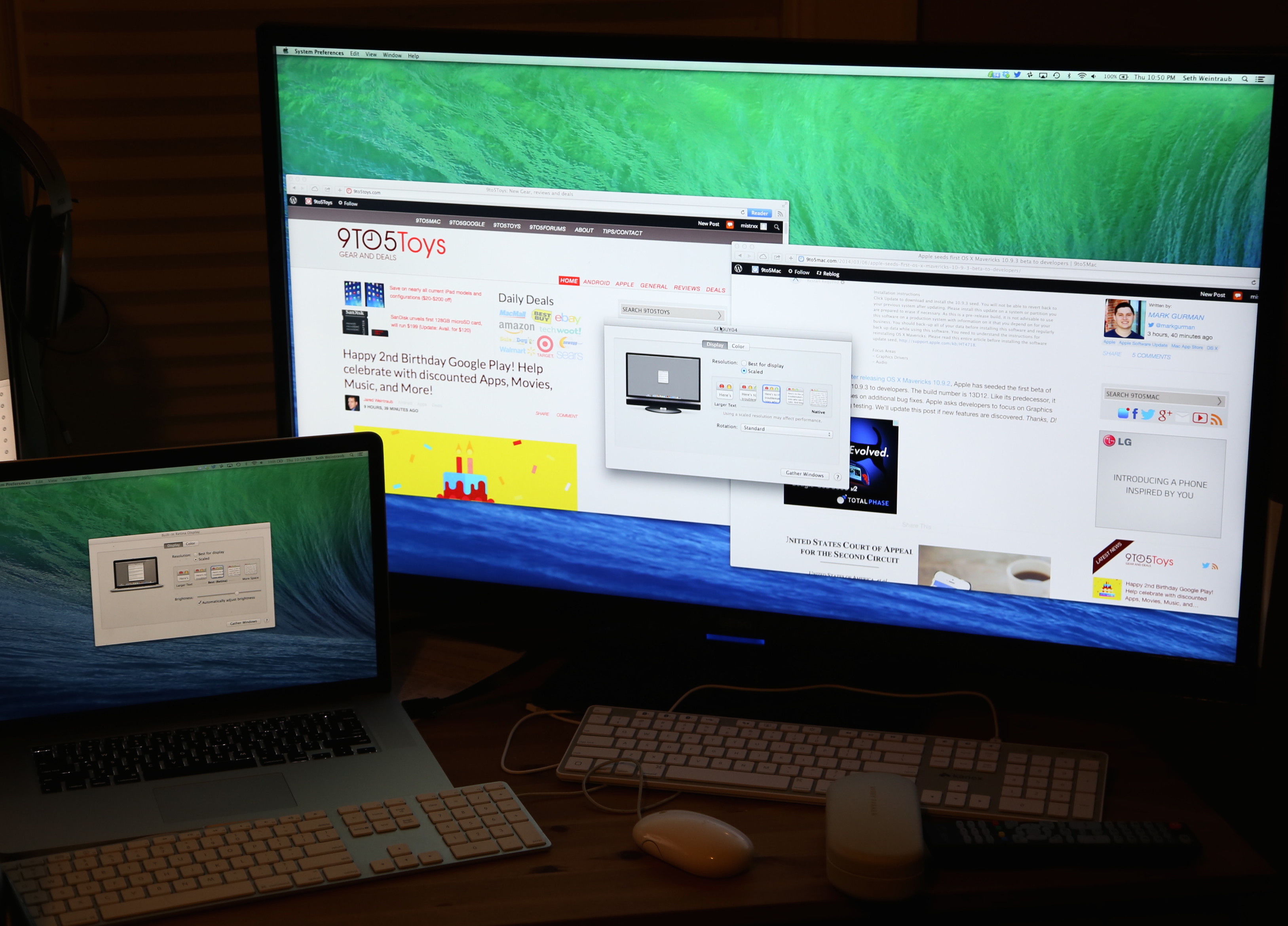
Earlier today, Apple provided developers with the first beta for the upcoming release of OS X Mavericks version 10.9.3. Apple did not disclose any new features coming in 10.9.3, but we have discovered that the update includes notable enhancements for users with Macs connected to 4K-resolution monitors. With 10.9.3, Mac users can now natively set their 4K monitors to run the Mac operating system at a pixel-doubled “Retina” resolution.

The new settings, which appear nearly identical to the settings on a standard Retina MacBook Pro display, can be seen here on a 10.9.3 Mac connected to a 4K monitor:


Expand
Expanding
Close

RIP Mac optical drives? Rumor suggests Apple to drop last non-Retina MacBook Pro this year

Site default logo image

DigiTimes is claiming that Apple will cease production of the non-Retina version of the 13-inch MacBook Pro this year as it prepares to launch refreshed Retina models toward the end of the year.

Apple is expected to stop production of the 13-inch MacBook Pro in the second half of 2014 and will replace the product line with thinner models equipped with a Retina display. Meanwhile, Intel will offer second-generation ultrabooks in the fourth quarter of 2014, pushing the notebook industry further into the ultra-thin era, according to Taiwan-based supply chain makers … 
Expand
Expanding
Close

Nuance announces Dragon Dictate 4, with pre-recorded transcription features and Gmail integration

Nuance has just announced the next major version of its Mac dictation software, Dragon Dictate 4. The new version improves recognition accuracy as well as several new features, including the ability to machine transcribe from a pre-recorded audio file. You no longer have to be recording a voice live to get transcription.

[youtube=http://www.youtube.com/watch?v=RRfbZ0h4yBo]

We’ve had a quick play with the software and the accuracy is almost scary good compared to older versions of the software. Speaking in a normal voice gives you almost 100% accuracy and even mumbling seems to work. While Mavericks uses the same Nuance speech engine, Dictate 4 has a better interface for transcription and tons of extra features as outlined in the videos above and below.

Dragon Dictate software has also been updated for modern system architectures — it is a 64-bit app now.  This results in better performance and better memory management over its predecessors. The company says it has drastically reduced latency when interpreting speech.

[youtube=http://www.youtube.com/watch?v=YnGKb854CNI]


Expand
Expanding
Close

Opinion: Why I love Apple products, and am just a tiny bit embarrassed to be seen using them

Site default logo image

I love my Apple products. I’ve used Macs since day one. My desk right now has on it my MacBook Pro, MacBook Air, iPad Air, Thunderbolt Display and iPhone. Oh, and an Apple Bluetooth keyboard and Magic Trackpad, of course.

My friends are convinced that I’m incapable of leaving the house without my iPad, and I have to confess that the evidence is on their side. My car has an iPhone dock so I can listen to music and podcasts. If I’m on a plane, train or tube, it’s a near-certainty that I’ll be using my iPad or listening to music on my iPhone – or both.

I love Apple hardware design. Sleek, minimalistic, beautiful. There aren’t that many other really attractive laptops out there, and most of the ones that are have essentially copied Apple’s designs … 
Expand
Expanding
Close

How-to: Use Preview to put signatures on PDF’s, Pages Documents, and Mail messages

Site default logo image

As we have written about in previous articles, Preview is a valuable tool in OS X that does not get a lot of press. In this article, we will review how you can use Preview to capture your signature using the iSight camera on a Mac, then use it in Pages documents, to sign PDF documents, and as an image in your signature in the Mail app.


Expand
Expanding
Close

Site default logo image

How to: Get Spotlight processes back under control when CPU usage goes crazy

If you’re finding that your Mac fans are running a lot more than they used to, you might want to check out whether a couple of Spotlight processes are consuming more than their fair share of CPU cycles.

Ever since the latest Mavericks update, I found that my MacBook Pro seemed to be running hot a lot of the time, with fans ramping up to high levels to cool it. Checking Activity Monitor didn’t seem to be shedding much light on things at first glance. The only two processes using an unusual amount of CPU were mds and mds_stores. These are two processes used by Spotlight when indexing, so I didn’t think too much of it – Spotlight has to do its indexing sometime, right?

But several checks later, these two processes seemed to be helping themselves to significant chunks of CPU on a regular basis, at which point I did some Googling.

I started by disabling Spotlight altogether to confirm that it was the culprit. To do this, I went into Terminal and entered:

sudo mdutil -a -i off

The fans spooled down and all was back to normal. Spotlight was indeed the culprit.

I briefly considered leaving Spotlight off until the next OS X update, but that proved too much of a pain. I keep my most-used apps in the dock, but everything else I habitually launch from Spotlight. CMD-space plus the first letter or two of the app is just too convenient to give up. So I did some more Googling – after switching Spotlight back on with:

sudo mdutil -a -i on

The first tip I found was here, where it suggested deleting the Spotlight database and forcing it to re-index. You can do this in Terminal again:

 sudo rm -rf /.Spotlight-V100/*

Top tip: set this going overnight, as the re-indexing takes a while.

This helped quite a bit, but the mds process still seemed a little greedy. More Googling led me to a suggestion to remove from Spotlight’s indexing any directories with frequently-changing content, especially those used for online backup. You can do this by going into System Preferences, clicking the Privacy tab and then drag-and-dropping onto it any directories you don’t want it to index.

I added my CrashPlan, MobileSync and Dropbox folders – three specific suggestions I’d found – and then for good measure added some others with frequently-changing content.

This did the trick: my fans stayed on low, and Activity Monitor showed the mds processes consuming only tiny amounts of CPU.

I’m not sure how general an issue this – hence making this an aside – but if you’re finding your Mac running hot, it may be worth checking out.

Apple acknowledges AirPlay Mirroring issue with new Mac Pros & MacBook Pros

Site default logo image

Update: The document originally recommended disabling Bluetooth, but it appears updating to the latest version of OS X is Apple’s recommended fix. Much better.

In a support document issued today, Apple addressed a known issue with AirPlay Mirroring performance freezing or dropping out. MacBook Pro and Mac Pro users with last year’s models may see the issue when using an 802.11 b/g network…
Expand
Expanding
Close

Site default logo image

Offers you can’t refuse: $100 off all MacBooks, up to 70% off 2K iOS games, Samsung 3D BR player $55, more

Be sure to follow 9to5Toys to keep up with the best gear and deals on the web: Twitter, RSS Feed, Facebook, Google+ and subscribe to the new Safari push notifications feature.

Today’s can’t miss deals: 

Best Buy 2-Day Doorbusters: $100 off all Apple MacBooks and 21″ iMac for $1,150 ($150 savings)

Game/App Deals: Up to 70% off 2K iOS games, Tilt to Live: $1 (Reg. $3), 100 Rogues: $1 (Reg. $3), iOS freebies, more

Samsung Smart 3D Blu-ray Wifi BluRay player (refurb): $55 shipped. Add Godfather series Blu-ray for an offer you can’t refuse


Other great deals from today:

More great deals still alive:

Review: How I transformed my workspace w/ LandingZone’s MacBook Pro Dock

Site default logo image

Think of it as an iPhone-style dock for your MacBook. At home you might have several things plugged into your MacBook’s various ports (hard drives, USB products, speakers, etc), which means disconnecting and reconnecting everything each time you leave or return with your MacBook. With LandingZone, everything gets connected to ports in the back of the dock, allowing you to simply place your MacBook in the dock and instantly connect to all your peripherals. When you leave, you can pop out your Mac and walk away in seconds without thinking twice about all the connected cables. It also packs in a 5-port USB hub, ethernet adapter, HDMI, and Mini DisplayPort all while reducing cable clutter on your desk. I’ve been using the latest LandingZone Dock model for the 15-inch Retina MacBook Pro for a couple weeks and it has truly transformed my workspace.
Expand
Expanding
Close

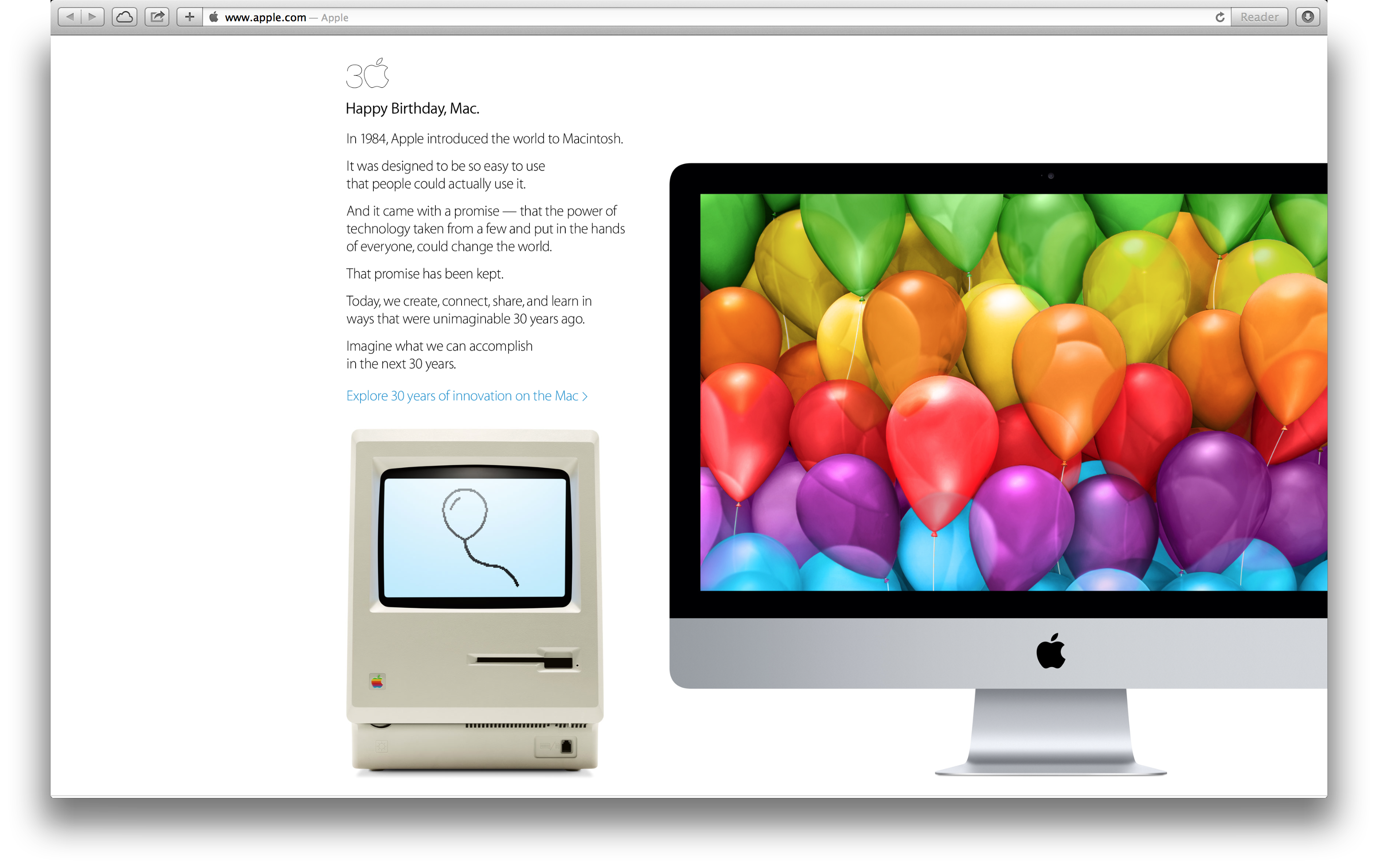
Apple takes over its homepage to celebrate 30 years of Mac, with accompanying video, timeline and poll

In addition to interviews with the press, Apple is celebrating 30 years of Mac with a full-bleed graphic on its homepage, which links to a minisite that plots how the Mac evolved over the years. The message says that Apple made the Macintosh with a promise to get “the power of technology .. in the hand of everyone”. “This promise has been kept.”, it reads. The dedicated minisite depicts a (scrollable) timeline of the major models of Mac since 1984, spanning the PowerBook, the iMac and ending with the Retina MacBook Pro and the brand new Mac Pro.

See the accompanying video after the break.


Expand
Expanding
Close

Google Now comes to the Mac in the latest Chrome Canary release

Screen Shot 2014-01-16 at 13.25.19

There have been indications for a long time that Google Now was eventually coming to the Chrome browser. Via the Google Operating System Blog, the service has finally surfaced in the most recent release of Chrome Canary (Google’s name for the app’s ‘alpha’ channel builds).

As expected, Google Now in Chrome closely mirrors Google Now on Android. The contextually-relevant cards (which show information such as weather, news or upcoming flights) appear in Chrome’s Notification Center on the desktop. The notification area can be accessed in the menubar, represented by a bell icon.


Expand
Expanding
Close

Stylish screensaver recreates the iOS 7 lock screen experience on your Mac

Want to bring iOS and OS X even closer together than they already are?
Christian Heudens has recreated the iOS 7 lock screen to your Mac as a free downloadable screensaver. The thin fonts look great on a Retina Display. It’s a neat way to give your Mac a bit of individuality and make your experience across your Apple devices even more consistent.

The developer has done a good job of replicating the feel of iOS 7, using the same starry wallpaper by default and font style. The screensaver adds a zoom effect to the background too, which is a sophisticated yet subtle addition.


Expand
Expanding
Close

How-to: Use Apple Mail rules to automatically filter out unwanted messages

Site default logo image

Preventing unwanted messages from showing up in your inbox can be integral to enjoying email. In this article we will walk you through the process of creating mail rules that will direct messages to other folders or the trash based on conditions you specify. We will also discuss how to update rules to include additional senders or other criteria, and provide some common-sense guidance about effectively using mail rules in general.

Mail rules allow you to direct messages out of your inbox into another folder or trash automatically, based on their sender or other conditions. Rules can be set up on iCloud.com if the email address is the one you use for iCloud (it can end in either @icloud.com, @me.com, or @mac.com).

For your other email addresses, rules can be set up in the Mail app on a Mac. If you set up rules using iCloud.com they are very effective, immediately directing messages to the specified folders on all your devices. If you set up rules using the Mail app, they are effective only after you start up your Mac and open the Mail app.  At the end of this article, I will make some practical suggestions about how to address that, and other aspects of using mail rules.


Expand
Expanding
Close

Bluetooth portable conference speakerphone smackdown: Philips WeCall vs. Logitech P710e

Site default logo image

Update: Check out the Harman Kardon Esquire which we reviewed in December 2014

As we begin to rely on our mobile devices for more and more of our business needs, I found myself needing a “portable Polycom” which would allow me to make quality speakerphone calls from my Mac or iPhone. Sure, the built-in speaker and mic are top notch on Apple products for their size, but I’d often have a hard time hearing what was on the other end of the line. Even more importantly, people couldn’t understand what I was saying, especially as I moved around.

I’ve decided to take a look at two similar solutions:  Philips WeCall ($150) vs. Logitech P710e ($140) pictured above…
Expand
Expanding
Close