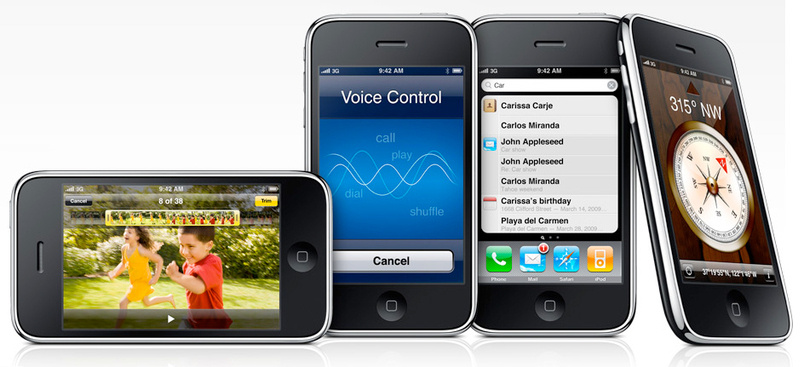
iOS devices refer to any of Apple’s hardware that runs the iOS mobile operating system which include iPhones, iPads, and iPods. Historically, Apple releases a new iOS version once a year, the current version is iOS 10. Here is the complete list of iOS 10 compatible devices.
There’s no denying iOS devices and cheaper Android solutions are taking the place of Cius. Recent studies show Apple with 97 percent of tablets in the enterprise, while 94 percent of the Fortune 500 arecurrently testing or deploying iPad. The result is no further investment in the Cius tablet line and only limited support for what is currently available. The company will instead “double down” on Jabber and WebEx
Ever since the release of iOS 5.1.1, many in the jailbreak community have anxiously waited for the destined release of an untethered jailbreak for the new software. For those who have been waiting, the day has finally come. The Chronic Dev Team just released Absinthe 2.0, which is the tool to jailbreak iOS 5.1.1—untethered style. It was announced on-stage at Hack in the Box 2012 in Amsterdam today as a “one more thing.”
Tim Cook likes to refer to the iPad as “the poster child of the post PC world” and often brags about how it is leading the pack. According to new numbers out today from research firm NDP, if you account for the iPad (13.6 million units during the quarter), Cupertino, Calif.-based Apple has maintained its position as the leader in mobile PC sales with 17.2 million units shipped during Q1. Apple beat out its nearest competitor HP by a solid 8.3 million units, which makes it the leader by far.
As for the area of key growth, NDP backs up Cook’s recent claims that China is a key emerging market. According to the study, China accounted overall for 13 percent of mobile PCs shipped during the quarter. In related China news, a new study reported Apple doubled its device market share in China during Q1. Of course, this is due in part to the launch of the iPhone 4S with the fighting bustling crowds. However, Samsung still leads in the country by roughly 2.8 million devices shipped.
Apple already announced its Q2 earnings, where the company revealed it shipped 11.8 million iPads. It will be interesting to see how Apple fairs against the competition during Q2. But, right now, it looks like the others do not have a shot. Apple also led in tablets shipped, with a 62 percent marketshare during Q1:
Calling her company “extraordinarily conservative,” IBM CIO Jeanette Horan recently toldMIT Technology News that the company she works for blocks Siri and iCloud on its staff iPhones. The reason? Security measures, just to ensure spoken queries that are transmitted are not stored somewhere, like on Apple’s servers. As for the reason the company blocks iCloud, it is because files through the service are transferred publically— or with not as much security as IBM would like.
The piece continues to outline IBM’s efforts on security with its staff. When a employee brings in their own device (as they have been encouraged to do within the company since 2010), they must first give it to IBM’s IT department to remove what they believe is troublesome software like Siri and iCloud, and they also enable software that will allow the IT staff to quickly erase the memory on the device remotely in case it is lost or stolen.
MIT Technology News noted that as more employees want to use their own devices, the tools companies are using to protect them are booming:
The kinds of challenges IBM faces are becoming increasingly common. Surveys have shown that more than half of large companies are catering to their employees’ desire to use their own smart phones, and as a result, the market for “mobile-device management” tools is booming. A January report by Forrester Research counted more than 40 companies offering such services.
John Nack, Adobe’s principal product manager, has taken to his usual forum on the Adobe blogs to share a new HTML5 gallery recently debuted by developer Felix Turner. Turner is known for his PostcardViewer and other Photoshop-compatible image gallery applications that inspired Adobe to include Flash support in Photoshop’s built-in Photo Gallery. Turner’s new HTML5 gallery, called “Juicebox“, also works through Photoshop and Lightroom plug-ins (or through the company’s own app), and it has impressive options for iOS galleries.
We exclusively reported this morning that the next-generation iPhone is currently tapped to measure 3.999-inches, and Apple is testing it internally. Furthermore, we also said it features an 1,136-by-640 resolution. Adding a bit of fuel to the 16:9 fire, MacRumors and BadGizmo Repair posted the front panel for the next iPod touch this morning, along with the camera sensor for the next iPhone. Interestingly, according to MacRumors’ leak, the front panel for the iPod measures 4.1-inches diagonally (as shown above).
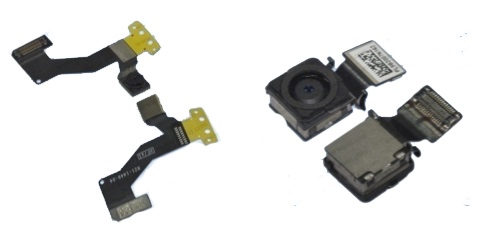
MacRumors and BadGizmo Repair also posted the alleged camera sensor for the next-generation iPhone. As you can see, there are not many differences from past generations of the camera included in the iPhone, except for the lack of an LED flash sensor. Leaked parts from suppliers are nothing new ahead of a new iOS device launch. Already we have seen leaks for the alleged home button and micro-SIM tray. Here is a close up of the camera:
Although there appears to be some discrepancy in the diagonal measure of the iPhone (we simply added the extra pixels, assumed the same 326ppi, and then applied some Pythagorus), it is clear that these seem to point to a 4-inch display. Other publications agreed:
As noted by The Loop, TiVo announced a new service called “TiVo Stream” that will allow TiVo Premiere or Premiere Q DVR customers to access content on their iPhones and iPads. The company made the announcement alongside a new “IP set-top box” that delivers content to secondary TVs. There is no timeframe for a launch of the new service, but additional details are coming in the months ahead. TiVo noted the Stream service would be the first to “enable streaming or download of shows simultaneously to multiple portable devices without interrupting what’s playing on the television”:
TiVo Stream seamlessly delivers the content available on a consumer’s TiVo Premiere or Premiere Q DVR to alternative screens such as iPads and iPhones. Unlike similar offerings in the market, this is the first product to enable streaming or download of shows simultaneously to multiple portable devices without interrupting what’s playing on the television. The power of TiVo Stream enables users to quickly transfer shows to their mobile device for viewing outside the home. TiVo will release both products at retail and through select cable operators.
Run by former Nokia and Fossil execs, and previously available in beta for Android devices only, Meta Watch officially launched its smartwatch platform today that interfaces with iOS—the first of its kind to utilize the low energy Bluetooth 4.0 technology. The watch works with an iOS app for customizing which notifications will pop up on its display. Notifications consist of the usual phone calls and messaging, but developers have access to an API that will allow them to send almost anything to the device.
The company previously had issues getting the platform to run smoothly due to limitations of iOS. However, thanks to Bluetooth 4.0, the device featuring a 96-by-96-pixel LCD display is now slated to ship sometime this month for $199. The Meta Watch is clearly still more of a development kit than an end-user product at this point, but with six fully programmable buttons, a 3-axis accelerometer, vibrating motor, ambient light sensor, and of course Bluetooth 4.0, there is a ton that devs will be able to do with the device.
Apple is testing multiple next-generation iPhones, and we have independently heard that at least one of these devices sports a brand new display.
Apple’s iPhone display went mostly unchanged from the first iteration of the iPhone to the third, but for the iPhone 4, Apple took the iPhone display to new heights with the incredible 640 x 960 Retina Display. The display has always been 3.5 inches measured diagonally and a 3:2 aspect ratio. As we hinted yesterday, all of that is about to change…
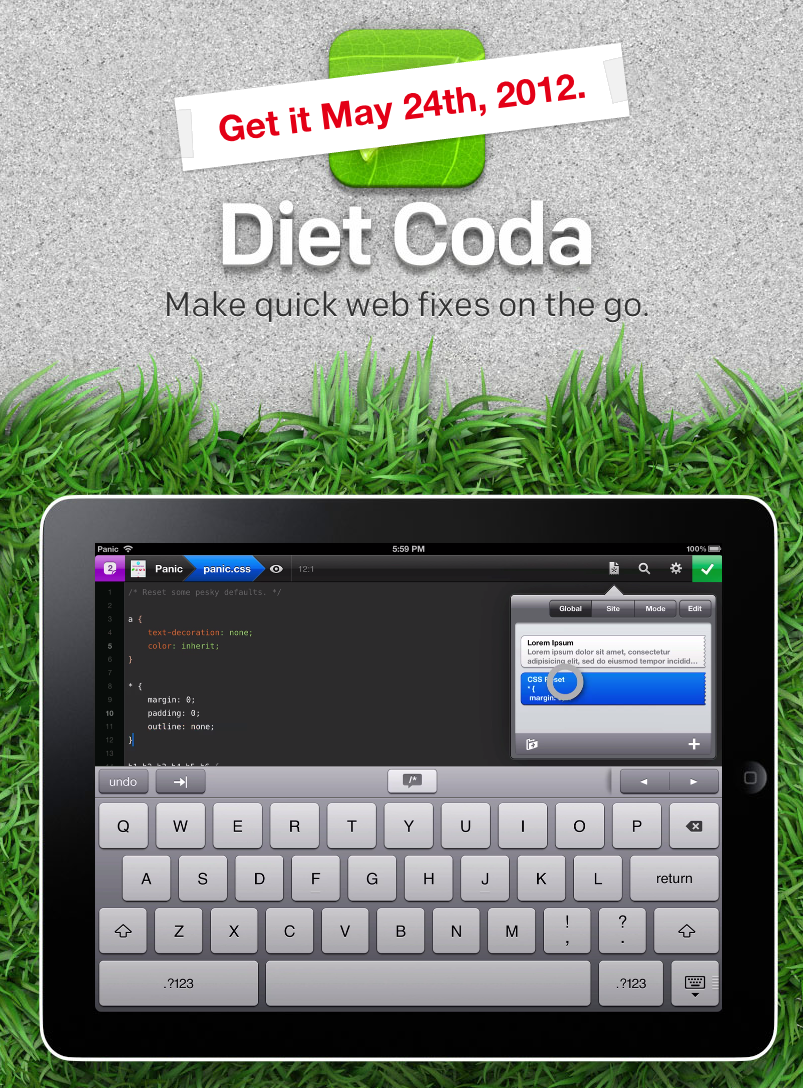
Panic, the makers of Coda, a popular development platform for web developers, just announced a new $9.99 iPad version and a second version of its Mac software. The demo videos (here and here) look delish.
The software will land May 24 and be available through the App Store for both platforms.
Most would assume that the currently free on-contract iPhone 3GS will discontinue with the introduction of the sixth-generation iPhone later this year, but one analyst claimed its life would go on. According to Jefferies analyst Peter Misek in a note released last night (via Fortune), Apple signed an agreement “with a major global distributor” that will bring the iPhone 3GS to pre-paid carriers and developing countries for an even cheaper price. Misek said the 3GS would be priced between the $200 to $250 range, which is cheaper than the $375 price point that it is now priced at wholesale. The analyst further estimated iPhone shipments for the June quarter.
Ever since the release of iOS 5.1.1, many in the jailbreak community have anxiously waited for the destined release of an untethered jailbreak for the new software. Non other than the prolific pod2g has worked tirelessly to comfort those in need. According to pod2g, the release of the untethered jailbreak does not appear to be that far off — coming this week.
Thanks to awesome work of @planetbeing and @pimskeks, we're near ready for a release. Now it's a matter of days.
Tethered jailbreaks are available for iOS 5.1.1; however, an untethered jailbreak is much better. It allows users to turn on and off their device without losing a beloved jailbreak.
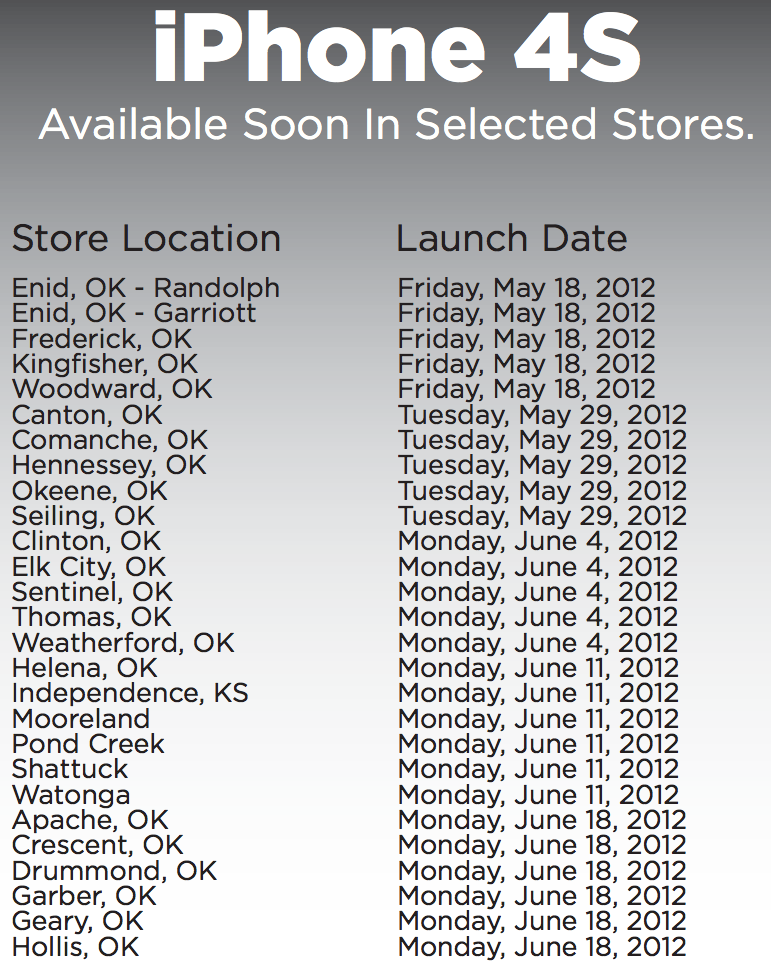
Following a number regional U.S. carriers that launched the iPhone this month, Oklahoma-based Pioneer Cellular today announced availability of the iPhone 4S. The carrier covers a large section of Northwest Oklahoma, and it will launch the device in-store at select locations today, followed by other locations on May 29, June 4, June 11, and June 18. Click the image to the right for a full list of cities and dates.
The carrier has not announced pricing or iPhone- specific plans for the device, but it currently has data plans starting at $30 for other smartphones. Earlier this month, regional carriers in Kentucky, Kansas, and California launched the iPhone 4S and iPhone 4, with some prices starting at $149 for the 4S and $49 for the iPhone 4. In April, five other small carriers added the iPhone.
Puerto Rico-based no-contract carrier Open Mobile now also offers the iPhone 4S and iPhone 4 at a number of its stores. Pricing is available below:
Best Buy this week began offering the 8GB iPhone 4 for $49.99 on the usual two-year contract through Sprint, Verizon, or AT&T— just like Target, many regional carriers, and other retailers following the trend. That is $50 off Apple and many other retailers’ $99 price tag. Unlike some of the other offers, it does not appear to be an in-store only deal, because free shipping is included. The offer is listed as valid between “5/11/12-6/30/12” and is available through BestBuy’s website now. However, some models are currently listed as “not available for shipping.”
As noted by a reader in Phoenix, AZ, at least some Sam’s Club locations appear to be offering the Verizon iPhone for $48.
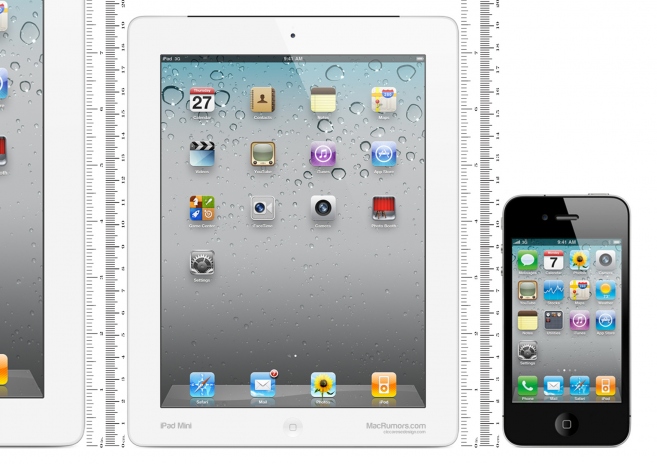
Taiwan-based publicationLiberty Times (translated, viaMacotakara) shared an interesting bit of information this evening about the rumored 7.85-inch “iPad Mini.” The publication reported that LG and AU Optronics were certified to supply the LCD panel for the iPad Mini. Furthermore, it goes on to claim that both manufacturers are working to ship the panels for production and for a release sometime during the latter half of 2012. The target-shipping amount for the iPad Mini is said to reach 6 million (which was previously reported), but I think there would be a need for more due to the influx of holiday sales.
Other news about iPad Mini parts include: TPK Holding will produce 4 million backlight modules; Chemi Innolux will produce 2 million; and Nissha Printing will produce the touch film sensor.
Rumors of the iPad Mini have really ramped up over the last few months, because Apple is said to take on Amazon and other competitors with a smaller 7.85-inch offering priced cheaper for customers just entering the tablet market. Many are skeptical that this product would see the light of day from Apple, but the biggest argument against it comes from late Apple co-founder Steve Jobs. He asserted one would need super-small fingers to navigate smaller 7-inch tablets.
According to rumors, the 7.85-inch iPad will not feature a Retina display as one would certainly hope. Instead, Apple may include the pixel dimensions that were featured on the original iPad (1024-by-768). This type of display will help Apple cut costs, and then it can sell the tablet at a low price.
In the middle of March, a slew of lawsuits were filed against Apple claiming the Cupertino, Calif.-based Company misadvertised Siri, which is the company’s intelligent personal assistant software announced on the iPhone 4S in October of last year. The lawsuits said Apple used its commercials to convey a “misleading and deceptive message” about Siri. However, in typical fashion, Apple firmly disagreed.
Apple is working to get the class-action lawsuit dismissed from a California court by claiming customers could return the iPhone within 30 days of purchase if they are unhappy with Siri. Here is Apple’s motion to dismiss, as found by The Wall Street Journal.
They offer only general descriptions of Apple’s advertisements, incomplete summaries of Apple’s website materials, and vague descriptions of their alleged—and highly individualized—disappointment with Siri. Tellingly, although Plaintiffs claim they became dissatisfied with Siri’s performance “soon after” purchasing their iPhones, they made no attempt to avail themselves of Apple’s 30-day return policy or one-year warranty—which remains in effect. Instead, they seek to take an alleged personal grievance about the purported performance of a popular product and turn it into a nationwide class action under California’s consumer protection statutes. The Complaint does not come close to meeting the heavy burden necessary to sustain such claims.
The company also said that while Siri is still in beta, she is still “cutting edge.” What do you think? Is this class-action lawsuit against Apple warranted? One of the plaintiffs in the case said he could not replicate the following commercial:
Last week, we revealed Apple’s decision to drop Google Maps in iOS 6 in exchange for its own in-house solution branded simply as “Maps.” At the time, we told you many versions of iOS 6 have been floating around Apple’s campus, which indicated Apple is likely on track for a mid-June unveiling at this year’s World Wide Developers Conference. Shortly after, references to an upcoming iOS 6 beta were found in the code strings of the iCloud.com beta website.
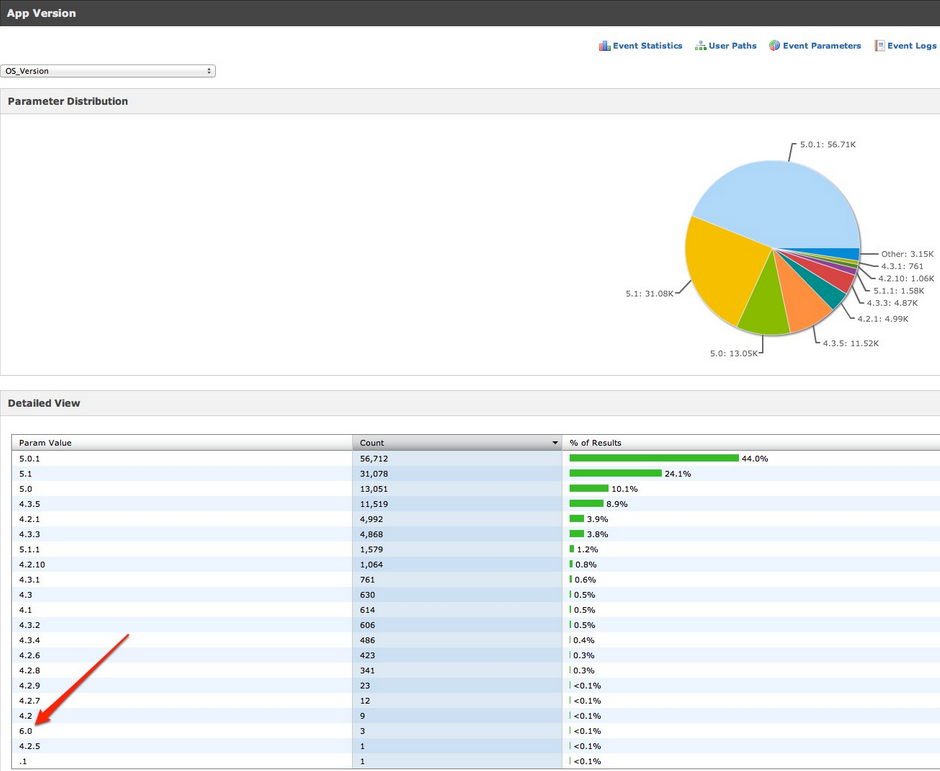
One app developer informed us today that it has recently noticed users running iOS 6 using its app. The developer observed the “iOS6” string when collecting the OS version from analytics software. It has not been able to trace exactly when the iOS 6 users started appearing, but it was sometime over the past week. Other developers that we spoke to began seeing hits in late April. There is a good chance that this means Apple is amidst iOS 6 compatibility testing with higher-profile applications from the App Store. The process of next-generation versions of iOS appearing in developer usage logs occurred last year too.
Although Apple’s new Maps app and its 3D mode will likely be pushed as a major feature of iOS 6, we noted previously that anyone anticipating major home screen changes or Android-style widgets will likely be disappointed. Yesterday, The Wall Street Journal reported Apple was preparing to unveil an upgrade to iCloud at WWDC that would include new sharing and commenting features for photos, as well as video syncing capabilities that will likely be the Video Stream feature we told you about last year. Expand Expanding Close
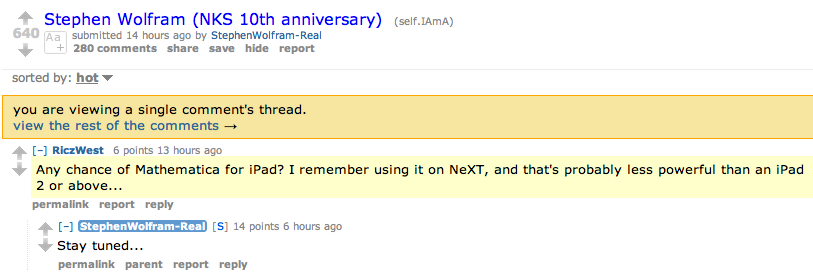
It would appear that Wolfram, the company behind the Siri search engine, is bringing its original product, Mathematica, to the iPad. In response to a comment on Reddit, when asked if there was an iPad version of Wolfram for iPad in the works, Stephen Wolfram said, “stay tuned.”
What Is Mathematica?
Almost any workflow involves computing results, and that’s what Mathematica does—from building a hedge fund trading website or publishing interactive engineering textbooks to developing embedded image recognition algorithms or teaching calculus.
Mathematica is renowned as the world’s ultimate application for computations. But it’s much more—it’s the only development platform fully integrating computation into complete workflows, moving you seamlessly from initial ideas all the way to deployed individual or enterprise solutions.
Mathematica is huge in science/engineering education and application—a few of the many areas where the iPad is making huge inroads in personal computing.
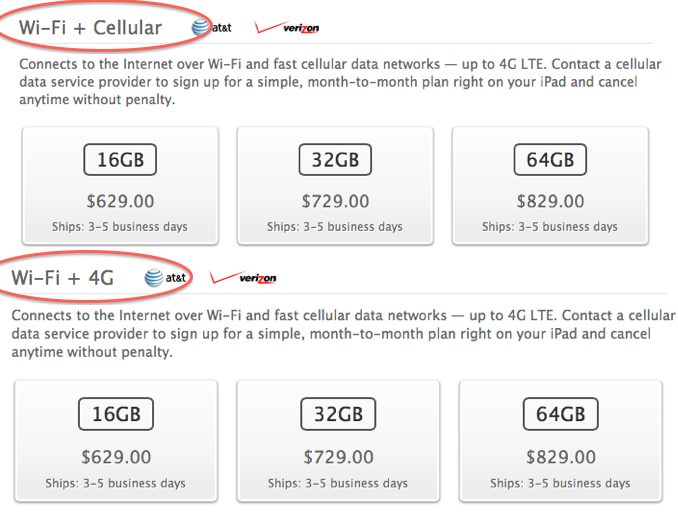
Top image was taken today, bottom image from May 9th (Apple Online Store)
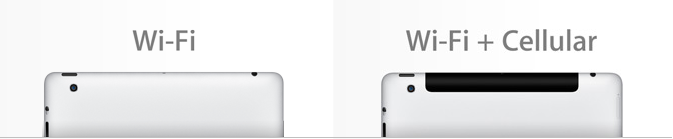
Following a string of complaints across the globe (notably in Australia and the United Kingdom) regarding Apple’s branding of the 4G-LTE compatible iPads, Apple has tweaked the name of their cellular-connecting iPad in some regions. The new name is simply “iPad WiFi + Cellular,” and this is a shift from the former “iPad WiFi + 4G” branding. All first-generation iPad and iPad 2 models with 3G-data connections were referred to as “iPad WiFi + 3G,” and the 3G model of the 16GB iPad 2 that Apple still sells is still called “iPad 2 WiFi + 3G.”
The source of the criticism of the 4G third-generation iPad models is the fact that the 4G LTE only functions in the U.S. and Canada, on a total of five carriers. The third-generation iPad can still connect to any 3G bands worldwide below the LTE level, but Apple still formerly advertised 4G capabilities in non-iPad-4G LTE- supported regions. Apple dropped that marketing weeks ago, but this new iPad name change marks Apple’s full point of not trying to fool customers. Apple did not simply make this iPad name change in the affected Australia and UK regions, but they changed it in the UK, Australia, the U.S., Canada, UAE, Vietnam, Thailand, Singapore, New Zealand, Malaysia, Ireland, and Hong Kong. Not every country (yet?).
On the Apple Online Store for Australia, the country where Apple has arguably taken the most heat regarding their former 4G iPad branding, Apple has long had the following explicit message:
This product supports very fast cellular networks. It is not compatible with current Australian 4G LTE networks and WiMAX networks. For service from a wireless carrier, sign up for a simple, month-by-month plan on your iPad and cancel anytime without penalty.
The new iPad name of “iPad WiFi + Cellular” can now be seen across Apple.com, and the changes were officially made within the last 24-48 hours. Apple retail stores have begun changing out their signage to new “WiFi + Cellular” marketing.
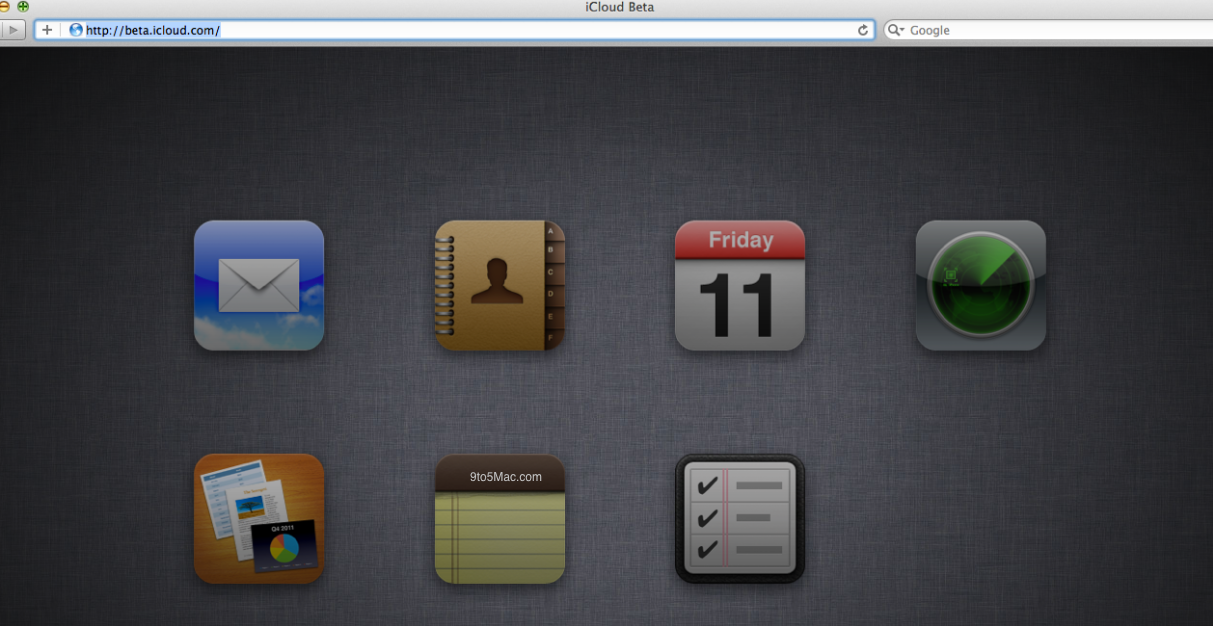
We know that Apple has been busy tweaking their iCloud.com website and testing new features like iOS 5-like notification banners, and now it appears that Apple is expanding the website’s web-application library. If you head to beta.icloud.com, you will see a beta-version of the iCloud.com website that includes new Reminders and Notes applications. Currently, we are unable to login, but we have been able to load the new icon grid. It is hard to tell if these new apps are something Apple trashed for the original iCloud website release or if Apple is planning on bringing them to the site. The 2012 marking on the bottom may support the latter. Thanks, Steven Troughton-Smith!
Update: It looks like Apple is showing and hiding the iCloud.com beta website sporadically. But we’ve got some more screenshots after the break. Let us know if you spot anything new.
Update 2: Reader Tom K. has discovered direct references to an upcoming iOS 6 beta in the code strings for this iCloud beta. From what we assume, it looks like Apple is going to unleash a new beta version of iCloud.com at WWDC and require the iOS 6 beta to run it:
Update 3: There is also a developer.icloud.com page.
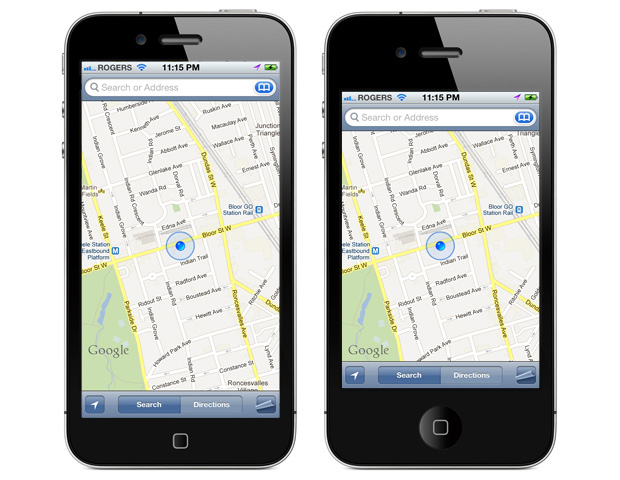
Rough mockup showing the user-enabled 3D mode (on the right)
According to trusted sources, Apple has an incredible headline feature in development for iOS 6: a completely in-house maps application. Apple will drop the Google Maps program running on iOS since 2007 in favor for a new Maps app with an Apple backend. The application design is said to be fairly similar to the current Google Maps program on the iPhone, iPad, and iPod touch, but it is described as a much cleaner, faster, and more reliable experience.
Following yesterday’s report from DigiTimes claiming Apple had a new 7-inch iPad in the works for August, iMore’s Rene Ritchie today claimed Apple is actually targeting an October release, alongside the next iPhone. He also claimed his unnamed source said the device will launch for $200 to $300 and pack-in a Retina display and specs almost identical to the current iPads:
Apple will be going forward with the 7-inch iPad, currently targeting an October 2012 release alongside the new iPhone, and — here’s the killer — at a $200 to $250 price point… Our source has indicated, however, that the 7-inch iPad will be identical to the current 9.7-inch iPad, just scaled down. That seems to include a 2048×1536 resolution display, just like the new iPad. If accurate, that would put the pixel density at around 326 ppi, the same as the iPhone 4S (and higher than the 264 ppi new iPad) retina display.
Ritchie noted his source is not sure of the exact dimensions, but past rumors indicated a 7.85-inch size could work. According to the report, one way Apple will meet the low price point is to offer the new 7-inch iPad with just 8GB of storage. We are taking this report for what it is until we have some solid proof, but we know iMore’s Ritchie has been accurate with several Apple product launches in the past, including the third-gen iPad and iPhone 4S.
According to a report from research firm MM Research Institute translated by Japanese blog Macotakara, iPhone sales in the Unites States during fiscal year 2011 hit 7.25 million units:
Research Institute released “General situation of mobile handsets shipment in Japan at 2011”. According to this MM Research Institute report, the number of iPhone sales reached 7.25 million units in Japan at 2011.
Amount of shipment of cell-phone was 42.74 million, which was 13.5% bigger than 2010, and smart-phone sales was 24.17 million in amount. In this market, Apple occupied 7.25 million (17% of all mobile phone sale) and got 2nd position by handset maker.
Focusing on smartphone market, Apple got 1st position as 30% share by handset vendor. Androids got 69% share by platform, and iOS got 30%.
As of the latest numbers from comScore, Apple’s growth in Japan outpaced Android during the three-month period ending February 2012 to take 34.2-percent of smartphone subscribers.