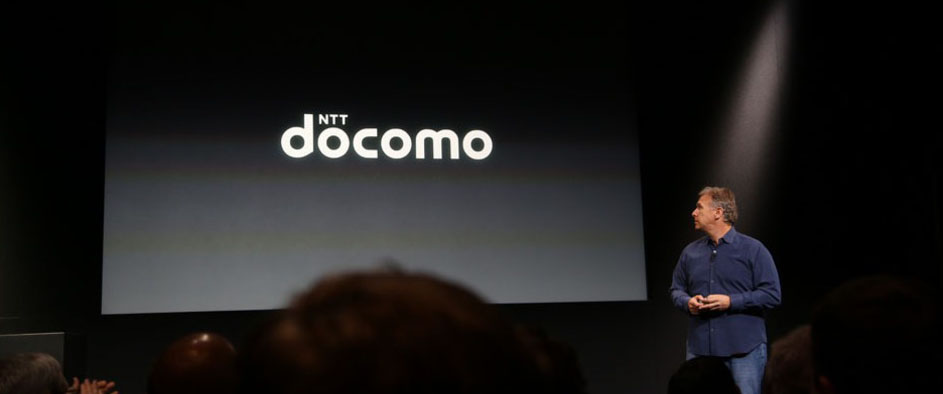
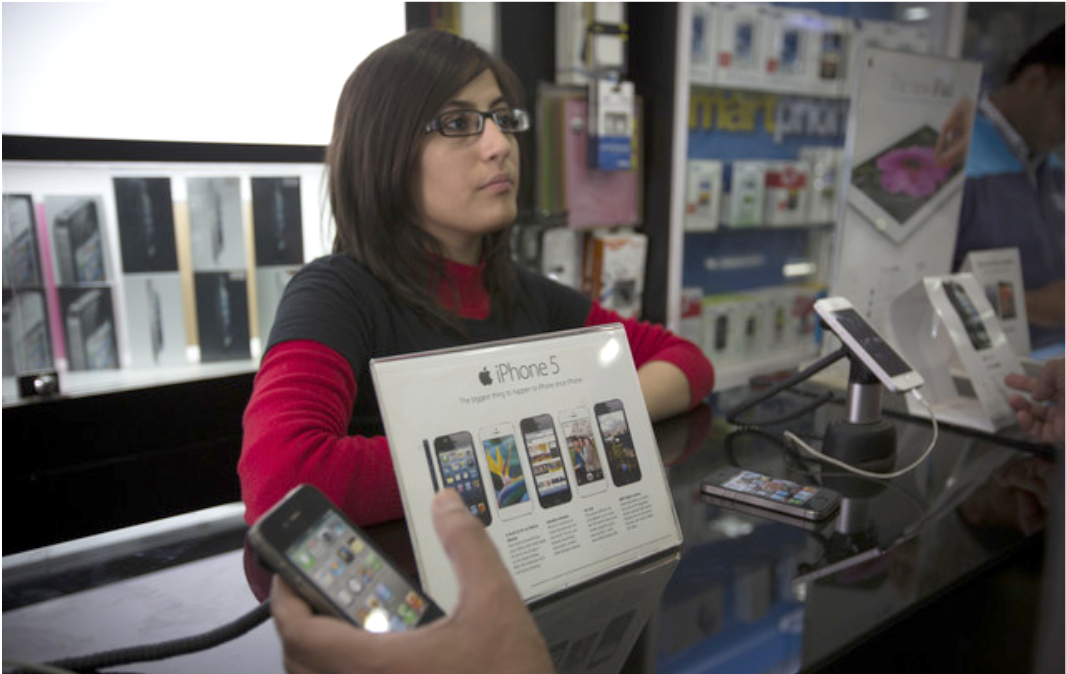
Apple is expected to become the market leader in Japan, with the iPhone 5s and 5c forecast to make up 40 percent of all new contracts on Japan’s DoCoMo carrier, reports Nikkei (via CNET).
The 40 percent figure is believed to be the quota that Apple and DoCoMo agreed on, the report said […] This development marks a tectonic shift in DoCoMo’s strategy and the Japanese phone market in general. Domestic phone suppliers like Sharp and Fujitsu are expected to suffer as a result … Expand Expanding Close
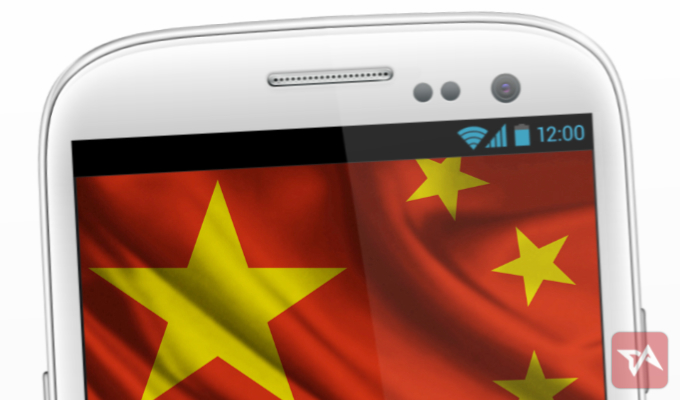
In an interview with the Korea Times, Samsung executives respond to Apple’s recent announcements in typical Samsung fashion. In order to better compete with Apple in China, Samsung confirmed that it would focus more on the huge Mainland market.
For example, the company says it has received clearance from Chinese authorities to sell TDD-LTE devices, to enable Samsung to offer phones that work on the world’s largest carrier, China Mobile. As a result of “changing market situations” (i.e. Apple), Samsung is accelerating its schedule for releasing these Chinese-friendly devices. Apple is expected to announce a partnership with China Mobile to sell the iPhone before the end of the year.
In addition, Shin, Samsung’s co-CEO announced that Samsung’s next Galaxy phones will feature 64-bit architectures, to rival the A7 in the iPhone 5s.
“Not in the shortest time. But yes, our next smartphones will have 64-bit processing functionality,” Shin said, adding he followed the media coverage of Apple’s new iPhone.
Bloomberg reports that Apple has absorbed a 14% hit in the value of the rupee in order to keep iPhone prices steady in India, speculating that it is willing to reduce margin in order to grow market share in what is expected to become the world’s second-largest smartphone market by 2017.
Apple has refrained from following Samsung Electronics Co in raising prices. Apple is selling the iPhone and iPad to distributors such as Redington India Ltd at the same price as in 2012 even after the currency’s decline this year, Rajesh Khetarpal, head of Redington’s strategic business unit, said in an interview.
Apple is currently in 6th place in smartphone market share in India, behind Samsung, Micromax, Karbonn, Nokia Oyj and Sony. It has previously offered disguised discounts and interest-free credit deals via distributors in order to boost sales in the country.
It is thought that BRIC countries (Brazil, Russia, India and China) are key target markets for the iPhone 5C expected to be officially announced today.
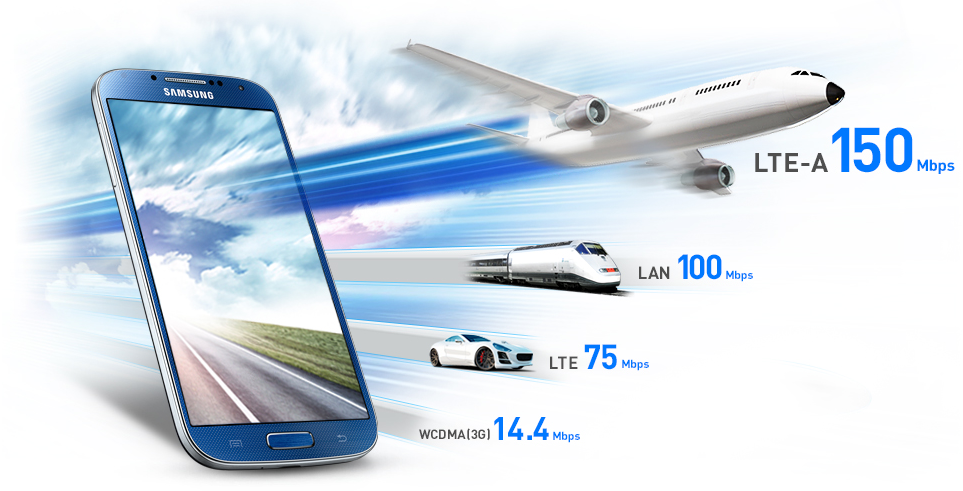
Samsung is so far the only company to announce an LTE-A compatible phone
A statement by Deutsche Telekom is adding to speculation that at least the European model of the iPhone 5S may support the high-speed LTE-A standard (also known as LTE+). The prospect of the 5S supporting the faster version of LTE had first been suggested back in July.
In announcing that the carrier will be launching its high-speed LTE-A data service this month, offering speeds of up to 150MBit/s, the company said:
Samsung will offer an updated version of the Galaxy S4 with LTE +. Appropriate devices from other manufacturers will follow the end of September.
Given the timing, some are suggesting that one of the ‘other manufacturers’ may be Apple … Expand Expanding Close
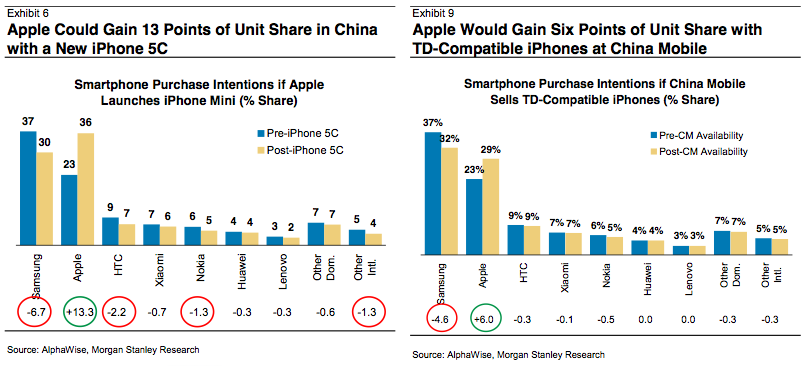
If the iPhone 5C is launched in China at $400, and Apple’s partnership with China Mobile for a TDD-LTE version of the handset proceeds as expected, Apple’s market share in China could jump by a massive 19.3 percent – enough to make Apple the number one seller.
The prediction, reported in Fortune, was made by Morgan Stanley’s Katy Huberty on the back of an AlphaWise survey of 2,000 mobile phone owners in China. Full details below … Expand Expanding Close
New figures from CIRP reported in Fortune show that Apple wins three times as many smartphone customers from Samsung as Samsung does from Apple: 20 percent switched from a Samsung handset to an iPhone, while only 7 percent switched in the opposite direction.
Unsurprisingly, the biggest chunk of iPhone buyers – 42 percent – were upgrading from a previous iPhone, while the rest were split between those switching from other brands (around 30 percent) and those upgrading from a featurephone (26 percent) – with a handful of first-time cellphone buyers making up the rest.
With iPhone prices higher than the average for Samsung’s range of smartphones, it’s also no surprise to see that the educational attainments of iPhone owners tend to be higher, this being a rough proxy for income.
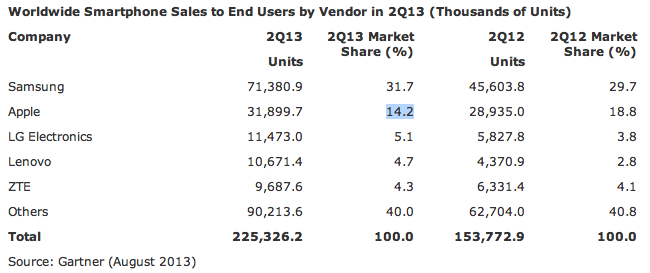
In the circles most of us hang out, it might seem incredible that featurephones – aka dumb phones – were still outselling smartphones until recently, but that was indeed the case right up to the first quarter of this year. The latest Gartner figures show that smartphones finally broke ahead in Q2, achieving 51.8 percent of worldwide phone sales.
Smartphones accounted for 51.8 percent of mobile phone sales in the second quarter of 2013, resulting in smartphone sales surpassing feature phone sales for the first time,” said Anshul Gupta, principal research analyst at Gartner. Asia/Pacific, Latin America and Eastern Europe exhibited the highest smartphone growth rates of 74.1 percent, 55.7 percent and 31.6 percent respectively, as smartphone sales grew in all regions.
The news wasn’t quite so good for Apple, with its year-on-year marketshare dropping more than four points to 14.2 percent.
This does, however, reflect a period in which market leader Samsung launched a flurry of new handsets. Apple’s position is likely to improve substantially when the iPhone 5S and iPhone 5C are launched, likely next month.
IDC is out today with its latest report tracking worldwide tablet shipments, reporting that total shipments have experienced a sequential decline during Q2 at the expense of Apple and the iPad. Apple already announced that it had sold 14.6 million iPads during the quarter, a significant drop from the 17 million it sold in the year ago quarter, but today IDC gives us some insight into where that puts Apple in its lead over Samsung as the top tablet vendor.
Apple was able to pick up 32.4% of the market during Q2, continuing its lead as the top tablet manufacturer, but dropping from the 60.3% of the market it had in Q2 last year. While Apple’s tablet shipments are clearly suffering from lack of new product announcements this year, it’s also losing share to Samsung and others. IDC reports 277% year over year growth for Samsung, giving it 18% of the market with 8.1 million units shipped during Q2. All of the top 3 vendors– Apple, Samsung, and ASUS– experienced a drop compared to Q1 2013, but the Android tablet makers have experienced significant growth compared to Apple since last year. Expand Expanding Close
The WSJ reports that more than a billion dollars were wiped off Samsung’s market value today following President Obama’s veto of the decision to ban the import of iPhone 4 and 3G iPad 2 devices into the USA. The fall represented 0.9 percent of the company’s market cap.
While a Presidential veto over-rules the original ITC ruling, the Financial Times reports that Samsung is appealing the ITC decision on the grounds that it only upheld one of the four patents it believes Apple has infringed. The appeal is expected to be held in Q1 2014. Were Apple to lose then, however, the impact would be significantly lower, as Apple is almost certain to have launched new iPhones and iPads by then, with the iPhone 4 and iPad 2 likely removed from Apple’s retail and online stores and seeing only residual sales elsewhere … Expand Expanding Close
We are disappointed that the U.S. Trade Representative has decided to set aside the exclusion order issued by the U.S. International Trade Commission (ITC). The ITC’s decision correctly recognized that Samsung has been negotiating in good faith and that Apple remains unwilling to take a license.
Today’s decision is not the first time in which the United States has sided with Apple over Samsung. Last summer, a California court granted Apple a $1 billion dollar verdict in a wide ranging case regarding Apple and Samsung’s mobile product design patents. Apple CEO Tim Cook called that win an “important day for Apple and for innovators everywhere.”
President Obama and Vice President Biden with an iPhone
United States President Barack Obama and his administration have issued a veto on a potential ban for iPhone 4 and 3G-capable iPad 2 models in the United States. The news comes by way of a notice from the U.S. Government. The official ruling comes from Michael Froman, a trade representative for the United States:
In addition, on January 8, 2013, the Department of Justice and United States Patent and Trademark Office issued an important Policy Statement entitled “Policy Statement on Remedies for Standard-Essential Patents Subject to Voluntary FRAND Commitments” (“Policy Statement”).2 The Policy Statement makes clear that standards, and particularly voluntary consensus standards set by standards developing organizations (“SDO”), have incorporated important technical advances that are fundamental to the interoperability of many of the products on which consumers have come to rely, including the types of devices that are the subject of the Commission’s determination. The Policy Statement expresses substantial concerns, which I strongly share, about the potential harms that can result from owners of standardsessential patents (“SEPs”) who have made a voluntary commitment to offer to license SEPs on terms that are fair, reasonable, and nondiscriminatory (“FRAND”), gaining undue leverage and engaging in “patent holdup”, i.e., asserting the patent to exclude an implementer of the standard from a market to obtain a higher price for use of the patent than would have been possible before the standard was set, when alternative technologies could have been chosen. At the same time, technology implementers also can cause potential harm by, for example, engaging in “reverse holdup” (“holdout”), e. g., by constructive refusal to negotiate a FRAND license with the SEP owner or refusal to pay what has been determined to be a FRAND royalty.
The would be, no-longer affected Apple devices include the iPhone 4, iPhone 3GS, iPad 2 3G, and the original 3G-capable iPad. This ruling mostly affects the iPad 2 and the iPhone 4 as those are the pertinent products that Apple actually currently sells in the U.S. The President’s block of the ITC ban is the first block of this kind since the 1987 Reagan administration.
Newer iPhone and iPad models, such as the iPhone 5 and 3rd/4th generation iPad, are not affected because they use a different cellular chipset design.
The latest numbers from IDC, ABI and Strategy Analytics (the latter not yet online) paint an interesting picture of where the smartphone business currently stands, and where the iPhone sits within it.
The overall picture for smartphones is, of course, strong. IDC reports:
In the worldwide smartphone market, vendors shipped 237.9 million units in 2Q13 compared to the 156.2 million units shipped in 2Q12. This represents 52.3% year-over-year-growth, the highest annual growth rate in five quarters. Second quarter shipments were up 10.0% when compared to the 216.3 million units shipped in 1Q13.
While ABI pegged the year-on-year growth at a significantly lower 44 percent, it’s clear that much of the traditional featurephone market is switching to smartphones.
The high-end also remains strong, with both the iPhone and Samsung S4 outpacing the smartphone market as a whole, though both sets of figures show iPhone growth at a long-time low … Expand Expanding Close
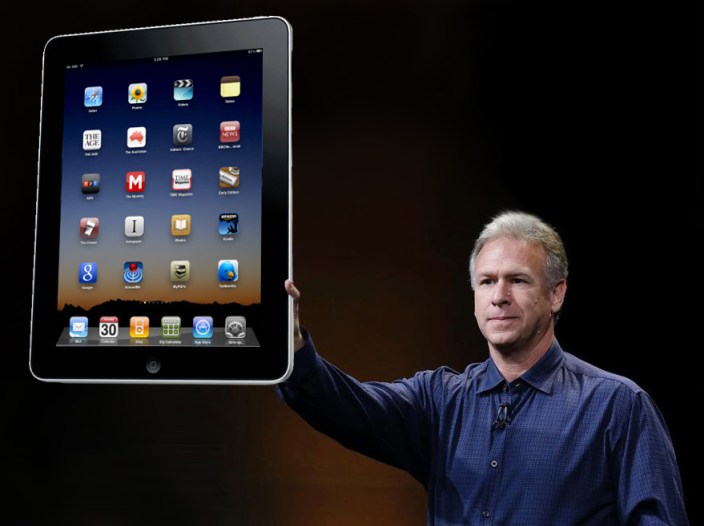
According to a report from the Wall Street Journal, Apple and its suppliers are testing versions of the iPad and iPhone with larger displays.
Apple and its Asian component makers are testing larger screens for iPhones and tablets, officials at the company’s suppliers say.
Due to mounting competition from hardware competitors like Samsung, a larger-screened iPhone has long been expected and rumored. However, this is one of the first specific claims for a larger sized iPad. In March of this year, an unverified claim emerged for a 12.9-inch iPad model being in the works with a rather unlikely name. WSJ‘s report points to a display “measuring slightly less than 13 inches diagonally.”
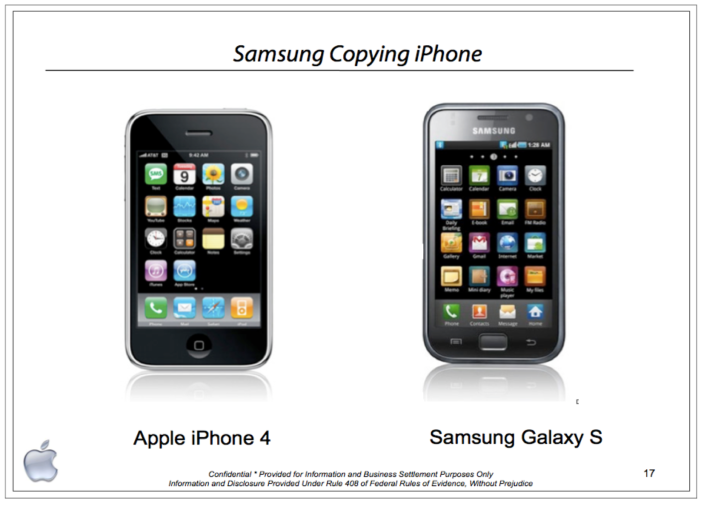
The Wall Street Journal summarizes information from court documents and various sources that points to Apple and Samsung being back at the bargaining table after the two companies spent much of 2012 in court proceedings regarding patent infringement claims. During the summer of 2012, Apple won a major lawsuit in California court against Samsung due to design patent infringement claims regarding the iPad and iPhone.
Today’s report shares that since that time, the Cupertino and South Korean tech firms have met multiple times in private to come to some sort of settlement. Since last summer, the two companies have still been filing lawsuits against each other. Notably, today’s report claims that a settlement was near this past February, but the talks dissolved. Even with the cool-down, the talks are reportedly still on-going. Samsung reportedly has made proposals for the potential settlement:
Apple’s two biggest competitors in the smartphone space have reported their initial Q2 earnings report and estimates today ahead of Apple’s fiscal Q3 financial results later this month. While Samsung, which holds the second place spot behind Apple as top smartphone vendor in the US, is estimating profits of around $8.33 billion for the quarter, it also missed estimates due to slowed growth of its smartphone sales. Despite the record number marking an increase of around $2 billion from its Q1 profit, Samsung falls just short of the 10.16 trillion won that analysts were expecting for the company thanks to slowed momentum in its smartphone division.
HTC, which sits at #3 smartphone vendor in the US with 9% of the market behind Apple and Samsung, has posted disappointing earnings for the quarter. 9to5Google reports HTC profits are down 83% year-over-year….not too surprising considering it’s been losing share of the smartphone market in the US since February. According to the report it’s also seeing sales of its flagship HTC One drop in June after strong May sales.
Oh, and the ad above… That’s Samsung’s latest mocking iPhone users. This time it’s a little more niche than its other ads that have aired in the US and abroad, but the new Icelandic ad makes it quite clear that Apple is the target. We’re not sure about the ninja symbology, but the tagline for the ad translates to “Get a phone that understands you” and the ad focuses on lack of Icelandic language support on the iPhone.
According to a report from the BostonHerald, Boston University is the latest to sue Apple for patent infringement claiming several Apple products use technology covered by its 1997 patent for highly insulating monocrystalline gallium nitride thin films. The university filed a lawsuit with the U.S. District Court of Massachusetts yesterday listing Apple’s iPhone 5, iPad, and MacBook Air as infringing devices.
“Defendant’s acts of infringement have caused and will continue to cause substantial and irreparable damage to the University,” BU alleges in its complaint.
The highly technical patent, which can be viewed on the USPTO’s website, was originally awarded in 1997 and lists computer engineering professor Theodore D. Moustakas as its inventor. BostonHerald notes that the university has also used the patent in cases against Samsung and Amazon, and “plans to illustrate that at least one other company pays a licensing fee to use the component in question” during its case with Apple: Expand Expanding Close
Research firm comScore is out today with its usual report covering U.S. smartphone subscriber market share for the three month period ending in May. Over the last three months Apple has gained in both categories including ‘top smartphone OEMs’ and ‘OS usage’, continuing its lead as the top smartphone manufacturer and growing its share of the market by platform.
The previous three month period had Apple at 38.9% of the market, making it the number #1 smartphone vendor in the US over second place Samsung. In May, Apple continues that lead by increasing its share 0.3 percentage points to 39.2% of the market. That’s significantly higher than the 23% Samsung grabbed despite growing 1.7 percentage points during the quarter. In a close race for third place is HTC with 8.7%, Motorola with 7.8%, and LG with 6.7%, all of which dropped less than a percentage point since last quarter.
When it comes to the market by OS usage, Android is still on top, growing 0.7 percentage points to 52.4% this quarter. Apple experienced slightly less growth at 0.3 percentage points to capture 39.2% of the market up from its 38.9% share last quarter. That means the majority of the growth, once again, comes at the expense of BlackBerry and Microsoft. Expand Expanding Close
Back in May, Apple was attempting to add Samsung’s flagship Galaxy S4 as an infringing device in its ongoing, second major patent dispute with Samsung in California. It was also claiming that Samsung infringed two Siri related patents with the device’s Google Now voice assistant feature. Now, according to a report from Bloomberg, Apple has been denied its request to add the device with U.S. Magistrate Judge Paul S. Grewal claiming it would be a “a “tax on the court’s resources”:
Adding another product to the case is a “tax on the court’s resources,” Grewal said in the ruling. “Each time these parties appear in the courtroom, they consume considerable amounts of the court’s time and energy, which takes time way from other parties who also require and are entitled to the court’s attention.”
Apple lawyer Josh Krevitt claims that denying to add the device in the ongoing patent suit would force Apple to “‘file a new lawsuit’ because the Samsung products covered by the case will be out of date by trial next year.” Expand Expanding Close
Apple’s share fell from 25% in Q1 2012 to 20% in Q1 2013, representative of approximately 6.2 million unit shipments. IDC notes that European smartphone market grew overall at a rate of just 12 percent, the slowest increase the company has ever recorded. The weakness in demand evidently hit Apple, but competing Android manufacturers have seen substantial share gains in the slump. Close rival Samsung, for instance, saw shipments rise by 1.8 million units to account for almost half of the whole market. Sony was another benefactor, gaining six percentage points over the period when compared to last year.
Reuters reports that Samsung is currently in preliminary discussions with EU regulators regarding a possible settlement related to charges that it abused its market dominance by blocking Apple from fairly using its essential patents in various ongoing patent disputes:
The talks came after the European Commission, which acts as EU competition regulator, told Samsung in December that it was acting unfairly by seeking injunctions against Apple over use of the essential patents.
“Samsung has been involved in settlement discussions for several months now. Samsung wants to settle,” said one of the sources, who declined to be identified because of the sensitivity of the matter.
If Samsung does settle in the case, it could avoid as much as $17.3 billion in fines. However, it would presumably have to agree to license its essential patents on fair terms, which could have an impact on current cases related to the European Union’s 3G UMTS standard.
A large majority of the deals we cover each day come from a variety of ‘Daily Deal’ websites or are so popular that they don’t even last 24 hours. We know you can’t be at your computer every second, so we’re going to roundup the best deals each day to make sure you have a fair shot at the deals you want. Be sure to follow 9to5Toys.com so you never miss a deal...Twitter, RSS Feed, Facebook
A report out of DigiTimes this morning claims that TSMC has reached a deal with Apple to supply 20nm, 16nm and 10nm chips for future Apple devices. However, as is often the case with DigiTimes, there are a few causes for concern surrounding the report. Leaving the site’s track record on other rumors aside, we must point out that rumors of TSMC supplying chips for Apple’s device are nothing new. In fact, DigiTimes itself reported back in 2011 that Apple would tap the Taiwan Semiconductor Manufacturing Company in a move away from its long-time supplier and biggest rival Samsung. Needless to say, it hasn’t happened yet, and there’s no proof as of yet to back up follow up reports from last year claiming Apple entered an agreement with the company. DigiTimes isn’t even the first to report it this year: Expand Expanding Close
Apple might not have any new mobile devices to show off until fall, but Samsung today introduced a number of new devices to its flagship Galaxy family. One of those devices was the new mid-range Galaxy S4 mini, which could be a competitor for the rumored low-cost iPhone and less expensive previous generation iPhones (although Samsung didn’t announce pricing) when it lands somewhere in the $400 price range in July.
Other devices announced by Samsung today include a brand new Galaxy NX camera with a 4.8-inch touch screen and Android 4.2.2., as well as Samsung’s new Galaxy S4 Zoom smartphone/camera hybrid device.