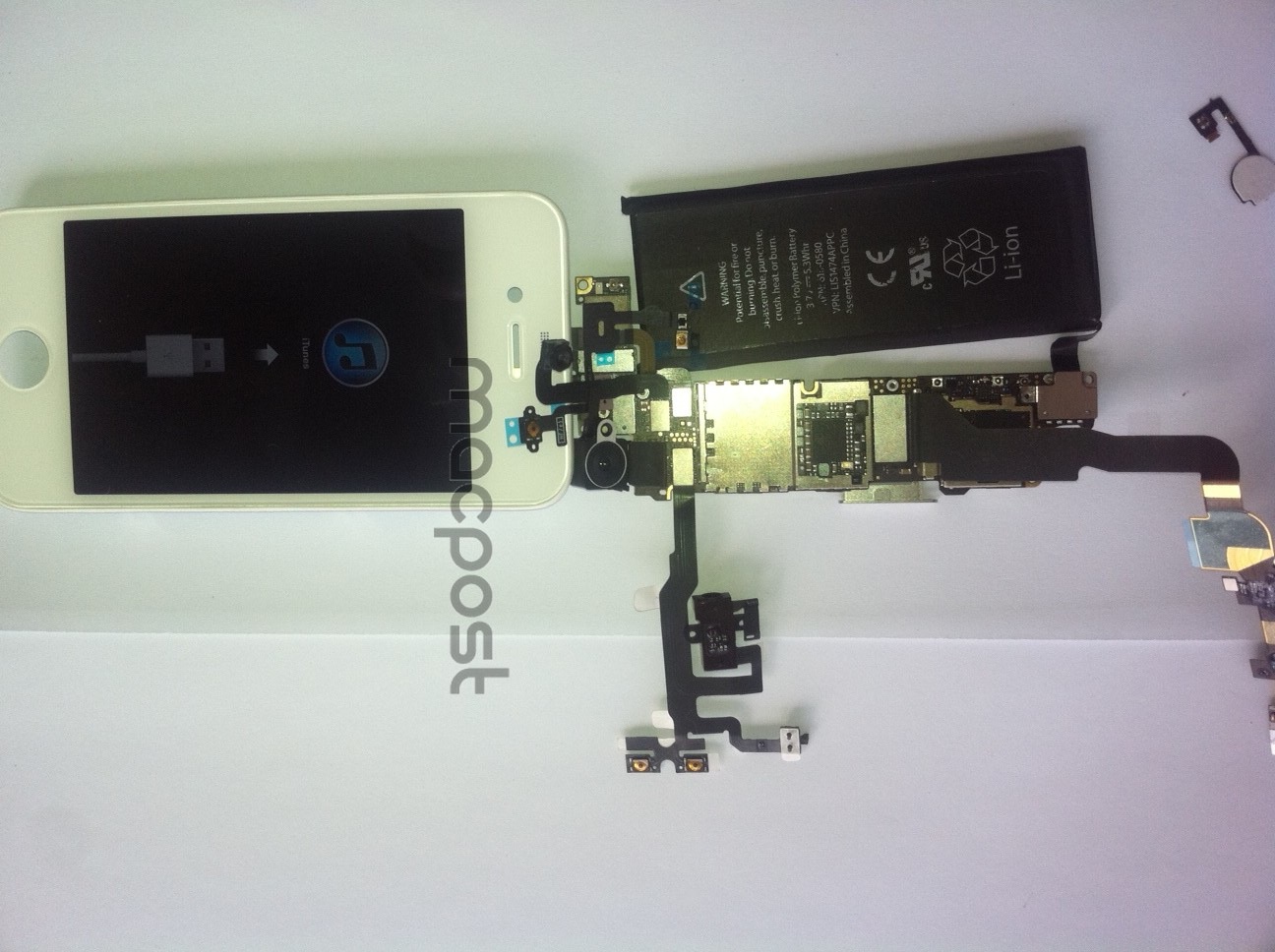
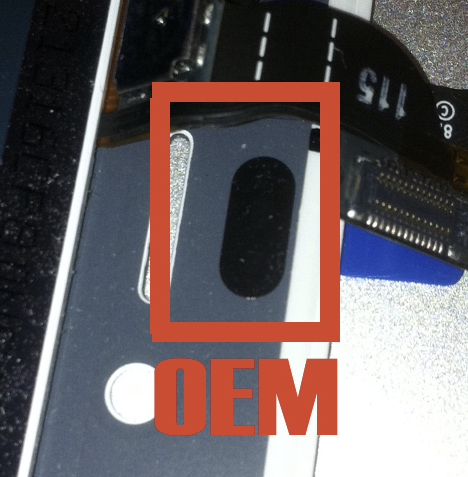
MacPost..posts..another image of today’s earlier ‘iPhone leak’ which shows much more of the front of the device. In the time since our original post this morning the iPhone 4 repair experts at iFixyouri have chimed in to note that the grill on the white iPhone front plate is a non-OEM version which likely indicates that this isn’t from Apple.
Apple removed the grated grill during the white iPhone redesign to help with the proximity sensor issues.
Perhaps this one is built from parts floating around Asia, but it isn’t one that Apple would have put together itself – recently anyway.
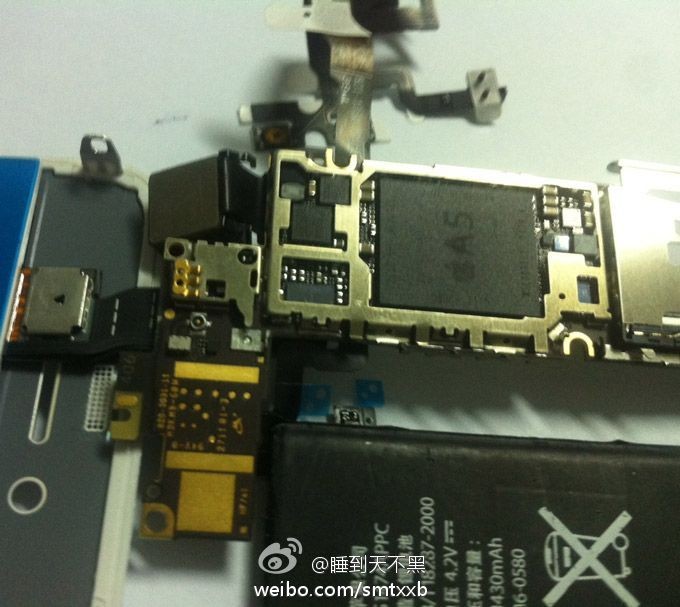
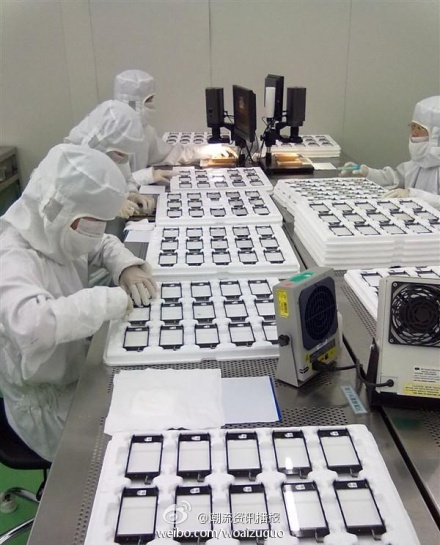
The image above was posted on Weibo, a Chinese Twitter clone of sorts, showing what is thought to be components of Apple’s yet to be released next-gen iPhone.
Clearly showing the familiar Apple “A5” stamp, the chipset is mysteriously not from an iPad 2, and as Phone Arena points out, closer resembles that of the current iPhone 4’s A4 chipset layout. Curiously, the visible part of the battery reads “430 mAh”, which leads us to believe a similar battery to the iPhone 4’s 1420 mAh battery may be included in the next-gen iPhone.
There is reason to be skeptical of these images. Apart from the overall blurriness of the shot, the A5 logo itself seems a little off and the source of the image cannot be confirmed.
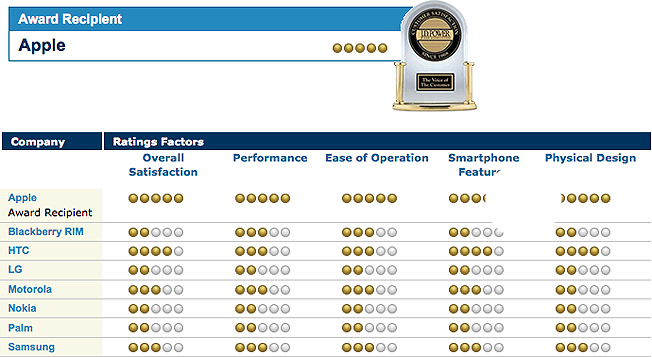
J.D. Power and Associates has just announced the results of their annual 2011 U.S. Wireless Handset Customer Satisfaction Study. Apple has earned the top-spot on the list for the sixth consecutive time. Apple scored a 838 on a 1,000-point scale with the iPhone, while the runner-up HTC scored a relatively close score of 801. 6,898 smartphone owners took part in the study. As if we already didn’t know, customers are pretty satisfied with Apple’s iPhone, and its 5-star rating for “Ease of Operation”. (via BGR)
This (very attractive) photo claims to have been taken by an iPhone 4, but the rest of its EXIF data tells a different story: although the image has been cropped to 2235×2291 (5.12 megapixels), the original picture was a much larger 3264×2448 — or just shy of eight megapixels. What’s more, the lens was recorded as a 4.3mm f/2.4, which is closer to that of a point-and-shoot than the iPhone 4’s actual 3.85mm f/2.8.
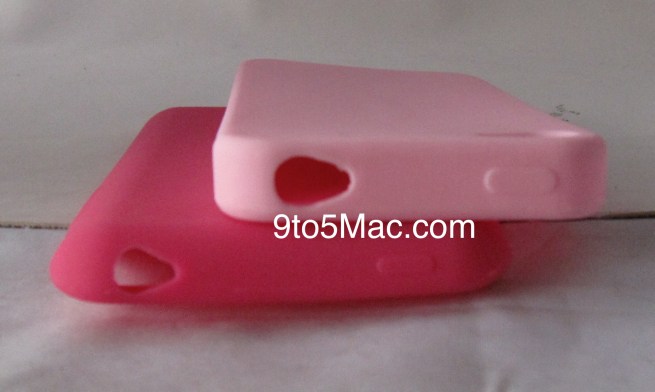
We’ve remarked on a number of occasions that the camera holes in the purported iPhone 5 cases seem significantly bigger than the current iPhone 4 cases. Could this be an indication of some serious glass?
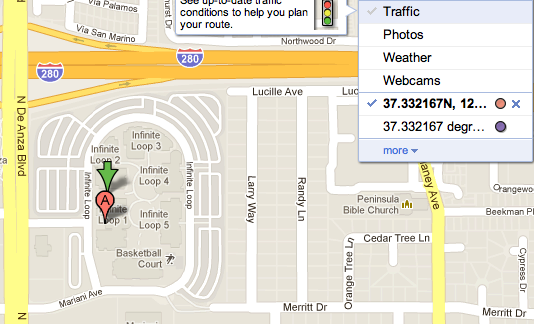
Interestingly the EXIF Data (comparisons below the fold) points to a GPS location here.
This one was “supposedly shot by an Apple engineer eating his lunch at work.”
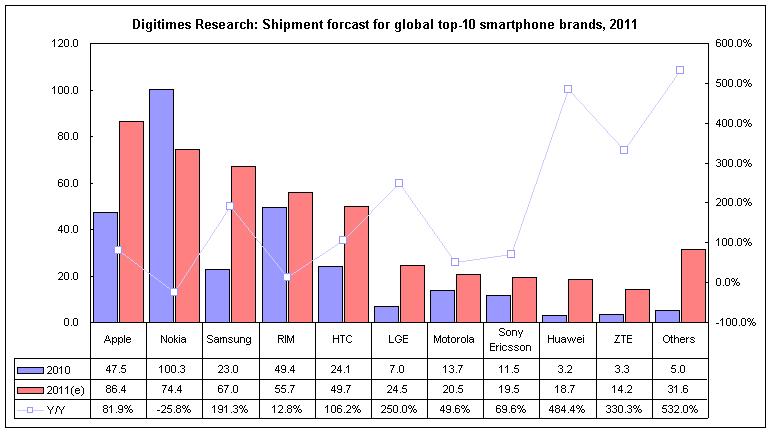
We knew in July that Apple had passed the imploding Nokia for the global smartphone unit lead by manufacturer. However, today Digitimesforecasts that by year end Apple will have sold 86.4 million iPhones by year which will easily best Nokia’s once insurmountable lead (Nokia had over double Apple’s share just last year).
Apple’s smartphone shipments are projected to top 86.4 million units in 2011, up 82% from 47.5 million units in 2010. In contrast, Nokia’s smartphone shipments in 2011 will decline to 74.4 million units from over 100 million in 2010, said Luke Lin, analyst for Digitimes Research.
Just because it almost doubled its unit shipment, doesn’t mean it is game over for Apple, however. Android makers Samsung, HTC, LG, Huawei and ZTE all showed better percentage gains though they shipped relatively few smartphones in 2010. Expand Expanding Close
We’ve independently heard that Apple has plans to begin selling the next-generation iPhone on Friday, October 7th; the date first reported by TiPB. According to our sources, Apple has been weighing between launching the new iPhone on October 7th or October 14th, but with the product’s latest stages of pre-mass-production currently moving along nicely, Apple is presently shooting towards a launch on the 7th. On top of this, unlike with the iPad 2, Apple plans to offer pre-orders for the new iPhone.
Apple currently plans to begin pre-orders for their next-generation smartphone in the final days of September. The company has still not finalized the pre-order start date, but is debating between Thursday, September 29th and Friday, September 30th. The 30th seems more likely at this point according to one of our sources.
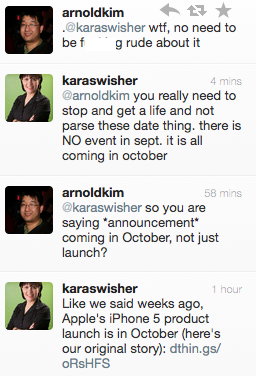
Pre-orders for the new iPhone starting in late September will also mean that Apple’s fall event will take place in September; which would seem to counter NewsCorp’s Kara Swisher’s combative insistence of an October iPhone 5 event. Additionally, the first week of October date for the new iPhone’s availability, fits nicely with our report about AT&T’s major early October changes: data throttling and a new insurance plan for $199 devices. This release date would also jive with John Paczkowski’s report about the iPhone 5 becoming available in October.
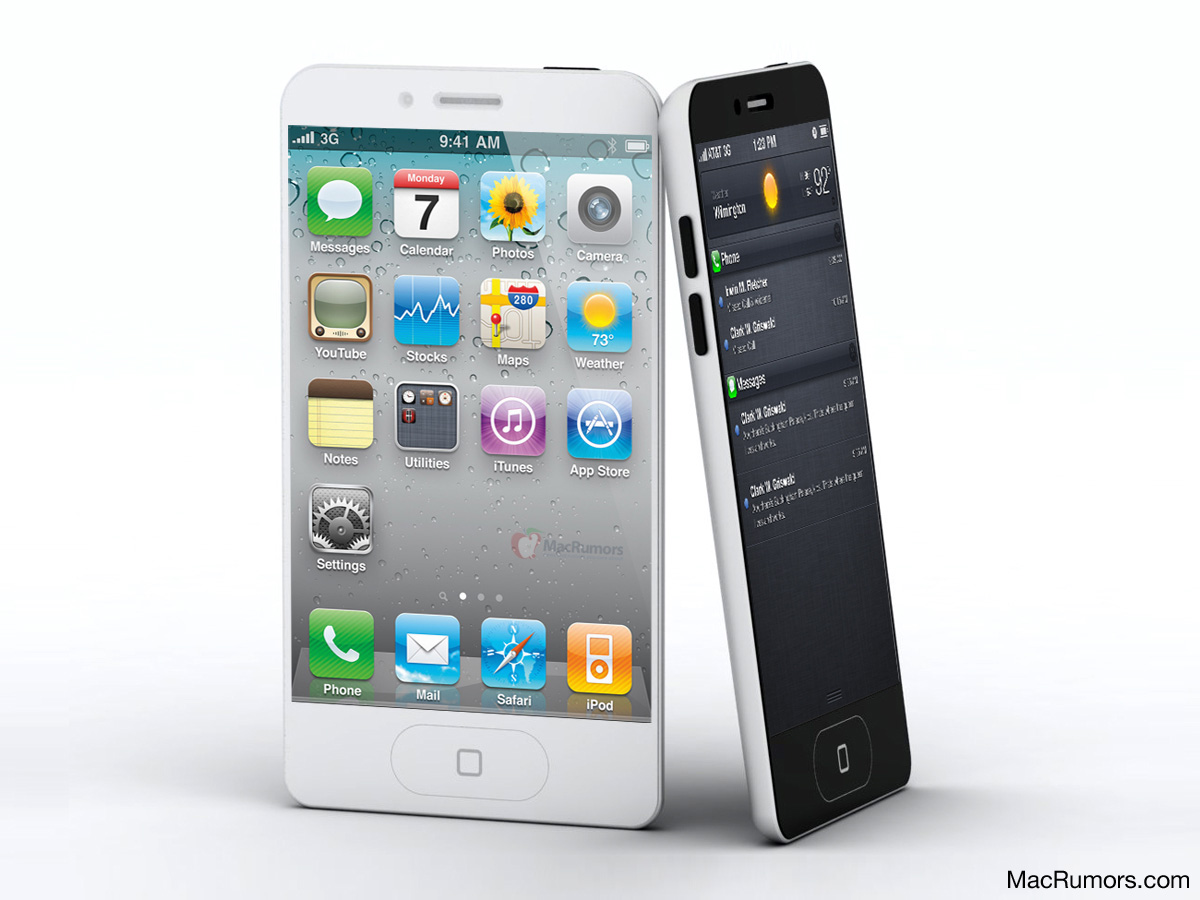
There has been mixed chatter about the device’s exterior design, with cases, which we first revealed, pointing to a thinner form factor. Others, though, have said the design will be largely similar to the current iPhone 4. As with any launch date report, we have to note that Apple is constantly shifting their launch plans. As we noted earlier, the launch date was already moved up a week in the company’s recent launch planning. We are reasonably confident, though, that as of today, Apple is planning to unleash their next iPhone on October 7th and offer pre-orders starting on September 29th or 30th. The date could and likely will change again, but we feel it is necessary to report the company’s current plan.
According to Digitimes, Apple has increased their second-half of 2011 iPhone orders to 56 million units from a previous goal of 50 million units. These 56 million iPhones cover current and next-generation models: iPhone 3GS, iPhone 4 (GSM + CDMA), and the upcoming “iPhone 5.” As previously reported, the iPhone 5 will make up almost half of Apple’s 2H11 iPhones with 25.5-26 million total units.
In addition, Apple reportedly originally planned to build 7 million iPhone 5 units for the third quarter, but adjusted their production plans to 5.5-6 million units. On the other hand, Apple is expecting major iPhone 5 demand in the fourth quarter and has increased Q4 iPhone 5 orders to 20 million units from 14 million units.
The iPhone 5 will go on sale this fall and will almost certainly include the dual-core A5 processor found in the iPad 2 and an eight megapixel camera possibly made by Sony. There has been debate over the new iPhone’s design, with some reporting a design that is largely similar to the iPhone 4, and others calling for a major redesign. As the iPhone 5 moves into Apple’s product lineup (in addition to a possible cheaper iPhone), Apple will be eliminating the iPhone 3GS.
According to several sources, and as has been widely expected, Apple will once again be holding its annual autumn special event, closer to mid-September this time. Apple (AAPL), which has had a fall hello-there confab every year since 2005, waited until August 31 last year to announce its “Let’s Rock” event on September 9 at the Yerba Buena Center for the Arts Theater in San Francisco.
The event turned out to be on September 1st. – 9 days earlier, rather than later, than the previous year’s September 9th launch.
With that in mind, AllThingsD‘s Kara Swisher lashed out at bloggers belligerently this evening (right) saying the iPhone 5 event would be held in “Oc … to … ber”, not September as had been forecasted and then shot down earlier today.
She didn’t take kindly to attempts at clarification. She cited a previous AllThingsD report which said the iPhone 5 would launch in October.
For the record, we do believe that the iPhone 5 will launch in October.
At this point, it is a good to keep in mind that Apple’s release schedules are fairly fluid and any forecasting is dangerous because of unforeseen setbacks that can delay launches.
Kodawarisan claims that Apple’s annual fall event will be held on Wednesday, September 7th (8th in Japanese time zone -via MacRumors). Apple will likely use this event (whenever it falls) to detail the final versions of iCloud and iOS 5, in addition to announce the next-generation iPhone (or iPhones) and iPods.
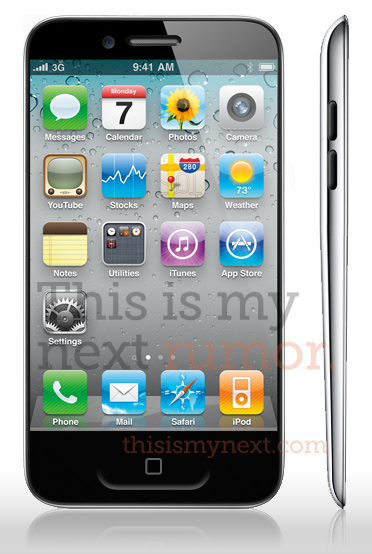
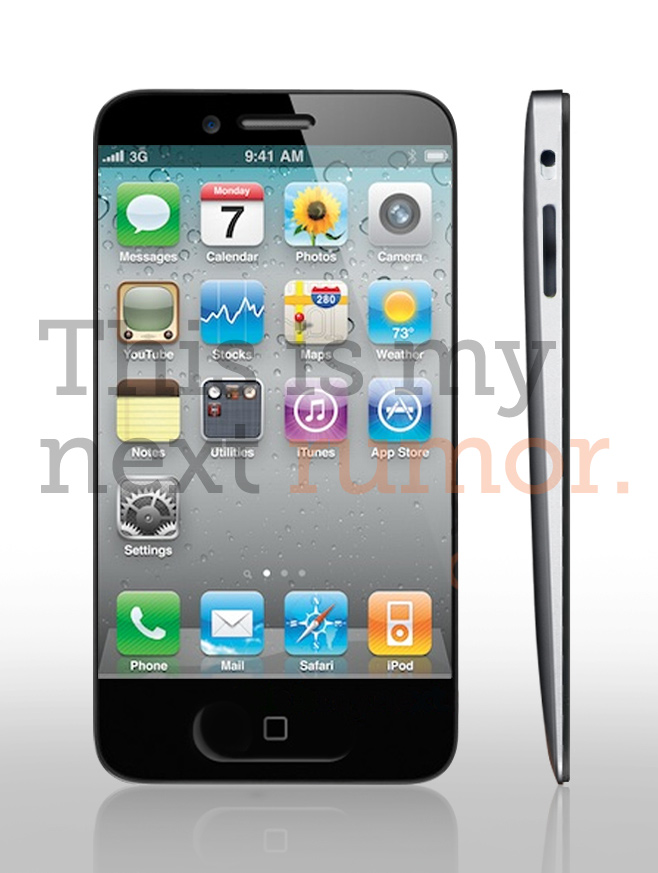
The final dimensions of the new design are calculated to be: 4.33″ x 2.36″ and .27″ thickness at the top and .21″ at the bottom In comparison, the iPhone 4 dimensions are: 4.5″ x 2.31″ x .37″. So the new design is actually shorter than the existing iPhone 4, but slightly wider and thinner.
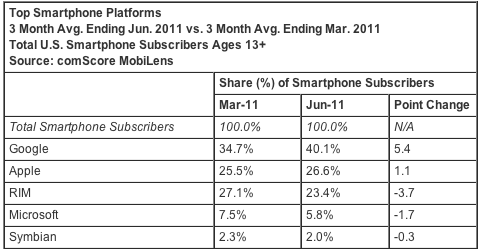
While Google passed the 40% smartphone share (Microsoft must be happy!) in the US threshold, Apple continues to outpace the industry as a whole posting modest 1 point gains in the US smartphone category according to comScore. Apple moved up from 25.5% in March to 26.6% in June on the year old iPhone 4 model which also saw its US debut on Verizon.
Apple also moved up in the hardware category, below:
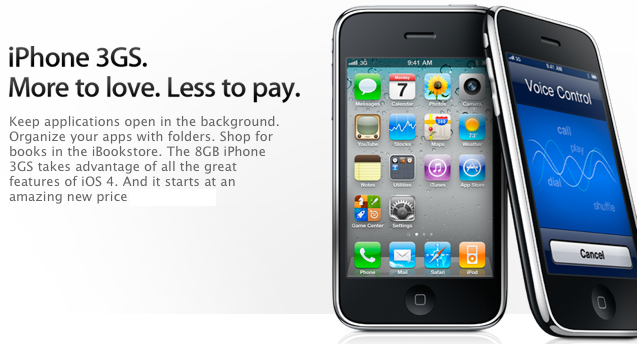
Three in Sweden is having a “half price sale” on the iPhone 3GS “while supplies last”. The free iPhone 3GS with the 99 Kroners a month ($15.42) plan works out to about US$370 for the entire contract and that is before minutes and the unlimited Internet (throttled after 1GB) are considered. That is incredibly cheap.
In the US, the price of an iPhone 3GS off contract is still over $400 and we’re used to some of the lowest prices on Apple products globally.
The move would seem to indicate that the iPhone 3GS is nearing its end of life (EOL) and prices may begin to drop in other countries as well.
The Swedish carrier’s move is interesting because we heard a report last month that the iPhone 3GS would continue to be offered next year at a sub-$350 prepaid option alongside the ‘iPhone 4S’.
Although it seems likely that Apple will soon discontinue its legacy iPhone 3GS, some reports have said that Apple will retain the device as its cost-effective pre-paid option. Others, including us, have reported that Apple is preparing two next-generation iPhones for this fall: one as the successor to the iPhone 4 and one as a cheaper, possibly pre-paid model.
According to several sources in different countries, stock of Apple’s iPhone 3GS is quickly tightening with hardly – or even any – shipments coming through to certain regions. In addition, according to a source at one popular international carrier, the iPhone 3GS has disappeared from the stock database.
We have heard from reliable sources at a major European iPhone carrier that stock of the iPhone 3GS is unusually low, with little stock coming through for the next few weeks. An accurate source at a major U.S. based iPhone reseller also reported to us that stock of the iPhone 3GS is significantly lower than usual. In addition, this source says, similarly to what our European carriers sources reported, that no iPhone 3GS shipments are coming through to several districts in the United States. On top of all of this, an accurate source with a hand in Apple’s global channel shipping operations reports that shipments of the 3GS are rapidly decreasing with a little amount of units remaining in the channel.
Apple gradually tightens its shipments and production of products ahead of its upgrade or discontinuation. This minimizes already-replaced product inventory from the company’s product lineup (which Apple often just moves to “refurbished”). This iPhone 3GS situation is a prime example of this process.
It is also possible that Apple is preparing an upgrade to the iPhone 3GS. Perhaps they will bump the screen or change something internally (A4?). It is also entirely possible that Apple is decreasing iPhone 3GS supplies in anticipation of more people buying the next-generation iPhone.
Last evening, a tipster sent us some pictures of what he now thinks is the iPhone 5. He caught what he said was likely an Apple employee hunched over the device on the way home from work in San Francisco earlier this week. He told us he was able to get a very good look at the device but the pictures he snapped “didn’t do it justice”.
We contacted the tipster by phone and checked his background. We believe he saw a totally new Apple device, probably a prototype iPhone 5. He contacted us because when he got home, he doubted what he saw was legitimate until he looked at the green cases we posted. Then it all came together for him. Our tipster has had an iPhone 3GS and currently has an iPhone 4. He knows his iPhones and iPods and this was like nothing he’s ever seen. He said it would fit perfectly into the case below.
“Almost EVO-like” in screen size, this iPhone also appears thinner than the current iPhone 4 but also wider. The edges are rounded metal like the edges of a Samsung Galaxy Tab 10.1 but could still function as an antenna. The back is a curved/tapered glass or plastic. He couldn’t tell but if he had to guess he’d say glass. He said it looked too amazing to be built by anyone besides Apple (fanboy!).
Our tipster wasn’t able to see the front/home button and the man holding the device was covering the Apple logo for all but a brief moment when the above picture was snapped. It seemed apparent that he was trying to hide what he had more than the average smartphone user.
We aren’t certain if this is legitimate or not but it is too thin and flat to be an iPhone 3GS and too rounded to be an iPhone 4. The black back with Apple logo would seem to rule out an iPod touch. Our tipster is all but certain it was a new Apple product and the iPhone 5 would be the most likely scenario.
Would Apple let employees out into the world with these over a month before launch? Apple has acknowledged that they real world test this way in the past (ahem, Gray Powell). They’ve also indicated that the cases the iPhone 4s came in may have been a factor in not diagnosing the finger spot/antennagate fiasco ahead of time. So perhaps this is legit?
According to our source, Apple will indeed be launching a prepaid / lower cost iPhone this year. We are told the handset will retail for no more than $350 without contract. Ready for the really interesting part? It’s entirely possible that the low-cost iPhone will in fact be the iPhone 3GS.
The author theorizes that “there would be an iPhone 4S in addition to the prepaid iPhone 3GS available within the next month to two” in addition to the iPhone 4 which BGR is told Apple will continue to sell…
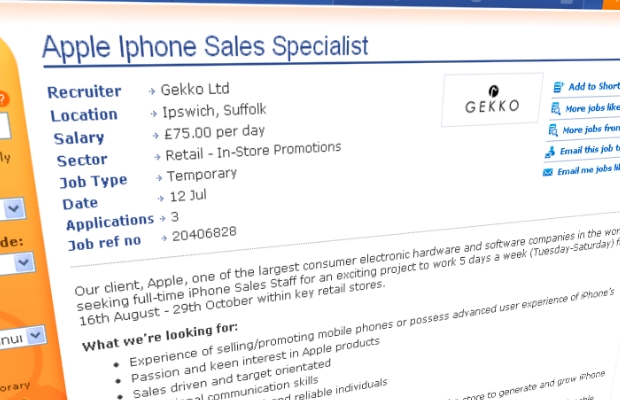
A new report from Cnet.co.uk seems to imply that Apple could launch a new iPhone on August 16th. Their source? A job posting for temporary workers who would work the last two weeks in August.
The job listing, posted by Gekko Ltd., says Apple is looking for a “full-time iPhone Sales Staff for an exciting project to work 5 days a week (Tuesday-Saturday) for the period 16th August – 29th October within key retail stores”. Oddly enough, Apple didn’t post the listing on their own, rather hiring out Gekko Ltd. to find their new Apple Store talent. Gekko appears to have worked with Apple before:
The awards page on Gekko’s website indicates that it has worked with Apple in the past on shops within shops — the specific Apple-branded sections within larger outlets. We’d wager that Gekko is hiring to fill these sections, as one of the responsibilities of the advertised role is to “ensure the Apple area within the store is effectively merchandised”.
Rumors pointing to a September or early October launch for the new iPhone have been prevalent so far with Apple’s traditional early September music announcement, but we’re happy to line up early. Full listing below: Expand Expanding Close
While Tim stopped short of explicitly stating that Apple would pursue a lower price iPhone, he did state that Apple was working hard to “figure out” the prepaid market and that Apple didn’t want its products to be “just for the rich,” but “for everyone”; he also stated that Apple “understood price is big factor in the prepaid market” and that the company was “not ceding any market.” ….He further noted that the handset distribution model was poorly constructed and that Apple would look to “innovate” and do “clever” things in addressing that market.
That was the WSJ tapping the line (har) of Bernstein Research’s Toni Sacconaghi in February.
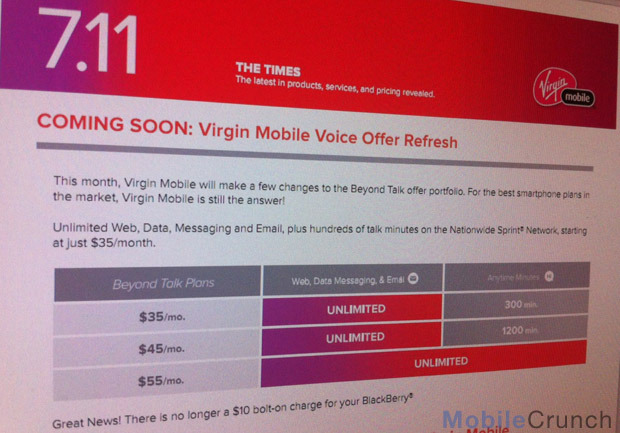
Today, Virgin announced that it was hiking its data plans to $35/month for unlimited data which coincides with the launch of a big Android phone. But more interesting, to me anyway, was that Virgin is changing its ‘unlimited’ to ‘unlimited with throttling at 2.5GB’ in…October.
Beginning in October 2011, Virgin Mobile will also move to reduce data speeds when a customer’s data usage exceeds 2.5GB in a month but still provide unlimited 3G access without a contract, usage cap, overage or activation fees. Based on current usage patterns, fewer than 3 percent of Virgin Mobile USA customers use more than 2.5GB of data usage per month. After reaching this level, this minority of customers may experience slower page loads, file downloads and streaming media. When a customer’s next month begins, the data usage meter starts back at zero with unlimited 3G speeds.
If Apple was going to do a pre-paid carrier in the US, it would certainly be Virgin (vs. Cricket, US Cellular, Boost). If Virgin did do iPhone, they’d certainly want to put measures in place to prevent the iPhone from killing its network.
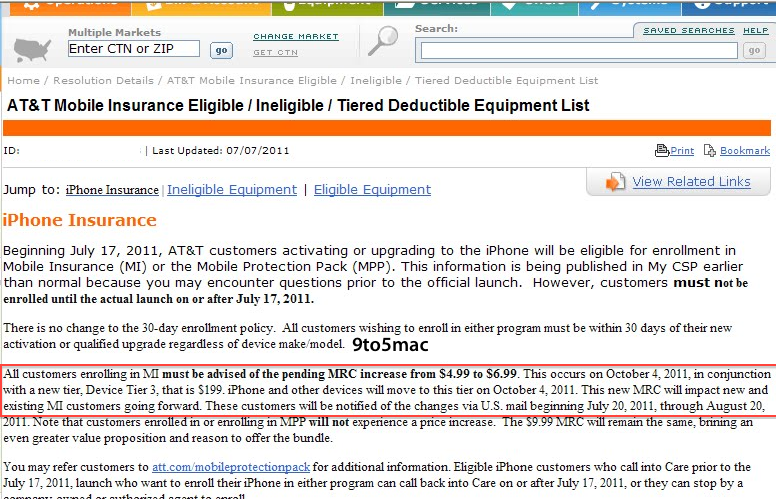
We got word yesterday that AT&T was changing its iPhone insurance plans on October 4th, perhaps signaling some new models. With what we had, we’d have given the info about a 25% shot of being legitimate. However, since then, we’ve heard that a big commotion was made about that information being made public. Based on that and today’s Virgin announcement, we’re thinking the probability of that date being right has increased significantly. Expand Expanding Close
We’ve just been handed some internal AT&T information on device changes:
.
A new tier of device will be created in AT&T’s phone database on October 4th (a Tuesday:) which will require a higher rate of insurance. iPhone (and other devices) will move there on the arbitrary October 4th date. It is curious that the iPhone was mentioned specifically and not other devices.
While light years away from a new iPhone launch date confirmation, it could be a sign that new iPhones will hit AT&T in this timeframe.
In any case, it might be a good idea to buy insurance before that date as the monthly prices are going up.
One of the more controversial components of the iPhone 4 is its non-Gorilla glass backing. Glass is a great material for displays obviously because it is transparent, relatively strong and scratch-resistant. However, it is more questionable for the back of a device because it breaks spectacularly where traditional materials are stronger and lighter.
But it does look awesome on the back of the iPhone 4.
So the question of the day: Should Apple’s next iPhone continue to use a glass backing or should they move to a different material like plastic, aluminum or liquid metal?
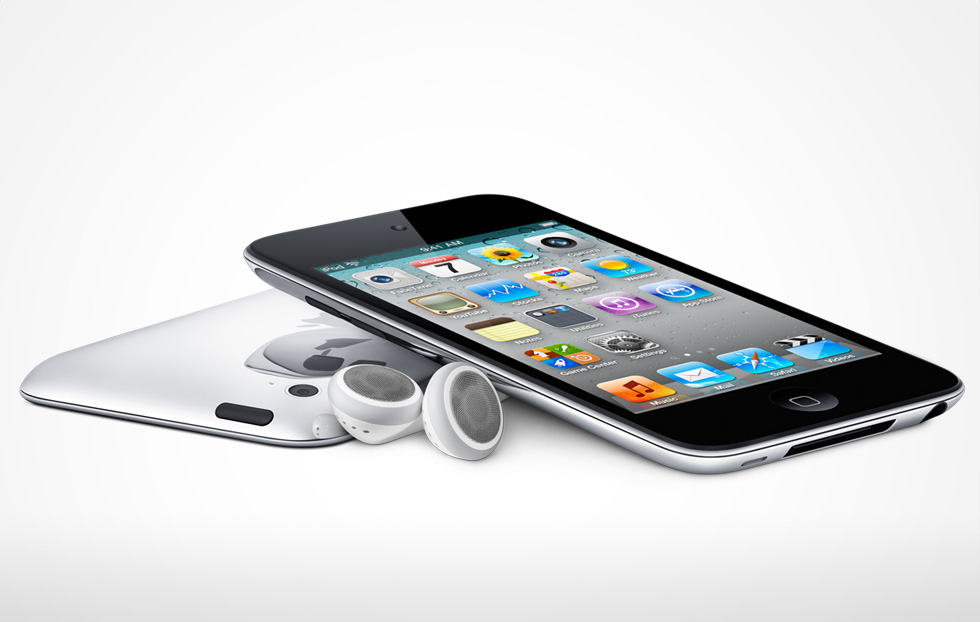
This afternoon, we recieved some intel from an iPhone source that has been reliable in the past. Most of the information is already known but it is important to weigh in on what’s going around. The “big” news is that Apple will be selling two totally distinct iPhones in September. One will be a low-end variety that will address the cheap Android market, according to the source. The other will be a high-end device and will be an all new design. There will be no mistaking these two devices, they will be immediately discernible. The iPod touch, like it always has, will get updated in September as well.
So that’s where the info path trails off, and to be frank, it isn’t all that surprising. There are currently two totally distinct iPhones on the market: the iPhone 3GS and the iPhone 4. The 3GS is at a cheaper price point while the iPhone 4 is the high-end line.
So we’ll have the same thing in September? iPhone 4 is the low end and iPhone 5 the high end?
I’m not so sure. For one, the price of an iPhone 4 isn’t going to compete with cheap Android phones in any way. Apple is currently selling them for over $600. They aren’t going to cut the price in half overnight. The 3GS doesn’t currently compete on price either. I think that to compete on price with Android, Apple has to make a totally new low end phone as well.
What’s it going to be? I think a good place to start looking is the curent iPod touch. The iPod touch has the same resolution screen as the iPhone 4 but with poor(er) viewing angles because the screen doesn’t have In-Plane Switching. (video below)
Also, the back camera is an order of magnitude worse than the iPhone 4’s, it doesn’t have GPS, has less RAM and the battery doesn’t last quite as long.
…and obviously the iPod lacks the “phone” bits.
But Apple somehow makes a lot of money selling this “almost iPhone” for just $229 retail (and under $200 at discounts) vs. the $650 that the iPhone 4 fetches without a plan. It doesn’t seem infeasible to me that Apple could use the iPod touch platform that debuted a full year ago to build a cheap iPhone device.
Here’s how:
Start with the same hardware. Add the GPS/3G baseband chips and some phone wiring and a solid 3 megapixel camera and you are 99% of the way to an iPhone lite. iPhone Air? Whatever.
Apple could make this device, one that is thinner than an iPhone 4, with most of the same specs, for $299. But here’s the best part: Expand Expanding Close
Analytics company Localytics today published a report on the rise of the Verizon iPhone. In the July month, it accounted for 32% of all iPhone 4s purchased (AT&T is still selling iPhone3GS, and has the US exclusive on the $49 iPhone). That’s with AT&T’s 8-month head start.
It’s not all gravy for Verizon. Localytics surmises that the biggest selling point to US users was the ‘unlimited’ data plans…which end today.
Why the recent uptick in Verizon adoption? One reason may be Verizon’s unlimited data plan, which they are scheduled to do away with on July 7th. AT&T officially discontinued its unlimited data plan in mid-2010, although existing customers were allowed to keep their plan as long as they remained AT&T customers. We’ll continue tracking the shift in iPhone 4 market share to see if Verizon loses momentum post-unlimited-data.
It will be interesting to see the split on iPhone 5 when all carriers (including Sprint T-Mobile and others?) are equally pitted against each other. Expand Expanding Close
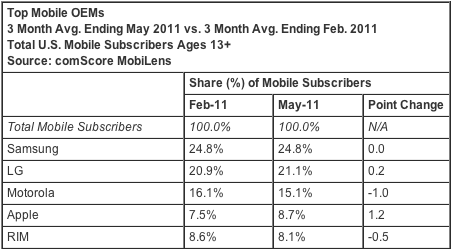
Today’s comScore report shows that a full third of all US phone users are using a Smartphone and that is heading toward a majority pretty quickly. Perhaps that is why (with a little help from Verizon) Apple was the biggest gainer in the overall phone market in the Feb-May quarter. LG was up just slightly while Apple stole marketshare from Motorla and RIM.
I think it is important to keep in mind that Apple’s original iPhone goal was to capture 1% of the total phone market in the first year of release. They’ve done that many times over and now Apple is capturing over 1% of the total US phone market per quarter. Expand Expanding Close
We are hearing from our connections with sources at Foxconn that the next-generation iPhone will include an iPhone 4-like design, and now we have some more information: parts.
Replace Base helped us get our hands on the dock connector and headphone jack flex. While these parts don’t look all to interesting to the normal eye, we had our friends at the iFixYouri iPhone repair shop take a look at these parts to basically confirm a few things.
First is that, indicative of these parts, the fifth-generation iPhone will have color options: black or white. This isn’t all too surprising – seeing we’re seeing a white iPhone 4 soon – but it’s still worth mentioning for fans of white devices.
Next is the iPhone home button. Some rumors from earlier this year pointed to future iPhones lacking physical home buttons. The dock connector for the iPhone 5 seems to refute all that as the home button connector is present on the piece.
Next is the headphone jack flex: It’s redesigned. Although the redesign of an internal part that the consumer will never see does not seem exciting, the engineering aspect of it certainly does. The connection piece to the iPhone’s motherboard usually sits at the top of the cable but on the next iPhone, it sits on the middle of the cable.
Apple moving the headphone jack flex motherboard connector elsewhere could mean that Apple might be making room for something new in the device. Our speculation ranges from a beefier processor, more storage, a bigger battery, a better camera, a 4G chip, a Gobi CDMA/GSM chip, to NFC. At this point there is no way to tell.