Update: Nokia has responded to reports that Apple is offering to license its nano-SIM patents royalty-free by claiming Apple does not have patents “essential to its nano-SIM proposal” (via ITworld):
“We are not aware of any Apple Intellectual Property which it considers essential to its nano-SIM proposal. In light of this, Apple’s proposal for royalty-free licensing seems no more than an attempt to devalue the intellectual property of others.”
In recent weeks, reports popped up that suggest Apple is attempting to push a new standard for miniaturized SIM cards. In May 2011, Reuters reported Apple “submitted a new requirement to (European telecoms standards body) ETSI for a smaller SIM form factor.” More recent reports from the Financial Timesconfirmed other companies, including Motorola and Nokia, were attempting to push their own “nano-SIM” design. At the time, FT said Apple had support from “most of the European operators.” Ahead of the Smart Card Platform Plenary meeting with the European Telecommunications Standards Institute this Thursday and Friday, Foss Patents reports Apple is promising the ETSI it will license any Apple-owned patents related to nano-SIM free of charge to its competitors: Expand Expanding Close
Square updated its “Card Case” app with a new design, new name, and a shiny new icon (literally) less than a week after PayPal announced its triangular Square competitor.
Unlike the previous version of the app, which used a credit card metaphor for each store you had an account with, version 2.0, now called “Pay with Square,” uses a list of businesses nearby that accept Square payments and allow you to quickly open a tab at any of them. You can also search a map for nearby Square-compatible businesses and add your favorites to a list for quick and easy access on future visits.
This is not the first time we have received hints that Apple is working on an innovative universal remote control for controlling TV and video content. In January, we told you that Apple was researching a touchscreen remote with adaptable user interfaces. The invention would essentially allow button layouts stored in the cloud or in a device (such as a TV) to be wirelessly and seamlessly beamed to the controller’s UI. The concept would alleviate the “table full of remotes” scenario Steve Jobs described at D8.
Today, a new patent application published by the United States Patent & Trademark Office and detailed by PatentlyApplegives us even more insight into what Apple’s universal remote concept could become. In the newly discovered patent application, Apple details a remote that is capable of displaying customized controls for various devices by simply taking a picture of the device. Apple would send the picture to iCloud, analyze it, and beam a UI or button layout to the remote that works for your TV. PatentlyAppleexplained:
Reports from the Wall Street Journal last Octoberrevealed Sprint’s Chief Executive Officer Dan Hesse convinced the company’s board to take on a staggering commitment of approximately $20 billion to purchase 30.5 million iPhones over four years. At the time, Hesse said Sprint “would likely lose money on the deal until 2014. ″ He also claimed not having the iPhone was “the No. 1 reason customers leave or switch.” In an interview with Mobile World Live (via BGR), Hesse defended the decision and claimed, among other things, that iPhone users are “more profitable than the average smartphone customer.”
“ Subsidies are heavy for the iPhone. This is the reason why a high percentage of new customers is important… But iPhone customers have a lower level of churn and they actually use less data on average than a high-end 4G Android device. So from a cost point of view and a customer lifetime value perspective. They’re more profitable than the average smartphone customer.”
Hesse went on to claim that Sprint was “pulling a lot of customers” from AT&T and Verizon during the fourth quarter by noting four out of every 10 iPhones the carrier sold were new customers. According to Hesse, that is around double the rate of the other carriers. Expand Expanding Close
This year we have an awesome speaker line-up, including cool dudes like Loren Brichter (Tweetie/ex-Twitter), Neven Mrgan (Panic), Karl von Randow (Camera+), Raphael Schaad (Flipboard), Matt Rix (Trainyard), Shaun Inman (Last Rocket) and many more.The full line-up and other details like the date and location can be found on our website, www.onemorething.com.au – videos from the 2011 event can be found on Vimeo:http://vimeopro.com/omtconf/2011 and we even have a podcast where we interview all the 2012 speakers up on iTunes: http://itunes.apple.com/au/podcast/one-more-thing-ios-conference/id511706732
An interesting study out of Strategy Analytics today says that United States and United Kingdom smartphone owners “prefer device screens in the 4.0-inch to 4.5-inch range, as long as the device is also thin.”
“Almost 90 percent of existing smartphone owners surveyed chose a prototype smartphone with a display larger than their current device,” commented Paul Brown, a Director in the Strategy Analytics User Experience Practice. “This trend is driven by increased mobile web browsing ability, as well as engaging video and gaming experiences.”
Not surprisingly, women overall chose smaller phones than men, and existing Android users chose bigger screens than iPhone users. Still, it seems Apple’s customers would prefer a bigger screen.
Kevin Nolan, Vice-President for the User Experience Practice at Strategy Analytics, added, “In order for smartphone owners to adopt larger devices, it is important for handset manufacturers to ensure that mobile devices are not too heavy and that the devices remain thin enough for purses and pockets.”
The data seems to line up with our January poll of 9to5Mac readers in which the majority prefers the next iPhone to be 4-inches or more:
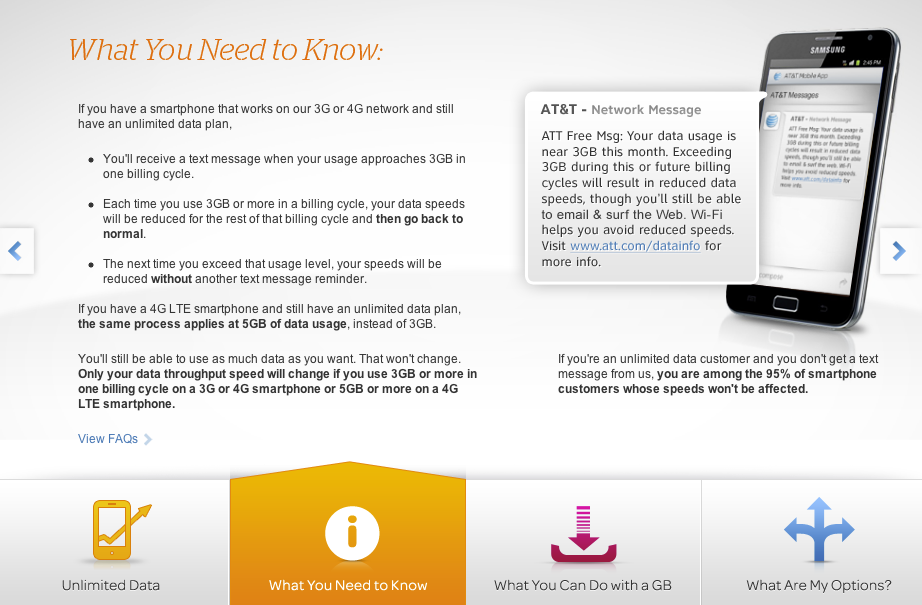
AT&T is now getting ahold of their throttling plans by laying out the numbers which will get users put into the “reduced data scenario”. Instead of the sliding scale “top 5% of users” which often was people under 2GB, they now have a hard maximum of 3GB for HSPA users like those with iPhones and 5GB for their new LTE offerings. Users will receive a warning the first time but won’t get a notice thereafter.
Over the past 24 hours, Digitimes has posted a series of reports each a bit more outlandish than the ones previous to it. They’ve been right on some stuff in the past but lately it doesn’t seem like they are even paying attention anymore. Our colleagues at other Apple blogs have been posting every one of these so let’s run them down.
Last night/this morning: Apple ‘considering’ a 14-inch MacBook for Asian Market.
Currently, 14-inch panels are the mainstream specification of the Asia notebook market, while consumers in Western countries prefer 15-inch models. In the global market, 14-inch models have an about 20-25% market share, but in Asia, the market share is about 35-40%, an indication of Asia consumers’ fondness for 14-inch models, the sources noted.
So Apple is going to make a .7-inch bigger MacBook (vs. 13.3 is current) specifically for the Asian Market? Makes no sense. Apple won’t even make an iPhone for China Mobile’s 600 million subscribers. We’re not doubting that Apple could change its size matrix, we just don’t think they will do a special size just for Asia.
Apple is expected to launch new MacBook Pro notebooks with an even thinner and lighter design than existing models in April, at the soonest. When paired with the company’s upcoming Mountain Lion operating system as well as Apple’s MacBook Air models, the product lines are expected to create a significant threat against notebook players’ ultrabooks, according to sources from the upstream supply chain.
Apple is expected to launch upgraded 13- and 15-inch MacBook Pros in April with initial shipments estimated to reach 900,000 units.
Mountain Lion is currently scheduled for “late summer” as when it will be cut loose. Also, Digitimes among others, said that Intel’s next processors weren’t coming out until June. So Apple is going to release a new MBP a few months before new processors?
By popular demand, MacTech provides a primer on taking AT&T to small claims court provided by attorney Bradley Sniderman. Recently a plaintiff in Los Angeles CA won a $850 settlement and per AT&T’s EULA, class action lawsuits are not possible so this might be your only means of exacting revenge on your limited unlimited plans. Excerpted: Expand Expanding Close
Along with Photoshop Touch for iPad 2, Adobe today officially announced ‘Primetime’ this morning. Primetime is a mashup of its video publishing, analytics and advertising platforms which aims to provide end to end video solutions for video publishers. Viewers on all four major platforms: Windows, Mac, iOS and Android will be able to use the output and Adobe specifically mentions that it will work on Apple’s native video, without requiring any tricks.
The Financial Times reports that Intel is expecting its 22nm Ivy Bridge processors to be delayed until June, according to Executive Vice-President of Intel and Chairman of Intel China Sean Maloney.
Intel expects its next-generation microprocessors to go on sale eight to 10 weeks later than initially planned, according to Sean Maloney, executive vice-president of Intel and chairman of Intel China.
In his first interview to discuss Intel’s business in China, Mr Maloney told the Financial Times that the start of sales of machines equipped with Ivy Bridge – the 22nm processor set to succeed Sandy Bridge in notebooks this year – had been pushed back from April. “I think maybe it’s June now,” he said.
Digitimesoriginally reported the delay, but V-R Zone said it was only for certain dual core chips that would most likely not affect Apple’s products. From the comments above, it seems the delay is broader than expected.
The bankrupt Chinese company that sold Apple the ‘IPAD’ name only to claim it was deceived by Apple’s secret IP Application Development subsidiary is now suing Apple in its own back yard, according to the WSJ.
The lawsuit, which was filed in the Superior Court of the State of California in Santa Clara County on Feb. 17, but previously unreported, claimed that Apple had committed fraud when it used a company set up by one of its law firms, called IP Application Development Ltd., to purchase the iPad trademark from Proview on Dec. 23, 2009 for 35,000 British pounds ($55,000).
Proview’s point of view?
In emails seen by The Wall Street Journal, a representative purportedly of IP Application Development told Proview that it wanted to acquire the iPad name because it was an abbreviation of its company’s title, and that its future products wouldn’t compete with Proview’s products.
Proview is bankrupt and its products look like cheap original iPad knockoffs (right). A judge in Shanghai denied Proview’s motion to ban sales of iPad in the city earlier today.
Analyst John Kinnucan is charged with two counts of securities fraud, two counts of conspiracy, and insider trading for leaking sales numbers from Apple, reportedReuters. The lawsuits against the analyst were filed in a U.S. District Court in Manhattan, and he was arrested on Thursday.
Kinnucan received tips from Apple’s suppliers SanDisk and Flextronics so he could leak sales numbers and forecasts to hedge funds. One SanDisk executive, Don Barnetson, is also in court on counts for insider trading. Kinnucan leaked the secret information about the iPhone’s sales between 2008 and 2010, and he would get the information by bribing suppliers. He is rumored to have earned $1.58 million for leaking Apple’s trade secrets.
Between 2008 and 2010, investigators said, Kinnucan paid insiders with cash, trips and other benefits to get secret information, including sales trends for Apple Inc’s iPhone. Kinnucan then funneled the information to hedge fund traders in California and New York in exchange for hundreds of thousands of dollars, investigators said.
Kinnucan’s arrest is part of a bigger crack down on insider trading within hedge funds. Over 60 people were already arrested during the operation, dubbed “Operation Perfect Hedge,” including a Flextronics executive for leaking iPhone sales numbers.
Apple’s Chief Information Officer Niall O’Connor visited Bangalore in January, according to The Economic Times, and the senior officials at technology firms Infosys and Wipro made sure he received the full-treatment upon landing in India.
Apple is supposedly looking to “quadruple the amount it spends in India, making it all the more covetous for Infosys and Wipro.” The CIO will decide which Indian companies get software outsourcing orders and maintenance work worth about $100 million USD (490 crore), which is roughly 20 percent of the Cupertino, Calif.-based Company’s total global outsourcing spending.
O’Connor started with Apple in 1991 and took the reigns as CIO in 1997. Two of his primary achievements include the global deployment of SAP software and the development of a full-suite of retail systems for Apple…
We had some time to talk to a well-connected developer at Macworld who was building an app that— among other capabilities— includes NFC reading for the purpose of mobile transactions. We were obviously curious why they would do that, noting that third party NFC readers for iPhone were not popular (aside from the recently announced Moneto, above). The developer told us that he had no hardware knowledge, but he had spoken to Apple iOS engineers on multiple occasions, and they are “heavy into NFC.”
I asked how confident he was, and he said, “Enough to bet the app development on.”
This is not the first we have heard that iPhone 5 would have NFC, however. Besides the deluge of ideas Apple has patented with NFC, the New York Times said pre-iPhone 4S that an upcoming iPhone would have NFC. While it did not turn out to be the iPhone 4S, it could be the one coming up.
(Moneto again)
The question is now: Who will Apple partner with for its payment systems? Over the weekend we received some hints… Expand Expanding Close
A patent application published by the U.S. Patent & Trademark Office earlier today reveals Apple is flirting with the idea of a universal touchscreen controller capable of controlling multiple devices including a “television, a video tape player, a video disk player, a stereo, a home control system, or a computer system.” The patent application is titled “Apparatus and Method to Facilitate Universal Remote Control” and was filed Sept. 30, 2011.
The patent application’s background covers many of the issues with current controllers for televisions and the devices mentioned above. It noted current universal remotes are “complex to operate” and unable to adapt to incorporate every command or control functionality supported by a device or future device. It also mentions the fact that users are often “confronted with multiple” remotes, which is the classic “table full of remotes” scenario described by Steve Jobs when talking about the Apple TV at D8. The patent application explained:
I think the Globe and Mail was the first to report that RIM’s beleaguered CEOs Jim Balsillie and Mike Lazaridis are out – moved upstairs to the boardroom. The strangest thing about the story, and really the past few years, is the total denial by the leadership that Blackberry is in a death spiral.
Research In Motion Ltd.’s new chief executive officer says the company is doing everything right and does not need a change in strategy, and must instead focus on harnessing its talent to improve the BlackBerry and revive sales.
“It’s a fantastic growth story and it’s not coming to an end,” Mr. Heins said in an interview with The Globe and Mail. “What you will see with me is rigour and flawless execution.”
When asked whether he thought the appointment of Ms. Stymiest as chair and himself as CEO would be enough to satisfy investors, Mr. Heins retorted, “Change to what? Change for what?”
He continued, “I mean, what’s the objective of a change? We’ve made a lot of changes in the past 18 months. Not changes, but also evolution. I changed a lot of my management team, in hardware, software … I’ve trained a lot of other people in the last four years. What do you think I did? … We didn’t stand still in the last 18 months, we did our homework. And I think we will complete our homework soon.”
Even in appointing a current co-COO, who looks even less charismatic than either of the two people he replaces (video below), RIM is hedging its bets on Blackberry 10/QNX, which it won’t release until the end of 2012 on phones —if it bucks recent trends and ships on time. Heins joined RIM just as the iPhone was released in 2007, and he has seen the company’s market share dive.
With an announcement tomorrow in New York City and an earnings call on Jan. 24, Apple Inc., has reached an all-time high of $429.47 per share on today’s market, and it closed at $429.11. Being up more than four points today, Apple is continuing to close in on a $400B market cap and sits at just $398.70B at closing.
Apple is expected to have had a record breaking Q1, which will be reported in an earnings call with CEO Tim Cook on Jan. 24. With the help of holiday sales, some analysts predict Apple sold 5 million Macs and around 30 million iPhones.
Tomorrow’s media event in New York City also added to today’s stock frenzy. Apple is expected to make a major announcement in the textbook industry. There have been many reports that Apple made the necessary partnerships with publishers, and may even launch its own textbook creation tool — which Ars Technica called a “GarageBand for e-books.” Apple teased the event as an education announcement. Per usual, 9to5Mac will be covering both events. Tomorrow’s event begins at 10 a.m., so stick with us for coverage. Any final predictions?
Apple currently has only one other Apple Store in New York City outside of Manhattan that is located in Staten Island. Things could change, however, according to a new report from NY Daily News that clamed retail developer Yeheskel Elia is working with Apple to bring an “iconic store” to Queens, New York. The specific location of the store would be Austin Street in Forest Hills.
Nothing is official because Elia and Apple are still working on more details. Elia said he would do anything to bring an Apple Store to the bustling area. If a deal is reached, Elia said a store could open in under a year. Several months ago, an Apple broker also reached out to Elia regarding the new store.
The deal would be a “kick in the pants” to the neighboring rival Brooklyn who, with borough president Marty Markowitz and local hipster legions, has campaigned nonstop for an Apple Store for years.
When NY Daily News reached out for comment from Apple, in a typical fashion they responded, Apple has “made no announcements” regarding a NYC store outside of Manhattan (sorry Staten Island).
Intel is looking to use its recently unveiled Medfield chips in the iPhone, according toThe Telegraph. In the report, Dave Whalen, vice president of Intel’s architecture group, told The Telegraph that Intel has talked to Apple and other manufacturers about using the new Medfield chips in iOS devices. Specifically, Whalen said as iOS continues to grow, “We talk to everybody.” Intel is also looking to Android and Windows Phone to use the new chips.
It is worth noting that it is highly unlikely Apple would move to Intel chips in iOS devices, even though the company uses Intel in Macs. Since the iPhone 4, Apple has continued to use its own line of processors—with the help of Samsung. The iPhone 4 was graced with the A4, the iPad 2 had the A5, and most recently— the iPhone 4S got the A5. The iPad 3 is rumored to get the quad-core A6 (mock up on the right), and going off Apple’s recent timeline, the iPhone 5 will most likely have the A6.
The most unique aspect about the Medfield chip is that it is a single core, unlike Intel’s previous chips. The Medfield uses the ARM chips’ strategy, in pulling all processes onto a single chip, which helps to save battery life and other things. For now, it looks Apple will most likely stick with its own proprietary chips. Samsung recently opened a factory in Texas for developing the A5 chip, showing Apple is committed to producing its own goods. Therefore, it is interesting that Intel is trying to make a move.
The United States Patent & Trademark Office published an Apple patent application today (via PatentlyApple) detailing new 3D GUI concepts and touch-free, motion sensing gestures that would allow you to simply wave your hand over a device equipped with proximity sensors. This follows a patent application published in July that explores similar 3D gestures and user-interfaces, and another in September detailing 3D display and imaging technology that could lead to Kinect-like gestures on future Apple products.
The image to the right (larger version is below) shows a 3D UI environment consisting of two sidewalls, a back wall, a floor, and a ceiling. As you can see, 2D objects are posted to the back and sidewalls, while 3D objects rest on the floor of the environment. The patent mentions a “snap to” feature that appears to allow objects to move from one surface to another by changing the orientation of the 3D environment. In other words, the user’s perspective of the UI, which PatentlyApple said could be imagined as the “view from an imaginary camera viewfinder,” would change when rotation of the device is detected by its gyro sensor or accelerometer:
I had a chance to meet with Samsung Storage solutions at CES 2012 this week and got the low down on its new OEM SSDs that Apple tends to buy in large numbers. Samsung and Toshiba are the OEMs that provide the SSDs in MacBook Airs. Samsung’s 470 OEM SSD product is noticeably faster than the Toshiba model that Apple also puts in otherwise identical MacBook Airs. We have talked about the speed difference before and how Air-buyers often will pay a premium for the faster Samsung drives.
Well, the speed difference is about to get even more noticeable. Samsung told me that it sold out of the 470 series OEM SSDs late last year and the company only makes a much faster variety: the 830 series.
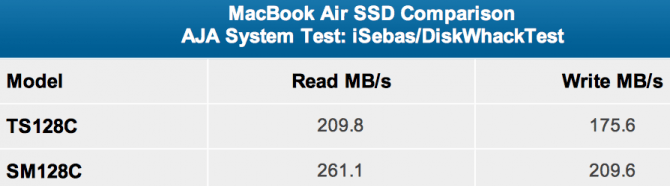
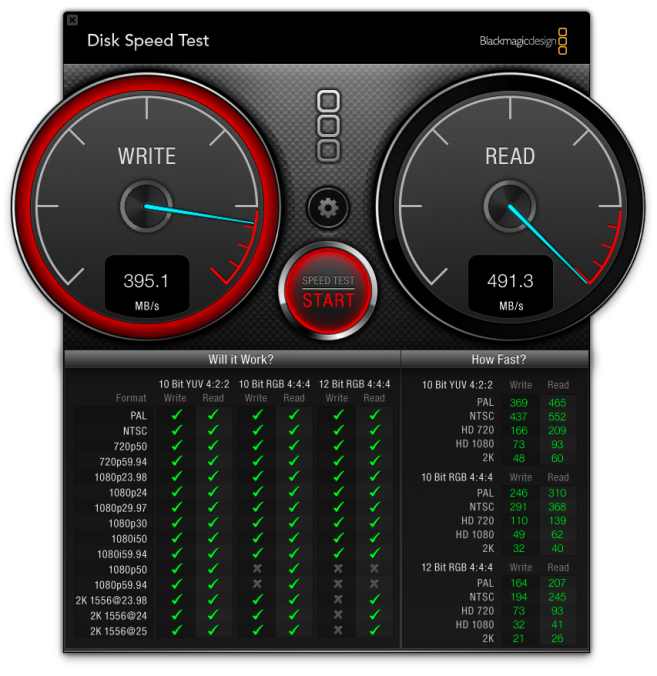
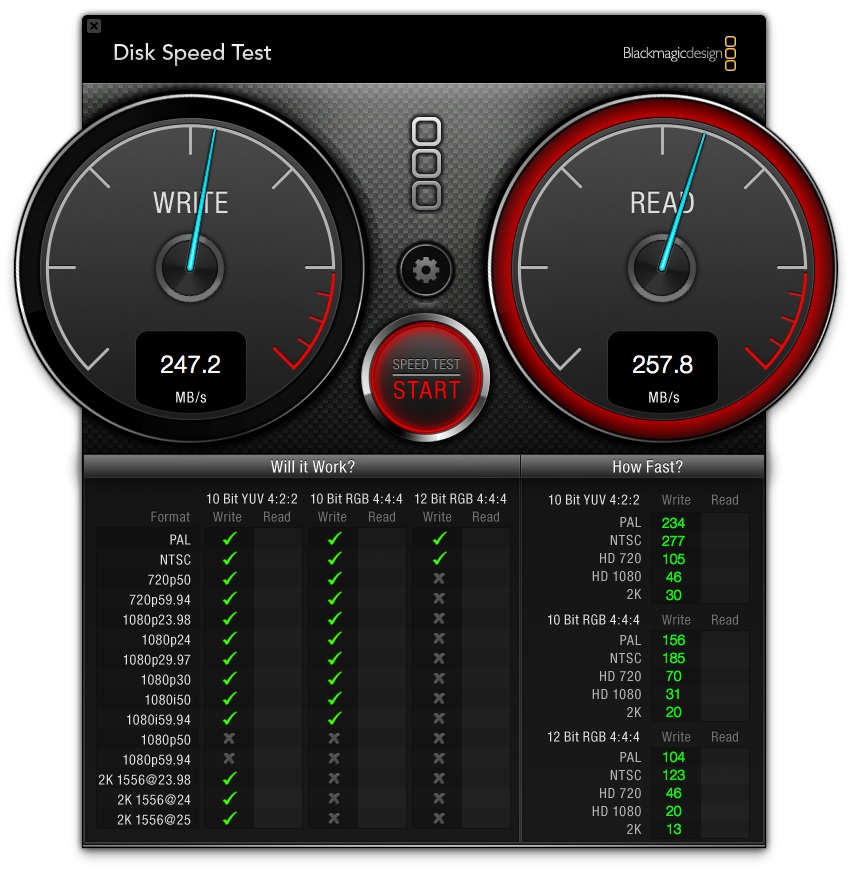
How fast is the 830 Series controller/chips? I had a chance to speed test the popular 2.5-inch 830 model late last year when it debuted. Typical speeds were over 400MB/s write and 500MB/s reads (below, left). That is almost twice as fast as the current MacBook Air SSD from Samsung (below, right), which itself is significantly faster than Toshiba’s SSD.
Samsung stopped short of announcing it is shipping the 830s to Apple, but the company confirmed it ran out of 470s a while ago and all of its SSD customers were receiving the updated 830 series. Samsung also confirmed that Apple is still a customer.
Today I ventured to the Las Vegas Apple Store to check the speeds of the MacBook Airs. I checked a new 128GB MacBook Air right out of the box which had the same “APPLE SSD SM128C” listed in System Profiler as my year-old Air. I checked the speed and it is indeed the old disk (same as above, right), which means the new Samsung SSDs haven not hit stores —at least here anyway.
Theoretically, a few things could happen at this point…
Update: Reports that T-Mobile knows Apple’s chipset roadmap are false I’ve confirmed with T-Mobile’s PR department. Ray only said that Apple could choose to use Chips that are AWS compatible, which is obvious.
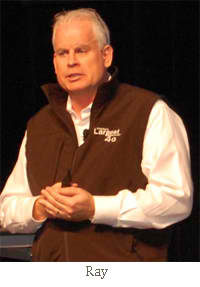
I had a few minutes this evening between Colbie Cailat songs at T-Mobile’s CES 2012 party to talk to CTO Neville Ray on what the future holds for T-Mobile since the AT&T merger is off. T-Mobile walked away with not only $3 billion but also some AWS spectrum from AT&T.
First, Ray is excited. He talked like someone who has been imprisoned by the merger over the past year, unable to make any long term moves. T-Mobile is still evaluating its long-term options (like LTE) but there is a buzz in the air now. While the parent company Deutsch Telekom gets the $3 billion payoff from AT&T, it seems that there will be big investment over the next few years in the T-Mobile USA subsidy.
On Dec. 19, T-Mobile’s official AT&T breakup release stated what —besides the $3 billion— T-Mobile would get:
As part of the break-up fee, T-Mobile USA will receive a large package of AWS mobile spectrum in 128 Cellular Market Areas (CMAs), including 12 of the top 20 markets (Los Angeles, Dallas, Houston, Atlanta, Washington, Boston, San Francisco, Phoenix, San Diego, Denver, Baltimore and Seattle).
The UMTS roaming agreement for the U.S. in T-Mobile USA’s favor has a term of over seven years and will allow the company to improve its footprint significantly among the U.S. population and offer its customers better broadband coverage for mobile communications services in the future. Population coverage will increase from 230 million potential customers at present to 280 million. As a result of the agreement with AT&T, coverage will be extended to many regions of the U.S. in which T-Mobile USA previously had neither its own high-speed mobile communications network nor the associated roaming agreements.
That spectrum will allow T-Mobile to light up HSPA+ radio frequency used by the iPhone’s 3G.
Nevada, parts of Northern California and the Pacific Northwest are also seeing some pockets of 1900MHz spectrum refarming for HSPA+. There are other parts of the country T-Mobile can refarm the 1900MHz spectrum but, the focus is on the Pacific Northwest, Nevada, Utah and California for right now from what we’re told. We should emphasize and emphasize greatly that this post does not mean that all of the aforementioned areas are seeing this refarmed spectrum, just pockets inside those areas.
Ray said those networks were not officially lit up (perhaps some tower testing or AT&T roaming confusion happened).
Nevertheless, there is good news for those who want to use an iPhone on T-Mobile’s 3G network…
While Apple does not have a booth or keynote at the 2012 Consumer Electronics Show in Las Vegas, the company is on the show floor scouting the competition. PaidContent’s Tom Krazit spotted Apple’s head of iOS product marketing Greg Joswiak at Sony’s booth. Joswiak talked to PaidContent, with a grin on his face, and said he was on location to see “How other companies present their products at events such as CES, from things like booth layout and aesthetics to which products are highlighted within a company’s booth.” Interesting.
It is worth noting that Apple has not participated in a trade show since MacWorld 2009, where the company announced iWork ’09, new MacBook Pros, and more. In recent years, Apple has stuck to announcing new products at its own events.
Roaming the floor does not seem like the only thing Apple is doing at CES. At 9to5Mac, we have been independently contacted through email by someone who seems to be seeking information on Apple competitors, including information on what 9to5Mac thinks about the technology being showcased at CES. The contact also wanted to know specifics on how journalists viewed companies’ product marketing practices. This probe certainly sounds similar to Mr. Joswiak’s recent activities on the show floor, right?