Apple job listing confirms Apple is investigating using flexible displays in future products

Apple-job-listing-flexible-displays-02

Update: Apple appears to have removed the job listing, but we grabbed a screenshot above and below.

Apple-job-listing-flexible-displays-01We know that Apple has been investigating various methods of incorporating flexible displays in its mobile devices thanks to a handful of patents and patent applications published over the last year. Flexible display rumors have picked up steam even more since rumors of an iWatch from Apple, and just today we came across two new Apple patent applications detailing flexible devices that could change states as a user bends or twists the device. We all know Apple patent applications have never been a good indication of future product releases, but now Apple has came right out and stated in a job listing that it is indeed considering flexible displays.

Apple Inc. is looking for a Display Specialist to lead the investigation on emerging display technologies such as high optical efficiency LCD, AMOLED and flexible display to improve overall display optical performance.

The job listing seeking a Sr. Optical Engineer was posted earlier this month and looks for a display expert to investigate “high optical efficiency LCD, AMOLED and flexible display.” Specifically, Apple is requesting someone to “Analyze the trade-offs between design, process, optical performance, and implementation feasibility,” hinting that the company is considering introducing new, advanced display technology in the future: Read more

More Apple patents detail completely flexible devices that change as they bend

iPhone-Flexible display

These are certainly not the first flexible display related patent applications that we’ve seen from Apple. A few different Apple patent applications have received attention in recent months, including one for a slap wrist-style bracelet with a flexible display, and others for curved and flexible displays in various iOS device-like form factors. Today we’ve come across a couple of recently published Apple patent applications filed as early as September of last year that further show Apple’s work with flexible displays (via UnwiredView).

The first patent application, titled “Flexible Electronic Devices” is pretty straight forward: Apple is interested in methods of providing not only flexible displays but also flexible components like batteries, circuit boards, and the housing of the device itself. Apple describes a device that could respond accordingly depending on how a user was manipulating the flexible display. The patent applications provides examples such as the device shutting off and entering standby mode when folded, or a user answering a call or changing volume: Read more

Apple in court: Samsung infringes key text-selection patent, anti-poaching class action blocked, slide to unlock invalidated in Germany

Text-selectionApple’s decision to disable VPN on demand functionality on iOS due to the virnetX lawsuit isn’t the only patent related Apple news today. Head below for a roundup of Apple’s court woes and wins from earlier today:

Samsung infringes key text-selection patent: Reuters reports that the International Trade Commission has handed down a preliminary decision ruling Samsung infringed on an Apple patent related to a text-selection feature. However, the courts also ruled Samsung didn’t infringe another patent related to detecting when other devices are plugged into a microphone jack. If the text-selection decision is upheld, the result could be a U.S. import ban on Galaxy, Transform, and Nexus devices: Read more

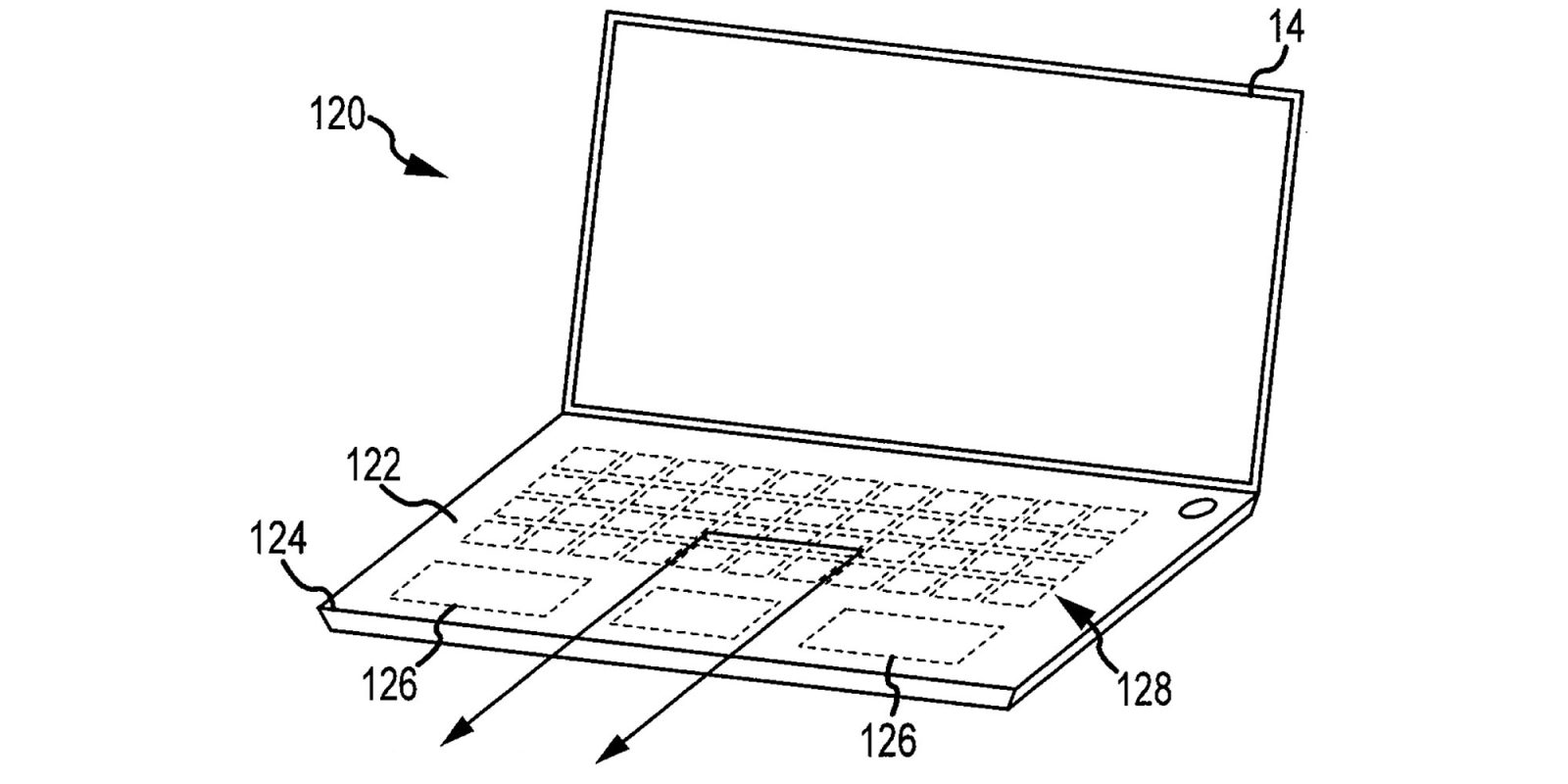
Apple patents detail quick app access on lockscreen, touch sensitive home button & unlikely tablet/notebook hybrid

Patent-quick-access-lockscreen

We all know Apple, like most big tech companies, files a lot of patent applications for inventions that will likely never see the light of day. Today we get a look at a couple of its latest patent applications via documents published by the U.S. Patent & Trademark Office and detailed by PatentlyApple.

On the more believable side, we get one that includes a new animated lock screen that would provide quick access to frequently used apps via a new animated feature accessible through a home button that could also recognize touch and pressure input (pictured above). Redesigning the lockscreen with new features has been a big request from many users, so this one isn’t entirely out of the realm of possibility for future iOS releases: Read more

Apple in Shanghai court over Siri speech recognition patent infringement claims

Siri promo video (text message reply 001)AFP reported Apple is in court in Shanghai, China again today, but this time it’s over a lawsuit alleging the company copied components of Siri’s speech recognition software. According to the report, Shanghai-based Zhizhen Network Technology Co. claimed in pretrial proceedings that Apple infringed its patent related to voice recognition technology via Siri. While the suit notes that development of Siri began in 2007, there is no mention of Nuance. Apple currently partners Nuance with to implement the speech recognition component in Siri, and it is also a market leader that presumably has its own arsenal of speech recognition related patents.

Zhizhen says it patented its “Xiao i Robot” software in 2004, while Apple’s Siri, which made its debut with the release of the iPhone 4S in 2011, was first developed in 2007.

“The company will ask Apple to stop manufacturing and selling products using its patent rights, once Apple’s infringement is confirmed,” Si Weijiang, a lawyer representing Zhizhen, told AFP.

“We don’t exclude the possibility of demanding compensation in the future,” he added.

The company is behind Siri-like software called ‘Xiao i Robot’ that it claimed was first developed before Siri in 2004. The technology is apparently available on some smart TVs and enterprise applications, but it doesn’t appear to be available as a consumer-facing app for smartphones or tablets. The video below appeared online when the company originally filed suit against Apple last year, and it shows the Xiao i Robot software running on a Lenovo smartphone:

Apple patents unlikely SmartCover wireless charging system

However unlikely—the United States Patent and Trademark office today published an Apple patent application that details a system of inductively charging an iPad through the Smart Cover. The idea is that rather than plugging in the iPad, the Smart Cover would include an inductive power transmitter that would allow it to pair with an inductive power transceiver embedded into the iPad. The result is the Smart Cover would become a wireless charging station, connecting to an external power source, and allowing you to power your iPad in various positions. Apple also explained that it could use “ambient power gathering devices, such as solar cells, can be used to gather ambient power (such as sunlight) to be stored internally in the flap for later inductive transfer.”

A method for wireless powering a tablet device, comprising: determining if a protective cover is in a closed configuration with respect to the tablet device; enabling a wireless power receiver circuit in the tablet device when it is determined that the protective cover is in the closed configuration with respect to the tablet device; and wirelessly receiving power from a wireless power transmitter associated with the protective cover.

Apple described the advanced Smart Cover as including multiple power transmitters to allow the iPad to charge even when using the case, for example, as a stand to prop up the device. Alternatively, the cover could continue charging the device when in the closed position or when an iPad is placed on top: Read more