It turns out that his hobby 9to5Mac blog was always his favorite and in 2011 he went full time adding his Fortune Google followers to 9to5Google and adding the style and commerce component 9to5Toys gear and deals site. In 2013, Weintraub bought one of the Tesla’s first Model S EVs off the assembly line and so began his love affair with the Electric Vehicle and green energy which in 2014 turned into electrek.
In 2018, DroneDJ was born to cover the burgeoning world of drones and UAV’s led by China’s DJI.
From 1997-2007, Weintraub was a Global IT director and Web Developer for a number of companies with stints at multimedia and branding agencies in Paris, Los Angeles, New York, Sydney, Hong Kong, Madrid and London before becoming a publisher/blogger.
Seth received a bachelors degree in Industrial and Systems Engineering from the University of Southern California with a minor in Multimedia and Creative Technology in 1997. In 2004, he received a Masters from NYU’s Tisch School of the Art’s ITP program.
Hobbies: Weintraub is a licensed single engine private pilot, certified open water scuba diver and spent over a year traveling to 60 cities in 23 countries. Whatever free time exists is now guaranteed to his lovely wife and two amazing sons.
Lucky iPhone owners on Sprint’s network (yeah we tried others) can now download Sprint TV and watch some pretty awesome programming.
This free application allows users to view select live and on-demand programming from such partners as ABC, CBS, NBC, ESPN, The Disney Channel, MTV and Comedy Central. If Sprint TV’s free programming isn’t enough to meet your mobile entertainment needs, you can purchase additional premium programming, with packages ranging from $4.99 – $9.99 per month.
The NYTimes rewrote our post about images and videos being up for grabs to developers who write apps for iOS.
The problem is that iOS apps not only have access to a user’s contacts database (including addresses and notes), but apps also have full and unencumbered access to everything in the iOS app sandbox, such as pictures, music, movies, calendars, and a host of other data. Any of this content is literally open for developers to freely transmit to their own servers while apps are open.
Conspicuously absent is any sort of linking. Their re-write:
As it turns out, address books are not the only things up for grabs. Photos are also vulnerable. After a user allows an application on an iPhone, iPad or iPod Touch to have access to location information, the app can copy the user’s entire photo library, without any further notification or warning, according to app developers.
It is unclear whether any apps in Apple’s App Store are actually doing this. Apple says it screens all apps submitted to the store, and presumably it would not authorize an app that clearly copied a person’s photos without good reason. But copying address book data was also against Apple’s rules, and the company let through a number of popular apps that did so.
All hope might not be lost, however. We spoke to sources familiar with the situation, and were informed that a fix is most likely coming for the loophole. According to the people we talked to, Apple has been made aware of the issue and is likely planning a fix with an upcoming release of iOS. Those sources also confirmed that the ability to send your photos and videos to a third-party is an error, not an intended feature. If we had to guess, the fix will likely come alongside a patch for Apple’s other recent security issue — the ability for apps to upload your address book information without warning.
By popular demand, MacTech provides a primer on taking AT&T to small claims court provided by attorney Bradley Sniderman. Recently a plaintiff in Los Angeles CA won a $850 settlement and per AT&T’s EULA, class action lawsuits are not possible so this might be your only means of exacting revenge on your limited unlimited plans. Excerpted: Expand Expanding Close
Developers are getting this email today from Apple:
The Mac App Store is the safest place for users to get software for their Mac, but we also want to protect users when they download applications from other places. Developer ID is a new way to help prevent users from installing malware on their Mac. Along with Gatekeeper, a new feature in Mountain Lion, signing applications with your Developer ID certificate provides users with the confidence that your application is not known malware and has not been tampered with.
Get your applications ready for Gatekeeper today. It’s easy to get started with Developer ID using the automated certificate request tools in Xcode 4.3 or the Developer Certificate Utility.
For developers that don’t want to distribute their Mac applications on the Mac App Store, Apple offers a new way to make sure Apps are from trusted sources. With a Developer ID and Apple’s new Gatekeeper, users (and IT administrators/parents/kids/ etc) can be sure that only applications signed by Apple developers are able to be executed on a Mac.
MacRumorspoints to a single Sina Weibo user who posted what is purported to be iPad 3 cost premiums over the iPad 2s now on the market (above). If true (and it seems a stretch at this point that Chinese locals would have U.S. prices), it would be the first time Apple has deviated from its original price matrix.
Along with Photoshop Touch for iPad 2, Adobe today officially announced ‘Primetime’ this morning. Primetime is a mashup of its video publishing, analytics and advertising platforms which aims to provide end to end video solutions for video publishers. Viewers on all four major platforms: Windows, Mac, iOS and Android will be able to use the output and Adobe specifically mentions that it will work on Apple’s native video, without requiring any tricks.
The Financial Times reports that Intel is expecting its 22nm Ivy Bridge processors to be delayed until June, according to Executive Vice-President of Intel and Chairman of Intel China Sean Maloney.
Intel expects its next-generation microprocessors to go on sale eight to 10 weeks later than initially planned, according to Sean Maloney, executive vice-president of Intel and chairman of Intel China.
In his first interview to discuss Intel’s business in China, Mr Maloney told the Financial Times that the start of sales of machines equipped with Ivy Bridge – the 22nm processor set to succeed Sandy Bridge in notebooks this year – had been pushed back from April. “I think maybe it’s June now,” he said.
Digitimesoriginally reported the delay, but V-R Zone said it was only for certain dual core chips that would most likely not affect Apple’s products. From the comments above, it seems the delay is broader than expected.
I recently found myself needing nice battery-powered wireless speakers for use with my iPhone, iPad, and Mac.
Airplay is great for stationary speaker systems when you are in one place and on a Wi-Fi network. However, when you want to go to the back yard, on a picnic, over night at a hotel, or anywhere else without a Wi-Fi network, Airplay becomes a pain (make a new network, add airplay peripherals, etc.). Remember that not all Mac or iOS applications support Airplay, and then it becomes a downright nuisance.
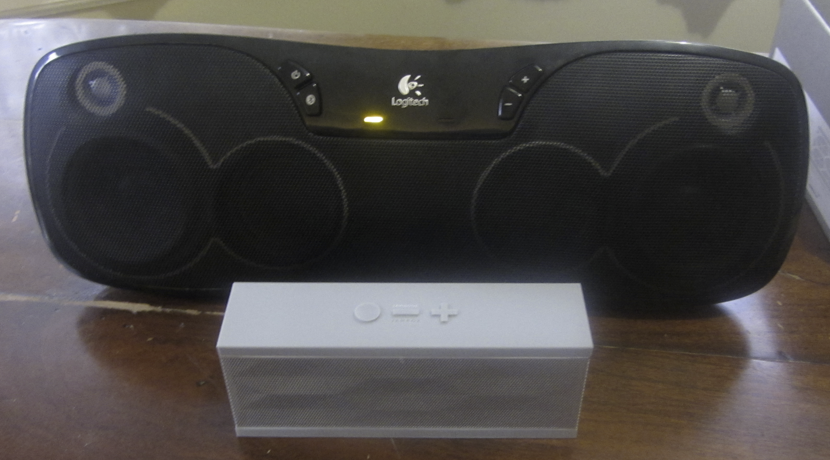
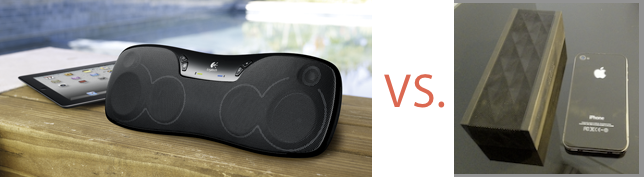
Therefore, I decided to go with an old standby: Bluetooth speakers. I needed a built-in rechargeable battery with over 5 hours of output and solid sound, and I was willing to spend around $150. Two of the most popular items in this category are the Jawbone Jambox and the Logitech Wireless Boombox.
I got my hands on both a few weeks ago and have used them since. Here is how it has gone…
The new design is said to be even simpler and more user-friendly than the current design. Apple is working on ways to enhance the speed and efficiency of finding new content, such as songs, videos, and applications. The cornerstone element of Apple’s new iTunes Store is interactivity. As Apple vaguely explained to a number of music labels and entertainment partners, Apple is looking to make the iTunes Store a much more engaging experience.
Yeah, Apple is not doing that 100 percent organically like the barley at Cafe Macs. Turns out, it is bringing some outside talent to help with the job. TechCrunchlearned that a startup founded by Ben Keighran called “Chomp” is now part of Apple:
This is not a cheap “acqui-hire”, Apple has bought the Chomp team and technology and plans to use both to completely revamp App Store search and recommendations, I hear.
Chomp currently powers Verizon’s Android market, but it might be time for Big Red to look for a new technology partner.
Update: Our sources said Chomp CEO Ben Keighran and CTO Cathy Edwards are already working at Apple. Keighran joined the iTunes marketing team, and Edwards is now a senior iTunes engineer.
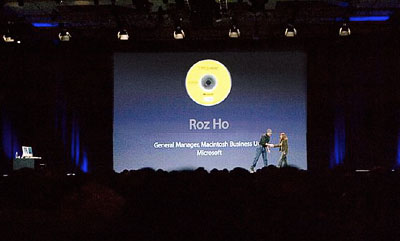
It appears Microsoft may finally unveil an iPad version of its bread and butter Office productivity suite. More interestingly, the launch seems timed with a possible on stage presentation at the iPad 3 event in a few weeks. Remember when Roz Ho, former head of the MS Mac Business Unit, was a staple at Apple events? Me neither.
However, the question comes up: Why would Apple, who has pushed the iWork apps for iPad since day one, want to give Microsoft a stage to showcase its competition? Moreover, why would Microsoft, who is readying its own Windows 8 tablets, want to empower Apple’s iPad with Office, thereby making its own Tablets less valuable when they hit the market …later? Read on… Expand Expanding Close
As Apple ramped up its Maiden, N.C. data center over the past few years, it was clear that it was looking to expand even further. Late last year there was a report that Apple was looking near Prineville Oregon, just a quarter-mile from Facebook’s massive datacenter, for a plot of land. The plan was called, “Project Maverick.”
Today, local station KTVZ, confirmated (via Macrumors) that Apple purchased a 160-acre parcel in Prineville from Crook County for $5.6 million just a stone’s throw from the huge facility built by Facebook. (Pictured, right.)
Apple’s Kristin Huguet confirmed the deal:
Apple spokeswoman Kristin Huguet confirmed Tuesday that “we purchased the land and it’s for a data center,” but could not speak to details beyond that, other than to say it will be a “green” facility.
She noted the company this week launched a new Website, www.apple.com/environment, which covers a wide variety of its “green” efforts, including LEED energy-efficiency certification for its new Maiden, North Carolina data center. Huguet noted it will have the largest solar array and largest fuel cell in the U.S.
County commissioners signed the deed on Feb. 15— the day that Oregon passed a tax break for corporations wanting to build data centers (including Facebook).
Microsoft attempted to kibosh the news surrounding its Microsoft Office app for the iPad started by The Daily earlier today. It told The New York Times:
“The Daily story is based on inaccurate rumors and speculation. We have no further comment.”
A Microsoft spokesperson said the screen shot accompanying The Daily’s story is not a picture of a real Microsoft software product. But the spokesperson also said Microsoft is declining to comment as to whether or not the company has developed a version of Office for the iPad and/or when such a product may come to market.
She later added this communication from Hickey:
“Right now, someone with a mid-level job at Microsoft is being yelled at. To that person: I’m sorry, I owe you a beer. But say it however you want to, we both know that Office for iPad is on its way. And if it’s as cool as the version I’ve seen, you’ve got a winner.”
A Microsoft employee released a third statement to the MacObserver:
Danell Arvberger, Sr. Category Manager – Office for Mac, said, “Interesting, this is the first I’ve heard of it. Thanks for sharing the article. If I find anything out and able to share I will let you know.”
It sounds like Microsoft is doing a non-denial denial. But wait, Hickey has more:
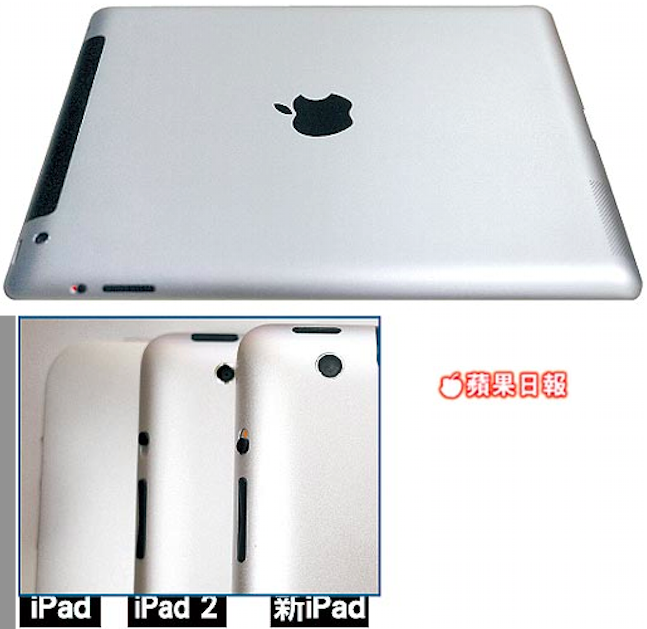
Apple Daily today has images of what it claimed is the next iPad compared to an iPad 1 and an iPad 2. You will notice increased tapering and a bigger camera lens. The publication said the camera is awhopping 8-megapixels,which would likely mean it is the same Sony camera found in the iPhone 4S that CEO Howard Stinger first leaked in April of last year. Apple will likely bring some of its optics over, as well.
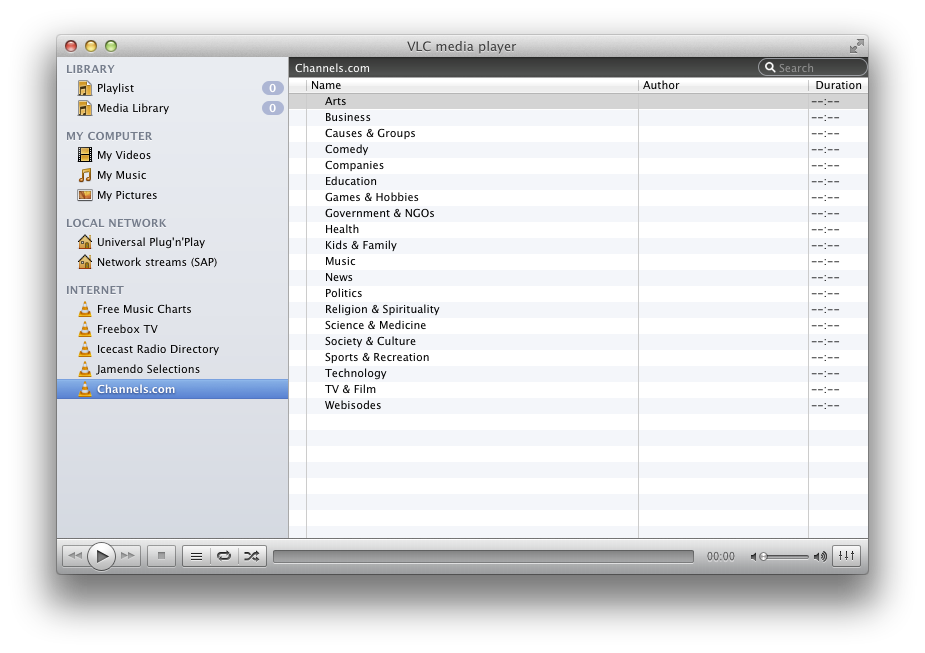
After 485 million downloads of VLC 1.1.x versions, VideoLAN and the VLC development team present VLC 2.0.0 “Twoflower”, a major new release. With faster decoding on multi-core, GPU, and mobile hardware and the ability to open more formats, notably professional, HD and 10bits codecs, 2.0 is a major upgrade for VLC. Twoflower has a new rendering pipeline for video, with higher quality subtitles, and new video filters to enhance your videos. It supports many new devices and BluRay Discs (experimental).
It features a completely reworked Mac and Web interfaces and improvements in the other interfaces make VLC easier than ever to use. Twoflower fixes several hundreds of bugs, in more than 7000 commits from 160 volunteers.
CNETreported that Apple settled 18 suits bundled as a Class-action lawsuit over the “Antennagate” “scandal.” Each iPhone 4 owner (it is not clear if Verizon iPhone 4 users who had different radios/Antenna are exempt) is entitled to a $15 cash settlement or a bumper. Apple began offering bumpers to users shortly after the release and the subsequent press conference to address the issue (as well as returns, no restocking fee or questions asked).
The settlement found:
Apple was “misrepresenting and concealing material information in the marketing, advertising, sale, and servicing of its iPhone 4–particularly as it relates to the quality of the mobile phone antenna and reception and related software.”
The settlement has its own Web site, www.iPhone4Settlement.com, which will be up in the coming weeks (the site doesn’t go anywhere right now). There, customers will be able to get information about the settlement and how to make a claim. As part of the arrangement, e-mails will also be sent alerting original buyers to the settlement before April 30, 2012. The claims period is then open for 120 days.
“We believe that the Apple iPhone 4 settlement is fair, adequate, and reasonable,” said co-lead counsel Ira Rothken, who represents the class, to CNET. “We believe that it allows members of the class to choose, and they can get $15 of cash or a bumper, so we believe that type of choice is proportional to the circumstances.”
Consumer Reports, who could not recommend the iPhone 4 based on the problem, demonstrated above, said the iPhone 4S was free of this issue.
Apple still sells the iPhone 4 with what we believe is the same design as the one used above, so it is not certain how this settlement will affect those sales.
“This settlement relates to a small number of customers who indicated that they experienced antenna or reception issues with their iPhone 4 and didn’t want to take advantage of a free case from Apple while it was being offered in 2010,”
Macrumorsclaimed to have obtained one of the screens floating around on the Internet from iPad 3 production. Putting it under a microscope, the publication indeed discovered it has 4 times the pixels as an iPad 2 or double the horizontal and double the vertical, which yields 2,048-by-1,536 pixels.
Physically, the purported iPad 3 display is the same size as the current iPad 1 and iPad 2 display at 9.7″ in diagonal, and looks quite similar to the naked eye.
However, when comparing the iPad 3 display to one from an iPad 2 under a microscope, the difference in resolutions becomes readily apparent, with the iPad 3 display’s pixels appearing to be one-quarter the size of those on the iPad 2.
This story is not going to surprise long-time Apple watchers. The Washington Post is reporting that the New York Times is steamed over not having access to Mountain Lion in step with its main rival the WSJ that reviewed Lion ahead of time and got one-on-ones with Apple executives, including a Q&A with CEO Tim Cook.
Other arms of Rupert Murdoch’s empire have also received planned Apple leaks for years in exchange, the NYTimes asserted, for positive coverage of Apple.
Says a source at the Times: “They are playing access journalism…I’ve heard it from people inside Apple: They said, look, you guys are going to get less access based on the iEconomy series.”
Tim Cook shot off an email last month in response to the Times’ iEconomy reporting. He said, “We respect every worker in our supply chain,” in a long, yet quickly worded email to employees.
As a company and as individuals, we are defined by our values. Unfortunately some people are questioning Apple’s values today, and I’d like to address this with you directly. We care about every worker in our worldwide supply chain. Any accident is deeply troubling, and any issue with working conditions is cause for concern. Any suggestion that we don’t care is patently false and offensive to us. As you know better than anyone, accusations like these are contrary to our values. It’s not who we are.
It is not a shocker that Cook is pissed off at the NYTimes and cut off access. If you have covered Apple for a long time, this is beyond obvious and a fact of life. It happened to other reporters in the past, as well: Remember when Dan Lyons was revealed to be behind the Fake Steve Jobs blog? Apple then blackballed Newsweek from Apple events/coverage when the publication hired him (and, in fact, dissuaded Newsweek from hiring him).
The level of access the NYTimes got is questionable. Columnist and longtime friend of Apple, David Pogue, tweeted that he’d been using Mountain Lion for a week yesterday before his review went up a little after 1PM ET:
But the Times didn’t get the customary access to executives that its competitors and even some bloggers got.
Moreover, it is not just Apple doing this—other companies do it as well. It is an industry standard. Companies who can afford to pick and choose coverage use their sway to get the kind of coverage they want. However, it is for good reason. Companies want positive reviews of their products through publications that they can trust to deliver.
The NYTimes’ cutoff is an obvious warning shot to other publications that those types of iEconomy stories will not be tolerated.
That is just the way the world works, but there is flip side to all of that…
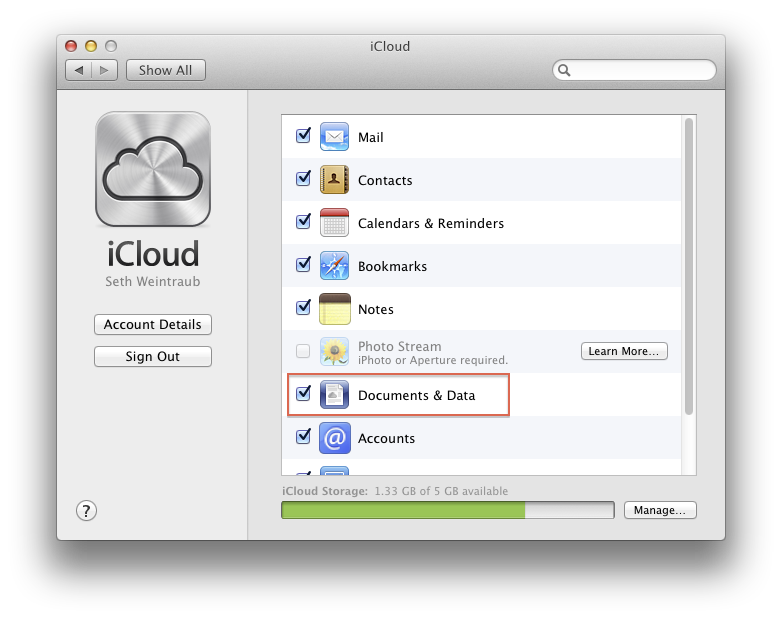
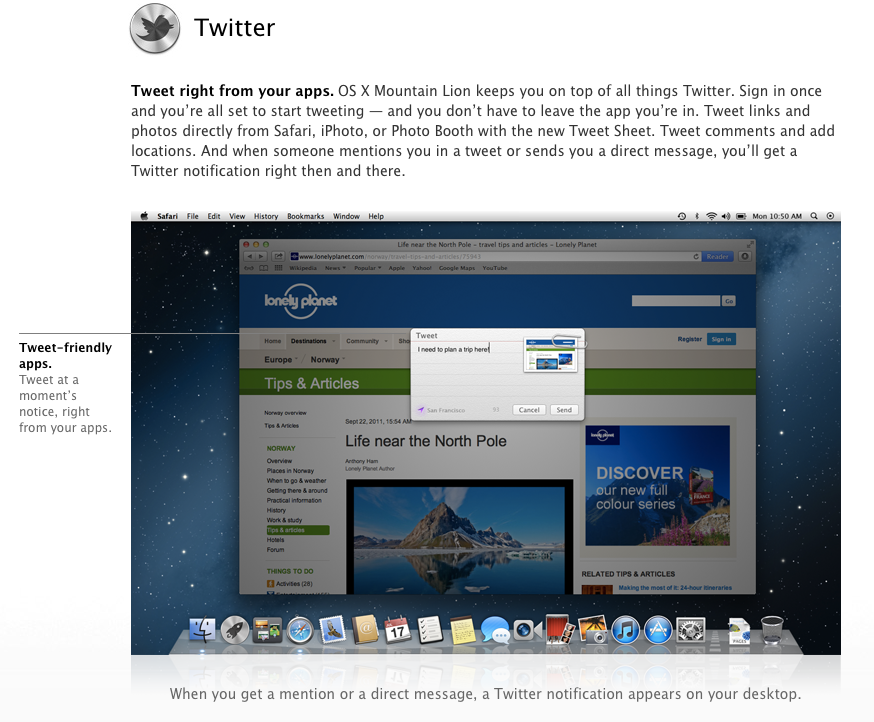
As of today, Twitter is baked into both iOS and MacOS X on a relatively low-level. Apple’s own social network Ping has yet to gather any steam in the marketplace. Facebook and Google are both growing their social networks like crazy while they are increasing in value.
Apple has $100 billion in its pocket, and CEO Tim Cook said at a recent Goldman Sachs event that he is looking for innovative ways to spend the money.
Apple responded today to the contacts-sharing issue with a statement indicating it plans to put some form of a setting on contact data that would allow users to control who views the data, similar to the way Apple locks down location data.
“Apps that collect or transmit a user’s contact data without their prior permission are in violation of our guidelines. We’re working to make this even better for our customers, and as we have done with location services, any app wishing to access contact data will require explicit user approval in a future software release.”
Congress became involved and probably motivated the move, but the legislative body is not going to like what it hears.
The problem is that iOS apps not only have access to a user’s contacts database (including addresses and notes), but apps also have full and unencumbered access to everything in the iOS app sandbox, such as pictures, music, movies, calendars, and a host of other data. Any of this content is literally open for developers to freely transmit to their own servers while apps are open.
(note that pictures with geotags will pop up a Location dialog which can be averted in code with some well known tricks)
Moreover, approved apps also have access to the iPhone’s camera and microphone, so apps can also take pictures and make recordings without permission (although, this would be easy to detect by the user with the light from the front camera or red bar during audio). Photos, videos, and audio are transmittable securely or insecurely up to servers that you and Apple do not know about.
To developers, this is no big secret. It is not trivial, but putting that kind of functionality into an app is straightforward and only uses Apple’s publicly available and blessed developer APIs (which means this stuff will not likely be detected by Apple’s App Store approval process).
Obviously, shady developers and even government entities are probably already using such apps to gather information. Therefore, these are some scenarios:
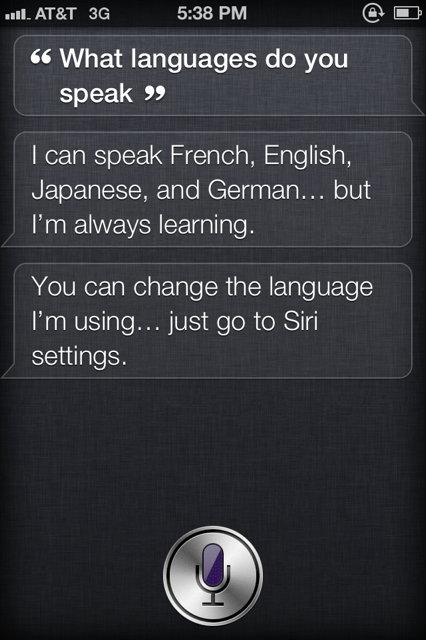
Siri is many things, but it seems she is not a good secret keeper. A few tipsters reached out and told us that Siri now speaks Japanese. Rumors earlier this month said Apple’s AI speech recognition interface would gain Mandarin Chinese, Japanese, and possibly Russian. It now appears that Japanese is about to be announced, perhaps at the iPad 3 announcement next month. There is no word yet on Chinese or Russian, but those are also likely coming soon.
When Siri was announced in October, Apple said that that additional languages would follow this year. Apple’s Siri FAQ says that she will support Japanese, Chinese, Korean, Italian, and Spanish in 2012:
Language Support and Availability
Siri works exclusively on iPhone 4S. Siri understands and can speak the following languages:
English (United States, United Kingdom, Australia)
French (France)
German (Germany)
In 2012, Siri will support additional languages, including Japanese, Chinese, Korean, Italian, and Spanish.
Can I use Siri in any of these languages in other countries?
Yes. Siri can be enabled in any country, and you can choose to speak to it in English, French, or German. However, Siri is designed to recognize the specific accents and dialects of the supported countries listed above. Since every language has its own accents and dialects, the accuracy rate will be higher for native speakers.








 .
.