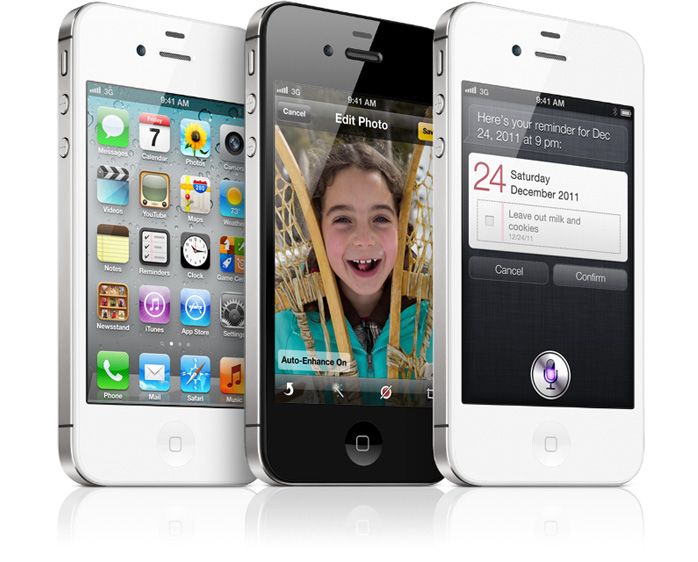
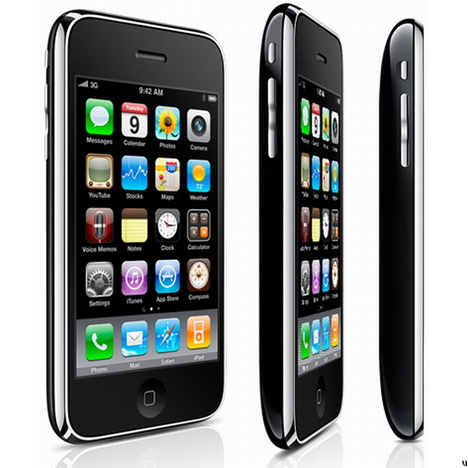
Digitimes’latest report puts some numbers on the low end iPhones coming out of China. The 2.5 year old iPhone 3GS has continued to sell briskly with the volume likely to reach two million units in the fourth quarter of 2011 and 1.4-1.6 million units in the first quarter of 2012, according to “industry sources”.
Think about that for a second. In a world where a new, free Android flagship phone comes out every week or so and dying out a few months later, Apple is selling 2 million/quarter of a device that was introduced two and a half years ago. This is the phone the original Droid went up against — in fact.
Verizon and conceivably other CDMA carriers in the world have also continued to sell the iPhone 4 CDMA version at an impressive clip.
Meanwhile, the production of the CDMA version of iPhone 4 is expected to top 800,000 to one million units in the fourth quarter of 2011 and 500,000-600,000 units in the following quarter, estimated the sources.
In what has become a tradition of sorts, Apple today published iTunes Rewind 2011, an annual list of the best iOS apps and games split across 21 App Store categories. Apple explains:
See what we chose as the best apps and games of the year, and stream video trailers to find out more. Plus, browser 2011’s top sellers and our favorite apps from this year in all 21 categories.
In addition to apps, charts are also available for music, movies, television shows, e-books and podcasts. They named Snapseed for the iPad App of the Year and Electronic Arts’ Dead Space for the iPad Game of the Year. As for the iPhone, Apple put Instagram at the top (runners-up were VidRhythm and Band of the Day).
Surprisingly, Apple gave Tiny Tower the iPhone Game of the Year award even though Angry Birds remains the top seller in the games category. To see the complete list in iTunes on your computer or using the App Store client on your iOS device, follow this link. As for the Mac, the Best of Mac App Store 2011 page features the cream of the crop amongst the Mac apps and games carried on the Mac App Store.
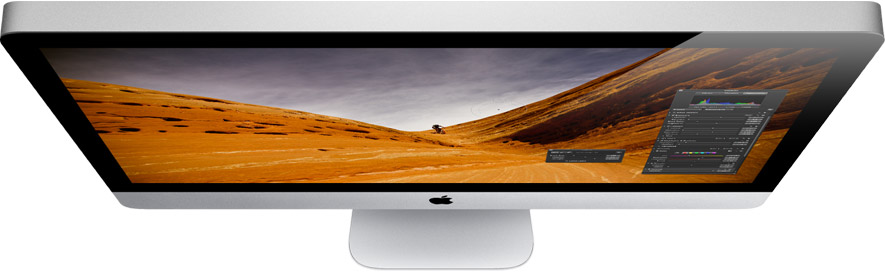
Even though all the growth in Apple’s Mac business is in MacBooks that accounted for nearly three-quarters of all the computers Apple sold during the September quarter, the iMac has been by far their most popular desktop. In fact, it’s the world’s leading all-in-one system in terms of popularity, recognition, visibility and – most importantly – sales.
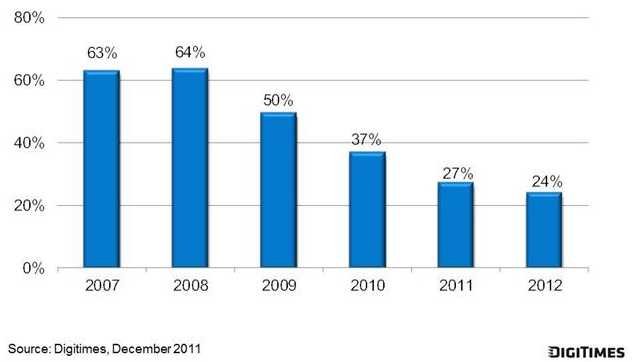
According to a DigiTimes Researchanalysis, some 13.5 million all-in-one PCs will ship this year and iMac will lead the charge with an estimated 3.7 million shipments, beating both Hewlett-Packard and Lenovo which are expected to move 2.4 million and 2.9 million all-in-ones, respectively.
In 2012 Apple, all-in-one shipments will rise to 15.8 million units, accounting for 10.5 percent of the overall desktop market (9.3 percent in 2011). Apple’s baby is projected to surrender the top spot to Lenovo which should ship four million all-in-ones versus 3.8 million iMacs. If true, the iMac’s share of the all-in-one market will drop from 27 percent in 2011 to 24 percent in 2012.
Lenovo should benefit from reduced prices of its systems and the brand’s popularity in China, which is increasingly becoming one of the key markets for all-in-one PCs. According to the report:
Although Apple’s iMac series has advantages in industrial design, the product series has shown only limited room for change in specifications. However, HP and Lenovo have delivered above-the-standard industrial design in their products, while offering better hardware specifications, price and a variety of choices. Therefore, Apple’s leading position in the AIO PC market will be taken by Lenovo in 2012.
With Apple deciding not to include support for T-Mobile’s bands in the US, T-Mobile has turned into an Android wasteland with over 90% of the smartphones sold on the network running on Google’s OS. Looking for some diversification (besides the over million legacy iPhones), T-Mobile looks to be one of the first in the US to roll out one of the new Nokia Windows Phone 7 devices which they plan to announce on Dec 14th, a little late for the holidays.
Grand opening of Apple’s massive new store inside New York City’s Grand Central Station is scheduled for Friday, December 9 at 10am, but today at 10am is a “media day”. Ahead of the event, first images of the store’s interior are cropping up all over the web. UPDATE: Apple just released a press statement formally announcing the new store. The new outlet is open from 7am to 9pm, Monday through Friday, Saturday 10am to 7pm and Sunday 11am to 6pm as we reported last week.
[slideshow]
The release also mentions 315 employees that work at the store, providing services such as Personal Pickup, two Genius Bars, the new 15-minute Express Workshops that offer “tips and tricks in a streamlined format to serve customers on a tight schedule” and of course the EasyPay system via the updated Apple Store app which lets folks “scan and pay for accessories with their iPhone”. More images, full release and another video byFortune’s Philip Elmer-DeWitt right after the break.
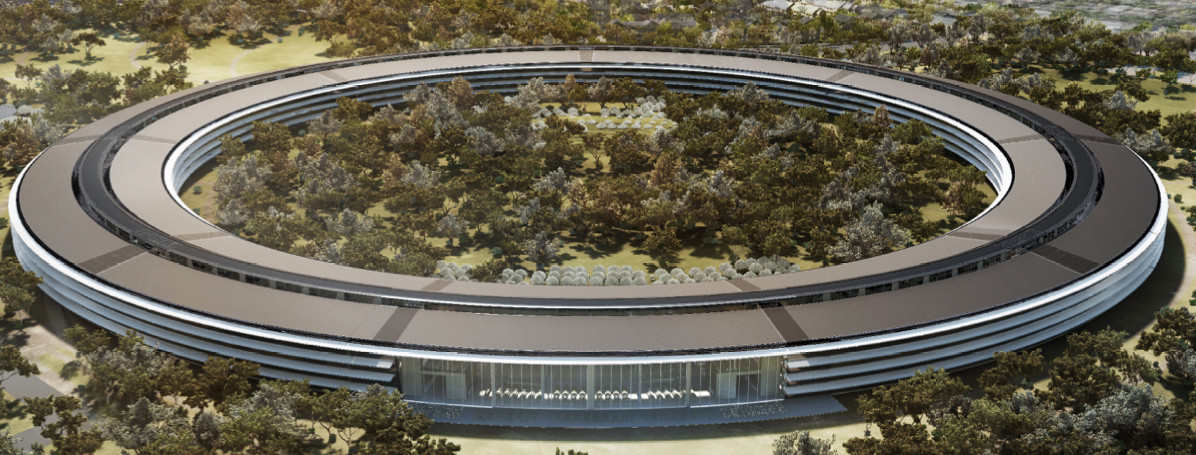
Dark roof adorning Apple’s upcoming Spaceship campus suggest solar panels.
UPDATE [Wednesday, December 7, 2011 at 12:55pm]: A reader chimed in about that black roof. Find the update added to the article bottom.
Apple’s upcoming campus in Cupertino, California is reminiscent of a spaceship with a footprint bigger than the Pentagon. The spectacular building should be completed by 2015, provided all goes as planned. Now, over the past few months we’ve been shown breathtaking renderings and descriptions of the 175-acre circular structure adorned in glass. The original conceptual images that had owed Cupertino City Council back in June and detailed drawings released in August have now been coupled with a brand new set of renderings that slip a couple of noteworthy details.
Yesterday, a new proposal Apple submitted on Monday has been made public at the City of Cupertino web site (viaiPhoneinCanada.ca). Four PDF documents weighing in at more than a hundred megabytes (Introduction, Site Plan & Landscaping, Floor Plans and Renderings) pitch the Spaceship building as “an integrated 21st century campus surrounded by green space”.
The company specifies its “distinctive and inspiring 21st century workplace” will “consist of 2.8 million square feet over four stories, and accommodate up to 13,000 employees”, respecting Apple’s security needs “in part through perimeter protection”. We can see how taking some paperwork to another department inside this monstrous super structure will be a lunch killer for some employees. The site is bounded by East Homestead Road on the north, properties adjacent to Tantau Avenue on the east, Interstate 280 on the south and Wolfe Road on the west. Apple doesn’t appear to have overlooked anything. Read on…
Siri, Apple’s artificial intelligence-driven digital secretary exclusive to iPhone 4S, is being worked on, improved and is about to get smarter, a pair of job openings indicate. This doesn’t come as such a big surprise because Siri – uncharacteristically for Apple – launched as a beta product because it had to (and thus its lack of fit and finish).
Apple’s Siri user interface manager Dan Keen pointed at two job openings for experienced iOS software engineers to join the team that implements the user interface for Siri and help “make the next big thing even bigger”. Both posts specifically mention the Siri API. The company explains in the iOS software engineer description (emphasis is ours):
You’ll need to work with them to enable access to their data and behaviors, and wire them up to your implementations. As a result, strong API design is needed to keep communications ideal.
The other job post, for senior iOS software engineer, is even less ambiguous about the API:
We are looking for an engineer to join the team that implements the UI for Siri. You will primarily be responsible for implementing the conversation view and its many different actions. This includes defining a system that enables a dialog to appear intuitive, a task that involves many subtle UI behaviors in a dynamic, complex system. You will have several clients of your code, so the ability to formulate and support a clear API is needed.
Note the above description doesn’t necessarily mean Apple will in fact open up the Siri API to third-parties – they could keep it private until they smooth out the rough edges and remove the beta tag. Also, “several clients” accessing the API could simply refer to external data sources Siri taps to deliver results, such as Wolfram Alpha, Yelp and more. Interestingly, the potential candidates should be familiar with Unix, “especially Mac OS X”, and display “passion for the Macintosh platform”, which might indicate a possible Siri port for the Mac, although that’s a stretch.
If history is an indication, Apple opening up Siri to third-party apps is a matter of when, not if. Clearly such a move would satisfy public hunger for Siri uses beyond core feature set. Think talking to your apps, saying stuff like “Update my Facebook status saying ‘Is anyone up for a movie tonight?'” or “Spotify, play my running playlist”. Make no mistake, the public Siri API could be huge and here’s why. Expand Expanding Close
Flipboard has finally released its excellent iPhone app (what better way to start this morning?) and Apple’s senior vice president of worldwide marketing Phil Schiller is clearly one of avid fans of the social news reader app. He just posted this short message via his Twitter account, approving of Flipboard for iPhone:
New Flipboard app for iPhone is very nice.
Couldn’t agree more. According to Flipboard CEO Mike McCue, Flipboard is now installed on one in ten iPads and has been downloaded more than 4.5 million times. Last year, Flipboard was named the iPad App of the Year. It’s interesting that the team had originally secured an impressive $60 million to fund development of the iPad version. With the yesterday’s update Flipboard became a trending topic on Twitter.
Schiller along with iOS chief Scott Forstall has been one of the very few Apple executives to maintain an account on the popular micro-blogging service. He hasn’t been tweeting much, though. To this date, his account was used to send only 127 tweets, unlike his colleague Forstall who hasn’t tweeted publicly yet.
A month ago Apple tweaked Schiller’s title, dropping “Product” from his previous title of senior vice president of worldwide product marketing. Some think the subtle change might reflect a change in responsibilities.
Sparrow, an efficient and minimalistic email application for the Mac, has been updated today with useful new features, including integration with the popular cloud storage, Dropbox. Upon authorizing your free or paid Dropbox account for use with Sparrow, you can attach and sync any file from your Dropbox by dragging and dropping it onto the compose window. Dropbox integration ensures that email attachments are not lost upon sending. The previous version of Sparrow also brought us support for CloudApp so Dropbox integration is a welcome addition that works towards strengthening the program’s cloud storage capabilities.
Also, if you receive a lot of unsolicited email messages (who doesn’t), you’ll be delighted to know that Sparrow finally lets you block remote images. You can tell Sparrow to display images once, always or choose to load only remote images in messages from specific domains or senders. Finally, improved search with tokens and suggestions enables you to find needle in a haystack in a Gmail-like fashion.
Using tokens means finding the mail you’re looking for in a matter of seconds. You could, for example, search for only the messages from a specific sender received on a specific date by taking advantage of the new FROM and DATE tokens. Sparrow is a ten buck download from the Mac App Store. A free lite version with adverts is also available.
The “30 Rock” actor was asked to get off a New York City-bound flight for playing “Words with Friends” while the plane idled at a gate Tuesday, said Baldwin’s spokesman, Matthew Hiltzik.
“He loves `Words with Friends’ so much that he was willing to leave a plane for it,” said Hiltzik, who added that Baldwin boarded another American Airlines flight to New York.
Consumer Reports, a U.S. monthly influencing purchasing decisions with its reviews and comparisons of consumer products, announced today that it rated AT&T the worst among wireless operators in the United States. In a repeat of last year’s ratings, rival Verizon Wireless ranked highest. The nation’s remaining major wireless carriers – including Sprint (the only carrier offering unlimited data to iPhone customers in the U.S.) and T-Mobile USA – fared “significantly better” than beleaguered Ma Bell.
Of the four major U.S. national cell-phone standard service providers, Verizon again scored the highest in this year’s Ratings, followed closely by Sprint. Survey respondents gave very good scores to Verizon for texting and data service satisfaction, as well for staff knowledge.
The findings are based on the newest satisfaction survey of some 60,000 Consumer Reports online subscribers with both standard and no-contract providers. Readers were polled about their service and customer support experience. Note that 18 percent of their readers, nearly one-fifth, said they don’t yet own a smart phone (but want one).
AT&T users are dissatisfied with their service, customer support and value for money.
So, who’s the happiest with their cell phone service? Surprisingly, it’s subscribers to prepaid services and customers of smaller standard-service providers rather than people with brand spanking new high-end smartphones on pricey plans. The magazine’s electronics editor Paul Reynolds explains: Expand Expanding Close
Walter Isaacson’s Steve Jobs biography has surfaced as the top-selling book on Amazon.com, per the online retailer’s Best Seller in Books for 2011 listing. Mind you, we’re talking about best-sellers for the whole 2011 here. Remember, Isaacson’s book has been selling for two months barely. The bio was released on October 23, a little over two weeks following Steve Jobs’s passing on October 5. It’s available as a digital download in Amazon’s Kindle Store and Apple’s iBookstore, and in hard cover form at bookstores worldwide.
Amazon, the online shopping juggernaut, just announced that it will ‘incentivize’ shoppers in physical retail stores to buy products on the Amazon.com instead by shaving an additional five percent off of qualifying products. The company urged customers to download their updated Price Check app so they could price check items as they stroll down the store aisles this coming Saturday, December 10:
Customers that use Price Check by Amazon (available on iPhone or Android) on December 10th to price check while shopping in physical retail stores will get an additional discount of 5% (up to $5) off Amazon’s price on up to three qualifying products in the eligible categories, including electronics, toys, music, sporting goods and DVDs.
This is the first time ever that Amazon will be giving shoppers an added incentive while in a physical retail store. It’s also the first time that Amazon has directly gone after brick and mortar retailers who have much higher overhead costs and must additionally charge sales tax in more places. So if you thought about buying the Steve Jobs hard cover at your local book shop, you may wanna order it on the Amazon.com shopping site instead. Speaking of which, Walter Isaacson’s Steve Jobs biography is now a best-selling book on Amazon.
Google today updated its Shopper app for iPhone with the ability to browse nearby offers provided by the Google Offers local deals service, which is available only in select U.S. cities. What’s more, you can purchase deals (discounted up to 50 percent) and subscribe to offers for your city, both from within the app. Google Shopper is a free download for iPhone and iPod touch from the App Store. The Shopper app launched on iPhone in February, enabling users to scan product bar codes or search for product information using voice or text. The app serves local and online prices, reviews, specifications, videos, and more. Google also issued an update to its Google+ native client for iOS yesterday, adding full resolution photo uploads, search and photos +1s.
Apple and five major e-book publishers are being probed by the European Commission over worries that the parties have colluded to restrict competition in the market for e-books, reportsAssociated Press. The Commission issued the following statement:
The Commission will in particular investigate whether these publishing groups and Apple have engaged in illegal agreements or practices that would have the object or the effect of restricting competition in the EU or in the EEA. The Commission is also examining the character and terms of the agency agreements entered into by the above named five publishers and retailers for the sale of e-books. The Commission has concerns, that these practices may breach EU antitrust rules that prohibit cartels and restrictive business practices (Article 101 of the Treaty on the Functioning of the European Union – TFEU). The duration of antitrust investigations depends on a number of factors, including the complexity of each case, the extent to which the undertakings concerned cooperate with the Commission and the exercise of the rights of defense.
Adamant to determine whether e-book publishers worked to fix prices, the Commission said it will be taking a closer look at the agreements between Apple and e-book retailers that define the retailer’s cut of the profit, price points and other business terms. Earlier this year in March, the Commission conducted a raid of the offices of several e-book publishers. Apple, as you know, operates iBookstore that sells e-books for iOS devices and keeps 30 percent of the proceeds to itself.
The five e-book publishers being scrutinized: Hachette Livre, a unit of France’s Lagardere Publishingl; Harper Collins, owned by Rupert Murdoch’s U.S.-based News Corp.; CBS Corp.’s Simon & Schuster; Penguin, owned by U.K. publishing house Pearson Group; and Germany’s Verlagsgruppe Georg von Holzbrinck. Expand Expanding Close
Can Amazon’s $199 Kindle Fire give iPad a run for its money? Rather than set Apple’s touch computer ablaze, the Fire will instead benefit California-based gadget designer by introducing to tablet computing people who otherwise would never consider a tablet. And after purchasing and enjoying their Fire for some time, some of them will likely upgrade to an iPad, J.P. Morgan analyst Mark Moskowitz wrote in a note to clients this past Friday. In other words, the Fire is a “gateway drug”:
In our view, Apple appeared confident in its position of strength in the tablet market continuing. We believe that Apple is not too concerned about the low-priced entrants. If anything, we think that Apple views the Kindle Fire as a device that stands to bring incremental consumers to the tablet market, and here, these consumers could gravitate to more feature-rich experiences. In other words, we think that Apple is not seeing much pressure from lower-priced tablets, yet.
Similarly, he dubbed the free iPhone 3GS “a good dynamic” for the iPhone family because, as Apple told him, it introduces the company’s products to a wider audience. Surveys tell us people predominantly want either Apple’s or Amazon’s tablet and Moskowitz’s thinking jives with Evercore Partners’ Robert Cihra (who isn’t terribly reliable), viaFortune’s Philip Elmer-DeWitt:
We know Apple previously tested Siri on iPhone 4 and older devices but hasn’t enabled the voice recognition software to work on customers’ iOS devices released before the iPhone 4S. Meanwhile however, the hacking community cracked Apple’s digital secretary to work on jailbroken devices and ported the dictation feature to iPhone 4. And now, it looks like a Chinese hacker group called CD-Team was able to create the first fully-featured Siri port. Called H1Siri, it’s already available on Cydia, a third-party store carrying unsanctioned software for jailbroken devices. The hack lets you use the full range of Siri features on both jailbroken fourth-generation iPod touch and GSM/CDMA iPhone 4 running either iOS 5.0 or the latest 5.0.1 version.
According toiClarified, the 100MB download is available via both Cydia.be and iphone3gsystem.fr/cydia repositories (select Manage > Sources > Edit in Cydia, add the sources and do a search for H1Siri). Be advised that H1Siri comes from a relatively unknown party and contains cracks so it’s likely illegal. Some people have speculated that the hack takes advantage of SiriProxy, a proxy server that fools Siri into believing it is talking to Apple’s servers. Taking this into account and knowing the hack passes your personal information to a shady third-party server, you should be aware of potentially serious privacy implications stemming from using this hack. If you’re still interested, a how-to guide is available here.
Please note that we couldn’t determine at press time the magic behind this tweak and some users reported intermittent connectivity issues, another indication of H1Siri talking to a third-party proxy server rather than communicate with the Apple cloud directly. The Siri Proxy project has been used to enable interesting uses, from managing a radio-controlled thermostat to controlling your Plex media center to starting your car.
As for jailbreaking, those waiting for an untethered iOS 5 jailbreak will be happy to know that a new tool is now available for easy downgrading to iOS 5.0…
Affiliate partner MacUpdate today offers their new $49.99 Dec 2011 Bundle headlined by TechTool Pro, TotalFinder, Postbox 3 and FontPack Pro Master Collection and seven more quality apps for $49.99. TechTool Pro, which retails for double the entire bundle price, includes a bootable DVD disk for disk repair and diagnostics.
8 of the 11 100% Mac OS X 10.7 compatible apps are available as demos, which can be downloaded in a single dmg from here. (TechTool Pro 6, FontPack Pro Master Collection, and Neverwinter Nights 2 do not have demos)
As a bonus, the all-new IconBox 2.5 goes to the first 15,000 buyers. $49.99 at MacUpdate
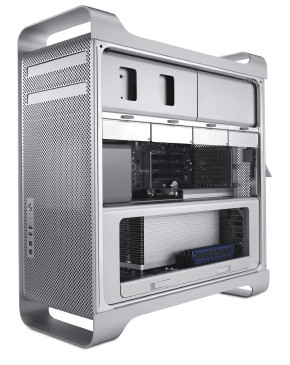
A lot of fuss has been made today of last month’s discovery that Mac OS X 10.7.3 Beta 1 contains references to an upcoming video card from AMD dubbed Tahiti, likely to be marketed under the 79×0 moniker. The 28-nanometer graphics card is scheduled for release in January 2012 and will come in XT and PRO flavors, the former being billed as the fastest single chip card from AMD.
MacGadget.dethinks this points to an upcoming Mac Pro hardware refresh as Apple’s dream machine is their only computer family that uses desktop graphics rather than stripped-down mobile chips found in the iMac, MacBook and MacBook Pro lineups. That could certainly be the case.
While MacGadget.de’s speculation may pan out at some point, it’s worth pointing out that code hooks for the Tahiti card could mean Apple is continuing to support “off the shelf” PC video cards, which would certainly be good news for those intending to build a Hackintosh.
For starters, we’ve certainly seen unsupported video cards for Macs before. Specifically, 9to5Macreported back in March that the Mac OS X 10.6.7 software update enabled native graphics acceleration for a bunch of AMD/ATI Radeon HD 5xxx and 6xxx cards, not all of which are included in Apple’s Macs…
Steve Wozniak, the co-founder of Apple and the original architect of the Apple I and Apple II computers in the mid-1970s, is a self-proclaimed Android fan (and of course he loves his iPhone, too). He has been quoted as predicting that Android will win smartphone wars (although he hopes Google’s platform will never beat iPad) and was one of the first customers in the United States to get their hands on the Galaxy Nexus handset.
Wozniak visited Bangalore yesterday, a city in south central India and capital of the country’s state of Karnataka, to speak to young entrepreneurs. AS always, everyone’s favorite geek had interesting thoughts to share, particularly on the state of mobile industry today. NDTV.comreported that the Woz likened today’s smartphones to the Apple III, an ill-fated computer of the 1908s that was largely considered a failure in the market:
If the guys at Apple had built the machine that they would love, it would have been successful. It came instead from formulas from Apple executives. Marketing people were in charge and some very bad decisions got made, in my opinion. There were hardware failures. You put out a product that has failures right away, and even if you fix it a year later, it just doesn’t sell. It’s the same thing with any smartphone today. It comes out and it has something horribly wrong about it. You can fix everything wrong about it, and it still won’t sell. It has missed its window of opportunity.
He hasn’t had time to read his copy of the authorized Steve Jobs biography he keeps on his Kindle, iPhone, iPad and computer (plus, he owns a hard cover) and said the death of Steve Jobs was shocking, but not hard emotionally “because we had expected his death for so long”, although Steve being such an important part of his life means he sometimes “tear up”.
He also said this on Apple’s first computer products:
The Apple III was a failure, the LISA was a failure, and the Macintosh was a failure. It was only by modifying the Macintosh hugely and over time that we made it a good computer.
And this on the failure of the Apple III:
If the guys at Apple had built the machine that they would love, it would have been successful. It came instead from formulas from Apple executives. Marketing people were in charge and some very bad decisions got made, in my opinion. There were hardware failures. You put out a product that has failures right away, and even if you fix it a year later, it just doesn’t sell. It’s the same thing with any smartphone today. It comes out and it has something horribly wrong about it. You can fix everything wrong about it, and it still won’t sell. It has missed its window of opportunity.
According to Walter Isaacson’s Steve Jobs bio, Wozniak drew upon himself the wrath of Steve Jobs for inventing the universal remote outside the Apple umbrella. Wozniak commented on the remote incident:
The Top Brewer is the work of a company called Scanomat. It’s billed as the fully automatic coffee machine that “completely redefines how we perceive a coffee brewer”. For once, that’s anything but your typical blurb. See, the appliance hides all of the complexity out of sight, under the counter. The result is a clean, elegant industrial design that wants to be seen, shown and touched and it works with your iOS device. More press shots and info after the break.
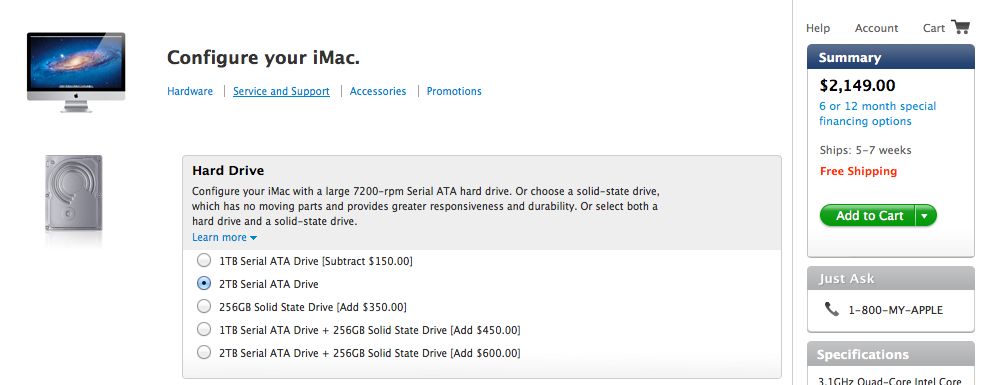
UPDATE [Friday, December 9, 2011 at 8:40am ET]: Wait time for the 2TB built-to-order iMacs has improved slightly to 2-4 weeks, per online Apple Store.
Apple sold 4.89 million Macs in its fourth fiscal 2011 quarter and the Mac business contributed with $6.27 billion in the $28.27 billion quarter. Even though more than 73 percent of Apple’s revenue came from Mac portables (mostly flash-based MacBook Airs), the remaining $1.69 billion came from hard drive-based desktop machines such as Mac Pro (some) and the popular iMac all-in-one family (the vast majority).
However, global hard drive shortage due to flooding in Thailand is now taking toll on the Cupertino, California-based gadget maker as shipping estimates for build-to-order iMac models fitted with a two terabyte hard drive slipped to 5-7 weeks. Previously, these iMacs shipped within 1-3 days so the delay is substantial…
The government of Syria has banned Apple’s iPhone in an effort to fight protesters who took to social media to expose the violence in the troubled nation. Yay! Many activists have been documenting the killings in Syria and protests that started January 26. They are using iPhones to share images and video clips on social media sites such as Twitter and YouTube. The authorities obviously figured out banning the iconic smartphone is the way to go.
Meanwhile, Steve Jobs’s biological father, Syrian-born Abdulfattah John Jandali, has joined the Syrian Sit-in movement on YouTube in solidarity with the Syrian people. The Syrian Sit-in invites activists from all over the world to express their solidarity with the demands of the Syrian people. Jandali says in the clip:
Bloombergreported this morning that a German data regulator is seeking to question Apple over its use of the Carrier IQ mobile tracking software in iPhones:
The Bavarian State Authority for Data Protection sent a letter to Apple today to request information about the software, Thomas Kranig, head of the office, said in an interview. Apple said yesterday that it will stop supporting Carrier IQ software.
Back in the United States, Senator Al Franken is urging Carrier IQ and Sprint to detail how specifically the software works and what data it transmits, demanding that Carrier IQ explain themselves by December 14. Phone vendors and platform providers such as Google are attempting to distance themselves from Carrier IQ, arguing carriers deploy the software on handsets and mine data.
Carrier IQ late Thursday disputed spying accusations, maintaining its software “does not record, store or transmit the contents of SMS messages, email, photographs, audio or video”. Apple too issued a statement acknowledging existence of Carrier IQ in iOS 5 and confirming plans to “remove it completely in a future software update”. Commenting on the move, Kranig said “If Apple decided to cease the use, all the better”.


 Digitimes’ latest report puts some numbers on the low end iPhones coming out of China. The 2.5 year old iPhone 3GS has continued to sell briskly with the volume likely to reach two million units in the fourth quarter of 2011 and 1.4-1.6 million units in the first quarter of 2012, according to “industry sources”.