Antitrust

See All Stories

There are growing concerns that Apple could be facing an anti-trust investigation by the US Department of Justice.
Apple faces antitrust worries

What does antitrust mean?

In most jurisdictions around the world, it is illegal for large companies to band together to form agreements or “trusts” to behave in a particular way – for example, to all sell their products for the same high price. Laws designed to outlaw this type of behavior are called antitrust legislation.

However, the term is used more generally to refer to laws designed to prevent companies from engaging in any kind of anti-competitive action – that is, do anything that would tend to artificially distort competition within a market.

One common myth is that antitrust laws only apply to monopolies. This is very much not the case: They apply to any company large enough to have a dominant position in any market. As we shall see below, the definition of the word “market” can be crucial to deciding whether antitrust concerns arise.

Why is Apple facing antitrust investigations?

First, Apple is a very large company, and it would be very easy for a company of that size to commit antitrust violations, so it is to be expected that any massive corporation would be put under the antitrust microscope.

But in Apple’s case, there are some more specific concerns based on the company”s market dominance in particular areas. These are addressed below.

What are the antitrust concerns with Apple?

There are a number of different ones, in areas as diverse as ad tracking and Sign In With Apple, but here are three of the main ones.

The App Store

The biggest antitrust concern is the App Store.

Apple argues that it does not have a dominant position in this market, as it considers the relevant market to be either “smartphones” or “apps.” Since the company holds a minority share of the smartphone market in most of the countries in which it operates, it believes it cannot be considered to have a dominant position.

Competition regulators tend to take the view that the relevant market is “iOS apps,” and here Apple has a 100% monopoly on their sale and distribution. Edge cases aside, there is no way for a developer to bring an iOS app to market without selling it through the App Store.

Companies like Epic Games argue that they should be allowed to sell in-app purchases without Apple taking a cut of their revenue. The argument here is that Apple harms developers by taking part of their income, and consumers by forcing developers to charge more to make up for Apple’s cut. Apple, in response, says that it is perfectly normal for a company to take a cut of the sales it facilitates.

Default apps

Additionally, some companies accuse Apple of anti-competitive behavior by giving its own apps advantages over third-party ones.

One way that Apple does this, they say, is by pre-installing its own apps. For example, when the Apple Weather app is already installed on an iPhone when you buy it, then Apple’s own app has an obvious advantage over a competing app.

There is overlap here with the App Store concerns. For example, Apple Music and Spotify are competitors, but not only is Apple Music preinstalled, you can subscribe from within the app. If Spotify offered this same ability, it would have to pay Apple a 30% cut. Spotify can’t afford this, so users are forced to take a more long-winded route to subscription, which gives Apple Music an additional competitive advantage.

Relationships with carriers and retailers

Apple has also been found guilty in more than one country of exploiting a dominant position within the smartphone market to place undue demands on carriers and retailers.

Because the popularity of iPhones meant carriers had to sell them, Apple was able to dictate terms. In South Korea, for example, it was accused of imposing three onerous conditions on local carriers:

  • Carriers had to buy minimum quantities of each model, dictated by Apple
  • Carriers had to share the cost of warranty repairs or replacements
  • Carriers had to pay to run Apple’s own TV ads for the iPhone

Budget-focused carriers might, for example, want to buy only older and cheaper models, as that’s what their customers want, but Apple would force them to buy flagship models, too. And if a phone proved faulty, Apple wouldn’t just replace it, but would oblige carriers to meet some of the costs. Finally, although carriers had to pay the full cost of running iPhone ads on TV, they were only allowed to use Apple’s own ads, and the only thing they were permitted to change was adding their own logo to the final frame.

Additional areas of concern range from Apple Pay to a 4K video codec alliance!

What could happen to Apple as a result?

Antitrust outcomes will usually happen on a country-by-country basis, though there are exceptions. In Europe, for example, it is likely that the European Union will act as a bloc, and that any legislation applying to Apple will apply across all 27 member countries.

The worst-case scenario for Apple is for the US government to call for the breakup of the company. For example, it might be ruled that Apple Inc cannot run an App Store while also selling the iPhones on which those apps run. This is not a likely outcome, however.

A more likely scenario is a series of smaller changes. For example, Apple might be required to appoint an independent oversight board to carry out app reviews, or that it must allow Spotify to offer in-app subscriptions without taking a cut.

How is Apple responding?

In public, Apple’s stance is an outraged one, arguing that it does not have a dominant position and is doing nothing wrong. Behind closed doors, the company is aware that it either has to change some of its practices, or be forced to do so by law.

For example, while publicly declaring that a 30% commission on apps was industry standard, Apple made a massive U-turn by introducing the Small Business Program, with a 15% commission instead. Although touted as applying to the smallest developers, it in fact applies to 98% of them. It would be more accurate to say that the App Store now has a standard commission rate of 15%, with a higher 30% rate applying only to a tiny minority of companies.

The company has also quietly made a number of other changes in direct response to antitrust concerns, for example, opening up the Find My app to third-party accessories, and allowing people to change their default email app and web browser.

However, Apple is still sticking its head in the sand and hoping the issue will go away – when it absolutely won’t.

App Tracking Transparency antitrust investigation launched because Apple exempts its own apps

App Tracking Transparency antitrust | Close-up of hands drawing flow schematics

An App Tracking Transparency antitrust investigation is underway, on the basis that Apple requires third-party apps to ask permission for tracking, but the company does not do so for its own apps.

The investigation has been launched in Germany, which is a somewhat surprising fact …

Expand Expanding Close

Dutch watchdog says Apple changed ‘unfair’ App Store conditions, will offer alternative payment methods in dating apps

Apple App Store Dutch

Today, the Dutch watchdog said Apple will allow alternative payment methods in the App Store for dating apps in the Netherlands. The statement from the Authority for Consumers and Markets comes after Apple announced on Friday that it was again updating App Store guidelines to comply with the Dutch government’s requirements.

Expand Expanding Close

Apple developer lawsuit: Judge accepts $100M deal, but questions $27M lawyer’s cut

Apple developer lawsuit | Man fastening jacket

An Apple developer lawsuit filed back in 2019 has been settled after the Cupertino company agreed to pay $100M in compensation, and the court approved the deal – but the judge in the case has asked the lawyers to justify their $27M cut.

The antitrust case was brought by a number of small iOS developers, on the same basis as the separate case brought by Epic Games: that Apple has a monopoly on the sale of iOS apps, leaving them forced to give the iPhone maker a 30% cut …

Expand Expanding Close

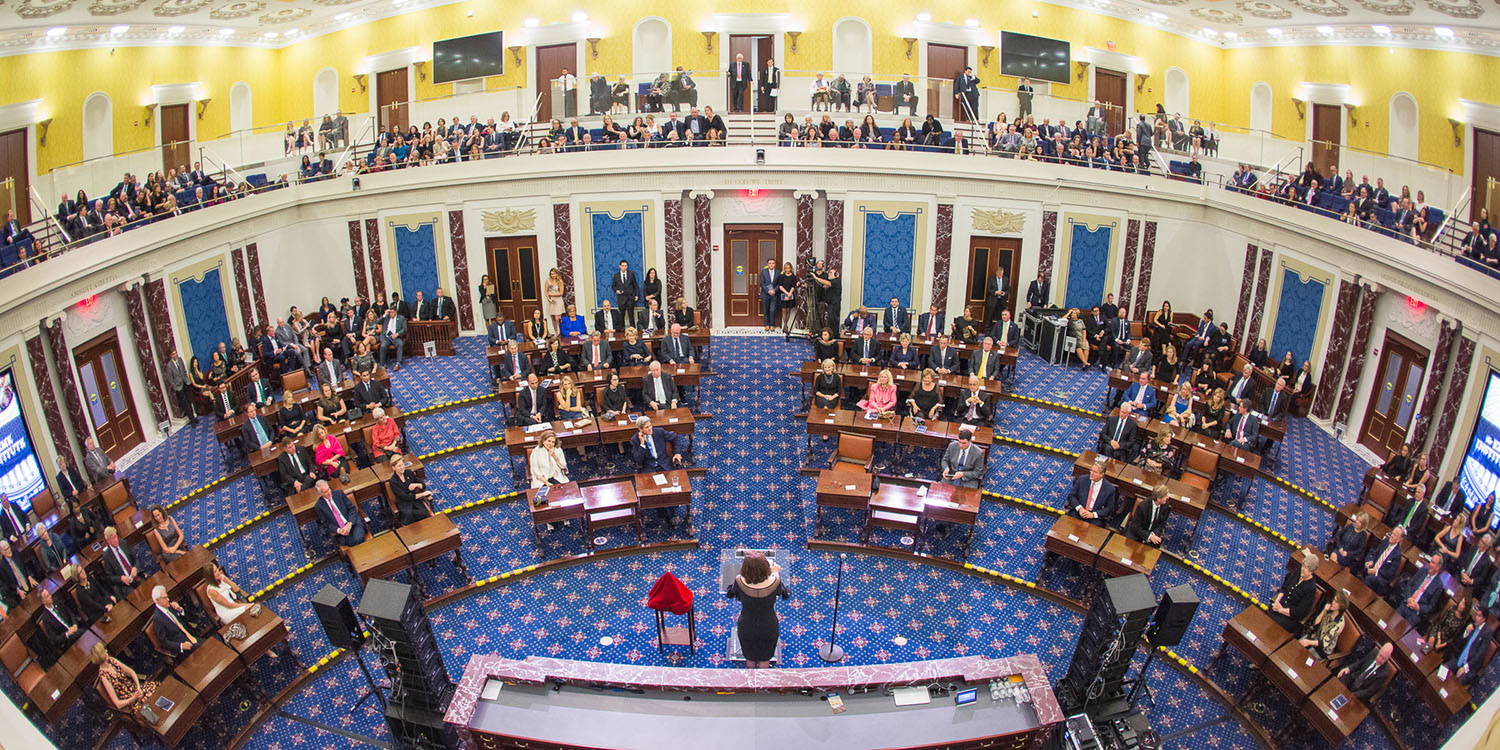
Senate antitrust vote likely to pass legislation targeting Apple and other tech giants

Senate antitrust | Senate in session

A Senate antitrust vote could take place as early as this month, and its proponents say they are confident that the legislation will pass into law.

Although there has been bipartisan support for antitrust legislation across both houses, there has been considerable debate on the wording – to the point where some were afraid that the issue would be lost to the midterms. But key figures behind the proposed bill say they now have the votes …

Expand Expanding Close

Epic CEO calls the App Store ‘a disservice’ for developers, says Facebook is his metaverse ally

Tim Cook and Epic CEO Tim Sweeney

“The app store is not a service. The app store is a disservice to developers,” says Epic CEO Tim Sweeney in his latest interview with The Financial Times. In his never-ending battle against the so-called Apple App Store (and Google) monopoly, the owner of Fortnite tackles the Cupertino policy and calls Facebook an ally on the metaverse.

Expand Expanding Close

Latest antitrust threat to Apple is a proposed federal Digital Platform Commission

Digital representation of gavel | Latest antitrust threat to Apple is a proposed federal Digital Platform Commission

It seems scarcely a week goes by without a new antitrust threat to Apple, and the latest is a proposed federal Digital Platform Commission. Its remit would include addressing anti-competitive behaviors by digital stores, which would include the App Store.

US Senator Michael Bennet argues that although the DoJ and FTC already do “admirable work,” they don’t have the tech expertise required to offer robust oversight …

Expand Expanding Close

UK antitrust body will be able to fine Apple and Google 5% of their global turnover per day

Lots of $100 bills | UK antitrust body will be able to fine Apple and Google billions

The UK antitrust body, the Competition and Markets Authority (CMA), will be given legal powers enabling it to fine Apple and other tech giants billions of dollars. This is an apparent second U-turn in British government plans.

The CMA’s powers will now go even further than originally announced, allowing it to fine companies 5% of their daily global turnover per day

Expand Expanding Close

Elon Musk compares Apple’s App Store tax to having a 30% fee for using the internet, ‘definitely not ok’

Elon Musk biography on the way

The man of the hour, Elon Musk, is tweeting as much as he can in these past few weeks – and might be related to his deal to buy Twitter. In his latest tweet, Musk is once again attacking Apple’s App Store fees to developers. This time, he compares it to having a “30% tax on the internet.”

Expand Expanding Close

UK antitrust body that thinks Apple has too much power is to be denied its own powers

Photo of Houses of Parliament at sunrise across the Thames | UK antitrust body which thinks Apple has too much power is to be denied its own powers

The UK antitrust body that last year decided that Apple and Google have too much power is itself set to be denied the legal powers it expected to be given.

The UK’s Competition and Markets Authority (CMA) expected to be granted what is known as statutory powers, but it’s today being reported that the government has shelved this plan …

Expand Expanding Close

Apple’s antitrust mess could easily be ended, at likely minimal cost

Photo shows two men in suits shakings hands | Apple's antitrust mess could so easily be ended, at likely minimal cost

Apple’s antitrust mess keeps getting worse, with today’s Apple Pay announcement as the latest example. The company is now under fire on so many flanks in so many countries that it spends half its PR life trying to defend its stance – and legislation is ultimately going to force it to change anyway.

To me, the most baffling thing about the company’s stubbornness on this issue is that the mess could so easily be resolved, and my bet is that it wouldn’t even cost the company much money.

Expand Expanding Close

Dutch watchdog considers Apple actions ‘insufficient’ on App Store payment system policies on dating apps

App Store dating apps dutch watchdog

After being fined 10 times by a Dutch watchdog group, Apple is still under fire for its actions regarding App Store policies relating to dating apps, with the Netherlands Authority for Consumers & Markets (ACM) saying they are “insufficient.” The ACM says it will need up to several weeks to see what actions it will take next.

Expand Expanding Close

Japanese antitrust report calls for multiple app stores and more; Apple protests

Site default logo image

A new Japanese antitrust report into the smartphone market has raised the possibility of new legislation intended to reduce the dominance of Apple and Google. It calls for multiple app stores for each platform.

Additionally, it suggests that the preinstallation of Apple and Google’s own web browsers on smartphones means that competitor apps are disadvantaged …

Expand Expanding Close

Apple versus Spotify antitrust latest: iPhone maker faces additional charge in Europe

Man wearing headphones, looking out of window over sea | Apple versus Spotify antitrust latest – iPhone maker faces additional charge in Europe

The Apple versus Spotify antitrust battle took a new turn today, with the European Union saying that the Cupertino company will now face an additional charge of anti-competitive behavior.

This indicates that investigators have found enough evidence to add to the expected antitrust charges relating to the way that Apple treats Spotify and other developers …

Expand Expanding Close

Apple doesn’t allow apps to automatically charge for price increases, but that may change

Apple settles lawsuit with developer who exposed multi-million dollar App Store scam

While there’s a lot of controversy regarding the App Store (whether Apple should let users have the option to pay for apps off it), governments and third-party developers continue to raise questions regarding if the store is a monopoly or not, the company could soon face another controversy as it is piloting tests that allow developers to automatically charge users for subscription price increases.

Expand Expanding Close

Epic vs. Apple: Roblox says App Store ‘enhances safety and security’ in antitrust case

App Store

It’s been a while since a big company defended Apple’s App Store regarding the Epic antitrust case. Last year, Snap’s CEO said that he was happy to pay App Store taxes “in exchange for all of the amazing technology that they provide to us,” and now Roblox has stated that Apple’s App Store enhances “safety and security” to its users.

Expand Expanding Close

Dutch class action lawsuit raises App Store stakes from millions to billions

Dutch class action lawsuit raises App Store stakes from millions to billions

Apple has already been fined $55M by Dutch antitrust regulators, but a new Dutch class action lawsuit is going after the Cupertino company for billions rather than millions.

The lawsuit alleges that the 15% or 30% commission Apple charges makes app prices higher than they should be, and that the total cost to consumers is almost €5B ($5.5B) …

Expand Expanding Close

Coalition for App Fairness loses second key figure days before Epic Games deadline

The Coalition for App Fairness (CAF) – which is primarily a voice for Epic Games, Spotify, and Tinder parent company Match in their antitrust fight with Apple over App Store commissions – has lost a second key figure.

In December of last year, Spotify’s legal officer Horacio Gutierrez left the company to join Disney. Today we’re learning that CAF executive director Meghan DiMuzio is also moving on …

Expand Expanding Close