AAPL Company

See All Stories

Breaking news from Cupertino. We’ll give you the latest from Apple headquarters and decipher fact from fiction from the rumor mill.
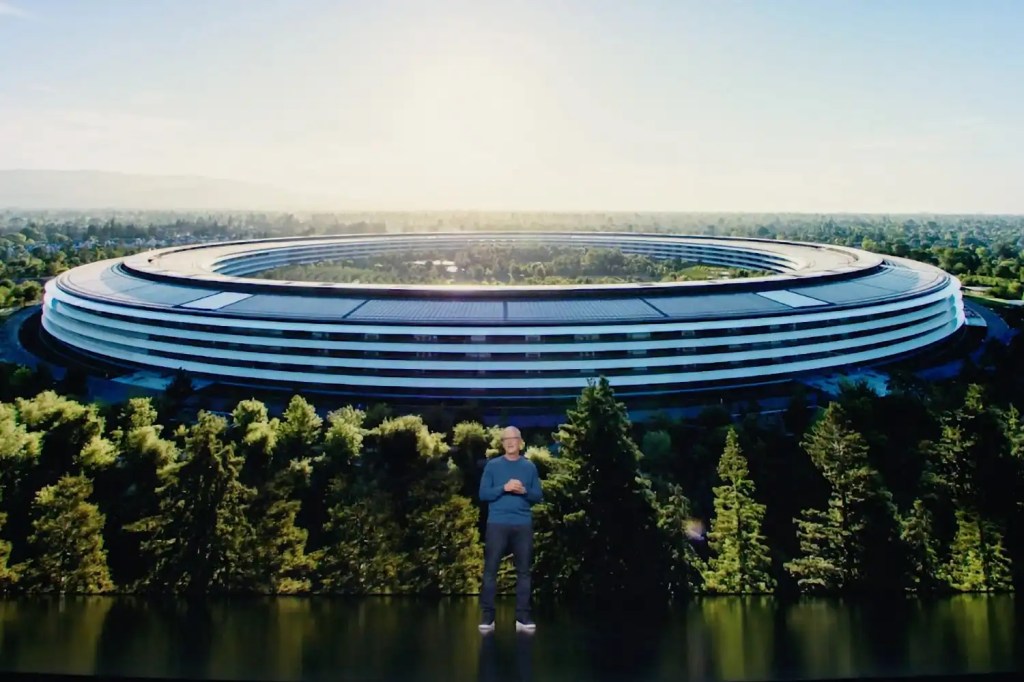
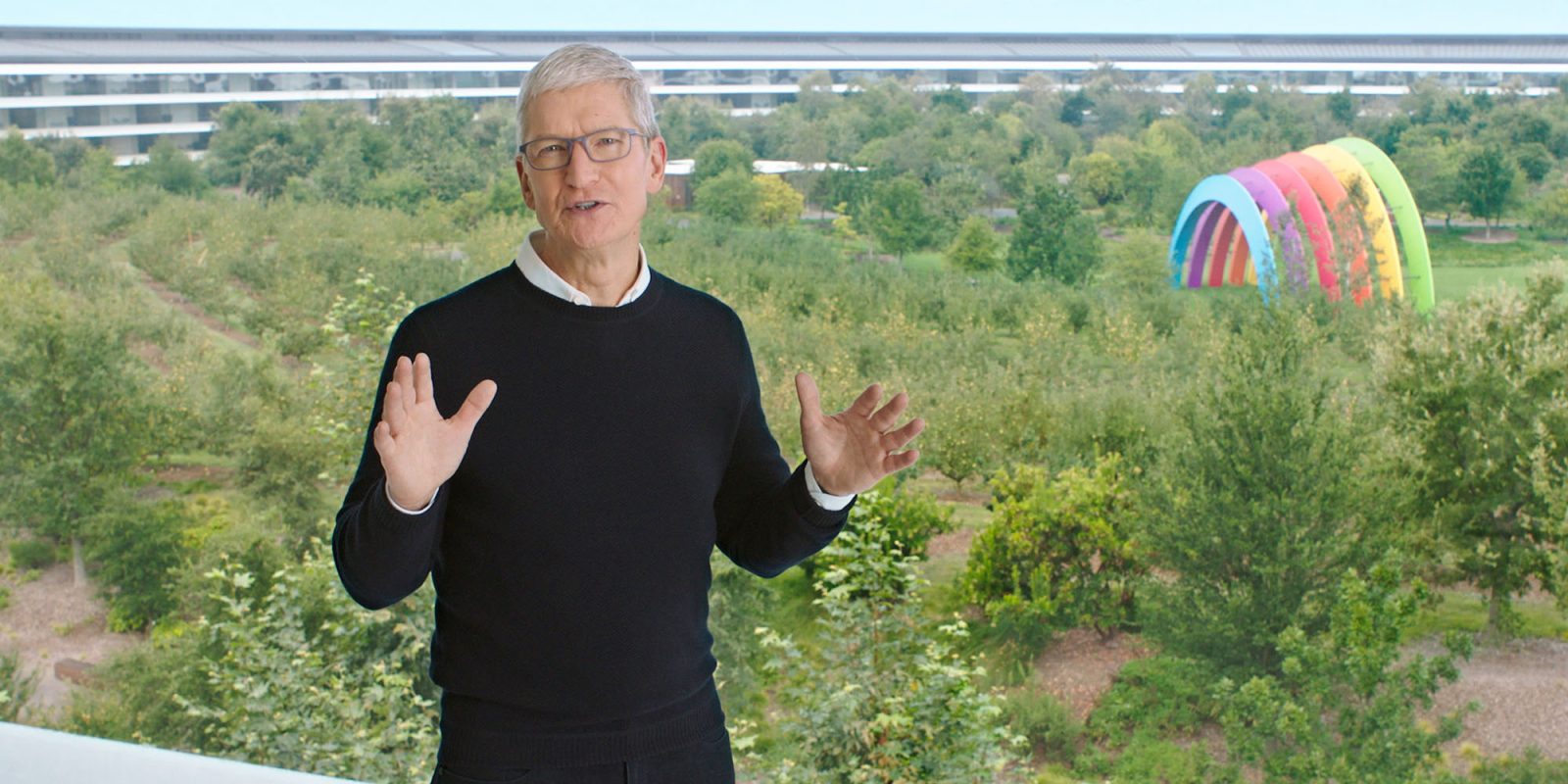
Apple Park Tim Cook AAPL

AAPL is a California-based computer company that became the most successful smartphone company in the world.

AAPL defined by Apple

Here’s how Apple defines itself:

Apple revolutionized personal technology with the introduction of the Macintosh in 1984. Today, Apple leads the world in innovation with iPhone, iPad, Mac, Apple Watch, and Apple TV. Apple’s five software platforms — iOS, iPadOS, macOS, watchOS, and tvOS — provide seamless experiences across all Apple devices and empower people with breakthrough services including the App Store, Apple Music, Apple Pay, and iCloud. Apple’s more than 100,000 employees are dedicated to making the best products on earth, and to leaving the world better than we found it.

Key AAPL history

From Apple I to iMac

Apple was founded in 1976 by Steve Jobs (Steve), Steve Wozniak (Woz), and (briefly) Ronald Wayne as a business partnership: Apple Computer Company. The following year it became Apple Computer, Inc. The company’s first product was the Apple I, a personal computer hand-built by Woz and sold in part-completed kit form. The Apple II and Apple III followed.

The modern Apple as we know it today began in 1983, with the launch of the first personal computer with a graphical user interface, the Lisa. Way too expensive to succeed, it was replaced by the Macintosh in 1984, launched with the single showing of a Ridley Scott commercial during the Super Bowl. The Macintosh transformed the world’s understanding of what a computer was, and would eventually lead to Microsoft adopting the GUI approach.

Steve Jobs and then Apple-CEO John Scully fell out in 1985, when Steve wanted to focus on the Macintosh while Scully wanted to put more attention on the Apple II, which was still selling well. That led to Steve being forced out of the company and going off to form NeXT.

Apple focused on selling Macintosh models at the highest possible margins, but would eventually fall foul of a mix of unsustainable pricing in the face of competition from Windows machines, and an overly complex product lineup. By 1996, the company was in trouble, and in 1997 Steve was brought back, along with the NeXT operating system, which would eventually form the basis of Mac OS X.

Steve simplified the Mac lineup and had industrial designer Jony Ive work on a whole new look for a consumer desktop Mac, the colorful iMac. The iMac, like the original Macintosh, again changed the world’s understanding of what a computer was, and who should want one.

From Apple Computer, Inc. to Apple, Inc.

In 2001, Apple launched the iPod. Although this wasn’t the first mp3 player, it was massively better than anything on the market at the time, and succeeded in turning a geeky piece of technology into a consumer electronics product with mass-market appeal.

The success of the iPod paved the way into other mobile devices. Apple was working on what would eventually become the iPad, when Steve realized that this was the basis of a smartphone. He diverted the team’s work into this, to launch the iPhone in 2007. The iPad launched later, in 2010.

The iPhone was yet another transformational product. While most other smartphones of the time were clunky devices with a keyboard and stylus, the iPhone was a sleek-looking device operated with a finger, and so simple that no user guide was needed. It was with the launch of the iPhone that Apple Computer, Inc. was renamed to Apple, Inc.

From Intel to Apple Silicon

While the iPhone, iPad, Apple Watch, and more are made with Apple-designed processors, the Mac lineup has historically relied on third-party companies for its CPUs. Over the years, Macs progressed from Motorola 680000 series chips through PowerPC to Intel.

In 2020, Apple began a two-year transition to the final stage in that journey, with Macs too finally getting Apple-designed chips. The first such is the M1 chip, used in the latest Mac mini, MacBook Air, and 13-inch MacBook Pro. Other Apple Silicon Macs followed.

AAPL today

Apple is one of the largest companies in the world. It was the first publicly traded company to hit a trillion-dollar valuation in 2018, $2 trillion in 2020, and $3T in 2022.

The company’s product lineup includes five different Mac families (MacBook Air, MacBook Pro, iMac, Mac Pro, and Mac mini); four iPad ranges (iPad mini, iPad, iPad Air, iPad Pro); four iPhone 12 models (12, 12 mini, 12 Pro, 12 Pro Max); three main Apple Watch models (SE, Series 3, Series 6); as well as other products, including Apple TV, AirPods, and HomePod mini.

In addition to hardware sales, Apple derives a growing proportion of its income from Services, including the App Store, iCloud, Apple Music, and Apple Pay.

Apple reportedly broke the law by ignoring US sanctions on apps

Apple reportedly broke the law by ignoring US sanctions on apps | App Store icon overlaid on a Russian flag

Apple has been accused of breaking the law by failing to comply with US sanctions after the App Store was found to have contain dozens of apps from sanctioned companies. The same was true of Google, though at a smaller scale.

The banned apps were identified by the Tech Transparency Project, which says it demonstrates that Apple failed to live up to its promises that the App Store represents a safe and trusted source …

Expand Expanding Close

Apple may have accidentally made it almost impossible for governments to ban iMessage

Apple may have accidentally made it impossible for governments to ban iMessage | Image shows iMessage bubbles floating in space

Authoritarian governments don’t like their citizens being able to have private conversations using end-to-end encrypted messaging apps. This is the reason Russia has just banned FaceTime, but it was surprising iMessage had escaped a ban.

A potential reason for this has now been discovered: Apple may have accidentally made it almost impossible for a government to ban its end-to-end encrypted text messaging app …

Expand Expanding Close

Even as a Liquid Glass fan, I’m looking forward to a new Apple design era

Even as a Liquid Glass fan (design detail shown), I'm looking forward to a new Apple design era

You almost have to feel sorry for Alan Dye at this point. It was pretty clear he expected news of his departure from Apple to be something of a bombshell, and Meta clearly thought their acquisition of Apple’s former VP of Human Interface Design would be perceived as a coup.

Instead, the prevailing opinion among Apple commenters appears to be succinctly summarized as a collective sigh of relief …

Expand Expanding Close

Apple Manufacturing Academy expands to include free virtual courses

Apple Manufacturing Academy opening in Detroit to support US businesses | Man with safety goggles in a factory

Earlier this year, Apple launched its first Apple Manufacturing Academy in Detroit. The academy is designed to offer free training in “smart manufacturing” for small and medium businesses from around the country, and was started in partnership with Michigan State University.

Today, Apple announced the first-ever virtual programming as part of the Apple Manufacturing Academy.

Expand Expanding Close

Gruber: Apple employees ‘giddy’ about Alan Dye’s departure

Yesterday, Bloomberg broke the surprise news that Alan Dye, Apple’s vice president of Human Interface Design since 2015, is departing the company to lead a new design studio at Meta. Apple confirmed the departure in a statement attributed to Tim Cook, adding that 26-year Apple design veteran Steve Lemay will take over Dye’s role.

In a new post on Daring Fireball, John Gruber has some sourced info on the reaction inside Apple to this news.

Expand Expanding Close

After Apple refusal, Indian government completes U-turn on mandatory iPhone app

After Apple refusal, Indian government makes complete U-turn on mandatory iPhone app | Photo shows a U-turn sign ahead of a bend

The saga of a mandatory government security app which Apple and Google had to preinstall on their phones didn’t last long after Apple refused to play ball.

The Indian government had already backed down on preventing iPhone owners from deleting the “security” app, and has now made a complete U-turn in the space of just 48 hours …

Expand Expanding Close

Apple’s willingness to stand up to governments is notably absent in China

Apple's willingness to stand up to some governments is notably absent in China | Photo shows Beijing skyline

Apple has frequently used small variations on the same one-sentence justification when giving in to government demands that conflict with the company’s stated values: “Apple complies with the law in each of the countries in which it operates.”

However, there are occasions on which the company has instead chosen to stand up to unreasonable government demands, and we yesterday saw the latest (and highly successful) example …

Expand Expanding Close

Apple security bounties slashed as Mac malware grows

Apple security bounties slashed as Mac malware grows | Lowkey shot of partially-open MacBook

A well-known security researcher reports that Apple has slashed its bounties for finding vulnerabilities in macOS. Many have been halved, with one of them reduced from over $30k to just $5k, despite a growing problem with Mac malware.

Csaba Fitzl, principal macOS security researcher at Iru, says it suggests Apple doesn’t really care about the Mac, and increases the likelihood that vulnerabilities will be sold on the black market instead of reported to the company …

Expand Expanding Close

As Apple reboots its AI work, OpenAI ramps up the pressure by declaring ‘code red’

As Apple reboots its AI work, OpenAI ramps up the pressure by declaring 'code red' | Photo shows close-up of a red light reminiscent of HAL

As Apple loses its AI head and reboots its work with a restructure, OpenAI is ramping up the pressure by declaring “code red.”

Concerned about being overtaken by Google’s Gemini, CEO Sam Altman has said that all of the company’s efforts will be devoted to improving the quality of ChatGPT

Expand Expanding Close