Steve Jobs

See All Stories

The foundation of Apple

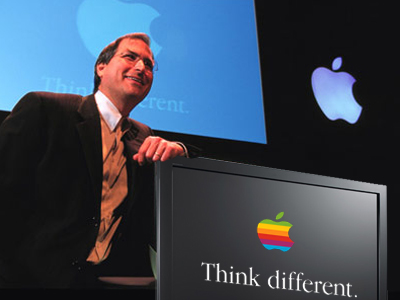
Steve Jobs was the co-founder and CEO of Apple. He also founded NeXT and was the majority shareholder of Pixar, both of which he was also CEO. Jobs is known as an icon of creativity and entrepreneurship. The prolific author Walter Isaacson released Jobs’ biography in October of 2011. Isaacson describes his major accomplishment as being a “creative entrepreneur whose passion for perfection and ferocious drive revolutionized six industries: personal computers, animated movies, music, phones, tablet computing, and digital publishing.”


Jobs attended Reed College for a short period of time before dropping out in 1972. However, he continued to dabble with classes unofficially and came across a calligraphy course instructed by Robert Palladino. This course ended up being highly influential for Jobs as he attributed it to bringing multiple typefaces to the Mac.

Steve Jobs founded Apple with Steve Wozniak and Ronald Wayne in 1976. After a drawn out power struggle Jobs was pushed out of Apple in 1985. He then founded NeXT in 1985 and also funded the move of Lucasfilm’s Graphics Group to become its own corporation, which became Pixar in 1986. Just over a decade later in 1997, Jobs returned to Apple as they acquired NeXT. His return marked the beginning of a new era of success. He took over as CEO in July of 1997 and continued on until handing the position to Tim Cook on August 24, 2011 after increasing health problems. Jobs passed away on October 5, 2011.

Isaacson describes his major accomplishment as being a “creative entrepreneur whose passion for perfection and ferocious drive revolutionized six industries: personal computers, animated movies, music, phones, tablet computing, and digital publishing.”

Apple’s 5th Avenue Store closes as the wraps come off the Cube

Site default logo image

Update: Here it is! (Thanks Dapper!)

.


Thanks Marty!

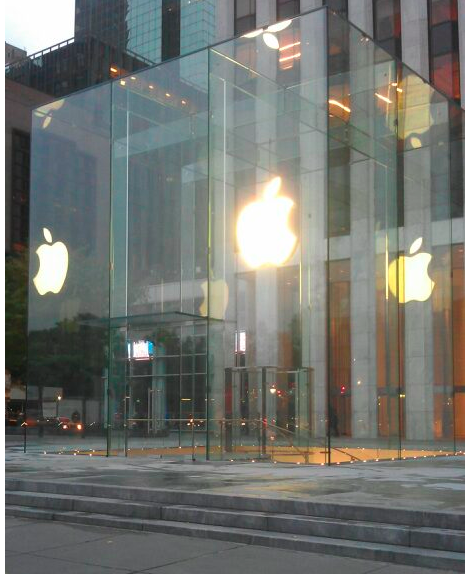
Apple has just started closing down its 5th Avenue Store which is usually open 24/7/365 where patrons are filing out of the GM building entrance.  It is preparing for a grand re-opening at 10am tomorrow where a newly-designed $6 million cube will be unveiled.  The number of panes in the cube will drop from 90 to just 15 (3 per side).

We’re simplifying the Fifth Avenue cube. By using larger, seamless pieces of glass, we’re using just 15 panes instead of 90.

Apple will spend the next 12 hours getting the store ready according to the 5th Avenue Store web page.

Attention:We’ll be closed starting at 10:00 p.m. on Thursday, November 3 and will reopen at 10:00 a.m. on Friday, November 4.

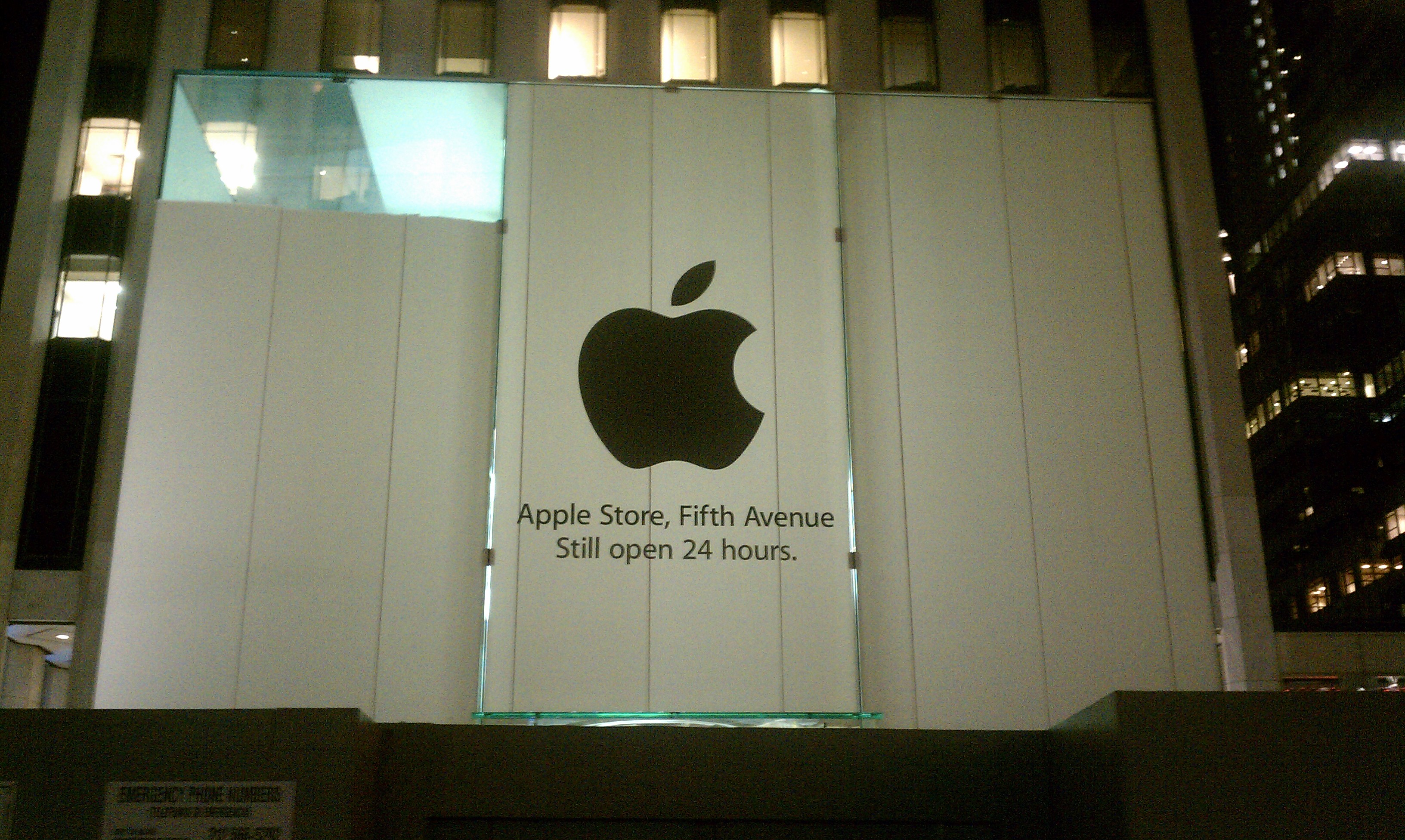
Apple began pulling the wraps off of the 5th Avenue Store Cube upgrade project this evening.  The above pictures shows the new seamless glass panels that will eventually look like this artist’s rendition, below:
Expand
Expanding
Close

Steve Cano to replace Ron Johnson as Head of Retail at Apple? (Update: Search ongoing)

Site default logo image


Update: The reporters at Bloomberg are somehow using us as a source for this false rumor.  We’ve contacted them to correct but they’ve so far left it untouched.  Our report comes from iFoAppleStore and CultofMac (below)

Updated from Cult of Mac: Apple has gotten back to us a statement, reading: “The search for a replacement for Ron Johnson continues, and Apple has nothing to announce about this subject at this time.”

Updated: 2: Apple wanted to make sure it was clear that no decision has been made yet and the Cult of Mac story is without merit.

Ron Johnson has only been gone a few days but rumors are already swirling that Steve Cano will be replacing the new JCPenney CEO as head of Apple’s retail business. Cult of Mac reports separately from an earlier post by ifoAppleStore’s Gary Allen which seems to indicate that Cano will assume the position. Here is the full statement as released by the Apple Retail Workers Union:

Statement regarding Steve Jobs and the future of Apple

by Apple Retail Workers Union on Wednesday, October 12, 2011 at 2:06am

The organizers of the Apple Retail Workers Union wish to express their condolences to the family of Steve Jobs. He was an inspiration to many, and will be regarded as one of the greats of our time. He followed his heart and did what he loved, which resulted in Apple becoming one of the greatest companies in the world. He surrounded himself with intelligent people who helped create technology that improved the way we live and share our lives.

With that in mind, we want to remind that while Steve and his teams created products and solutions to work “right out of the box”, Apple’s retail stores are still experiencing problems 10 years after launch. The messages we receive from workers illustrate a desire for improved compensation, consistent management policies and adherence to local, state and national laws. The feeling extends to the workers at Apple’s suppliers including Foxconn, Wintek, Samsung and others.

We wish much success to Tim Cook and Steve Cano, who will be leading Apple and its retail stores going forward. As word of our movement grows and workers become increasingly interested in finding solutions where management is unwilling or unable, we continue to take pride in the opportunity we have every day to provide our customers with enriching experiences. At our core, we simply want Apple to return to its roots and remind itself that their “most important resource… is our people”.

We can’t confirm that Cano has been promoted and in fact his role is still listed as Apple retail employee in Region XV. He’s certainly in the running, as one of Ron Johnson’s subordinates.

Cano started with Apple ten years ago as the manager of Steve Jobs’s local Palo Alto Apple Store. He then rose through the ranks…


Expand
Expanding
Close

What is different about a Tim Cook Apple?

Site default logo image

It wasn’t much of a surprise when Tim Cook said “Apple is not going to change” in his letter to employees as newly appointed CEO following Steve Jobs’ resignation. Not long after that, we published a story about what we called Cook’s first “anti-Jobsian move”. Of course many questions arose surrounding how Cook’s sales and operations background may influence his leadership style, and how it might differ from Jobs.

Today we get a look at just how the company has changed under Cook’s guidance with the Wall Street Journal publishing a story detailing the moves the new CEO has made since taking over in August:

In recent weeks, Mr. Cook has tended to administrative matters that never interested Mr. Jobs, such as promotions and corporate reporting structures, according to people familiar with the matter. The new chief executive, 50 years old, has also been more communicative with employees than his predecessor, sending a variety of company-wide emails while addressing Apple employees as “Team,” people close to the company said.

According to the report, Cook was also behind a recent restructuring of the company’s education division, a move which split the business (which until now operated “fairly independently”) into a sales and marketing structure and incorporated it into the company-wide sales and marketing divisions. The restructuring will place additional responsibilities on Apple execs Phil Schiller and John Brandon.

Citing “former executives” and others close to the company, the WSJ claims Cook will also “be more open with shareholders” and note he’s expressed desire to meet with investors more often than Jobs. After Cook’s statement that he’s “not religious about holding cash or not holding it” during Apple’s earnings call last month, it’s not much of a surprise many expect the new CEO to be more open to stock buybacks or dividends as well.


Expand
Expanding
Close

Bill Gates on Jobs bio quotes “he said a lot of very nice things about me and he said a lot of tough things” [Video]

Site default logo image

[youtube=http://www.youtube.com/watch?v=PtILiyMGl84&start=360]

Gates defends himself slightly but seems smart enough (and secure enough) not to handle the tough words head on.

“Well, Steve and I worked together, creating the Mac. We had more people on it, did the key software for it.”

“So, over the course of the 30 years we worked together, you know, he said a lot of very nice things about me and he said a lot of tough things. I mean, he faced several times at Apple the fact that their products were so premium priced they literally might not stay in the marketplace. So, the fact that we were succeeding with high-volume products, including a range of prices, because of the way we worked with multiple companies, its tough.”

“At various times, he felt beleaguered. He felt like he was the good guy and we were the bad guys. You know, very understandable. I respect Steve, we got to work together. We spurred each other on, even as competitors. None of that bothers me at all.”

It is getting harder and harder to hate Bill.


Expand
Expanding
Close

Free Steve Jobs Audio Book via Audible.com

Site default logo image

From 9to5Toys.com:


Looking to get a free Audio copy of the Steve Jobs book (or any book for that matter)? If you don’t feel like shelling out the $35 in addition to whatever you paid for the paper/digital version, Audible.com offers a free audio book with a 14-day membership which allows you to pick up the book for free.

The 3x110MB download is DRM free and can be played on any iOS device or in iTunes among others. Audible.com does offer many membership benefits…


Expand
Expanding
Close

Mac OS 10.8 users already doing external testing

Site default logo image

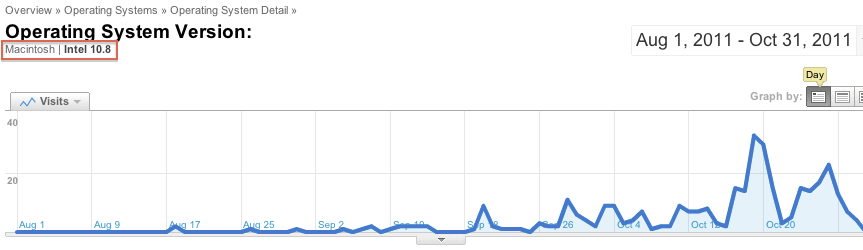
Mac OS 10.8 testers both inside Apple’s HQ and in the surrounding area of Silicon Valley have been spotted in Web Logs by MacRumors. Indeed, looking at our own logs (above), 10.8 users have been hitting our servers since mid-August, though only in numbers that probably could have been faked.

More recently, however, 10.8 testing has grown more abundant, with testers hitting our site every day including on weekends from non-Apple IP addresses throughout October.

Similar patterns emerged in testing OS 10.7 which leads us to conclude that this is still very early testing and it is likely more than a year before we’ll see even public betas of the OS.

Still, very nice to see Apple’s already working on the next big cat.


Expand
Expanding
Close

iTV

Site default logo image

The moment I read the “I’ve Cracked the TV” quote from the Steve Jobs bio, I knew what the subject of the next few months at the rumor mill would be. Here it is in context:

“‘I’d like to create an integrated television set that is completely easy to use,’ [Jobs told Isaacson]. ‘It would be seamlessly synced with all of your devices and with iCloud.’ No longer would users have to fiddle with complex remotes for DVD players and cable channels. ‘It will have the simplest user interface you could imagine. I finally cracked it.’”

That seems to be a lot more certain than Jobs was last year at the D8 conference when he took a question from an audience member. In it, he laid out some very important things that no one is really talking about.

[vodpod id=Video.4289468&w=650&h=425&fv=videoGUID%3D%7BFF922002-FA63-4B68-A326-EA12EC800612%7D%26amp%3Bplayerid%3D4001%26amp%3BplyMediaEnabled%3D1%26amp%3BconfigURL%3Dhttp%3A%2F%2Fm.wsj.net%2Fvideo-players%2F%26amp%3BautoStart%3Dfalse]
(Flashless)

The whole clip is much more fascinating than much of what I’ve been reading over the past week. The interface that Jobs is talking about isn’t whether Apple will use Siri or 3D gestures or not. It is how to put a layer on top of everything else with a consistent UI. He gets down to the nitty gritty at 1:30-3:00:

Add a box on to the TV system. You can say well gosh I notice my HDTV has a bunch of HDMI ports on it one of them is coming from the set-top box I’ll just add another little box with another one. Well, you just end up with a table full of remotes, clutter of boxes, bunch of different UIs, and that’s the situation we have today. The only way that’s ever going to change is if you go back to step one and tear up the set top box and restart from scratch with a redesigned UI and present it to the consumer in a way they’re willing to pay for it. And right now there’s no way to do that. So that’s the problem with the TV market. We decided what product do we want the most, a better TV or a better phone? Well the phone won because there was no chance to do the TV because there’s no way to get it to market. What do we want a better TV or better tablet. Well a better tablet because there’s no way to get the TV to market. The TV is going to lose until there is a better go to market, or there’ll just be a bunch of TIVOs. That’s the fundamental problem. It’s not a problem of technology, it’s a go to market technology.

So the question becomes: How is Apple going to “tear up the set top box” and start over?


Expand
Expanding
Close

Steve Jobs told Rupert Murdoch Fox News is an “incredibly destructive force”

Site default logo image

[youtube=http://www.youtube.com/watch?v=k4dxoH9DViQ]

Rupert Murdoch on Fox News talking about the iPad and Steve Jobs (2 minutes in)

Reuters points us to a section of Walter Isaacson’s ‘Steve Jobs’ bio detailing the relationship between Jobs and New Corp.’s Rupert Murdoch. News Corp. is behind the iPad-only publication, The Daily, which Jobs was originally supposed to introduce with Murdoch on stage prior to taking medical leave before the app’s February 2nd launch.

Isaacson writes about a conversation between the two men following New Corp.’s annual management retreat in June 2010 where Jobs tells Murdoch he’s “blowing it with Fox News” while calling it a “destructive force in our society”.

“The axis today is not liberal and conservative, the axis is constructive-destructive, and you’ve cast your lot with the destructive people. Fox has become an incredibly destructive force in our society. You can be better, and this is going to be your legacy if you’re not careful.”

During the conversation, Jobs apparently asked Murdoch to create a video reel consisting of Glenn Beck and Sean Hannity shows, to which Murdoch agreed. Jobs later revealed to Isaacson plans to have a similar reel made by Jon Stewart’s Daily Show team, a show known for calling out Fox News frequently. Isaacson quotes Murdoch, prior to Steve’s passing, as saying, “I’d be happy to see it, but he hasn’t sent it to me”.

Jobs told Isaacson he believed Murdoch didn’t like the direction Fox News had gone saying, “Rupert’s a builder, not a tearer-downer, he said. I’ve had some meetings with James, and I think he agrees with me. I can just tell.” Although, Isaacson quotes Murdoch as shrugging off Jobs’ complaints saying “He’s got sort of a left-wing view on this”.


Expand
Expanding
Close

Steve Jobs gets a musical tribute featuring a Beatles song cover

Site default logo image

Following the outpouring of grief over Steve Jobs’s October 5 passing and the subsequent October 19 event Apple organized to celebrate its co-founder and visionary, the news has arrived of a musical tribute featuring rockers the Flaming Lips. The band will perform a cover of the Beatles’ “Revolution” at the MTV O Music Awards 2 and their performance will be recorded with an iPad and broadcast on OMusicAwards.com, according to the official blog post.

The O Music Awards broadcast kicks off on October 31 at 8:30 p.m. PDT/11:30 p.m. EST. It is a fitting tribute to Jobs for much more than a choice of song. Steve was a big fan of the English rock band (and pop culture in general). In fact, he regarded The Beatles as being his model for business:

My model for business is The Beatles: They were four guys that kept each other’s negative tendencies in check; they balanced each other. And the total was greater than the sum of the parts. Great things in business are never done by one person, they are done by a team of people.


Expand
Expanding
Close

Apple building 174 acre solar farm to power North Carolina data center

Site default logo image

[youtube=http://www.youtube.com/watch?feature=player_embedded&v=hDXSSi1qStA]

Charlotte Observer is reporting that Apple has begun work building a 174 acre solar farm to power their new Maiden, North Carolina data center. The data center, located in Catawba County, was revealed by Steve Jobs during the iOS 5 keynote at WWDC this year, and will be partly responsible for powering iCloud. It was revealed earlier this year that Apple was purchasing land around the data center. Now we know why.

Permits issued by Catawba County show that the Cupertino, Calif., company has been approved to reshape the slope of some of the 171 acres of vacant land it owns on Startown Road, opposite the data center, in preparation of building a solar farm.

The solar farm will spread across 171 acres outside of the data center, which originally cost Apple $1 billion to build.

The plans are called “Project Dolphin Solar Farm A Expanded.” Project Dolphin was the code name given Apple’s plans to build a $1-billion data center in Maiden.

There are no specific details on who exactly will be building the solar farm. For Apple, and many other companies, it has become important to build data centers with clean energy. Google is one of the companies that does this very well, and it looks like Apple is headed that way too.


Expand
Expanding
Close

Slide to Unlock? Patented!

Site default logo image

The United States Patent & Trademark Office this morning issued a patent grant to Apple pertaining to the familiar Slide to Unlock gesture. Remember, the now ubiquitous sliding move debuted on the original iPhone as a fun way to keep your device secured while in your pocket. “To unlock the phone, I just take my finger and slide it across. Wanna see that again? We wanted something you couldn’t do by accident in your pocket. Just slide it across – BOOM.”, Steve Jobs said entertaining the invitees at the phone’s unveiling in January of 2007.

The iOS chief Scott Forstall is credited as one of the inventors, in addition to Apple engineers Imran Chaudhri, Bas Ording, Freddy Allen Anzures, Marcel Van Os, Stephen O. Lemay and Greg Christie. Apple actually filed a patent application in December of 2005, a little over a year ahead of the iPhone introduction at the Macworld Expo. Of course, the work on the iPhone had begun a few years earlier.

It’s a bit silly, really, but blame it on the patent system. Be that as it may, nobody now gets to use the popular ‘Slide to Unlock’ without infringing on Apple’s patent unless a court rules it is invalid or prior art. Here’s a video of the 2004-5 Neonode N1m, showing a similar Slide to Unlock that existed before the iPhone (4 minutes in):

[youtube=http://www.youtube.com/watch?feature=player_embedded&v=Tj-KS2kfIr0]

Interestingly, a Dutch court ruled that the slide to unlock patent was invalid because of this very device.

The company explains in the granted patent document:


Expand
Expanding
Close

ARM and iOS dominate tablets thanks to Jobs listening to Tony Fadell

Site default logo image

According to the newly-released DisplaySearch Tablet Quarterly report, shipments of tablets powered by chips based on ARM’s CPU designs will grow by a projected 211 percent in 2011 to nearly 60 million units. At the same time, mobile devices using Intel’s x86 architecture are not expected to pick up steam until 2013. Meanwhile, Apple sold 11.12 million iPads in the September quarter, a 166 percent annual unit growth, grabbing a Strategy Analytics-estimated 67 percent market share of all quarterly tablet shipments, down from 96 percent in the year-ago quarter when the company took the market by surprise and left competitors flabbergasted.

ARM’s domination in mobile stems from the tremendous growth of smartphones and tablets, the vast majority of which come with chips based on ARM’s blueprints. With iPad accounting for more than two-thirds of tablets and their A-series of chips being based on ARM’s designs, it’s really not surprising that tablet PC architectures are now feeling the heat by ARM and iOS.

In retrospect, the mobile landscape might have looked a lot different had Apple’s deceased co-founder Steve Jobs not listened to the iPod Godfather Tony Fadell. I found this incredibly interesting anecdote yesterday in the authorized Steve Jobs bio by Walter Isaacson…


Expand
Expanding
Close

Isaacson interviewed Jony Ive in his bunker, here’s what came out with him

Site default logo image

The world’s most famous industrial design lab is found at the ground floor of Apple’s corporate campus at 1 Infinite Loop in Cupertino, California. It’s arguably one of the most closely guarded offices on the planet. Even Steve Jobs’ biographer Walter Isaacson was asked to interview Apple’s leading designer elsewhere most of the time. But one day in 2010, Jonathan Ive took the writer for a tour inside his design bunker. It holds “the future for the next three years”, the Briton told Isaacson. According to the just-released biography, the facility is as cutting-edge as cutting-edge gets.

Nobody gets past the guards without special access cards. The office has heavy locks and tinted windows. It features metallic gray decor and has powerful boom boxes that pump out techno and jazz music for a bunch of designers developing future design ideas. Expensive prototyping equipment can be seen inside and various machines to apply paint and make countless foam models of future products are everywhere.

Jobs would often visit Ive’s design lab to actively participate in the design process and his artistic sensibilities were crucial for Apple’s design prowess, Ive said:

In so many other companies, ideas and great design get lost in the process. The ideas that come from me and my team would have been completely irrelevant, nowhere, if Steve hadn’t been here to push us, work with us, and drive us through all the resistance to turn our ideas into products.

Apple’s design guru also tells how they often obsessed over the packaging for Apple products:

Steve and I spend a lot of time on the packaging. I love the process of unpacking something. You design a ritual of unpacking to make the product feel special. Packaging can be theater, it can create a story.

But it wasn’t all peachy. The designer would at times get upset with his late boss for “taking too much credit”, which didn’t sit well with Ive’s introvert personality and especially his careful consideration to always put his team’s efforts first and foremost:


Expand
Expanding
Close

Analysts: Apple prototyping television set for a 2012 launch, but it won’t come cheap

Site default logo image


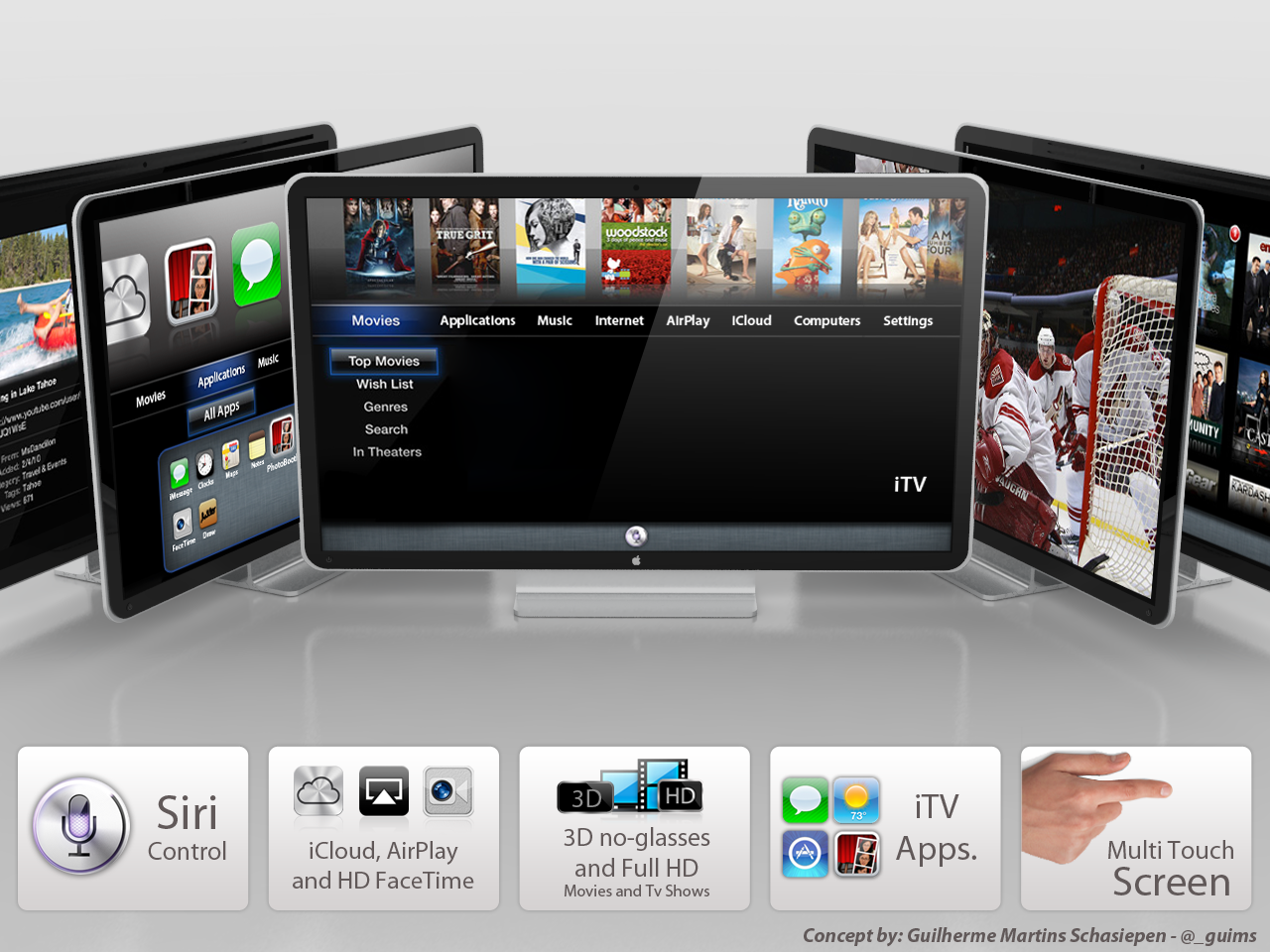
Apple television mockup by 9to5Mac.

“It will have the simplest user interface you could imagine. I finally cracked it.” These are the exact words of Apple’s late co-founder Steve Jobs, as revealed in the just released authorized biography by Walter Isaacson. In his own admission prior to his death earlier this month, Jobs was working on “an integrated television set that is completely easy to use”, a solution which would be “seamlessly synced with all of your devices and with iCloud”. The quote served as the basis for Piper Jaffray’s resident Apple analyst Gene Munster, the most outspoken proponent of an Apple-branded television set. Munster wrote in a note to clients that Apple is already building prototype TV sets, according to a Fortune blog post:

A significant hurdle to a full-fledged Apple (AAPL) television set (as opposed to the Apple TV set-top box), Munster writes, is combining live television with shows previously captured on iCloud. “Perhaps this code is precisely what Jobs believed he has ‘cracked,'” Munter suggests, adding that Apple could use the new Siri voice activated system “to bolster its TV offering and simplify the chore of inputting information like show titles, or actor names, into a TV.”

If it eventually becomes a reality, the analyst speculates, the rumored product could cost up to $2,000, which is at least double the asking price for a typical 40-inch television product. In addition, Apple’s will likely require users to sign up for an iTunes TV Pass subscription service in order to enjoy bulk television programming, costing anywhere between $50 and $90 a month. It’s unclear whether the strategy stands a chance at a time when Internet providers are capping bandwidth. All told, the Apple television sounds like a pricey proposition…


Expand
Expanding
Close

Apple updates Smart Covers, kills the Orange but adds a lovely dark gray (and “color-matched fiber lining”)

Site default logo image

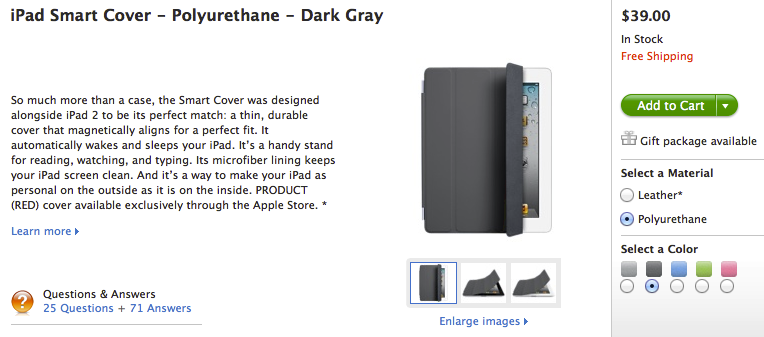
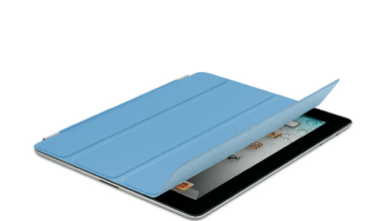
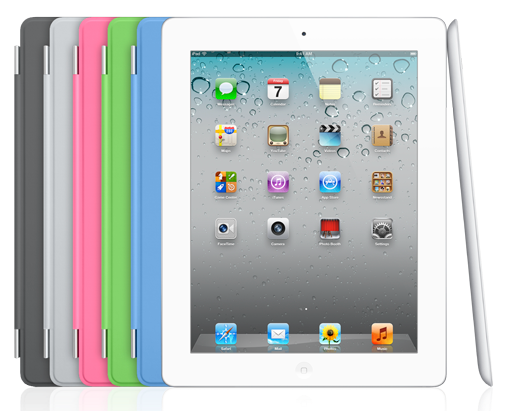
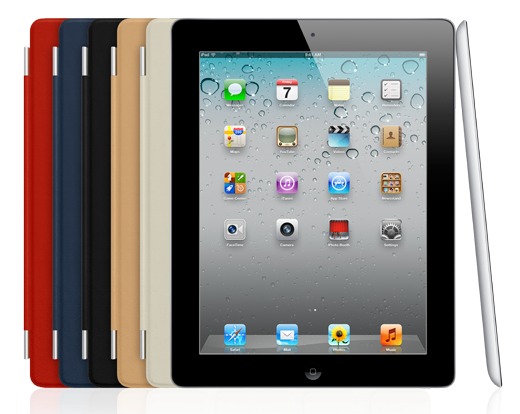
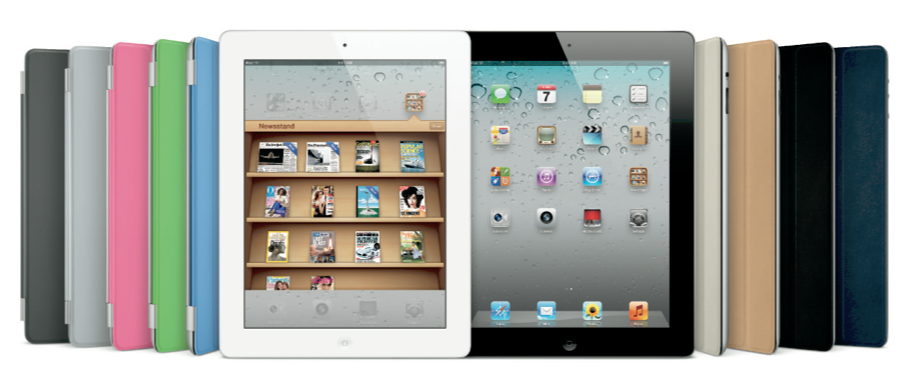
New MacBook Pros weren’t the only thing updated quietly in the Apple Store this morning. Apple has updated the whole line of Smart Covers for iPad. You’ll notice the Orange Smart Cover is now gone and Apple has added a lovely Dark Gray Polyurethane model. Apple has added “color matched microfiber lining” to the description of the leather products (gone are the gray lining across the board) as you can see in the images below:


click to enlarge

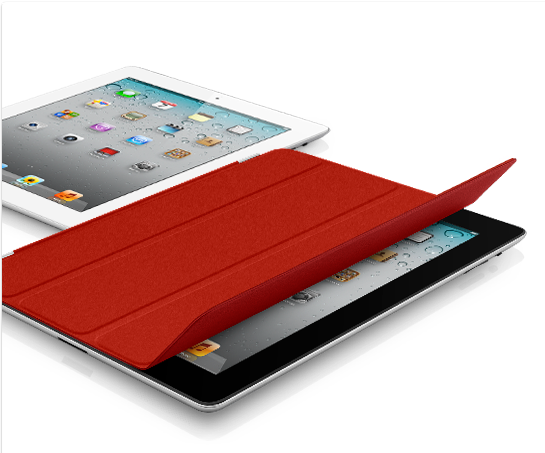
Apple has also improved the colors of the Smart Covers as well:


click to enlarge

The whole line gets new part numbers but prices have not changed. Notice the subtle color change comparisons below:


Expand
Expanding
Close

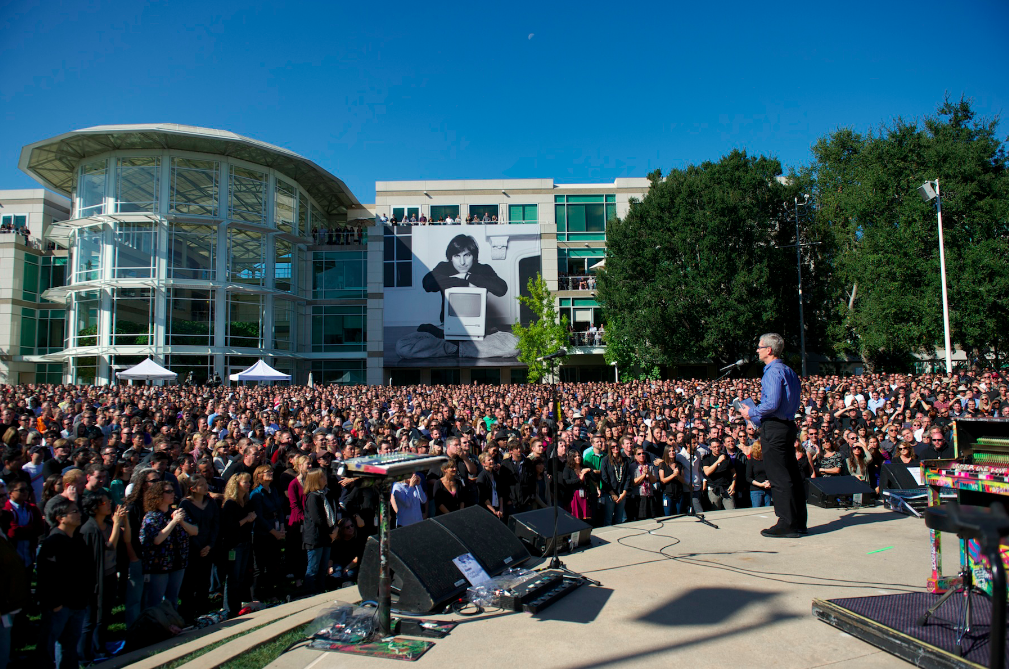
Apple posts full video of Steve Jobs’ celebration at Apple’s campus

Site default logo image

Apple has posted the full video of the Steve Jobs memorial and celebration of his life at the Cupertino, California campus. The event was held on October 19th and was only streamed to Apple employees who were not physically attending the event. The full video can be viewed at Apple’s website.  Don’t come wearing any browser except for Safari.


Expand
Expanding
Close

Former Compaq Chairman, and current Mac user, reveals that Jobs asked Compaq to license the Mac OS in 1999

Site default logo image

[youtube=http://www.youtube.com/watch?v=ghdTqnYnFyg]

Among other interesting tidbits on Steve Jobs, technology investment pioneer Ben Rosen reveals that the new Apple CEO invited the then Compaq Chairman and CEO to Silicon Valley in 1999 to inquire about licensing Mac OS X:

After we finished with the amenities and reminiscences, we got to the purpose of the meeting. Steve wanted Compaq to offer the Apple operating system on its PC line, adding to the Microsoft OS that had always been our sole OS. At the time, Compaq was the world’s largest manufacturer of PCs. Our adopting the Apple OS would be seen as a feather in Apple’s cap (and a pretty visible slap at Microsoft). The catching up with Steve was fun, the food was great, but the OS idea never gained traction. Upon further analysis, it didn’t make sense for either Compaq or Apple. Compaq wasn’t about to declare war on Microsoft, our partner from our birth in 1982, and Steve had second thoughts about licensing their crown jewels.

What’s interesting here is this is a year after the introduction of the iMac and more than a year after Jobs had terminated Mac Clone licensing deals with Power Computing, Motorola and others. This was something else entirely.

This is also around the time OS X was being tested (the server version which was a NeXT port was released that same year). From the Intel transition announcement (4:40 above) we know Apple always had an Intel version of the Mac OS X being built alongside the PowerPC version (codenamed Marklar) but it now appears that Apple was seriously considering licensing the Intel version alongside the PowerPC version when the Mac OS X client was released way back at the turn of the decade.

Imagine an alternative universe where Compaq Macs competed with Apple’s Macs through the last decade. Weird.

Also, Rosen has a warm email contact with Steve Jobs where he reveals that though he was a Compaq CEO and Chariman for 20 years, he’s back to using a Mac as of 2007, below:


Expand
Expanding
Close

Jobs told biographer that he cracked the code to building an HDTV

Site default logo image

The Washington Post details an interesting revelation from Steve Jobs to biographer Walter Isaacson prior to his death earlier this month.

“He very much wanted to do for television sets what he had done for computers, music players, and phones: make them simple and elegant,” Isaacson wrote.

Isaacson continued: “‘I’d like to create an integrated television set that is completely easy to use,’ he told me. ‘It would be seamlessly synced with all of your devices and with iCloud.’ No longer would users have to fiddle with complex remotes for DVD players and cable channels. ‘It will have the simplest user interface you could imagine. I finally cracked it.’”

That is particularly interesting when you consider that Apple has been rumored to be entering the TV business since the beginning of time. There has also been speculation that Apple’s Siri Voice control could play a big part in Apple’s HDTV venture.

Jobs’ passage could also relate to the current Apple TV model which Apple just makes the pass-through box, instead of Apple actually manufacturing the LCD TVs themselves. Obviously with iCloud only being released this month, there could be some Apple TV updates coming shortly.

Meanwhile, CBS posted another clip from the 60 Minutes interview with Isaacson in which Jobs himself reveals on tape the circumstances around meeting his biological father, below:


Expand
Expanding
Close

Pop culture that shaped Steve Jobs’ penchant for design and innovation

Site default logo image

Here’s another excerpt from the upcoming Steve Jobs biography by Walter Isaacson, which goes on sale Monday in electronic, hardcover and spoken word formats. The juicy bits published by the Huffington Post teach us about the books and music which had shaped the brilliant mind of the entrepreneur and cultural icon who would go on to transform computers, music, mobile, publishing, digital entertainment and cell phones, to name a few. Jobs’ artistic sensibilities drew from the influences he picked up along the way from his reading and listening material, most of which he had discovered and consumed back in the teen and college years.

So what did Jobs read and listen to back then? The music part is easy:

Jobs called Bob Dylan “one of my heroes” and had over a dozen Dylan albums on his iPod, along with songs from seven different Beatles albums, six Rolling Stones albums and four albums by Jobs’ onetime lover Joan Baez.

Jobs’ love for the Beatles became widely known when he likened Apple’s creative process to that of the Beatles, here’s that quote from 60 Minutes:

My model for business is The Beatles: They were four guys that kept each other’s negative tendencies in check; they balanced each other. And the total was greater than the sum of the parts. Great things in business are never done by one person, they are done by a team of people.

As for literature, Jobs’ “required reading” spanned a variety of genres that includes the likes of William Shakespeare to Paramahansa Yogananda, whose “Autobiography of a Yogi” remained one of Jobs’ favorite reads throughout his life and the only e-book he downloaded onto his iPad. Jobs also liked Shunryu Suzuki’sZen Mind, Beginner’s Mind” and Chogyam Trungpa’sCutting Through Spiritual Materialism.”

Apple’s co-founder in the early days was deeply involved in a spiritual search for enlightenment and he experimented with marijuana and LSD starting at the age of 15.

Jobs found himself deeply influenced by a variety of books on spirituality and enlightenment, most notably Be Here Now, a guide to meditation and the wonders of psychedelic drugs by Baba Ram Dass, born Richard Alpert. “It was profound,” Jobs said. “It transformed me and many of my friends.”

Moby Dick and Dylan Thomas’ poetry were also among Jobs’ favorite reads, but the books which really shaped Jobs’ artistic sensibilities and enriched them with a touch of the much-needed technology flare are…


Expand
Expanding
Close

Jobs’ original vision for the iPhone: No third-party native apps

Site default logo image

[youtube=http://www.youtube.com/watch?v=8Vq993Td6ys]

Remember back in 2007 when Apple first told developers that to develop for the iPhone, they’d need to build WebApps for Safari? Well, that really was the plan. At the time, Jobs said:

The full Safari engine is inside of iPhone. And so, you can write amazing Web 2.0 and Ajax apps that look exactly and behave exactly like apps on the iPhone. And these apps can integrate perfectly with iPhone services. They can make a call, they can send an email, they can look up a location on Google Maps.

And guess what? There’s no SDK that you need! You’ve got everything you need if you know how to write apps using the most modern web standards to write amazing apps for the iPhone today. So developers, we think we’ve got a very sweet story for you. You can begin building your iPhone apps today.

The App Store came later and apparently as a reaction to jailbreakers and developer backlash.

The App Store nowadays is arguably the most vital app community on any platform, but Steve Jobs initially resisted the idea of users customizing their iPhones with third-party programs, later to become known as apps. The revelation is another of the many interesting nuggets to leak from the upcoming Steve Jobs biography by Walter Isaacson, which goes on sale Monday. According to the Huffington Post which obtained an early copy of the book:

Apple board member Art Levinson told Isaacson that he phoned Jobs “half a dozen times to lobby for the potential of the apps,” but, according to Isaacson, “Jobs at first quashed the discussion, partly because he felt his team did not have the bandwidth to figure out all the complexities that would be involved in policing third-party app developers.”

Some other tidbits: Jobs informed Cook on a flight to Japan that “I’ve decided to make you COO”. Also, the initial lukewarm reception to iPad “annoyed and depressed” Jobs.

As for Apple’s seemingly unstoppable mobile application bazaar, Jobs – of course – would later embrace the App Store fully as it had become the central theme around Apple’s famous iPhone commercials featuring the “There’s an app for that” tagline. Upon releasing, the original iPhone immediately captured attention of the hacking community which had begun tinkering with the product. Soon thereafter, popular tweaks ensued which added more functionality to the device despite the lack of the official software development kit.


Expand
Expanding
Close

Jobs told Isaacson that he was either going to be one of the first “to outrun a cancer like this” or be among the last “to die from it”

Site default logo image

Details from the upcoming Steve Jobs biography by Walter Isaacson continue trickling in as big media got an early copy of the book. Both the Associated Press and the New York Times have published excerpts that offer a unique insight into the life of the famously private Silicon Valley luminary. According to a New York Times article from yesterday, after attempting to combat a cancerous tumor on his pancreas with a special vegan diet, Jobs then turned to the latest in modern medicine, which included an experimental gene therapy:

According to Mr. Isaacson, Mr. Jobs was one of 20 people in the world to have all the genes of his cancer tumor and his normal DNA sequenced. The price tag at the time: $100,000. The DNA sequencing that Mr. Jobs ultimately went through was done by a collaboration of teams at Stanford, Johns Hopkins, Harvard and the Broad Institute of MIT. The sequencing, Mr. Isaacson writes, allowed doctors to tailor drugs and target them to the defective molecular pathways. A doctor told Mr. Jobs that the pioneering treatments of the kind he was undergoing would soon make most types of cancer a manageable chronic disease. Later, Mr. Jobs told Mr. Isaacson that he was either going to be one of the first “to outrun a cancer like this” or be among the last “to die from it.

A 60 Minutes preview with Walter Isaacson also touched on Jobs’ cancer treatment, with the biographer revealing that Apple’s late CEO in hindsight was regretful for going with a special diet rather than chose to operate on it sooner. Another interesting tidbit from the New York Times article: Apple’s co-founder began designing his own luxury yacht back in 2009. This is a surprise since Jobs was many things, but not the kind of guy who would display his wealth:


Expand
Expanding
Close