Tech Industry

See All Stories

Foxconn reportedly investing $210M in new Apple production line

Site default logo image

According to a report from the China Daily, Foxconn is looking to invest $210 million in a new Apple production line that will be based in Huai’an city, China, according to the office of Taiwan Affairs today. The plant is expected to be relatively big in size, covering 40,000 square meters, with plans to hire 35,800 workers. However, it looks to be smaller than Foxconn’s other plants. When it comes to how much the plant plans to produce, the output from the plant is expected to be between $949 million to $1.1 billion yearly, according to the report.

It is not clear which Apple products are expected to be built in the plant, but construction will begin in October of this year, perhaps ruling out possibility of the factory producing the sixth-generation iPhone that is rumored to go into production in June. Manufacturing for the new iPhone will most likely take place in Foxconn’s main Shenzhen plant, where upwards of 200,000 workers currently work. Foxconn also opened a new plant in Brazil and a larger plant in Zhengzhou just last year.


Expand
Expanding
Close

Site default logo image

Samsung chief says company looking to resolve differences with Apple ahead of court rendezvous, options include cross-licensing deal

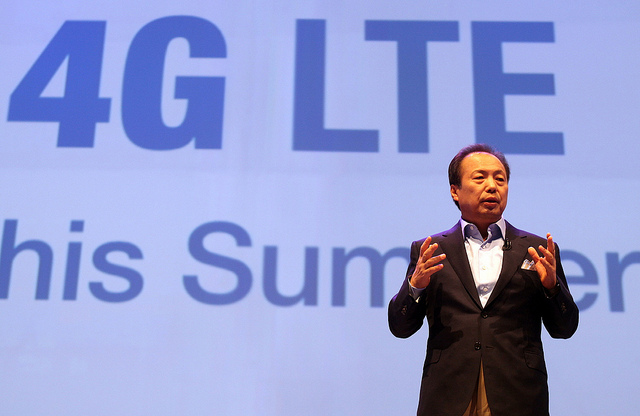
The legal battle between Samsung and Apple is nothing new, because the two companies have duked it out in court for quite sometime. Both companies are ordered to meet to talk about a deal tomorrow. Not surprisingly, Samsung chief JK Shin is looking to resolve the differences between his company, and Apple is looking toward negotiating with them, according to Reuters. One of the ways he suggested is a cross-licensing deal: “There is still abig gapin the patent war with Apple but we still have several negotiation options including cross-licensing.”

Headed to the United States today, Shin is accompanied by chief executive Choi Gee-sung. Both will meet with Apple’s CEO Tim Cook and company in a San Francisco court tomorrow to try to hammer out a negotiation.

The interesting part of this whole kerfuffle is that Samsung is a key supplier for many parts that Apple uses in its products. South Korean-based Samsung even has a factory in Austin, Texas dedicated to making chips for Apple’s iOS devices. However, even with giving each other their business, the two companies’ relationship is not very good. Samsung is one of the most popular manufacturers of Android handsets, leaving both Apple and Samsung suing each other to try to back up their respective devices.

We will cover anything that comes out of the court tomorrow, but do not expect the two companies to strike a deal very quickly, because it looks like it is going to take a bit to settle their differences.


Expand
Expanding
Close

Site default logo image

Internal Sam’s Club listing shows Verizon Shared Data plan still on track for summer

Verizon’s shared data plan has been known since CFO Andrew Davies announced the news on the company’s call with investors in late April—along with many other rumors that developed over the past year. It will allow Verizon customers to share data between their iPhone, iPad, or with the rest of their family’s devices. Davies said it will be available by mid-summer.

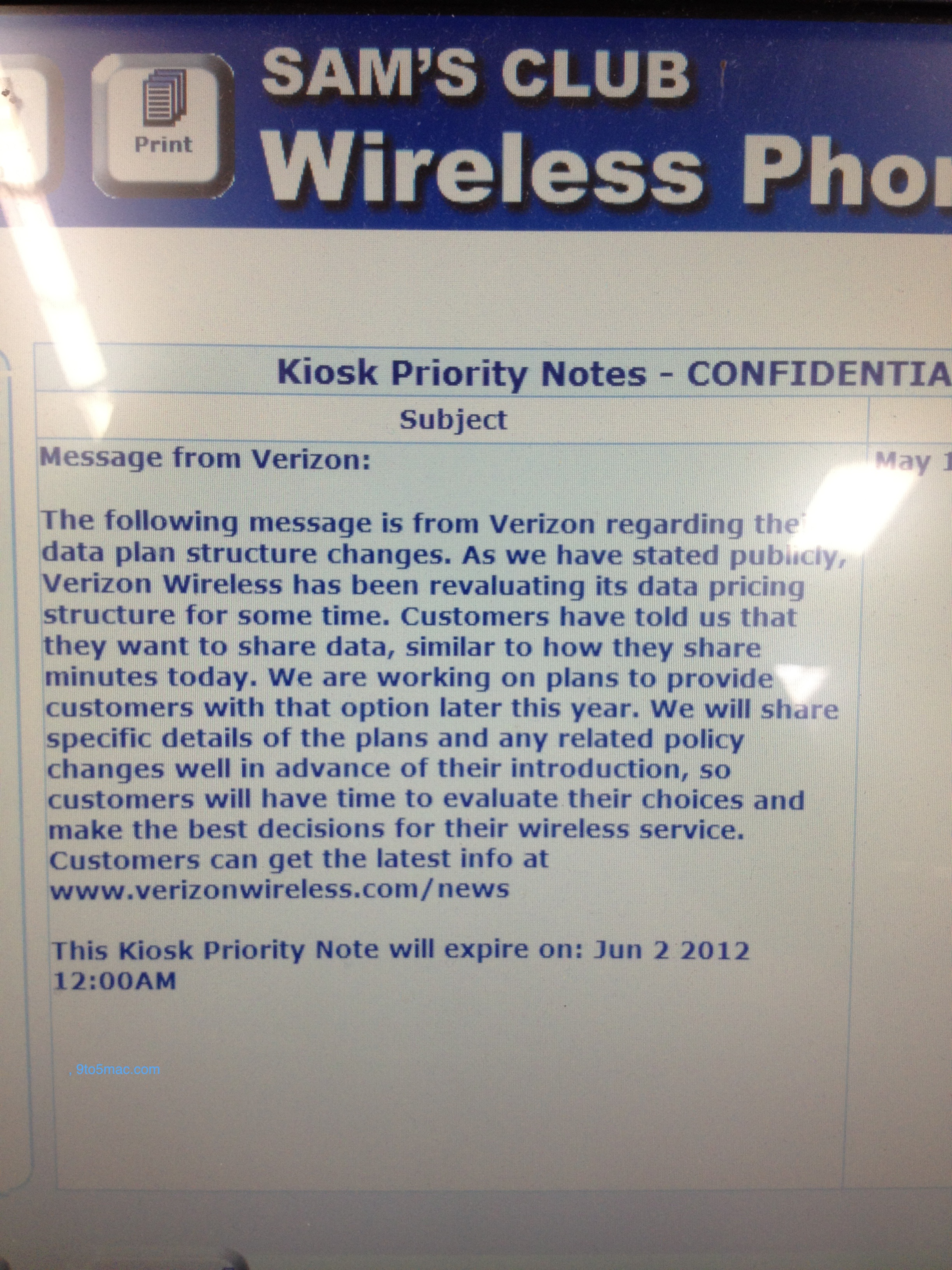
According to a screenshot of an internal listing from Sam’s Club, which was given to 9to5Mac by a tipster, the plan to roll out shared data still seems to be on track for a mid-summer release. The note said the plan would be similar to how customers “share minutes today.”

In March, PhoneArena leaked a screenshot of the family data usage calculator to estimate how much data is used on your plan. There is no word on how much data will be provided, or how much it will even cost. However, according to the screenshot below, it looks like it will extend to 30 GB and beyond.

For those on AT&T, you will also be able to use a similar plan soon. Just last week, AT&T CEO of Mobile Business Ralph de la Vega told CNET that a shared data plan is on its way. When it came to the carrier’s profit from the plan, he said, “I’m very comfortable with the plan that will be offered to our customers.” Carriers, of course, make bank off data plans.

It is great to know things are still on track, and we will let you know when these types of plans launch in the near future. Is anyone interested?

Cheers, Phoenix!
Expand
Expanding
Close

Site default logo image

T-Mobile announces no-contract broadband passes starting at $15

T-Mobile announced new “worry-free No Annual Contracts” today for its mobile broadband service that is expected to launch through T-Mobile retail stores and online May 20. The plans start at $15 per one-week pass capped at 300MB and $25 per one-moth pass capped at 1.5GB. The carrier is also offering 3.5GB and 5GB one-month passes at $35 and $50, respectively.

T-Mobile’s website currently lists no-annual contract broadband plans at $100 for a 100MB week pass, $30 for a 1 GB month pass, or $50 for a 3GB month pass. We are assuming the new plans will replace the old ones on May 20.

Starting at just $15, T-Mobile’s lineup of No Annual Contract mobile broadband passes delivers a pay-in-advance, overage-free solution that offers an allotment of mobile data, making it possible for customers to choose a pass that best fits their data needs without committing to a two-year contract.

The full press release from T-Mobile is below:

T-Mobile Introduces New No Annual Contract
Mobile Broadband Service Passes
New Passes, Available May 20, Offer Flexible, More Affordable Access to High-Speed Internet on the Go on an Advanced Lineup of 4G Tablets, Mobile Hotspots and Laptop Sticks
Bellevue, Wash. — May 17, 2012  T-Mobile USA, Inc. today announced that its new, flexible and worry-free No Annual Contract mobile broadband service passes will debut May 20, making it easier for customers to enjoy access to high-speed Internet on the go whenever they want. With T-Mobile’s new, more affordable No Annual Contract data passes, customers can experience T-Mobile’s blazing-fast 4G network speeds across a variety of mobile broadband devices including tablets, mobile hotspots and laptop sticks – with no strings attached.
 
Starting at just $15, T-Mobile’s lineup of No Annual Contract mobile broadband passes delivers a pay-in-advance, overage-free solution that offers an allotment of mobile data, making it possible for customers to choose a pass that best fits their data needs without committing to a two-year contract:
  • 300MB 1-week pass for $15
  • 1.5GB 1-month pass for $25
  • 3.5GB 1-month pass for $35
  • 5GB 1-month pass for $50
“Although most of our mobile broadband customers choose postpaid rate plans for the best device prices and data rates, we know that many of our customers want the flexibility to be able to experience mobile broadband without committing to an annual contract up front,” said Jeremy Korst, vice president of marketing, T-Mobile USA. “With better pricing and new features like an auto-refill option and a simpler purchase experience, T-Mobile’s No Annual Contract mobile broadband passes make it easier and more affordable than ever to experience high-speed Internet on the go on a range of devices.”
 
T-Mobile® offers a variety of 4G mobile broadband devices that, when connected to T-Mobile’s high-speed 4G network, offer customers fast access to the Web, e-mail, gaming, movies and more, while on-the-go.
  • T-Mobile’s lineup of mobile, connected tablets, including the Samsung Galaxy Tab 10.1, the Samsung Galaxy Tab 7.0 Plus and the T-Mobile® SpringBoard™ with Google,  deliver a premium on-the-go entertainment and Web experience, making it possible to stream movies on a road trip or shop online while the kids play at the park.
  • The T-Mobile® Sonic 4G Mobile Hotspot and the T-Mobile 4G Mobile Hotspot are ideal for staying connected on-the-go with colleagues and clients or providing Internet on the go for the family on vacation. Providing simultaneous access to T-Mobile’s 4G network for up to five Wi-Fi-enabled devices, customers can use their mobile hotspots to connect their iPad® devices, laptops, music players, portable gaming devices and e-readers, among other devices, to T-Mobile’s high-speed 4G network.
  • T-Mobile’s laptop sticks, including the HSPA+ 42-enabled Rocket 3.0 USB Laptop Stick, are perfect for customers looking for a blazing-fast mobile Internet connection on their laptop.
Availability
T-Mobile’s new No Annual Contract mobile broadband passes are expected to be available beginning May 20 at T-Mobile retail stores, select dealers, national retailers and online at http://www.t-mobile.com. More information on T-Mobile’s mobile broadband offerings is available at http://mobile-broadband.t-mobile.com.  
Site default logo image

Apple patent details steering wheel remote control

PatentlyApple covered a number of Apple patents today that were recently published by the US Patent & Trademark Office. One of the 21 patents originally filed in Q1 2011 is for an iOS remote control that would clip onto a steering wheel. The remote shown in the patent drawings essentially looks like the iPod click wheel, but Apple described it as a touch-sensitive, rotatable faceplate:

Apple’s invention generally relates to remote controls. More specifically, certain embodiments of the present invention provide a steering wheel mountable wireless remote control for controlling a portable media player… The remote control device can also include a faceplate that is rotatably mounted on top of the base section that very much resembles Apple’s iPod clickwheel… The notable difference is that Apple states that the faceplate is touch-sensitive.

You can get full coverage on the patent at PatentlyApple

Bloomberg reiterates: Apple to unveil new, thinner MacBook Pro at WWDC

Site default logo image

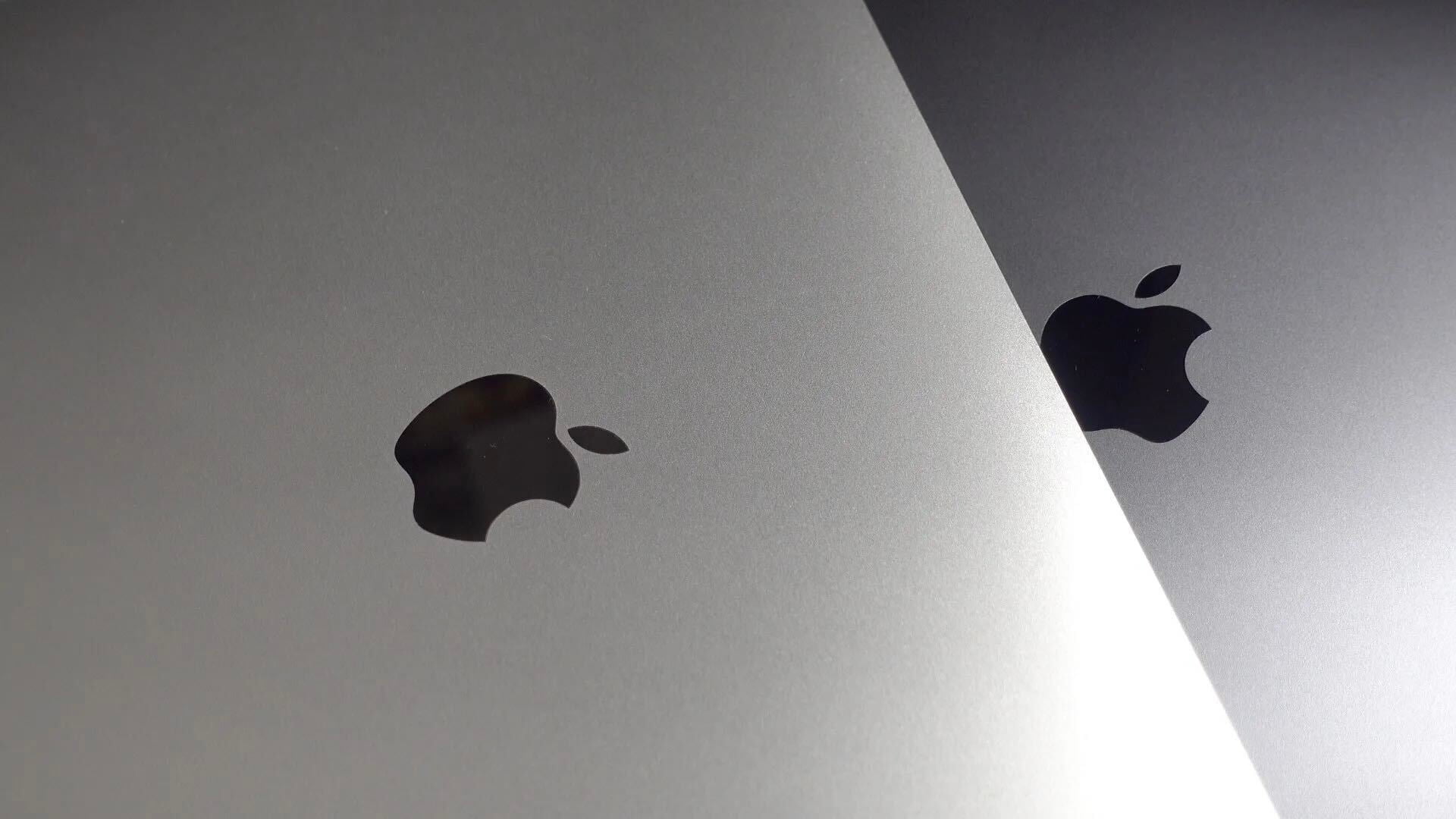
<em>Mockup: New, thinner MacBook Pro on the left. Current model on the right.</em>

Our Senior Editor Mark Gurman exclusively brought you details about Apple’s new 15-inch MacBook Pro this morning that the company is currently readying to be unveiled. According to our trusted sources, the new MacBook Pro features an ultra-thin design, a “jaw-dropping” Retina Display, and super-fast USB 3. Confirming our report from this morning, Bloomberg reported that Apple will announce the new MacBook Pro at this year’s WWDC set to begin June 11 at the Moscone West conference center in California.

Bloomberg also suggested Apple would announce the release date for Apple’s next operating system, Mountain Lion, due in “late summer.” Mountain Lion brings many features from iOS like a Notification Center, heavy iCloud integration, Messages, and a new feature called “Gatekeeper.” It is now available as a beta to those apart of Apple’s Developer Center.

This is most likely a controlled leak by Apple—something Apple’s PR is known for. Notice that on Friday, when we published our exclusive that outlined Apple’s new Maps technology, which will début in iOS 6, both TechCrunch and AllThingsD confirmed our report—rather quickly too. Furthermore, The Verge and ABC News also confirmed what we said this morning: the new MacBook Pro will feature NVIDIA graphics to power the Retina display. It would not surprise us if this were a controlled leak.

With the announcement of iOS and new MacBook Pros, this year’s WWDC is sure to be crazy. We are looking forward to the festivities kicking off June 11, and you bet we will cover the event obsessively and in full force.

Site default logo image

Microsoft’s infamous Steve Ballmer named worst CEO by Forbes

http://www.youtube.com/watch?v=wvsboPUjrGc

Forbes (via BGR) ranked Microsoft’s infamous Steve Ballmer as the worst CEO of any publicly traded company “without a doubt.” I’m sure you all know Ballmer—the tall, sweaty man who loves to yell things like “c’mon!” and the classic, “developers, developers, developers.” Ballmer entered the role of Microsoft CEO in 2000, and he ranks as the 19th richest man in the world. However, as Forbes mentioned, this man could take the blame for many of Microsoft’s issues, like being slow to act in emerging markets, most namely smartphones.

“Although he’s #19 on Forbes list of billionaires, Mr. Ballmer should not be allowed to take such incredible risks with investor money and employee jobs. Best he be retired to enjoy his fortune rather than deprive investors and employees of building theirs.”

At the time of the iPhone’s launch in 2007, Ballmer and other Microsoft execs did not feel threatened. Now, look at who’s on top. Ballmer’s glory also came around the time of Windows Vista, which was plagued by issues and let OS X Leopard push Macs where they are today.

All right, enough bashing. I will just leave you with this video:

http://www.youtube.com/watch?v=8To-6VIJZRE


Expand
Expanding
Close

Site default logo image

After backlash, Sprint CEO to return $3.25M in salary tied to iPhone

Sprint’s CEO Daniel Hesse will take a small pay cut during 2012 after receiving a bit of flack from shareholders for investing so much in adding Apple’s iPhone to the network. Reuters reported Hesse will lose $3.25 million from his salary. Hesse said in a statement to Sprint HR: “These voluntary actions regarding my personal compensation, which total $3,250,830, will eliminate any benefit for me to the discretionary adjustment the compensation committee made earlier this year.” 

Why are shareholders so upset? Sprint, the nation’s third-largest carrier, invested $15 billion to add the iPhone to its network. However, shareholders think that was a bit much, because the network has to pay a $200 higher subsidy per-device than its other phones. I guess this is a bit of an apology from Hesse.

Sales of the iPhone on the network are pretty solid, though. The company reported a sale of 1.5 million iPhones during Q1, compared to 1.8 million during Q4 2011. A very cool 44 percent (or 660,000) of the new iPhones sold during Q1 were new customers.

I think we can all agree this sounds much better than the news regarding the AT&T’s CEO from earlier today…
Expand
Expanding
Close

Samsung announces Galaxy S III with S Voice and a bunch of other iOS features

Site default logo image

[youtube http://www.youtube.com/watch?v=2lpLGb1WW8E&hd=1]

Samsung announced the Galaxy S III today at the Unpacked event in London. Apple’s biggest competitor in the smartphone space, and the only other manufacture making any significant profit, showed off the upgraded 4.8-inch 720P SuperAMOLED display device that now weighs 133 grams among other minor spec improvements.

A few of the features shown off were S-Voice, which is like Siri, Scan and Match for Music (iTunes Match), and Airplay-like “AllShare Cast” for streaming content to your HDTV through the AppleTV-like AllShare Cast Dongle.  Samsung also named its iPod nano-like music player “Pebble,” which bears a resemblance to the iOS Kickstarter watch that goes by the same name.

One cool new thing is a face recognition photo app. It lets you instantly send pictures to your friends that it recognizes in your pictures. The S III also has a pop-up player, which is sort of an app version of picture-in-picture that allows you to watch a movie while you switch around to other applications.

Initial reviews seem a little luke-warm on the device. Most call it an incremental update from the S II with new features that also brought some new flaws.

Oh, and Phil Schiller will not like this news: Flipboard for Android is debuting on the S III.


Expand
Expanding
Close

Site default logo image

Yes, Apple is still working on haptics for touch devices

We already know Apple is working on haptic technologies for mobile devices from patents in the past (here, here, and here). We also know that last-minute rumors of Finnish company Senseg’s technology being included in the third-generation iPad never came true. Another patent surfaced today giving us a look at Apple’s work with an advanced multi-tiered haptics system for iOS devices. PatentlyApple has all the details:

…today’s surprise invention packs a punch with a wildly intelligent multi-tiered haptics system. The system will actually allow an iDevice display to deform so that it could provide the user with a button, an arrow or even a geological map to physically pop right out of the screen to give it 3D depth. If that wasn’t cool enough, Apple’s patent discusses a flexible OLED display that could be used for video glasses.

Report: New thinner iPhone will have longer 4 inch screen, metallic backside and small round dock connector

Site default logo image

[slideshow]

Earlier this year, leading up to the new iPad launch, iLounge editor Jeremy Horwitz claimed to have held the new device, and then he reported a few of the features that would ultimately launch with the third-gen iPad in March (and some that would not). Today, Horwitz claimed to have new details on the next-generation iPhone. He reported the device would sport a longer 4-inch screen, metallic backside, and smaller and rounded dock connector.

The majority of Horwitz’s specs mirror our report from March 2011 about the iPhone 5 prototypes spotted with metal backs, larger displays, and the overall iPhone 4 design.

The first of his claims: As rumored, the new iPhone will be “longer and thinner” than iPhone 4 and 4S, and it will sport the following changes to its physical design:


Expand
Expanding
Close

Site default logo image

Inventor says Apple several years away from large Liquidmetal products

Last month, there were rumors claiming Apple planned to use the Liquidmetal amorphous metal alloys it obtained the rights to in 2010 for an upcoming iPhone. Speaking with BusinessInsider, one of Liquidmetal’s inventors, Atakan Peker, said Apple is still a few years away before we will see Liquidmetal used in a large scale—at least for MacBooks. Although, he does think a breakthrough product made of the material is in the cards for Apple.

A few highlights from the interview are below:

How long did it take to perfect Liquidmetal?

I would not say Liquidmetal was perfected. This is a technology that has yet to be matured and perfected both in manufacturing process and application development. I should note that this is a completely new and different metal technology. Therefore, there is no suitable manufacturing infrastructure yet to take full advantage of this alloy technology.

For example, I estimate that Apple will likely spend on the order of $300 million to $500 million — and three to five years — to mature the technology before it can used in large scale.

I’ve heard rumors that future MacBooks from Apple could use Liquidmetal casing, what would that be like? Is it likely to happen?

Given the size of MacBook and scale of Apple products, I think it’s unlikely that Liquidmetal casing will be used in MacBooks in the near term. It’s more likely in the form of small component such as a hinge or bracket. A MacBook casing, such as a unibody, will take two to four more years to implement

How does Liquidmetal compare to the metal, glass, and plastic used in mobile devices now?

Each material has its own advantage and disadvantages. Plastics are low cost to manufacture into complex shapes but not strong enough. Metals are strong but difficult to produce into complex shapes. And glass feels and looks beautiful but is highly fragile. Liquidmetal can combine these advantages and remedy some of these shortcomings.

Is there anything else relating to mobile gadgets and Liquidmetal that you think people should know about?

I expect Liquidmetal application in two ways: First evolutionary substitution of current materials and secondly, and more importantly, in a breakthrough product made only possible by Liquidmetal technology. Apple’s exclusively licensing a new material technology (specifically for casing and enclosures) is a first in the industry.

This is very exciting. Therefore, I expect Apple to use this technology in a breakthrough product. Such product will likely bring an innovative user interface and industrial design together, and will also be very difficult to copy or duplicate with other material technologies.

You can read the full interview at BusinessInsider.

BlackBerry 10 features interesting keyboard and camera apps, neither will save the platform

Site default logo image

In case you had not heard, BlackBerry World is occurring in Orlando right now, and RIM is officially announcing BlackBerry 10. Overall, I am not seeing anything that will save this company, but there are a few nice features in the new OS to speak of.

First is the predictive text soft keyboard:

[youtube=http://www.youtube.com/watch?feature=player_embedded&v=JEPYYo0-gfc]

Interesting use of the predictive text here and perhaps ironic that, of all companies, RIM is putting the last nail in the physical keyboard coffin. It will be interesting to see how well this keyboard works in practice.

Also debuting is a camera feature (video below) that allows you to step back in time when you miss a shot. The technology is not terribly advanced, because the camera is just taking shots from the time the camera app is open and caching them for later browsing.

Update: It appears the camera app is a repurposed third-party app.

Both of these are cool, but they will by no means save the platform. Android and iOS now control over 80 percent of the United States smartphone market. That is actually low in contrast to places like Japan, where the figure is over 95 percent iOS and Android.

The only question that remains is which will die first: Junk bond Nokia or RIM?


Expand
Expanding
Close

Site default logo image

Kindle Fire now over half of Android tablet market, as Amazon reports blowout earnings

It is apparent over the last few months that Amazon’s $199 Kindle Fire has been making rapid gains in Android tablet market. However, we did not think it was an all out domination. According to research firm ComScore, the Kindle Fire now makes up 54.4 percent of the total Android Market (as of the end of the month) after just six months on the market. Following behind is the Samsung Galaxy Tab series at 15.4-percent, Motorola Xoom at 7 percent, and Asus Transformer come at 6.3-percent.

The Kindle Fire has been selling very well on Amazon’s online store and at various retail stores. Priced at $199 and built on a custom version of Android 2.3, the Kindle Fire offers a tablet on the cheap for those looking to consume content. Of course, today’s news sounds a little better for Amazon than Google, as there is really no hint to the average consumer eye that the Kindle Fire is running Android. We are hoping Amazon will announce how many have been sold some day, but it hasn’t yet.

In further Amazon news this afternoon, the company just reported its Q1 2012 earnings. The Seattle-based company is reporting $13.18 billion in revenue for the first quarter, compared to $9.86 billion YOY, which blows out analysts’ expectations for the online marketplace. However, Amazon’s net income was down 35 percent to $130 million. You can read the full announcement after the break.


Expand
Expanding
Close

Apple chip supplier TriQuint having ‘challenging quarter’ due to its biggest customer

Site default logo image

According to a report from The Oregonian, power amplifier specialists TriQuint Semiconductor is facing a “challenging” quarter due to a temporary drop in revenues from its biggest customer, Apple. The report noted the company’s CEO Ralph Quinsey did not mention Apple by name, but that Foxconn was responsible for 35 percent of TriQuint’s revenue during 2011:

TriQuint said sales in the current quarter will fall at least 19 percent to the lowest point in at least two years… While Quinsey wasn’t specific about where the problem lies, Apple has incorporated TriQuint chips in the last several generations of the iPhone. Apple is approaching its annual iPhone upgrade — the last upgrade took place in October — and sales tend to fall off before new products launch.

We know from teardowns that Apple included TriQuint chips in many generations of the iPhone and iPad, including the most recent iPhone 4S and third-generation iPad. When iPhone component supplier Qualcomm announced last week it was having “trouble meeting demand” for LTE chips likely to end up in a next-gen iPhone, many analysts speculated that was a clear indication of an October iPhone launch.

Quinsey said in a statement to the publication that he expects to return to normal revenue and growth numbers in the second half of this year:

“I believe this dip will be temporary and remain confident about our long term position,” Quinsey said in a written statement. “We have achieved design win success with our new products and I believe we will return to normal revenue levels and growth in the second half of 2012.”


Expand
Expanding
Close

AT&T activated 4.3M iPhones last quarter, over 78 percent of its smartphone activations

Site default logo image

AT&T is still the “iPhone network,” according to numbers  from its quarterly earnings report. AT&T sold 5.5 million smartphones in the quarter, but 4.3 million of the smartphones activated were iPhones. That means the iPhone represented a whopping 78 percent of total smartphone sales (although some “iPhone activations” could have been hand me downs). Additionally, AT&T’s postpaid customers are almost 60 percent smartphone customers, which means AT&T’s iPhone customers represent a huge percentage of its base—nearly 5o percent and growing.

Verizon announced numbers last week including 3.2 million iPhones sold. While the iPhone is down significantly from the holiday quarter, it is up from 3.6 million activations in Q1 2011. Apple’s earnings will be reported at the end of the day today.


Expand
Expanding
Close

Site default logo image

Apple to drop 17-inch MacBooks, slim down iPhone w/ in-cell?

You can read into these reports from analyst Ming-Chi Kuo of KGI Securities as much as you want. Kuo claimed this morning that Apple is about to axe the 17-inch MacBook Pro line entirely while introducing a rumored all new MacBook design by Q3 2012 (via MacRumors). Kuo also alleged Apple will adopt in-cell display technology to help slim down the next-generation iPhone by up to 1.4mm to under 8mm. IHS told Wired earlier about the advantages of in-cell displays:

“The advantage of in-cell is that you’re streamlining the manufacturing process, so in time you should be able to drive efficiencies and reduce cost.” IHS analyst Rhoda Alexander told Wired. “Additionally, by reducing the number of layers, you reduce the size and thickness of the device, making it thinner and lighter.”

According to the report, Kuo said in-cell would provide a reduction of approximately 0.5mm, while other reductions could come from the battery and a thinner metal casing on the back.

Since Apple’s smartphone competitors have generally slimmed down their high-end offerings to 7-8mm, Apple needs to make a leap forward from 4S’ 9.3mm thickness. We believe Apple will aim at 8mm or below (at least 1.4mm slimmer) for iPhone 5, in a bid to ensure brisk sales through 2014, while peers will also continue to introduce increasingly slim models next year… As such, all iPhone 4S components that account for thickness must be slimmer, specifically, touch panel, battery and casing. Moreover, a marginal amount of space is required between the three parts for the sakes of assembly tolerance and thermal expansion of components.

Adobe officially launches CS6 suite, offers $30/month introductory pricing on Creative Cloud

Site default logo image

Adobe today begins taking pre-orders for its CS6 line of its popular line professional design products. Adobe combines 14 different individual applications, including its venerable Photoshop CS6 (free Beta download), Illustrator CS6, and InDesign CS6, in a variety of bundles.

United States pricing is as follows (matrix below): Adobe Creative Suite 6 Design and Web Premium for $1,899, Adobe Creative Suite 6 Design Standard for $1,299, Adobe Creative Suite 6 Production Premium for $1,899, and Adobe Creative Suite 6 Master Collection $2,599. Meanwhile, upgrades from previous version of CS5.5 range from $300 to $550 for the Master Collection.

However, Adobe now offers what is likely to be an even more popular pricing option, the Adobe Creative Cloud, which also offers online storage, versioning, and sharing along with all the Master Collection of applications. Starting at $29.99 a month for the first year for those updating from just about any version of Adobe CS3+, the Creative Cloud annual membership is $600 a year billed monthly or $75 a month on a month-to-month basis.

At those rates, Master Collection users would still be ahead of the $2,600 stand alone price after four years and would have access to all of Adobe’s online storage and some Creative Cloud specific options as well.


Adobe continues to offer savings of up to 80 percent off for students and teachers starting at the standard bundle for $350 and Master Collection CS6 for $800

Adobe posted hundreds of CS6 feature and tutorial videos on its tv.adobe.com website and will have a live broadcast launch event at 10 a.m. PST.

The full press releases and product matrix follow:


Expand
Expanding
Close

Site default logo image

Munster: Next iPhone will be ‘Mother of all Upgrades’ (video)


Yesterday, we reported that Qualcomm announced it was having “trouble meeting demand” for its next-generation chips that would likely find their way into an LTE-enabled iPhone 5. While the announcement was a clear indication that Apple’s rumored October release window was much more likely than talk of a June unveiling at WWDC, Piper Jaffray analyst Gene Munster agreed and said the new device will be the mother of all hardware upgrades:

“We think one of the big features of iPhone 5 is going to be LTE… when iPhone 4S came out it was obviously the same form factor… this is going to be a big hardware upgrade… this is going to be the year of the hardware… the mother of all upgrades “

Apple Marketing SVP Phil Schiller dumps ‘Instagram’ over expansion to Android

Twitter cofounder Jack Dorsey is not the only photo-loving business executive upset by Instagram in recent weeks. While Dorsey stopped posting photos on Instagram after Facebook reportedly beat his Twitter to an acquisition of the app, Apple Senior Vice President Phil Schiller quit Instagram for another reason: Android.

A reader noticed Schiller deleted his Instagram account (@schiller), and then reached out to Apple’s most visible public speaker by Twitter for confirmation. Schiller told the reader that he quit the rising photo-based social network, because the app “jumped the shark” when it launched on the Android platform.

In terms of iOS marketing, which is something that Schiller runs at the highest level, Instagram could have been seen as a pull for smartphone buyers to the iOS platform. The fun, convenient, and growing network was featured several times in Apple’s App Store—even winning “App of the Year” recognition. As marketing chief at Apple, seeing one of the platform’s most popular third-party pieces of software running on millions of Android phones is a disappointing sight.

Update: 9to5mac reader Clayton got in touch (we verified headers) with SVP Schiller who clarified his position… a little:


Expand
Expanding
Close

Apple LTE chip supplier Qualcomm unable to meet demand, could push back next iPhone launch

Site default logo image

According to a report from Reuters, Apple’s LTE chip supplier Qualcomm is having “trouble meeting demand” for smartphone chips and will continue experiencing manufacturing constraints throughout the rest of the year. Qualcomm Chief Executive Paul Jacobs told analysts on a conference call yesterday, “At this stage we cannot secure enough supply to meet the increasing demand we are experiencing.”

With Apple’s next-generation iPhone expected to include LTE capabilities like the recently launched third-gen iPad, many are speculating Qualcomm’s supply issues could lead to delays. It would also make the rumored September or October unveiling and holiday launch all the more likely opposed to June. Is it possible Qualcomm’s supply constraints have anything to do with Apple buying up its capacity?

Apple recently began internally seeding prototype N96— a faster iPhone with 1GB of RAM and an A5X variant to test the performance of the new chip on iPhones.

Qualcomm’s Chief Financial Officer Bill Keitel told Reuters the constraints have lead to increased operating expenses:
Expand
Expanding
Close

HTC fights ‘slide-to-unlock’ in London as Samsung continues patent war with Apple ahead of settlement talks

Site default logo image

With court moderated settlement talks between Apple and Samsung executives set to take place within the next 90 days, Samsung has now filed a counterclaim in a California federal court alleging Apple’s iOS devices are infringing eight patents. The counterclaim is part of an original patent infringement lawsuit initiated by Apple in February. Foss Patents reported:

It comes as no surprise that Samsung retaliated with infringement claims. Samsung owns roughly 30,000 U.S. patents. It has from the outset of its dispute with Apple demonstrated its belief that a good offense is the best defense. So far, none of Samsung’s infringement claims against Apple has succeeded anywhere on Earth, despite efforts in nine different countries, but Samsung keeps on fighting.

Apple is also in the middle of patent infringement cases with HTC, which just told a court in London that its touchscreen devices, specifically its “slide-to-unlock” functionality, do not infringe on Apple’s patents. Bloomberg reported today that HTC’s lawyers described the functionality in question as “extremely simple implementations of commonly known techniques.” Apple’s lawyer Simon Thorley argued HTC is “attacking the validity of four patents” and claimed, “It is clear the inventions make the requisite contributions.”

If HTC is successful, it could have an impact in ongoing patent infringement related cases with Apple in Dutch and German courts. The report described the functionality Apple claims is covered in the patents:


Expand
Expanding
Close