Microsoft issued the Windows 8 Consumer Preview today for everyone to download and try. Demonstrating the operating system’s ability to scale from the smartphone screen all the way to high-end PCs and beyond, the Redmond, Wash.-headquartered software giant showcased Windows 8 on a monstrous 82-inch display that is capable of detecting up to 100 simultaneous touch events or 10 simultaneous users.
Unfortunately, AnandTech, which reported the story, does not have a video online yet. However, I think it is safe to take Microsoft’s word. Now, if the operating system only ran Apple’s Keynote, the ninja PC-plus-Windows 8 combo coupled with a huge projector-based display would make for an impressive keynote rig.
By the way, we would love to hear impressions from our tech-savvy readers that have managed to dual-boot Windows 8 Consumer Preview alongside OS X using Boot Camp (go here for the FAQ detailing system requirements).
The Windows 8 Consumer Preview product demonstration video is right below the fold.
The iPad maker is defending its moniker by insisting the device became synonymous with both the company name and the tablets. PCWorldquotes Apple’s legal representatives who argued at the Guangdong Province Higher People’s Court hearing this morning that Apple made the iPad name famous in the first place:
Among consumers across the world, the iPad trademark is already uniquely connected with Apple. When consumers see a tablet with an iPad trademark, they know it comes from Apple, and not from another company.
No ruling occurred during the six-hour long hearing, and the judges adjourned without setting a new court date. Should Apple lose the appeal, Proview’s request to put a sales ban on the iPad in 30 Chinese cities will go-ahead. Moreover, Apple would risk lawsuits seeking damages. Last week, the Shanghai Pudong New Area People’s Court rejected a preliminary iPad sales injunction until the Guangdong court made its ruling on the appeal.
Apple’s argument might actually backfire, because its legal standoff with Proview has blown up. Wikipedia claims,“A trademark owner takes a risk in engaging in such a corrective campaign because the campaign may serve as an admission that the trademark is generic.” I am not a lawyer, but it seems obvious Apple might be calling upon itself long-term damage with this testimony.
Arguing that the iPad became a generic term for tablets theoretically means anyone could use it as a descriptor. Besides, why do you think Proview brought this battle to the United States? The opposite argument is that Apple actually owns the iPad name, and it is the only company marketing a product that became synonymous for tablets in the first place.
Update: AAPL closed at 535.41 but is at 536.37 pushing its market cap over $500B
.
Some folks noticed that shares of Apple, Inc. surged yesterday morning amid favorable market conditions. Today’s announcement of the March 7 iPad 3 unveiling has managed to push the Cupertino, Calif.-headquartered designer of shiny electronics to a new lifetime high. The Apple stock, which trades on NASDAQ under the AAPL symbol, was up nearly nine points, or more than 1.5-percent, in early afternoon trading.
Valued at $534.08 a share, the company was just shy of $500 billion in market valuation at the time of this writing. Wow, just wow. Talk about the iPad effect.
That is still below Microsoft’s $583 billion valuation from 1999, but the iPhone maker’s getting closer and closer with each passing day. AAPL first crossed the $500 a share milestone the day before Valentine’s Day. Earlier on Feb. 9, 2012, shares of Apple, Inc. passed 10 percent of all of NASDAQ value and traded at $431 a share. In addition, right following Valentine’s Day, Apple first passed the psychological $500 a share barrier. For comparison’s sake, AAPL on Steve Jobs’ Oct. 5, 2011 passing traded at $378.25.
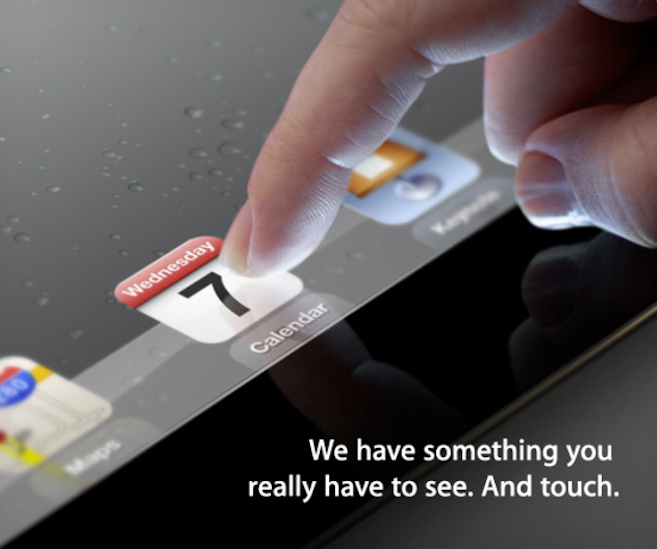
The Vergejust reported (and The Loopconcurred) that Apple sent invites for that iPad 3 introduction you have waited for, likely with tingling anticipation. The presser is March 7 at the Yerba Buena Center for the Arts in San Francisco at 10 a.m. PST. The three app icons featured on the shot hold subtle clues: The Maps icon shows an infinite loop (it is the “who,” as Apple’s address is 1 Infinite Loop); the Calendar displays Wednesday, March 7 (the “when”); and, the “what” is conveyed through the self-explanatory Keynote app icon.
This news officially exposed CNBC’s report calling for a March unveiling in New York City as grossly inaccurate. True to Apple’s form, the invite teases with an iPad close-up shot featuring a finger touching upon the Calendar icon. The tagline reads:
We have something you really have to see. And touch.
Both the wording (“something you really have to see”) and the image (can you discern the individual pixels on iPad’s display?) would appear to confirm the long-standing rumors of an ultra high-resolution Retina Display (2048-by-1536 pixels), reportedly the key selling point of the device. Also interesting is lack of the physical home button—assuming the close-up was meant to depict iPad 3 in portrait orientation. Some fans also took to Twitter to note how Apple unmistakably sent out invites just as Eric Schmidt was delivering his Google keynote talk at Mobile World Congress in Barcelona, Spain.
Our sources expect at least three next-generation iPads possibly running a dual-core A5X chip sporting an improved graphics engine. Per Apple’s naming convention, the A5X seems to be an alleged evolution of iPad 2′s A5 processor and not a major upgrade the rumored quad-core A6 chip is expected to be. Today’s announcement also reinforces claims of near-immediate availability based on sightings of iPad shipments landing at ports of multiple countries around the world.
9to5Mac will provide live coverage of the announcements as they happen.
UPDATE: Apple proved CNBC terribly wrong and officially announced that iPad 3 will be introduced at the Yerba Buena Center for the Arts in San Francisco at 10 a.m. PST on March 7. Expand Expanding Close
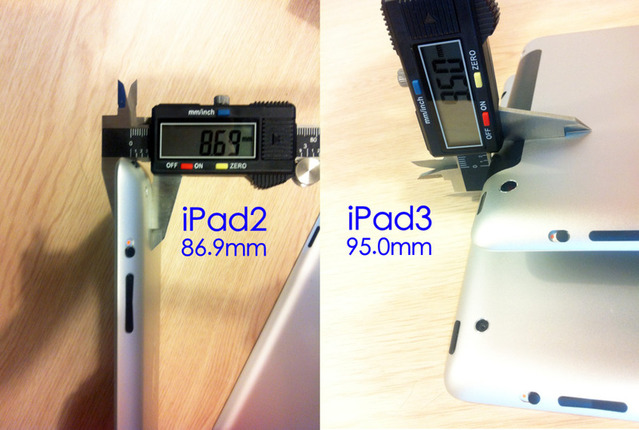
Apple.pro recently leaked spy shots of the purported iPad 3 front glass and a next-generation iPod nano with a camera on the back. Today, the Chinese blog is at it again, pointing to an image depicting the thickness of the third-generation iPad’s shell compared to the current-generation iPad 2. Resorting to a good ol’ digital caliper, the photograph reveals iPad 3 to be 9.50mm thick.
Compare this to iPad 2’s depth of 8.8mm (the original iPad is 13.4mm), and the third-generation iPad could end up a hair thicker than its predecessor could. Or, if we are really nitpicking, it is 0.81mm thicker. It would seem there is some merit to that talk of a slightly thicker iPad 3 with more tapering and narrower bezel. Apple is likely to unveil iPad 3 at a media event next March 7.
According to sources that spoke with 9to5Mac’s Mark Gurman, at least three next-generation iPads are expected. It is speculated iPad 3 would run a dual-core A5X chip with an improved graphics engine. This chip is said to be an evolution of iPad 2’s A5 processor and not a major upgrade that the rumored quad-core A6 silicon is expected to be. Near-immediate availability is being mulled for iPad 3 as shipments were spotted landing at ports of multiple countries around the world.
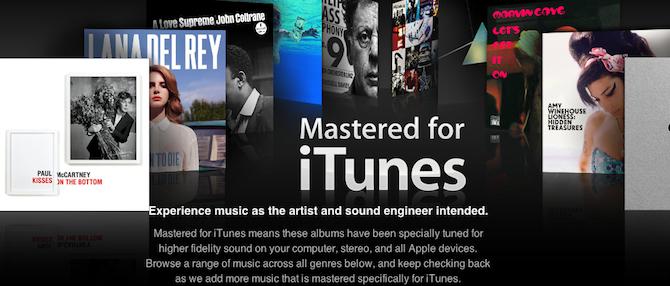
The Guardianreports that Apple is working on a new high-definition audio format to adapt to bandwidth or hardware capabilities. Presumably, Apple will leverage the new format to distribute high-fidelity music through iTunes and perhaps upgrade the iTunes Match service that currently provides matched songs in 256Kbps AAC format.
It is believed the new audio format would intelligently adjust itself to the bandwidth and storage available on the receiving device. Such a description also gives hope that an iTunes music streaming service, which is akin to Spotify and based on Apple’s Lala acquisition, could be in the works.
According to “a source with inside knowledge of the process,” the Cupertino, Calif.-based company is working with a London studio to prep existing audio files for the new format. An anonymous source told the paper:
All of a sudden, all your audio from iTunes is in HD rather than AAC. Users wouldn’t have to touch a thing – their library will improve in an instant.
Apple’s annual iPod refresh that usually takes place in fall could be a fitting venue to announce the new high-fidelity format. Another possibility is the forthcoming iPad 3 event rumored to take place March 7.
Handset maker Motorola Mobility may have found itself in an uneasy place as both Microsoft and Apple are attempting to block its $12.billion sale to Google, but the company’s marketing department is as vigorous as ever. With this week’s spotlight on the latest mobile developments showcased at Mobile World Congress 2012 in Barcelona, Spain, the Razr-maker published three provocative clips on its YouTube channel.
The videos pit the iPhone 4S-exclusive Siri feature against Android Voice Actions running on three different handsets: The Atrix 2, Photon 4G and Electrify. In each instance, Siri runs notably slower (and therefore less useful) than Android Voice Actions on Motorola’s devices.
Both Android Voice Actions and Siri need a network connection to upload audio samples of spoken queries. The cloud does the rest–speech recognition, parsing your query and beaming down the results.
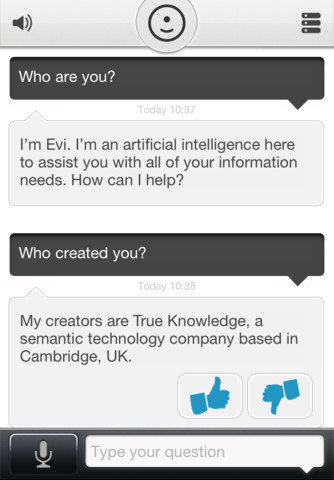
True Knowledge, the brains behind a popular Siri alternative for iOS devices, received a note from Apple that the company will shoot down the popular 99-cent download from its mobile bazaar. According toTechCrunch, True Knowledge had a call from an Apple representative on Friday evening who informed them the company was “going to pull Evi from the App Store,” citing similarities with Siri.
However, pundits point out that Evi, which couples Nuance-licensed speech recognition engine with its own core semantic search technology dubbed the “True Knowledge Answer Engine,” may pose a threat to the otherwise stellar iPhone 4S sales due to folks running Evi on iPhone 4 being uncompelled to upgrade to an iPhone 4S.
If Apple’s real motivation is similarities and not competition, then perhaps the company should take a closer look at Japan carrier NTT DoCoMo’s new project that is a Siri alternative for non-iPhones.
Evi landed last month as a Siri alternative for owners of iOS devices. The program costs 99-cents and has already raked in 200,000 downloads, proving there is a practical market for search assistants on mobile devices. It is also available on the Android Market, so the App Store removal will not affect its availability on the rival Android platform. Siri owes much of its success to Apple’s top-notch marketing and an advanced artificial intelligence engine Apple scored by acquiring SRI. Shortly upon the iPhone 4S introduction last October, Siri spanned various projects aiming to port her to older iOS devices. She has also inspired similar programs on both Android and Windows Phone platforms.
Despite what True Knowledge told TechCrunch, the app remains in the App Store, and according to sources familiar with the matter[translation: Apple off the record], Apple is attempting to work with the developers on bumping out those similarities, rather than just pulling the product. It’s apparently standard practice these days for Apple to flag something that could be confusing to end users and then try to work with developers to alter the appearance and / or functionality of the app, and we’re told that’s taking place with True Knowledge right now.
Last year, the iPhone was the best-selling smartphone in the world, and Apple re-captured the crown for top smartphone maker in the United States last quarter with an estimated one-fifth of the market. While the original arrived at $499 (remember Ballmer’s reaction?), Apple would not hit the ground running until switching to the subsidized model with the second-generation iPhone 3G. Nowadays, U.S. carriers subsidize the full price of the device with an estimated $400, so those willing to commit to a two-year contract end up paying just $199 upfront for the hardware… Expand Expanding Close
Vimeo launched its long-awaited iOS app nearly a year ago. Though the program offered a comprehensive set of editing features, it only supported iPhone and iPod touch. Today, the company introduced a new version at Mobile World Congress (MWC), an annual mobile industry trade show that runs this year from Feb. 27 through March 1 in Barcelona, Spain.
A free download from the App Store, Vimeo 2.0 is a major update bringing the much-awaited native iPad interface with full-screen playback and the ability to simultaneously watch a video while browsing other clips. In addition, the improved video editor now lets you enrich clips with music bought in the integrated Vimeo Music Store. You can also share clips, add comments and likes, view your Subscriptions, and utilize the “Watch Later” album option or browse featured channels without logging in or signing up…
Photoshop maker Adobe Systems, Inc., released a long-expected iPad companion aptly named “Photoshop Touch.” The Android version demonstrated at Maxx earlier this year and released shortly afterwards.
The first in a series of six touch-optimized apps (the other five are Collage, Debut, Ideas, Kuler and Proto), it supports Photoshop layers—arguably the basic and most-oft used Photoshop feature. With simple finger gestures, users can combine multiple photos into layered images, make popular edits, and apply professional effects. It also provides advanced selection tools and adjustments.
According to Adobe’s website, the tablet-exclusive Scribble Selection Tool lets you extract objects in an image by simply scribbling on what to keep and then what to remove. With Refine Edge technology from Adobe Photoshop, even hard-to-select areas with soft edges, such as hair, are easily captured when making selections. Photoshop Touch also plays nice with Creative Cloud—a brand new paid cloud storage service from Adobe for seamless sync of your Photoshop files between desktop and iPad.
Social sharing is also supported through Facebook or email. You can also import images from Facebook, Google Image Search, and your iPad’s camera roll. Photoshop Touch works only on iPad 2 and requires iOS 5. The app is a $9.99 download from the App Store. Photoshop Touch became available on Android devices last November.
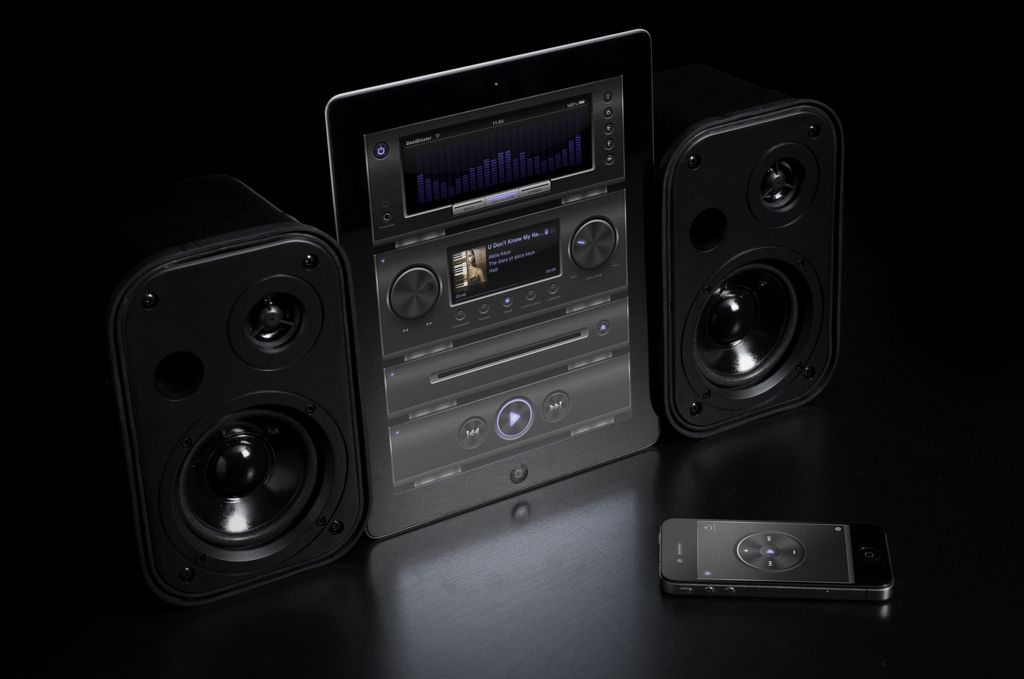
Quality music players are far and few between on the iPad—especially ones with an interesting twist. Enter BeatBlaster for iPad. Born from the collaboration between mobile conception, development agency AppConcept, and communication and design agency StagLabel, it recreates the look and feel of those old Hi-Fi sound systems with stunning graphics, head-turning design and an assortment of useful features. First up, it plays your existing music, but it also lets you access lyrics, get detailed information about the artist, and more.
Moreover, the view switches to a new mode that animates huge speaker graphics when you play a favorite song. If you are really last century, you will like a turntable mode that spins vinyl records for the right mood. We also love visually flipping through CD jewel cases in the music library—a seemingly effective solution for sorting through huge libraries. Not everything about BeatBlaster is about looks, though.
BeatBlaster for iPad works well with the free companion BeatBlaster Remote app that connects wirelessly with your tablet over Bluetooth. Why is that cool, you ask? Well, how about docking your iPad to a home stereo system to control it from across the room using an iPhone? Better yet, hook up BeatBlaster to supported AV receivers through AirPlay for true cables-free nirvana. BeatBlaster will set you back three bucks and is available now from the App Store.
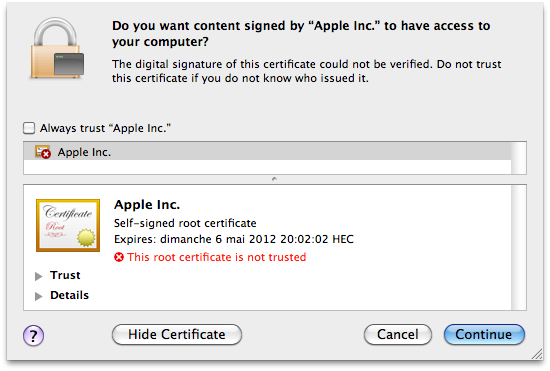
A new variant of the Flashback trojan horse called “Flashback.G” is reportedly out in the wild and able to exploit a pair of vulnerabilities found in an older version of Java run-time, according to a blog post by antivirus maker Intego yesterday. People running Snow Leopard and an older Java run-time are at high risk as the primary spreading method calls for maliciously crafted websites. When visiting such pages, the malware exploits a browser’s security settings and installs itself without any intervention on the user’s part.
Even if you use the latest Java run-time installation, the malware can still falsely report a Java certificate as signed by Apple (though it is reported as untrusted), duping naïve users into clicking the Continue button in the certificate window and letting the trojan infect the host system.
Upon infection, the trojan will suck personal data into the cloud, including sensitive usernames and passwords for Google, PayPal, eBay, and other popular websites. One possible sign of infection includes unexpected crashes in Safari, Skype, and other apps with embedded browser content.
So, how does one protect oneself from this nasty piece of software?
Apple informed customers in Germany that push email on both MobileMe and iCloud services were disabled due to the company’s patent fight with handset maker Motorola Mobility. According to a support document Apple quietly published today, “Due to recent patent litigation by Motorola Mobility, iCloud and MobileMe users are currently unable to have iCloud and MobileMe email pushed to their iOS devices while located within the borders of Germany.”
Push still works for Contacts, Calendars and other items and it is unaffected on OS X. Moreover, the affected users can still access the iCloud/MobileMe email service by manually checking for messages or using the Fetch setting. Apple also wrote the following line in the support document:
Apple believes Motorola’s patent is invalid and is appealing the decision.
As you will recall, Motorola filed an iCloud-related lawsuit on April Fools’ Day. It recently won an injunction and provided a €100 million bond to enforce it. Apple detailed how the patent suit affects the iCloud/MobileMe email service:
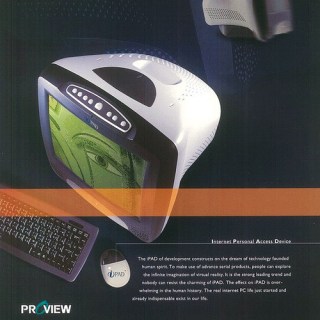
The bankrupt Chinese company that sold Apple the ‘IPAD’ name only to claim it was deceived by Apple’s secret IP Application Development subsidiary is now suing Apple in its own back yard, according to the WSJ.
The lawsuit, which was filed in the Superior Court of the State of California in Santa Clara County on Feb. 17, but previously unreported, claimed that Apple had committed fraud when it used a company set up by one of its law firms, called IP Application Development Ltd., to purchase the iPad trademark from Proview on Dec. 23, 2009 for 35,000 British pounds ($55,000).
Proview’s point of view?
In emails seen by The Wall Street Journal, a representative purportedly of IP Application Development told Proview that it wanted to acquire the iPad name because it was an abbreviation of its company’s title, and that its future products wouldn’t compete with Proview’s products.
Proview is bankrupt and its products look like cheap original iPad knockoffs (right). A judge in Shanghai denied Proview’s motion to ban sales of iPad in the city earlier today.
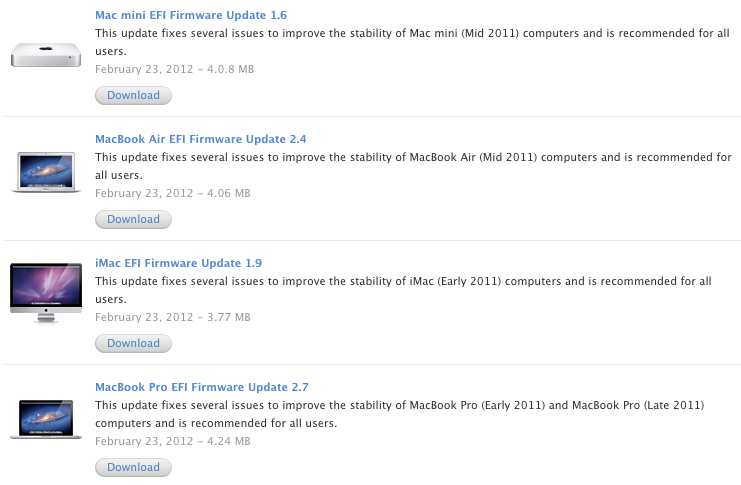
If you have any of the above machines, you might want to hit the Software Update (or manually from Apple Downloads) to get all of these wonderful improvements:
This update improves the reliability of booting from the network, addresses an issue that can prevent HDCP authentication after a reboot, and resolves an issue with boot device selection when a USB storage device is hot-plugged. Expand Expanding Close
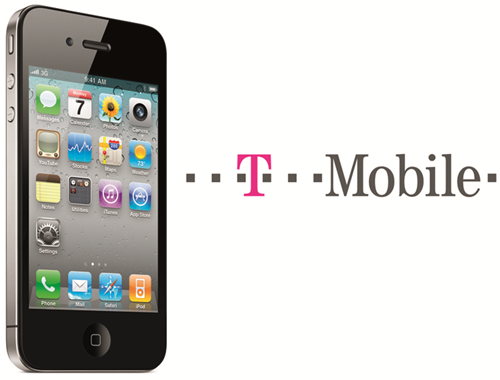
T-Mobile USA executives are talking reinvigorated challenger strategy and the carrier’s Chief Technology Officer Neville Ray (whom we interviewed last month) just confirmed that its 4G network, being deployed in 2013, “will be compatible with a broader range of devices, including the iPhone.” He also warned T-Mobile “will continue to need more AWS spectrum to support a deeper LTE rollout.” Luckily, the carrier walked away from that failed AT&T merger with not only $3 billion but also some AWS spectrum.
Basically, in addition to its 1700MHz AWS band, the carrier will also use the 1900MHz band for HSPA+. This will result in a faster 84MBps HSPA+ service and iPhone compatibility because Apple’s handset utilizes the more common 1900MHz frequency band. Following the network reconfiguration, users of unlocked iPhones should be able to enjoy true 3G HSPA+ speeds on T-Mobile USA’s network.
Chief Executive Officer and President Philipp Humm stressed he wants his company known for “4G services, 4G devices and a great 4G network.” T-Mobile will re-launch its brand at some point and reposition as the Best Value in Wireless. As for the prospect of landing the iPhone this year, Humm said there is “nothing new to report,” and he argued such a deal would require “right terms” —a notion shared by U.S. Cellular.
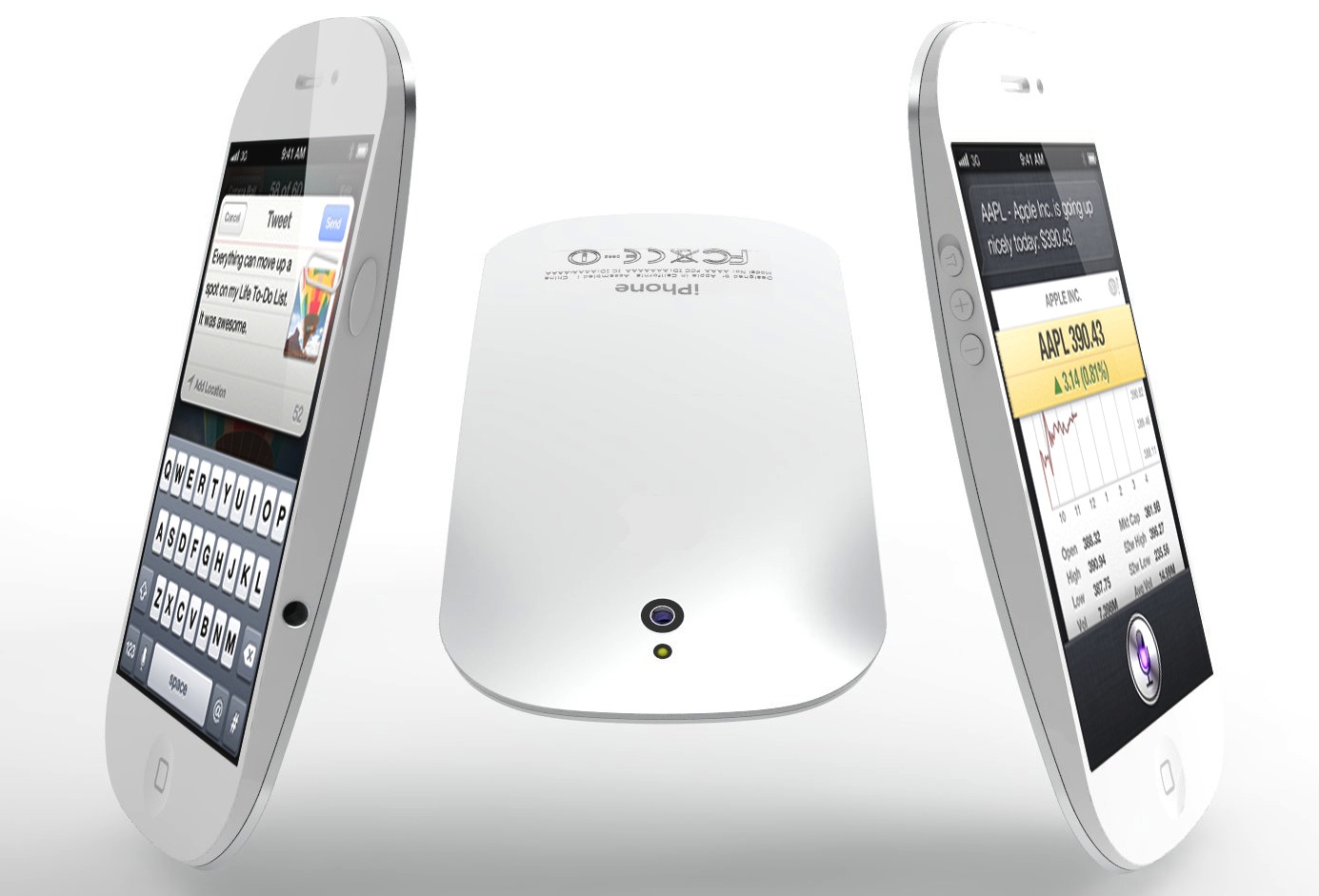
We are fans of Ciccarese Design here at 9to5Mac, even when its renderings do not closely follow Apple’s design language. The design studio’s new iPhone 5 mockup exploits a teardrop design meme in a lovely way (and as commenters pointed out, it’s inspired by the Magic Mouse). As rumormongers are well aware, a teardrop-shaped iPhone 5 was often speculated in the weeks and months leading up to the iPhone 4S launch.
The hype was in vain for Apple’s new phone, though, that turned out to be almost identical to its predecessor (at least from the outside). With all eyes now on a rumored summer (or is it fall?) unveiling of a sixth-generation iPhone, the pundits again believe the launch will mark a major design change for Apple’s phone with the biggest visual overhaul since the original iPhone.
Now, do not get us wrong: We really do not think these mockups will be accurate. For starters, how would this thing sit flat on a table? Nevertheless, the renderings are interesting and appealing and we would love to hear your thoughts, so meet us in comments. Oh, and what is with the glowing Apple logo on the back, cool or what?
The nation’s fourth-largest wireless carrier T-Mobile USA just reported it lost 802,000 contract customers during the holiday quarter, causing revenues to dip 3.3-percent to $20.6 billion. For comparison, the company reported 186,000 net contract customer losses in the third quarter of 2011 and 251,000 in the year-ago quarter. The Deutsche Telekom-owned carrier put the blame for such a huge decline in customers and mindshare on Apple’s iPhone 4S that bypassed T-Mobile to launch last October on AT&T, Verizon Wireless, Sprint and regional carriers C Spire Wireless and Claro Puerto Rico, the largest Puerto Rican telecommunications services company.
A statement from Deutsche Telekom said:
For T-Mobile USA, the past year was characterized by significant challenges, particularly in the fourth quarter, following the market launch of the new Apple iPhone model by the three major national competitors in October. […] However, not carrying the iPhone led to a significant increase in contract deactivations in the fourth quarter of 2011. […] Sequentially, the decline in branded net contract customers was driven primarily by higher branded contract deactivations as a result of the launch of the iPhone 4S by three nationwide competitors in mid-October.
The Bellevue, Wash.-headquartered firm contemplated for far too long whether to invest big bucks into 4G LTE deployment, and it clung to a hopeful merger with AT&T to solve its capital investment issues. With that deal off the table now, the company is promising to launch 4G LTE service sometime next year, tapping $1.4 billion of its own investment, re-farmed frequencies, and extra spectrum acquired from AT&T.
The embattled monitor maker Proview, fighting Apple over rights to the iPad name in China, suffered a blow as the Shanghai Pudong New Area People’s Court rejected a preliminary injunction against the sale of the iPad. This means Apple can continue selling iPads in its flagship Shanghai stores without fear (and embarrassment) of sales suspension.
The hearings are now postponed, because both companies are awaiting the results of a separate case in the Guangdong provincial high court, the Wall Street Journalreported today.
Proview had sought the injunction, saying it owns the iPad trademark in China. Apple, which contends that it previously purchased the rights to the iPad name from Proview, had applied in Shanghai to suspend proceedings on Wednesday. Ma Dongxiao, an attorney representing Proview, said the company doesn’t yet have a response.
As the Fair Labor Association inspectors interview Foxconn employees about working conditions at iPad plants, early reports coming our way are a bit ambiguous and a tad confusing. First FLA president toldReuters that plant floors are spotless, then Bloombergpublished an article claiming the organization found “tons of issues,” and finally those two video teasers (here and here) from ABC Nightline’s ‘iFactory’ documentary added ambiguity as the producers apparently “didn’t find any egregious violations.”
Knowing ABC’s parent company Disney has the Steve Jobs Trust as its largest shareholder, and considering that FLA is funded by the biggest players in the industry, including Apple who commissioned the Foxconn inspection that began last week, some watchers are speculating there must be more to this than meets the eye. Read on… Expand Expanding Close