Google’s Vic Gundotra just announced on his Google+ page a host of new Hangouts features meant to “go beyond the status update”. In short, you can now hangout on any post (an invitation will be added to the comments), call any phone number in the world and conference in anyone (free calling to US and Canada, international calling rates are “super, super low”), plus initiate a hangout session from the official Google+ iOS app by tapping the new hangout icon.
The executive also shared an interesting milestone for Hangouts on Air, saying “hundreds of people” whitelisted as part of their trial now have the ability to broadcast their hangouts to the world. “Our goal is to enable this for everyone on the planet”, Gundotra noted. You will also be able to automatically record a Hangouts on Air session and upload it to a private YouTube account for later viewing. These features require a new Google+ app, “coming soon” to the App Store. The official Google blog has more information.
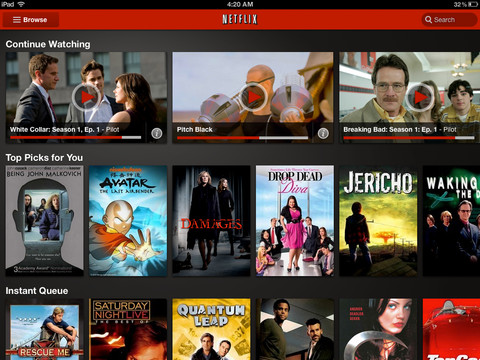
Netflix has just updated its iOS app with a nicer user interface following an overhauled Android app from a month ago. Netflix version 2.0 with a prettified appearance is now available in all regions, Netflix said, including the United States, Canada and Latin America. The new interface provides access to twice as many television shows and movies available for streaming.
Interestingly, the app is now available in Latin America for both the iPhone and iPad just as Apple announced the arrival of both the iTunes Store with iTunes Match in Latin America and Apple TV in Brazil. Netflix for iOS is a free download (a Netflix subscription is required). Video out is supported on the iPad, iPhone 4, iPhone 4S and fourth-generation iPod Touch 4G. Full release notes after the break.
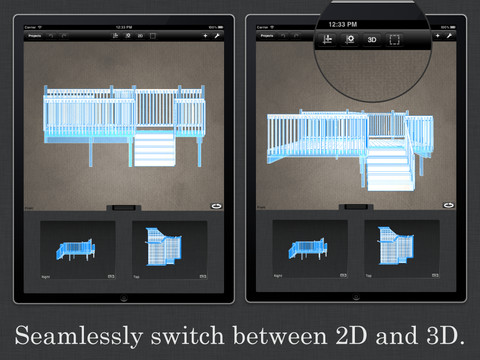
The novelty of smartphone apps may have worn off since the original iPhone but every now and then an app comes along that captures our imagination. Woodcraft for iPad ($9.99 iTunes) by software artisans at Fasterre is interesting for its novel idea and professional execution. Say you’re an amateur or pro woodworker and you want to design your next deck, bench, furniture or backyard shed on your iPad.
Niche apps like that are few and far between and Woodcraft arrives to fill the gap. It’s no toy: The program features the fully automated bill of materials, seamless switches between 2D or 3D and lets you measure distances with up to 1/64th of an inch precision.
Watching their promo clip (nice editing work, BTW) makes me wanna explore my carpenter genes (my grandpa was an adept woodworker). Woodcraft is a universal binary that supports both iPad and iPhone/iPod touch and is available in exchange for ten bucks during the launch period. Release notes right after the break.
Calcalist, a daily business newspaper published in Israel by the Yedioth Ahronoth Group (which also publishes Yedioth Ahronoth, the country’s most widely circulated newspaper) on Tuesday ran a story claiming Apple was actively engaged in talks to buy fabless flash memory chip maker Anobit for as much as half a billion dollars. In a follow-up story this morning, Calcalistreports that Apple’s senior research and development executive Dr. Edward H. Frank is already touring Israel, investigating possibilities of an Apple-run development center as numerous Silicon Valley technology giants already operate R&D centers in the country, including Intel, Google, IBM, Microsoft, Qualcomm, Broadcom, Yahoo!, eBay and China-based Huawei, to name just a few.
Apple’s Frank is a member of Carnegie Mellon University’s Board of Trustees and chairs the university’s Inspire Innovation campaign. He is apparently holding meetings with a bunch of Israeli startups who are hoping to wow the world’s most valuable technology company with next-generation solutions promising to bring flash storage prices down while substantially extending the lifespan of flash memory chips. The delegation headed by Frank has already met with executives at Intel Israel, the Calcalist story claims.
Globeschimed in with information from sources that “Apple has hired Aharon Aharon, a veteran player in Israel’s high tech industry, to lead the new development center”.
Should the Anobit deal go through, reporters Assaf Gilad and Meir Orbach write, Apple may be interested in further acquisitions of other Israeli startups specializing in innovative flash storage solutions. This includes XtremIO which develops server-based storage systems and its rival Kaminario, as well as DensBits which specializes in controller based signal processing to improve the operation of flash memory chip processors.
DensBits licenses its technology which improves flash memory chips’ reliability to about 100,000 deletions – twice that of its nearest competitor Anobit – helping reduce the prices of flash memory chips dramatically. Both DensBits’ and Anobit’s technology is believed to be licensed by many flash memory chip makers. Specifically, South Korean Hynix uses Anobit’s solution for a flash memory chip inside the iPhone 4S. Interestingly, Apple co-Founder Steve Wozniak is lead scientist for a competing enterprise SSD operation called Fusion I/O.
Ed Frank can be seen in the below clip talking about his experience at Carnegie Mellon University and how it continues to influence him today.
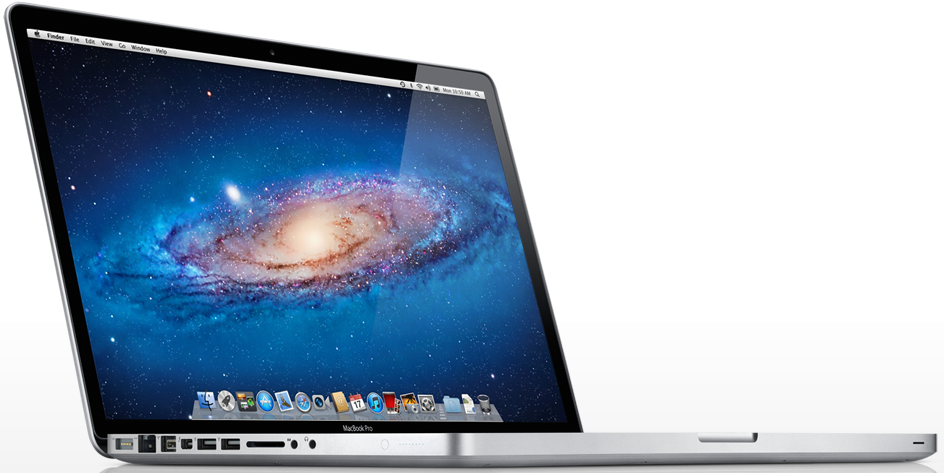
DigiTimes reports, based on “sources in the upstream supply chain”, that a next-generation MacBook Pro with a Retina-capable display sporting a 2880-by-1800 resolution could arrive in the second quarter of 2012:
While the prevailing MacBook models have displays with resolutions ranging from 1680 by 1050 to 1280 by 800, the ultra-high resolution for the new MacBook Pro will further differentiate Apple’s products from other brands, commented the sources.
The report continues asserting that Acer and Asustek Computer also plan to launch high-end Ultrabook models sporting the 1920-by-1080 pixel resolution displays versus the 1366-by-768 displays typically found on today’s Ultrabooks. The rumor might make sense as Intel’s upcoming Ivy Bridge platform natively supports displays with up to a 4096-by-4096 pixel resolution and is capable of decoding multiple 4K video streams at once. Lion also added support for 3200-by-2000 wallpapers, doubling icon resolution to 1024-by-1024 pixels and enabling HiDPI display modes.
Whoa, Microsoft is definitely on a roll today. In addition to the Xbox Live client for iPhone and the Halo Waypoint companion app for their popular gaming franchise, both of which were recently released on Apple’s iOS platform – and on top of today’s release of Kinectimals, their first-ever game for the iPhone, iPod touch and iPad, the Redmond, Washington-headquartered software giant just outed another iPhone app.
If you’re a fan of 25 gigabytes of free storage from Microsoft (a 100MB individual file limit) , Christmas definitely came early with today’s release of the official SkyDrive for iPhone . A free download from the App Store, it lets you access all of your content (including files shared with you) stored on SkyDrive cloud storage. You can also upload photos or videos from your iPhone to SkyDrive, view your recently used documents, share a link to any file using email and create/delete folders.
Microsoft over time released a couple of apps for the iOS platform, such as Windows Live Messenger and Bing for iPad. While its Office for iOS remains vapourware, the Windows maker last week released Xbox Live client for iPhone and today saw the arrival of Microsoft’s very first iOS game called Kinectimals. Available as a universal binary on both the iPhone and iPad for three bucks , Kinectimals invites you to “use your phone to visit the island of Lemuria and play with, care for and fall in love with your very own cub”.
This cutesy pet simulator is actually a port of the original Windows Phone release from two months ago, but it originally debuted on the Xbox 360. If you own an Xbox 360 and a copy of Kinectimals, you’ll be delighted to know that the iOS version lets you unlock five new cubs for the Xbox 360 version. The full blurb is right after the break.
[slideshow] Expand Expanding Close
A recent comment (originally a bit misquoted) by Eric Schmidt asserting developers will overwhelmingly prefer writing apps for Android 4.0 Ice Cream Sandwich over Apple’s iOS has resulted in some commotion among Apple watchers. His bait? Ad dollars on the Android platform. However, Android is generating an estimated$833 million in ad revenue a year for Google, at most, and two-thirds of this sum comes from iOS devices. Apple on its part paid out $3 billion to developers as of October 2011 after its customary 30 percent cut.
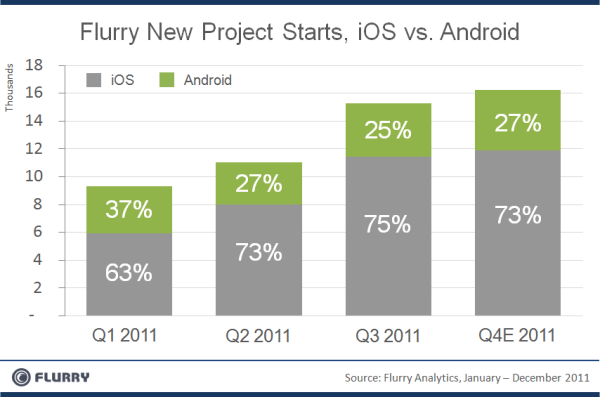
Even though Android beats iOS in unit sales, the number of devices available and activation numbers, iOS remains the most popular app environment in the world and now Flurry has some analytics confirming that app developers are betting on iOS this holiday season. Based on data gathered from 135,000 iOS and Android apps using Flurry analytics, turns out Android developers make barely a quarter of what their iOS peers are earning, or approximately 24 percent.
Flurry’s findings also beg the question of where does this leave other platforms? Well, per another report issued today by research firm NPD, iOS and Android combined represent a commanding 80 percent of the market for smartphones in the United States through October 2011, mostly at the expense of Research In Motion and Microsoft (see BGR’shandy comparison chart after the break).
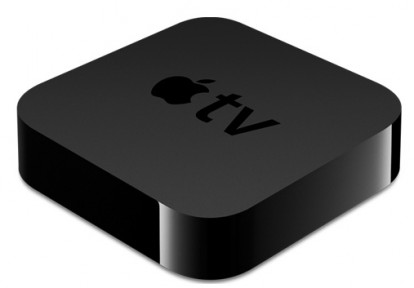
The Next Webnotes that Apple today introduced Brazil to its Apple TV set-top box. The hobby project is available in the Brazilian online Apple Store for R$ 399,00, or approximately $217 (compare this to the $99 price point in the United States). The gizmo is available now and comes with free shipping. This is the first BRIC nation to get the Apple TV (BRIC being a term for huge global emerging economies coined by Goldman Sachs). According to a Strategy Analytics analysis, Apple’s set-top box is set to capture nearly one-third, or 32 percent, of the set-top box market in the US 2011 based on projected sales of four million units. A hardware update is expected to include 1080p video output and Bluetooth 4.0 technology, among other things.
In a matter of less than two weeks, the Carrier IQ controversy blew up and became the mainstream topic in national newspapers and evening newscast. The idea that over a hundred million cell phone owners weren’t aware of an app that secretly collect personal information without their consent has had privacy advocates cry foul.
Making the privacy scare even more scary, The Federal Bureau of Investigation refused to release information about its own use of Carrier IQ in response to the request under the Freedom of Information Act filed December 1 by Michael Morisy. David Hardy, who’s with the Bureau, replied:
The material you requested is located in an investigative file which is exempt from disclosure. I have determined that the records responsive to your request are law enforcement records; that there is a pending or prospective law enforcement proceeding relevant to these responsive records.
That the agency wasn’t forthcoming to Morisy’s request to release any manuals and documents outlining their use of data gathered by Carrier IQ only serves to underscore the lack of transparency on their part, if not a waste of taxpayers’ money. That’s not to say that Big Brother is monitoring your calls or eavesdropping on your messaging all the time, but the Bureau clearly has had this capability for a long time and could be working with Carrier IQ to downplay the media outrage.
UPDATE: Carrier IQ reacted to the FBI statement, tellingVentureBeat it doesn’t don’t give your data to the FBI or any other law enforcement for that matter. “Just to clarify all of the media frenzy around the FBI, Carrier IQ has never provided any data to the FBI”, a company spokesperson said.
As we repeatedly stressed, Carrier IQ is the mobile industry’s worst kept secret. Carrier IQ CEO Larry Lenhart and vice president of marketing Andrew Coward sat down withAllThingsD’s John Paczkowski to discuss the controversial data mining software. In damage control mode, the two executives pretty much admitted to Carrier IQ’s keylogger-like capabilities and sucking your SMS messages into the cloud…
People have been wondering what should Apple do with its cash hoard since the dawn of time and the company’s silence on the matter has only fueled speculation and increased pressure on the new CEO to pay a cash dividend, which they had stopped doing in 1995. If TechCrunchis to be believed, which relayed a Calcalistreport in Hebrew, Apple is going to spend between $400 and $500 million to acquire Anobit, a fabless flash memory chip maker based in Israel.
To put this in perspective, the Anobit acquisition would be bigger than any since the 1997 purchase of NeXT for $404 million that brought back Steve Jobs. Anobit specializes in flash storage solutions for enterprise and mobile markets and making them cheap and reliable using its proprietary MSP technology (which stands for ‘Memory Signal Processing’). MSP lets Anobit engineer more reliable flash memory chips with significantly longer usable life.
Anobit’s list of clients isn’t public, but the Calcalist report claims Apple is a client:
Apple is hiring dozens of talented people on a daily basis, but this one deserves your attention. Jan-Michael Cart, a mass media arts student from Georgia, is the brains behind a bunch of very insightful iOS interface concepts you’ve likely seen on the web, as noted byiPhoneinCanada.ca. This includes the notification center and application switcher mockup videos below.
As Apple is always on the lookout for young blood, Cart’s work caught the company’s attention and they decided to hire him as an intern, he announced in a blog post:
Soon I will be embarking to California, where I will be interning at a fruit company for seven months. I will be updating this to chronicle my adventures and misadventures in the Bay Area for my family, friends, and followers online. Stay tuned, I leave in less than a month!
“And like that, my time has come — I am now a member of the Apple community”, he confirmed on the front page of his personal web site. Congrats to Cart on his new gig! We sure are looking forward to seeing some of his great concepts implemented in iOS.
Heck, even the BlackBerry maker Research In Motion hired the Astonishing Tribe design shop to make the PlayBook tablet’s operating system aesthetically appealing. Watch Cart’s Dynamic Icons and Speech Recognition user interface concepts right after the break and don’t forget to check out his YouTube channel.
Earlier today, Mark Tweeted the amusing new file Apple put in iOS 5.1 beta 2 which includes a lot of silly references to devices that don’t exist. This isn’t entirely new – Apple had done this to another file in iOS 5.1B1.
As you’d probably expect, it isn’t going to stop developers from finding the special sause inside iOS 5.1B2. That doctored file is a high level file which is easily found. Developers which we are in contact with are already digging through the lower level stuff which remains the the feeding grounds for useful information. Expand Expanding Close
Walter Isaacson signing books in Times Square | Photo: Tanner Curtis
We noted last week that Walter Isaacson’s Steve Jobs biography published by Simon & Schuster became Amazon’s best-selling book of 2011, but that included just sales of the dead trees version. Print sales do not, however, paint an accurate picture because Kindle e-books are now outselling hardcover and paperback editions combined, prompting Amazon to include Kindle books into the rankings.
The company this morning issued a press release stating that the biography of Apple’s late co-founder broke all records to become the best-selling book of 2011 – just 50 days following the October 23 release. It’s not just Amazon, the book also topped Customer Favorites chart on Amazon and is #2 on Audible.
The exclusive biography is also a top-seller in the Non-fiction category on Apple’s iBookstore, where it can be yours for fifteen bucks. It’s also available as a digital download from the Kindle store. It did not fare as well on Barnes and Noble however, only garnering a #34 ranking of NookBooks. Go past the fold for Amazon’s list of Top 10 best-selling books overall.
Apple just issued a press release announcing that its App Store mobile bazaar now carries over half a million apps for the iPhone, iPod touch and iPad. Additionally, customers have downloaded apps from the Mac App Store over a hundred million times. The App Store has passed over eighteen billion downloads since its inception and continues to clock more than a billion downloads a month.
An Apple spokesperson confirmed to The Loop’s Jim Dalrymple that Mac App Store downloads don’t include Lion, updates or downloads to other Macs. Apple CEO Tim Cook said at the October 4 iPhone 4S introduction that they were approaching 60 million Mac users worldwide and that Mac OS X Lion had been download from the Mac App Store over six million times. The press release quotes Apple’s head of worldwide marketing Phil Schiller:
In just three years the App Store changed how people get mobile apps, and now the Mac App Store is changing the traditional PC software industry. With more than 100 million downloads in less than a year, the Mac App Store is the largest and fastest growing PC software store in the world.
The statement also features quotes from Autodesk and Pixelmator, developers who saw tremendous success with their iOS and Mac offerings. AutoCAD in late-August 2011 made its Mac App Store debut, along with companion iOS apps on the App Store such as the free AutoCAD WS app for iPad and iPhone or sketchbook for iPhone, a pro-grade paint and drawing app that recently raked in fourteen million dollars, or about $9.8 million after Apple’s customary thirty percent cut.
Pixelmator, a popular image editing program, was recently updated to version 2.0. This nifty Photoshop alternative is being exclusively distributed on the Mac App Store and in no time proved one of the most popular downloads on the store. The success has prompted Apple to name Pixelmator the Mac App of the Year in the iTunes Rewind 2011 charts released last week.
AirPlay, a proprietary protocol by Apple allowing for worry-free wireless streaming of audio, video, photos and related metadata between certified devices, is about to gain an enhanced support for the wireless Bluetooth standard via a new chip, Japanese blog Macotakarahas learned. Apple apparently announced the new certification chip at a Shenzen, China conference organized for two thousand members of their MFI (Made For iPhone/iPad/iPod) program. The company is aiming to expand the market for wireless iOS accessories by a factor of seven by taking the IAP via Bluetooth (iPod Accessory Protocol) – first implemented in iOS 5 – to the Bluetooth 4.0 heights.
The new piece of silicon will enable future wireless accessories certified for use with the iPod, iPhone or iPad to stream content to and from a host iOS device using Bluetooth 4.0 connectivity, in addition to WiFi AirPlay support. AirPlay over Bluetooth mitigates the need to connect to a WiFi network when AirPlaying your music, photos and movies. This feature comes into play when traveling, for example, or using your device in areas with no WiFi connectivity.
AirPlay already features a limited support for Bluetooth in that it can stream audio using the AD2P protocol. Apple has become a member of the Bluetooth Special Interest Group board of directors back in June so they’re in a position to influence the development of the Bluetooth wireless standard.
Taking into account that Macotakara has had its share of misses in the past, this development really makes sense. iPhone 4S is the first handheld device from Apple to feature support for the new Bluetooth 4.0 wireless standard. It lets the handset connect to the mid-2011 MacBook Airs and Mac minis and future Bluetooth Smart Ready devices at an extremely low-power and low latency mode up to 50 meters away.
Instead of taking up to six seconds to pair like current Bluetooth implementations, Bluetooth 4.0 takes just six milliseconds – virtually instantly. This opens up a whole new world of possibilities. Think beyond Bluetooth headphones acting as an iPhone camera trigger.
One awesome possibility is the addition of Bluetooth 4.0 to the iPod nano. Low latency is especially important for gaming and healthcare accessories, so expect some big strides in those markets. Bluetooth 4.0 should also help reduce the lag when using the AirPlay mirroring feature in iOS 5 which lets you stream whatever is shown on your iOS device to your television set through the Apple TV set-top box. That’s only scratching the surface, though…
Seems to be Beatles day at Apple. Earlier, we noted the iBookstore offering an enhanced iBook version of The Beatles Yellow Submarine (also worth noting: in the credits at the top it says ‘For Steve’).
A few minutes ago, the above ad appeared in Apple’s YouTube feed.
We’re not quite sure why Samsung is adamant on insulting its potential future customers (you will be in the market for a new refrigerator or a washing machine at some point), but here it is: A new Galaxy SII commercial that exploits the line waiters theme first seen in last month’s commercials and bashing on Facebook. The new commercial once again depicts Apple fans queued up for a new iPhone.
“You guys are still here?”, the Samsung dude asks, before laughing them off by insisting his Galaxy SII keeps all his content – and specifically music – in the cloud. “I have all my playlists right here, my music streams from the cloud and I have tons of places to buy my music”, he says to his iPhone-toting friends who stare at his device in bewilderment.
As you know, Apple’s been heavily advertising the iOS 5 software and iCloud/iTunes Match music locker in the cloud. As for Samsung, they are “excited for the opportunity to educate as many consumers as possible about why the Samsung Galaxy S II is the preferred choice for smartphone owners”. Feel free to share your thoughts in the comment section.
An incredible new Apple store inside New York City’s landmark Grand Central Terminal – one of Apple’s largest stores in the world – is set to open this morning at 10am and already hundreds have queued up. The Fortune’s Philip Elmer-DeWitt snapped up the above shot showing staffers on the balconies above Grand Central Terminal and hundreds of fans stretching all the way down one track and part-way back.
The company will treat avid fans to cool perks, such as 4,000 black shirts with “Apple Store, Grand Central” spelled out in lettering, resembling a train arrival board. The Mac maker also posted the below press shot on its PR site. A dedicated page for the 23,000-square-foot store on Apple’s web site reveals the store work hours Monday through Friday from 7am to 9pm, 10am to 7pm on Saturdays and on Sundays from 11am to 6pm. Here’s a glimpse of the excitement.
The store’s extended holiday hours plus another video are right after the break. Our own Seth Weintraub is on hand so stay tuned for more updates, coming soon.
Today is a bad day for Apple’s legal sharks. First Motorola Mobility scores a ruling in Germany which has paved the way for a Europe-wide injunction on sales of Apple’s iOS devices and now High Court in Australia denies Apple’s request to appeal against an earlier decision which overturned the ban on Galaxy Tab 10.1 sales in Australia.
Put simply, the country’s highest-level legal instance has ruled that no, Samsung’s tablet does not “slavishly copy” Apple’s iPad, as the Mac maker argues in court documents. The Federal Court honored Apple’s recent request that its injunction against the Samsung tablet remain in effect until today at 4pm in order to allow Apple time to prepare an appeal.
According to the Sydney Morning Herald, Tyler McGee, vice-president of telecommunications for Samsung Australia, said customers in Australia will be able to pick up the Galaxy Tab 10.1 tablet “towards the latter part of next week”. Also…
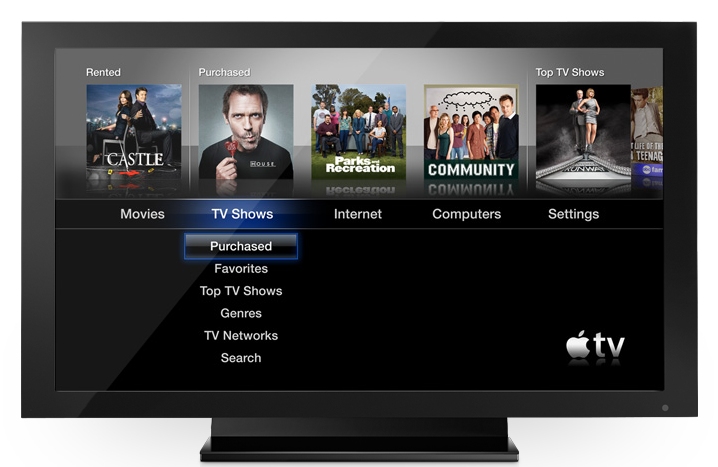
Just two days after Wednesday’s release of an updated software for the Apple TV set-top box that brought the new TV Shows menu option, we’re hearing Apple pulled that option from the device’s menu, reportsiPhoneinCanada.ca. Originally, the firmware update (which was deployed silently) added the new TV Shows choice to the Apple TV main menu.
However, it doesn’t work as iTunes Canada users report being unable to purchase television shows. For some, the TV Shows menu option disappeared on its own 24 hours following the firmware update. Others report that the option gets deleted from the main menu upon choosing it. It could also be a software glitch rather than a deliberate move on Apple’s part and there’s already a thread on Apple’s support discussions forum.
Chronic Dev Team is putting finishing touches on what is set to become the world’s first untethered jailbreak solution for iOS 5 and 5.0.1. Team member and French hacker pod2g just released this video showing off the jailbreak, which appears to be near-complete and functioning properly.
Unlike tethered, untethered jailbreak does not require that the device be connected to a computer each time it needs to be booted. It appears you won’t be able to untether with iOS 5.0.1 using Chronic’s tool, but pod2g did confirm that the iOS 5 untether will work on iOS 5.0.1:
Tons of questions from my nice followers. Too early to answer. Will work on iOS 5.0.1, will try iPad 2 and 4S after others are ready.
UPDATE [Friday, December 9, 2011 at 12:45am ET]: The article has been updated with statements from Motorola and Apple, found at the bottom.
Motorola Mobility this morning scored a major win in Germany as the Mannheim Regional Court ruled against Apple in one of the patent infringement lawsuit that the maker of the Razr phone filed against the Cupertino firm in April of this year. Interestingly, Motorola’s counsel Quinn Emanuel also beat Apple’s motion for a preliminary injunction against Samsung products in the United States and is representing Motorola in an iCloud-related lawsuit which was filed on April Fools’ Day.
As part of the ruling, first reported by the FOSS Patents blog, Motorola won an injunction against Apple products that infringe on Motorola’s wireless patents, which includes the original iPhone, iPhone 3G, iPhone 3GS, iPhone 4, the original iPad 3G and iPad 2 3G. The court decision follows a default judgment against Apple last month, scheduled to be discussed again in early February.
The ruling involves the European Patent 1010336 (B1) patent – the European equivalent of the U.S. Patent No. 6,359,898 – which covers a “method for performing a countdown function during a mobile-originated transfer for a packet radio system” and was declared essential to the General Packet Radio Service (GPRS) standard. This is the first “substantive ruling” as the injunction is “preliminarily enforceable” against Ireland-based Apple Sales International in exchange for a bond unless Apple wins a stay, FOSS Patents explains.