Android

See All Stories

Siri vs S-Voice on Samsung’s Galaxy S III

Site default logo image

[youtube=http://www.youtube.com/watch?feature=player_embedded&v=X9YbwtVN8Sk]

The Verge recently went hands on with Samsung’s new flagship Galaxy S III launched earlier this month and during its review put the device’s new Vlingo-powered “S-Voice” feature up against Siri on the iPhone 4S. Other than the striking resemblance to Siri’s UI and canned responses, the first thing we notice is Siri appears to be much quicker than S-Voice running on the Galaxy S III.

When asked “Who is the president of France”, Siri quickly asks to search the web, while S-Voice takes a little longer but comes up with the correct answer. However, in most scenarios, both Siri and S-Voice request to search the web for the majority of the same queries. You’ll also notice S-Voice has no problem keeping up with Siri when scheduling appointments, but both have some of the same issues understanding The Verge’s commands.

S Voice consistently chews up my words when I try asking it questions, although it works better when instructed to schedule an appointment or set an alarm. It can also be used as an unlocking mechanism once you pre-record a pass phrase. That adds to the face unlocking option that’s native to Android 4.0 in being frustratingly unwieldy and planted firmly within gimmick territory — more than once I was stuck repeating “hello” without any recognition from the phone.

While we don’t have all of the info on S-Voice, we know it is using voice recognition technology from Vlingo, the same as the previous Voice Commander feature for the Galaxy S II. Last December Nuance acquired Vlingo. It’s no secret Apple is currently using Nuance to power speech in Siri, and Siri co-founder Norman Winarsky told us in October that Siri originally used Vlingo, but that Nuance has by far the most IP in speech synthesis technologies”. However, he also noted Apple could likely easily replace Nuance if something better was available.

Expand
Expanding
Close

Site default logo image

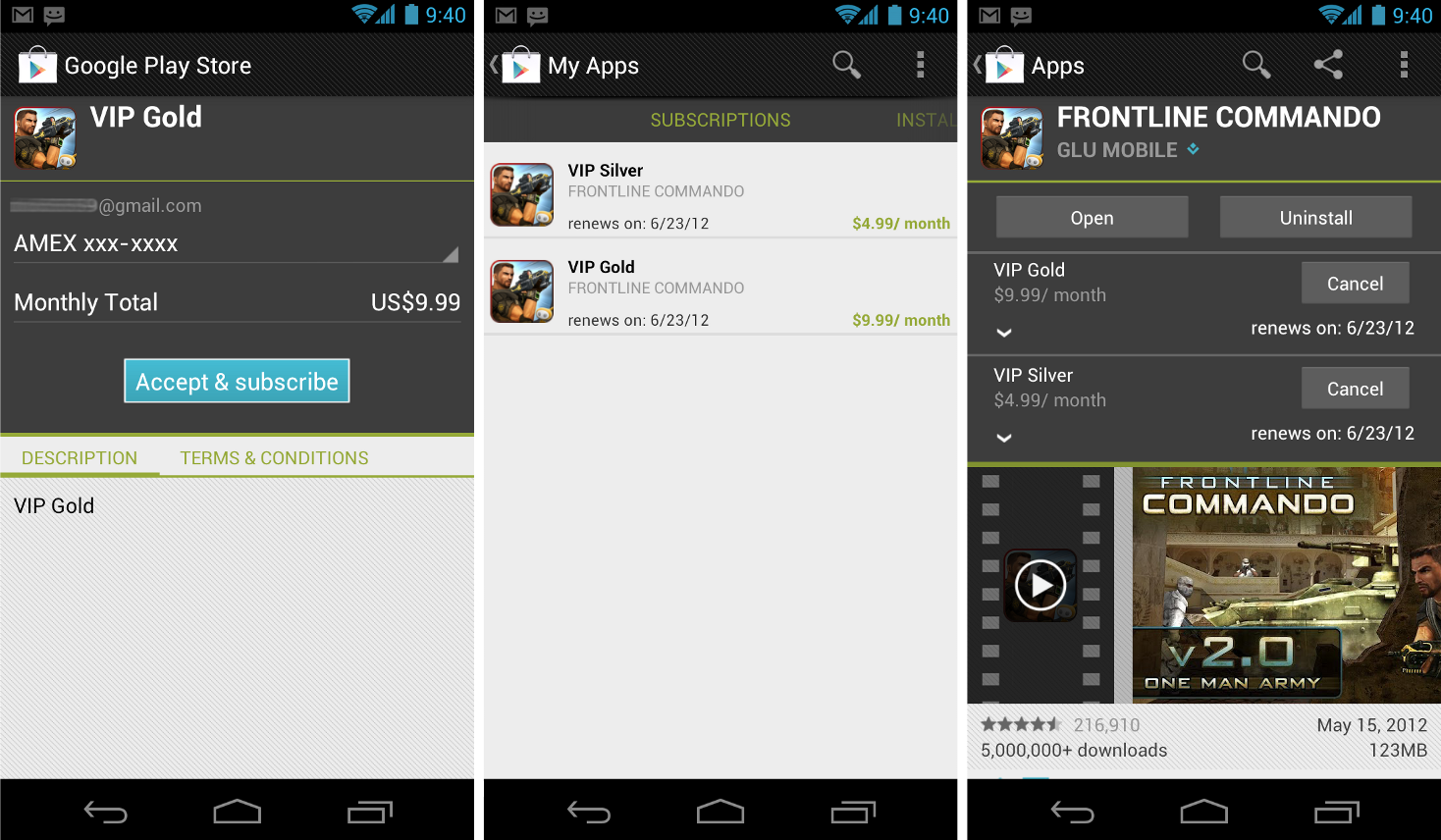
Google follows in Apple’s footsteps, opens in-app subscriptions for Google Play apps

Apple unveiled in-app subscriptions for all App Store apps over a year ago, and now Google has announced the same feature today for Google Play apps. The feature is available immediately to users and developers alike for all content-based apps like magazines, newspapers, video, music, and any other type of recurring service that a developer could monetize.

Get the full story at 9to5Google.


Expand
Expanding
Close

Site default logo image

Samsung & Apple take half of global smartphone market, Android & iOS hit 80 percent

Research firm Gartner released its numbers today for “Worldwide Mobile Device Sales” during Q1 2012. There are not many surprises in the report when it comes to Apple, but Gartner estimated Samsung sold 38 smartphones during the quarter, which is less than the 42.2 million estimated by IDC earlier this month and more than the 32 million by IHS iSuppli. With Apple confirming 35.1 million iPhones sold during the quarter, Gartner’s numbers put Samsung as the both the No. 1 smartphone and overall mobile device vendor. The report also noted Samsung and Apple together accounted for 49.3-percent of the global smartphone sales, which is up from just 29.3 percent in Q1 of last year:

“The continued roll-out of third generation (3G)-based smartphones by local and regional manufacturers such as Huawei, ZTE, Lenovo, Yulong and TCL Communication should help spur demand in China. In addition, the arrival of new products in mature markets based on new versions of the Android and Windows Phone operating systems (OSs), and the launch of the Apple iPhone 5 will help drive a stronger second half in Western Europe and North America. However, as we are starting to update our market forecast we feel a downward adjustment to our 2012 figures, in the range of 20 million units, is unavoidable.”

On the platform side, Gartner’s report estimated both Android and iOS accounted for 79 percent of global smartphone sales—up from just 53.3-percent in Q1 2011. Of that 80 percent, Android grabbed 56.1-percent, which is slightly higher than the 51 percent of the United States market, according to estimates from comScore earlier this month. Apple took in the remaining 22.9-percent, which is less than the 30.7-percent comScore estimated for the U.S. market:

Gartner analysts said the smartphone market has become highly commoditized and differentiation is becoming a challenge for manufacturers. “At the high end, hardware features coupled with applications and services are helping differentiation, but this is restricted to major players with intellectual property assets. However, in the mid to low-end segment, price is increasingly becoming the sole differentiator. This will only worsen with the entry of new players and the dominance of Chinese manufacturers, leading to increased competition, low profitability and scattered market share.”

Site default logo image

Report: Apple sold 7.25 million iPhones in Japan during 2011 as No.1 smartphone vendor

According to a report from research firm MM Research Institute translated by Japanese blog Macotakara, iPhone sales in the Unites States during fiscal year 2011 hit 7.25 million units:

Research Institute released “General situation of mobile handsets shipment in Japan at 2011”.  According to this MM Research Institute report, the number of iPhone sales reached 7.25 million units in Japan at 2011.

Amount of shipment of cell-phone was 42.74 million, which was 13.5% bigger than 2010, and smart-phone sales was 24.17 million in amount. In this market, Apple occupied 7.25 million (17% of all mobile phone sale) and got 2nd position by handset maker.

Focusing on smartphone market, Apple got 1st position as 30% share by handset vendor. Androids got 69% share by platform, and iOS got 30%.

As of the latest numbers from comScore, Apple’s growth in Japan outpaced Android during the three-month period ending February 2012 to take 34.2-percent of smartphone subscribers.

Site default logo image

Google plans to copy Apple and develop Game Center-like app

Apple introduced Game Center, an online multiplayer social gaming network, in 2010 that allows app users to invite friends, start multiplayer games, track achievements, and compare scores on a leader board, and now reports claim that Google is looking to copy Apple by creating a similar system for Android.

While not naming any sources, Business Insider claimed Google is developing a native Android app similar to Game Center, but the publication detailed Apple’s offering as “an app on the iPhone that connects players in most of Apple’s iOS games.” However, that description is selling the network short. Game Center comes standard with the current iOS, and Apple announced in February that the service would soon integrate with Mountain Lion, which is set for a late summer 2012 release (image, above).

Google’s flavor will allegedly include a social-based achievement system, as well as a leader board. The similar client would poise Google as a legitimate contender in the exploding mobile games market. Developers who build Android games use a variety of third-party solutions, like the iOS-compatible OpenFeint, but Google wants to create its own native app in the wake of Apple’s popularity with gaming.

Read the full story at 9to5Google. 


Expand
Expanding
Close

Facebook announces App Center for all platforms and devices

Site default logo image

Facebook just announced that it is launching a new App Center—but it is not just for Facebook apps.

9to5Mac reported for months that Facebook’s CEO Mark Zuckerberg and company were planning a web-based alternative store to Apple’s App Store and Android’s Google Play dubbed “Project Spartan.” Speculation said the project is a framework for apps that would use social hooks, while working inside of Facebook’s ecosystem.

It seems those reports are ringing true, because the highly-anticipated HTML 5-based App Center will give Facebook users access to iOS, Android, web, mobile web, and desktop apps. Interestingly, Facebook reiterated that it is not competing directly with Apple or Google, because the App Center will send users to both the iOS and Android platforms. For example: If you are visiting Facebook’s App Center on an iPhone, and then enter Words with Friends, or one of the many Facebook-compatible games, you will soon beam to that app’s App Store page for installation. The same holds true for Android users.

“In the coming weeks, people will be able to access the App Center on the web and in the iOS and Android Facebook apps. All canvas, mobile and web apps that follow the guidelines can be listed. All developers should start preparing today to make sure their app is included for the launch,” explained Software Engineer Aaron Brady in a Facebook Developer’s blog post.


Expand
Expanding
Close

Site default logo image

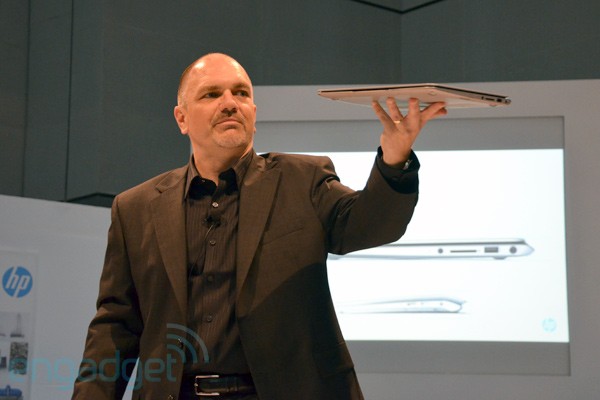
HP addresses Apple-like laptop design, tells fanboys it didn’t copy

HP’s Vice President of Industrial Design Stacy Wolff discussed his company’s current design philosophy in Shanghai today and claimed its laptop styles were developed by research centers across 11 different cities. Despite his anecdotes, Engadget said one journalist asked Wolff if he feared being sued, because the new Envy Spectre XT looks strikingly like Apple’s MacBook Air. 

The V.P. simply replied:

“I would go back to the TC1000 [Tablet PC] from about 10 years, and that’s a tablet. I think if you look at the new Spectre XT, there are similarities in a way, not due to Apple but due to the way technologies developed. Apple may like to think that they own silver, but they don’t. In no way did HP try to mimic Apple. In life there are a lot of similarities.”

Oh, but it does not end there: Wolff even addressed fanboys’ reaction to HP’s Apple-esque design approach:

“Yeah, fanboys are wonderful, right? You guys gotta be my fanboys, come on. [Laughs] I think the big thing for me is that we’re doing what’s right for the customers, so one of the things is by going with the isolated island style of keyboard, there’s only so many ways to do it, right? If I put it on a black surface you’d go, ‘Oh you didn’t copy.’ If I put it on a silver surface, ‘Oh you’re copying.” How can that be? You know, it’s a change of color, there’s no intent to mimic or to follow. What you have is a common theme of island style keyboard, use of silver, wedge design. So if I measure things on a macro level, well, you know, maybe you can judge it that way. I don’t.”


Expand
Expanding
Close

Site default logo image

RIM announces new COO, CMO following anti-Apple ‘Wake Up’ reveal

[youtube=http://youtu.be/Ldq2tNLRDwA]

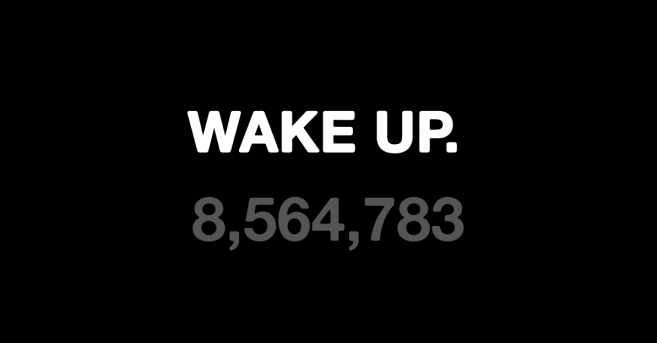
The big May 7 uncloaking that revealed Research in Motion is behind the seemingly anti-Apple “Wake Up” flash mob from last week occurred on schedule, but not too many people appeared to care as the steam from the confusing campaign already ran its quick course.

The “Wake Up. Be Bold” marketing scheme unveiled yesterday at wakeupbebold.com by BlackBerry Australia & New Zealand, and it included a Star Wars-like running script read aloud by a narrator prompting viewers and listeners to “Wake up.” Now, less than 24 hours after the brains behind the campaign came to light, RIM announced a newly appointed Chief Operating Officer and Chief Marketing Officer—Kristian Tear and Frank Boulben, respectively.

Tear joins RIM from Sony Mobile Communications, where he served as Executive Vice President, and Boulben is the former Executive Vice President of Strategy, Marketing, and Sales for LightSquared.

More information about the fledging company’s new executives is available in the presser [here].


Expand
Expanding
Close

Site default logo image

NPD: iOS plummets to 29 percent of total US smartphone sales in Q1

Apple’s iOS United States smartphone market share slide 12 percent in the year’s first quarter, which helped Google’s Android to capture nearly two-thirds of the market.

According to CNET, market research firm NPD Group placed Android’s U.S. market share at 61 percent, which is a dramatic gain from the holiday quarter’s 49 percent.

Meanwhile, Apple’s iOS slid from 41 percent in Q4 2011 to 29 percent in Q1 2012. It is assumed Apple’s October iPhone 4S launch boosted the holiday sales, but Android eventually reclaimed its Q3 2011 crown once the new year settled.

It is worth mentioning that advertising research company Neilsen measured the two smartphone OS manufacturers in March and placed Android at 49.5-percent and iOS at 32 percent for Q1 2012.

This article is cross-posted on 9to5Google.


Expand
Expanding
Close

Samsung announces Galaxy S III with S Voice and a bunch of other iOS features

Site default logo image

[youtube http://www.youtube.com/watch?v=2lpLGb1WW8E&hd=1]

Samsung announced the Galaxy S III today at the Unpacked event in London. Apple’s biggest competitor in the smartphone space, and the only other manufacture making any significant profit, showed off the upgraded 4.8-inch 720P SuperAMOLED display device that now weighs 133 grams among other minor spec improvements.

A few of the features shown off were S-Voice, which is like Siri, Scan and Match for Music (iTunes Match), and Airplay-like “AllShare Cast” for streaming content to your HDTV through the AppleTV-like AllShare Cast Dongle.  Samsung also named its iPod nano-like music player “Pebble,” which bears a resemblance to the iOS Kickstarter watch that goes by the same name.

One cool new thing is a face recognition photo app. It lets you instantly send pictures to your friends that it recognizes in your pictures. The S III also has a pop-up player, which is sort of an app version of picture-in-picture that allows you to watch a movie while you switch around to other applications.

Initial reviews seem a little luke-warm on the device. Most call it an incremental update from the S II with new features that also brought some new flaws.

Oh, and Phil Schiller will not like this news: Flipboard for Android is debuting on the S III.


Expand
Expanding
Close

IDC: iPad’s all-purpose functionality allows it to trump content consumption Android devices

Site default logo image

The iPad is more than just a content-yielding eReader, and consumers are finally making the distinction.

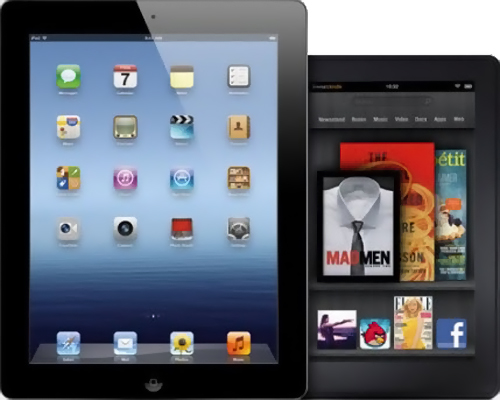
Analytics firm IDC released new data today illustrating Apple’s global tablet market share having increased dramatically from 2011’s holiday quarter. The firm accredited the iPad’s success to its all-purpose functionality that outshines Android devices’ content.

The iPad rose to 68 percent in Q1 2012 from 54.7-percent in Q4 2011. Apple’s 13.3-percent gain is attributed to the Kindle Fire’s staggering 12.8-percent drop to 4 percent in Q1 2012.

IDC’s Mobile Connected Devices Research Director Tom Mainelli explained the market share differences:

“Apple reasserted its dominance in the market this quarter, driving huge shipment totals at a time when all but a few Android vendors saw their numbers drop precipitously after posting big gains during the holiday buying season. […] Apple’s move to position the iPad as an all-purpose tablet, instead of just a content consumption device, is resonating with consumers as well as educational and commercial buyers. And its decision to keep a lower-priced iPad 2 in the market after it launched the new iPad in March seems to be paying off as well.”


Expand
Expanding
Close

Site default logo image

Parallels app is now iPad Retina-optimized with iOS 5 compatibility

The app that lets users wirelessly access their Mac applications and Windows programs on-the-go, while running Parallels Desktop for Mac, was just updated to version 3.1.530.

Parallels Mobile allows users to remotely control all the software on a computer from an iOS device, but today’s upgrade includes iOS 5 compatibility and new iPad optimization. It also offers support for international keyboard layouts when working in Mac applications, fixed scrolling in Mac and Windows, and a host of other improvements.

The app requires Parallels Desktop for Mac version 6 or 7 (Amazon currently offers v7 for $62), but 9to5Mac found Parallels Desktop 7 to be a huge leap ahead of its predecessor. This is especially true for Lion users that want to run the odd Windows app, try Windows 8, or for devs that just want to run another instance of OS X.

Parallels Mobile is $4.99 in the App Store.


Expand
Expanding
Close

Apple posts growth among OEMs in March, as iOS and Android capture 80 percent of US market

Site default logo image

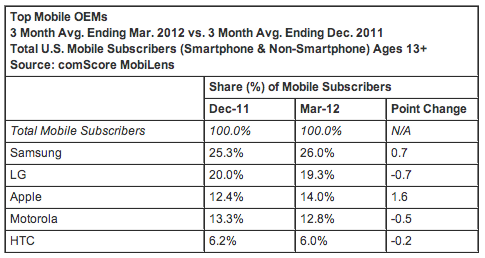
Following IDC’s report this morning that highlighted Apple’s continued growth among mobile phone marketshare worldwide, while coming second to Samsung in global smartphone marketshare, research firm comScore just released its numbers for United States mobile subscribers for the three-month period ending March 2012.

According to comScore, Apple posted impressive growth during the quarter with 30.7-percent marketshare among smartphone platforms in the U.S (up from 29.6-percent). Increasing from 47.3-percent in December 2011 to 51 percent in March 2012, Android was able to grab the top position for platforms during the quarter. Growth for Android and iOS continues to come at the expense of RIM. The company grabbed just 12.3-percent of the platform market in March, which is down from 16 percent in December 2011. Microsoft also lost marketshare with 3.9-percent, which is down from 4.7-percent…

Expand
Expanding
Close

Site default logo image

Skype iOS apps updated with UI enhancements and fixes

Update:  Skype’s Director of product security Adrian Asher issued a statement to 9to5Mac regarding the “User IP-address Disclosure” method of obtaining a Skype user’s IP address as detailed below:

We are investigating reports of a new tool that captures a Skype user’s last known IP address. This is an ongoing, industry-wide issue faced by all peer-to-peer software companies. We are committed to the safety and security of our customers and we are takings measures to help protect them.”

The Skype iOS apps were both been updated today bringing one new feature: “The ability to move own video preview.” The update also includes a redesigned user-interface for contacts and messages, and a number of performance, stability, and UI fixes listed below. Skype for iPad received the same update except for the redesigned contacts and messages.

In other Skype news, the Skype Open Source blog pointed us to a “User IP-address Disclosure” method that will allow you to obtain the city, country, ISP, and IP address of a user on your contact list. This is perhaps something Skype will be addressing in a future update. All of the steps are here.

What’s New in Version 4.0

-New feature: ability to move own video preview

-App auto restarts if unexpectedly shut down

-Improved accessibility

-Improved stability

-Updated design for contacts and messages

-New sign in screen

-Other minor UI improvements

-Bug fixes

Samsung denies organizing anti-Apple ‘Wake Up’ campaign

Site default logo image

[youtube=http://www.youtube.com/watch?feature=player_embedded&v=Ldq2tNLRDwA]

Samsung just officially denied any involvement with the “Wake Up” protest held outside of an Australian Apple Store earlier this week.

According to SlashGear, the company stepped forth today and rebuffed any ties to the affair: ”Samsung Electronics Australia has nothing to do with the ‘Wake-Up Campaign’.”

For currently unknown reasons, a puzzling demonstration with anti-Apple cues occurred outside an Apple Store in Sydney April 22. A black bus boasted the phrase “WAKE UP” and a slew of paid picketers with coordinating signs paraded along George Street while chanting, “Wake up!”

The staged fuss accompanied a series of billboards posted around the city, as well as “WAKE UP” written on the bottom of Bondi Ice Bergs’ pool, and a baffling website at wake-up-australia.com.au that features a focal point countdown. The URL is registered to ad agency New Dialogue, which underwent rebranding and now goes by the name “Tongue.”  


Expand
Expanding
Close

Apple axes Chomp for Android following acquisition

Site default logo image

We reported in February that Apple acquired discovery app Chomp and was thought to be using the company’s technology to help improve the App Store and iTunes experience. We later confirmed Chomp’s CEO Ben Keighran and CTO Cathy Edwards already started working at Apple on the iTunes teams. Today, it appears Apple has shut down Chomp for Android with Chomp’s website now only listing links to iOS versions of the app, as noted by GigaOM.

The “Download Chomp” tab in the upper right corner of the Chomp.com now leads directly to the iTunes download page and only iPhone and iPad options are available for searching online. However, when searching for apps on the website, changing the platform to “Android” in the URL still allows you to view Android apps. As we noted earlier, Chomp helps power Verizon’s Android market, so it is unclear what will happen with that partnership going forward.

[tweet https://twitter.com/#!/g_____________n/status/195900431413673985]

Expand
Expanding
Close

Report: Six of top 10 enterprise devices using Good are iOS, 97 percent of tablets are iPad

Site default logo image

In its Q1 2012 report of device activations by platform, multi-platform software company Good Technology analyzed thousands of activated smartphones through its network of enterprise customers. Apple’s CEO Tim Cook noted this week during Apple’s Q2 earnings call that the iPad was now being deployed or tested by 94 percent of the Fortune 500s and 75 percent of the Global 500. Good Technology’s numbers show the iPad and iPhone together continue to dominate Android in the enterprise market with roughly 73.9-percent of all smartphone activations and 97.3-percent of tablet activations during Q1. Apple’s iOS devices together took 80 percent of total activations, which is up 10 percent from last year.

Among iOS, iPhone 4S is the clear leader with 37 percent, representing four times the amount of activations of any other device. In the graphic of the Top 10 Devices above, we see iOS take up six of the top 10 spots with iPhone 4S and iPad 2 accounting for the majority of activations during the quarter. Good’s numbers, however, do not include RIM or Windows…


Expand
Expanding
Close

Site default logo image

Japan inches closer to Android/iPhone duopoly, as Apple gains marketshare

As of the latest research from Nielsen, we know the United States smartphone market has quickly become an iOS/Android duopoly with 90 percent of devices on either one of those platforms. While smartphone usage in Japan is still at 1-in-5 mobile phone owners, new numbers from comScore today show Japan’s smartphone market is also quickly becoming dominated by Apple and Google. To be specific, 95.6-percent of smartphones in the country are Android or iPhone, and Apple has outgrown Google in the last three months while Android’s share remains steady.

AT&T activated 4.3M iPhones last quarter, over 78 percent of its smartphone activations

Site default logo image

AT&T is still the “iPhone network,” according to numbers  from its quarterly earnings report. AT&T sold 5.5 million smartphones in the quarter, but 4.3 million of the smartphones activated were iPhones. That means the iPhone represented a whopping 78 percent of total smartphone sales (although some “iPhone activations” could have been hand me downs). Additionally, AT&T’s postpaid customers are almost 60 percent smartphone customers, which means AT&T’s iPhone customers represent a huge percentage of its base—nearly 5o percent and growing.

Verizon announced numbers last week including 3.2 million iPhones sold. While the iPhone is down significantly from the holiday quarter, it is up from 3.6 million activations in Q1 2011. Apple’s earnings will be reported at the end of the day today.


Expand
Expanding
Close

Apple Marketing SVP Phil Schiller dumps ‘Instagram’ over expansion to Android

Twitter cofounder Jack Dorsey is not the only photo-loving business executive upset by Instagram in recent weeks. While Dorsey stopped posting photos on Instagram after Facebook reportedly beat his Twitter to an acquisition of the app, Apple Senior Vice President Phil Schiller quit Instagram for another reason: Android.

A reader noticed Schiller deleted his Instagram account (@schiller), and then reached out to Apple’s most visible public speaker by Twitter for confirmation. Schiller told the reader that he quit the rising photo-based social network, because the app “jumped the shark” when it launched on the Android platform.

In terms of iOS marketing, which is something that Schiller runs at the highest level, Instagram could have been seen as a pull for smartphone buyers to the iOS platform. The fun, convenient, and growing network was featured several times in Apple’s App Store—even winning “App of the Year” recognition. As marketing chief at Apple, seeing one of the platform’s most popular third-party pieces of software running on millions of Android phones is a disappointing sight.

Update: 9to5mac reader Clayton got in touch (we verified headers) with SVP Schiller who clarified his position… a little:


Expand
Expanding
Close

Twitter announces IPA to support engineers, also calms ‘Pull-to-Refresh’ patent poachers

Site default logo image

.
Engineer support (almost) never tasted so good. 

Twitter just announced a little agreement that subsequently guarantees it would never pursue other companies that poach its “pull-to-refresh” patented feature, which is duplicated across a slue of iOS and Android applications.


The micro blogging service unveiled the “Innovator’s Patent Agreement” today that assures the world it will not use its patents against competitors, while allowing engineers to keep control over their patents.

“The IPA is a new way to do patent assignment that keeps control in the hands of engineers and designers. It is a commitment from Twitter to our employees that patents can only be used for defensive purposes. We will not use the patents from employees’ inventions in offensive litigation without their permission. What’s more, this control flows with the patents, so if we sold them to others, they could only use them as the inventor intended,” explained Twitter in a bog post.

The IPA will affect every patent issued to Twitter engineers in the past and going forward:


Expand
Expanding
Close

Carriers and bankers not liking Nokia’s chances against iPhone/Android. Is it over? (Poll)

Site default logo image

Although Nokia may or may not be having some success in the United States with its heavy Lumia 900 marketing campaign under AT&T, it does not appear to have made any headway on its home turf in Europe. AT&T will give you $50 to take one of its Lumia 900 phones in the United States, but it has already fallen off the Best Selling list at Amazon.

Yesterday, the credit rating agency Moody’s downgraded Nokia’s debt to near junk level citing a “sharp decline in first-quarter cell phone sales that led to a 35 percent fall in revenue.” Standard & Poor’s announced a similar downgrade in March. Nokia’s share prices plunged another 20 percent in recent days on news that it would not come close to its forecasts.

Things do not seem to be looking up, either. Reuters talked to four European carriers that said Nokia phones simply could not compete with Apple’s iPhone and the Android devices already available.

“No one comes into the store and asks for a Windows phone,” said an executive in charge of mobile devices at a European operator, which has sold the Lumia 800 and 710 since December

When the Nokia 900 launched, we asked: “What question does the Lumia 900 answer? Why would you buy a Lumia over an iPhone or Android device?”
Expand
Expanding
Close

Site default logo image

Apple job opening hints at continued 3D technology in iOS

Apple filed many patents for 3D technology over the years—from advanced 3D cameras to the ability to create 3D avatars inside of iOS. Recently, Apple posted a new “Computer Vision specialist to strengthen its multi-view stereo research groupjob opening on its careers website that suggests the Cupertino-based company has continued pursuit to integrate 3D technology, which has not been done.

The job opening calls for a person with a “Ph.D. degree in a Computer Vision related field such as Mathematics, Physics or Computer Science. You should be a confident and experienced C programmer.” The listing also clarifies that the job title is an “iOS Software Engineer.” Other requirements include:

  • Multi-view stereo and 3D reconstruction
  • Inpainting of occluded geometry and texture data
  • SLAM
  • Mesh texturing techniques
  • Large scale bundle adjustment
  • Cameras and surfaces in a 3D environment

Apple has yet to include 3D technology into its products. On the other hand, over on Android, both HTC and LG included 3D cameras and passive 3D displays in some of their handsets. There are a few 3D savvy folks in Cupertino, however. One employee on job ranking website Glassdoor called Apple the “best job I’ve had in my 36 year career of 2D/3D imaging.” What is interesting is that Apple is continuing to hire someone with serious credentials to work on 3D technology.

It will be interesting to see what 3D technology Apple includes in the upcoming versions of iOS and perhaps even the rumored iTV, which is perfect for an iOS software engineer with a Ph. D degree.

I really do not think we will see a 3D display or 3D camera on an iPhone anytime soon, because Apple would most likely rather stick with its stunning Retina display. However, I think such an engineer would work on products like a panorama mode for the camera.


Expand
Expanding
Close