China

See All Stories
China

China has been fundamental to Apple’s historical success, but is also arguably the greatest risk to the company’s future.

Why are most Apple products made in China?

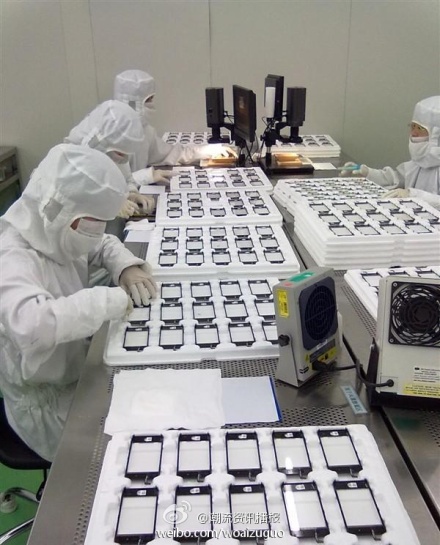
Although everyone assumes Apple products are made in China because labor is cheap there, that’s only part of the story – and an increasingly small part, as the company’s assembly partners move toward more and more automated operations.

Steve Jobs originally transferred most Apple manufacturing to China because it was the only country in the world with a huge ready-made supply-chain network, and the ability to scale up production almost overnight. There are three main reasons China – and specifically the Shenzhen area – is such a powerful manufacturing center.

First, the city is strategically placed, serving as the gateway between mainland China and Hong Kong. It is one of the largest shipping centers in the world, with a massive container port.

Second, the Chinese government established Shenzhen as the first Special Economic Zone (SEZ) in the country. SEZs are designed to encourage enterprise through relaxed planning regulations and generous tax incentives – and crucially, to facilitate foreign investment in local companies. It is this, as much as its geographical advantages, which has enabled it to grow at such a pace.

Third, that SEZ was established way back in 1980, meaning that the city has had over 40 years to grow into the manufacturing center of the tech world. Apple relies on a huge network of suppliers and sub-contractors, some of which may make just a single tiny component. The majority of them are based in Shenzhen and its immediate surrounds, so the logistics of bringing everything together in one place for assembly are straightforward.

What are the risk factors with China?

Being over-dependent on China carries a number of risks.

First, there is the generic one: Being overly dependent on any one country is a strategic risk. For example, the COVID-19 pandemic originated there, and had a massive impact on manufacturing capacity. Anything from a natural disaster to political upheaval could disrupt operations within a single country, so it is always wise to have a diverse range of manufacturing centers around the world.

Second, the relationship between the US and China has often been fraught. The trade war started by the previous US administration was a particularly low point, but continued tensions mean that there is always a risk of disruptions to trade between the two countries.

Third, it is increasingly damaging to Apple’s reputation to be so closely associated with a country that has a worsening human rights record – especially when the iPhone maker has no choice but to comply with local laws, however much they may conflict with the company’s own values. Apple has been required to remove VPN and a variety of other apps from the Chinese App Store, allow the iCloud data of Chinese customers to be stored on government-controlled servers, and more. Additionally, there have been growing reports of forced labor in China, including within many different areas of Apple’s supply chain.

What is Apple doing about it?

Apple has been working for a long time on diversifying its manufacturing operations, and has in recent years accelerated the pace at which it is doing so.

As explained above, this is far from an easy undertaking, but Apple now has major manufacturing operations in India, Thailand, Malaysia, and the Philippines, among other countries.

In India in particular, we are seeing the very early stages of a complete supply-chain infrastructure as the government uses a mix of carrot and stick to encourage companies to manufacture more of their components within the country – namely, tariffs on imports of components and tax breaks for local production. COVID-19 lockdowns in China also saw Apple move some iPad production to Vietnam for the first time, but it’s clear that the risks of over-dependence on China have never been greater.


China not only fakes iPhones… but Apple Stores, too!

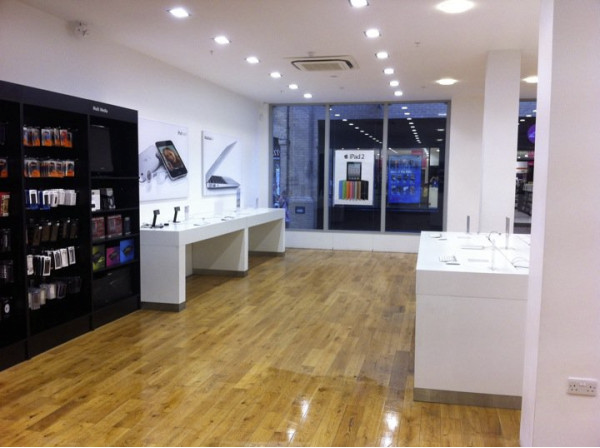
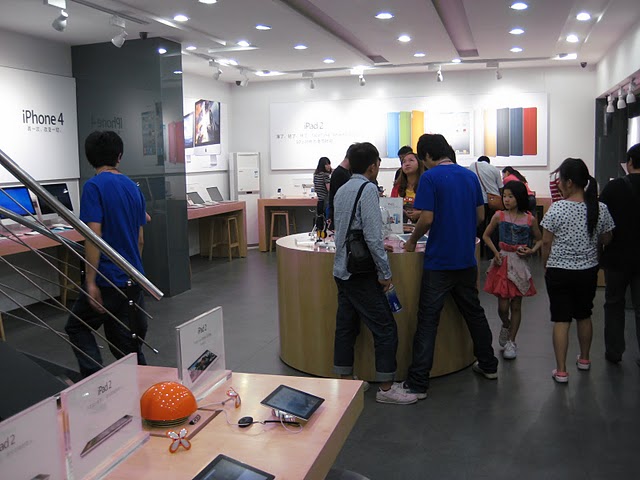
China might be known as the home of the fake iPhone, but what about whole stores? Surprising almost no one, China is indeed home to the fake Apple Store. These pictures from BirdAbroad (via IFOAppleStore), show a fake Apple Store complete with everything that a real Apple Store offers. Right down to the blue shirts with Apple logos and name labels for the employees. Starting from the top, this ‘Apple Store’ features a shiny exterior with a big glowing, white Apple front and center.

When you walk into the store, you will be stepping on wood or grey stone floors, depending on the section of the store, and will be surrounded by a showroom filled with iPads, Macs, and more… all on wooden tables. These tables are even equipped with the Apple (patented!) product holders. In fact, these tables are nearly identical, if not identical, to the tables used in Apple’s official stores. These stores went as far as to completely rip off Apple’s official press images – as you can see with the iPad 2 and iPod shuffle banners. Also notice the extremely outdated pink iPod posters.

Making this sound even more unbelievable are the twisted stair cases, accessory and software walls (which are nearly identical to the official ones), an area for children with cushy and fun chairs, and of course what appears to be a mini Genius Bar or a section of the store to take product lessons from employees. The most amazing part is what these employees think of their jobs:

Being the curious types that we are, we struck up some conversation with these salespeople who, hand to God, all genuinely think they work for Apple.

The “bosses” of this fake Apple Store, in Kunming, knowing that they are up to no good, informed their multiple plain clothed security guards to ban all picture taking. The best part is that there are three of these stores all within walking distance of each other. Check out some more pictures after the break that are courtesy of BirdAbroad.


Expand
Expanding
Close

WSJ: China Mobile “getting closer” to deal that will make iPhone available to 600 million subscribers

Site default logo image

[vodpod id=Video.13339040&w=650&h=400&fv=videoGUID%3D%7B2606B2B4-E5C1-41E6-A7FF-191E5D010FA3%7D%26amp%3Bplayerid%3D1000%26amp%3BplyMediaEnabled%3D1%26amp%3BconfigURL%3Dhttp%3A%2F%2Fwsj.vo.llnwd.net%2Fo28%2Fplayers%2F%26amp%3BautoStart%3Dfalse]

Without revealing too many new details, The Wall Street Journal reports that Apple and China Mobile are “getting closer” to the seemingly elusive China Mobile iPhone deal. China Mobile is the mainland’s largest carrier with over 600 million subscribers (that’s about the equiv. of the US+European populations). The report also confirms that it was, in fact, Tim Cook who was spotted at China Mobile‘s headquarters in mid-June.

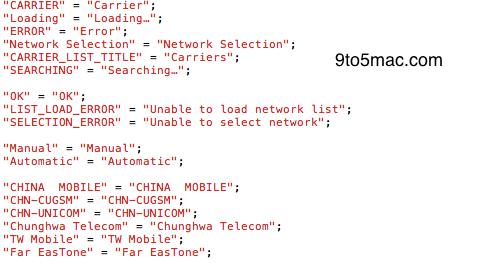
China Mobile references in the iOS SDK – Thanks, Sonny Dickson!

The WSJ also discusses the price of the current iPhone models in context with the average salaries for China households:

The iPhone, which currently sells for between 3,999 and 5,999 yuan without contract, would be a luxury for many Chinese consumers. The average household income in the first half of 2011 was 12,076 yuan, according to China’s national statistics bureau.

With this fact in mind, it makes sense for Apple to build and sell a more economical iPhone. The report is not specific about when this China Mobile iPhone will launch and China Mobile has already confirmed that talks with Apple over carrying the iPhone are ongoing. Be sure to check out the WSJ’s explanation of the “exclusive” in the video above.


Expand
Expanding
Close

Foxconn to spend $1.6B on stores in China to sell Apple products

Site default logo image

The Chinese Economic Daily News via Bloomberg reports that Foxconn plans on spending NT$47B to build stores in China which will sell Apple products, which of course it also produces.  The information was relayed by the unit’s Chairman Steve Chang.

Back in January, we reported:

Foxconn subsidiary Cybermart has been granted retail permission from Apple and will begin selling Apple products in April of this year. Cybermart currently has 34 stores across the Greater China area, with 7-8 more stores planned for 2011. The report also states that Cybermast is planning to open as many as 500 stores, that will retail Apple products, in the future.

Foxconn is becoming a pretty powerful player in Apple’s fortunes in China and the world.


Expand
Expanding
Close

Brazilian iPad production begins in late August or early September

Site default logo image

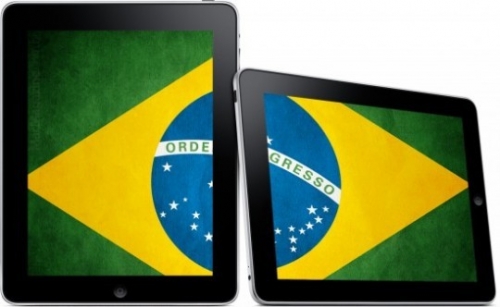
Originally planned for late July, the Brazilian Minister of Science and Technology, Aloizio Mercadante told Globo that iPad production would being in Brazil later this Fall at Foxconn’s new plant outside of São Paulo. Roughly machine translated:

“The handle access to the company, which would be used to drain the production plant in Jundiaí (SP), was not ready in time, due to construction delays.In addition, there is a shortage of skilled labor in the country.The company has hired 175 engineers, who had to send them to China where they are doing stage.The company, however, need more than 200 engineers to the sector, “said the minister.

One reason for the additional factories? A 40% reduction in consumer costs, according to the post.  Not because the iPad is cheaper to make (though it could be) but the government won’t levy taxes on domestically produced products.


Expand
Expanding
Close

iSuppli: Foxconn explosion could cost Apple half a million iPads

Site default logo image

Besides the extremely unfortunate loss of life, Bloomberg posts a dire scenario on iPad production laid out by IHS iSuppli this evening:

The drop in manufacturing will depend on how long the plant is closed following a May 20 explosion that killed three people and injured at least 15, according to ISuppli. The total could be even greater if the suspension of operations at the facility lasts longer than a month, the firm said.

Another Foxconn factory in Shenzhen that produces iPads may not be able to make up for the lost output, ISuppli said. The manufacturing breakdown may lead Apple to miss ISuppli’s forecast of 7.4 million iPad 2 shipments in the quarter ending in June, the El Segundo, California-based research firm said.

Not all analysts are as down with Apple Bull Shaw Wu saying there may not be cause to worry.  He said in a report today that the concerns are “overdone” and that production at other facilities is being ramped up to make up for the shortfalls. He expects Apple to sell 6.8 million iPads in the June quarter.

Foxconn closes all of its electronic parts polishing workshops for up to 2 days

Site default logo image


scene from Foxconn explosion

According to the WSJ, Foxconn has suspended production across many of its plants in China for two days while the government investigates the explosion that killed three people and injured many more.

Hon Hai Precision Industry Co., a Taiwan-based company better known by the trade name Foxconn that operates dozens of factories across China, said it closed all of its workshops that handle polishing for electronic parts and products pending further inspections.

At issue appears to be the flammable aluminum dust that comes from polishing parts like the iPad 2’s aluminum back.  A student group out of Hong Kong called Sacom published a report on the dangers of flammable airborne aluminum dust in a report on May 6, saying workers complained about inhaling the dust and about poor ventilation. It isn’t clear whether the workshops referred to in Sacom’s report include the site of the accident.

The news is another setback for Foxconn, which is barely past a recent outbreak of public suicides.

Should the Chengdu production capacity not be restored anytime soon, Hon Hai may have to hire more expensive labor in Shenzhen, said Arthur Hsieh, an analyst at UBS.

While Foxconn has dominated the contract manufacturing industry until now, analysts say Hon Hai competitors like Singapore’s Flextronics Inc. and Taiwan’s Quanta Computer Inc. could try to woo some of its customers, including Apple.

The prospective plant closures and their affect on Apple’s iPad were assessed by Digitimes earlier today
Expand
Expanding
Close

Apple's iPhone/iPad factory partner now has a million recruits

Site default logo image

Apple’s iPhone and iPad supply partner, Foxconn, this morning claimed its China workforce now exceeds one million workers — and the company continues to expand. A huge recruitment drive is taking place as the company rushes to build numbers to meet anticipated heavy demand for products to serve the Christmas market, a report claims.


Expand
Expanding
Close

Apple's iPhone 4 approved for sale in China

Site default logo image


Apple’s iPhone 4 seems set to hit the insanely populous Chinese market as the device has won key approval from government agencies there.

The company has won a China network license for the iPhone 4 from China’s Telecommunication Equipment Certification Center. That’s broadly in line with statements from Apple’s Chinese iPhone carrier, China Unicom, which has previously said it expects to offer the iPhone in China later this year.
Expand
Expanding
Close