Samsung

See All Stories

Report: Apple continues lead as top smartphone vendor in U.S. during April

Site default logo image

ComScore today reported its numbers for smartphone subscribers in the U.S. for the three month period ending in April with Apple experiencing the biggest gains in both categories. The main theme of the report is much the same as we heard in its January and February reports– Apple is up and gaining at the expense of Google and just about everyone else.

When it comes to market share by platform, comScore reports that Google continues its lead with 52.3% (down 0.3 percent since the January quarter), while Apple experienced a slight gain of 1.4 percentage points increasing from 37.8% to 39.2%. That’s compared to BlackBerry at just 5.1% (down from 5.9% last quarter) and 3.0% for Microsoft (down from 3.1%).

Apple also captured the biggest gain for smartphone subscribers by OEM, positioning itself as the No.1 smartphone vendor in the U.S. with 39.2% of the market compared to Samsung’s 22% during the three month period. Filling out the final three positions is HTC, Motorola, and LG:
Expand
Expanding
Close
Apple claims Google Now infringes Siri patents as it adds Galaxy S4 to ongoing Samsung patent suit

Site default logo image

Earlier this month we noted that Apple was asking courts to add the Galaxy S4 as an infringing device in its ongoing patent dispute with Samsung in California. Now, Apple has officially filed a motion (via FossPatents) outlining five patents infringed by the Galaxy S4 and another two Siri related patents infringed by the device’s Google Now voice controlled search feature.

Apple had previously claimed that the Android Google search box feature on Samsung devices infringed the same patents, but is now moving to have Google Now included alongside the S4. Excerpt from Apple’s filing below:
Expand
Expanding
Close

iOS devices approved for use on U.S. military networks following Samsung and BlackBerry

Site default logo image

Update: Apple provided the following comment to AllThingsD on the approval:

“With iPhone and iPad being tested or deployed in almost every Fortune 500 company, Apple continues to scale across enterprise with nearly 30,000 companies globally developing and distributing iOS apps for corporate use by their employees,” Apple spokeswoman Trudy Muller told AllThingsD. “The FIPS 140-2 certification and STIG approval demonstrate our ongoing commitment to deliver a secure platform to our enterprise and government customers around the world who deploy iOS devices on their networks.”

Following reports earlier this month that the Defense Department was in the process of approving iOS 6 for nonclassified communications and widespread use by government agencies, Bloomberg reports today that Apple has officially been granted approval for use on U.S. military networks.

The Pentagon already approved Samsung devices powered by the company’s Knox security software and BB10 ahead of today’s approval of iOS 6.

In February the US Defense Department confirmed plans to open its networks to 100,000 new devices from Apple and Google by February of next year. At that time the Pentagon said its networks had about 470,000 BlackBerrys, 41,000 Apple products, and 8,700 Android devices.

A number of U.S. agencies switched from BlackBerry to iPhones over the last year, while earlier reports indicate Samsung is attempting to attract more government and corporate customers with a new team of security experts and former RIM employees as well as a water and dust proof variant of its flagship S4 dubbed the Galaxy S4 Active. Today’s security approval will increase the number of agencies allowed to deploy iPhone and iPads on government networks for nonclassified communications.


Expand
Expanding
Close

IDC: iOS and Android accounted for 92.3% of smartphone shipments in Q1, iPhone fell to just 17%

Site default logo image

Research firm IDC is out with its latest numbers for Q1 2013 today tracking worldwide smartphone shipments by OS and OEM noting Android and iOS combined accounted for 92.3% of all shipments during the quarter.

IDC noted that Apple and Android  shipments combined increased year over year approximately 59.1% with a total of 199.5 million units shipped worldwide during Q1. That’s up from just 125.4 million a year ago. Apple is clearly a large driver of the growth with the report pointing out that iPhone had its “largest ever first quarter volume.” However, despite that, Apple also saw a decline among usage of iOS compared to growth of the industry as a whole, allowing Android to keep its top spot by OS and Samsung to remain number 1 by OEM.

How far is iOS behind Android? According to IDC it accounted for 17.3% of the market in Q1 compared to 75% for Android. Of course this is likely taking shipments (not sales) into account and also doesn’t represent tablet usage that we know iOS continues to dominate. 
Expand
Expanding
Close

Apple seeks to add Galaxy S4 to ongoing Samsung patent suit in California

Site default logo image

In its ongoing second major patent trial against Samsung, Apple yesterday filed a statement with the US District Court in California claiming that after examining the recently released Galaxy S4 it has “concluded that it is an infringing device and accordingly intends to move for leave to add the Galaxy S4” to its long list of 22 infringing products. Apple is hoping Judge Lucy Koh allows the S4 to be added, but in line with the court’s request to reduce the number of infringing devices ahead of a trial scheduled for spring 2014, Apple has also agreed to remove without prejudice one of the other 22 infringing devices from Samsung it currently has listed.

Apple’s current list of infringing Samsung products include Admire, Captivate Glide, Conquer 4G, Dart, Exhibit II 4G, Galaxy Nexus, Galaxy Note, Galaxy Note 10.1, Galaxy Note II, Galaxy Player 4.0, Galaxy Player 5.0, Galaxy Rugby Pro, Galaxy SII, Galaxy SII Epic 4G Touch, Galaxy SII Skyrocket, Galaxy S III, Galaxy Tab 7.0 Plus, Galaxy Tab 8.9, Galaxy Tab 2 10, Illusion, and Stratosphere.

The filing also highlights a disagreement in which Samsung believes each carrier variant of a specific device should be counted separately. For example, “the Galaxy Nexus activated on Sprint must be counted separately from the Galaxy Nexus activated on Verizon; and the Galaxy Nexus operating on Sprint running Android version 4.0 must be counted separately from the Galaxy Nexus operating on Sprint, but running Android version 4.1.” Apple, however, claims that Samsung has not itself applied this logic:
Expand
Expanding
Close

Site default logo image

Report: Apple loses share to Android in Q1 but maintains lead in tablet market

Research firm Canalys is out today with its latest report tracking worldwide smart mobile device shipments for Q1 with Android accounting for almost 60% of smart mobile devices shipped by OS. That’s compared to a 19.3% share for Apple and approximately 18.1% for Microsoft. Keep in mind Canalys’s report also includes notebooks, in addition to tablets and smartphones, which account for the majority of Microsoft’s share. When looking at tablets alone, Apple continued its lead with 46.4% share in the quarter, although Canalys warned Apple “lost share to its Android-based rivals for the third consecutive quarter.”

Though Apple continues to lead in the tablet space with a 46.4% share, it lost share to its Android-based rivals for the third consecutive quarter. ‘Spearheaded by Google and Amazon, the commoditization of the tablet market has happened far quicker than that of the wider PC market,’ said Canalys Senior Analyst, Tim Coulling. ‘Profit margins are being squeezed and vendors without a low cost structure will find it hard to compete. A solid range of must-have accessories and a software and services strategy are vital as vendors will increasingly need to make revenue around their devices.’

When it comes to smartphones, the report has Android at roughly 75.6% of shipments with around 32% of those shipments coming from Samsung. We know Apple sold around 37 million iPhones in the quarter but, as always, we warn that the stats from Canalys don’t include shipped vs sold data. 
Expand
Expanding
Close

Site default logo image

What does Samsung’s S-Voice assistant think of Siri?

Despite having access to a pretty powerful voice-enabled, predictive search engine with Google Now, Samsung is still pushing ahead with its own ‘S Voice’ app to try and provide a unique Siri-like experience on its devices. We’ve seen many comparisons of how Samsung might have borrowed from Apple for its own voice-controlled assistant, but today a post from AndroidCentral got us curious about how S Voice reacts when asked about Siri.

The screenshot we grabbed above speaks for itself with the Galaxy S4 returning snappy answers when asked about the iPhone and Siri. When asked, “Have you ever used an iPhone?,” S Voice responded, simply, “No, I have standards.” Another question, “Are you Siri?,” returns the answer, “I think that I am, but I’m a little biased.”

Results appear to vary for users, but it’s certainly an easter egg that Samsung has intentionally included in the app at some point. Siri isn’t free of its own clever responses with users finding several easter eggs and controversial remarks since the app first launched on iPhone 4S. Asking Siri about Samsung or its devices, however, usually just provides a vague response or directs users to Apple’s website or the web.

Some answers Siri gives are amusing, such as responding to marriage questions with “My End User License Agreement does not cover marriage”. People are more amused by the silly stuff, like when you say “call me an ambulance” and she responds by acknowledging “From now on, I’ll call you ‘an ambulance’”.

Site default logo image

Pentagon approves Samsung Knox and BlackBerry 10 for government use ahead of iOS 6

From 9to5Google:

Earlier this week we told you that the Defense Department was nearing a decision on approving the three major mobile platforms through new security approvals that would allow widespread use of devices by government agencies and the DoD networks. While the department is yet to grant approval to Apple’s iOS 6 for for nonclassified communications by military agencies, today the Wall Street Journal provides an update noting that both Samsung’s Knox security software and BlackBerry 10 have now received the approvals ahead of Apple:

RIM announced late Thursday that the Department of Defense approved smartphones and tablets running on BlackBerry 10, the company’s new operating system, for use throughout DOD networks…Samsung devices outfitted with Knox, the company’s new security software offering, also received Pentagon approval Thursday, according to a DOD spokesman. Apple’s approval is still expected in the “next few weeks,” according to the spokesman.

IDC: iPad drops below Android with 40% share of worldwide tablet market, Apple still top vendor

Site default logo image

Research firm IDC is out today with preliminary data from its quarterly study tracking worldwide tablet market share putting Apple at 40% market share compared to Android’s 56.5% of the market in Q1 2013. In the year ago quarter, Apple held 58.1% of the market surpassing Android’s 39.4%. IDC says Android shipments were increased thanks to strong growth of Samsung’s smaller sized tablets, while ASUS moved into the number 3 spot with 350.0% year over year growth due to strong demand for the Nexus 7:

ASUS managed to move into the number 3 vendor spot as it continued to see decent tablet shipment demand from the highly marketed Nexus 7 device. But, with Google’s I/O conference right around the corner and expectations of an imminent device refresh, the company will need to find a way to sustain its momentum. Amazon fell to the number 4 position, once again the victim of a highly seasonal product cycle.

Despite Apple taking number two behind Android for tablet shipments by operating system, it remains the top vendor by OEM taking a 39.6% share of the market vs Samsung’s 17.9% and 5.5% for ASUS. IDC notes that Apple actually exceeded expectations for Q1, where it typically experiences a drop off in shipments, by selling 19.5 million units compared to a forecast of 18.7 million:
Expand
Expanding
Close

Job postings suggest Apple to begin chip development in Orlando, Florida, near chip partners AMD and Qualcomm

Site default logo image

Several job postings looking for both hardware and software engineers reveal that Apple is looking to begin its own chip development in Orlando, Florida.

Last week we learned that Apple is hiring software engineers to work on fingerprint technology at Authentec in Melbourne, Florida, which is about one hour south of the future site of the company’s development labs.

The job posting are interesting as Samsung, which works with Apple to develop the custom chips used in iPhones and iPads, continues to compete with Apple in the smartphone and tablet space.


Expand
Expanding
Close

Site default logo image

Judge says Apple and Google are using litigation as a business strategy, have ‘no interest’ in settlement

In an ongoing case in which Apple and Google’s Motorola have accused each other of infringing various mobile related patents since 2010, U.S. District Judge Robert Scola said in an order yesterday that the two companies have no interest in reaching a settlement. Bloomberg reports Scola said in his order that both companies are using the litigation as a “business strategy that appears to have no end”:

“The parties have no interest in efficiently and expeditiously resolving this dispute; they instead are using this and similar litigation worldwide as a business strategy that appears to have no end,” U.S. District Judge Robert Scola in Miami said in an order dated yesterday. “That is not a proper use of this court.”

“Without a hint of irony, the parties now ask the court to mop up a mess they made by holding a hearing to reduce the size and complexity of the case,” he wrote. “The court declines this invitation.”

The result is Apple and Google will now have a four month period to narrow their claims related to the case that now includes over 180 claims for 12 patents. Bloomberg notes that Scola said the case currently includes “disputes over the meaning of more than 100 terms,” and that the case would be put on hold until the disputes are resolved if the two companies are unable to come up with a solution before the four month timeframe expires.

Back in November there were reports that Apple and Google’s Motorola were considering a settlement and even submitted “proposals on using binding arbitration to reach a licensing agreement” for standard essential patents to courts in Wisconsin. At the time Apple said “such an agreement could lead to a global settlement of all of their patent disputes,” but the two companies couldn’t come to an agreement on the arbitration process.

Last year Apple and HTC announced they reached a global settlement in multiple patent-related cases that some analysts estimated could be worth as much as $180 million to $280 million annually. When it comes to Samsung, many reports quoted Samsung’s Shin Jong-kyun as claiming the company does not “intend to (negotiate) at all” following the HTC settlement.

Site default logo image

‘LookAway Player’ brings Samsung’s Smart Pause-inspired feature to iPhone

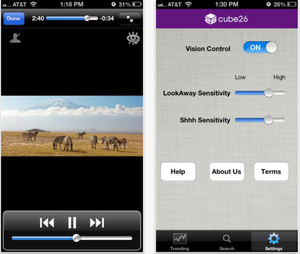
Sensitivity and Settings menu of LookAway Player

Samsung’s new eye-tracking features on its Samsung Galaxy S IV are arguably some of its coolest yet.

One of them, Smart Pause, is built right into the video player on the device and recognizes when you are watching a video. If you look away from the screen while it is playing, the GS4 automatically pauses the video for you and starts playing it again when you look back.

Many are wondering when or if a similar feature will launch on iOS. While Apple may never implement such a feature, iOS users can try out the feature.

LookAway Player for iOS is a YouTube player that includes the same look-away-pause, look-back-play features found on the Galaxy S IV. LookAway uses a technology developed by Cube26, which utilizes the front-facing camera to track eye movement.

While it is not yet clear how well the player actually works, it is available to try out yourself on the App Store.

Site default logo image

Korea Times posts its latest ‘Apple moving away from Samsung’ claim

Photo: knowyourmobile.com

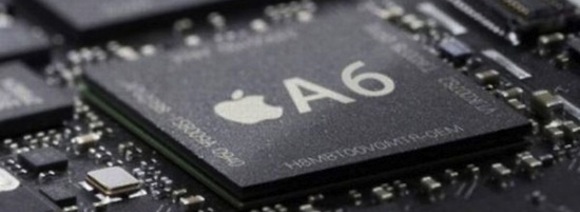
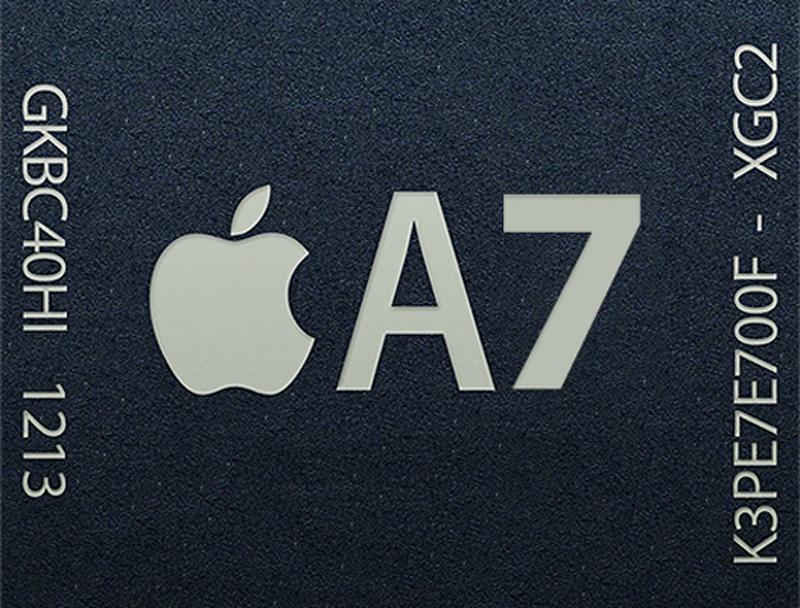
The Korea Times claims that Apple has excluded Samsung from development of the A7 chip expected to be used in next year’s iPhones and iPads, citing un-named Samsung parts suppliers who say that all A7 chip production will be handled by the Taiwan Semiconductor Manufacturing Company (TSMC).

The chasm between Samsung Electronics and Apple is expected to widen further as the U.S. electronics giant has excluded its Korean rival from a project to develop A7 application processors, due to be released in the first half of next year.

The paper regularly claims that Apple is abandoning Samsung as a supplier, and is regularly wrong …

Apple in court: Samsung infringes key text-selection patent, anti-poaching class action blocked, slide to unlock invalidated in Germany

Site default logo image

Apple’s decision to disable VPN on demand functionality on iOS due to the virnetX lawsuit isn’t the only patent related Apple news today. Head below for a roundup of Apple’s court woes and wins from earlier today:

Samsung infringes key text-selection patent: Reuters reports that the International Trade Commission has handed down a preliminary decision ruling Samsung infringed on an Apple patent related to a text-selection feature. However, the courts also ruled Samsung didn’t infringe another patent related to detecting when other devices are plugged into a microphone jack. If the text-selection decision is upheld, the result could be a U.S. import ban on Galaxy, Transform, and Nexus devices:
Expand
Expanding
Close

comScore: Apple increases lead as top smartphone vendor in US, iOS steals market share from Android

Site default logo image

Research firm comScore is out with its usual monthly report that ranks the top smartphone OEMs and platforms for the three-month period ending in February. Apple continues to grow its lead this month as top OEM in the U.S., jumping 3.9-percent from November to 38.9-percent of the market and increasing its lead on the second biggest OEM by subscribers, Samsung:

Samsung ranked second with 21.3 percent market share (up 1 percentage point), followed by HTC with 9.3 percent share, Motorola with 8.4 percent and LG with 6.8 percent.

It’s important to point out that the shipped vs. sold argument doesn’t apply to comScore’s results, as its data comes from surveys tracking smartphone subscribers and usage and not sales or units shipped. Google grabs the spot as top smartphone platform at the end of February, but Apple continues to close the gap capturing 38.9-percent of the market (up from 35 percent) compared to Google’s 51.7-percent (down from 53.7-percent):
Expand
Expanding
Close

Apple closes gap on Samsung for connected device sales in Q4 as market hits 1B devices

Site default logo image

Research firm IDC is out today with its latest report on the smart-connected device market, and it includes worldwide shipments of desktop PCs, notebook PCs, smartphones, and tablets. IDC predicted the market in total grew 29.1-percent year over year in 2012, crossing 1 billion units shipped and hitting a total value of $576.9 billion. According to the report, Apple significantly closed the gap on Samsung during the last quarter of the year. It jumped from 15.1-percent in Q3 to 20.3-percent of unit shipments in Q4 2012. That brings the company up right behind market leader Samsung, which dropped slightly from 21.8-percent to 21.2-percent in the fourth quarter:

Looking specifically at the results for the fourth quarter of 2012 (4Q12), combined shipments of desktop PCs, notebook PCs, tablets, and smartphones was nearly 378 million and revenues were more than $168 billion. In terms of market share, Apple significantly closed the gap with market leader Samsung in the quarter, as the combination of Apple’s iPhone 5 and iPad Mini brought Apple up to 20.3% unit shipment share versus 21.2% for Samsung.

Not surprisingly, Apple dominated Samsung when it came to revenue share. It took in 30.7-percent of the market compared to just 20.4-percent for Samsung by revenue:

On a revenue basis for the fourth quarter, Apple continued to dominate with 30.7% share versus 20.4% share for Samsung.

Apple’s increase is likely thanks to strong iPad and iPad mini sales, as growth in the market was “largely driven by 78.4-percent year-over-year growth in tablet shipments.” IDC expected tablet shipments to outgrow desktop PCs by the end of this year, while the tablet market could surpass the portable PC market in 2014 and provide Apple with even more opportunity to outgrow Samsung for total connected smart device shipments this year and next:
Expand
Expanding
Close

Site default logo image

Sony and Philips-backed Intertrust sues Apple over security and trusted computing patents

Apple is the target of a new patent infringement suit filed today by Intertrust—a company backed by Sony and Philips that has licensed its patents to many companies in the past including Samsung, Nokia, Microsoft, HTC, Motorola, and others. The Wall Street Journal noted Philips and Sony each hold a 49.5-percent stake in the company that previously settled with Microsoft in 2004 for $440 million related to a patent infringement case.

The announcement from Intertrust on its website doesn’t mention the specific patents or technologies involved in the suit, but it claims Apple products, including iPhone, iPad, Apple TV, Macs, iCloud and iTunes, infringe on 15 Intertrust patents related to “security and distributed trusted computing.”

 The lawsuit accuses Apple of making products and services that infringe on 15 Intertrust patents on security and distributed trusted computing. The lawsuit covers a broad range of key Apple products and services including iOS devices such as the iPhone and iPad, Mac computers and laptops, Apple TV, and services including iTunes, iCloud, and the Apple App Store.

“Apple makes many great products that use Intertrust’s inventions,” said Talal Shamoon, Intertrust’s chief executive officer. “Our patents are foundational to modern Internet security and trusted computing, and result from years of internal research and development. We are proud of our record of peaceful and constructive licensing with industry leaders. We find it regrettable that we are forced to seek Court assistance to resolve this matter.”

Smartwatch race is on as Samsung confirms it’s in the game

Site default logo image

Samsung has confirmed to Bloomberg the rumors that it’s working on a smartwatch to rival the widely-speculated Apple iWatch.

Known for being a ‘fast follower’, a company that, er, watches what others do and aims to quickly launch a competitive product, Samsung appears to be following Apple’s lead in revealing nothing at all about the device: no feature-list, no visuals, no price, no launch-date. Samsung’s executive vice president of mobile business Lee Young Hee said only: “We’ve been preparing the watch product for so long. We are working very hard to get ready for it. We are preparing products for the future, and the watch is definitely one of them.” Thanks for that, Samsung.

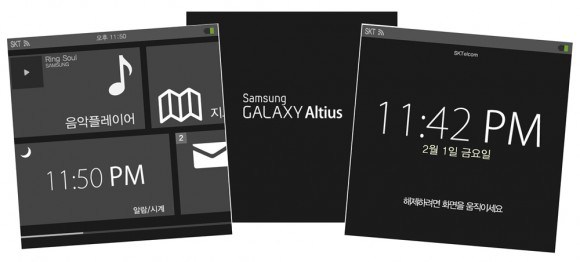
The alleged screenshots that appeared last month on Slashgear suggested a 500×500-pixel touchscreen device running a new operating system supposedly named AltiusOS.

The smartwatch market is estimated to be worth $60 billion a year. Just to put that in perspective, that’s about 16 percent of the $358 billion handset market. Marshal Cohen, an analyst at NPD Group in Port Washington, told Bloomberg: “We’re going to see formidable competition coming from many different directions — from device makers, accessory makers, even fashion designers.”

Laurence Balter, chief investment strategist at Oracle Investment Research, said he believed Apple’s strategy should be to use the iWatch as an affordable entry into the Apple ecosystem, generating sales for its more expensive products. “If I were Apple, I’d strategically price the watch as low as possible to bring as many as possible into the ecosystem,” he said.

It’s expected that most smart watches will follow Pebble’s lead in making the device a Bluetooth accessory to a phone and not a standalone gadget, but there has been speculation that the iWatch will run iOS, potentially allowing it to perform useful functions without a link to an iPhone.

Apple analysts react to Galaxy S4 launch with a variety of wild insights

Site default logo image

Samsung officially unveiled its flagship Galaxy S4 smartphone last night at a theatrical, Broadway-style presentation in New York, and analysts are quick to jump in today with opinions on what it means for Apple. AAPL is having a decent morning hitting a high of 442.50 and opinions from analysts seem to be split down the middle regarding whether the S4 has what it takes to cut into Apple’s market share.

Gene Munster of Piper Jaffray doesn’t seem too impressed with the S4 upgrade but noted Samsung’s new S Band is “a quick first pass for Samsung on wearable technology ahead of Apple’s watch. Munster added that he expects Apple to launch its smart watch product by 2014 (via Barron’s):

The Galaxy S4 appears to be largely an incremental update to the S3 including a slightly larger screen (4% larger on diagonal), better camera and processor, and updated software, but largely the same body style and casing. We believe some of the software features are unique, including the tilt to scroll, video pausing based on facial recognition, and hand gesture based interactions, but view these software improvements as minor compared with what Siri was to the iPhone 4S or even Google Now to Android.

Jefferies analyst Peter Misek thought the S4 will be “incrementally negative for Apple” but doesn’t view the S4 upgrade as “revolutionary” (via Zdnet):
Expand
Expanding
Close

Site default logo image

Samsung’s ad budget exploded past Apple and the rest of the field in 2012

We have been hearing much about Samsung’s advertising efforts in recent months including its efforts crafting the now well-known ad campaign mocking iPhone line sitters, to some of the companies recent marketing tactics used to target iPhone users. Last night The Wall Street Journal published a new piece outlining Samsung’s increasingly aggressive advertising thanks to new data from research firm Kantar Media. According to the report, Samsung passed Apple in 2012 for ad spending by around $68M in the US:

Outspent by rival Apple Inc. more than three to one in advertising for mobile phones in the U.S. in 2011, Samsung responded with a marketing blitz on TV, billboards, the Internet and print media that moved the Korean company into the pole position last year… In 2012, Samsung spent $401 million advertising its phones in the U.S. to Apple’s $333 million, according to ad research and consulting firm Kantar Media.

Apple spent more than three times Samsung on marketing its mobile devices in 2011. If a slew of recent media reports is any indication, including one from Apple’s own former ad man Ken Segall, many seem to think Apple is losing its advertising momentum to Samsung.

The Wall Street Journal added that executives at carriers said Samsung “also spends more on “below the line” marketing than any device maker. Those funds help pay for in-store advertising, promotions and training for carrier sales representatives that help close the sale.”

To put the spending in perspective for the global smartphone market, Tech/telco analyst Benedict Evans noted the figures above account for around 10% of Samsung global ad budget compared to 1/3 of Apple’s, which also somewhat reflects sales proportions.

Site default logo image

Nokia submits amicus brief in support of Apple’s bid to block sale of Samsung products

According to a report from Reuters, Nokia has this week become the first company to submit an amicus brief in support of Apple’s attempt to secure injunctions on several Samsung products. While the full contents of the brief have not yet been revealed, Reuters reports Nokia argued its position in a summary of the brief that was filed with the U.S. Court of Appeals for the Federal Circuit in Washington on Monday.

In an accompanying summary, however, Nokia argued that a trial court judge got it wrong when she denied Apple’s request for a permanent injunction.

In the filing on Monday, Nokia attorney Keith Broyles from Alston & Bird argued that U.S. District Judge Lucy Koh in San Jose, California, erred by ruling that Apple must establish a “causal nexus” between its patented feature and the demand for its phones in order to secure a permanent injunction.

Nokia argued that the rule “could cause wide-ranging damage to the United States patent protection landscape.”

Companies and advocacy groups will still be able to submit briefs on behalf of Samsung after the company’s written arguments in the coming weeks. Nokia said its decision to submit the brief is to “advocate for patent rights as a means of fostering innovation.” 
Expand
Expanding
Close

Site default logo image

iPhone concept imagines a 4.8-inch bezel-less display (Gallery)

Nowhereelse.fr posted another set of high-quality renders from designer Martin Hajek today that seem to be the illegitimate lovechild of a Samsung Galaxy device and the iPhone 5. In the images below, we get the designer’s take on a 4.8-inch “iPhone 6” with a super thin bezel and black and silver anodized backs. He’s also included a 4-inch version of the concept that clearly takes cues from Samsung’s Galaxy devices.

More images at Nowhereelse.fr.

Site default logo image

Samsung steals Apple’s wallet

.
From 9to5Google:

Samsung is today officially unveiling its “Samsung Wallet” mobile app solution, and it is quickly gaining attention for similarities to Apple’s iOS 6 ticket, card, and coupon solution known as Passbook. For those familiar with Apple’s app, Samsung Wallet appears to work much the same way. The app will allow users to store event tickets, membership cards, coupons, and boarding passes in one central app. From there, users will be able to present the digital passes. Companies supporting the standard can also scan a barcode included for each digital ticket.

Full story and video of the app in action is available on 9to5Google.