Earlier this month we told you that Verizon-backed ItsOn, a company building software for carriers that provides users with dynamic pricing plans on mobile devices, was planning on introducing a new mobile service that takes advantage of its software. Today ItsOn has officially announced Zact, a mobile service that provides flexible, adjustable data plans that allows users to pay for only what they use, customize voice, text, and data plans in real-time at any time, and share data on an unlimited amount of devices: Read more
ItsOn, a company building software for carriers that provides users with dynamic pricing plans on mobile devices, last year announced plans to partner with one of the big U.S. carriers for its launch early this year. We’ve since learned that the carrier is likely Verizon, and that ItsOn will be launching as a consumer facing MVNO later this month (Verizon and Vodafone who both share ownership of Verizon Wireless are both investors).
There’s no word on exactly what the announcement will consist of or what the ItsOn service will include, but based on the company’s software we expect to see flexible pricing plans that, of course, run on Verizon’s robust LTE network. Despite executives expressing doubts about the service running on iOS devices in previous interviews, we also believe that an iOS version of the service is indeed coming, but at launch the service will initially be limited to other smartphones (likely Android-based). Read more
Verizon announced a few notable changes this week, possibly in response to T-Mobile’s new ‘Uncarrier’ pricing structure.
The first change enforces 24-month contracts and restricts subsidized upgrades during that period. Customers will no longer enjoy ‘early upgrades’ after 20-months, as was previously the policy.
While the change may disappoint customers who enjoyed upgrading their devices more frequently, Verizon told The Vergethat a new “Device Payment Plan” will be accompany the policy changes.
The new payment plan allows customers to upgrade their smartphone annually by paying the upgrade fee at the register and dividing the rest of the full-retail price over 12 months. This payment plan will include a $2/month finance charge through the duration of the year.
For people like us who update annually, this option is a more pragmatic approach, especially when vendors like Gazelle (as well as others) typically pay more than the subsidized cost of a new smartphone for last year’s smartphone.
On the subject of LTE networks, McAdam also shared an interesting tidbit regarding an encounter with Steve Jobs and Apple during the development of the current iPhone, the iPhone 5. One of the latest iPhone’s premier new features over its predecessors is support for LTE networks in regions across the globe. McAdam says that Apple co-founder Steve Jobs was initially reluctant about including LTE in the iPhone 5, but McAdam’s descriptions of LTE’s speed capabilities changed Jobs’ mind:
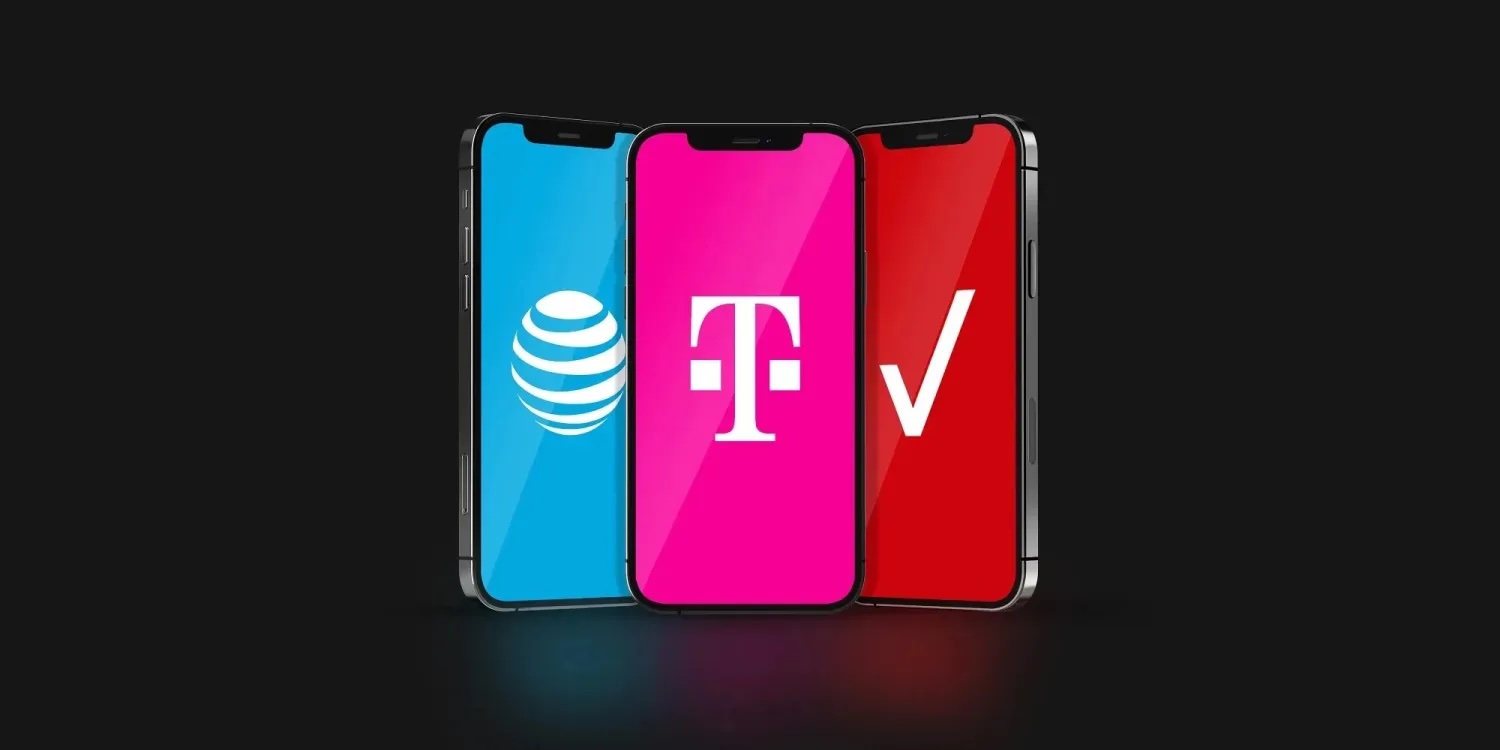
Now that T-Mobile offers the iPhone, how do the four national carriers compare in terms of costs? A couple of websites have done the sums.
Our friends over at Zagg did a blog post that suggested three of the four networks come out at exactly the same annual cost when attempting to get as close as possible to like-for-like tariffs, while going with T-Mobile’s contract-free option will save you $580 over two years.
Based on unlimited talk and text, and 4GB of data per month. Sprint offers only ‘unlimited’ data (claiming not to throttle), though is not noted anyway for fast data speeds.
While this is true for individuals, it doesn’t tell the whole story … Read more
Verizon CFO Fran Shammo spoke at the Duetsche Bank Annual Media, Internet & Telecom conference this morning, where he was asked a few questions related to the iPhone. Verizon reported its fourth quarter 2012 earnings last month with 9.8 million smartphone activations—a record 6.2 million of which were iPhone. We knew about half, or 3.1 million, of those iPhone sales were driven by the first full quarter with the iPhone 5, but today Shammo talked about just how important getting the free iPhone 4 was during the quarter:
But this past fourth quarter you had a couple — you had really one thing happen that never happened before, especially with Verizon Wireless, and that was for the first time ever, because of the iPhone 5 launch, we had the 4 at free. So it was the first time ever you could get a free iPhone on the
Verizon Wireless network. So that produced a lot of volume for us. We had a lot of new customers come into Verizon who took that free phone, and that was great for us because again if you think about — we sold a lot of LTE product in the fourth quarter. We sold a lot of 3G product from the iPhone products in the fourth quarter.
But that is key for us, because if you think about our two networks it is important for me as I migrate people into the 4G network I still have this very large 3G network that operates very efficiently. We are not investing any more capital in that network other than to keep it up and running, so no more coverage capital, no more capacity capital. If I can keep that network up and running that just generates more contribution margins for us. So it is critical for us to balance that. But, again, I think you had one point in time where you had a free phone, a free Apple phone that never happened before with us and that generated a lot of volume.
While noting that 53 percent of the carrier’s smartphone activations were iPhones in 2012, Shammo was asked about the opportunity to incentivize employees to sell non-Apple devices that would also come with lower subsidies for Verizon:
The answer is, no, we don’t and it is critical that we don’t do that. The reason for that is because what is more important for us is when a customer walks into a store that customer walks out with a phone that they will be happy with and not return under our 30-day guarantee. Because the worst thing that can happen for us is for me to incentivise a salesperson to get you into a phone that you walk out the door with thinking you are going to like and in three days you come back because you don’t like it. Therefore, now I’ve just subsidized two smartphones because that phone you used I can’t resell as a new phone.
You can read more from Shammo’s presentation and where he discusses the growth of Share Everything plans, tablets, and more here.